Before Our Honeymoon, He Ran Off With His Childhood Friend. I Quietly Flew One-Way To Australia…
The night before our honeymoon, I packed my husband’s blood pressure pills beside his passport like a good wife. By sunrise, I learned he had booked a luxury Maldives trip with another woman. So I did not scream. I did not beg. I bought a one-way ticket to Australia.
PART 1
“Our honeymoon is canceled,” my husband said, while his secret flight to the Maldives was already paid for in business class.
David stood in our bedroom doorway wearing a white T-shirt and the expression he used for funerals, briefings, and conversations he wanted to end before they started.
I was kneeling on the floor beside our silver Samsonite suitcase, holding a pair of his folded socks.
“Canceled?” I asked.
“Postponed,” he corrected, like I had offended the English language. “Emergency coordination briefing at the Pentagon. Allied drills. Orders from the top.”
Of course.
The Pentagon.
The magical concrete fortress that swallowed birthdays, dinners, weekends, and apparently honeymoons.
I looked down at the suitcase.
Two crisp dress shirts. Sunscreen. A European power adapter. His medication. His toiletry kit. My new floral sundress with the tag still hanging from it because I had been stupid enough to buy something that said honeymoon instead of wife on standby.
“When?” I asked.
“Two weeks.”
He turned away before I answered.
That was David Walker. Lieutenant colonel. Top-secret clearance. Perfect posture. Cold voice. The kind of man who could brief generals for forty minutes and still not manage, “I’m sorry, Emma.”
So I unpacked.
One item at a time.
Sunscreen back into the cabinet. Shirts back onto hangers. Medication into the bathroom drawer. My sundress into the darkest corner of the closet, where hope apparently went to suffocate quietly.
My phone buzzed.
Chloe: What time is your flight tomorrow? I’ll come see you guys off.
I typed one word.
Postponed.
Then I made chicken noodle soup because that was what wives like me did.
We swallowed humiliation and skimmed fat off broth.
David ate at his desk without looking at me. I put the bowl on the silicone coaster I had bought for him after measuring the exact spot where he always placed his mug.
“Soup’s ready,” I said.
“Put it there.”
There. Not thank you. Not come sit with me. Just there.
The next morning, I was watering the fiddle leaf fig on our Arlington balcony when my phone rang.
Unknown number. New York area code.
“Mrs. Emma Walker?” a woman asked.
“Yes.”
“This is Elite Travel Concierge. Your husband isn’t answering, so we’re calling the backup number on file regarding tomorrow’s departure. Emirates flight EK232 out of Dulles, connecting through Dubai to Malé. We just need to confirm the private seaplane transfer.”
The watering can tipped.
Water spilled over the planter and ran across the balcony tile.
“I’m sorry,” I said. “Tomorrow’s departure?”
“Yes, ma’am. June second. Two passengers. David Walker and Eleanor Morgan. Two adjacent overwater villas. Is that still correct?”
Eleanor Morgan.
The name landed clean.
No warning. No drama. Just a blade sliding between ribs while the person holding it asked if the reservation was correct.
I knew Eleanor.
Not personally. David had called her a childhood friend when I saw her in an old photo album. Long dark hair, sweet smile, standing close enough to him that even seventeen-year-old Emma would have known better.
“She moved away,” he had said.
That was the entire obituary for their relationship.
“Yes,” I said into the phone. My voice sounded polished enough for a customer-service survey. “Everything is correct. Keep the reservation as is.”
“Wonderful. Thank you, Mrs. Walker.”
I hung up.
The balcony was wet. My bare feet were wet. The hem of my pajama pants was wet.
Inside, our apartment was spotless because I had made it that way. Twelve hundred square feet of proof that I had spent eleven months trying to become useful enough to be loved.
I opened Safari.
EK232. Washington Dulles to Malé via Dubai. Departure 10:20 a.m.
There it was.
While David had stood in our bedroom telling me about a classified emergency briefing, he had already arranged paradise with another woman.
I did not throw the phone.
I did not call him.
I did not do what men like David expect women to do, which is lose control so they can call us unstable later.
I mopped the balcony.
Then I went to Whole Foods.
I bought cherries because he liked cherries. Sharp cheddar. Parsley. Cherry tomatoes. A bottle of soy sauce because we were almost out and I had trained myself to notice things before he did.
At the register, a woman ahead of me argued over digital coupons while I stood there holding my groceries and thinking, My husband is taking his childhood friend to the Maldives on our honeymoon.
The cashier smiled.
“Find everything okay?”
“Absolutely,” I said.
Back home, I washed the cherries and arranged them in the white porcelain bowl on the coffee table.
When David came home at seven, he walked in wearing his uniform and the smug exhaustion of a man who believed his lies had already been accepted.
“What’s for dinner?” he asked.
“Steak. Salad. Roasted potatoes. Soup.”
“Got it.”
Got it.
That was the closest thing to romance in our house.
At dinner, I watched him check his phone under the table. His thumb moved fast. Then he flipped the screen face down.
“What time are you leaving tomorrow?” I asked.
His fork paused for half a second.
“Car from base picks me up at seven.”
“I’ll make breakfast.”
“Don’t bother.”
I almost smiled.
Of course not.
Why eat oatmeal with your wife when you can drink champagne in business class beside Eleanor Morgan?
That night, he slept facing the wall.
I lay beside him in our king-size bed, separated by the invisible border that had existed since our wedding night.
He had hugged me once that night, stiffly, like fulfilling a policy requirement.
Then he said, “Let’s get some sleep.”
For eleven months, I told myself he was tired. Disciplined. Stressed. Military men weren’t emotional. Maybe after the honeymoon, he would soften. Maybe after Paris, he would touch me like I was his wife instead of a houseplant he forgot to water.
Now I knew.
His warmth had not been missing.
It had been reserved.
At 5:55 a.m., he got out of bed.
I kept my eyes closed.
Bathroom faucet. Electric razor. Closet door. Shoes.
Not his uniform oxfords.
Loafers.
Brown leather loafers from Nordstrom. The salesman had said, “Perfect for a resort vacation,” and David had actually smiled.
He wore them for her.
The front door opened.
Closed.
No goodbye.
No kiss.
No glance into the bedroom.
At 6:10, I sat up.
The apartment was gray-blue and quiet.
I opened the Emirates app.
Flight EK232. Boarding later that morning.
I took a screenshot.
Then I made plain oatmeal with salt and no sugar. I ate every bite slowly because anger on an empty stomach makes people sloppy.
At 9:15, David texted.
Just got to the Pentagon. Going to be a late night.
I stared at the message.
Then typed:
Okay.
At 10:20, the flight departed.
I picked up the bowl of cherries, walked to the kitchen, dumped every single one into the trash, washed the bowl, dried it completely, and put it away.
That was the first thing of his I stopped preserving.
PART 2
By the time his plane crossed the Indian Ocean, I had already started erasing him from my life.
The next afternoon, I opened David’s laptop.
His Gmail was still logged in because men who lie often confuse arrogance with security.
I searched one name.
Eleanor Morgan.
Seventeen results.
January. February. March. April. May.
She sent him coffee pictures on Valentine’s Day. He helped push a “DoD project” through his division. He booked her ticket. He arranged the transfer. He told her to fly into D.C. the day before.
There was no mystery left.
Only dates, timestamps, receipts, and the kind of calm that arrives when pain has no more questions.
I created a folder on my phone called 0602.
Screenshot. Screenshot. Screenshot.
Then I opened our documents drawer.
Marriage certificate. Lease. Car title. Bank paperwork.
I transferred my money from the joint account to my personal Bank of America account. I closed an old Chase certificate of deposit early and lost the interest without blinking.
Freedom has fees. I paid them.
Then I called Chloe.
“I need a divorce attorney,” I said. “Military experience.”
There was a silence.
“Emma, what happened?”
“Find me one.”
By evening, I had a consultation with Michael Evans, a downtown D.C. lawyer with expensive glasses and the dead-eyed calm of a man who had seen officers, surgeons, CEOs, and pastors all get stupid for the same reasons.
That night, I searched flights.
Washington to Sydney. One way. June fifth.
Economy.
My husband had bought business class to the Maldives for another woman.
I bought economy to the rest of my life.
PART 3
When David came home from paradise, my keys were waiting beside our marriage certificate—and I was already in Australia.
On June fourth, I walked into Michael Evans’s office carrying printed emails, flight screenshots, bank statements, and the kind of silence people mistake for weakness right before it costs them something.
Evans flipped through the stack.
“Your husband is active duty?”
“Lieutenant colonel.”
“With TS/SCI clearance?”
“Yes.”
He stopped flipping.
Then he leaned back.
“Mrs. Walker, if this becomes public, your husband has a serious problem.”
“He made that problem,” I said.
Evans looked at me for one long second, then nodded.
“Fair.”
He explained Virginia divorce procedure, separation periods, court filings, service, leverage. I listened. I had spent eleven months decoding David’s moods from the sound of his footsteps. Legal language was easier.
“He left the country without the approved travel he claimed he didn’t have,” I said. “He lied about official duty. He traveled with a civilian woman. He used funds I can trace.”
Evans tapped the papers.
“You came prepared.”
“Being ignored gives a person time.”
He almost smiled.
I signed a power of attorney. Paid the retainer by wire. Told him to file after David returned.
“Are you sure you want to leave the country?” he asked.
“I am not leaving,” I said. “I am relocating.”
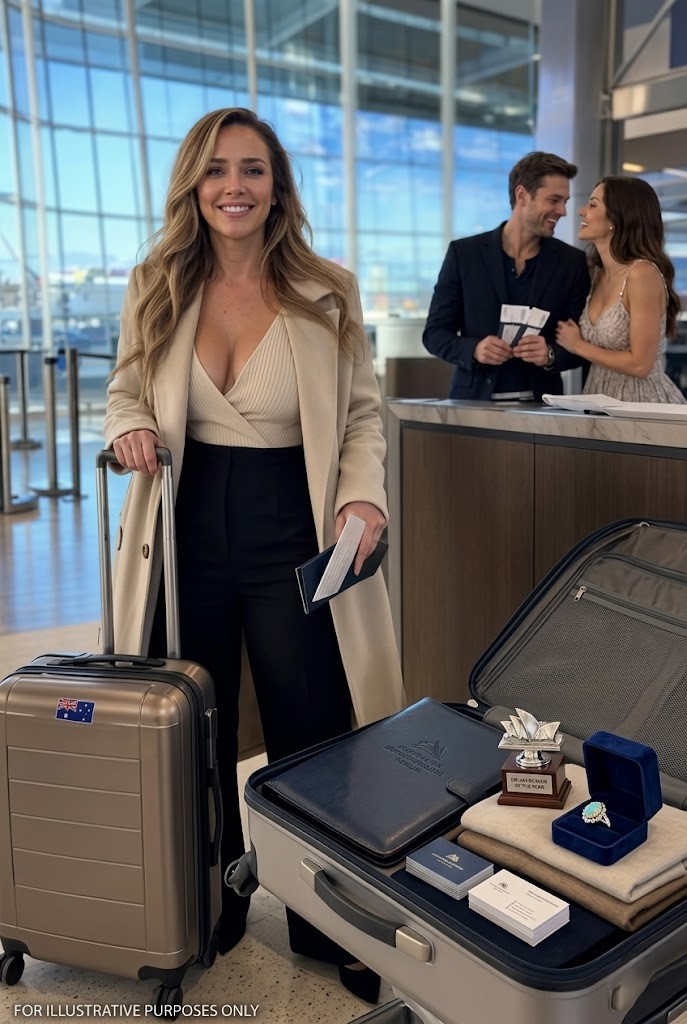
Back at the apartment, I packed one silver suitcase.
Jeans. Sweaters. Translation certificates. My passport. Toiletries. A few books. My NAATI documents from years before, when I had dreamed of working abroad before David convinced me that a lieutenant colonel’s wife didn’t need a career.
I threw away my birth control pills.
Not dramatically. Not with a speech.
Just dropped them in the trash and closed the lid.
In the kitchen, I cleaned the counters. I emptied the fridge except for milk and eggs because David knew how to command a room full of officers but not how to shop for breakfast.
In the bedroom, I made the bed perfectly.
I flipped our wedding photo face up.
Let him look at the evidence.
At 6:00 a.m. on June fifth, my Uber waited outside.
The driver looked at my suitcase.
“Dulles?”
“Yes.”
As we pulled away, my phone lit up.
David: Briefing is going to run late tonight. Don’t wait up for dinner.
He was still in the Maldives.
Still lying.
Still confident that I was home wiping counters and saving leftovers.
I typed:
Okay.
Then I muted him.
By the time he returned on June seventh, the apartment had already gone cold.
He opened the door and found my keys on the console. Beside them, the marriage certificate lay open to our signatures.
No note.
No explanation.
Men like David loved briefings. I gave him a visual one.
He called my name from the entryway.
Nothing.
Living room. Empty.
Kitchen. Empty.
Closet. Half-bare.
Nightstand. Wedding photo staring back at him.
He called me.
Straight to voicemail.
He texted.
Green bubble.
He called Chloe.
“Is Emma with you?” he demanded.
“No,” Chloe said.
“Where is she?”
“I don’t know.”
“You’re her best friend.”
“And you’re her husband,” she snapped. “Funny how neither of us knows where she is, but only one of us earned it.”
She hung up.
I know because she texted me afterward.
He’s panicking. Proud of you. Also, please eat something.
I was in a hostel near Sydney Airport drinking terrible instant coffee from a paper cup.
I had already bought a local SIM card, opened a Commonwealth Bank account, and sent my resume to three translation agencies before noon.
Australia in June was winter. The air was sharp. The sky looked freshly washed. Nobody knew me as Mrs. Walker. Nobody expected me to remember their medication or iron their collars.
For the first time in eleven months, I heard my own thoughts without his silence sitting on top of them.
On my third day, a translation agency on Martin Place called me in.
The manager, a woman with short gray hair and red glasses, slid my test across the table.
“Ninety-eight percent accuracy,” she said. “Highest in the pool.”
“Good.”
She studied me.
“You have a gap in employment.”
“Personal reasons. Resolved.”
“Can you handle forty-eight-hour turnaround on legal contracts?”
“Yes.”
“Overtime?”
“Yes.”
“Difficult clients?”
I almost laughed.
“I’ve had practice.”
She hired me on probation for forty-two Australian dollars an hour.
After the interview, I bought a latte downstairs. It burned my tongue. I liked that. It proved I was there. Awake. Alive. Not waiting.
My phone rang.
David Walker.
I watched it ring six times.
Then I declined.
Across the world, he finally understood that unanswered and rejected were not the same.
His messages came in bursts.
Where are you?
Call me back.
Emma, we need to talk.
Then, days later:
If you don’t answer, I’m filing a missing person’s report.
I was eating a sandwich on a bench, watching pigeons bully each other like tiny unpaid lawyers.
I wiped my hands on a napkin and typed:
Don’t bother.
Two words.
He deserved less.
At the Pentagon, those two words hit harder than any scream would have.
He tried the bank next.
Denied.
He tried Chase.
Denied.
He tried to use his rank on a receptionist at my old translation agency.
Denied.
He tried my parents.
They told him I was in Australia because I had called them and said we had extended our honeymoon.
That was the only lie I allowed myself.
It kept them calm.
It kept him confused.
It kept me free.
Then David made his first real mistake after I left.
He asked a Department of Homeland Security buddy to pull my travel record off the books.
He wanted to know which flight I took.
The system logged the query.
People like David always believe rules are for civilians, junior officers, and wives.
Not for men with clearance badges and polished shoes.
By June twenty-third, a process server arrived at the Pentagon.
Petition for dissolution of marriage.
Petitioner: Emma Smith.
I used my maiden name professionally. Seeing it on paper felt like finding a locked door already open.
The petition included the Maldives flight, the resort transfer, the emails, the unauthorized travel, the timeline.
Colonel Miller summoned David.
I was not there, but Evans later summarized it with lawyerly restraint.
“He was not pleased.”
Which, translated from legal English, meant David got skinned alive in a government office.
Miller told him a public divorce involving unauthorized foreign travel, adultery, and a wife suddenly working overseas was a security nightmare.
David’s promotion board was coming.
His clearance was now under review.
His perfect career had met my folder of screenshots.
So he messaged me.
If you want a divorce, come back to D.C. and tell me to my face.
I read it while sitting in my small sublet in Newtown, eating noodles from a chipped bowl.
I replied:
Not returning.
He typed for a long time.
Stopped.
Typed again.
This will drag out for months.
I answered:
I know.
And I did.
The longer he fought, the more investigators would ask why his wife left, what he hid, where he traveled, and who Eleanor Morgan really was.
David had trained me for this without meaning to.
Every ignored dinner. Every flat “okay.” Every night he treated me like furniture.
He had taught me patience.
Now he hated the lesson.
PART 4
The woman he took to the Maldives was not just his affair—she was the name on a corruption trail leading straight back to his Pentagon division.
On June twenty-eighth, I received an offer from the Australian National Audit Office.
Contract translator. International audit materials. Compliance documents. Sanctions, shell companies, supply chains.
Four hundred eighty Australian dollars per day.
I clicked accept.
Then I emailed Evans.
I accepted a government contract role. That may be relevant.
His reply came in under five minutes.
Very relevant. His clearance people will hate this. Keep everything documented.
I did.
Documentation had become my second language.
By July, mediation was scheduled by video.
David appeared in a conference room in D.C., flanked by a JAG-appointed attorney and the expression of a man trying to look regretful without admitting liability.
I sat in Sydney against a blank white wall wearing a dark gray turtleneck and no wedding ring.
His lawyer spoke first.
“My client is prepared to offer a substantial lump-sum payment if Mrs. Walker agrees to withdraw or seal the petition.”
“Ms. Smith,” I corrected.
The lawyer blinked.
Evans smiled faintly from his screen.
“My client has one demand,” Evans said. “Absolute divorce. She waives claims to pension and assets if Lieutenant Colonel Walker signs promptly.”
David leaned toward the camera.
“Emma, can we speak privately?”
“No.”
His mouth tightened.
“There are things you don’t understand.”
“That sentence has done a lot of work for weak men.”
His attorney shifted in his chair.
David inhaled slowly.
“I admit I lied.”
“Generous of you.”
“But nothing physical happened with Eleanor.”
I looked at him through the screen.
“Two adjacent overwater villas with a connecting door. Five nights. Business class. Private transfer. You want to try that sentence again, or should we all pretend dignity is still available?”
His lawyer looked down.
David’s jaw flexed.
“I made a mistake.”
“No,” I said. “You made a schedule. January emails. March calls. May booking. June flight. That is not a mistake. That is project management.”
He stared at me.
For eleven months, I had spoken to him in soft edges.
That woman was gone.
“Sign,” I said. “Or contest it and let your command read every exhibit twice.”
He refused.
Of course he refused.
David believed pressure was something he applied, not received.
Then July fifteenth happened.
My first major ANAO assignment involved a procurement audit tied to Eastern European logistics intermediaries.
Dense file. Ugly numbers. Inflated contract values. Shell routing through the UAE. Equipment moving under clean labels while money moved through dirty hands.
Then I saw the name.
Global Trans LLC. Director: Eleanor Morgan.
I stopped breathing for exactly one second.
Then I leaned closer.
Global Trans had been registered the previous September. Fourth month of my marriage. Its contracts showed a thirty-seven percent markup. Payments traced back through defense subcontractors connected to David’s logistics division.
Eleanor was not just the woman from the Maldives.
She was the profit center.
I pulled the earlier emails from my archive.
That DoD project you mentioned. I can help push it through on our end.
David’s words.
Not romantic.
Worse.
Useful.
I called Evans.
“Michael, I found something.”
His voice changed after the first minute. By the third, he was no longer speaking like a divorce lawyer. He was speaking like a man holding a lit match near a gas leak.
“Emma, do not email classified or restricted material. Do not take anything outside authorized channels. But if the data you’re reviewing is legally accessible through your work and matches your personal evidence, we can prepare a whistleblower submission.”
“To whom?”
“Department of Defense Inspector General. Possibly NCIS. This is federal corruption.”
I looked out my apartment window.
Rain dragged silver lines down the glass.
For a moment, I thought about the woman I had been on June first, folding socks beside a honeymoon suitcase.
She would not have recognized me.
Good.
“Draft it,” I said.
The complaint went in on July twentieth.
Emails. Flight records. Resort receipts. Public corporate registry. Procurement links. A timeline clean enough for a prosecutor and ugly enough for a headline.
Two days later, David was relieved of command.
His clearance was suspended.
Travel restricted.
Duties removed.
The Pentagon did not announce shame loudly. It used phrases like pending investigation and administrative action. But everybody understood.
David Walker, the untouchable officer, had become radioactive.
He texted me that afternoon.
Did you file the IG complaint?
I replied:
Yes.
His answer came fast.
Do you understand what this means? They could put me in federal prison.
I stared at my phone.
Then typed:
I understand.
He sent a wall of text after that.
He gave me a home. He gave me fifteen hundred dollars a month. I lived comfortably. I drove the car. I had no right to destroy his life over one vacation.
There it was.
Not fear for his oath.
Not remorse for corruption.
Not even shame about Eleanor.
Just rage that the appliance-wife had found the breaker box.
I replied:
You gave me $1,500 a month to pay utilities and buy groceries. The Global Trans markup was millions. You funded my household labor. You funded her company. Don’t confuse the two.
No answer.
By July twenty-ninth, he signed.
Evans texted me:
He signed. He is asking you to stop cooperating with investigators.
I rubbed the pale line on my ring finger.
Understood, I wrote.
Then I went back to work.
October twelfth, the final divorce decree arrived.
That same week, federal prosecutors indicted David Walker for conspiracy to defraud the United States and abuse of public trust.
Eleanor Morgan was named in the filing.
Her company accounts were frozen.
Her passport was flagged.
Her glossy online profile disappeared within hours.
David’s assets were frozen.
His promotion evaporated.
His uniform, the thing he had used as armor in every room, could no longer protect him from the receipts.
On November sixth, his defense attorney requested one final video call.
I agreed because closure is easier when the other person proves you were right to leave.
David appeared on screen in a plain gray hoodie. Not the Arlington apartment. Not his office. A bare room with bad lighting and no authority.
His face looked thinner.
His eyes had lost the bored patience he used to wear around me.
“Emma,” he said.
I waited.
“I wanted to say thank you. And I’m sorry.”
I said nothing.
“I took everything for granted. You cooked. You cleaned. You remembered my pills. You changed the light bulbs. You labeled the fridge. When you left, I realized none of that happened by magic.”
I let the silence sit there until it became uncomfortable.
He swallowed.
“I thought it was just your duty as a wife.”
“That is not an apology,” I said.
He flinched.
“That is you listing services you lost.”
His mouth opened.
I kept going.
“It became inconvenient to live without me, and now you are confusing inconvenience with regret.”
“Emma—”
“No. You did not wake up one day with a conscience. Investigators arrived. Your clearance disappeared. Your girlfriend became evidence. Your career collapsed. That is not growth, David. That is impact.”
He looked down.
I almost felt sorry for him.
Almost.
Then I remembered the cherries in the trash.
The brown loafers.
The text from the Maldives.
Briefing is going to run late. Don’t wait up.
“What do you want from me?” he asked quietly.
“Nothing.”
He looked up.
That was the part he could not understand.
Men like David think every action is negotiation. Every exit is strategy. Every woman who leaves must secretly want to be chased.
“I left for myself,” I said. “I filed for myself. I cooperated with investigators because you used public trust like a personal credit card. None of this is about winning you back, punishing Eleanor, or getting your attention.”
“Then what is it about?”
“My life.”
I reached for the mouse.
“This is our last conversation.”
Then I ended the call.
The screen went black.
I stood up, walked to the kitchen, poured cold water into a glass, and drank it slowly.
No shaking.
No speech.
No collapse.
Just water.
Just quiet.
Mine this time.
PART 5
The last thing I threw away was the ring, and I did not even watch where it landed.
On December nineteenth, I walked out of Sydney International Airport after a work trip to Melbourne.
The ANAO had extended my contract indefinitely. My apartment in Newtown had real furniture now. My bank account had my name on it. My mornings belonged to me.
Outside, the Australian summer sun hit the curb hard and bright.
My old silver Samsonite squeaked behind me.
While waiting for my Uber, my fingers brushed a cold metal circle in my jacket pocket.
My wedding ring.
It had traveled from Washington to Sydney, Sydney to Melbourne, and back again. Not because I treasured it. I simply had not found the right moment.
Now I had.
Inside the band was our wedding date.
I looked at it once.
Then I turned toward a thick line of shrubs near the airport road and flicked my wrist.
The ring flashed once in the sunlight and vanished into the green.
I did not search for it.
I did not care where it landed.
My Uber pulled up.
“CBD?” the driver asked.
“Yes,” I said, sliding into the back seat.
As the car pulled away, sunlight rested across my empty left hand.
For the first time in a year, there was no mark, no ring, no weight.
Nothing left to explain.
Nothing left to forgive.