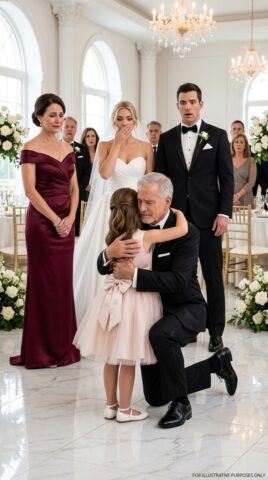
Martha looked at Lucas, then at Isabelle.
“Because most parents panic when their child is in pain like that,” she said. “Mr. Albright didn’t. He was terrified, I could see that, but he never let his daughter see it. He sat beside her bed all night. He held her hand. He sang to her. When she cried, he cried quietly where she couldn’t see him.”
Lucas bowed his head.
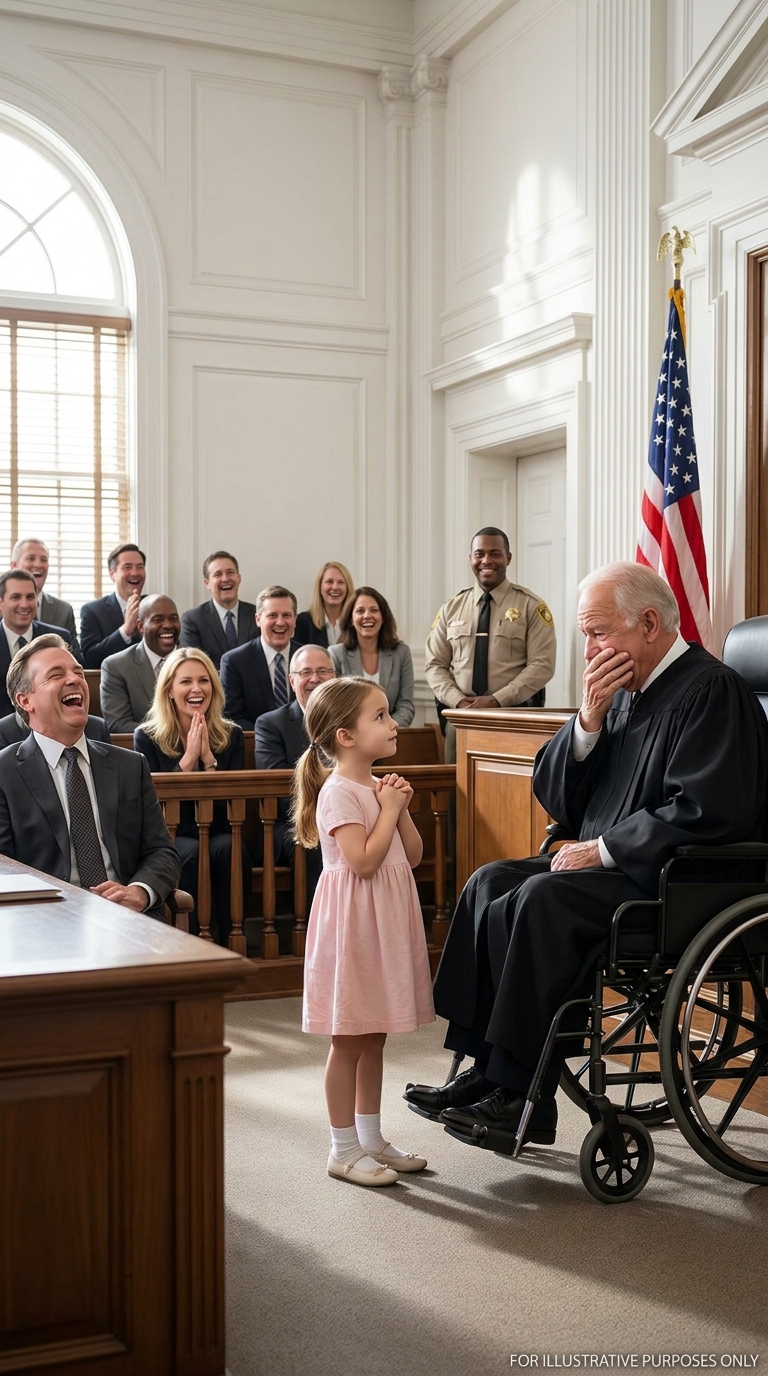
“Did he leave the pediatric wing at any time between midnight and six a.m.?”
“No,” Martha said. “I checked on them throughout the night. He did not leave.”
Nora turned to the bench. “Your Honor, the State alleges the transfers occurred between 2:13 a.m. and 3:02 a.m.”
Judge Harrison looked at Vale. “And at that time, according to the hospital’s admission records and this witness, Mr. Albright was with his critically ill daughter.”
Vale stood. “The State needs time to examine these records.”
“You should have examined them before asking for a prison sentence.”
The words landed like a slap.
Judge Harrison took off his glasses and set them on the bench.
“This court finds that serious questions exist regarding the integrity of the investigation and the prosecution of this matter. Sentencing is suspended. The guilty verdict is held pending review. Mr. Albright will be released to home confinement while a full evidentiary inquiry is conducted.”
Lucas covered his mouth.
Isabelle began to cry again, but this time she smiled through it.
Judge Harrison looked at her.
“No one will laugh at you in my courtroom again,” he said.
Outside the courthouse, reporters swarmed the steps like birds around spilled grain.
“Mr. Albright, did the State frame you?”
“Are you suing the city?”
“Isabelle, why did you say you could make the judge walk?”
Lucas kept his daughter tucked against his side and said only one thing.
“My daughter told the truth when adults refused to listen.”
That evening, Judge Harrison sat alone in his chambers long after everyone else had gone. Snow tapped against the dark window. The courthouse below him had emptied into silence.
On his desk lay the first pages of the hospital report.
On his screen sat a copy of Nora Lane’s ignored motion.
And beneath both was something that made his stomach turn cold.
An archived email from Andrew Vale to a police detective, sent three weeks before trial.
Do not include the hospital material in discovery unless defense forces the issue. Digital evidence is cleaner without noise.
Judge Harrison read the sentence again.
Cleaner without noise.
A child’s pain had been noise.
A father’s alibi had been noise.
Truth had been noise.
He opened a drawer he had not touched in years and removed a thick folder labeled Harrison accident file.
For seven years, he had accepted the story. A drunk driver. A wet road. A crash no one could prevent.
But the driver had disappeared after posting bail.
The vehicle had been crushed before independent inspection.
The highway camera nearest the crash had malfunctioned that night.
At the time, Harrison had been investigating a corruption pattern involving corporate money, political favors, and suspicious prosecutions.
At the time, he had been asking questions about Victory Capital.
His phone rang.
He stared at the caller ID.
Nora Lane.
When he answered, her voice was tight.
“Judge Harrison, I’m sorry to call your chambers directly, but Lucas received something at his apartment.”
“What?”
“A photo of Isabelle leaving the courthouse.”
A pause.
Then Nora added, “On the back, someone wrote, Tell the little miracle girl to stop believing.”
Judge Harrison’s hand tightened around the phone.
For years, he had believed his legs were the dead part of him.
Now he understood the truth.
It was his courage that had gone numb.
And a little girl had just forced it to wake up.
Part 2
Lucas Albright did not sleep that night.
He sat at the kitchen table of his small apartment in Oak Park with the lights off and a baseball bat across his knees, listening to the radiator hiss and the wind scrape ice against the windows.
Isabelle slept on the couch because she refused to be in a room where he could not see her. Her stuffed rabbit was tucked beneath one arm. Her hospital bracelet from months ago still lived in the drawer beside the silverware because she said throwing it away felt like tempting fate.
Every few minutes, Lucas checked the hallway through the peephole.
Every few minutes, he saw nothing.
That did not comfort him.
Fear had a way of becoming more terrifying when it had no face.
Nora Lane arrived just after midnight with a duffel bag, two coffees, and the expression of a woman who had stopped being surprised by how ugly the world could be.
“We need to leave,” she said.
Lucas opened the door wider. “Where?”
“Somewhere they won’t expect.”
“The police?”
Nora’s silence answered before she did.
“Not yet,” she said. “Judge Harrison has a court security officer he trusts. Paul Mendes. Former federal marshal. We go to him first.”
Lucas looked at Isabelle asleep on the couch.
“She stood in a courtroom today and saved my life,” he said. “Now they’re threatening her because of it.”
Nora’s voice softened. “That means they’re scared.”
“I don’t care if they’re scared. I care that they know where my daughter sleeps.”
Isabelle stirred.
“Daddy?”
Lucas immediately went to her. “Hey, sweetheart. We’re going for a ride.”
Her eyes widened. “Did they come?”
“No,” he said. “And they’re not going to.”
She sat up, trying to be brave faster than any child should have to.
“Are we going to Judge Harrison?”
Lucas glanced at Nora.
Nora nodded.
“Yes,” Lucas said. “We’re going to the judge.”
Isabelle rubbed her eyes. “Good.”
“Good?”
“He’ll do what’s right,” she said simply.
Lucas wished he could borrow even a handful of her certainty.
They drove through Chicago under a sky the color of steel. The city looked different after midnight, all glass towers and empty intersections, snow glowing beneath streetlights. Lucas sat in the back seat with Isabelle curled against him, one hand on her shoulder, the other gripping the strap of the duffel bag.
Nora drove.
No one spoke until Isabelle whispered, “Daddy, do you think Mom saw what happened today?”
Lucas swallowed hard.
His wife, Emily, had died four years earlier from a sudden aneurysm. One moment she had been packing Isabelle’s lunch for school. The next, she was on the kitchen floor, and the world had split into before and after.
“I think,” Lucas said carefully, “your mom would have told you to stop scaring grown men in courtrooms.”
Isabelle smiled faintly.
“Then she would have hugged me?”
“For a very long time.”
At the courthouse annex, Paul Mendes met them in a private garage. He was broad-shouldered, gray-haired, and calm in a way that made Lucas trust him against his will.
“You did the right thing coming here,” Mendes said.
“Did we?” Lucas asked. “Because the last time I trusted the system, I ended up in cuffs.”
Mendes did not argue.
“That system failed you,” he said. “Some of us are trying to find out who helped it fail.”
Upstairs, Judge Harrison waited in a conference room, not behind a bench, not elevated above anyone. Just a man in a wheelchair with a stack of files, a cold cup of coffee, and eyes that looked older than they had that morning.
When Isabelle entered, he lowered his voice.
“Miss Albright,” he said. “I owe you an apology.”
She blinked. “For what?”
“For almost not listening.”
She considered that. “You listened eventually.”
“That is a generous way to describe it.”
Lucas stepped forward. “Judge, with respect, why are we here?”
Harrison turned a folder toward him.
“Because your case is not an isolated miscarriage of justice. It appears to be one piece of something much larger.”
Nora leaned over the table. “Victory Capital?”
“Yes,” Harrison said. “Victory Capital, at least two senior police officials, possibly members of the State’s Attorney’s Office, and political protection reaching beyond Cook County.”
Lucas felt the room tilt.
“I was just a compliance analyst.”
“You were a good one,” Harrison said. “That may be why this happened.”
The judge opened another file.
“Three days before your arrest, you flagged irregular transactions tied to a client account called Bellweather Municipal Strategies. Do you remember that?”
Lucas frowned, searching through the wreckage of the past months.
“Yes. The deposits didn’t match the stated business activity. Money came in from shell vendors, moved through several accounts, then went out as consulting fees.”
“What did you do?”
“I reported it to my supervisor, Craig Bell.”
“And what did he say?”
“He told me it was a sensitive client. Said not every account fit neatly into compliance categories.” Lucas paused. “The next week, detectives were at my desk.”
Judge Harrison nodded grimly.
“They needed to discredit you before you understood what you had found.”
Isabelle stood beside her father’s chair, listening to adult words she should never have needed to understand.
“Like when kids lie first so nobody believes the person they hurt,” she said.
Everyone looked at her.
Lucas brushed his thumb over her knuckles. “Yeah, baby. Like that.”
Mendes placed a new document on the table.
“We found fifteen cases in five years with the same pattern. Employees, reporters, auditors, city contractors. Each one noticed something tied to Victory Capital or its partners. Each one was accused of a crime shortly after. Evidence appeared. Alibis got lost. Witnesses were never called.”
Nora’s face hardened. “How many went to prison?”
“Seven,” Mendes said. “Three took plea deals. Two lost custody of their kids. One died before appeal.”
Lucas closed his eyes.
He had spent months thinking his nightmare was personal. Now he understood it was machinery.
And he had almost been another body fed into it.
“What about Andrew Vale?” Nora asked.
Harrison’s expression darkened.
“Compromised. Possibly coerced. Possibly paid. We found correspondence suggesting he knew exculpatory evidence was being withheld.”
“Arrest him,” Lucas said.
“We tried,” Mendes answered. “He’s gone.”
The word hung in the room.
“Gone where?” Nora asked.
“Apartment empty. Phone off. Car found near the river.”
Isabelle gripped Lucas’s hand tighter.
The conference room door opened, and a young woman in a dark suit stepped inside. Her black hair was pulled into a neat bun, and a federal badge hung from her belt.
“Grace Park,” she said. “Assistant United States Attorney. Judge Harrison contacted my office earlier this evening.”
Lucas looked at Harrison, startled. “You brought in the feds?”
“I brought in someone with jurisdiction beyond the people trying to bury this,” Harrison said.
Grace set a tablet on the table.
“We’ve been watching Victory Capital for eighteen months,” she said. “Money laundering, bribery, fraud involving public contracts. The problem has always been witnesses disappearing, recanting, or becoming legally compromised before they could testify.”
“Legally compromised,” Lucas repeated bitterly. “That’s a clean phrase for destroyed.”
Grace did not flinch. “Yes, Mr. Albright. It is.”
For the next hour, the room filled with names.
Maurice Brandt, billionaire founder and CEO of Victory Capital.
Representative Victor Langford, whose campaign committees had received suspicious donations from shell companies tied to Victory.
Police Chief Oliver Mendoza, who supervised detectives in multiple questionable cases.
Andrew Vale, prosecutor, now missing.
Craig Bell, Lucas’s supervisor.
A network of polished men who attended charity galas, shook hands at ribbon cuttings, sat in front pews at church fundraisers, and smiled for cameras while ordinary people lost their freedom in courtrooms.
At 3:17 a.m., Mendes received a call.
His face changed as he listened.
When he hung up, he looked at Harrison.
“Nurse Martha Oliver is safe,” he said. “But two men tried to break into her house twenty minutes ago. She escaped through the back door and got to a neighbor.”
Lucas stood so suddenly his chair scraped the floor.
“They went after the nurse?”
Grace was already typing. “We’ll place her in protective custody.”
Isabelle’s face went pale. “Because she told the truth.”
Harrison looked at her.
“Yes,” he said. “Because she told the truth.”
“Then telling the truth is dangerous.”
The room fell silent.
Lucas knelt in front of his daughter. “Sometimes it is.”
Isabelle searched his face. “Then why do it?”
He had no easy answer. Not one that belonged in the ears of a child.
But Judge Harrison spoke.
“Because lies are dangerous too,” he said. “They just hurt people more slowly.”
Isabelle turned to him.
“Is that why you stopped walking?”
The question struck the room like thunder.
Lucas whispered, “Isabelle.”
But Harrison lifted a hand.
“No,” he said quietly. “It’s all right.”
He looked down at his motionless legs.
“I stopped walking because of an injury,” he said. “But I think I stopped living because I became afraid. After my accident, I told myself justice was about rules. Paperwork. Procedure. I stopped asking whether the paper in front of me was true.”
Isabelle stepped closer.
“But today you asked.”
“Yes.”
“Then maybe that’s how it starts.”
“What?”
“Walking.”
Harrison stared at her.
No one laughed this time.
By morning, the news of Lucas Albright’s suspended sentencing had spread across Chicago. The image of Isabelle standing in court was everywhere. Reporters called her the miracle girl, the courtroom angel, the child who stopped a conviction.
Lucas hated every nickname.
“She’s not a symbol,” he told Nora as they sat in a secured waiting room. “She’s a kid who still needs reminders to brush her teeth.”
Nora smiled sadly. “Sometimes the world turns people into symbols because it doesn’t want to admit it ignored them when they were just people.”
Before Lucas could answer, Grace Park entered.
“They found Andrew Vale,” she said.
Lucas knew from her face that it was bad.
“Where?”
“The river.”
Nora closed her eyes.
“Suicide?” Lucas asked.
“Staged,” Grace said. “The preliminary coroner’s report found bruising consistent with restraint. We also found a confession letter in his apartment taking responsibility for everything.”
“Convenient,” Nora said.
“Too convenient,” Grace replied. “Especially because twenty minutes ago, Andrew Vale’s personal attorney received a scheduled email. If Vale didn’t cancel it within twenty-four hours, it automatically sent.”
“What was in it?” Lucas asked.
Grace looked toward the closed door, where Isabelle was drawing with crayons under Mendes’s watch.
“Enough,” she said. “Recordings. Payment ledgers. Names. Instructions to frame you. Instructions to bury the hospital alibi. And a video.”
Nora exhaled.
“He knew they would kill him.”
“He was afraid they would,” Grace said. “There’s a difference, but not much.”
Judge Harrison insisted on watching the video privately before admitting it into any proceeding.
Lucas was not supposed to be there, but Harrison allowed it.
Andrew Vale appeared on screen in a wrinkled dress shirt, eyes red, hair disheveled. Behind him was a motel room wall.
“If this is being watched,” Vale said, “then I failed to get out.”
He laughed once, but it broke in the middle.
“My name is Andrew Vale. I am an Assistant State’s Attorney for Cook County, and I helped convict innocent people. Not because I believed they were guilty. Because I was paid, threatened, and eventually too ashamed to stop.”
Lucas felt Nora touch his arm.
Vale continued.
“Lucas Albright is innocent. His alibi was known. Hospital records were intentionally kept out of discovery. Detective Harris removed witness statements. I allowed it. Maurice Brandt approved the operation. Representative Victor Langford protected the company politically. Chief Oliver Mendoza made sure investigations went where they were supposed to go.”
Vale leaned closer to the camera.
“They will say I acted alone. I did not. They will say I killed myself. I will not. They will say the people we framed were criminals. They are not.”
His voice shook.
“To Lucas Albright, if you ever see this, I am sorry. That word is too small. It gives you nothing back. But I am sorry.”
Lucas looked away.
He had wanted to hate Andrew Vale cleanly.
The video made that harder.
Not impossible.
Just harder.
Vale swallowed.
“And to whoever finds this, don’t let fear do what it did to me. Fear makes cowards look practical. It makes evil look survivable. It is not. Tell the truth before it costs someone else everything.”
The video ended.
For a long moment, no one spoke.
Then Judge Harrison moved.
His hands gripped the arms of his wheelchair. His jaw clenched. Slowly, with a sound somewhere between pain and rage, he pushed himself upward.
“Harrison,” Grace said, startled.
His legs trembled beneath him.
Lucas stood frozen.
The judge rose one inch.
Then two.
Then he collapsed back into the chair, breathing hard, sweat shining on his forehead.
But he was smiling.
Not happily.
Fiercely.
“They took my legs,” he said. “Then I gave them my spine.”
No one knew what to say.
Harrison looked at Lucas.
“Tomorrow, we reopen your case in open court.”
Grace frowned. “Judge, strategically, a closed federal operation may be safer.”
“No,” Harrison said. “They have hidden behind closed doors for years. Tomorrow they come into the light.”
Lucas thought of Isabelle in the courtroom, small and shaking, refusing to sit down.
“What do you need from me?” he asked.
Harrison’s eyes burned.
“Courage,” he said. “And your daughter already taught us where to find it.”
Part 3
The next morning, the line outside the Cook County Criminal Courthouse stretched down the block.
Reporters stood shoulder to shoulder in the cold. News vans idled near the curb. Camera crews stamped their feet and blew into their hands. Everyone wanted to see the little girl who had stopped a sentencing and the judge who had ordered the most shocking corruption hearing Chicago had seen in a decade.
Lucas hated the attention.
Isabelle held his hand anyway.
She wore the same blue sweater with stars on the cuffs because she said it was lucky. Lucas had tried to convince her to stay in the secured room with Mendes, away from the cameras, away from the people who had threatened her.
She had looked at him with Emily’s stubborn eyes.
“Daddy, I started it,” she said. “I have to see it finish.”
“You’re eleven.”
“I was eleven yesterday too.”
He had no answer for that.
Inside the courtroom, every seat was taken. Federal agents stood along the walls. Court officers checked every bag twice. Nurse Martha Oliver sat near the front under protection, red glasses perched on her nose, angel necklace shining at her throat.
Nora Lane arranged her files at the defense table. Lucas sat beside her in a dark suit she had found through a church donation closet. It did not fit perfectly, but it was the first clothing he had worn in months that did not tell the world he was a prisoner.
Across the aisle sat men who looked nothing like criminals.
Maurice Brandt wore a charcoal suit that probably cost more than Lucas’s car. His silver hair was perfectly combed, his expression controlled, almost bored.
Representative Victor Langford sat beside him, smiling faintly at the press as though this were an unpleasant hearing before a triumphant campaign comeback.
Chief Oliver Mendoza stood near the prosecution side with two attorneys, his uniform decorated, his posture proud.
They looked untouchable.
Then the side door opened.
The courtroom rose.
Judge Daniel Harrison entered in his wheelchair.
For one brief second, Isabelle’s face fell.
She had believed he would walk in.
Lucas saw it and squeezed her hand.
But Harrison’s eyes found hers.
He gave the smallest nod.
Wait.
The bailiff called the court to session.
Harrison positioned himself behind the bench. He looked out over the room with a calm so heavy it seemed to press everyone into silence.
“Yesterday,” he began, “this court nearly sentenced an innocent man to prison.”
Not a murmur moved.
“That failure did not happen because of a single mistake. It did not happen because one document was misplaced or one witness was forgotten. It happened because people with power decided that truth was inconvenient.”
Maurice Brandt leaned toward his attorney and whispered.
Harrison’s gaze snapped to him.
“Mr. Brandt, you will have ample opportunity to speak.”
Brandt sat back.
Harrison continued.
“Today we are here to review the case of Lucas Albright. But we are also here because evidence has emerged suggesting his case was part of a coordinated criminal enterprise involving fabricated charges, suppressed evidence, bribery, and the destruction of innocent lives.”
Representative Langford stood. “Your Honor, I object to this inflammatory characterization. I am here voluntarily, and I will not be slandered for political theater.”
Harrison looked at him coldly.
“Sit down, Representative.”
Langford hesitated.
Then he sat.
Nora called the first witness.
Martha Oliver walked to the stand.
She testified again about the night Isabelle was admitted. She described Lucas holding his daughter’s hand. She described the coffee he forgot to drink. She described speaking to police, giving a statement, and never being contacted again.
Then Grace Park introduced the hospital security footage.
There was Lucas on screen at 2:18 a.m.
Then 2:41.
Then 3:05.
Every timestamp overlapped with the alleged transfers.
Lucas watched himself in grainy black and white, sitting beside Isabelle’s hospital bed, bent over her hand like prayer.
The room was silent.
Nora’s voice was steady.
“At the time my client was supposedly stealing money from a downtown office, he was forty minutes away in a children’s hospital, caring for his daughter.”
She turned.
“So who was at his desk?”
Grace called the next witness.
A young man in a gray sweater took the stand. He looked terrified.
“My name is Ethan Price,” he said. “I worked IT security at Victory Capital.”
Brandt’s attorney stood. “Your Honor, we object. Mr. Price is violating corporate confidentiality.”
Harrison’s voice was ice.
“Overruled.”
Ethan swallowed.
“Lucas Albright’s workstation was accessed with a cloned security token,” he said. “I discovered it two days after the transfers. When I reported it to my supervisor, I was told the matter had been handled. Then I was offered a severance package and reminded that my wife’s immigration paperwork was still pending.”
Gasps moved through the gallery.
Ethan looked at Lucas.
“I’m sorry,” he said. “I should have come forward.”
Lucas did not know what forgiveness was supposed to feel like in that moment. He only nodded.
Then came Teresa Foster, a former accountant at Victory Capital.
“I found shell vendors tied to municipal contracts,” she said. “A week after I reported it, I was accused of embezzling funds from a client account. I spent two years in prison. My husband divorced me while I was inside. My son stopped calling me Mom.”
Her voice cracked, but she did not stop.
Then Mark Neely, an investigative journalist.
“I was preparing a story about Victory Capital donations,” he said. “Police raided my apartment and claimed they found stolen financial records. My paper fired me. The records had been planted.”
Then a city contractor. Then a former auditor. Then a school board treasurer.
One after another, people stood and told the same story in different clothes.
They had noticed something.
They had asked questions.
Then the system had turned on them.
By noon, the courtroom no longer felt like a courtroom.
It felt like a dam cracking.
Finally, Grace Park stood.
“The United States Attorney’s Office submits into evidence a recorded statement from the late Andrew Vale.”
A ripple passed through the room.
Maurice Brandt’s polished calm finally faltered.
The video played on the courtroom screen.
Andrew Vale’s haunted face appeared.
He confessed.
He named names.
He described payments routed through consulting firms. He described meetings in private dining rooms. He described detectives planting evidence and prosecutors steering cases toward plea deals. He described Maurice Brandt approving Lucas Albright’s destruction after Lucas flagged Bellweather Municipal Strategies.
Brandt stood. “This is fabricated.”
The video continued.
Vale looked into the camera.
“If Maurice is watching this, he is already planning to say I acted alone. He always does. But I kept everything. Recordings. Transfers. Emails. He taught me that men like him survive because nobody keeps receipts. I kept receipts.”
Grace clicked to the next file.
Audio filled the courtroom.
Maurice Brandt’s voice, smooth and unmistakable, came through the speakers.
“Albright is a problem. Make him look dirty enough that nobody listens when he talks.”
Another voice. Chief Mendoza.
“We can put him at the center of the transfer. The digital trail will hold.”
Then Representative Langford.
“And if it doesn’t?”
Brandt again.
“Then Andrew makes it hold.”
The courtroom erupted.
Harrison slammed his gavel.
“Order.”
Chief Mendoza moved first.
His hand went toward his jacket.
Federal agents reacted instantly.
“Hands where we can see them!”
For one terrifying second, Lucas pulled Isabelle behind him, shielding her with his body.
Mendoza froze as three agents surrounded him.
“It’s a flash drive,” Mendoza snapped, though his face betrayed him.
An agent removed it from his inner pocket.
Grace Park looked at it, then at him.
“Thank you, Chief. We’ll add it to the collection.”
Mendoza’s mask broke.
“You think this ends with us?” he shouted. “You think you can clean this city with one hearing? There are judges, donors, commissioners, people in Washington. You pull this thread, the whole suit comes apart.”
Judge Harrison stared at him.
“Then let it come apart.”
The words silenced the room.
Harrison looked to Grace.
She nodded.
Federal agents stepped forward.
Maurice Brandt was arrested first. He protested until the cuffs clicked around his wrists, then went silent with the stunned disbelief of a man who had spent his life assuming metal was for other people.
Representative Langford shouted about lawyers, immunity, donors, consequences.
Chief Mendoza said nothing as he was led away.
Lucas watched them pass.
He expected triumph.
Instead, he felt grief.
For the years stolen from Teresa Foster. For the career stolen from Mark Neely. For the fatherhood nearly stolen from him. For Andrew Vale, who had chosen cowardice too many times and truth too late. For Isabelle, who had learned before middle school that powerful people could lie and call it law.
When the doors closed behind the arrested men, Judge Harrison did not immediately speak.
He looked down at his hands.
Then, slowly, he pushed his chair back from the bench.
A court officer stepped forward, but Harrison lifted one hand.
“No.”
Isabelle stopped breathing.
Harrison gripped the edge of the bench.
His shoulders shook.
His face twisted with pain.
One inch.
Then another.
The entire courtroom watched as Judge Daniel Harrison rose from his wheelchair.
Not gracefully.
Not easily.
Not like a movie miracle wrapped in music and light.
He rose like a man dragging himself out of a grave.
His legs trembled. His knuckles whitened. Sweat rolled down his temple. For a moment, it seemed he would fall.
Then Paul Mendes moved near him, not touching, only ready.
Harrison stood.
A sound moved through the courtroom that was not laughter this time.
It was a collective breath.
Isabelle began to cry.
Lucas whispered, “My God.”
Judge Harrison held himself upright behind the bench and looked at the room.
“Seven years ago,” he said, his voice rough, “I lost the ability to walk. But that was not the worst thing I lost.”
No one moved.
“I lost faith. In the system. In people. In myself. I told myself that if I followed procedure, I was still doing justice. But procedure without truth is only machinery. And machinery can crush the innocent without ever knowing their names.”
His eyes found Isabelle.
“Yesterday, a child stood where grown people were afraid to stand. She told me I could walk again if I did what was right. I thought she was speaking of magic. She was not.”
Isabelle wiped her face.
“She was speaking of the part of us that wakes up when we stop choosing comfort over courage.”
His legs shook harder, but he stayed standing.
“Lucas Albright, please rise.”
Lucas stood.
So did Isabelle.
Harrison looked at him.
“Mr. Albright, this court formally vacates the verdict against you. All charges are dismissed with prejudice. Your record will be cleared. The State will issue a formal apology, and this court will recommend full compensation for wrongful prosecution and confinement.”
Lucas’s mouth trembled.
He tried to speak, but nothing came out.
Harrison’s voice softened.
“I am sorry,” he said. “Not in the way institutions say sorry to close a file. I am sorry as a man who failed to listen soon enough.”
Lucas pressed his hand over his heart.
“Thank you, Your Honor.”
“No,” Harrison said. “Thank your daughter.”
Lucas turned to Isabelle.
She looked suddenly small under the weight of every eye in the room.
“I just wanted my daddy,” she whispered.
The simplicity of it broke people.
Nurse Martha cried openly. Nora Lane wiped her face and pretended she wasn’t. Even Grace Park looked down for a moment, blinking hard.
Harrison reached for an envelope on the bench.
“Isabelle Albright,” he said, “you reminded this court that justice is not a performance carried out by powerful adults. It is a promise owed to every person, including the smallest voice in the room.”
Isabelle looked up at her father.
Lucas nodded.
She stepped forward.
Harrison smiled.
“For extraordinary civic courage, this court awards you the Cook County Medal of Civic Honor.”
The courtroom stood.
This time, nobody laughed.
They applauded until Isabelle hid her face against Lucas’s jacket, embarrassed and overwhelmed.
Two months later, spring came slowly to Chicago.
Snow melted into gray gutters. Trees along the sidewalks began to show tiny green buds. The news cycle moved on, then returned, then widened as federal indictments spread through the city like cracks in old paint.
Victory Capital collapsed within weeks.
Maurice Brandt’s assets were frozen.
Representative Langford resigned before he could be expelled.
Chief Mendoza’s department became the center of a federal investigation.
Seven wrongfully convicted people were released. Three more had their records cleared. Families who had been told to move on learned that truth could arrive late and still matter.
Lucas received a settlement offer large enough to make Nora Lane stare at the page twice.
He did not celebrate the number.
He used part of it to pay medical bills, part to buy a small house with a yellow kitchen because Isabelle said yellow felt like mornings, and part to start the Emily Albright Justice Fund for families who could not afford investigators, expert witnesses, or the luxury of being believed.
On the day they moved in, Isabelle placed her mother’s framed photo on the mantel.
“Do you think she likes it?” she asked.
Lucas looked around at the boxes, the scratched hardwood floors, the sunlight falling across the empty living room.
“I think she loves it.”
A knock came at the door.
Lucas opened it and found Judge Harrison standing on the porch with a cane.
Standing.
Not perfectly. Not without effort. But standing.
Beside him was Paul Mendes, carrying a lemon pie from a bakery in Lincoln Park.
Isabelle screamed.
Not in fear.
In joy.
She ran across the room and stopped just short of throwing herself at the judge, suddenly remembering he was still a judge.
Harrison laughed.
It was the first time Lucas had heard him laugh.
A real laugh.
“You can hug me, Miss Albright,” he said. “I am off duty.”
She hugged him carefully.
“You’re walking.”
“I’m working on it.”
“I told you.”
“Yes,” he said. “You certainly did.”
They sat in the yellow kitchen and ate pie off paper plates because the dishes were still packed. Harrison told Isabelle he was stepping down from the bench temporarily to assist the federal review commission. Nora Lane had been appointed special counsel for wrongful conviction cases. Martha Oliver had become the most protected and most beloved nurse in Chicago.
Lucas listened, one hand wrapped around a mug of coffee he did not need, and felt something unfamiliar settle in his chest.
Not happiness exactly.
Something quieter.
Peace with scars.
Before Harrison left, he paused on the porch.
“Lucas,” he said, “there will be days when none of this feels like justice. The time you lost. The fear. What Isabelle endured. No verdict can erase that.”
Lucas looked through the window at his daughter, who was showing Mendes where she wanted to plant sunflowers.
“I know.”
“But what you build after matters too.”
Lucas nodded.
“I’m trying.”
Harrison followed his gaze.
“She changed a lot of lives.”
“She should have been playing soccer and worrying about math homework.”
“Yes,” Harrison said. “She should have.”
That truth sat between them.
Then Lucas said, “I used to think courage meant not being afraid.”
Harrison adjusted his grip on the cane.
“And now?”
“Now I think courage is being afraid and still telling the truth with your whole voice.”
Inside the house, Isabelle laughed at something Mendes said.
Lucas smiled.
Harrison stepped carefully down from the porch, one slow movement at a time.
At the bottom, he turned back.
“Mr. Albright.”
“Yes, Your Honor?”
Harrison’s eyes softened.
“Tell Isabelle something for me.”
“What?”
“Tell her I’m still walking.”
Lucas nodded.
When he went back inside, Isabelle was kneeling by a box labeled Mom’s Christmas things.
“Daddy,” she said, holding up an ornament Emily had painted years before. “Can we put this somewhere even though it’s not Christmas?”
Lucas took the ornament gently.
It was a tiny wooden star.
“Yeah,” he said. “I think stars are allowed all year.”
He hung it in the kitchen window, where afternoon light caught the gold paint and scattered it across the walls.
Isabelle leaned against him.
“Daddy?”
“Yeah, baby?”
“Are we safe now?”
Lucas looked at the star, at the yellow kitchen, at the boxes waiting to be unpacked, at the world that had broken and somehow not ended.
He would not lie to her. Not after everything.
“We’re safer,” he said. “And we’re together.”
She nodded, accepting the difference.
After a while, she whispered, “When everyone laughed, I almost sat down.”
Lucas closed his eyes.
“What made you stay standing?”
She thought about it.
“Mom,” she said. “And you. And Judge Harrison’s face.”
“His face?”
“He looked like someone who forgot he was good.”
Lucas felt tears rise, but he let them come.
Isabelle looked up at him.
“Do grown-ups forget that a lot?”
“Sometimes.”
“Then kids have to remind them?”
He kissed the top of her head.
“Sometimes they do.”
Outside, Chicago moved on. Cars passed. Dogs barked. A neighbor dragged a trash can to the curb. Somewhere downtown, powerful people hired lawyers and denied everything. Somewhere else, innocent people opened envelopes saying their names had finally been cleared.
And in a small yellow kitchen, a father and daughter stood beneath a wooden star, alive, free, and no longer silent.
The world had laughed at Isabelle Albright.
The court had mocked her trembling voice.
Powerful men had threatened her, dismissed her, and tried to bury the truth she carried.
But she had stood anyway.
And because one little girl refused to sit down, her father came home, a judge remembered his soul, and a city learned that justice can begin with the smallest voice in the room saying the one thing everyone else is afraid to say.
Do what’s right.