PART 2
Ronan came home at 4:17 in the morning with blood on his cuff and applause still echoing in his head.
Not much blood. Just a smear near the wrist. A dock supervisor had decided, after too many drinks and too much encouragement from New York men, that he could challenge a Whitlock shipment. Ronan had handled it personally, because some lessons traveled better when delivered by the man whose name people feared.
He expected the penthouse to be quiet.
He expected Ava to be asleep, turned away from his side of the bed, her breathing soft and controlled. He expected the familiar guilt he always felt when he saw her there and did not know how to cross the distance between them. He expected to undress in the dark, place his watch on the tray, and tell himself he would speak to her tomorrow.
Tomorrow had become the most common lie in his marriage.
The bedroom door stood open.
Ava’s side of the bed was untouched.
Her gown from the gala lay on the floor like shed skin. Her jewelry was gone from the vanity. One drawer was half open. The room still smelled faintly of her vanilla lotion, but the warmth of her was missing.
Ronan stopped at the doorway.
Men like him did not panic first.
They assessed.
He scanned the room once, then again. Bathroom empty. Closet door open. No suitcase missing, because she knew his staff would notice. Her robe gone. Her old winter coat gone. Her favorite boots gone.
Then he saw the pillow.
His pillow.
Her wedding ring lay in the center of it.
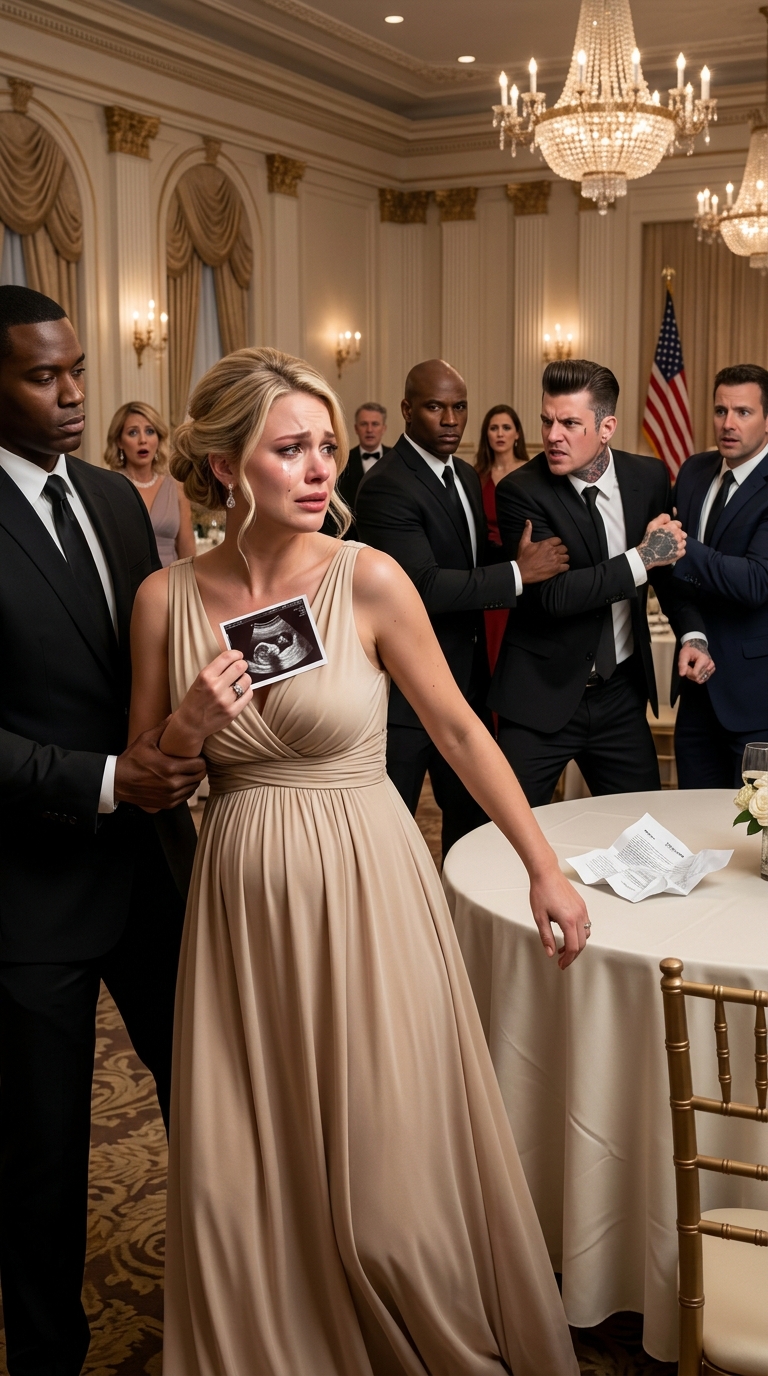
Beside it sat a folded letter, a hospital envelope, a black-and-white ultrasound photograph, and a flash drive with white tape across it.
On the tape, in Ava’s handwriting, were four words.
Listen before you blame me.
Ronan crossed the room slowly.
He picked up the photograph first.
For a heartbeat, he did not understand what he was seeing. Then the grainy image sharpened in his mind: a small profile, a curved spine, one tiny arm floating in darkness.
On the back, Ava had written:
Our daughter. Twenty-four weeks. I tried.
Ronan sat down because his legs had forgotten their purpose.
A daughter.
Ava was pregnant.
No—not was.
Is.
His hand tightened around the photograph until he realized he might crease it. He placed it carefully on the bed, as if the paper itself could feel pain.
Then he opened the letter.
Ronan,
I used to think your silence meant you were tired. Then I thought it meant you were busy. Tonight, I finally understood. Your silence was your answer.
I am not leaving because of one cruel sentence. I am leaving because that sentence was the only honest thing you have said to me in months.
I am pregnant. We are having a daughter.
I tried to tell you. I tried at dinner, at breakfast, in your office, in the bedroom, and in every small moment where I hoped you would remember I was your wife before I became another responsibility on your schedule.
A wife should not have to fight through phone calls, locked doors, assistants, and your mother just to tell her husband he is going to be a father.
There is more. My heart is not handling the pregnancy well. The doctors are worried. I was worried too. I wanted to be afraid beside you. I wanted your hand in mine. I wanted you in the hospital chair when they said words like risk and emergency and survival.
Instead, I learned how to nod alone.
Your mother knew. She kept the sonogram from you. She told me I would weaken you. Maybe she did not have to convince you. Maybe you already believed it.
I hope our daughter grows up knowing love that does not ask her to disappear.
Ava.
Not Mrs. Whitlock.
Not your wife.
Just Ava.
Ronan read the letter once.
Then again.
Then a third time, slower, as if repetition might create a different ending.
It did not.
He opened the hospital envelope. Medical reports spilled across the bed. Specialist referrals. Test results. Notes from Dr. Harper Lane at Northwestern Memorial. Words circled in red seemed to rise from the paper and strike him.
Maternal cardiac strain.
High-risk delivery.
Emergency plan advised.
Stress reduction urgent.
Spousal support strongly recommended.
Ronan had stared down guns without blinking. He had watched enemies beg for mercy. He had heard men cry, pray, offer money, names, secrets. Nothing had ever entered him like those clean medical words.
Spousal support strongly recommended.
That was how hospitals wrote abandonment when they wanted it to sound polite.
He called Ava.
Voicemail.
He called again.
Voicemail.
Again.
Voicemail.
Her recorded voice filled the room.
“Hi, it’s Ava. Leave a message and I’ll call you back when I can.”
When I can.
Ronan had ignored that voice too many times.
Now he would have given half of Chicago to hear it answer.
The flash drive waited.
He plugged it into his laptop.
Static hissed.
Then Vivian Whitlock’s voice filled the room, calm and elegant.
“Women like you ruin men like my son.”
Ava’s voice followed, quiet but shaking. “I’m pregnant, Vivian. He needs to know.”
“He needs to lead.”
“He is my husband.”
“And he is my son. I know what destroys men like him.”
“You hid the sonogram.”
“I protected him from distraction.”
“Our baby is not a distraction.”
“To you, perhaps not. To Ronan, everything that softens judgment is a threat.”
Ava’s breath hitched on the recording.
“I could die.”
A long pause.
Then Vivian said softly, “Then make peace with God before making demands of my son.”
Ronan ripped the flash drive from the laptop so hard the port cracked.
The room went silent.
For one moment, he did not breathe.
If anyone else had said those words to Ava, they would have already been dead in his mind.
But this was his mother.
The woman who raised him after his father was murdered in an alley behind a restaurant. The woman who taught him never to cry because grief made predators hungry. The woman who turned fear into doctrine, power into religion, and love into weakness.
Ronan walked into the bathroom and gripped the marble sink.
His reflection stared back: tuxedo wrinkled, knuckles bruised, blood on his cuff, eyes hollow.
For the first time in his life, Chicago’s most feared man looked at himself and saw what Ava had been running from.
Not an empire.
A cage.
PART 3
Vivian Whitlock lived in a Gold Coast mansion with black iron gates, white columns, and security cameras hidden among winter ivy.
Ronan arrived before sunrise.
The staff saw his face and stepped aside without a word.
He found his mother in the breakfast room, dressed already in charcoal silk, pearls at her throat, tea cooling beside her hand. She looked less like a woman who had slept than a queen waiting for news from a war she had started.
“You found her performance,” Vivian said.
Ronan placed the sonogram on the table between them.
“You knew.”
Vivian glanced down at the image. A tiny flicker passed across her face, too quick for most men to see.
Ronan was not most men.
“I knew she was becoming unstable,” Vivian replied.
“You knew she was pregnant.”
“I knew she intended to use pregnancy to control you.”
Ronan leaned forward, palms flat on the table.
“That is my child.”
“And this is your family.”
“No,” he said. “This is your altar. You have been sacrificing everyone on it for years and calling it survival.”
Vivian’s mouth tightened.
“You sound like your father before mercy got him killed.”
“My father died because men betrayed him.”
“My husband died because he hesitated.”
There it was.
The story Vivian had carved into him since childhood. His father had loved too deeply. Trusted too easily. Softened at the wrong time. Mercy had opened the door to death.
Ronan had built his entire life around that warning.
Now, with Ava’s sonogram on the table, he wondered how much of himself had been shaped by grief twisted into poison.
“You made me afraid of loving my wife,” he said.
“I made you strong enough to survive.”
“You made me empty.”
Vivian stood so fast her chair scraped the floor.
“Do not confuse heartbreak with clarity. She left you in the night. She took your child and ran. That is betrayal.”
Ronan looked at the woman who had once been the center of his universe.
“She left because I gave her no safe way to stay.”
“That is her version.”
“I heard yours.”
Vivian went still.
Ronan took out his phone and called his attorney.
“Edward,” he said when the call connected. “Effective immediately, remove Vivian Whitlock from all foundation authority, all trust access, all estate voting rights, and all security clearance connected to my properties.”
Vivian’s hand tightened around the back of her chair.
“No delays,” Ronan continued. “No courtesy calls. Send the documents within the hour.”
He ended the call.
Then he called his head of security.
“Vivian Whitlock is no longer authorized at my penthouse, the docks, the clubs, or any Whitlock office. Anyone who lets her in answers to me.”
Vivian laughed once, sharp and cold.
“You are burning your own house because a fragile woman cried.”
Ronan put the sonogram back into his coat pocket.
“No,” he said. “I am opening the windows because I finally smell the smoke.”
For the first time in his life, Vivian looked at him as if she did not know the man standing before her.
At the doorway, her voice followed him.
“If you chase her, Chicago will see weakness.”
Ronan stopped but did not turn.
“Let it look closely.”
By eight in the morning, his inner circle knew something had broken.
Grant Callahan, Ronan’s chief of security, stood in the private conference room beneath Whitlock Security’s riverfront office. Former Marine. Scar through one eyebrow. Loyal, practical, not sentimental.
When Ronan entered, Grant took one look at him and said, “Tell me who we’re killing.”
Ronan opened his hand.
Ava’s ring lay in his palm.
Grant’s expression changed.
“She’s gone?”
Ronan nodded.
“I’ll put men on airports, train stations, clinics, hotels, highway exits—”
“No.”
Grant stopped.
“No guns near her,” Ronan said. “No grabbing her. No following close. No dragging her into a car because you think that solves my problem.”
“She’s carrying your child.”
“She is not cargo.”
Grant did not answer, because he had been thinking like every man Ronan had trained.
Property. Risk. Recovery.
Ronan placed the medical papers on the table.
“She used her maiden name. Ava Bennett. Paid cash at Union Station. Phone shut off before sunrise.”
Grant studied the reports.
“She planned it well.”
“She had to.”
That sentence silenced the room.
For two days, Ronan did not sleep.
The search moved through small traces: a pharmacy outside Milwaukee where Ava bought prenatal vitamins; a roadside clinic that requested records from Northwestern; a motel clerk who remembered a pale pregnant woman paying cash and asking about buses north; a diner receipt from a little town on the Michigan lakeshore.
Harbor Springs.
Small enough for strangers to be noticed. Close enough to a hospital in Petoskey if something went wrong. Far enough from Chicago to feel like escape.
Ronan stared at the name written on a yellow legal pad.
Behind the glass walls of his office, the city moved under a gray sky. Trucks crossed bridges. Barges cut through the river. His empire breathed below him, restless and waiting for its king to return.
His phone buzzed.
Men needed orders.
Rivals were testing docks.
Vivian’s allies were calling.
Ronan picked up his coat.
Grant waited near the elevator.
“I’m driving,” Grant said.
Ronan did not argue.
As the elevator descended, Ronan touched Ava’s ring in his pocket.
He was not going to Harbor Springs to bring his wife back.
He had lost the right to demand that.
He was going to stand close enough to help if she let him—and far enough away to let her breathe if she did not.
For Ronan Whitlock, that would be the hardest thing he had ever done.
PART 4
Harbor Springs did not look like a place built to hide from a man like Ronan Whitlock.
It looked too honest.
Main Street sloped toward the water, lined with small shops, a post office, a hardware store, a bakery with fogged windows, and a diner with a faded blue sign that read Maggie’s. Fishing boats rocked gently in the marina. American flags snapped from porches in the cold lake wind. People wore boots, flannel, and expressions that said they knew every stranger before he opened his mouth.
Grant slowed the black SUV near the town square.
A man carrying lumber stopped walking.
A woman with a golden retriever stared for three full seconds.
An old veteran sitting outside the diner looked at Ronan’s suit, then at the SUV, then back at Ronan with open disgust.
“Subtle,” Grant muttered.
Ronan did not answer.
His eyes had fixed on a small family clinic across the street from the pharmacy.
A woman stepped out slowly, one hand on the railing, the other resting low on her stomach.
Ronan stopped breathing.
Ava.
She wore black leggings, a loose gray sweater, and a cream scarf wrapped around her neck. Her hair was pulled back carelessly, not styled, not polished, not arranged for anyone’s approval. She looked thinner than she had in Chicago. Paler. Tired in a way he had refused to see when she was standing beside him beneath chandeliers.
But she was alive.
She lifted her face.
Their eyes met across the street.
For one second, the whole town disappeared.
Then fear flashed across her face.
She gripped the railing.
That small movement stopped Ronan harder than a gun.
A man stepped out behind her, tall, broad-shouldered, mid-forties, with tired eyes and a stethoscope hanging around his neck. He moved half in front of Ava.
“Ma’am,” he said, “do you know this man?”
Ava’s lips parted.
Ronan wanted to say her name. He wanted to cross the street, pull her into his arms, apologize until language failed him.
He did none of it.
Ava swallowed.
“He’s my husband.”
The doctor looked at Ronan with instant judgment.
Ronan had been hated by dangerous men, dying men, federal agents, and rivals with blood in their mouths. None of them had ever made him feel as small as that country doctor did with one glance.
Grant opened his door.
Ronan lifted one hand without looking back.
“Stay by the car.”
Grant froze.
Ava saw it.
So did the doctor.
Ronan crossed the street slowly, palms open at his sides.
“Ava.”
She flinched at her own name.
He stopped.
“I’m not here to take you.”
Her eyes shone, but her voice was steady.
“You don’t know how not to take.”
The words landed clean.
There was no anger in them. Anger would have been easier. This was knowledge. This was a woman telling him what his love had felt like from inside the cage.
The doctor looked at Ava.
“Do you want him gone?”
Ronan looked at her too and forced himself to be ready for the answer.
Ava stared at him across the damp sidewalk.
Finally, she said, “Not yet.”
Inside the clinic, the office smelled like coffee, antiseptic, and raincoats. Ava chose the chair farthest from Ronan. He waited until she sat, then took the seat across from her with the desk between them.
The doctor remained beside her.
“I’m Dr. Samuel Reed,” he said.
“Ronan Whitlock.”
“I know.”
The door opened, and a woman in a sheriff’s jacket stepped in. Late forties, sharp eyes, brown hair tied at the back of her neck.
“Sheriff Claire Donovan,” she said. “I got a call saying a black SUV rolled into town looking expensive enough to cause trouble.”
Ava looked embarrassed.
Ronan did not.
Sheriff Donovan pointed one finger at him.
“Mrs. Whitlock is here because she chose to be. She leaves when she chooses to leave. If she tells you to go, you go.”
Ronan nodded.
“Yes.”
The sheriff narrowed her eyes, as if his obedience bothered her.
Ava watched him like she did not trust the shape of it.
That was fair.
Ronan removed a folder from his coat slowly, aware of the sheriff’s hand near her weapon.
“I saw Dr. Lane,” he said. “She gave me names of cardiac specialists. Chicago, Milwaukee, Cleveland. I can arrange any of them. I can pay for equipment here. I can set up emergency transport. I can do it without making you leave this town.”
Ava’s hand curved over her stomach.
“You came with solutions.”
“I came with money,” Ronan said quietly. “I’m trying to learn the difference.”
Silence filled the room.
Ava looked away first.
Ronan pushed nothing toward her.
“I created a medical trust in your name. No conditions. No access from my side.”
“You expect me to believe that?”
“No.”
“Then why say it?”
“Because it is true whether you believe it today or not.”
Her mouth trembled once.
“You found out I was pregnant and suddenly you know how to be honest.”
Ronan lowered his gaze.
“I found out you were pregnant and realized I had become the last person you could tell.”
That one hurt her. He saw it.
Good, he thought. Let truth hurt me too.
Ava leaned forward slightly.
“Do you understand what it felt like to sit in hospital rooms alone and hear words like cardiac failure while your name was on every emergency form and you were not in the chair beside me?”
Ronan’s throat tightened.
“No.”
Her eyes flashed.
“No,” he repeated, voice rough. “I can imagine it. I can hate myself for it. But I do not get to claim I understand pain I caused and did not share.”
For the first time, Ava looked at him as if she had heard something real.
It did not heal anything.
But it landed.
Then she gave him rules.
“You do not stay with me.”
“Yes.”
“You do not put guards outside my door.”
“Yes.”
“You do not speak to my doctor unless I am present.”
“Yes.”
“You do not contact your mother.”
“I already cut her off.”
Ava’s face changed, complicated and wounded.
“I did not ask you to do that.”
“I know.”
“Do not make it my debt.”
“I won’t.”
She inhaled carefully.
“You do not ask me to forgive you. Not when I am sick. Not when you are scared. Not in front of other people. Not because guilt is eating you alive.”
Ronan nodded.
“I understand.”
“No,” Ava said. “You don’t. But you can obey it anyway.”
For the first time in days, Ronan almost smiled.
Not from happiness.
From recognition.
“Yes,” he said. “I can.”
PART 5
Ronan rented the smallest room at the Harbor Light Inn.
He did not buy the inn, though the old instinct rose immediately when the clerk said the heater was unreliable and the lake-facing room was already taken. He handed over his credit card, took the brass key, and walked upstairs without comment.
The room had a faded quilt, a crooked painting of sailboats, a radiator that hissed angrily, and a window facing the marina. It was the kind of room he would once have considered unacceptable for a driver.
Now it felt appropriate.
Grant stood in the doorway, looking around.
“You sure you don’t want to purchase civilization while we’re here?”
“Go back to Chicago,” Ronan said.
“No.”
“That was not a request.”
“Good. I’m tired of taking those.”
Ronan turned.
Grant’s face was flat, but concern sat beneath it.
“You’re in a town with one sheriff, a doctor who hates you, a diner woman who may poison you, and a wife who doesn’t want you within ten feet of her. Meanwhile, Chicago is being held together by duct tape, fear, and men who are starting to wonder if you still have teeth.”
Ronan looked out the window.
“She was alone because every man around me learned my priorities too well.”
Grant said nothing.
“So learn new ones,” Ronan finished.
Grant stayed until morning.
Then Chicago called him back.
Over the next week, Ronan learned how little power mattered in Harbor Springs.
The pharmacist asked for paperwork and did not care whose name was on the credit card.
The hardware store owner refused to open late because Ronan needed clinic supplies delivered.
Sheriff Donovan ignored two of his calls and then texted one sentence:
If it is not a medical emergency, learn patience.
Maggie Fowler, the diner owner who had given Ava the apartment above the restaurant, treated Ronan like a dog that might bite if fed too quickly.
The first time he entered her diner, conversations died.
Maggie came out from behind the counter carrying a coffee pot.
“No,” she said.
Ronan paused.
“I haven’t said anything.”
“You were going to.”
“I would like dinner.”
“This is a diner. Try again.”
Ronan glanced toward the stairs in the back.
Maggie’s eyes hardened.
“She’s upstairs resting. You don’t go up. You don’t ask me to carry messages. You don’t stare at the ceiling like longing makes you noble.”
Ronan looked down.
“Yes, ma’am.”
Maggie snorted.
“Chicago men get polite when they know they’re losing.”
She served him fish chowder he did not order and coffee strong enough to remove paint. He ate every bite.
Above him, the floor creaked once.
His whole body reacted.
Ava was there. Safe, or safer than she had been in his penthouse. Breathing. Carrying her daughter.
Her daughter first.
He closed his eyes.
A few days later, Dr. Reed allowed Ronan into a medical planning meeting because Ava allowed it.
She sat in a blue sweater with a blanket over her knees. Her face was pale, but her eyes were clear. Ronan took the chair nearest the door.
Dr. Reed explained that Ava’s blood pressure was unstable. Her heart rhythm needed monitoring. The safest plan would involve a cardiac team in Traverse City or Chicago, but stress and travel both carried risks. An emergency delivery could become necessary.
Ronan listened without interrupting.
When the doctor mentioned transport access, Ronan reached for his phone automatically.
Ava looked at his hand.
He stopped.
Then he asked, “May I make a call if Dr. Reed thinks it helps?”
The room shifted around the question.
Permission.
Dr. Reed nodded. “It helps.”
Ava looked down at her hands.
“Yes.”
Ronan stepped into the hallway and made the call. His voice became precise, calm, powerful—but not cruel. He arranged air transport, hospital coordination, privacy protection, and payment without delay.
When he returned, Ava was watching him.
“What?” he asked softly.
“You still sound like him.”
Ronan did not pretend not to understand.
“I know.”
“Does it feel good?”
He considered lying.
“Yes.”
Her face closed.
“And that scares me now,” he added.
She looked back at him.
“Good.”
Later that week, Ava let him attend an ultrasound.
She did not invite him herself. Dr. Reed stepped into the waiting room and said, “She says you can come in if you stay quiet.”
Ronan stood too fast, then forced himself to slow down.
The exam room was dim. Rain ran down the window in thin silver lines. Ava lay on the table, sweater lifted just enough to reveal the curve of her stomach. Her jaw tightened when Ronan entered.
He stayed near the wall.
The monitor hummed.
A grainy image appeared.
At first, he could not understand the shapes.
Then a tiny hand opened and closed on the screen.
Ronan’s chest broke open.
“There she is,” Dr. Reed said.
Ava’s eyes filled.
Ronan whispered, “She’s real.”
Ava did not look at him.
“She was real when you didn’t know.”
He closed his eyes.
“I know.”
No defense. No explanation. No speech about being busy, manipulated, powerful, damaged, or afraid.
Just two words.
The baby moved.
Ava inhaled sharply.
Ronan stepped forward on instinct, then stopped himself.
“Are you okay?”
“Yes.”
After a pause, she added, “She kicks hard when I’m upset.”
Ronan swallowed.
“I’m sorry.”
Ava looked at the screen.
“Don’t apologize to me in here. Not while she’s listening.”
His throat tightened.
“All right.”
So he stood in silence and watched his daughter move in the dark.
That night, after Ava went back upstairs over the diner, Ronan walked to the harbor and sat on a bench far enough away that she would not feel watched.
One window above Maggie’s glowed.
Ava’s window.
He did not cross toward it.
He did not call.
He simply sat there under the cold Michigan sky, holding only what had been freely given.
Near midnight, the diner door opened.
Ava stepped outside in a coat over her night clothes, one hand pressed to her chest.
Ronan stood.
“Are you in pain?”
“Yes.”
His whole body wanted to move, command, lift, carry, control.
He held still.
“Do you want me to call Dr. Reed?”
Ava nodded.
Ronan made the call with a steady voice.
When he hung up, he asked, “Can I stand closer?”
The question hurt her. He saw it.
Then she nodded again.
He crossed the distance and stopped beside her without touching.
Rain began to fall.
Ava looked at his hand.
Then she reached for it.
Ronan let her fingers close around his.
He did not tighten his grip.
He did not pull her close.
He simply stood there holding only what she had chosen to give.
PART 6
The crisis came two weeks before Ava’s scheduled transfer.
It happened on a Sunday morning when the lake was bright, the church bells were ringing, and Ronan was standing behind the diner counter trying to repair Maggie’s espresso machine under strict supervision.
“You’re forcing it,” Ava said from the booth near the window.
Ronan immediately removed his hands.
Maggie, passing behind him with plates, said, “Progress.”
Ava smiled.
It was small, quick, almost private.
Ronan went still for half a second, the way he always did when her happiness caught him unprepared.
Then Ava’s smile vanished.
Her hand flew to her chest.
The cup beside her tipped over, tea spreading across the table.
Ronan moved, but Maggie was closer.
“Ava?”
Ava tried to answer. No sound came.
Her face drained of color.
Ronan stopped three feet away from her.
Every instinct screamed at him to grab her, lift her, command the room into obedience. Instead, he forced out one question.
“Ava, do you want my help?”
Her eyes found his.
Fear filled them.
Then she nodded.
Ronan caught her before she slid from the booth.
The diner erupted.
Maggie called Dr. Reed. Sheriff Donovan cleared the room. Someone brought towels. Someone else opened the door for air. Ronan held Ava carefully, one arm behind her shoulders, one hand supporting her head, terrified of his own strength.
“Stay with me,” he whispered.
Ava’s fingers clutched his shirt.
“The baby,” she gasped.
“I know. I know.”
“No.” Her eyes burned into his. “Promise me.”
Ronan’s blood went cold.
“Ava—”
“Promise me,” she breathed. “If it’s me or her—”
“No.”
“Ronan.”
“No.”
For the first time since finding her, his control cracked.
“I lost you once because I thought love meant deciding for you. Do not ask me to survive by choosing without you.”
Tears slipped from the corners of her eyes.
Dr. Reed arrived with a medical bag and one look at Ava changed everything.
“We move now.”
The air transport Ronan had arranged landed in a field outside town twelve minutes later.
He did not shout. He did not threaten. He did not tell anyone who he was. He carried Ava only when she asked him to. He climbed into the helicopter only after Dr. Reed looked at Ava and she nodded.
At the hospital in Traverse City, the world became white lights, clipped voices, monitors, forms, consent, blood pressure numbers, a baby’s heartbeat racing like tiny thunder.
Ava was rushed into a cardiac maternity unit.
Ronan stood outside the operating room doors in a borrowed blue gown, hands empty and shaking.
Grant arrived from Chicago before noon, breathless, coat open, face grim.
“Ronan.”
Ronan did not look at him.
“Not now.”
“There’s trouble in Chicago.”
“Not now.”
“Vivian moved.”
That made Ronan turn.
Grant held out a phone.
Vivian had contacted board members, old allies, men connected to New York, men who had waited years to see Ronan distracted. The story spreading through Chicago was simple: Ronan had abandoned control for a runaway wife. The king was weak. The kingdom was open.
Ronan stared at the phone.
Once, that would have pulled him back instantly.
Once, he would have left Ava with doctors and flown home to remind Chicago why it feared him.
The operating room doors opened.
A nurse stepped out.
“Mr. Whitlock?”
Ronan dropped the phone into Grant’s hand.
“Handle it.”
Grant stared.
“Handle Chicago?”
Ronan’s eyes stayed on the nurse.
“Yes.”
Something changed in Grant’s face. Respect, maybe. Or understanding arriving late.
He nodded once.
Then Ronan followed the nurse.
Ava was awake but fading, pale against the hospital sheets, wires crossing her body, oxygen beneath her nose. Doctors moved around her. Dr. Reed stood near the head of the bed, speaking calmly.
“They need to deliver,” he told Ronan. “Now.”
Ava turned her head.
“Ronan.”
He went to her side.
This time, when she reached for him, he held her hand.
Not too tight.
Never too tight.
“I’m here,” he said.
“You always say that like it can fix everything.”
“No.” His voice broke. “I’m saying it because this time it’s true.”
The surgery began in a blur of motion and sound.
Ronan kept his eyes on Ava’s face. When her breathing hitched, he breathed with her. When fear widened her eyes, he lowered his forehead to her hand.
“You are not weak,” he whispered. “You were never weak. You survived me. You survived my house. You carried our daughter through a war I refused to see.”
A tear slid into Ava’s hair.
“I should have protected you.”
Her voice was faint.
“No. You should have loved me right.”
The words destroyed him.
“Yes,” he said. “I should have.”
Then a baby cried.
Small.
Fierce.
Alive.
The room changed.
A nurse lifted a tiny red-faced girl into the light.
Ava sobbed once, weak and broken with relief.
Ronan could not move.
His daughter screamed like she had arrived furious at everyone for being late.
“Congratulations,” someone said. “She’s here.”
Ava turned her head toward the sound.
“Hope,” she whispered.
Ronan looked at her.
“What?”
“Her name,” Ava said, tears on her face. “Hope.”
He nodded, unable to speak.
The nurse placed the baby near Ava for one brief, precious moment. Hope’s tiny cheek brushed her mother’s skin. Ava closed her eyes.
Then the monitors changed.
A sharp alarm split the room.
Doctors moved fast.
Ronan was pulled back.
Ava’s hand slipped from his.
“No,” he said.
No one listened.
For the next seven minutes, Ronan Whitlock learned what true powerlessness was.
Not being challenged.
Not being betrayed.
Not losing territory.
Powerlessness was watching the woman you loved disappear beneath hospital lights while all your money, fear, violence, and reputation stood useless in your hands.
He prayed for the first time since childhood.
Not like a king.
Like a beggar.
PART 7
Ava lived.
Barely.
For three days, Ronan existed in the space between machines and miracles.
Hope stayed in the neonatal unit, small but strong, her tiny fists curled like she was ready to fight the world that had rushed her arrival. Ava remained in cardiac intensive care, drifting in and out, sometimes aware, sometimes too exhausted to speak.
Ronan did not leave the hospital.
He slept in chairs. He drank terrible coffee. He signed forms only after reading them aloud to Ava when she was conscious. He asked permission from nurses, from doctors, from Ava herself. It became almost painful to watch him learn humility one small sentence at a time.
May I sit here?
Do you want water?
Should I call Maggie?
Can I hold Hope?
The first time Ava watched him hold their daughter, something in her face softened and broke at once.
Ronan stood near the window, Hope tucked against his chest, one enormous hand supporting her head with almost terrified gentleness. He looked like a man holding a universe he did not deserve.
“She’s so small,” he whispered.
Ava’s voice was weak.
“She’s not weak.”
Ronan looked at her.
“No,” he said. “She’s not.”
A week later, Vivian came.
Not into the room.
She made it as far as the hospital corridor, dressed in black, pearls at her throat, two attorneys behind her and old authority in her spine.
Sheriff Donovan happened to be visiting with Maggie.
Grant stood outside Ava’s room.
Ronan stepped into the hallway.
Vivian looked past him toward the door.
“I want to see my granddaughter.”
Ronan’s face did not change.
“No.”
Her eyes hardened.
“You would deny her blood?”
“I am protecting her from poison.”
Vivian’s lips parted slightly.
Then she looked at him with something close to grief.
“You have become her servant.”
Ronan glanced through the glass panel at Ava, pale but alive, sleeping with one hand near Hope’s blanket.
“No,” he said. “I have become her husband. Too late, maybe. But finally.”
Vivian’s voice dropped.
“You will lose Chicago.”
“I already lost what mattered.”
“And if your enemies come?”
Ronan turned back to her.
“Then for once, I will not use my family as the wall they hit first.”
Grant stepped closer.
Vivian understood then. She had no access, no leverage, no son willing to confuse cruelty with strength. She left without another word.
Chicago did not collapse overnight.
It changed.
Ronan withdrew from the pieces of his empire that had always smelled like blood and fear. Grant handled negotiations. Attorneys handled divestments. Federal men received information that made old enemies disappear into prison instead of rivers. Vivian’s allies lost board seats, contracts, access, and the illusion that she still controlled the Whitlock name.
Some men called Ronan weak.
Some tested him.
They learned quickly that mercy and softness were not the same thing.
But Ronan no longer confused fear with respect.
Months passed.
Ava recovered slowly in Harbor Springs.
She did not move back to Chicago.
Ronan did not ask her to.
He bought no mansion. Built no fortress. Instead, he rented a modest white house near the water with a porch, a nursery painted pale yellow, and a kitchen where the coffee maker broke twice a week because Ronan still had the bad habit of forcing things.
Ava stayed above Maggie’s diner at first.
Then, when she was ready, she brought Hope to the white house for afternoons.
Then dinners.
Then nights when the baby would not sleep and Ronan walked the floor for hours, whispering apologies Hope was too young to understand and Ava was not obligated to accept.
Their marriage did not heal like a movie.
There was no single kiss that erased everything.
There were hard conversations. Silent breakfasts. Ava waking from nightmares in which she was back in the penthouse, trying to speak while no one heard her. Ronan learning not to rush toward her pain as if speed could repair it. Therapy calls. Medical appointments. Legal protections. Separate bedrooms for a while. Separate bank accounts forever.
The wedding ring remained on a thin chain around Ava’s neck.
She did not put it back on her finger.
Ronan never asked.
One late spring evening, almost a year after the gala, Ava walked with him along the marina. Hope slept against Ronan’s chest in a carrier, her little fist tangled in his shirt. The sun was setting over Lake Michigan, turning the water gold.
Ava wore a blue coat. Her color had returned. Her laugh came easier now, though not as easily as before. Ronan had learned not to mourn the woman she used to be in front of the woman who had survived becoming someone else.
They stopped near the end of the dock.
A small American flag moved on the back of a fishing boat. Gulls wheeled above the water. Somewhere behind them, Maggie shouted at a delivery boy for blocking the alley.
Ava looked at the horizon.
“Do you miss it?”
“The power?” Ronan asked.
She nodded.
He was quiet long enough for the answer to become honest.
“No.”
Ava looked at him.
Ronan touched Hope’s back gently.
“I miss who I might have been if I had chosen this sooner.”
The wind moved between them.
Ava looked down at his hand.
Then she reached for it.
Ronan let her take it.
He did not tighten his grip.
He did not pull her closer.
He simply stood there holding only what was freely given.
Ava leaned her head lightly against his shoulder.
It was not forgiveness.
Not completely.
Not yet.
Maybe not ever in the clean way stories promised.
But it was something alive.
And Ronan Whitlock, who had once ruled Chicago with fear, finally understood that love was not a kingdom, not an inheritance, not a name to protect at any cost.
Love was a door left open.
A hand offered without demand.
A child breathing softly between two people who had almost lost everything.
And a woman who had disappeared to save herself, now standing beside him because, this time, she was free to leave.
THE END