PART 2
Three days later, we met in the conference room of a family law firm in downtown Chicago.
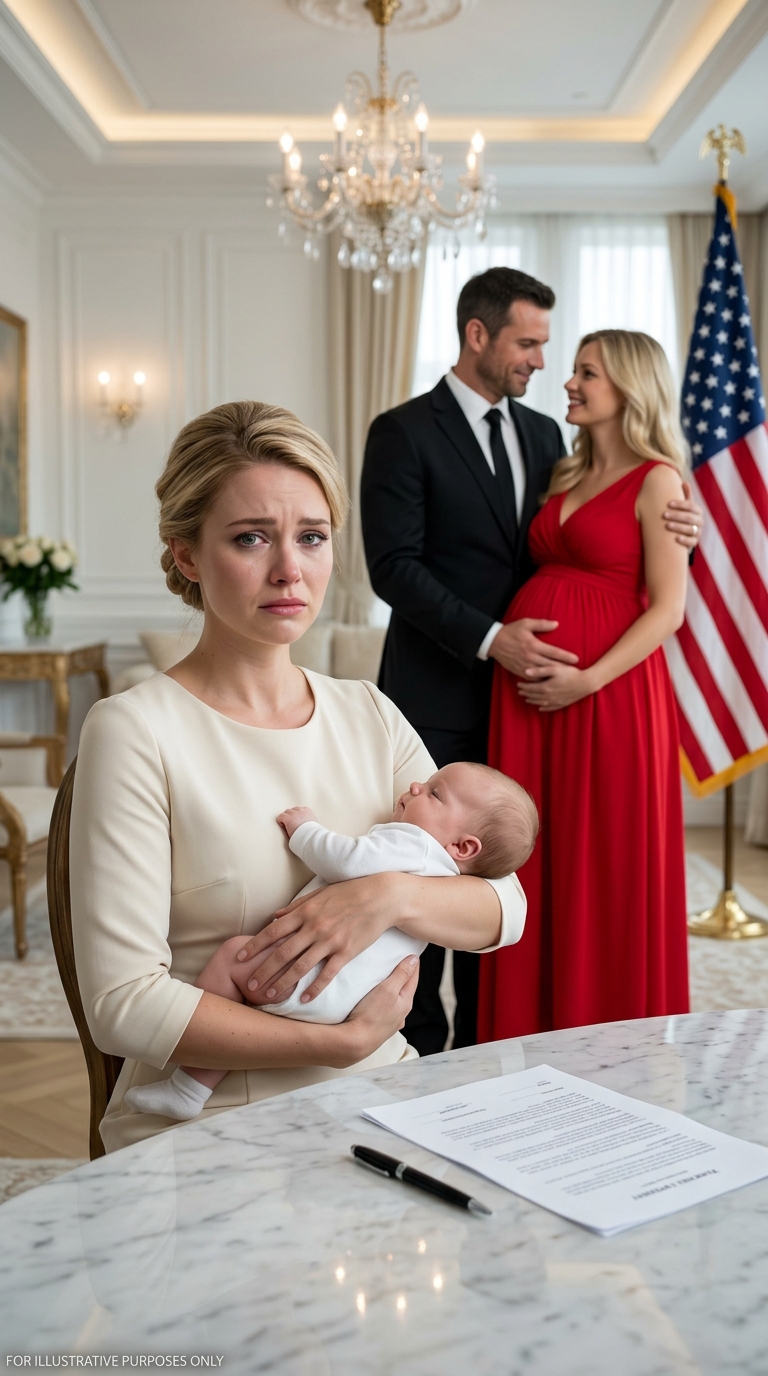
Ethan arrived in a navy suit, looking irritated and tired. Ava came with him, which told me everything I needed to know about how much control she believed she had. She sat close to him, one manicured hand on his sleeve, wearing the same delicate victim mask she had worn in my living room.
I arrived with Lauren Whitfield.
Lauren had been my best friend since college and one of the most feared divorce attorneys in Cook County. She did not raise her voice. She did not need to. She could slice a man open with one sentence and make him thank her for the anatomy lesson.
Ethan frowned when he saw her. “I thought we could handle this privately.”
“I thought my husband wouldn’t bring his mistress home while I was nursing his daughter,” I said. “We’re both disappointed.”
Lauren placed a folder on the table. “Let’s begin.”
The house was the first battle.
Ethan assumed we would sell it and split the profit. He assumed wrong.
My parents had contributed most of the down payment. The renovation money had come from an inheritance my grandmother left me. Ethan’s name was on the mortgage, but the paper trail told a different story. Lauren explained, in polite legal language, that if he wanted to keep the house, he would need to reimburse my separate contribution and pay me half the current equity.
Ethan’s face darkened. “That’s impossible.”
“Then sell the house,” Lauren said.
Ava shifted in her seat. “Isn’t that a little cruel? Ethan needs somewhere to live.”
I turned to her. “You should have thought about housing before you moved into my marriage.”
The second battle was Lily.
Ethan suddenly announced that he wanted shared physical custody.
I nearly laughed.
This was a man who had held his daughter fewer than twenty times. A man who once asked me where we kept the diapers. A man who slept through midnight feedings and called babysitting his own child “helping out.”
Lauren folded her hands. “Lily is three months old, breastfed, and under the primary care of her mother. If Mr. Reynolds wants to fight for equal custody immediately, we can proceed, but the court will review his recent conduct, including the incident in which he shoved Mrs. Reynolds while she was holding the baby.”
Ethan went pale.
Ava pulled her hand from his sleeve.
“That was an accident,” he muttered.
“Then I’m sure you’ll enjoy explaining it under oath,” Lauren said.
By the end of the meeting, Ethan had agreed to my terms: primary custody for me, generous child support, reimbursement for my financial contribution to the house, and a deadline to settle the property issue.
He signed with a hand so tense the pen left a dent in the paper.
Ava glared at me as if I had stolen something from her.
She still did not understand. I did not want Ethan anymore. I wanted the life he had tried to steal from my daughter.
That evening, Ethan asked when Lily and I would leave.
He tried to sound kind. “I can hire movers.”
I looked down at my hands and let my voice soften. “She’s so little, Ethan. I’m still recovering. Finding a safe apartment takes time. The crib, the stroller, the formula, the medical appointments… I can’t move everything overnight.”
For the first time in days, guilt flickered across his face.
“How long?” he asked.
“A few weeks.”
He hesitated. Then he nodded. “Fine. Until you find a place.”
I thanked him.
Inside, I smiled.
Staying in that house was not weakness. It was strategy.
Ava wanted me gone so she could play wife in the home I had built. I would remain there like a mirror she could not turn away from. Every bottle on the counter, every tiny sock in the laundry, every cry from the nursery would remind Ethan that his fantasy came with consequences.
At night, while Lily slept, memories came for me.
Ethan and I had not always been ugly.
We met on campus during a lake-effect snowstorm. He gave me his scarf because I had forgotten mine. For years, we built a life slowly: cheap apartments, late-night takeout, promotions, miscarried dreams, and finally this house.
Two years before Lily, there had been another baby.
A son.
At eight months pregnant, I was in the passenger seat while Ethan drove us to buy a rocking chair. He was on a work call. A delivery truck ran a red light. Ethan slammed the brakes too late.
I survived.
Our son did not.
Afterward, grief split us in different directions. I wanted to talk about him. Ethan wanted silence. I wanted to hold the tiny blue blanket the hospital gave us. Ethan hid it in a closet. He drowned himself in work, and I drowned myself in pretending I understood.
That was when Ava appeared.
She was pretty, fragile, always available to listen. She admired Ethan. She laughed at his jokes. She made him feel heroic at a time when he could not bear feeling guilty.
But Ava was not innocent.
Before Ethan, she had been involved with Richard Marlowe, a senior executive at our company, a married man twenty years older than her. He had paid for her luxury apartment, her clothes, even her car. When his wife found out, Ava lost her safety net.
Then she found Ethan.
I had known for months.
I had stayed silent because I was not ready to strike.
But now the divorce papers were signed, Lily was safe, and Ava had moved into my battlefield.
The next move would not come from me.
It would come from Ethan’s parents.
PART 3
Linda and Robert Reynolds arrived from Wisconsin two days after Ethan told them about the divorce.
They did not call first.
I heard tires screech in the driveway, then Linda’s voice thundered through the foyer.
“Where is my son?”
I was in the nursery, feeding Lily. I walked to the top of the stairs and saw my mother-in-law standing below in a red raincoat, her gray hair damp, her face blazing with fury. Robert stood behind her, quieter, but his disappointment was almost worse than her anger.
Ethan came out of the kitchen with Ava behind him.
Linda saw Ava and nearly exploded.
“So this is her?” she snapped. “This is the woman you threw away your wife and baby for?”
Ava stepped closer to Ethan. “Mrs. Reynolds, I know this is difficult—”
“Do not Mrs. Reynolds me,” Linda said. “You walked into another woman’s home while she was caring for a newborn. I don’t need your manners now.”
Ethan raised his hands. “Mom, calm down.”
“Calm down?” Linda’s voice cracked. “Your daughter is upstairs in diapers, your wife is still healing, and you brought this woman into the house like you won a prize?”
Robert looked at Ethan with eyes full of shame. “We raised you better than this.”
For the first time, Ethan looked small.
Linda climbed the stairs and came to me. Her anger disappeared the moment she saw Lily. Tears filled her eyes.
“Oh, sweetheart,” she whispered, touching Lily’s tiny foot. Then she looked at me. “You and the baby are not going anywhere until you’re ready. This is her home too.”
That was how my in-laws moved into the guest room.
Ava’s dream turned into a cage overnight.
Linda cooked soups and casseroles for me, washed Lily’s blankets, and made a performance of calling me “my daughter” in front of Ava. Robert fixed the nursery window, assembled a new shelf, and took Lily for slow walks around the garden when I needed rest.
At dinner, Linda served me first.
Then Ethan.
Then Robert.
Ava last.
Sometimes not at all until Robert coughed politely.
Ethan was forced into fatherhood by shame. Linda made rules. He had to be home for dinner. He had to spend an hour with Lily every evening. He had to learn to change diapers and warm bottles. He resisted at first, awkward and impatient, but Lily had a way of undoing men.
She smiled at him one night while he held her.
A small, gummy, innocent smile.
I watched Ethan’s face change.
Ava saw it too.
That smile became the first crack in their love story.
At night, Ava complained.
“You spend more time in the nursery than with me.”
“She’s my daughter,” Ethan said.
“She’s Emily’s daughter too,” Ava snapped. “Why does everything have to revolve around them?”
“Because she’s a baby.”
“Then what am I?”
I sat in my room, rocking Lily, listening through the wall.
I did not have to poison them.
They were poisoning themselves.
Then came the fever.
One night, Lily’s temperature rose to 101.5. I did not fake that. I would never risk my child. But I also understood the power of the moment.
I knocked on Ethan’s door just after midnight. “Ethan, wake up. Lily has a fever.”
He opened the door annoyed, hair messy, shirt wrinkled. Ava sat up behind him, glaring.
Then he heard Lily crying.
His expression changed instantly.
Within minutes he was driving us to the pediatric ER at Lurie Children’s Hospital, his hands tight on the steering wheel, his voice shaking every time he asked, “Is she breathing okay? Is she still hot?”
At the hospital, he handled registration, bought bottled water, found a blanket, and stood beside the crib all night touching Lily’s forehead.
The doctor said it was a common viral fever. She would be fine.
But Ethan was not fine.
He stared at our daughter as if seeing her for the first time.
At dawn, he whispered, “I almost lost her.”
I did not correct him.
Guilt is a seed. Once planted, it grows roots.
After that night, Ethan came home earlier. He bought toys. He learned Lily’s schedule. He read board books in a ridiculous whisper while she chewed on her fist. Linda watched with satisfaction. Robert’s shoulders loosened.
Ava’s face grew sharper every day.
She tried to smile. She failed.
The breaking point came at Lily’s vaccination appointment.
Ethan had promised to take the morning off. I dressed Lily in a white sweater and packed her diaper bag. As I reached for the car seat, Ava appeared in the doorway wearing heels and a tight blue dress.
“I’m coming,” she said.
I looked at her. “No, you’re not.”
She smiled. “I’m going to be part of Ethan’s life. That includes his daughter.”
Ethan came downstairs, saw her, and sighed. “Ava, stay home.”
She hooked her arm through his. “I want to learn.”
He gave in.
At the clinic, Lily cried after the shot. Ethan held her carefully, murmuring, “Daddy’s here, sweetheart.”
Ava watched with eyes full of hatred.
Then she said loudly, “God, she cries like she’s dying. When I have a baby, I won’t raise it to be that dramatic.”
The room went quiet.
Ethan turned. “What did you just say?”
Ava lifted her chin. “I said she’s spoiled.”
I stepped between them. “Do not talk about my daughter.”
Ava’s hand flew to her stomach.
Her face twisted.
“Oh my God,” she cried. “Ethan… the baby…”
And just like that, the next bomb entered the room.
PART 4
Ethan carried Ava out of the clinic as if the building were on fire.
He handed Lily back to me so quickly I nearly dropped the diaper bag. Ava moaned into his shoulder, one hand pressed to her stomach, her eyes wet and dramatic.
“Our baby,” she whimpered. “Something’s wrong.”
I watched the taxi pull away toward Northwestern Memorial Hospital.
For a moment, I stood on the sidewalk with Lily against my chest, feeling the December wind cut through my coat.
Then I went home.
Linda opened the door before I could knock. “Where is Ethan?”
I told her everything: the vaccination, Ava insulting Lily, the sudden performance, the hospital.
Linda slammed her palm on the kitchen table. “That girl is poisonous.”
Robert removed his glasses and rubbed his eyes. “Let’s wait for the facts.”
Two hours later, Ethan came home alone.
His face looked hollow.
Linda stood. “Well?”
Ethan swallowed. “Ava is pregnant.”
The kitchen fell silent.
I did not move.
Linda’s mouth opened, then closed.
Robert stared at the floor.
“She’s about six weeks,” Ethan said. “The doctor said there was some stress, but she’s stable. She needs rest.”
Linda looked at me with guilt. I knew what she was thinking. She despised Ava, but if that baby was Ethan’s, it was still her grandchild.
Ava returned that evening wrapped in Ethan’s coat, pale and victorious.
The balance of the house changed.
Linda stopped openly attacking her. She still did not like her, but she began leaving extra soup on the stove. Robert spoke less. Ethan tried to divide himself between guilt over Lily and responsibility toward Ava.
Ava gained confidence again.
She placed a hand on her stomach whenever she wanted attention. She sighed loudly when Ethan went to the nursery. She complained about smells, noise, stairs, light, food, everything.
One night at dinner, I put down my fork.
“I need to tell everyone something,” I said.
All eyes turned to me.
“Our company is closing a major federal healthcare contract in Washington, D.C. next week. I’ve been asked to go for seven days.”
Linda immediately said, “We’ll take care of Lily.”
I hesitated, performing worry. “She’s never been away from me.”
Ethan straightened. “She’s my daughter. I can handle a week.”
Ava’s face tightened.
I looked at her. “Are you sure? You need rest.”
She forced a smile. “Of course. We’ll be fine.”
They thought they were agreeing to prove themselves.
They were agreeing to reality.
I did not go to Washington.
I checked into a quiet hotel fifteen minutes away, worked remotely, slept for the first time in months, and let the house teach Ava what motherhood actually sounded like at 2:00 a.m.
By the second night, Linda called me.
“Emily,” she whispered, “I shouldn’t laugh, but this house is a circus.”
Lily missed me and cried often. Ethan was exhausted. Ava, nauseous and sleep-deprived, lost patience immediately.
“She told Ethan your baby cries on purpose,” Linda said. “Can you imagine?”
I could.
By day four, Ethan and Ava were fighting loud enough for neighbors to hear.
“You care more about Emily’s baby than me!” Ava screamed.
“She is my baby!” Ethan shouted back.
“You promised me a new life!”
“I didn’t promise you a life without consequences.”
Every night, Linda reported the damage like weather updates.
By day seven, the romance had no shine left.
That morning, I sent a message to Richard Marlowe.
Richard was Ava’s former protector, former lover, and former source of money. He had lost face when his wife exposed their affair. Men like Richard did not forgive humiliation. They stored it like expensive whiskey and waited for the right occasion to pour it.
My message was simple:
Richard, this is Emily Reynolds. We have a mutual problem named Ava Pierce. If you want the truth known, meet me today.
He replied within six minutes.
That afternoon, Richard picked me up from a café near my house in a black Mercedes. He was in his late fifties, silver-haired, polished, and angry beneath his manners.
“You understand,” he said as we drove, “I don’t care about your marriage.”
“I don’t need you to,” I said. “I need you to tell the truth.”
He smiled thinly. “That I can do.”
When we pulled into my driveway, Ethan was inside holding Lily. Linda was folding laundry. Robert was reading. Ava sat on the sofa with one hand resting on her stomach, queen of a kingdom she had not earned.
I rang the bell.
Linda opened the door and hugged me with relief. Then she noticed Richard.
“This is Richard Marlowe,” I said. “A senior executive at Whitestone. He was kind enough to drive me from the airport.”
Ava heard his name.
The color drained from her face before he even stepped into the room.
Richard walked in, looked straight at her, and smiled.
“Well,” he said. “Isn’t this a cozy little family gathering?”
Ethan stood quickly. “Mr. Marlowe?”
Richard did not look at him.
He looked at Ava.
“Funny thing, Ethan,” Richard said. “You stole your wife’s subordinate, but you might want to ask yourself whether she was ever yours to steal.”
The room froze.
Ava whispered, “Richard, don’t.”
And that was how the truth finally walked into my house wearing a cashmere coat.
PART 5
Richard sat down as if he owned the room.
Ava remained frozen on the sofa, her hand trembling against her stomach. Ethan looked from her to Richard, confused at first, then slowly afraid.
“What are you talking about?” Ethan asked.
Richard smiled. “Ava and I were involved for three years. Apartment, car, designer bags, weekend trips. I paid for everything.”
“That’s a lie,” Ava said, but her voice had no strength.
Richard pulled out his phone. “Would you like photos? Bank transfers? Lease documents? Hotel confirmations?”
Linda made a sound of disgust.
Ethan stared at Ava. “Is this true?”
Ava began to cry. “He manipulated me. I was young. I didn’t know how to get away.”
Richard laughed once. “You seemed very trapped when you asked for a Cartier bracelet.”
Ethan’s face went red.
Richard leaned back. “And here’s the charming part. While she was taking my money, she told me you were harassing her at work. She said your wife was jealous and cruel. She made everyone a villain depending on who was paying the bill.”
Ava stood, shaking. “Stop it.”
“No,” Richard said. “You don’t get to rewrite this one.”
Ethan’s eyes dropped to her stomach.
The room felt suddenly airless.
“That baby,” he said quietly. “Is it mine?”
Ava’s face twisted. “How can you ask me that?”
“Because I don’t know who you are.”
She reached for him. He stepped back.
“Ethan, I love you.”
“You loved him too?” Ethan asked, pointing at Richard. “Or did you love his money?”
Ava slapped him.
The sound cracked through the room. Lily started crying. I took her from Linda and held her close.
Ethan did not react to the slap. He only looked at Ava as if the woman he had destroyed his family for had vanished, leaving behind a stranger.
“When the baby is born,” he said, “there will be a paternity test.”
Ava screamed.
Richard stood. His work was done. He gave me a slight nod and left the house.
After that day, Ava’s power collapsed.
Linda stopped pretending. Robert barely acknowledged her. Ethan slept on the couch. Ava cried, pleaded, accused, apologized, and threatened, sometimes all in the same hour.
Ethan began orbiting me again.
He brought flowers. He cooked dinner. He took Lily in the mornings so I could sleep. He told me he remembered our first apartment, our first Christmas tree, the night he proposed by Lake Michigan.
I listened without answering.
A person can regret burning down a house. That does not mean the ashes become a home again.
One Saturday, Ethan suggested we go to Water Tower Place.
“You and Lily need winter clothes,” he said. “Let me do this.”
I agreed because I knew Ava would not stay away.
The mall was bright, crowded, and warm. Christmas decorations hung above the escalators. Ethan pushed Lily’s stroller like a proud father, carrying shopping bags and smiling at strangers who complimented the baby.
For one hour, we looked like a family.
Then Ava appeared near the children’s department.
She looked terrible: pale, thin, desperate, her hair loose around her face.
“How sweet,” she said loudly. “Playing husband and wife while I sit at home carrying your child.”
People turned.
Ethan’s face hardened. “Go home, Ava.”
“No.” She grabbed his arm. “You don’t get to abandon me.”
“You followed us?”
“You forced me to.”
He pulled away. “You need help.”
“I need you!”
A small crowd formed. Phones came out. I moved the stroller away, keeping Lily close.
Ava’s voice rose. “Tell them, Ethan. Tell everyone how you used me and now you’re crawling back to your ex-wife.”
Ethan’s jaw clenched. “I told you. We’ll discuss responsibility after the paternity test.”
The words detonated her.
“Paternity test?” she shrieked. “You disgusting coward!”
She shoved him. He caught her wrists. She twisted, crying, fighting, trying to pull him close and push him away at the same time.
Then her heel caught on a fallen toy from a display bin.
For one second, everything slowed.
Ava’s eyes widened.
She fell backward.
The sound of her body hitting the tile was followed by a scream so raw the entire floor went silent.
Blood spread beneath her.
This time, there was no performance.
Ethan stood motionless, white as paper.
Someone shouted for security. Someone else called 911. I lifted Lily from the stroller and turned her face into my coat so she would not see.
Ava sobbed on the floor, clutching her stomach.
“My baby,” she cried. “Save my baby.”
The ambulance came fast, but not fast enough.
At the hospital, Ethan sat in the hallway with his hands clasped, staring at nothing. Linda and Robert arrived, shaken and silent. I stayed because Lily was asleep against me and because endings have gravity. They pull everyone to the same place.
Hours later, a doctor came out.
Ava had survived.
The baby had not.
The doctor could not confirm paternity without testing, but the blood type made it possible that Ethan had been the father.
Possible.
That word destroyed him more than certainty would have.
He had doubted a child who might have been his.
He had lost a child he had never allowed himself to love.
And he had done it all in public, surrounded by strangers with phones.
When Ava woke, Ethan went into her room alone.
I saw him through the narrow window in the door. She reached for his hand, crying.
He took it for a moment.
Then he gently removed her fingers.
When he came out ten minutes later, his face was empty.
“It’s over,” he said.
No one asked what he meant.
We already knew.
PART 6
After Ava left the hospital, she did not return to the house.
Ethan paid her medical bills. Richard ensured her position at Whitestone disappeared quietly but permanently. She sent Ethan dozens of messages: apologies, threats, memories, accusations. He stopped answering.
For the first time since the night he brought her home, the house became quiet.
But quiet was not peace.
Ethan mistook silence for opportunity.
He began trying to rebuild what he had destroyed. He came home early, cooked my favorite pasta, cleaned bottles, folded tiny onesies with clumsy hands. He learned Lily’s pediatrician’s name and her nap schedule. He cried once when she fell asleep on his chest.
Linda watched him with hope.
Robert watched me with understanding.
One evening, after dinner, Ethan asked me to sit with him in the living room.
It was the same room where he had ended our marriage.
This time, there was no Ava on the sofa. No rain. No shouting.
Only Ethan on his knees.
“Emily,” he said, his voice breaking, “I know I don’t deserve forgiveness. I know sorry isn’t enough. But please give me a chance to spend the rest of my life making it right. For Lily. For us.”
Linda cried softly in the doorway.
Ethan looked up at me with the face of a man who had finally understood the cost of his choices.
For a moment, I felt the ghost of the woman I used to be.
That woman would have forgiven him.
She would have called pain a lesson, betrayal a mistake, humiliation a storm that had passed.
But I was not that woman anymore.
“No,” I said.
Ethan blinked. “No?”
“It’s too late.”
His face collapsed.
I stood and walked to the window. Outside, snow had begun to fall over the garden. The house looked peaceful under it, as if it had not heard every cruel word spoken inside.
“I accepted a promotion,” I said. “Regional director for the West Coast division. San Diego headquarters. I leave next week.”
Linda gasped.
Ethan stood too fast. “California? You were going to leave without telling me?”
“We are divorced,” I said. “I don’t need your permission.”
“What about Lily?”
“You’ll have visitation. Lauren has already drafted a parenting plan. You can come to California once a month, and when she’s older, we’ll revisit holidays. I’m not taking your daughter from you. I’m taking myself away from the damage.”
He shook his head. “Emily, please.”
“No. You taught me something, Ethan. You taught me that a woman who builds her whole life around a man can wake up one day and find herself homeless in her own house. I will never let that happen again.”
Linda covered her mouth.
Robert lowered his eyes.
Ethan whispered, “I lost you.”
“Yes,” I said. “You did.”
The following week was strangely calm.
I sold the house.
Not because I needed to, but because some places hold too many ghosts. I packed Lily’s nursery last. The yellow walls nearly broke me. I took the framed photo of her tiny footprints, the blanket from her crib, and the rocking chair.
I left the wedding photo behind.
Linda and Robert hugged me at the airport until boarding was almost closed. Linda cried into Lily’s blanket. Robert slipped an envelope into my coat pocket.
“For emergencies,” he said.
Inside was a check and a note: You are still our daughter, if you allow us to be your family.
I cried for the first time in months.
Ethan walked us to security. He looked thinner, older.
“Can I hold her?” he asked.
I handed him Lily.
He kissed her forehead and whispered something I could not hear.
Then he looked at me. “Will you ever come back?”
I thought of the woman on the stairs, clutching a screaming baby after being shoved by the man she loved.
“No,” I said. “But you can move forward.”
He nodded, tears in his eyes.
Lily and I boarded the plane to San Diego as the sun rose over Chicago.
For the first time in a long time, I was not running from something.
I was walking into my own life.
PART 7
Three years later, Lily asked me why her dad did not live with us.
We were sitting on the beach in La Jolla, building a crooked sandcastle while the Pacific turned gold in the evening light. She had Ethan’s eyes and my stubborn chin. She was bright, funny, dramatic, and deeply loved.
“Daddy loves you,” I told her. “But sometimes grown-ups make choices that mean they can’t live in the same house anymore.”
“Was he mean to you?”
I paused.
Children deserve truth, but not adult wounds.
“He hurt me,” I said gently. “And I decided we would be happier in a peaceful home.”
Lily considered that, then placed a shell on the sandcastle. “Our home is peaceful.”
“Yes,” I said. “It is.”
Ethan kept his visitation schedule. To his credit, he became a better father than he had been a husband. He flew to California every month, never missed Lily’s birthday, and called every Sunday evening. He did not ask me to come back anymore.
Regret matured him.
It did not reward him.
Linda and Robert visited often. They spent summers in San Diego, spoiling Lily with pancakes, storybooks, and trips to the zoo. They never mentioned Ava. Neither did I.
I heard, through professional whispers, that Ava moved to Dallas and tried to start over under a different last name. Richard retired early after his own marriage collapsed. Whitestone survived, as companies always do, swallowing scandal and calling it restructuring.
As for me, I became senior vice president before forty.
I bought a white house with blue shutters ten minutes from the ocean. I planted lemon trees in the backyard. I learned to sleep without listening for betrayal in the dark. I learned that loneliness is not the same as being alone, and marriage is not the same as love.
One spring, Whitestone sent me to Washington, D.C. to speak at a national healthcare leadership conference.
After my speech, Ethan was waiting outside the ballroom.
He had brought Lily, who had spent the weekend with him in Chicago before he flew her to D.C. to meet me. She ran into my arms, all curls and laughter.
Ethan smiled. “You were incredible up there.”
“Thank you.”
He looked nervous, but not desperate. “I’m moving to San Diego.”
I stiffened.
“Not for you,” he said quickly. “For Lily. I got a remote position. I want to be closer, if that’s okay.”
I studied him.
The old Ethan would have framed it as sacrifice. This Ethan simply waited.
“That would be good for her,” I said.
Relief crossed his face. “That’s all I want.”
Years earlier, those words would have sounded like a promise.
Now they sounded like accountability.
We walked outside together, not as husband and wife, not as enemies, but as two people connected by the little girl skipping ahead of us beneath the cherry blossoms.
Lily turned and shouted, “Mom! Dad! Hurry up!”
For a heartbeat, the picture looked almost whole.
But I knew better than anyone that some broken things do not need to be repaired. Some broken things become doors.
Ethan and I reached Lily at the same time. She took one of his hands and one of mine, swinging between us, laughing.
I looked up at the white dome of the Capitol glowing in the distance and felt no bitterness.
The woman who had stood on the stairs with a crying baby was gone.
In her place was a mother, a leader, a woman who had survived humiliation without becoming cruel, who had chosen dignity over revenge, freedom over fear, and peace over the illusion of a perfect family.
Ethan squeezed Lily’s hand.
I squeezed the other.
Then we walked forward.
Not back.
Forward.