PART 2
By sunrise, Chicago had chosen sides.
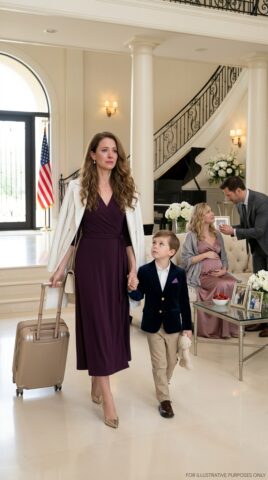
Amelia woke on the couch in her own small apartment in Logan Square, still wearing the black dress she had bought for Eleanor’s anniversary dinner. Her feet ached from the heels. Her eyes burned from a night without sleep. Her phone vibrated so violently on the coffee table that it seemed alive.
The video had crossed 80,000 views.
Then 120,000.
Then a local news account shared it with the headline:
Whitaker Matriarch Humiliates Working-Class Architect at Anniversary Dinner. Fiancé Says Nothing.
Amelia watched only once.
That was enough.
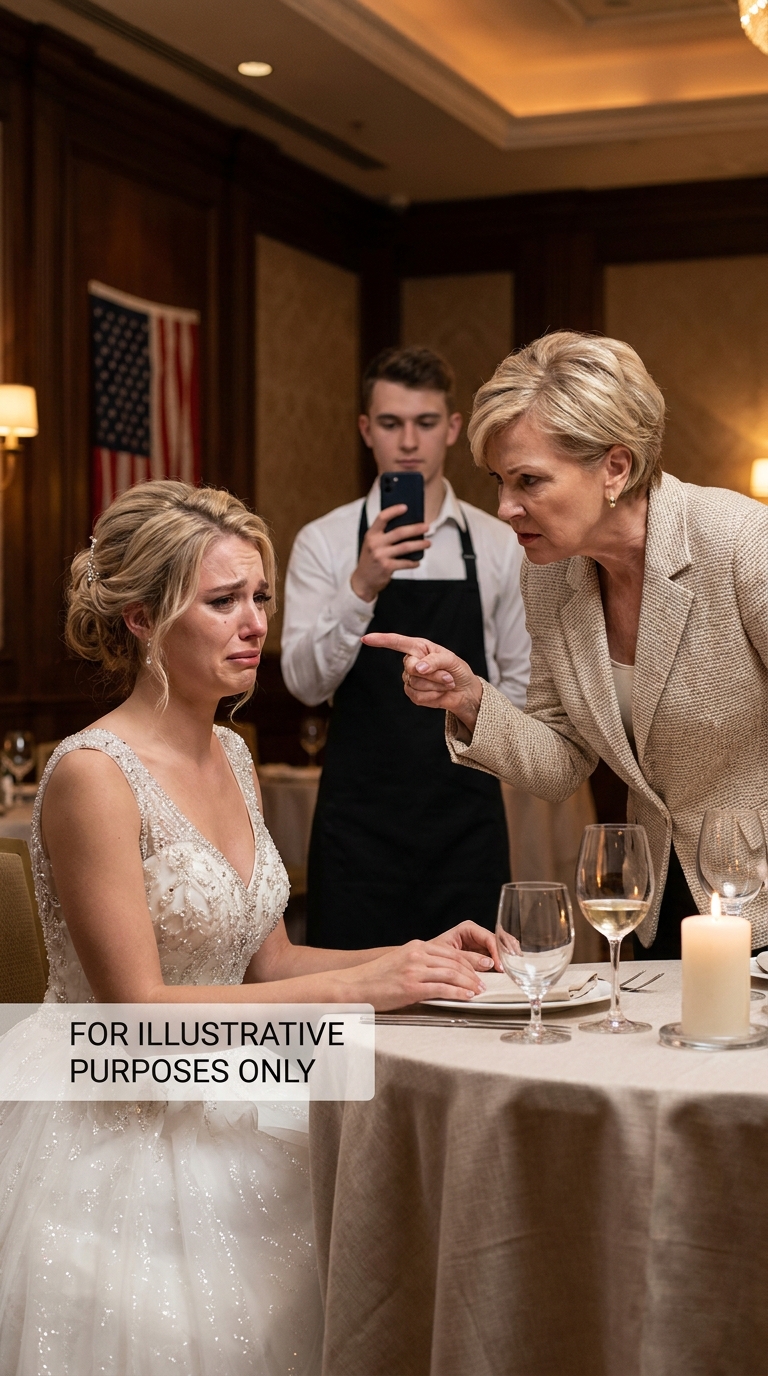
Eleanor’s voice. The laughter. Nathan’s hand pulling away. His eyes fixed on the table while Amelia sat there, publicly stripped of dignity by the woman who would have been her mother-in-law.
She closed the video before the end.
A call came from her best friend and business assistant, Paige Monroe.
“Millie,” Paige said the second Amelia answered, using the nickname only people who loved her used. “Oh my God. Are you safe?”
“I’m home.”
“I swear I want to drive to that restaurant and throw bread rolls at every single rich person in that room.”
Despite herself, Amelia almost smiled.
Almost.
“Has Nathan called?” Paige asked.
“Thirty-seven times.”
“And?”
“I’m not answering.”
“Good.”
Amelia stood and looked around her apartment. It was not impressive. One bedroom, exposed pipes, thrifted furniture, stacks of architectural drawings on the dining table, and a leaning bookshelf her father had helped build during his last visit. Nathan used to say it had “potential,” by which he meant it did not fit his life.
But it was hers.
Every inch of it.
Across town, Eleanor Whitaker’s morning was not unfolding with the same quiet dignity.
Inside her Lake Forest mansion, Eleanor stood barefoot in her silk robe, shouting into a phone while her assistant, Margaret Bell, refreshed three screens at once.
“What do you mean you can’t remove it?” Eleanor snapped. “It is defamatory.”
Margaret’s face was pale. “Mrs. Whitaker, it’s been reposted hundreds of times. TikTok, Instagram, X, Facebook. There are reaction videos already.”
“Reaction videos,” Eleanor repeated, as if Margaret had said insects were nesting in her jewelry box.
Nathan entered the study, still in last night’s dress shirt.
“Mother,” he said, “Preston Caldwell called. He’s reconsidering the Washington investment.”
For the first time that morning, Eleanor stopped moving.
Preston Caldwell was not just an investor. He was the investor. The D.C. expansion depended on his money. Without it, Whitaker Hospitality would not simply delay growth. It would collapse under debt Nathan did not know existed.
Eleanor recovered quickly. She always did.
“Call Palmer PR,” she ordered Margaret. “We need a statement. Something gracious. Misinterpreted words. Emotional evening. Support for working families.”
Nathan looked sick. “You called her a gold digger.”
“I protected you.”
“You humiliated her.”
Eleanor turned on him. “And you let me because deep down you know I’m right.”
Nathan flinched.
That was how she knew she still had him.
By noon, the official Whitaker statement appeared online.
I deeply regret that my words were misinterpreted during a private family moment. As a mother and business leader, I care deeply about preserving the legacy many hardworking people helped build. Whitaker Hospitality will host a charity dinner next week supporting vocational scholarships for working-class students.
Amelia read it at her kitchen table.
Misinterpreted.
Private.
Working-class students.
She laughed once, sharp and humorless.
Then her phone rang from an unknown number.
“Miss Hart,” said a polished male voice, “this is Graham Palmer with Palmer Public Relations. I represent the Whitaker family.”
“Congratulations.”
“I’m calling to offer you an opportunity to participate in a joint statement that may help reduce the negative attention surrounding this unfortunate incident.”
“Unfortunate for who?”
A pause.
“For everyone involved.”
“You mean for Eleanor.”
“Miss Hart, public exposure can affect careers. Clients may become uncomfortable with controversy.”
Amelia’s fingers tightened around the phone.
“Is that a threat?”
“Not at all. Just practical advice.”
“Here’s mine,” Amelia said. “Tell Eleanor Whitaker that my father has more honor in one hand than her whole family has in all its bank accounts.”
She hung up before he could answer.
That evening, Nathan showed up at her apartment carrying red roses and wearing the expression of a boy who had broken something expensive and expected someone else to fix it.
Amelia opened the door but did not invite him in.
“I’ve been worried,” he said.
“About me or the video?”
“Both.”
“At least you’re honest enough to put me second.”
He winced. “Can we talk?”
She stepped aside.
Nathan entered slowly, looking around as though the apartment had become unfamiliar territory. His eyes landed on the drawings pinned to the wall, then on the clay mug her father had made in a community class, then on the empty space on her left hand.
“Where’s your ring?”
Amelia walked to her desk, opened a small wooden box, and took out the diamond.
Nathan looked relieved for half a second.
Then she placed it on the table between them.
“I’m not wearing it.”
“Are you ending our engagement?”
“I’m pausing my participation in your family’s performance.”
“That’s not fair.”
“No,” Amelia said. “What happened last night wasn’t fair. This is a consequence.”
Nathan rubbed his face. “My mother is under enormous pressure. The D.C. expansion—”
“Is that why she’s arranging for you to attend the charity dinner with Charlotte Caldwell?”
His silence answered before his mouth could.
“How do you know about that?” he asked.
Amelia folded her arms. “People talk. Especially staff members rich families pretend don’t exist.”
Nathan looked away.
“It’s just optics,” he said. “Charlotte’s father is important to the deal. My mother thinks if we show unity—”
“Unity with another woman?”
“It doesn’t mean anything.”
“It means you’re willing to hide me until your family finishes using someone else.”
He stepped toward her. “Amelia, I love you.”
“If you loved me, you would not be asking me to become your secret.”
“It’s temporary.”
“So was last night’s silence,” she said. “But I will remember it for the rest of my life.”
Nathan’s shoulders dropped.
“What do you want me to do?”
“For once?” Amelia opened the door. “Choose without me begging you.”
He stood there, stunned, as if she had spoken a language no Whitaker man had ever learned.
“Amelia—”
“Go to your charity dinner. Hold Charlotte’s hand. Smile for the cameras. But don’t come back here afterward expecting me to still be sitting in the dark, grateful for whatever corner of your life you offer me.”
Nathan left with the roses still on her table.
She threw them away after he was gone.
At 9:14 p.m., Sophie Lane sent another message.
I may know why Eleanor is so desperate. My cousin works in accounting at Whitaker corporate. She says the company is drowning. The D.C. deal isn’t expansion. It’s rescue.
Amelia read the message twice.
Then a third time.
The humiliation at the restaurant had not been only about class.
It had been strategy.
Eleanor did not just despise Amelia.
She needed her gone.
Amelia looked at the diamond ring resting inside the wooden box. For two years, she had thought it was a promise.
Now she saw it for what it really was.
Access.
And maybe, if she was brave enough, a key.
PART 3
Amelia drove to Ohio the next morning.
She did not tell Nathan. She did not tell Paige until she was already past the Indiana border. She needed her parents before the internet turned her childhood into a headline.
The Harts lived in a small white house outside Columbus, with blue shutters, a cracked driveway, and a front porch her father had rebuilt twice because her mother kept adding flower boxes until the railing sagged. Compared with Eleanor Whitaker’s Lake Forest mansion, it was nothing.
Compared with Nathan’s penthouse, it was plain.
But when Amelia pulled up and saw her father’s old pickup in the drive, she nearly broke apart from relief.
Her mother, Linda Hart, opened the door before Amelia knocked.
“Baby?”
That one word undid her.
Amelia stepped into her mother’s arms and cried the way she had refused to cry in the restaurant, in Nathan’s apartment, and alone on her couch. She cried for the little girl who had watched her father leave before dawn in concrete-stained boots. She cried for the teenager who worked weekends at a hardware store to buy drafting supplies. She cried for the woman who had believed love could protect her from contempt.
Jack Hart came from the garage, wiping sawdust from his hands.
He saw his daughter’s face and went still.
“What did he do?”
Amelia wiped her eyes. “Not him. His mother.”
Linda led her to the kitchen, where everything smelled like coffee, cinnamon toast, and home. Jack sat across from Amelia, silent and steady, while she opened the video.
She watched their faces as Eleanor’s words filled the room.
It must have taken extraordinary balance to go from job sites where your father poured concrete to private dining rooms where you pretend you belong.
Linda covered her mouth.
Jack did not move.
When the clip ended, he looked down at his hands.
The hands Eleanor had mocked.
For a long moment, no one spoke.
Then Jack said, “Pouring concrete paid for your school.”
His voice was quiet.
That made it devastating.
Amelia reached for him. “Dad, I’m so sorry.”
He looked up sharply. “Don’t you dare apologize for her ugliness.”
Linda’s eyes were wet, but her voice was fierce. “That woman showed the world who she is. Not who you are.”
“She made me feel small,” Amelia admitted.
Jack leaned forward. “Listen to me. People like Eleanor Whitaker inherit rooms and call themselves builders. People like us pour the foundations those rooms stand on. Never confuse polish with strength.”
Amelia pressed her palms over her eyes.
“I took off the ring.”
Linda glanced at her bare hand. “Good.”
Jack raised an eyebrow. “Where is it?”
“In my bag.”
“Don’t throw it in a lake,” he said.
Amelia gave a broken laugh. “That was one option.”
“Use it better.”
“For what?”
Jack leaned back. “Justice usually costs something.”
That afternoon, while Linda made chicken pot pie and Jack pretended not to hover, Amelia sat on the porch and checked the news.
The video had passed two million views.
Commentators were arguing about privilege, silence, family money, class shame, and whether Nathan Whitaker was more pathetic than his mother was cruel.
Then Sophie called.
“I’m sorry to bother you,” she said. “But I found something.”
Amelia sat up. “What?”
“My cousin isn’t the only one talking. People at the restaurant say vendors haven’t been paid. One wine distributor threatened to stop delivery. And last night Eleanor had a private meeting with a bank officer. She was furious.”
“Do you have proof?”
“Not yet.”
“Don’t risk your job.”
Sophie laughed softly. “They’re already cutting my shifts. I posted the video. They just haven’t found a clean excuse to fire me.”
“I’m sorry.”
“Don’t be. My dad was a drywall installer. My mom cleans offices. When Eleanor said what she said about your father, I heard every rich woman who ever looked through mine.”
That sentence settled between them like a vow.
Two days later, Sophie arrived at the Hart house in a borrowed gray Honda, carrying a manila envelope and wearing jeans instead of a waitress uniform.
Linda fed her within ten minutes.
Jack listened while Sophie spread photographs across the kitchen table.
Bank notices. Vendor demands. A foreclosure warning on one Whitaker property in San Diego. A denied credit line from Lakefront National Bank. A handwritten memo with Eleanor’s initials beside altered revenue projections.
Amelia studied the papers the way she studied blueprints.
“This is bigger than unpaid bills,” she said.
Jack whistled low. “Looks like the queen’s castle has termites.”
Sophie nodded. “They’re almost bankrupt. The D.C. deal with Preston Caldwell is their last chance.”
“And Charlotte Caldwell?” Linda asked.
“Part of the show,” Amelia said. “If Nathan looks tied to Charlotte, Preston feels tied to the Whitakers.”
Linda’s expression hardened. “That woman tried to erase you so she could sell her son.”
Amelia stared at the diamond ring now sitting on the table in her grandmother’s carved wooden box.
For the first time since the restaurant, her humiliation rearranged itself into something useful.
A pattern.
Eleanor had insulted her as a gold digger because she needed the world to believe Amelia wanted Whitaker money. That way, if Amelia spoke later, she would sound bitter. Convenient. Jealous.
A discarded woman.
A social climber.
“She was building my cage before I knew there was a trial,” Amelia murmured.
Jack looked at her carefully. “What are you going to do?”
Amelia gathered the papers. “I’m going back to Chicago.”
Linda touched her arm. “For Nathan?”
“No.”
“For revenge?” Jack asked.
Amelia shook her head. “For the truth.”
The next morning, she returned to her studio in Chicago wearing a navy dress, low heels, and the diamond ring on her finger.
Paige stared at it. “Please tell me this doesn’t mean what I think it means.”
“It means people like Eleanor only understand symbols,” Amelia said. “Today, I’m still the fiancée. That gives me questions I’m allowed to ask.”
At 2:30 p.m., Amelia walked into Lakefront National Bank for a meeting with Walter Keene, a senior lending officer who had approved financing for three of her past projects.
He greeted her stiffly.
“Miss Hart. I wasn’t expecting you back in business so soon.”
“Buildings don’t stop needing architects because someone’s mother has bad manners.”
His smile flickered.
Amelia opened a project folder. “I need to revise collateral for the North Avenue community arts center. Nathan mentioned the Whitaker family’s San Diego property could support the guarantee after our wedding.”
Walter Keene went pale.
“I’m afraid that property is unavailable.”
“Unavailable?”
“Already pledged.”
“What about the Lake Forest estate?”
He looked toward the closed door.
“Also pledged.”
“All of them?”
His silence was answer enough.
Amelia closed the folder.
“Thank you, Mr. Keene.”
“I didn’t tell you anything.”
“No,” she said. “You confirmed what I already knew.”
As she left the bank, her phone buzzed.
Nathan had posted a photo from the Whitaker charity dinner.
He stood beside Charlotte Caldwell beneath a banner reading Building Futures Together.
His caption said:
Proud to support working families with Charlotte Caldwell and Whitaker Hospitality.
Amelia looked at the photograph until she felt nothing.
Then she removed the ring again.
This time, it did not hurt.
PART 4
Nathan came to Amelia’s studio during a thunderstorm.
Rain lashed against the tall windows. The old brick building groaned in the wind. Amelia was alone at her drafting table, reviewing plans for a community library on the South Side, when a hard knock rattled the glass door.
Nathan stood outside soaked through, his hair plastered to his forehead, his expensive shirt clinging to him like a costume that no longer fit.
Amelia considered letting the rain answer him.
Then she opened the door.
“What do you want?”
“To talk.”
“You’ve been talking through Instagram.”
He flinched. “The photo with Charlotte was my mother’s idea.”
“Most weak decisions are someone else’s idea.”
Nathan stepped inside. Water dripped onto the concrete floor.
“I didn’t come to fight.”
“Then why did you come?”
He looked around the studio. Models, drawings, material samples, photographs of completed projects. His eyes lingered on one picture: Amelia with Jack and Linda on the porch in Ohio.
“I miss you,” he said.
Amelia laughed once, not because it was funny, but because it was so small compared to everything else.
“You miss the version of me who made your life easier.”
“No. I love you.”
“Then why did you let your mother announce you and Charlotte as practically engaged?”
“She didn’t announce an engagement.”
“Not yet.”
Nathan went still.
Amelia saw the truth in his face.
“She’s planning to,” Amelia said.
He swallowed. “At the Chamber of Commerce gala tomorrow night.”
The storm cracked overhead.
“And you were going to warn me?”
“I was going to stop it.”
“How?”
He had no answer.
Amelia turned back to her table, rolling up a set of plans before rain from his sleeves could touch them.
“My mother says the Caldwell investment will protect hundreds of jobs,” Nathan said. “She says if the D.C. deal fails, everything collapses.”
“It’s already collapsing.”
His eyes sharpened. “What does that mean?”
Amelia studied him.
For the first time, she realized he might truly not know.
“Did you ever read the company’s financial reports yourself?” she asked.
“Of course.”
“The original reports?”
“My mother handles finance. I handle operations.”
“That’s a very convenient arrangement for her.”
Nathan’s face reddened. “You don’t understand how family businesses work.”
“I understand how manipulation works.”
He stepped closer. “Amelia, please. Stay out of this. My mother is dangerous when cornered.”
“That sounds like something a man should have realized before handing her the woman he claimed to love.”
His jaw tightened.
“You don’t fit in that world,” he said suddenly.
The words came out with a strange exhaustion, as if he had been carrying them for a long time. “That’s not an insult. It’s just true. You don’t understand the pressure, the rules, the history.”
Amelia stared at him.
There it was.
The sentence beneath every silence.
“You’re right,” she said softly. “I don’t fit in a world where a woman is humiliated for her father’s honest work. I don’t fit in a world where cowardice is called strategy. I don’t fit in a world where love is acceptable in private but embarrassing in public.”
“I didn’t mean—”
“Yes, you did.”
Nathan’s eyes filled with panic. “I’m trying to save everything.”
“No. You’re trying to keep everything without becoming anyone.”
The words struck him.
For a moment, the only sound was rain.
Then Amelia’s phone buzzed.
A message from Sophie.
I got audio. Eleanor told the accountant to alter the numbers before showing them to Caldwell. Also mentioned hiding the real books from Nathan. I have photos too. It’s bad.
Amelia read it once and locked the screen.
Nathan noticed.
“What was that?”
“The truth getting louder.”
Before he could respond, she walked to the door and opened it.
“Go home, Nathan.”
“Amelia—”
“No. Tomorrow your mother is going to stand in a ballroom and sell a lie. You can stand beside her or you can become the man you keep promising to be.”
He looked at her as if she had pushed him to the edge of a cliff.
Maybe she had.
After he left, Amelia called Sophie.
“Send me everything.”
Sophie’s voice trembled. “I’m scared.”
“So am I.”
“They’ll fire me.”
“They were going to anyway.”
A pause.
Then Sophie said, “I heard Eleanor say something else. She said once the engagement to Charlotte is public, Caldwell won’t back out without looking unstable.”
Amelia closed her eyes.
There it was.
The whole machine.
Humiliate Amelia. Recast her as a greedy outsider. Parade Nathan with Charlotte. Trap Caldwell socially. Use fraudulent numbers long enough to secure investment. Let new money cover old lies.
“What do we do?” Sophie whispered.
“We don’t leak it online,” Amelia said. “Not yet. We take it somewhere that matters.”
The next morning, Amelia met with Martin Quinn, a forensic accountant in a modest office near the Loop. He was sixty-five, blunt, respected, and allergic to rich people who thought manners were a substitute for ethics.
He reviewed Sophie’s photographs and audio transcript without interrupting.
When he finished, he removed his glasses.
“This is fraud.”
Amelia’s stomach tightened. “How serious?”
“Bank fraud, investor fraud, falsified financial statements, possibly wire fraud depending on how they transmitted these documents.” Martin tapped one image. “This note is especially damaging. ‘Adjust before showing Nathan.’ That suggests deliberate concealment from an officer of the company.”
“So Nathan may not be involved.”
“He may be negligent. That’s different from criminal intent.”
Amelia hated the relief that moved through her.
Martin leaned back. “The Caldwell announcement is tonight?”
“Yes.”
“Then Eleanor is counting on public pressure. If Caldwell allows an engagement and investment announcement in front of half of Chicago, backing out tomorrow becomes humiliating.”
“What would you do?”
“I’d notify the bank and Caldwell’s legal counsel before the announcement.”
“I don’t have direct access to Caldwell.”
Martin smiled faintly. “No. But you have something better.”
“What?”
“A reason to be in that room.”
That evening, Amelia stood before her mirror in a deep emerald gown her mother had mailed overnight from Ohio with a note tucked into the box.
Walk in like your father built the floor.
Amelia folded the note and placed it in her purse beside the manila envelope.
Inside it were copies of financial documents, Martin’s written preliminary assessment, Sophie’s transcript, and the diamond ring.
At 7:40 p.m., she stepped out of a taxi in front of the Langham Hotel, where Chicago’s Chamber of Commerce gala glittered behind glass doors.
Photographers turned.
Whispers started.
Amelia Hart had arrived.
PART 5
The ballroom was a cathedral of money.
White orchids towered over round tables. Gold-rimmed plates gleamed beneath chandeliers. A jazz quartet played near the bar while Chicago’s business elite performed the ancient ritual of pretending greed was vision.
Eleanor Whitaker stood near the stage in a silver gown, greeting guests like a queen receiving tribute. Nathan stood beside Charlotte Caldwell, who looked beautiful, uncomfortable, and trapped inside a pale blue dress that matched the Caldwell family crest on the invitation.
Preston Caldwell, Charlotte’s father, watched everything with the careful expression of a man who had built his fortune by trusting numbers more than charm.
Sophie moved among the tables in a server’s black uniform. She saw Amelia enter and nearly dropped a tray.
Amelia gave her the smallest nod.
No fear.
Not tonight.
Eleanor saw Amelia next.
Her smile froze for half a second before sharpening.
“Well,” Eleanor said when Amelia approached the front of the room, “this is unexpected.”
“Not for me.”
Nathan’s face drained of color. “Amelia.”
Charlotte looked between them, realization dawning.
Eleanor touched Nathan’s arm hard enough for him to wince. Then she turned back to the crowd, lifting her champagne flute.
“Ladies and gentlemen,” she called, reclaiming the room before Amelia could speak. “Tonight is about legacy, partnership, and the future of Chicago business.”
The crowd settled.
Amelia stood near the center aisle, manila envelope in hand.
Eleanor continued, “Some families are built on shared values. Some commitments strengthen communities, while others are based on opportunism and temporary fascination.”
Several people glanced at Amelia.
She did not move.
Eleanor smiled wider. “It is my joy to celebrate a partnership between Whitaker Hospitality and Caldwell Capital, and perhaps an even more meaningful bond between my son Nathan and the lovely Charlotte Caldwell.”
Nathan stood abruptly. “Mother—”
Applause began, uncertain and scattered.
Charlotte’s face flushed with humiliation.
Preston Caldwell did not clap.
That was when Amelia stepped forward.
“Before anyone applauds,” she said, “Mr. Caldwell should see what he’s being asked to celebrate.”
Her voice did not need a microphone.
The room was already leaning toward scandal.
Eleanor’s eyes narrowed. “This is a private event.”
“It became public when you tried to use your son as collateral.”
Gasps moved through the ballroom.
Eleanor’s voice dropped. “Security.”
Two men near the back started forward.
Preston Caldwell raised one hand.
“Stop.”
The guards froze.
Caldwell looked at Amelia. “Miss Hart, I believe?”
“Yes.”
“What do you have?”
Amelia held up the envelope. “Financial documents. Altered reports. Evidence that Whitaker Hospitality has two sets of books—one real, one created for banks and investors.”
The word investors changed the temperature in the room.
Eleanor laughed. “This is absurd. A bitter woman with a broken engagement is hardly a credible source.”
Amelia opened the envelope. “Then let the documents speak.”
Caldwell approached and took the first set of papers.
His attorney, a thin man in a dark suit, appeared at his side as if summoned by blood scent. Together they scanned the pages.
Nathan moved closer to Amelia.
“What is this?” he asked.
She handed him a copy.
“Something your mother didn’t want you to see.”
Nathan looked down.
His expression shifted from confusion to disbelief, then to something that looked like grief.
“These aren’t the reports I approved.”
“No,” Amelia said. “They’re the reports you should have demanded.”
Eleanor stepped off the stage. “Nathan, give those to me.”
He did not.
That was the first brave thing Amelia had ever seen him do in public.
Caldwell’s attorney whispered in Preston’s ear. Preston’s face hardened.
“Mrs. Whitaker,” he said, “these revenue figures differ substantially from the reports your office sent last week.”
“Preliminary drafts,” Eleanor said smoothly. “Internal projections. Nothing more.”
Amelia removed her phone. “There is also an audio recording.”
Eleanor went very still.
Sophie stopped moving beside table twelve.
Amelia pressed play.
Eleanor’s voice filled the ballroom.
I need those numbers adjusted before Caldwell sees them. Nathan doesn’t need the real books. Once the engagement is public, Preston won’t embarrass his daughter by walking away.
The silence afterward was enormous.
Charlotte stood slowly.
“My engagement?” she said, voice shaking. “Was I ever a person in this plan?”
Eleanor turned to her. “Charlotte, dear, business families have always understood—”
“No,” Charlotte said. “Manipulative families understand that.”
Preston Caldwell closed the folder.
“The investment is withdrawn.”
Eleanor’s face whitened.
“Preston, don’t be emotional.”
“I’m not emotional. I’m informed.”
Nathan looked at his mother. “You lied to me.”
“I protected you.”
“You used me.”
“I built this company for you!”
“You built a prison and called it a legacy.”
The sentence struck the room so hard even Eleanor faltered.
For the first time, Amelia saw Nathan without the polished obedience. His face was pale, but his spine was straight.
Eleanor recovered by turning her fury where it had always been safest.
“You,” she hissed at Amelia. “You think exposing this makes you noble? You are exactly what I said you were. You came for what wasn’t yours.”
Amelia reached into the envelope and removed the wooden box.
She opened it.
The diamond ring glittered beneath the chandelier.
“No,” Amelia said. “I came to return what was never mine.”
She placed the ring on a nearby table.
Then she looked at the guests.
“My father poured concrete for thirty-eight years. He taught me that if a foundation is rotten, the building falls no matter how beautiful the lobby looks. Your empire is falling, Mrs. Whitaker, because you built it on lies.”
A flash went off.
Then another.
Someone was recording. Then everyone was.
At that moment, a man in a navy suit entered through the side doors with two uniformed officers.
“I’m Special Agent Daniel Reyes with the Illinois Financial Crimes Task Force,” he announced. “Mrs. Eleanor Whitaker, we need to speak with you regarding allegations of fraudulent financial reporting.”
Eleanor looked around the ballroom for help.
No one moved.
The same people who once fought for her attention now studied their plates.
“Nathan,” she whispered.
He looked at her with tears in his eyes.
Then he said, “Cooperate, Mother.”
It broke her more than the officers did.
As they escorted Eleanor toward the exit, she passed Amelia.
“This isn’t over,” Eleanor said.
Amelia met her eyes.
“For you, maybe not. For me, it is.”
But it wasn’t.
Not completely.
Because when the ballroom doors closed behind Eleanor, Nathan turned toward Amelia with a face full of regret, and she knew the hardest part of justice was not exposing the lie.
It was deciding what to do after the truth survived.
PART 6
The fallout was immediate.
By morning, Eleanor Whitaker’s humiliation had surpassed Amelia’s.
Every major Chicago outlet carried the story. The first viral video had made Eleanor look cruel. The gala recordings made her look criminal. Financial reporters dissected Whitaker Hospitality’s debt. Legal analysts explained bank fraud. Social media crowned Sophie Lane “the waitress who brought down a dynasty.”
Sophie hated that headline.
“I didn’t bring down anything,” she told Amelia over coffee three days later. “Eleanor did. I just pressed record.”
They sat in Amelia’s studio with Paige, Jack, and Linda on speakerphone from Ohio. Outside, photographers waited on the sidewalk, hoping Amelia would cry, smile, or say something sharp enough to become a caption.
She gave them nothing.
Lakefront National froze Whitaker accounts. Caldwell Capital withdrew all pending agreements. Vendors filed claims. Three restaurants closed within a week. The Lake Forest mansion went into foreclosure proceedings. The San Diego property was seized by creditors.
Nathan resigned as executive vice president and agreed to cooperate with investigators.
The first time he called Amelia after the gala, she did not answer.
The second time, she did not answer.
The third time, he left a voicemail.
“I know apologies don’t repair what I allowed. I’m not calling to ask for forgiveness. I just wanted you to know I’m telling the truth now. All of it.”
She listened once.
Then deleted it.
Not because she hated him.
Because she needed silence that belonged to her.
Two weeks later, Amelia drove back to Ohio for Sunday dinner. Linda made roast chicken. Jack grilled corn even though it was too cold outside because he said a man needed principles. They ate at the kitchen table where Sophie’s documents had first been spread like evidence from another life.
After dinner, Jack walked Amelia to the garage.
On his workbench sat a small concrete casting, smooth and square, with a brass plaque embedded in it.
Amelia picked it up.
The plaque read:
FOUNDATION FIRST.
Her throat tightened.
“I made it for your office,” Jack said.
She ran her thumb over the letters. “Dad.”
“I know people think concrete is ugly,” he said. “They only notice marble. Chandeliers. Glass walls.” He shrugged. “But none of it stands without the gray stuff underneath.”
Amelia hugged him hard.
For the first time since the restaurant, she cried without shame.
A month passed.
Then three.
Eleanor accepted a plea agreement involving massive fines, restitution, and house arrest pending final sentencing. The media wanted a dramatic prison photo, but the real punishment was quieter. Eleanor Whitaker became socially radioactive. Her name no longer opened doors. It closed them.
Nathan vanished from society pages.
Then, one morning, Paige dropped a newspaper onto Amelia’s desk.
“Don’t be mad.”
Amelia looked down.
A small article featured Nathan wearing jeans, work boots, and a plain canvas jacket, standing beside volunteers outside a half-renovated youth center in Little Village.
The headline read:
Former Whitaker Executive Launches Nonprofit Renovation Group After Family Scandal.
Amelia read the article slowly.
Nathan had sold his luxury car. Moved out of the penthouse. Started working with a nonprofit contractor renovating community spaces across Chicago. No interviews about redemption. No speeches about being misunderstood. Just work.
Paige watched her carefully. “Thought you should know.”
Amelia handed the paper back. “I do know.”
“Do you care?”
Amelia looked at the concrete plaque on her shelf.
“Yes,” she said. “But not the way I used to.”
Spring arrived late in Chicago, but when it came, it came all at once.
Amelia’s firm won the bid for a public library and community arts center on the West Side. It was the largest project of her career, and she won it not because of scandal, sympathy, or proximity to powerful men, but because her design was beautiful, practical, and rooted in the neighborhood it would serve.
At the groundbreaking ceremony, Sophie stood beside her as operations coordinator.
After being fired from Whitaker’s, Sophie had expected to go back to waiting tables somewhere else. Instead, Amelia hired her part-time, then full-time, after discovering Sophie could organize contractors, donors, permits, and angry volunteers with the calm authority of a battlefield commander.
“You look like you’re about to throw up,” Sophie whispered as Amelia prepared to speak.
“I am.”
“Good. Means you’re human.”
Jack and Linda stood in the front row.
Paige held the oversized scissors for the ribbon. Reporters gathered, but this time Amelia welcomed them.
“My father taught me,” she said into the microphone, “that every structure tells the truth about what supports it. This center is built on community, dignity, and work that deserves to be seen.”
Jack wiped his eyes when he thought no one noticed.
Amelia noticed.
That evening, after the ceremony, she found Nathan waiting across the street.
He did not approach until she saw him.
He looked different. Leaner. Sun-browned. His hands rougher. His clothes plain. He carried no flowers, no jewelry, no performance.
“Congratulations,” he said.
“Thank you.”
“I saw the design. It’s extraordinary.”
“It is honest.”
He nodded. “That sounds like you.”
They stood awkwardly beneath a streetlamp while traffic moved around them.
“My crew is finishing the Little Village youth center next week,” Nathan said. “I wanted to invite you to see it. No pressure. No cameras. Just… I thought you might want to know the building survived.”
Amelia studied him.
“Are you asking as a contractor or as Nathan?”
He looked down, then back up.
“As someone trying to become worthy of being either.”
The answer surprised her.
Not because it was poetic.
Because it did not ask her for anything.
“I’ll think about it,” she said.
“That’s more than I deserve.”
“Yes,” Amelia said. “It is.”
He smiled faintly. “I know.”
She walked away first.
That mattered.
For a year, they rebuilt separate lives.
Amelia’s firm grew. Sophie finished her business degree at night and became project director. Paige became partner. Jack’s concrete plaque sat in the lobby of Hart & Monroe Architecture, where clients sometimes asked about it and Amelia always told them the truth.
Nathan kept working. Quietly. Consistently.
He sent no desperate messages. No late-night apologies. No emotional ambushes. Just occasional professional updates when their work overlapped, always respectful, always giving her room to decline.
Eleanor wrote Amelia one letter.
Amelia never opened it.
She placed it in a drawer, not from fear, but because not every apology deserves an audience.
Then came the day of the Little Village youth center opening.
Amelia went alone.
The building was simple and bright, filled with natural wood, wide windows, art rooms, tutoring spaces, and a basketball court where children were already shouting with joy. Nathan stood near the entrance, speaking with a contractor twice his age who clapped him on the shoulder like a proud uncle.
When Nathan saw Amelia, his expression softened but did not reach for possession.
“You came.”
“I said I’d think about it.”
“And?”
“I decided the building deserved a fair review.”
He laughed quietly. “Fair.”
They walked through the center together.
He showed her where volunteers had repaired the roof, where reclaimed brick had been used, where old restaurant tables from a closed Whitaker location had been cut down and remade into study desks.
“That was your idea?” she asked.
“The old life should be useful for something.”
In the art room, sunlight fell across fresh white walls.
Nathan stopped.
“I need to say one thing,” he said. “Not to change your mind. Not to reopen anything. Just because truth should be spoken when it’s overdue.”
Amelia waited.
“I loved you badly,” he said. “I loved you in private and failed you in public. I let my mother’s fear become my behavior. I let comfort make me cruel by omission. You didn’t just expose my family’s lies. You exposed mine.”
Amelia felt the old pain stir.
But it no longer owned the room.
“Thank you for saying that.”
“I’m sorry, Amelia.”
“I know.”
He nodded, accepting that forgiveness was not automatically attached to the words.
Outside, children were laughing on the basketball court.
Amelia looked through the window.
“My father says foundations can be repaired,” she said. “But sometimes it costs more than building new.”
Nathan followed her gaze.
“Then maybe building new is better.”
She looked at him.
“Maybe.”
PART 7
Two years after Eleanor Whitaker called Amelia Hart a gold digger in front of Chicago’s elite, Amelia stood in Washington, D.C., inside a community design center that bore her firm’s name on the wall.
Not Whitaker’s.
Not Caldwell’s.
Hers.
The irony was not lost on her.
The city Eleanor had tried to conquer with fraudulent numbers had become the city where Amelia opened her second office. Not with borrowed prestige or family money, but with federal grants, nonprofit partnerships, and designs that turned forgotten buildings into libraries, clinics, shelters, and art spaces.
Sophie managed the Chicago office now.
Paige ran client strategy.
Jack and Linda visited D.C. for the opening, and Jack spent twenty minutes inspecting the polished concrete floor before declaring it “acceptable,” which from him meant “perfect.”
The opening reception was filled with people Eleanor would have once dismissed as irrelevant—teachers, builders, neighborhood organizers, nurses, young architects, city staff, and families who would actually use the spaces Amelia designed.
Nathan arrived late.
He had been invited as a professional collaborator.
Nothing more.
Nothing less.
His nonprofit had partnered with Amelia’s firm on three projects by then. Each time, he did the work well. Each time, he respected boundaries. Each time, Amelia found herself trusting him a little more—not with her heart at first, but with schedules, budgets, contractors, and eventually silence.
That was where trust truly began.
Not in grand speeches.
In silence that did not demand payment.
After the reception, Amelia found Nathan on the rooftop terrace overlooking the city lights.
“You disappeared,” she said.
“Didn’t want to crowd you.”
“That’s new.”
He smiled. “I’ve been practicing.”
She stood beside him.
Below them, Washington glowed with monuments, traffic, offices, and secrets. A city built on power, but also on people who cleaned its floors, poured its sidewalks, drove its buses, and raised its children.
“My mother asked about you,” Nathan said.
Amelia did not answer immediately.
Eleanor lived quietly in a rented townhouse outside Fort Lauderdale now. Her sentence had included probation, restitution, and a permanent ban from serving as a corporate officer. The woman who once ruled dining rooms with a raised eyebrow now spent her days attending court-mandated financial ethics classes and writing letters most people did not answer.
“What did she ask?”
“If you were happy.”
Amelia looked at him. “And what did you say?”
“That I hoped so.”
That was a good answer.
The old Nathan would have claimed to know.
The new Nathan understood he did not own the conclusion.
“She also said she was wrong,” he added.
Amelia breathed out slowly. “About which part?”
“All of it, I think. But especially your father.”
Amelia’s jaw tightened.
Nathan noticed and did not rush to soften it.
“She wanted me to tell you she understands now that she mocked the only kind of work that ever actually built anything.”
The words reached Amelia in a place she had boarded shut.
She imagined Eleanor saying them.
She imagined not caring.
Then she realized healing was not proven by indifference. Sometimes healing meant hearing the truth and no longer needing the speaker to suffer for it.
“Tell her my father is doing fine,” Amelia said. “And that he still pours better foundations than any Whitaker ever stood on.”
Nathan smiled. “I will.”
They stood quietly.
Then Nathan reached into his jacket pocket.
Amelia stiffened.
He saw it and immediately lifted his empty hand.
“It’s not a ring.”
He pulled out a folded piece of paper.
“I wrote something. Not a proposal. Not a speech. Just terms.”
“Terms?”
“For starting over.”
Amelia unfolded it.
It was a single page titled:
If Amelia Ever Chooses to Build With Me Again
Below were five points.
No secrets.
No public silence in the face of disrespect.
No family pressure disguised as duty.
No money used as power.
No love without dignity.
Amelia read it twice.
Her eyes stung.
“This is dramatic,” she said.
“I learned from the best.”
She laughed.
A real laugh.
The sound surprised them both.
Nathan watched her carefully. “I don’t expect an answer tonight.”
“Good.”
“But I needed you to know I understand the blueprint now.”
Amelia folded the paper and kept it.
A month later, they had coffee.
Three months after that, dinner.
Six months later, Amelia invited him to Ohio for Jack’s birthday—not as her fiancé, not as a Whitaker, not as the man who once failed her, but as Nathan, the person trying.
Jack was polite.
Linda was kind.
Neither made it easy.
Nathan did not expect easy.
When Jack handed him a shovel and asked him to help repair a cracked walkway, Nathan removed his jacket and worked for four hours in the sun. He blistered both palms and said thank you when Linda gave him lemonade.
That night, on the porch, Jack sat beside Amelia while Nathan helped Linda clear dishes.
“He’s different,” Jack said.
“Yes.”
“Different enough?”
Amelia watched Nathan through the kitchen window.
“I don’t know yet.”
Jack nodded. “Good. Knowing too fast is how people fall through bad floors.”
Amelia smiled.
Another year passed before Nathan asked her to marry him.
He did not do it in a restaurant.
He did not do it with cameras, chandeliers, or family watching.
He asked on the front porch of her parents’ house after helping Jack pour a new concrete step.
The ring was not a diamond.
It was a simple gold band with a tiny engraved line inside:
Foundation first.
Amelia cried.
Then she said, “Not yet.”
Nathan nodded, heartbroken but steady.
“Okay.”
She touched his face.
“I’m not saying no. I’m saying I want us to keep building before we decorate.”
Six months later, she said yes.
Their wedding took place in a restored community hall in Chicago designed by Amelia’s firm and renovated by Nathan’s nonprofit. Sophie stood beside Amelia as maid of honor. Paige officiated because she claimed no one else could be trusted to keep the ceremony under twelve minutes.
Jack walked Amelia down the aisle wearing a new suit and work boots polished so fiercely they shone.
When asked who gave Amelia away, Jack said, “Nobody. She brings herself.”
Everyone laughed.
Amelia cried again.
Nathan did too.
Eleanor was not invited.
But the morning of the wedding, Amelia received a handwritten note.
I once believed legacy was a name protected from outsiders. I know now legacy is what remains standing after truth tests it. I am sorry for the night I tried to make you small. You were the strongest person in the room. —Eleanor
Amelia read it alone.
Then she folded it and placed it in a box with the old viral headlines, the returned diamond, Sophie’s first message, and her father’s note from the emerald dress.
Not because she wanted to live in the past.
Because some ruins should be remembered—not as homes, but as warnings.
At the reception, Nathan took the microphone.
Amelia gave him a look.
He smiled. “Short. I promise.”
The room laughed.
Nathan turned to Jack.
“Sir, the first night I met your daughter, I thought I came from a family that built things. I was wrong. I came from a family that owned things. You built. Linda built. Amelia built. And I am grateful every day that she taught me the difference.”
Jack’s eyes filled, though he later blamed allergies.
Nathan looked at Amelia.
“I failed you once in a room full of people. I promise to honor you now in every room I enter.”
There were no gasps.
No scandal.
No chandelier trembling above a cruel toast.
Only truth.
And applause that sounded nothing like the applause at Whitaker’s.
Years later, when people asked Amelia about the viral video, she rarely told the dramatic version.
She did not linger on Eleanor’s insult, Nathan’s silence, Sophie’s recording, the gala confrontation, the fraud investigation, or the downfall of a family empire.
Instead, she told them about foundations.
How some are poured in concrete.
Some in courage.
Some in the moment a humiliated woman stands up from a table and decides shame belongs to the person who caused it.
And every time she passed the framed plaque in her firm’s lobby—FOUNDATION FIRST—she remembered the night Eleanor Whitaker called her a gold digger in a restaurant, believing she had exposed Amelia’s weakness.
But Eleanor had exposed the cracks in her own house.
Amelia had simply let the truth do what truth always does.
Find the fault line.
Break the lie open.
And make room for something stronger to stand.