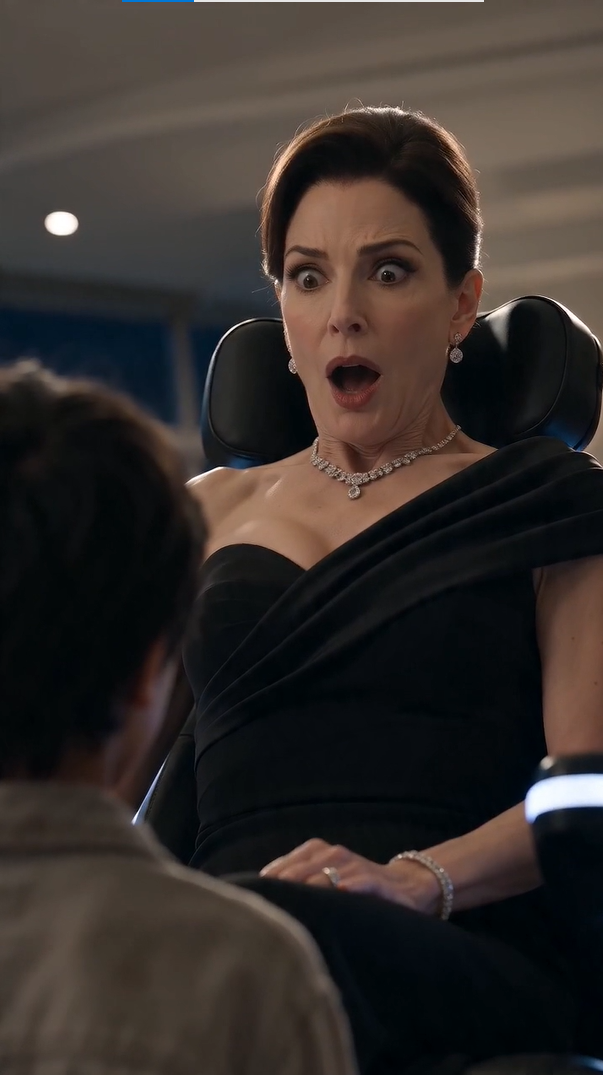
Nobody laughed anymore.
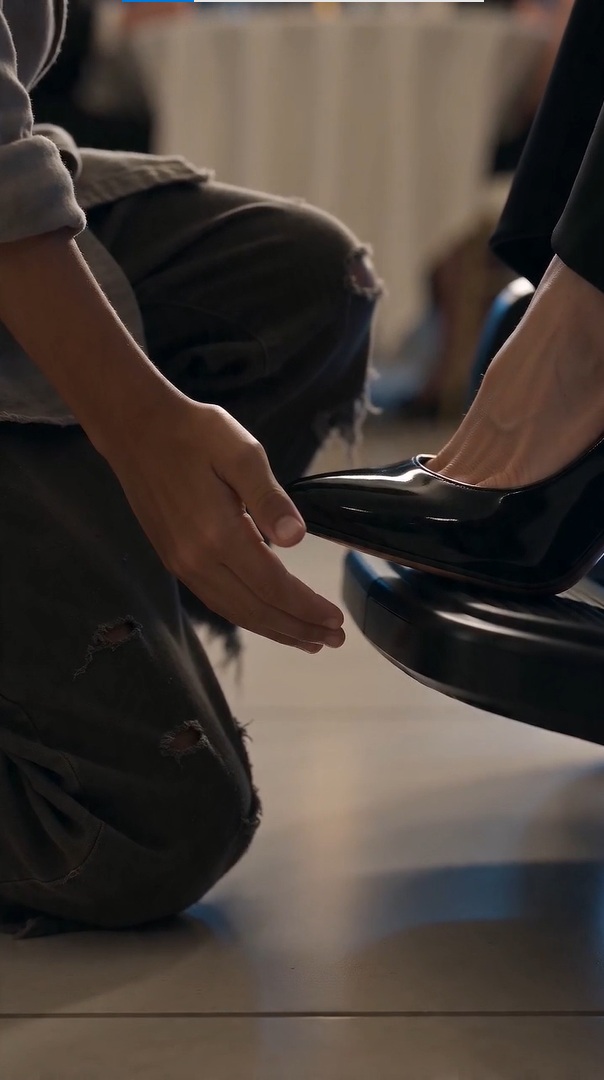
The rich man stared at his foot like it belonged to someone else. His breathing broke into sharp, terrified sounds as the boy kept one hand gently pressed against him.
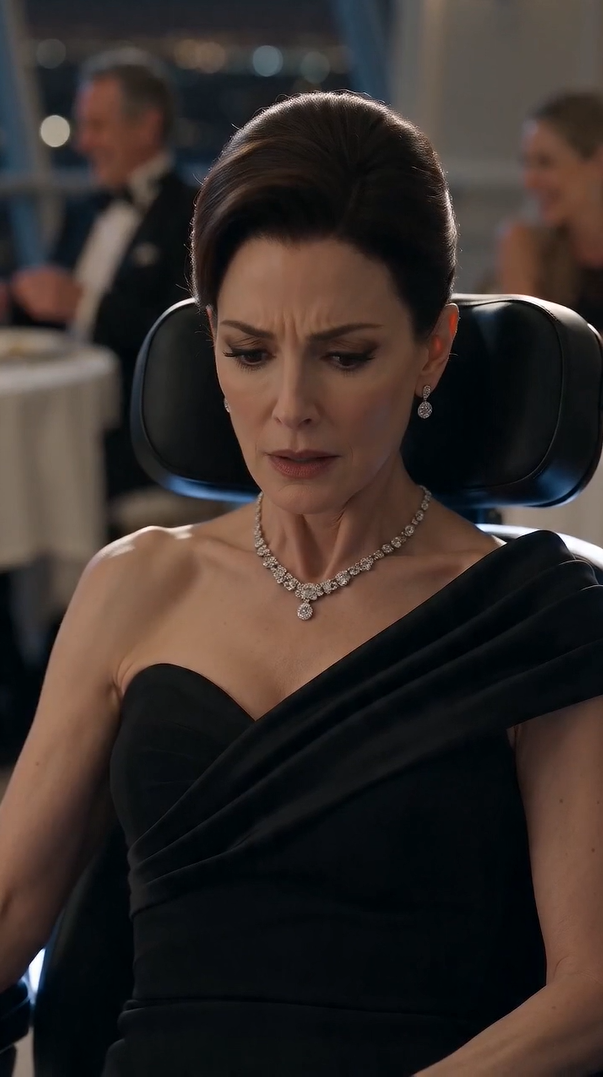
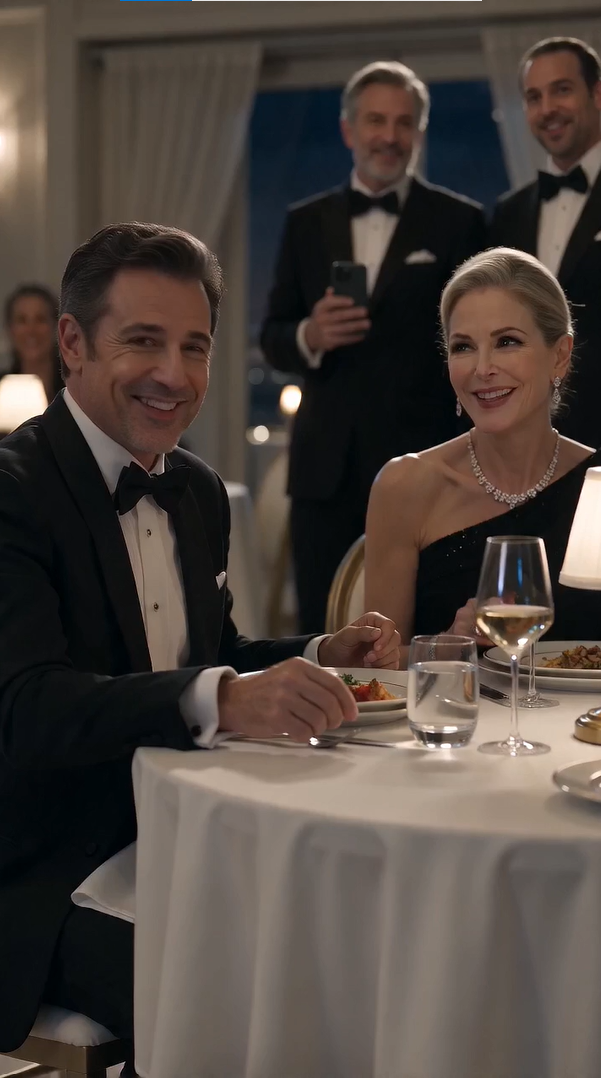
The woman in diamonds lowered her phone.
The wine in the glass trembled harder.
The man whispered, “What are you?”
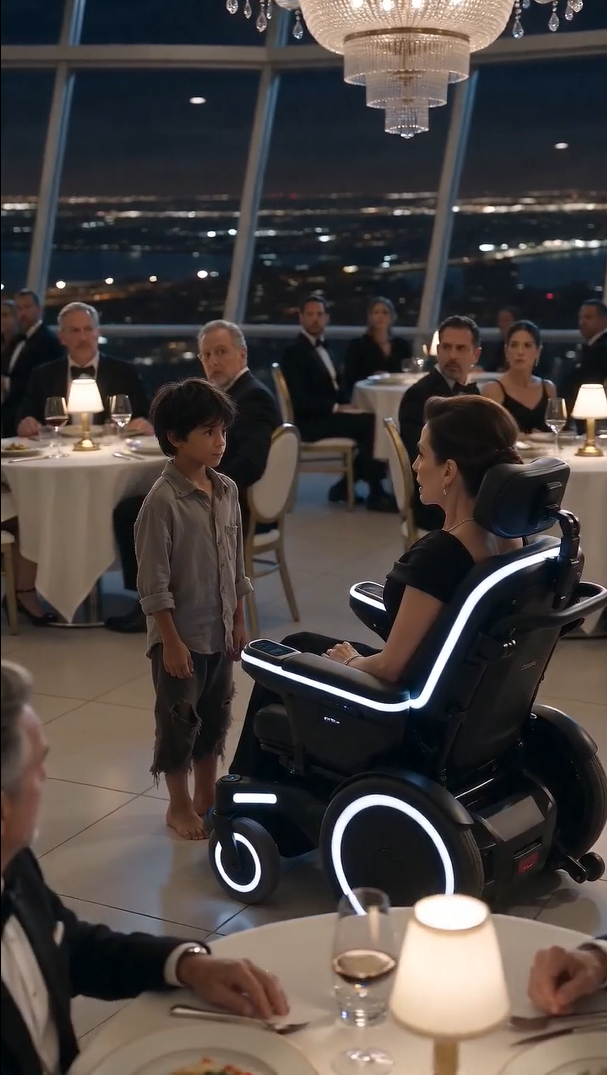
The boy looked up at him, and for the first time, the room saw he wasn’t just poor.
He was exhausted.
Like he had walked through a whole life of locked doors to reach that table.
“My mother said you would know me when I touched your leg.”
The man’s face changed.
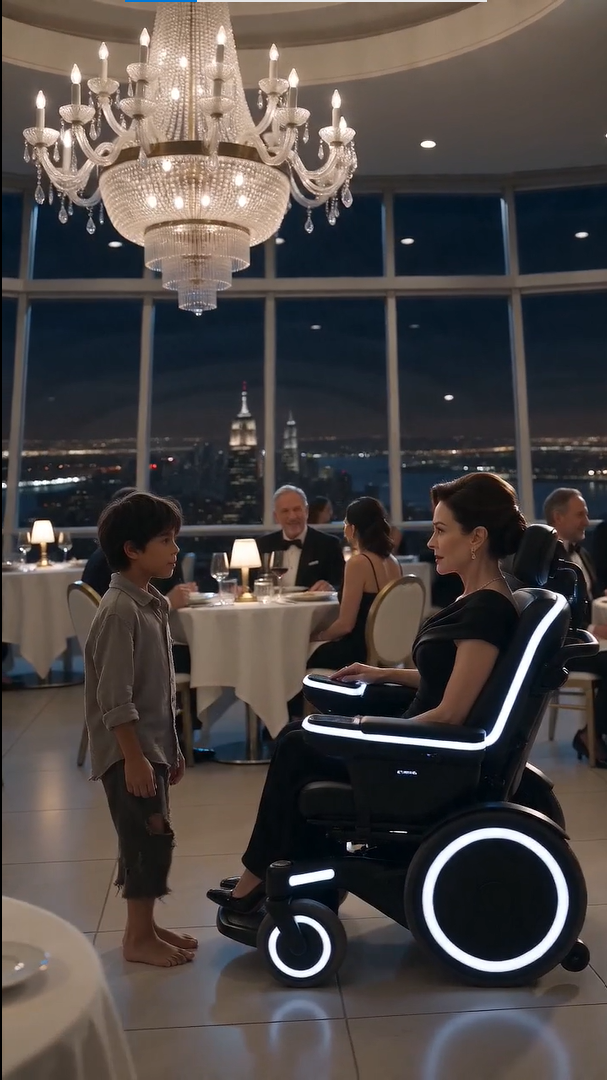
A memory hit him so hard his hand slipped from the table.
Years ago, before the wheelchair, before the money became his whole body, there had been a woman with the same strange calm eyes.
A woman who saved him after the accident.
A woman he paid to disappear because her gift frightened him.
His lips trembled.
“What was her name?”
The boy pulled a folded hospital bracelet from his torn pocket.
The man saw the name and went pale.
Elena.
The boy’s voice broke for the first time.
“She died last night.”
The restaurant vanished around the man.
The boy looked at the wheelchair, then at his face.
“She told me not to hate you,” he whispered. “She said if I found you, I should give back what she gave you once.”
The man’s legs shook.
Slowly, impossibly, he stood.
Gasps filled the room.
But the boy stepped back, tears in his tired eyes.
The man reached for him.
“Wait.”
The boy shook his head.
“I didn’t come for your million.”
Then he placed the hospital bracelet on the marble table.
“I came so you could walk to her grave yourself.”
The words crushed the room harder than any scream could have.
The rich man stared at the bracelet lying between the silver plates and untouched food. Around it were drops of spilled wine, crumbs of expensive bread, and the reflection of a chandelier that cost more than most families made in a year.
But all he could see was Elena’s name.
Elena.
The woman he had tried to forget.
The woman he had buried alive in his memory because remembering her meant remembering the kind of man he had become.
His knees trembled beneath him.
For years, he had told himself she was just a nurse.
Just a strange woman who had been near him when the doctors said his legs would never move again.
Just someone he had paid enough money to leave quietly.
But he remembered the truth now.
He remembered rain hammering against the hospital windows.
He remembered pain so deep he had begged to die.
He remembered doctors speaking in careful voices.
Permanent damage.
No response.
No chance.
And then Elena had sat beside him after everyone else left.
She had not cried.
She had not promised miracles.
She had only placed both hands on his legs and said, “If this works, you must never use your second chance to become cruel.”
He had laughed at her then.
But by morning, his toes moved.
By the end of the week, he stood.
By the end of the month, he walked.
And by the end of the year, he had made sure no one ever spoke her name around him again.
Because gratitude was uncomfortable.
Debt was unbearable.
And fear was easier to hide beneath money.
Now her son stood in front of him, thin, tired, and wearing shoes with holes near the toes.
The man swallowed hard.
“She had a child?”
The boy looked at him quietly.
“She had me.”
The woman in diamonds shifted in her chair.
“This is some kind of trick,” she whispered, but her voice had lost its power.
The rich man did not even look at her.
He kept staring at the boy.
“How old are you?”
“Twelve.”
The man closed his eyes.
Twelve years.
For twelve years, Elena had lived somewhere in the same world as him, raising a son alone, while he built towers, bought cars, and allowed people to call him generous at charity events.
For twelve years, he had signed checks with his name printed in gold while the woman who had saved his life disappeared into hospital corridors, cheap apartments, and silent suffering.
His voice cracked.
“Why didn’t she come to me?”
The boy’s face hardened for the first time.
“She did.”
The man froze.
“She came when I was six,” the boy said. “She waited outside your office for three hours. Your assistant told her you were busy.”
The rich man shook his head slowly.
“I never knew.”
“She came again when I was nine. She had my school bag with her because she picked me up from class first. She said she just needed five minutes.”
The boy’s eyes filled with tears, but he did not let them fall.
“Your guards pushed her outside.”
The man looked down.
His hands curled into fists.
“She wrote letters too,” the boy continued. “I used to watch her write them at the kitchen table. She never asked for money. Not once. She only asked if you remembered what she told you.”
The room stayed silent.
Even the waiters stood still against the walls.
The rich man whispered, “What did I do?”
The boy looked at him like the answer was already everywhere.
“You forgot.”
That one word was worse than anger.
The man took one step forward, then another.
Each step looked painful, not because his legs were weak, but because every movement carried the weight of the woman who had given those legs back to him.
He reached for the bracelet.
His fingers shook so badly he could barely pick it up.
“Elena,” he whispered.
Then he looked at the boy.
“What is your name?”
The boy hesitated.
For the first time, he looked like a child again.
“Mateo.”
The man’s face twisted.
“Mateo.”
He said it softly, as if the name itself deserved care.
“Where is she?”
Mateo looked away.
“Outside the city. The public cemetery near Saint Mary’s clinic.”
The rich man stared at him.
“They put her in a public cemetery?”
Mateo’s jaw tightened.
“We didn’t have money for anything else.”
A sound left the man’s throat.
Not a word.
Not a sob.
Something smaller.
Something ashamed.
He looked around the restaurant.
At the people who had laughed.
At the woman in diamonds who had filmed a poor boy for entertainment.
At the men in suits who had raised their glasses while a hungry child stood beside their table.
And for the first time in years, he saw them clearly.
He saw himself clearly.
A rich room full of empty people.
He turned to the woman beside him.
“Give me your car keys.”
She blinked.
“What?”
“Your car keys.”
“You can’t be serious.”
He looked at her with a coldness she had never seen before.
“I have never been more serious.”
She placed the keys on the table with shaking fingers.
Then he turned to his assistant, who stood near the wall with a pale face.
“Cancel everything.”
“Sir, the board dinner, the press interview, the mayor is arriving in twenty minutes.”
“Cancel everything,” he repeated.
Then he looked at Mateo.
“Take me to her.”
Mateo stepped back.
“I already gave you what I came to give.”
“No,” the man said, his voice breaking. “You gave me the truth. Now let me carry it properly.”
Mateo looked at him for a long time.
The whole room waited.
Finally, the boy nodded once.
Outside, the night air was cold.
The photographers who usually followed the rich man lifted their cameras, but he did not pause for them. He walked past the flashing lights with Elena’s bracelet clenched in his hand.
For years, newspapers had written about him walking into deals, walking across stages, walking through crowds that worshiped him.
That night, every step felt different.
That night, he was not walking toward applause.
He was walking toward a grave.
Mateo sat in the back seat beside him, silent.
The rich man wanted to ask him a hundred questions.
Did Elena suffer?
Was she afraid?
Did she speak his name with hatred?
Did she forgive him?
But he could not force the boy to comfort him.
So he said nothing.
The city lights faded behind them.
The road grew narrow.
The car turned past old shops, closed pharmacies, and apartment blocks with laundry hanging from balconies.
Finally, they reached a small cemetery near the edge of town.
There were no marble angels.
No iron gates.
No golden plaques.
Just rows of simple stones and wooden crosses under a tired yellow lamp.
Mateo got out first.
The rich man followed.
His expensive shoes sank slightly into the damp ground.
Mateo walked ahead, past three rows, then stopped in front of a fresh mound of earth.
There was no proper headstone yet.
Only a small wooden marker.
Elena Marquez.
Beloved mother.
The rich man stared at it.
His whole life seemed to stop at that piece of wood.
Mateo knelt first.
He placed one hand on the soil.
“Mom,” he whispered. “I found him.”
The rich man could not breathe.
He lowered himself slowly to his knees.
The dirt stained his trousers.
He did not care.
For the first time in years, he bowed his head to someone who had nothing and had given him everything.
“I’m sorry,” he whispered.
The wind moved through the cemetery.
No one answered.
He pressed the hospital bracelet against the grave.
“I was afraid of you,” he said. “That was the truth. You gave me something I didn’t understand, and instead of honoring it, I ran from it. I buried you in money and silence.”
His voice broke.
“And you still sent your son to me.”
Mateo wiped his eyes with his sleeve.
“She said your heart was more injured than your legs.”
The man covered his face with both hands.
That finished him.
He cried there, on the wet ground, beside the grave of the woman he had abandoned.
Not the pretty tears rich men show at charity dinners.
Not the controlled grief of someone who knows people are watching.
He cried like a man finally seeing the wreckage behind him.
Mateo sat quietly beside him.
After a long time, the rich man looked at the boy.
“How did she die?”
Mateo’s face went still.
“She got sick. Her lungs. She kept working even when she couldn’t breathe right. She said medicine cost too much.”
The man’s eyes closed.
“She should have had doctors.”
“She did,” Mateo said quietly. “Just not the kind you can keep when you can’t pay.”
The man looked at the grave again.
There are sentences that do not need anyone to say them aloud.
This was your fault.
He knew.
Not because he had made her sick.
But because he had had the power to help and chose comfort instead.
He reached into his coat and pulled out his phone.
Mateo stiffened.
The man noticed.
“I’m not calling the press.”
He dialed his lawyer.
When the call connected, his voice changed.
Not louder.
Clearer.
“I need a trust created tonight. In the name of Elena Marquez.”
He listened for a moment.
“No, not tomorrow. Tonight.”
Mateo stared at him.
The man continued.
“Healthcare, housing, and education support for single mothers and children who cannot pay. Start with fifty million.”
The lawyer said something on the other end.
The rich man looked at the grave.
“Then make it one hundred.”
Mateo stood suddenly.
“I told you I didn’t come for your money.”
The man ended the call and looked up at him.
“I know.”
“Then why are you doing that?”
“Because your mother should not be the last person I failed.”
Mateo’s eyes filled again.
“I don’t want your charity.”
The man stood slowly.
“It isn’t charity.”
“What is it then?”
The man looked at Elena’s grave.
“A debt.”
Mateo shook his head.
“You can’t pay her back.”
“No,” the man whispered. “I can’t.”
The truth sat between them.
Heavy.
Final.
Then the man said, “But I can spend the rest of my life proving I finally understood what she gave me.”
Mateo stared at him.
The boy had come ready to hate him.
He had carried grief, hunger, and his mother’s last wish through the city like a stone in his chest.
But hate is hard to hold when the person in front of you is no longer hiding.
Still, forgiveness was not simple.
And it was not owed.
Mateo looked back at the grave.
“She told me something else before she died.”
The man waited.
“She said, ‘If he kneels, don’t let him stay there forever.’”
The man’s lips trembled.
Mateo wiped his face.
“So stand up.”
The man looked at him.
Mateo’s voice shook.
“She didn’t save your legs so you could spend your life on your knees.”
For a moment, the rich man could not move.
Then slowly, he stood.
The boy stood beside him.
Not close.
Not like family.
Not yet.
But beside him.
The next morning, the restaurant video was everywhere.
Not the part where people laughed at the poor boy.
Not just the impossible moment the man stood from his wheelchair.
But the ending.
The hospital bracelet on the marble table.
The words that silenced a room.
“I came so you could walk to her grave yourself.”
The world wanted to turn Mateo into a miracle.
They called him gifted.
They called him strange.
They called him blessed.
But the rich man refused every interview that asked about the boy’s touch.
Instead, he held a press conference outside Saint Mary’s clinic.
He stood without his wheelchair.
No gold watch.
No expensive smile.
Only a folded paper in his hand and Elena’s bracelet around his wrist.
“Years ago,” he said, “a woman named Elena Marquez saved my life. I repaid her with fear, silence, and pride. Last night, her son brought me the truth I spent years avoiding.”
The cameras flashed.
His voice stayed steady.
“I cannot undo what I did. I cannot bring her back. But I can tell the truth. And I can make sure her name opens doors for people who have had too many closed in their faces.”
Behind him, Mateo stood beside a nurse from the clinic.
He did not smile.
He did not wave.
He looked tired.
But not alone.
The Elena Marquez Foundation opened its first office three months later.
Not in a glass tower.
Not in a rich district.
It opened beside the clinic where Elena had worked double shifts until her body gave out.
The first woman they helped was a young mother who had been choosing between rent and medicine for her son.
The second was an old man who needed surgery but had stopped asking because rejection had become too familiar.
The third was a girl with a scholarship letter and no way to pay for books.
Each time the rich man signed a check, he thought of Elena.
Not as a ghost.
Not as a regret.
As a command.
Do better.
Mateo did not move into the mansion.
He refused.
For a while, he stayed with the nurse who had loved his mother like a sister.
The rich man respected that.
He did not push.
He did not buy him gifts he did not ask for.
He did not call himself family.
He showed up instead.
At school meetings.
At the cemetery.
At the clinic.
At quiet dinners where Mateo barely spoke.
Some days the boy answered him.
Some days he didn’t.
The rich man accepted both.
Because trust is not a door money can unlock.
It is built.
One truthful day at a time.
On the first anniversary of Elena’s death, Mateo arrived at the cemetery holding white flowers.
The rich man was already there.
He stood in front of the grave, hands folded, head bowed.
A proper stone had replaced the wooden marker.
Elena Marquez.
Beloved mother.
A woman who gave life twice.
Mateo stood beside him and placed the flowers down.
For a long time, neither of them spoke.
Then Mateo looked at the man’s legs.
“Do they still hurt?”
The rich man nodded.
“Sometimes.”
“Good,” Mateo said softly.
The man looked at him.
Mateo’s eyes stayed on the grave.
“Pain helps people remember.”
The man swallowed.
“Yes,” he said. “It does.”
Mateo reached into his pocket and pulled out something small.
Another bracelet.
This one was worn and faded.
His own hospital bracelet from the day he was born.
“My mother kept this,” he said. “She said I was the only miracle she never regretted.”
The rich man’s eyes filled.
Mateo placed the bracelet beside Elena’s flowers.
Then he turned and began walking back toward the gate.
After a few steps, he stopped.
He looked over his shoulder.
“Are you coming?”
The man stared at him.
It was not forgiveness.
Not fully.
Not yet.
But it was a door.
Unlocked just enough.
He looked once more at Elena’s grave.
Then he walked after her son.
Step by step.
Not toward applause.
Not toward cameras.
Not toward power.
Toward the boy who had carried his mother’s last mercy into a room full of cruelty.
Toward the life Elena had asked him to live.
And behind them, under the quiet morning light, her name rested on stone.
No longer hidden.
No longer forgotten.
The woman he had paid to disappear had become the reason thousands of doors would open.
And every time he walked through one, he remembered why he still could.