One year after the divorce, I ran into my ex-husband at the hospital, and when he smirked about having a one-year-old son with my former best friend, I smiled and said, “Really?” — five minutes before a man walked in and she dropped the baby bottle.
One year after the divorce, I ran into my ex-husband at the hospital, and when he smirked about having a one-year-old son with my former best friend, I smiled and said, “Really?” — five minutes before a man walked in and she dropped the baby bottle.
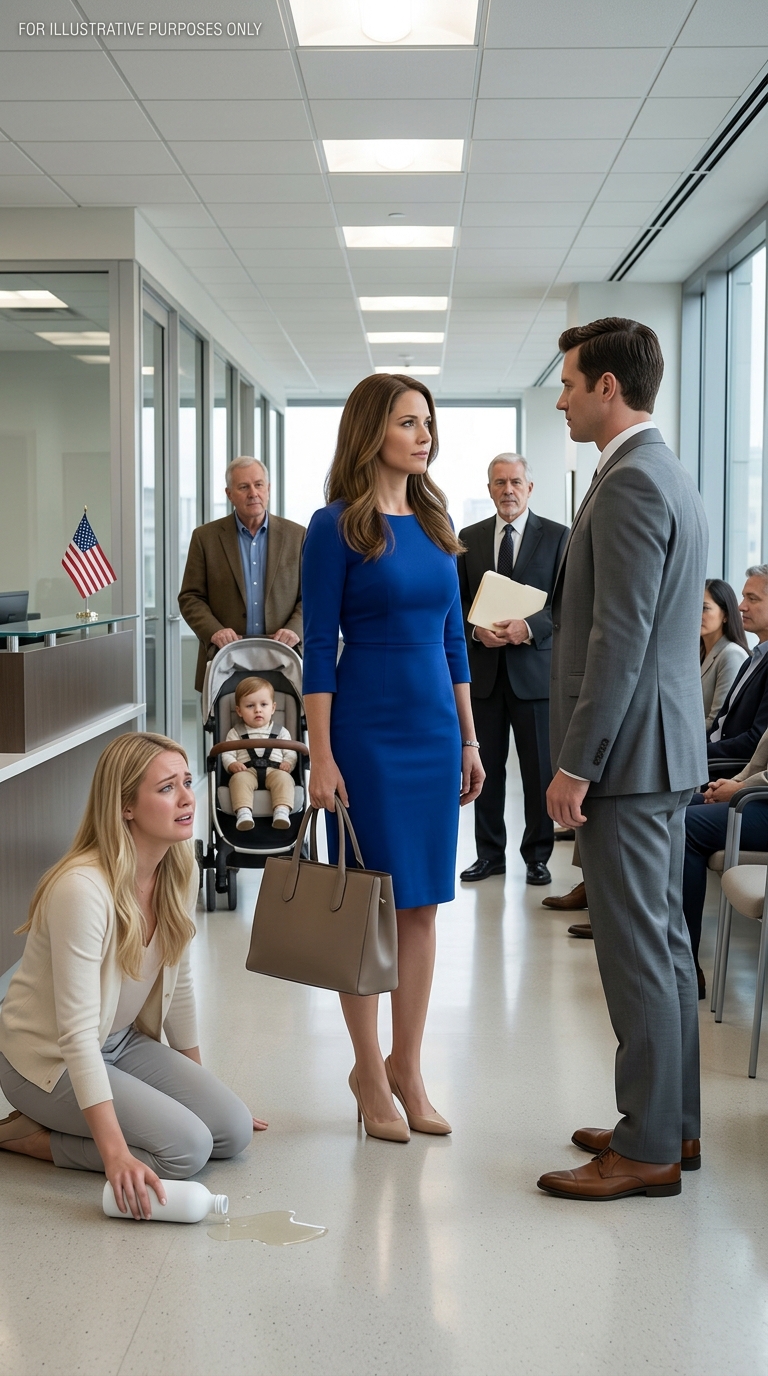
Connor Fleming was standing in the pediatric wing like he owned the hallway.
One hand on a diaper bag.
One polished shoe planted beside the stroller.
That same smug smile sitting on his face like the last twelve months had been nothing but a victory lap.
Beside him stood Melinda Travis.
My former best friend.
The woman who used to sit across from me at brunch, squeeze my hand, and tell me I deserved better while she was already becoming the reason my marriage was ending.
She was holding a baby bottle in one hand and adjusting a blanket with the other, trying very hard to look calm.
The little boy in the stroller reached for a toy giraffe.
He had soft blond hair, blue eyes, and no idea that the adults above him were about to turn a hospital waiting area into a courtroom without a judge.
I was wearing my white coat.
My badge still said Dr. Kirsten Sinclair.
My tablet was tucked under my arm, full of patient charts.
I had a staff meeting in twelve minutes.
And for half a second, I thought I could keep walking.
Then Connor saw me. His smile widened.
“Well,” he said loudly enough for the nurses’ station to hear. “Look who it is.”
A mother holding a clipboard looked up.
An older man stopped turning the page of his magazine.
Melinda’s fingers tightened around the bottle.
I stopped in the middle of the hallway.
“Hello, Connor.”
He looked disappointed that my voice didn’t shake. That had always bothered him. During our marriage, he loved emotional reactions. He collected them. Tears, anger, pleading silence, anything he could point to later and call unreasonable.
But I had spent twenty years in medicine.
I had learned how to keep my hands steady when families panicked.
I had learned how to speak clearly when rooms became loud.
And I had learned that some men mistake calm for weakness because they have never seen what restraint costs.
Connor glanced at my badge.
“Still working too much?”
Melinda looked down. I almost laughed. That accusation had survived the divorce, apparently.
Too many shifts. Too many patients. Too much ambition. Too much of a life outside the version of wife he wanted me to be.
“I enjoy my work,” I said.
His smile sharpened.
“Oh, I know.”
The air changed. People felt it. Hospital waiting rooms have a strange way of becoming silent when humiliation enters wearing expensive cologne.
Connor shifted closer to the stroller, like he wanted to make sure I saw everything.
The baby.
The blanket..
The little family portrait he thought would cut me open in public.
Then he delivered the line he had probably rehearsed in his head for months.
“Leaving you was the best decision I ever made.”
Melinda whispered, “Connor.”
But he was already performing.
He looked around just enough to make sure the audience had grown.
Then he said it.
“A woman who can’t have children shouldn’t act surprised when a man finally builds a real family.”
The nurse behind the desk froze.
A man near the vending machine lowered his coffee cup.
Melinda’s face went pale.
There it was.
The old wound.
The one he had pressed for years.
Seven years of appointments.
Seven years of tests.
Seven years of driving home from clinics in silence while I stared out the passenger window and blamed myself for something I didn’t yet understand.
Back then, I thought grief had made us cruel.
Now I knew cruelty had simply been living in the house with me.
Connor nodded toward the stroller.
“I’m lucky,” he said. “I have a one-year-old son with your best friend.”
Melinda’s mouth parted, but no words came out.
The baby bottle trembled slightly in her hand.
I looked at the child first.
Because none of this was his fault.
Then I looked at Melinda.
She still would not meet my eyes.
That was the first thing that felt wrong.
Not guilty.
Not proud.
Afraid.
Finally, I looked back at Connor.
He was waiting.
He wanted the scene.
He wanted my face to crack.
He wanted a tear, a raised voice, one sharp word he could carry around later as proof that he had been right about me all along.
So I smiled.
Small.
Controlled.
Almost polite.
“Really?”
His expression changed before he could stop it.
Just a flicker.
But I saw it.
Doctors are trained to notice small changes.
A shallow breath.
A tightening jaw.
A pulse jumping under the skin.
Connor blinked.
“What does that mean?”
“Nothing,” I said.
My phone buzzed inside my lab coat pocket.
I ignored it at first.
Connor stepped closer.
“No, say it. You always had something to say when we were married.”
“I remember you talking more than I did.”
A few people shifted.
Please type “YES” if you’re ready for the next part and I’ll send it right away.

Показать меньше