
The first time I ate dinner at my wife’s parents’ house, I thought they had forgotten to finish cooking.
Claire and I had been dating for around six months, and although I had met her parents several times, this was the first time her mother had invited me for a full Sunday meal.
I wanted to make a good impression.
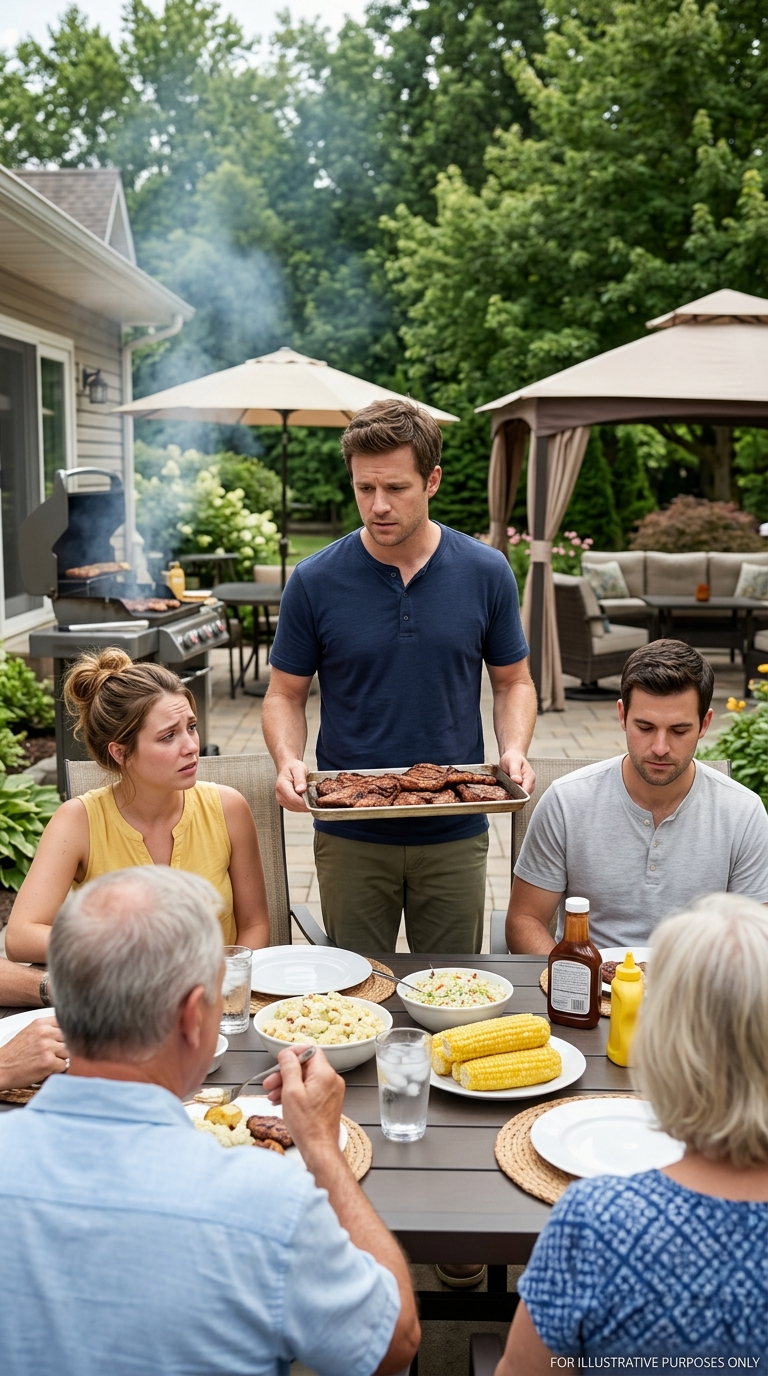
I arrived with flowers for her mother and a bottle of wine for the table. Claire’s father shook my hand at the door. Her mother, Linda, hugged me and told me I was too thin even though I was not.
The house smelled warm and familiar.
There was roasting meat, boiled vegetables, and something faintly buttery in the air. A football game played quietly from the living room. Claire’s older brother, Nathan, was sitting on the couch with his wife, Beth.
Everyone was friendly.
That was important.
There was never anything cruel about Claire’s family. They did not criticize the food I brought, question my job, or test me with uncomfortable personal questions.
Linda asked whether I wanted coffee.
Her father, George, showed me a shelf he had built in the garage.
Nathan offered me a beer.
By the time we sat down to eat, I felt welcomed.
Then Linda carried in the Cornish hens.
They looked beautiful from a distance.
The skin was golden, the portions were generous, and the platter had been arranged carefully with sprigs of parsley around the edges.
I took a piece and added mashed potatoes, green beans, and a dinner roll to my plate.
Everyone began eating.
I cut into the hen.
The meat was cooked properly.
It was tender and juicy.
It tasted like absolutely nothing.
I chewed slowly, waiting for some flavor to appear.
Nothing did.
The skin had not been salted. There were no herbs, no garlic, no pepper, no lemon, and no spice that I could detect.
I tried the mashed potatoes.
They were potatoes.
Not bad potatoes.
Not lumpy or watery.
Just boiled potatoes that had been mashed and placed into a bowl.
No butter.
No milk.
No cream.
No salt.
George reached across the table for a tub of Country Crock and dropped a large spoonful onto his potatoes.
Nathan shook salt over his entire plate.
Beth added pepper.
Claire took barbecue sauce from the center of the table and poured some beside the chicken.
That was when I noticed the collection of sauces.
Ketchup.
Mustard.
A1.
Barbecue sauce.
Ranch dressing.
Hot sauce.
Salt and pepper shakers.
The center of the table looked like a restaurant condiment station.
Linda smiled at me.
“Everything all right?”
“Yes,” I said.
It was technically true.
The food was safe, cooked, and filling.
I reached for the salt.
Claire watched me.
I added a little to the potatoes, then pepper, then some butter substitute.
The food improved.
Not enough to become exciting, but enough that I could eat comfortably.
No one seemed offended.
In fact, everyone seasoned their own plate without discussion.
After dinner, Linda served apple pie, which was excellent.
I praised it honestly.
On the drive home, Claire asked what I thought of the meal.
“Your mom is really nice.”
“That isn’t what I asked.”
“The pie was great.”
She laughed.
“You hated the chicken.”
“I didn’t hate it.”
“You used every sauce on the table.”
“Not every sauce.”
“You considered it.”
I smiled.
“The chicken was a little plain.”
“That’s how Mom cooks.”
“I noticed.”
“She thinks people should season food themselves.”
“After it’s cooked?”
“Yes.”
“Why?”
“Because everyone likes different things.”
I thought about that.
The logic was not completely ridiculous.
Some people wanted more salt. Others wanted less. One person liked pepper. Another preferred barbecue sauce.
Preparing food simply allowed everyone to control the final taste.
Still, I had grown up cooking differently.
My father seasoned meat before it went anywhere near heat. He rubbed herbs beneath chicken skin. He salted steaks before grilling them. He taught me that garlic needed time in oil, spices tasted better after blooming, and barbecue sauce became deeper and stickier when it caramelized over fire.
Food was not supposed to be a blank object that became flavorful only after reaching the plate.
The flavor was meant to develop during cooking.
“You don’t think it tastes unfinished?” I asked.
Claire shrugged.
“It’s what I grew up eating.”
That explanation became the answer to almost every food discussion between us.
It’s what I grew up eating.
We married several years later and moved into a small house ten minutes from her parents.
Living close to them had many advantages.
Linda collected packages when we were at work.
George helped when our kitchen sink leaked.
If one of us was sick, soup appeared at the door.
Linda cooked dinner for us regularly, sometimes twice a week.
She never demanded payment or treated the meals as a favor we owed her for later.
She simply liked feeding people.
I appreciated that.
I also learned to keep seasonings in our kitchen.
Whenever Linda sent over meat, I added something after reheating it.
Salt.
Pepper.
Hot sauce.
Garlic butter.
I did this privately because Claire seemed sensitive about the subject.
She believed criticizing her mother’s food was ungrateful.
I agreed that direct criticism would be rude.
Linda spent time and money preparing meals for us. I would never insult her cooking or demand that she change.
But there was a difference, in my mind, between insulting someone and adjusting food to your taste.
Claire did not always agree.
The disagreement became clear during a family cookout.
Linda had purchased chicken breasts for the grill. She arranged them on a tray and carried them toward the patio.
The chicken was raw, pink, and completely plain.
No marinade.
No salt.
No oil.
Nothing.
I was helping George light the grill when I saw them.
“Are those going straight on?” I asked.
Linda nodded.
“Yes.”
“Could I season mine first?”
I tried to make the question casual.
Linda looked at the tray.
“Of course.”
She did not appear offended.
“What do you want on it?”
“I can do it.”
I went inside, found garlic powder, salt, black pepper, and a little paprika. I rubbed them over one chicken breast and marked it with a toothpick so we would know which one was mine.
Linda watched with interest.
“That smells good,” she said.
“You’re welcome to use some on the others.”
“No, everyone can decide after.”
She carried the tray outside.
That should have been the end of it.
During the meal, my chicken tasted good.
The seasoning had cooked into the surface. The paprika gave it color. The salt had helped the meat retain flavor.
The rest of the family added sauces to their plain chicken.
No one complained.
On the drive home, however, Claire was quiet.
I knew the signs.
She looked through the passenger window and gave short answers when I asked questions.
“What’s wrong?” I said eventually.
“Nothing.”
“Claire.”
She sighed.
“I thought the thing with the chicken was rude.”
“What thing?”
“Seasoning only yours.”
“Your mom said it was fine.”
“She was being polite.”
“She offered me the spices.”
“She shouldn’t have had to.”
“I didn’t ask her to season it.”
“You made it look like her food wasn’t good enough.”
I stared at the road.
“I asked before touching anything.”
“That isn’t the point.”
“What is the point?”
“You were a guest.”
“So I should eat something I don’t enjoy even when there’s a simple solution that doesn’t inconvenience anyone?”
“It was one chicken breast.”
“Exactly.”
“That’s why you could have left it alone.”
I felt frustration rising.
I reminded myself that this was her mother.
Food carried emotional meaning.
“I wasn’t criticizing Linda,” I said. “I just believe seasoning works better before food is cooked.”
“You could add salt afterward.”
“It isn’t the same.”
“It is to us.”
“I know.”
“Then why make it an issue?”
“I didn’t make it an issue. I seasoned my own piece after asking.”
Claire shook her head.
“You always have to improve things.”
The sentence surprised me.
“What does that mean?”
“You can’t just accept something as it is.”
“We’re discussing chicken.”
“It’s not only chicken.”
She did not explain further.
The conversation ended with both of us irritated.
For a while, I avoided cooking around her family.
I ate what Linda served.
I used the condiments.
I praised the meals when there was something specific to praise.
“Those rolls are good.”
“The meat is tender.”
“The pie is excellent.”
I never lied by calling plain food flavorful.
Over time, the issue became a family joke.
Nathan would pass me the hot sauce before I asked.
George once placed the salt shaker beside my plate and said, “Your emergency supplies.”
I laughed.
Linda laughed too.
The jokes never felt hostile.
If anything, I believed everyone understood that I preferred stronger flavors.
That was why I thought offering to make barbecue wings would be safe.
The idea came up during a discussion about an upcoming Saturday dinner.
Linda usually hosted, but she had been busy helping one of her sisters move.
“I don’t know what to cook this weekend,” she said during a phone call with Claire.
I was sitting nearby.
“I can do wings,” I said.
Claire repeated the offer.
Linda sounded pleased.
“That would be wonderful.”
“How many people?” I asked.
“Six adults.”
That included Linda, George, Nathan, Beth, Claire, and me.
I calculated that around fifty wings would be more than enough, especially with sides.
I asked whether everyone liked barbecue.
Claire gave me an impatient look.
“Of course they do.”
Her family used barbecue sauce on almost everything.
Chicken.
Steak.
Pork.
Sometimes potatoes.
I assumed barbecue wings were the least controversial food I could make.
The day before dinner, I bought several large packages of chicken wings.
I also purchased barbecue sauce, though we already had some at home.
I wanted enough to coat the wings properly and serve extra on the side.
Saturday morning, I cleaned and dried the wings.
Drying mattered because wet skin would steam instead of crisping.
I arranged them in large bowls and seasoned them with salt, pepper, garlic powder, onion powder, and paprika.
Nothing was especially spicy.
There was no chili powder or cayenne.
I chose basic flavors I believed almost everyone would tolerate.
Claire entered the kitchen while I was mixing the wings.
“That’s a lot of powder.”
“It’s fifty wings.”
“Are they going to be spicy?”
“No.”
“What’s the red stuff?”
“Paprika.”
“Isn’t that spicy?”
“Not this kind.”
She looked uncertain.
“You know my family doesn’t like strong food.”
“It’s garlic, onion, paprika, salt, and pepper.”
“That sounds strong to them.”
I stopped mixing.
“Do you want me to leave some plain?”
She hesitated.
That was the moment when the entire problem could have been avoided.
If she had said yes, I would have separated ten or fifteen wings.
But she looked at the bowl and shrugged.
“They’ll probably be fine.”
“Are you sure?”
“Yes.”
I continued.
The wings rested in the refrigerator for several hours so the salt and seasoning could settle into the skin.
That afternoon, I packed the wings, sauce, grill tools, and a meat thermometer into the car.
At Linda’s house, George had already started the grill.
He looked at the trays.
“That’s enough for an army.”
“I’d rather have leftovers than not enough.”
Nathan arrived with Beth shortly afterward.
He carried a grocery bag.
I assumed it contained drinks.
While I arranged the wings on the grill, everyone sat on the patio talking.
The weather was warm but not hot. Linda brought out potato salad, coleslaw, and corn.
I grilled the wings in batches, turning them carefully to avoid burning the skin.
The smell drew compliments.
“That actually smells good,” Nathan said.
I looked at him.
“Actually?”
“You know what I mean.”
When the wings were nearly cooked, I brushed them with barbecue sauce.
Then I turned them over the heat until the sauce became sticky and dark around the edges.
I added another thin layer and repeated the process.
This was how I understood barbecue wings.
Not plain grilled wings placed beside a bowl of sauce.
Wings cooked with barbecue sauce so the sugar caramelized, the surface became glossy, and the flavor attached to the meat.
I placed the finished wings into two large trays.
They looked good.
Golden-red, slightly charred in places, and coated without swimming in sauce.
I was proud of them.
As I carried the trays through the kitchen, I saw Nathan unpacking the grocery bag.
Inside was a large bottle of barbecue sauce.
Not the same brand I had used.
He placed it on the table beside the ketchup and A1.
The sight bothered me immediately, though I was not sure why.
Perhaps he had brought his favorite sauce simply because he preferred it.
Or perhaps he had expected plain wings.
I considered asking.
Then I decided it did not matter.
There was extra sauce available if he wanted more.
Everyone filled their plates.
Linda took corn, potato salad, and coleslaw.
She did not take a wing.
George took three.
Nathan took two.
Beth selected one.
Claire put several on her plate.
I took five.
At first, I told myself everyone was starting slowly.
There were plenty of wings. People could return for more.
No one did.
Conversation continued normally.
Nathan ate one wing and left the second on his plate.
Beth took two bites of hers.
George finished all three but did not take more.
Linda never touched the tray.
I watched more closely than I should have.
“Are they too spicy?” I asked.
George shook his head.
“No.”
“Too smoky?”
“They’re all right.”
All right.
Nathan poured his own barbecue sauce into a small bowl.
He dipped part of his already-sauced wing into it.
“Not enough sauce?” I asked.
“I like this brand.”
“That makes sense.”
I tried to sound relaxed.
Beth drank water.
Linda asked whether anyone wanted more corn.
No one commented directly on the wings.
That silence became its own comment.
By the end of dinner, more than thirty wings remained.
Possibly closer to forty.
Linda offered to divide them between containers.
Nathan and Beth declined leftovers.
George said he might eat some later, but Linda placed only six in their refrigerator.
We took the rest home.
I carried two heavy containers to the car.
The smell of barbecue filled the interior.
Claire remained quiet until we reached the main road.
Then she said, “I’m surprised the wings weren’t more popular.”
I laughed softly.
“That’s one way to say it.”
“They were good.”
“You ate them.”
“Yes.”
“I think your brother expected plain wings.”
“Why?”
“He brought his own barbecue sauce.”
“He likes that brand.”
“I know, but maybe he assumed everyone would sauce their own.”
Claire looked at me.
“Why did you sauce all of them?”
The question confirmed my suspicion.
“Because they were barbecue wings.”
“You could have left them plain.”
“Then they would be grilled wings with barbecue sauce on the table.”
“That’s still barbecue wings.”
“Not to me.”
She turned toward the window.
“You knew how my family eats.”
“I also said I was making barbecue wings, not plain chicken.”
“You should have let people decide.”
“I asked you before cooking whether I should leave some plain.”
“You didn’t ask clearly.”
“I said, ‘Do you want me to leave some plain?’”
“I thought you meant without seasoning, not without sauce.”
“I would have done either.”
“You know they don’t like food prepared that way.”
“I knew they liked barbecue sauce.”
“On the side.”
I gripped the steering wheel.
“So when someone says barbecue wings, you picture completely plain wings?”
“I picture wings people can customize.”
“That isn’t what the dish usually means.”
“To your family.”
“To most restaurants.”
“We weren’t at a restaurant.”
I took a breath.
This was becoming another argument where the food itself was only half the issue.
“I spent hours cooking,” I said.
“No one asked you to make them complicated.”
“They were not complicated.”
“You seasoned them, grilled them, sauced them, grilled them again.”
“That is how barbecue wings are cooked.”
“They didn’t want that.”
“They could have told me.”
“You should know by now.”
The sentence irritated me more than anything else.
I should know by now.
I was expected to interpret their preferences without anyone stating them.
At the same time, Claire believed I should not expect them to understand what I meant by a common dish.
“So this is my fault?” I asked.
“I’m not saying fault.”
“You’re saying I should have predicted that adults who use barbecue sauce constantly would reject barbecue wings because the sauce was already on them.”
“You’re making it sound ridiculous.”
“It feels ridiculous.”
She crossed her arms.
“They don’t like the way you cook.”
The statement landed harder than it should have.
“My cooking?”
“You use too much seasoning.”
“No one has ever said that directly.”
“They don’t want to hurt your feelings.”
“Then how am I supposed to adjust?”
“You shouldn’t cook for them.”
I looked at her.
“What?”
“You should probably avoid cooking for my parents again.”
“Because one meal wasn’t popular?”
“Clearly no one likes the way you cook.”
She said it sharply.
Perhaps she was angry and did not mean it as a permanent judgment.
Still, I heard it clearly.
No one likes the way you cook.
We drove the rest of the way home mostly in silence.
When we arrived, I placed the containers in the refrigerator.
They occupied an entire shelf.
The next morning, the smell of barbecue remained in the kitchen.
I ate wings for lunch.
They tasted good.
Not perfect.
A few were slightly dry because I had cooked them in large batches.
But the seasoning was balanced. The sauce had caramelized well. They were not spicy.
I could not understand how six adults had eaten fewer than ten.
I began wondering whether they had disliked the flavor or the violation of their usual system.
Perhaps both.
Their family did not experience plain food as unfinished.
They experienced it as considerate.
Every person controlled their own plate.
No one was forced to eat garlic, paprika, or a sauce they did not choose.
From that perspective, saucing all fifty wings removed an option they assumed they would have.
I could understand that intellectually.
What bothered me was the lack of communication.
If Linda had said, “Could you leave half plain?” I would have done it.
If Claire had said, “My family expects sauce on the side,” I would have adapted.
Instead, they accepted my offer, watched me cook, barely ate, and later treated the result as proof that my cooking was unwanted.
That felt unfair.
I discussed it with my friend Marcus at work.
Marcus cared far too much about food and owned three smokers despite having a small backyard.
I described the wings.
He looked offended on my behalf.
“You caramelized the sauce?”
“Yes.”
“Two coats?”
“Yes.”
“And they wanted naked wings?”
“Apparently.”
“That is not barbecue.”
“That’s what I said.”
“They’re wrong.”
His immediate support felt satisfying but not useful.
“My wife says I should have known.”
“Did she tell you?”
“Not clearly.”
“Then no.”
“It’s her family. Maybe she thought it was obvious.”
“Families think their strange habits are normal.”
“That includes mine.”
“Exactly.”
He pointed at me with a screwdriver.
“Your mistake was assuming the name of a food means the same thing to everyone.”
That was closer to the truth.
I had heard barbecue wings and pictured a prepared dish.
They had heard chicken wings served with barbecue as an optional condiment.
Both expectations existed.
Only one of us was cooking.
Later that week, Linda called and asked whether we wanted to come for dinner.
She sounded completely normal.
There was no mention of the wings.
I considered declining.
Claire accepted for both of us.
“What is she making?” I asked after the call.
“Steak.”
“Thin gray steak?”
“Don’t start.”
“I’m asking.”
“She didn’t say.”
At dinner, Linda served thin steaks cooked well-done.
They were unseasoned.
A1, ketchup, salt, pepper, and barbecue sauce stood in the middle of the table.
I added salt and A1.
No one commented.
Afterward, Linda gave us leftover pie.
She remained kind.
That made it difficult to feel angry with her.
The conflict was mostly between Claire and me.
On the drive home, I said, “Your mom didn’t seem upset about the wings.”
“She wouldn’t show it.”
“Did she tell you she didn’t like them?”
“No.”
“Did your dad?”
“No.”
“Nathan?”
“He said they were stronger than he expected.”
“That is at least information.”
Claire sighed.
“Why do you need everyone to say it?”
“Because you told me clearly no one likes my cooking.”
“I was frustrated.”
“So you didn’t mean it?”
She hesitated.
“They prefer food differently.”
“That is not the same as disliking my cooking.”
“Evan.”
“What?”
“You want me to tell you the wings were amazing and everyone else was wrong.”
“No. I want you to stop treating their preference as the only correct standard.”
“I’m not.”
“You called my cooking rude when I seasoned one chicken breast.”
“Because it was Mom’s meal.”
“She gave permission.”
“You made a point.”
“I wanted flavor.”
“You always say that like their food has no value.”
“I never said it has no value.”
“You call it plain.”
“It is plain.”
“That sounds insulting.”
I realized then that Claire did not hear plain as a neutral description.
She heard it as criticism of her childhood.
Linda’s meals represented home, care, and family.
When I said the potatoes needed butter, Claire heard that the meals she loved were deficient.
When I seasoned chicken before grilling, she saw me correcting her mother.
When I made wings differently, she felt I had imposed my standards on everyone.
My intentions were about flavor.
Her response was about loyalty.
“I’m not attacking how you grew up,” I said.
“It feels like you are.”
“I like your mother.”
“I know.”
“I appreciate everything she cooks.”
“I know.”
“Then why is seasoning such a sensitive subject?”
She looked down.
“Because you act like you know the right way.”
That accusation contained some truth.
I did speak confidently about cooking.
I believed salt before heat behaved differently from salt after heat. That was not merely preference; it was chemistry.
I believed sauce caramelized on a grill created a different dish from sauce poured cold at the table.
Also true.
But being technically correct did not mean everyone had to prefer the result.
“I do think some methods work better,” I said.
“Exactly.”
“But that doesn’t mean your family has to like them.”
“You don’t act that way.”
“How should I act?”
“Stop being surprised.”
That was fair.
Their behavior was consistent.
They preferred plain bases and personal condiments.
I had known this for years.
Offering to cook barbecue wings without confirming the format had been an assumption.
Still, Claire’s final conclusion felt extreme.
“I can adapt,” I said. “But saying I should never cook for them again is unnecessary.”
“They barely ate.”
“One unsuccessful dish does not mean I’m banned from the kitchen.”
“No one banned you.”
“You did.”
“I suggested avoiding the problem.”
“By never contributing food.”
“If it keeps everyone comfortable, why not?”
“Because cooking is one way I participate.”
Claire became quiet.
Her family gatherings revolved around meals.
Linda expressed love through feeding people.
If I never cooked, I remained a guest rather than someone who could contribute.
Perhaps that mattered more to me than I had realized.
The argument continued in smaller forms for several weeks.
Not constant fighting.
Small comments.
I reheated wings.
Claire said, “Still working through those?”
I added seasoning to vegetables.
She said, “Don’t make those for Mom.”
I joked that her family would season water individually if possible.
She did not laugh.
Eventually, Linda resolved more than either of us did.
We were at her house one afternoon helping move patio furniture.
She brought out sandwiches for lunch.
The fillings were plain turkey and cheese.
Condiments sat in packets on the table.
After eating, Linda said, “I’m sorry no one ate your wings.”
I looked at Claire.
She appeared surprised.
“It’s fine,” I said.
“They smelled very good.”
“Thank you.”
“I don’t like barbecue sauce cooked onto things.”
That was the first direct explanation.
“I wish I had known.”
“I thought Claire told you.”
Claire looked down.
“She said you all liked barbecue.”
“We do,” Linda said. “But I like only a little.”
“That makes sense.”
“And garlic gives George heartburn.”
I looked toward George, who was moving chairs.
“He never said anything.”
“He doesn’t like complaining.”
“Garlic powder too?”
“Probably.”
I had not known.
That changed the situation.
“Next time, I can leave some plain.”
Linda smiled.
“You’d cook again?”
“If you want me to.”
“Of course.”
Claire stared at her mother.
“I thought you didn’t like his cooking.”
Linda looked confused.
“I don’t know his cooking. I’ve only had wings.”
“The chicken,” Claire said.
“The seasoned piece was his.”
“I know.”
“Did you taste it?”
“No.”
“Then how would I know whether I liked it?”
Claire had no answer.
Linda continued.
“The wings were too saucy for me. That doesn’t mean they were bad.”
I felt vindicated.
I tried not to look pleased.
Then Linda added, “Though there was an awful lot of red powder.”
“Paprika,” I said.
“Is that the spicy one?”
“Sometimes. That one wasn’t.”
She nodded thoughtfully.
“I would try one without the sauce.”
The conversation took less than five minutes.
It provided everything that had been missing.
A preference.
A reason.
A possible solution.
No one needed to be offended.
On the drive home, Claire was quiet again.
This time, I waited.
Finally, she said, “I may have overreacted.”
I glanced at her.
“About what?”
“Don’t make me say every word.”
“I want clarity.”
She gave me an irritated look.
“About saying no one liked your cooking.”
“Thank you.”
“And telling you not to cook for them again.”
“Thank you.”
“You also made assumptions.”
“I did.”
“You knew they liked sauce on the side.”
“I knew that was common. I did not know it was required.”
“It isn’t required.”
“It sounded required.”
She smiled slightly.
“I should have told you to leave some plain.”
“Yes.”
“You should not act like caramelization is a moral virtue.”
“It might be.”
“Evan.”
“I’m joking.”
Mostly.
The next time we hosted her family, I made tacos.
I chose tacos deliberately because they were designed for individual assembly.
I seasoned the meat lightly, keeping garlic low for George.
I placed every topping in a separate bowl.
Cheese.
Lettuce.
Tomatoes.
Sour cream.
Salsa.
Onions.
Hot sauce.
Plain meat.
Seasoned black beans.
Everyone created their own meal.
Linda loved it.
George avoided onions.
Nathan used only meat and cheese.
Beth added everything.
Claire watched me place the bowls on the table.
“You seem very happy with yourself.”
“I have created the ideal food for your family.”
“Ingredients that are not touching.”
“Exactly.”
Dinner went well.
Still, I wanted to prove that cooked flavor could also work.
A month later, I offered to grill chicken.
This time, I communicated.
“I’ll leave half plain,” I said.
Linda nodded.
“Could you season a few lightly?”
“Absolutely.”
I prepared three groups.
Plain chicken.
Chicken with only salt and pepper.
Chicken with garlic, paprika, herbs, salt, and pepper.
I marked each group clearly.
At dinner, people chose.
Linda took the salt-and-pepper version.
George tried the seasoned one despite the garlic concern and ate only half.
Nathan took plain chicken and poured barbecue sauce over it.
Beth tried the fully seasoned version.
“This is good,” she said.
Claire looked at her.
“Really?”
Beth nodded.
“It tastes like restaurant chicken.”
I tried not to smile too widely.
Linda tasted a piece from Beth’s plate.
“That is good.”
Then she added, “I still prefer less on mine.”
That was fine.
Preference did not need to become judgment.
Over time, the family’s food habits changed slightly.
Not dramatically.
Linda began salting potatoes during cooking.
She occasionally added butter before serving, though she still placed Country Crock on the table.
George continued using A1 on every steak, no matter how it was prepared.
Nathan brought his favorite barbecue sauce everywhere.
I learned not to interpret the bottle as criticism.
It was simply part of how he ate.
They also became more willing to try food I prepared, as long as I explained what was in it and offered alternatives.
The original wing incident became a family joke.
Whenever someone mentioned barbecue, Nathan asked, “Sauce already applied, or are we still a free country?”
I replied, “Sauce belongs on the grill.”
He shook his head.
We both laughed.
Years later, I made wings again for the same six adults.
This time, I prepared three trays.
One plain.
One lightly seasoned with sauce on the side.
One fully seasoned, grilled, sauced, and caramelized.
I made fewer wings overall.
The plain tray disappeared first.
The lightly seasoned tray went next.
Half of the fully sauced tray remained.
But Linda ate two from it.
“That’s more than last time,” I said.
She pointed at me.
“Don’t make this a thing.”
“I wouldn’t dream of it.”
Claire ate several.
Nathan dipped a sauced wing into additional sauce.
Some habits never changed.
The meal taught me something simple that should have been obvious.
Cooking for yourself is expression.
Cooking for other people is communication.
You can prepare food correctly and still fail to prepare it for the people who will eat it.
That does not mean every preference is reasonable or that a cook must erase their own style.
It means assumptions work poorly at a shared table.
I had assumed barbecue wings meant sauce cooked onto the meat.
Claire’s family assumed barbecue wings meant plain wings with sauce available.
Neither interpretation was dishonest.
The problem came from believing our version was so obvious that the other person should have known.
I was not wrong for seasoning food I cooked.
I was not wrong for believing barbecue sauce improved when caramelized over heat.
Her family was not wrong for preferring plain food they could customize.
Claire was wrong to tell me that no one liked my cooking when no one had actually said that.
I was wrong to treat their lack of enthusiasm as evidence that they did not understand food.
They understood what they liked.
So did I.
The solution was not avoiding the kitchen forever.
It was dividing the tray.
That became my rule whenever I cooked for the family.
Half their way.
Half mine.
Sometimes the seasoned half disappeared.
Sometimes it came home with us.
Either way, no one felt trapped by the cook’s assumption.
And I still caramelized the sauce.