“At 4:30 A.M., My Husband Came Home While I Held Our Two-Month-Old Son and Cooked for His Entire Family. He Looked at Me and Said One Word: ‘Divorce.’ I Didn’t Cry or Beg—I Packed One Suitcase and Left. They Never Imagined What I Would Do Next…”
My husband finally returned home at exactly 4:30 in the morning.
I was standing alone in the kitchen, holding our two-month-old son against my chest while preparing breakfast for Ryan’s entire family.
He looked at me and said one word.
“Divorce.”
I didn’t fall apart.
I didn’t plead with him to reconsider.
I didn’t even ask him why.
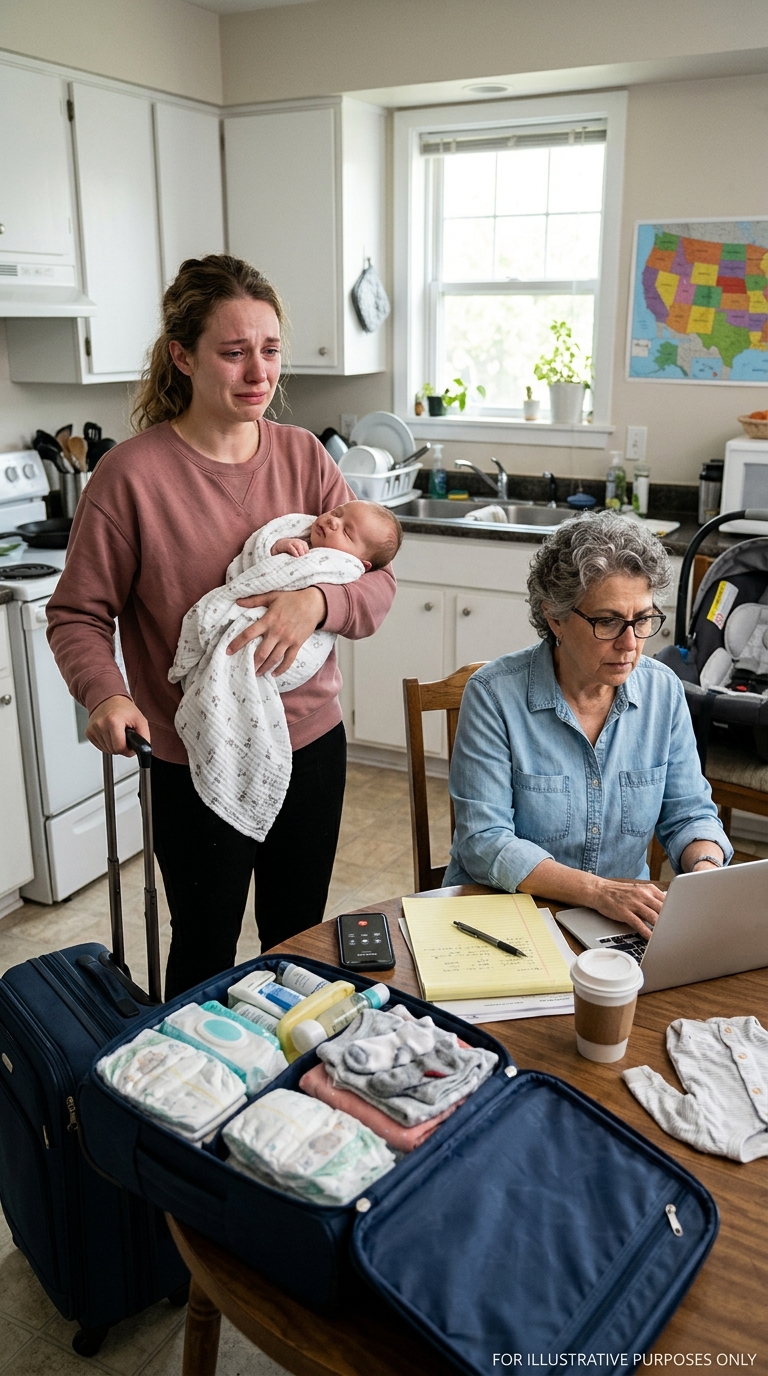
I tightened my arms around our baby, packed one suitcase, and walked out.
None of them understood what they had just set in motion.
The front door opened at precisely 4:30 a.m., slicing through the sleeping house with a sound that felt like a warning meant only for me.
I stood barefoot on the freezing kitchen tiles. Our son slept against my shoulder while a pan sizzled quietly on the stove.
The meal wasn’t for me.
It was for Ryan’s parents, who expected breakfast to be waiting when they arrived later that morning.
The air smelled of fried onions, freshly brewed coffee, and the kind of exhaustion that no amount of sleep could cure.
Ryan stepped through the doorway with his tie hanging loose around his neck and deep wrinkles pressed into his shirt. His phone was still glowing in one hand.
He glanced at me briefly.
Then his attention moved to the dining table I had spent hours preparing.
Dinner plates.
Folded napkins.
Polished silverware.
Matching serving dishes.
A complete meal for the same people who had spent two years treating me like an unpaid housekeeper who happened to wear their son’s wedding ring.
Only after inspecting the table did Ryan finally meet my eyes.
“Divorce.”
That was all he said.
No raised voice.
No apology.
No explanation.
He dropped the word between us as casually as if he were reminding me to buy milk.
For several seconds, the refrigerator’s low hum sounded louder than my husband.
Our baby released a tiny breath against my shoulder, and that soft, innocent sound was the only thing in the room that still felt real.
I didn’t ask Ryan where he had spent the night.
I didn’t ask whether there was another woman.
I didn’t ask which member of his family had finally convinced him to say aloud what they had been suggesting for months.
And I didn’t ask why he had chosen this particular moment—when I was sleepless, isolated, and holding our newborn son—to announce the end of our marriage.
Control does not always enter a home shouting.
Sometimes it speaks softly.
Sometimes it smiles across a perfectly arranged table, compliments the flowers, and then politely wonders why dinner is three minutes late.
That was how control operated inside the Calloway family.
It wore tailored suits and expensive perfume.
It praised you in public, corrected you in private, and slowly trained you to question whether you deserved a place in your own home.
So I gave Ryan exactly nothing.
No tears he could mock.
No begging he could describe later as desperation.
No angry words his family could twist into evidence that I was unstable.
I simply moved our son higher against my shoulder and reached for the stove.
The burner clicked off.
The sudden silence seemed to unsettle Ryan more than any scream could have.
He frowned when I walked past him.
“Claire.”
I didn’t stop.
In our bedroom, I pulled my old suitcase from the back of the closet. A crack ran across its handle, left over from the business trips I used to take before marriage to Ryan Calloway slowly transformed me into a woman who apologized for needing rest.
I opened it on the bed and began packing.
Diapers went in first.
Then formula, bottles, onesies, and a packet of wipes.
I added my work shoes, one clean blouse, our son’s favorite blanket, and the sealed envelope containing his birth certificate.
Nothing sentimental.
Nothing unnecessary.
Only what we needed.
At 4:42 a.m., Ryan appeared in the doorway.
He leaned against the frame, watching me as though I were performing something mildly entertaining.
“Where do you think you’re going?”
“Out.”
A short laugh nearly escaped him.
That was his first mistake.
His second was assuming my silence meant he had finally broken me.
I had not become quiet because I was powerless.
I had become quiet because I was observing.
For two years, I listened while Ryan’s father boasted about Silverline Holdings during family dinners. I noticed whenever invoices disappeared from folders that had been left on the dining table. I noticed when Ryan stopped leaving his laptop unlocked at night.
I remembered every occasion when his mother dismissed one of my questions by saying, “Claire has never understood how real business works.”
They believed I was confused.
They never considered that I was collecting details.
Before I became Ryan Calloway’s wife, I had been a senior corporate auditor.
Before his family taught me to soften my voice and lower my eyes, I had built a respected career uncovering the places where wealthy people buried their fear beneath false invoices, altered ledgers, and carefully structured lies.
At 5:16 a.m., I placed my suitcase in the trunk and backed out of the driveway.
One hand rested on the steering wheel.
Our son slept peacefully in his car seat behind me.
The Calloway house glowed against the darkness—large, elegant, and warm from the outside.
Inside, it had always felt empty.
Ryan stood on the porch wearing only his socks, staring after me as if I had violated some unspoken family rule by leaving without first requesting permission.
I drove away without looking back again.
Before sunrise, I reached Mrs. Parker’s house.
She had been my mentor years before marriage made me increasingly difficult to contact. She was the woman who taught me how to reconstruct financial trails backward, recognize fraudulent reimbursements, and make shell companies reveal their connections without confronting a single person.
When she opened the door, her gaze moved to the suitcase beside me.
Then to the sleeping baby in my arms.
Finally, she looked at my face.
She didn’t ask whether I was all right.
Women like Mrs. Parker never waste time asking questions when the truth is already standing on their doorstep.
“He came home at four-thirty and said he wanted a divorce,” I whispered.
“And you walked out?”
I nodded.
A small but unmistakably satisfied smile touched her lips.
“Good.”
That one word held me upright more firmly than sympathy ever could have.
A short while later, I sat at her kitchen table while pale morning light spread across the room. A paper cup of coffee cooled untouched between my hands.
Mrs. Parker opened a yellow legal pad and wrote three lines in precise block letters:
4:30 A.M.—DIVORCE DEMAND
INFANT PRESENT
LEFT WITH PERSONAL BELONGINGS ONLY
Beneath them, she wrote RYAN CALLOWAY and underlined his name twice.
“Men like the Calloways aren’t frightened by tears,” she said. “They’re frightened by documentation.”
My throat tightened, but my fingers remained still.
This was no longer panic.
It was no longer heartbreak.
It was evidence.
A sequence of events.
A written record.
And a woman beginning to remember exactly who she had been before they convinced her to forget.
Mrs. Parker leaned back and examined me with the same sharp expression she once reserved for complicated audit files.
Then she glanced at the suitcase beside my chair and asked the one question Ryan should have been terrified of from the moment he spoke that word:
“Claire… do you still have access to—”