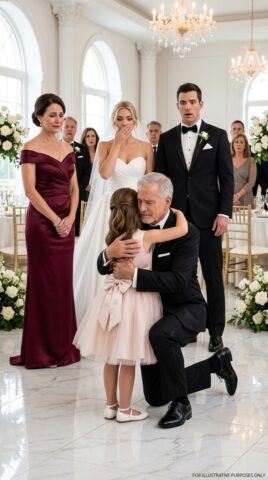
Part 1
My brother Tyler built his entire adult identity around being the successful one.
He was thirty-one when he launched Innovate Tech Solutions, fresh out of Stanford’s MBA program, wearing expensive sneakers with suits and talking about disruption like he had personally invented the word.
I was twenty-seven.
I worked as a data analyst at a mid-sized firm in Seattle. I drove a ten-year-old Honda with a cracked cup holder. I lived in a one-bedroom apartment above a dentist’s office, where the pipes knocked every morning at six and the kitchen light flickered when it rained.
To my family, I was stable.
That was the polite word.
Dad used it with the same tone people use for a couch they do not love but cannot justify replacing.
“Emily has always been practical,” he would say.
Mom said, “Not everyone needs to chase big dreams.”
Tyler said things like, “Safe lane suits you, Em,” and then laughed like it was affectionate.
I let them.
That was easier.
What none of them knew was that I had been investing since college. Not gambling. Not chasing hot tips from strangers online. I studied patterns, tested algorithms, built models, and learned to keep my emotions out of the market.
A five-thousand-dollar graduation gift became fifty thousand by the time I was twenty-three.
By twenty-five, I had four hundred thousand.
By twenty-seven, my portfolio was worth 2.3 million dollars.
The first few times I mentioned an investment win, Dad called it lucky timing. Tyler patted my head once and said, “That’s cute, but don’t confuse Robinhood gains with real finance.”
So I stopped mentioning it.
I kept wearing cardigans to work. Kept packing lunch. Kept letting my Honda complain on cold mornings. Kept building wealth in silence.
Then Tyler launched Innovate Tech.
At Sunday dinner, Dad raised his wine glass like my brother had already rung the Nasdaq bell.
“Tyler’s company is going to change everything,” he announced. “This is the kind of innovation that builds generational wealth.”
Mom beamed. “Our son, the CEO.”
I sat at the end of the table, twirling pasta around my fork.
Tyler leaned back, smiling like he had been born under a spotlight.
“Innovate Tech is going to revolutionize cloud-based project management,” he said. “The market is massive. Enterprise clients are tired of bloated systems. We’re building something leaner, smarter, more adaptive.”
Buzzwords aside, he had something.
I went home that night and did what I always did.
I researched.
I reviewed the pitch deck he had sent Dad, pretending it was too technical for me. I studied the market, competitors, user demand, pricing strategy, burn rate projections, and Tyler’s technical architecture.
The product was good.
Not revolutionary. Not world-changing. But solid. Practical. Well-designed. With the right funding and responsible leadership, Innovate Tech could become a meaningful player.
I wanted in.
Not because Tyler was my brother.
Because it was a strong investment.
But I knew better than to approach him directly.
If I had said, “Tyler, I want to invest serious money,” he would have smiled that older-brother smile and explained equity financing to me like I was a child asking to buy a spaceship.
So I created Cascade Ventures LLC.
My investment adviser, Patricia Morgan at Silverlake Capital, handled the structure. Clean paperwork. Proper filings. Legal separation. Full discretion.
Through Patricia, Cascade Ventures approached Innovate Tech’s fundraising team with a Series A offer.
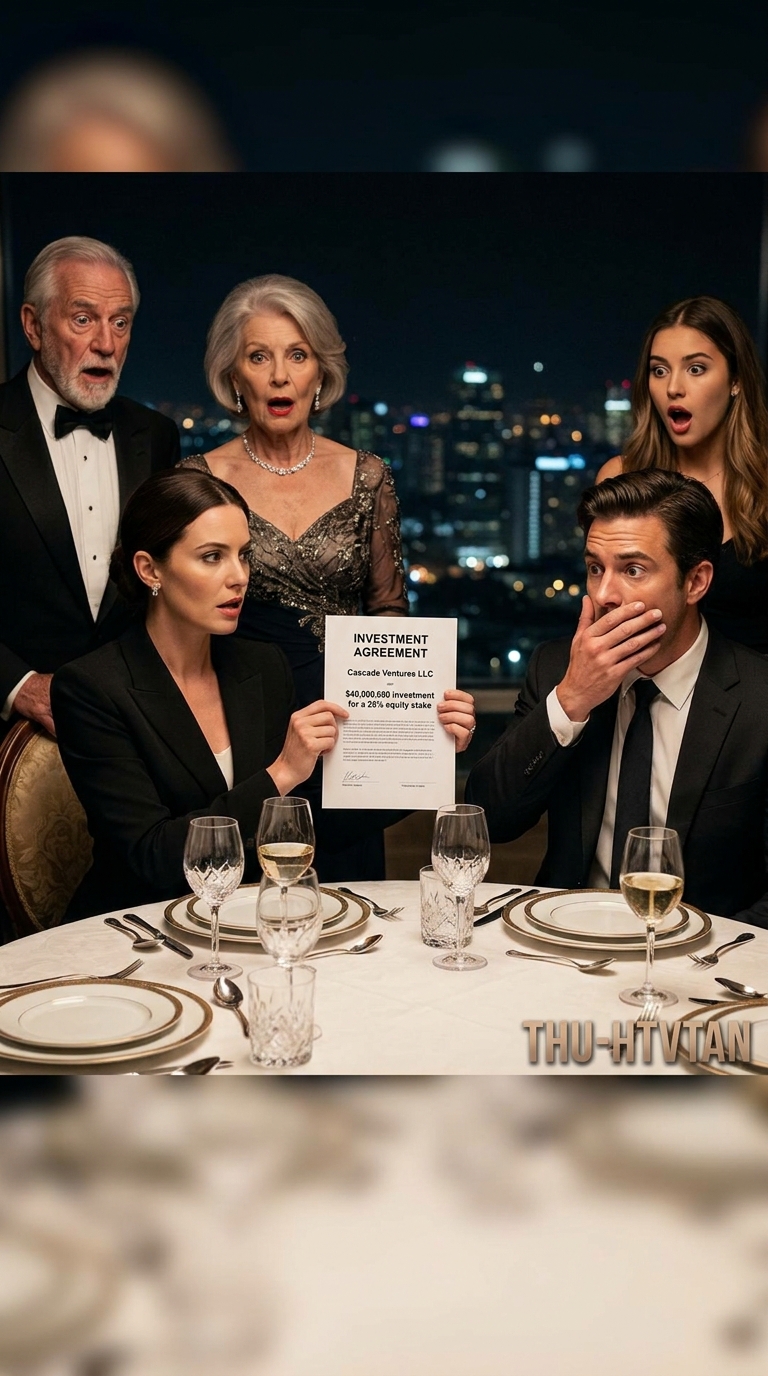
Forty million dollars for twenty-eight percent equity.
Enough to fund three years of product development, hiring, marketing, and expansion.
Tyler was ecstatic.
At dinner, he could barely stay seated.
“We secured our lead investor,” he said, dropping the words like gold coins. “Cascade Ventures. Serious people. Forty-million-dollar commitment.”
Dad actually stood to hug him.
Mom cried.
Tyler looked at me and winked.
“Don’t worry, Em. I’ll explain what a Series A is later.”
I smiled and picked up my water glass.
The deal closed in six weeks.
Cascade Ventures became Innovate Tech’s primary investor and largest stakeholder.
I became my brother’s boss.
He had absolutely no idea.
For three years, I sat behind a corporate veil and watched the company grow.
Quarterly board meetings happened over video. My camera stayed off. Patricia attended as Cascade’s formal representative while I listened, reviewed reports, asked questions through her, and approved strategy.
Revenue grew from zero to eighteen million annually.
User retention was strong.
Client churn stayed low.
The fundamentals were good.
But Tyler’s ego grew faster than revenue.
Every family dinner became a performance.
“We just signed Microsoft,” he said once.
I knew it was a fifty-thousand-dollar pilot contract.
“Forbes mentioned us.”
One sentence in a list of fifty startups.
“I’m speaking at three conferences next month.”
Because I had approved a marketing budget that paid for sponsor speaking slots.
Still, I said nothing.
Mom glowed. Dad bragged. Tyler expanded.
I stayed in my usual seat at the end of the table.
Then came Mom’s birthday dinner.
November 15.
An upscale steakhouse with dark wood walls, low lighting, and steaks priced like small appliances. Tyler arrived in a new Tesla Model S, wearing a Breitling watch and the expression of a man expecting the room to notice both.
“The company is doing incredibly well,” he announced over appetizers. “We’re preparing for our Series B. Looking at a two-hundred-million-dollar valuation.”
Dad whistled. “Two hundred million.”
“We’re talking with Sequoia. Andreessen sent feelers.”
I cut my steak carefully.
None of that was real.
Our burn rate was too high. Growth was steady but not explosive. The two-hundred-million valuation existed mostly in Tyler’s imagination, and those famous VC firms had taken polite coffee meetings that went nowhere.
Tyler turned toward me.
“You’re quiet, Em. Not impressed?”
“It’s impressive,” I said.
Mom touched my arm. “She doesn’t really understand tech business, honey. It’s very complex.”
I set down my knife.
“Actually, I follow the cloud software market pretty closely.”
Tyler laughed.
“Right. Your little stock hobby.”
Something in me went still.
“How’s that going?” he asked. “Made your first million yet?”
The table laughed softly.
I looked at him.
Then at Dad, smiling like Tyler was charming.
Then at Mom, waiting for me to take the joke like a good sport.
“I do okay,” I said.
Tyler leaned forward.
“Didn’t you once say you wanted to invest in Innovate Tech? Like five thousand dollars or something?”
“It was more than that.”
“Oh, sorry. Ten?” He grinned. “Look, we appreciated the thought, but we work with serious venture capital. Institutional investors. People who understand term sheets, board seats, liquidation preferences. It’s not the same league as trading stocks on your lunch break.”
I heard the restaurant around us.
Glassware. Silverware. A waiter describing mashed potatoes to another table.
“I understand term sheets,” I said.
“I’m sure you do in your way.” Tyler’s voice softened, which made it worse. “But this is aggressive growth strategy. High risk. High pressure. It’s not really built for someone with your conservative mindset.”
“Conservative?”
“Risk averse,” he clarified. “Which is fine. Safe job, safe apartment, safe car, safe life. Nothing wrong with that.”
Dad raised his glass.
“To Tyler and Innovate Tech.”
Everyone toasted.
I lifted my glass too.
No one noticed my hand was perfectly steady.
That night, I went home, opened my laptop, and pulled up the Cascade Ventures shareholder agreement.
Then I called Patricia.
“I need to schedule a board call with Tyler Chin,” I said.
“Agenda?”
I looked at the rain streaking my apartment window.
“Investment review,” I said. “I’m considering liquidating our position.”
There was a pause.
“Emily, if Cascade pulls out, Innovate Tech may not survive.”
“I know.”
“Are you sure?”
I thought of Tyler’s smirk. Dad’s toast. Mom’s soft dismissal. Three years of being patronized by a man whose company existed because of my money.
“Schedule the call.”
Part 2
Two days later, Tyler joined the emergency board call from Innovate Tech’s glass conference room.
He wore the expression of a man annoyed by inconvenience, not afraid of consequences.
I watched from my apartment with my camera off. The kitchen light flickered twice above me. Rain tapped against the window. My old Honda sat on the street below, probably leaking through the passenger-side door seal again.
On Tyler’s screen, everything looked expensive.
Long table. Branded wall. Floor-to-ceiling windows. A fancy water bottle near his laptop.
My money had helped pay for that conference room.
Patricia Morgan appeared on screen, calm as always, silver hair smooth, blazer perfect, voice precise.
“Good morning, Mr. Chin. Thank you for joining on short notice.”
“Of course,” Tyler said. “Though I’ll be honest, I was surprised by the urgency. Q3 results were solid.”
“Your financial performance is acceptable,” Patricia replied. “However, Cascade Ventures is conducting a portfolio review, and we have concerns about the company’s trajectory and leadership judgment.”
Tyler blinked.
“Leadership judgment?”
“Yes.”
His smile thinned. “We’re executing according to plan.”
“Your Series B projections are unrealistic. Your target valuation is not supported by current metrics. Your burn rate is concerning. And we have questions about capital allocation.”
I watched his hand move to the Breitling on his wrist.
“What allocations?”
Patricia glanced at her notes.
“The Tesla. Executive compensation. Premium office space. Conference sponsorship packages. These are questionable uses of venture capital during a growth phase.”
Tyler’s face reddened.
“Those are standard startup CEO expenses.”
“No,” Patricia said. “They are standard ego expenses.”
I almost smiled.
He leaned closer to the camera.
“With respect, Cascade has approved every budget.”
“Cascade approved growth expenses,” Patricia said. “Not personal branding disguised as scaling.”
Tyler sat back.
“Okay. If there are concerns, we can address them. What exactly does Cascade want?”
“To discuss whether we wish to maintain our investment position.”
The silence changed.
Tyler’s mouth opened slightly.
“Maintain?”
“We are evaluating all options, including liquidation of our equity stake.”
His face went pale.
“You can’t liquidate. That would destabilize the company.”
“We are aware.”
“We depend on your funding for operations.”
“Yes.”
His phone rang.
He glanced down, irritated.
“Sorry, I need to take this. It’s Pacific Trust.”
“Please do,” Patricia said.
Tyler answered on speaker.
“This is Tyler Chin.”
A man’s voice came through. “Mr. Chin, this is David Reynolds from Pacific Trust Bank. I’m calling regarding your business line of credit. We’ve received notice of potential changes in your capital structure.”
Tyler looked at Patricia.
“What notice?”
“Our covenants require review if your primary investor withdraws. If Cascade Ventures liquidates its position, your eight-million-dollar credit line may become callable within thirty days.”
Tyler swallowed.
“This is preliminary.”
“Understood,” the banker said. “But we’ll need documentation immediately.”
Tyler ended the call.
Before he could speak, his cell rang again.
He checked the screen.
“Our CFO.”
“Answer it,” Patricia said.
Tyler put it on speaker.
“Brian?”
“Tyler, what the hell is happening? Microsoft just asked for clarification on company stability. Two other clients are pausing expansion discussions. Someone heard Cascade might be pulling out.”
Tyler rubbed his forehead.
“We’re in discussions.”
“Discussions? If Cascade pulls, we have maybe four months of runway.”
“I know.”
“We can’t raise emergency Series B under pressure. We’ll get destroyed on terms.”
“I said I know.”
Tyler ended the call, and for the first time in three years, I saw real fear on his face.
“Patricia,” he said carefully, “what does Cascade need?”
I unmuted my microphone.
“Hello, Tyler.”
He froze.
His eyes moved toward the screen, searching for a name.
“Who is that?”
“It’s Emily.”
His face went blank.
Then confused.
Then annoyed, like I had wandered into a room where adults were speaking.
“Em? What are you doing on this call?”
“I’m Cascade Ventures.”
Nothing.
No reaction.
His brain refused to let the words enter.
“What?”
“I created Cascade Ventures through Patricia three years ago. I invested the forty million dollars. I own twenty-eight percent of Innovate Tech.”
Tyler stared at the screen.
“That’s not funny.”
“No.”
“Cascade is a venture capital firm.”
“Cascade is my shell corporation.”
“You don’t have forty million dollars.”
“I had fifty-two million when I invested. I have about forty-seven million outside the current paper value of Innovate Tech, depending on the week. Markets move.”
His mouth closed.
The room behind him looked suddenly too large.
“You work in data analysis.”
“Yes.”
“You live above a dentist’s office.”
“Yes.”
“You drive that ancient Honda.”
“Yes.”
“Why?”
“Because I prefer compounding returns over luxury depreciation.”
Patricia unmuted.
“Mr. Chin, everything Emily is saying is accurate. Cascade Ventures is a properly structured investment entity owned by Ms. Chin. I have acted as her adviser and representative throughout the investment period.”
Tyler leaned back slowly.
“You’ve been on the board.”
“Yes.”
“For three years.”
“Yes.”
“At every quarterly meeting?”
“Yes.”
His face changed as memory arrived.
Family dinners.
His lectures.
His jokes.
His little stock hobby.
His explanation of liquidation preferences to the person who owned his funding source.
“Oh my God,” he whispered.
“Exactly,” I said.
He rubbed both hands over his face.
“Emily, I didn’t know.”
“That’s not the problem. The problem is how you treated me because you didn’t know.”
He looked down.
“You assumed I was small,” I said. “Safe. Boring. Too risk-averse for serious business. You spent three years talking down to me while spending my money like it was unlimited.”
“I didn’t—”
“The Tesla was purchased with company funds meant for product development. Your watch was bought the same month you cut the customer support training budget. The conference sponsorships are vanity. The office lease costs more annually than three junior developers.”
His lips pressed together.
“You’ve been reviewing everything.”
“I own twenty-eight percent of your company, Tyler. Of course I review everything.”
For once, he did not have a comeback.
“What do you want?” he asked finally.
I sat back.
The question could have gone many directions.
I could have ruined him.
Cascade held enough leverage to force a brutal restructuring, scare off creditors, trigger layoffs, and leave Tyler explaining to our parents how his empire collapsed because his boring sister pulled the plug.
But I was an investor first.
And despite Tyler’s ego, Innovate Tech was still a good business.
“I’m not liquidating today,” I said.
His shoulders dropped with relief.
“But things change immediately.”
He nodded fast.
“Anything.”
“First, an audit. Every personal expense charged to the company gets reviewed. The Tesla is returned or bought out personally. The watch is personal. Conference vanity spending ends.”
“Done.”
“Second, your compensation drops from two hundred eighty thousand to one hundred eighty until revenue hits twenty-five million annually.”
He winced.
“You want founder money? Hit founder metrics.”
“Okay.”
“Third, we hire a real COO with operational discipline. I approve the search firm and final candidate. You do not get veto power.”
He swallowed. “Okay.”
“Fourth, the two-hundred-million-dollar Series B fantasy ends. We build a sustainable business with honest projections. I would rather own twenty-eight percent of a company worth one hundred million than twenty-eight percent of zero.”
“That makes sense.”
“Fifth,” I said, “you tell Mom and Dad.”
He looked up.
“No.”
“Yes.”
“Emily.”
“Sunday dinner. Everyone hears the truth. You tell them Cascade is mine, the investment was mine, and your success was built with my capital.”
His face tightened.
“That’s humiliating.”
I laughed once.
“So was being told I didn’t understand serious business while I was funding yours.”
He closed his eyes.
I let him sit in it.
“Accept the terms,” I said, “or Cascade begins liquidation tomorrow.”
He opened his eyes.
“I accept.”
“Good.”
His voice softened. “I’m sorry.”
I looked at him on my screen, my brother in the beautiful conference room my money had helped build.
“You can start making it right on Sunday.”
Then I ended the call.
For a long time, I sat in my dim apartment with the rain sliding down the window.
My hands were shaking.
Not from fear.
From finally letting the truth enter a room where I had been underestimated for years.
Part 3
Tyler looked like he might throw up when he arrived at Sunday dinner.
That gave me a small, quiet satisfaction.
Mom had made pot roast, Tyler’s favorite. She had set the table with the blue plates she only used for birthdays or when she wanted a dinner to feel more meaningful than it was. Dad had opened wine before anyone sat down.
I took my usual seat at the end of the table.
Old habit.
Or maybe strategy.
Tyler sat across from me. He avoided my eyes while Mom fussed over his plate.
“Extra carrots, honey?”
“Thanks, Mom.”
Dad lifted his glass before we had even started eating.
“To the man of the hour.”
Tyler’s fork paused.
Dad smiled proudly. “How’s that Series B coming? Still looking at two hundred million?”
Tyler glanced at me.
I lifted my eyebrows slightly.
His throat moved.
“Actually,” he said, “I need to tell everyone something.”
Mom froze with the serving spoon in her hand.
“Is something wrong?”
“No. Yes. Not exactly.” He set down his fork. “It’s about Innovate Tech. About how the company was funded.”
Dad leaned forward. “New investor?”
“No. The original investor.”
I watched him struggle.
For once, he could not turn a story into a highlight reel.
“Three years ago, when I raised Series A, we received a forty-million-dollar investment from Cascade Ventures. That money funded product development, hiring, operations, marketing. It’s the reason Innovate Tech exists in its current form.”
“We know that,” Mom said gently.
“What you don’t know,” Tyler said, voice quieter, “is who Cascade Ventures is.”
He looked directly at me.
“It’s Emily.”
The table went silent.
Dad blinked.
Mom’s mouth opened slightly.
My aunt Linda, who had been buttering a roll, stopped mid-motion.
Tyler continued.
“Emily created Cascade Ventures as a shell corporation through her investment adviser. She invested forty million dollars of her own money. She owns twenty-eight percent of Innovate Tech and has been on the board for three years.”
The silence stretched so long the refrigerator hum became loud.
Dad turned toward me.
“Emily,” he said slowly, “you have forty million dollars?”
“I have more than that now.”
Mom lowered herself into her chair.
“But you work as a data analyst.”
“I like data analysis.”
“You live in that little apartment.”
“I like low fixed expenses.”
“You drive that old car,” Dad said.
“It still runs.”
Tyler let out a short, humorless breath.
Dad stared at me like he was seeing me under different lighting.
“How?”
“I’ve been investing since college.”
“Investing how?”
“Day trading at first. Then algorithmic models. Growth stocks. Some crypto early. Options when I understood the risk. I built slowly.”
Mom looked hurt.
“Why didn’t you tell us?”
“I tried.”
Dad frowned.
“I told you when I turned five thousand dollars into fifty. You called it lucky timing.”
His face shifted.
“I told Tyler I understood financial markets. He patted my head and called it cute.”
Tyler looked down.
“At some point,” I said, “I stopped offering information to people committed to misunderstanding me.”
Aunt Linda whispered, “Forty million.”
I ignored that.
Dad set his wine glass down carefully.
“So all this time, Tyler’s company…”
“Was funded by me.”
“And you were on the board?”
“Yes.”
Mom looked between us.
“Tyler knew?”
“No,” Tyler said. “I didn’t.”
Dad’s eyes sharpened. “You didn’t know your own sister was your investor?”
“I knew Cascade was our investor. I didn’t know Emily owned Cascade.”
“And during that time,” I said, turning toward Tyler, “he explained term sheets to me at dinner like I was slow.”
Aunt Linda made a small sound that might have been a laugh.
Tyler looked miserable.
“I deserved that.”
“You deserved more than that.”
“Fair.”
Dad rubbed his forehead.
“This is a lot to process.”
“I know.”
“Why hide it?” Mom asked again, softer now.
I looked at her.
“Because in this family, Tyler’s ambition was treated like genius. Mine was treated like a hobby. He took risks. I was lucky. He built. I played with stocks. He was a CEO. I was safe.”
Mom’s eyes filled.
“I didn’t know you felt that way.”
“That’s because none of you asked.”
The pot roast sat cooling in the center of the table.
For years, I had thought a moment like this would feel triumphant. Like standing on a stage under bright lights while the people who doubted me finally clapped.
Instead, it felt quieter.
Like removing a splinter that had been under the skin so long the body had grown around it.
Dad cleared his throat.
“I owe you an apology.”
I waited.
He looked me in the eye.
“A real one. I underestimated you. Worse, I dismissed you. I treated your choices as smaller because they didn’t look like Tyler’s. That was wrong.”
I nodded once.
Mom wiped under her eye.
“I’m sorry too. I thought I was praising your stability, but I see now I used it to make you smaller.”
Tyler’s voice was rough.
“I was an arrogant ass.”
“Yes,” I said.
He almost smiled.
“I talked down to you because I needed to believe I was the successful one. I was so busy performing CEO that I didn’t notice my company survived because of you.”
“That’s accurate.”
Dad looked at Tyler sharply.
“Is the company in trouble?”
Tyler inhaled.
“It could have been. Cascade had concerns. My spending was undisciplined. My Series B expectations were inflated.”
“What does that mean?” Mom asked.
“It means,” I said, “Tyler was trying to run a company like a reputation machine. We are correcting that.”
We.
The word settled over the table.
Not him.
Not me in the shadows.
We.
Aunt Linda finally put down her roll.
“So Emily is rich-rich?”
I gave her a look.
She lifted both hands. “Sorry. But somebody had to ask.”
For the first time that night, everyone laughed.
The tension loosened slightly, not gone, but cracked enough to breathe through.
After dinner, Tyler found me in the kitchen.
I was rinsing plates, watching steam rise under the faucet.
“Em.”
I turned off the water.
He leaned against the counter, looking younger than thirty-four.
“Are we okay?”
“The company or us?”
“Both.”
“The company will be fine if you follow the terms.”
“I will.”
“As for us,” I dried my hands on a towel, “I don’t know yet.”
He nodded.
“I really am sorry.”
“I know you are right now.”
He winced.
“I earned that.”
“Yes.”
“What do I do?”
I looked at him for a long moment.
“You stop needing to be bigger than me.”
He looked down.
“That’s harder than it should be.”
“At least you know.”
He laughed softly.
Then I said, “And Tyler?”
“Yeah?”
“Don’t ever explain business to me like I’m a child again.”
He raised both hands.
“Never again. You literally own my business.”
I smiled.
“Good. Just making sure the governance structure is clear.”
For the first time in years, my brother laughed without trying to win.
Part 4
The first month after the reveal was uncomfortable.
Not bad. Not explosive. Just awkward in the way a house feels after someone moves a wall.
Everyone kept bumping into new space.
Dad called me one Tuesday evening and asked if I had time to explain “portfolio diversification from a practical standpoint.” He said practical carefully, like the word might bite him.
Mom texted me articles about women investors with little heart emojis.
Aunt Linda called twice to ask whether she should buy Tesla stock, which told me she had understood none of the dinner.
And Tyler became painfully polite.
Too polite.
He started every business call with, “I defer to Emily on capital discipline,” even when we were discussing software release timelines. In family conversations, he praised me so much it became another kind of performance.
“She’s the real genius.”
“Emily saw the market before anyone.”
“We’re lucky she backed us.”
After the third dinner like that, I pulled him aside.
“Stop.”
He blinked. “What?”
“This.”
“I’m trying to give you credit.”
“No. You’re trying to speed-run humility so everyone forgives you.”
His mouth opened, then closed.
The kitchen light above us hummed. Mom was in the dining room telling Dad to stop opening another bottle of wine. A football game murmured from the living room.
Tyler leaned back against the counter.
“Fine,” he said. “Maybe.”
“Actual respect is not a speech. It’s behavior repeated when nobody is watching.”
He looked at the floor.
“I know.”
“And in the company, that means you follow the controls even when they annoy you.”
“I returned the Tesla.”
“I saw.”
“I bought a used Audi.”
“Still expensive.”
“With personal money.”
“Progress.”
He smiled faintly.
We hired a COO named Rachel Kim six weeks later.
Rachel had run operations at two enterprise software firms, had no patience for founder mythology, and could read a burn-rate report the way some people read weather.
In her first meeting, she told Tyler, “Your product is good. Your spending is emotional. We’re going to fix one without damaging the other.”
I liked her immediately.
Tyler did not.
Then he did.
That was one of his better qualities when ego was not blocking oxygen. He could recognize competence eventually.
Rachel cut vendor waste, renegotiated office leases, reduced conference spending, improved onboarding, and put real financial controls in place. The company stopped feeling like a founder’s dream board and started behaving like an actual business.
At board meetings, Tyler listened more.
Not perfectly.
But more.
One afternoon, after Rachel presented a revised eighteen-month growth plan, Tyler asked, “Emily, what do you think?”
He asked it normally.
No edge. No performance. No please notice that I’m asking my sister.
Just the question.
I looked at the plan.
“I think it’s realistic. Not sexy, but real.”
Rachel smiled. “My favorite kind of forecast.”
We approved it.
By spring, Innovate Tech was healthier than it had ever been.
Revenue climbed steadily. Churn dropped. Customer satisfaction improved. The company no longer needed fantasy valuations to look successful.
Meanwhile, my family’s treatment of me changed in visible ways that sometimes made me angry all over again.
Dad asked my opinion before making financial decisions.
Mom introduced me to friends as “our daughter, the investor.”
Tyler stopped calling my apartment tiny and started calling it “strategically understated.”
People who had dismissed me now wanted lessons.
It should have felt good.
Sometimes it did.
But sometimes I sat in my Honda outside my apartment after family dinners and gripped the steering wheel, furious that proof had been required.
Not kindness.
Not curiosity.
Proof.
Not even proof of my intelligence exactly.
Proof of money.
Forty million dollars had accomplished what thirty years of being their daughter had not.
That realization hurt more than the old dismissal.
One night, Dad called while I was reviewing market data at my kitchen table.
“Emily,” he said. “Can I ask you something?”
“Sure.”
“Are you angry with us?”
I looked at the spreadsheet glowing on my laptop.
“Yes.”
He was quiet.
“I thought so.”
“I’m trying not to live there. But yes.”
“I understand.”
“Do you?”
“I’m starting to.”
That was honest enough that I leaned back.
Dad sighed.
“I keep thinking about all the times I praised Tyler for taking risks while I praised you for being careful. I thought I was being fair. Different kids, different strengths.”
“You weren’t praising me. You were assigning me a smaller role.”
“I see that now.”
I heard ice clink in a glass on his end. Water, probably. Dad did that when he was uncomfortable.
“I’m sorry,” he said. “Not because you’re rich. Not because I was wrong about money. Because I should have wanted to know you better before the money made me curious.”
My throat tightened before I could stop it.
That apology mattered.
Not enough to erase everything.
Enough to mark a turn.
“Thank you,” I said.
At Mom’s birthday the next year, we went to a smaller restaurant.
Tyler did not arrive in a flashy car. He wore a normal watch. Dad did not make a CEO toast.
Halfway through dinner, Mom touched my hand.
“I used to think you were hiding because you were shy,” she said. “Now I wonder if we taught you hiding was safer.”
The room noise moved around us.
Forks. Conversations. A child laughing near the hostess stand.
“You did,” I said.
Mom’s eyes filled, but she did not make me comfort her.
That mattered too.
“I’m sorry.”
“I know.”
After dinner, Tyler walked me to my car.
The Honda had finally gotten worse. The passenger door only opened from the inside now.
“You know,” he said, looking at it, “you can afford a better car.”
I gave him a look.
He raised both hands. “Not judging. Just concerned this one has become sentient.”
“It has character.”
“It has rust.”
“Also character.”
He laughed.
Then his face turned serious.
“Series B documents are going out next week. Realistic valuation. Clean metrics. Rachel says we’re ready.”
“You are.”
“We are.”
I looked at him.
He caught it and nodded.
“Yeah,” he said. “We.”
Part 5
Series B closed at a one-hundred-twenty-million-dollar valuation.
Not Tyler’s fantasy number.
A better one.
Better because it was real.
Investors liked the disciplined spending, improved retention, clearer market position, and Rachel’s operational controls. They liked Tyler too, once he stopped trying to sound like a keynote speaker and started answering questions directly.
Cascade’s twenty-eight percent stake diluted slightly after the round, but the value held strong.
On paper, my Innovate Tech position was worth roughly thirty-four million after adjustments, with additional liquidity options and dividend distributions making the total return solid. Not spectacular by fantasy-startup standards, but stable, credible, and profitable.
I preferred stable when stable was chosen, not assigned.
At the closing dinner, Tyler raised a glass.
This time, only the executive team and board were present. No family. No theater. No Dad beaming from the head of a table.
Tyler stood and looked at Rachel first.
“To the person who stopped me from spending like a man trying to impress LinkedIn.”
Everyone laughed.
Rachel lifted her glass. “You’re welcome.”
Then he looked at me.
“And to Emily. Cascade Ventures believed in the product early, held us accountable when ego got expensive, and made this company better by refusing to confuse ambition with discipline.”
That was the right toast.
No sister angle. No dramatic confession. No overcorrection.
Just the truth, professionally stated.
I raised my glass.
“To sustainable growth,” I said.
Rachel clinked hers against mine. “Finally, someone romantic.”
After dinner, Tyler and I stepped outside. The night was cool, the sidewalk wet from earlier rain. His car, now a sensible dark-blue Audi, waited by the curb.
“Do you miss the Tesla?” I asked.
“Every day.”
“At least you’re honest.”
“But the company is healthier.”
“Yes.”
He shoved his hands in his pockets.
“I used to think success meant being seen as successful.”
“I know.”
“Now it feels more like not being terrified of your own numbers.”
I smiled. “That’s actual business.”
He looked at me sideways.
“Are you proud of me?”
The question surprised me.
Not because he wanted approval.
Because he asked without armor.
“Yes,” I said. “I am.”
He looked away quickly, blinking once.
“Thanks.”
At Christmas that year, dinner was at Mom and Dad’s house again.
The same table. Same blue plates. Same roast potatoes Mom always over-salted. Same seat at the end waiting for me.
I sat there by choice.
That was the difference.
Near dessert, Tyler stood with his wine glass.
“Oh no,” I said. “Another speech?”
He smiled. “Short one.”
Dad groaned playfully. Mom looked nervous, still slightly afraid of emotional landmines.
Tyler cleared his throat.
“I want to toast Emily. My sister, my investor, and the smartest person in this family.”
Aunt Linda whispered, “Richest too.”
“Linda,” Mom hissed.
I laughed.
Tyler continued.
“She taught me that success doesn’t always look like what you expect. Sometimes it looks like a person driving an old Honda, sitting quietly at the end of the table, and owning the room without needing anyone to notice.”
Everyone raised their glasses.
“To Emily.”
I looked around the table.
For years, I had thought respect would feel like triumph. Like finally being placed in the center.
But real respect felt calmer.
It felt like not needing the center anymore.
I lifted my glass.
“To family,” I said. “May we all learn to look deeper before money forces us to.”
Dad nodded.
Mom wiped her eyes.
Tyler met my gaze across the table.
A real acknowledgment passed between us.
No performance.
No competition.
Just the shared understanding that some lessons are expensive because cheap ones are ignored.
After dinner, I helped Mom wash dishes.
The kitchen smelled like cinnamon and soap. Dad and Tyler argued about football in the living room. Aunt Linda wrapped leftover pie in foil.
Mom handed me a wet plate.
“Do you ever wish you had told us earlier?”
I thought about it.
The secret board meetings. Patricia’s careful emails. Tyler’s shock. Dad’s apology. The ache of knowing my family had needed wealth to see me clearly.
“Yes,” I said. “And no.”
Mom nodded slowly.
“I wish I had been the kind of mother you could tell.”
That was the most honest thing she had ever said to me.
I took the plate and dried it.
“Me too.”
She cried then, quietly, but she did not ask me to make it better.
So I stayed beside her and dried the dishes.
Sometimes repair is not a hug or a perfect speech.
Sometimes it is two people standing under kitchen light, letting the silence tell the truth without running from it.
Part 6
The Honda died in February.
Not dramatically. No smoke. No highway breakdown. No cinematic final gasp.
It simply refused to start outside my apartment on a cold Tuesday morning while rain tapped the windshield and the dentist downstairs drilled into someone’s molar loudly enough for the whole building to hear.
I sat in the driver’s seat, key turned, engine clicking uselessly.
“Fair enough,” I said.
After fifteen years, the car had earned retirement.
Tyler insisted on driving me to the dealership.
“I am not letting you buy another ten-year-old car,” he said.
“I could.”
“You could also buy a small island. That doesn’t mean you should.”
We compromised on a modest electric sedan. Reliable. Efficient. Not flashy. Tyler called it “financially responsible with Bluetooth.”
As I signed the paperwork, the salesman tried to upsell me six different add-ons. Tyler opened his mouth once, probably to negotiate for me, then closed it.
I noticed.
Later, over coffee, I said, “Thank you for not taking over.”
He stirred his drink.
“I almost did.”
“I know.”
“I’m learning.”
“You are.”
That spring, I moved too.
Not into a mansion. Not into some glass tower penthouse.
I bought a townhouse with tall windows, a small garden, and a kitchen where the light did not flicker. I paid cash, quietly, through a trust Patricia helped structure. For the first time in my life, I owned a place that reflected what I wanted, not what I was trying to hide.
On moving day, Dad carried boxes until his back hurt. Mom unpacked dishes and cried over my garden view. Tyler assembled a bookshelf incorrectly, then refused to admit it until Rachel, who had somehow become close enough to be invited, pointed out the shelves were upside down.
The house filled with laughter.
Real laughter.
Not the kind people use to cover discomfort.
That evening, after everyone left, I stood alone in the kitchen. Cardboard boxes lined the walls. My new refrigerator hummed softly. Rain slid down the windows.
I thought about the girl I had been at twenty-two, watching candlestick charts after midnight, afraid to tell anyone when she won and more afraid when she won big.
I thought about twenty-seven-year-old me creating Cascade Ventures because she trusted contracts more than family respect.
I thought about Tyler’s face when he realized the person he dismissed had been approving his budgets.
The story could have ended in revenge.
I could have liquidated the position, watched Innovate Tech collapse, and let him explain to our parents that his boring little sister had been the foundation under his feet.
There would have been satisfaction in that.
Brief satisfaction.
But I had learned from markets that emotional trades are expensive.
So I chose leverage over destruction.
I chose accountability over spectacle.
I chose to make him better because the company was worth saving, even if his ego was not.
A year after the reveal, Innovate Tech hosted its annual leadership retreat.
This time, I attended in person.
No camera off. No corporate veil. No Patricia speaking while I listened in the shadows.
The room went quiet when I walked in.
Some people knew the story. Tech circles love a good secret investor reveal, especially when family humiliation adds seasoning.
Tyler introduced me without drama.
“Emily Chin, founder of Cascade Ventures and board member.”
Not sister.
Not secret genius.
Not the twist.
Just my name and role.
I sat beside Rachel and opened my notebook.
During the financial strategy session, a young VP suggested aggressive spending to “capture narrative momentum.”
I looked at the numbers.
Then at Tyler.
A year earlier, he would have loved that phrase.
Now he said, “Narrative doesn’t pay payroll. Show me retention impact.”
Rachel gave me the smallest smile.
Progress.
After the retreat, Tyler and I walked along the waterfront.
Seattle wind cut across the water. Ferries moved in the gray distance. The city looked expensive, damp, and stubborn.
“I used to hate that you were quiet,” Tyler said.
I glanced at him. “I didn’t know that.”
“I thought it meant you were judging me.”
“I often was.”
He laughed. “Fair.”
Then he grew serious.
“But mostly, I think I hated it because I couldn’t tell what you wanted. I wanted applause so badly that anyone not clapping felt like a threat.”
“That sounds exhausting.”
“It was.”
We stopped near the railing.
“I’m not proud of who I was,” he said.
“You don’t have to be proud of who you were to build someone better.”
He looked at me.
“That sounds like something you’d put in a shareholder letter.”
“Don’t tempt me.”
He smiled.
Then, quieter, he said, “Thank you for not destroying me.”
I watched a ferry cut through the water.
“I considered it.”
“I know.”
“You were lucky the investment thesis was strong.”
He laughed once.
“Comforting.”
“It should be. I didn’t save you because you’re my brother. I held because the company still had value.”
“That is both brutal and fair.”
“Good investing usually is.”
He nodded.
Years earlier, I would have softened that. Added, of course I love you, you’re my brother. Made sure he did not feel too exposed.
Now I let the truth stand.
Love was there.
But love was not the whole explanation.
It should not have to be.
That night, back in my townhouse, I sat by the window with tea cooling in my hands. My portfolio dashboard glowed on my laptop, numbers shifting in tiny green and red movements.
Markets changed.
Families changed slower.
But sometimes they did.
Not because everyone suddenly became perfect. Not because one dramatic reveal healed years of dismissal.
Because the truth, once spoken clearly enough, gave everyone a choice.
Tyler chose accountability.
Dad chose humility.
Mom chose honesty.
And I chose not to hide anymore.
The next Sunday, I hosted dinner at my place.
Tyler brought wine. Mom brought dessert. Dad brought flowers for the garden and pretended he had not chosen them after watching three YouTube videos about soil.
At the table, nobody sat at the head.
That was accidental at first.
Then I noticed and decided to keep it that way.
We passed food. Talked about normal things. Work. Weather. Rachel’s new cost controls. Aunt Linda’s disastrous attempt at cryptocurrency. The Mariners.
Halfway through dinner, Dad asked me about a municipal bond fund he was considering.
Tyler listened carefully to my answer.
Mom said, “Emily, explain that again. I want to understand.”
No one smirked.
No one patted my head.
No one called it cute.
I looked around my table, at the people who had once needed forty million dollars to take me seriously, and felt something complicated but peaceful settle in my chest.
This was not the family I had always wanted.
It was the family that remained after illusion, ego, and silence were forced out into the open.
Maybe that was enough.