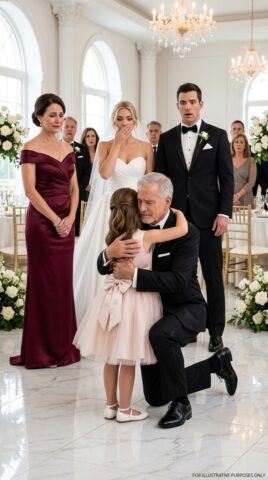
PART 2: The Receipts Behind the Romance
By eight that evening, my phone had rung forty-seven times.
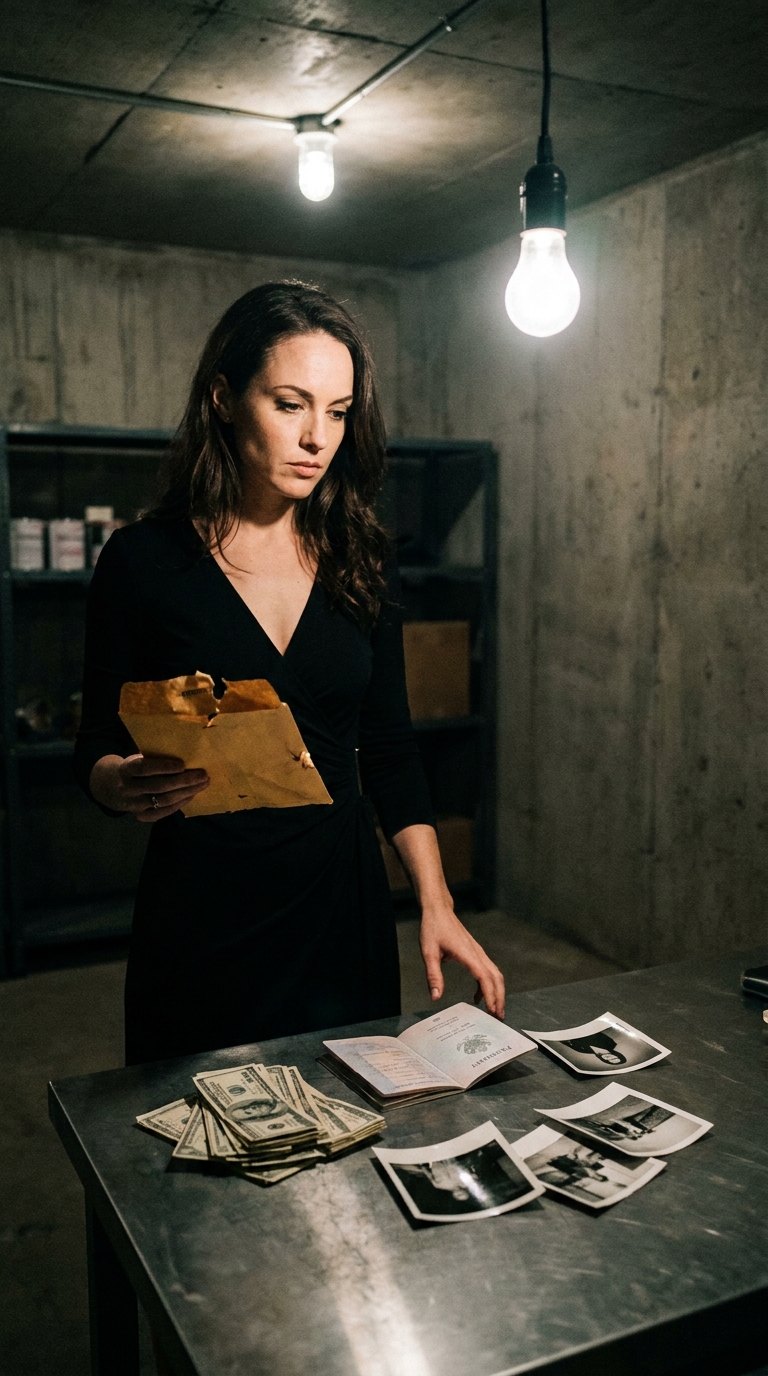
Graham called first. Then his sister Clare. Then his business partner Mark. Then Chloe. Then my college roommate, who had been sitting in the audience while another woman wore my ring.
I answered none of them.
In my apartment, I hung the wedding dress on the back of my bedroom door.
Under the clean light, the damage looked worse. The French lace at the hem was torn. Dust had settled into the satin. The neckline had one empty space where a pearl should have been. The remaining fifty-six pearls sat in a quiet row, like witnesses waiting to testify.
The forty-eighth call came with a text.
Zoe, where the hell did you go? Everyone’s waiting. How am I supposed to explain this?
Another.
Are you throwing another tantrum?
Another tantrum.
I stared at those two words until they stopped looking like language and started looking like evidence.
At 9:30 p.m., he texted:
Fine. I’m coming over. We’ll talk face to face.
Twenty minutes later, the doorbell rang.
I did not move.
Then came the knocking.
“Zoe,” Graham called through the wood. “Open the door.”
His voice held no desperation. Only patience. The patience of a man waiting for a child to tire herself out.
I stood and walked to the door.
When I opened it, Graham stood in the hallway wearing a dark blue shirt, sleeves rolled to his forearms. He held an insulated takeout bag from my favorite soup place.
His brow loosened when he saw me.
“You’re okay,” he said. “Good. I thought something happened to you.”
He stepped forward as if he still lived here.
I did not move aside.
He stopped.
“Zoe.”
“Why are you here?”
He lifted the bag slightly. “I brought soup. You haven’t eaten all day.”
“I’m not asking about the soup.”
His face shifted. Concern became controlled annoyance.
“All right,” he said. “Let’s talk.”
“Explain the rehearsal.”
“It was a misunderstanding.”
“You kissed her.”
His jaw moved once.
“That was part of the walk-through.”
“You put my ring on her finger.”
“It was a prop.”
“You told Chloe I was touching up my makeup.”
His eyes stilled.
Only for a second.
“Chloe misunderstood.”
I leaned against the doorframe, studying him in the dim hallway light. I knew the architecture of his face intimately. The vein at his temple when he was angry. The left laugh line deeper than the right. The way his eyes did not blink when he lied.
Right now, he was not blinking.
“Call Lily,” I said. “Tell her to bring back the ring.”
Graham reached into his pocket and pulled out a small velvet box.
“I already got it back.”
He opened it.
The emerald diamond flashed under the entry light.
“See?” he said. “It was always yours.”
I stared at the ring.
It had been warmed by another woman’s hand.
“Wedding is still on tomorrow,” he said. “We’ll pretend today never happened.”
Something almost like laughter rose in my throat, but it was too dry to escape.
“Did you book Lily’s flight?”
His expression froze.
“What?”
“June third. British Airways BA113. London Heathrow to JFK. First class. Passenger Lily Bennett.”
The hallway motion light flickered on, flooding his face with a harsh white glow.
His jaw clenched.
“You audit my statements?”
“I don’t have to,” I said. “The spending alerts for that authorized user card go to my phone. You forgot the primary account is tied to my number. I helped you set it up.”
He looked away.
Just once.
It was enough.
“She’s studying abroad,” he said. “Exchange rates are inconvenient. I was helping her.”
“With a black card?”
“Zoe.”
“Harrods. Twelve thousand dollars. Selfridges. Seven thousand. Graff. Twenty thousand.”
Each number entered the hallway like a witness taking the stand.
“Do you want me to keep going?”
“Enough,” he snapped.
There he was.
Not the gentle man with soup.
Not the patient fiancé.
The investor whose hidden account had been audited.
“What exactly are you accusing me of?” he asked.
I looked at the ring. Then at his face.
“I’m not accusing you of anything. The wedding is cancelled.”
His mouth parted.
“No.”
“Yes.”
“Zoe, be serious.”
“I am.”
“You can’t cancel a wedding the night before.”
“I already started notifying the guests.”
His calm broke. “Do you have any idea how this makes me look?”
There it was.
Not how I felt.
Not what he had done.
How it made him look.
I reached for the door.
“Take the soup,” I said. “And take the ring.”
“Zoe.”
“Tell Lily the rehearsal is over. She doesn’t need to stand in for me anymore.”
I shut the door.
The deadbolt clicked.
For one minute, there was silence.
Then footsteps retreated toward the elevator.
Only after the elevator doors closed did I realize my hand was clenched so tightly that my nails had cut four crescent marks into my palm. One had drawn blood.
I went to the bathroom and held my hand under cold water.
The blood dissolved down the drain.
In the mirror, I saw a woman with half-ruined makeup and half-bare skin. It looked like two faces had been stitched together badly.
One belonged to the woman who had arrived at the hotel that afternoon.
The other belonged to the woman who had left it.
My phone buzzed.
Simon.
Offer confirmed. Partners approved the contract. We’ll send documents next week. Need housing support in London?
I typed:
Yes, thanks.
Then I opened the wedding guest list.
One hundred twenty-three names.
I began sending the same message.
The wedding scheduled for tomorrow has been cancelled. My sincere apologies for the inconvenience. Best, Zoe.
By the thirtieth person, Clare called.
This time, I answered.
“Zoe, what is going on?” she demanded. “My brother said you’re having a meltdown.”
“The wedding is cancelled.”
“Because of Lily? Zoe, she was just trying to be helpful.”
“Clare,” I said slowly, “how old is Lily?”
She paused. “What?”
“Graham keeps saying she’s like a little sister.”
“Well, she’s family to us.”
“She’s older than you.”
Silence.
“She is three years older than you,” I said. “And two years younger than me. What little sister did Graham grow up protecting?”
Clare’s breathing changed.
“Don’t overthink it,” she whispered.
There it was again.
The family motto.
Don’t overthink.
Don’t question.
Don’t look at the wiring behind the wall.
“Coordinate the cancellation with the hotel,” I said. “I’ll cover any contractual fees.”
“Zoe—”
I hung up and kept sending messages.
By one in the morning, all one hundred twenty-three guests had been notified.
Graham’s final text came at 11:40 p.m.
Sleep on it. I’ll come by tomorrow.
The next morning, at eight sharp, I sat at my home office desk with my firm’s project schedule open in front of me. Three active projects. A cultural center renovation. A mixed-use Midtown development. A private art museum in the Hudson Valley.
The doorbell rang.
Then again.
Then a key turned in my lock.
I looked up.
Graham entered carrying a brown paper bag from the bakery down the block.
“You didn’t eat breakfast,” he said.
His eyes moved to my desk.
“You’re working?”
“Yes.”
“Zoe, we need to talk.”
“Your key,” I said.
He stopped. “What?”
“Leave it on the counter when you leave.”
His face tightened. He set the bakery bag down.
“I didn’t sleep,” he said softly.
“You look like it.”
He sat at the island. Damp hair. Clean white T-shirt. Dark circles beneath his eyes. He looked almost human enough to hurt me.
“I handled yesterday badly,” he said. “I admit that. The optics were terrible. But we’ve been together five years. You can’t throw that away over one misunderstanding.”
“You said last night you’d agree to anything.”
“I did.”
“Cancel Lily’s authorized user card.”
His fingers twitched.
“Fine.”
“Wire me the thirty-five thousand dollars she charged to the joint credit line.”
His eyes sharpened.
“Why?”
“Because it was tied to our joint financial structure.”
He swallowed.
Then he pulled out his phone and did it.
Card locked.
Wire sent.
Confirmation screen shown.
He looked almost relieved, as if money had purchased the first inch of forgiveness.
“Now,” he said, “can we act like adults?”
“Did you see Lily this morning before coming here?”
His face did not move.
“No.”
“Your Audi pulled out of her Tribeca garage at 7:15 a.m.”
His expression changed instantly.
Not guilt.
Panic.
“How did you—”
“She lives at The Orchard, right?” I asked. “Garage cameras. Resident access logs. Your plate is GTC 8892.”
His mouth opened, then closed.
“I left a folder there,” he said.
“At seven in the morning?”
No answer.
“You didn’t come here to talk,” I said. “You came to see if I was still manageable.”
He stared at me.
For the first time in five years, Graham had no argument ready.
“Leave the key.”
I walked into my office and closed the door.
A moment later, metal clinked against marble.
The key.
Then the front door opened and closed.
I sat in silence for thirty seconds.
Then an email arrived from Simon.
Contract attached via DocuSign.
I opened it and read every clause.
Base location: London.
Contract term: twenty-four months.
Start date: July first.
Today was June seventeenth.
Fourteen days.
I picked up my stylus and wrote on my project schedule:
June 19. Twelve days until wheels up.
For the next several days, I worked like someone performing surgery on her own life.
I handed off files. Migrated drawings. Updated project notes. Cut Graham’s name from every place it had been casually attached to my work.
The Hudson Valley Museum hurt the most.
Graham had introduced that client.
For years, I had let that fact sit beside the project like a watermark.
Then I opened the file and saw the truth clearly.
Every model was mine.
Every zoning fight was mine.
Every structural revision, every sleepless night, every argument with contractors, every boardroom defense—it had all been mine.
An introduction was not authorship.
So I deleted his referral tag from the CRM.
Then, at a donor gala on the 101st floor of Hudson Yards, I saw exactly what he had wanted me to remain.
Useful.
Quiet.
Decorative.
The rain outside turned Manhattan into a smear of neon behind the glass. Inside, billionaires and developers drank scotch beneath warm recessed lights. I had just entered the VIP lounge when Graham arrived with his polished smile and his effortless control of oxygen.
Lily was with him.
Silk slip dress. Soft blowout. Champagne flute. Bare shoulder inches from his hand.
I walked past them without slowing.
For forty minutes, I networked professionally. Zoning laws. Public-private partnerships. International bids. I was fine until Graham joined the circle and began speaking over me.
“Zoe is more of a pure creative,” he told one developer when I was asked about financing structures.
Strike one.
“She stays out of macroeconomic weeds.”
Strike two.
When someone mentioned the East London regeneration RFP, Graham smiled.
“Zoe’s boutique firm is probably just testing the waters internationally.”
Strike three.
I set down my glass.
“Actually,” I said, my voice clear enough to cut through the room, “I’ve accepted a partner-track role with Arup’s London headquarters. I relocate on July first.”
Graham’s smile remained.
His index finger stopped tapping.
The room went silent.
Then Mr. Harrison, the cultural center chairman, stood.
“That’s extraordinary, Zoe. Congratulations.”
I looked at Graham and smiled slightly.
“It wasn’t on a need-to-know basis for you.”
Two hours later, Lily appeared at the VIP lounge door, pale and trembling.
“Graham,” she whispered. “I’m dizzy. Can you get me home?”
Every head turned.
Graham glanced at me.
Just once.
Then he stood.
“I’ll take her,” he announced. “Can’t have her navigating the city alone.”
He looked at me.
“Zoe, you can grab a cab.”
The room heard it.
The dismissal.
The demotion.
The public correction of my place.
Lily leaned into him as he wrapped an arm around her waist. As they passed through the doorway, she looked back over his shoulder.
Not with triumph.
With confirmation.
She wanted to know that I had seen.
I had.
After they left, no one made eye contact with me.
Mr. Harrison’s chief of staff leaned in gently.
“Do you want me to have the valet pull a car around?”
“No,” I said. “I have what I need.”
In the elevator, while rain beat against the glass walls of the sky lobby, I opened my notes app.
Have Carla run audit on Graham conflicts of interest regarding ZW Architects. Subpoena finder fee agreement for Hudson Valley Museum.
By Saturday morning, Carla had the folder on her conference table.
The room smelled of coffee, paper, and expensive legal leather.
“He executed a finder fee agreement through his LLC,” she said.
“How much?”
“Fifteen percent of your firm’s total design fee. One hundred eighty thousand dollars.”
My fingers went cold.
“Did ZW’s accounting department know?”
“No. Side letter. Hidden from the firm.”
“So he pocketed one hundred eighty thousand dollars off my labor.”
“Yes.”
“And legally?”
Carla tapped the folder.
“Radioactive.”
I did not want revenge in the form of screaming.
I wanted structure.
“I don’t want the cash clawed back first,” I said. “I want a hard legal firewall. I want ZW Architects severed from him. No referral status. No future claims. No hidden leverage. His name removed from every contract, every CRM file, every professional connection he thinks he owns.”
Carla studied me.
“You’re sure?”
“My work signed the drawings,” I said. “Not Graham Turner.”
She nodded.
“I’ll draft it.”
Then I added, “Check for shadow equity ties.”
Carla’s pen paused.
“You think there’s more?”
“I don’t think,” I said. “I collect data.”
On Monday, the data arrived.
Graham’s private equity fund held an eight percent shadow stake in the shell company that owned the Hudson Valley Museum site.
My design had increased the property’s appraised value by forty percent.
He had not only taken a secret commission.
He had profited from the value my architecture created.
I forwarded the file to Marcus Vance, my managing partner.
I need the glass conference room Wednesday at 10 a.m. Hard stop, sixty minutes.
His reply came in under a minute.
Booked. Agenda?
Internal audit and restructuring of project-related equity.
On Wednesday, five people sat around the oak table at ZW Architects.
I stood at the head of the room with my iPad connected to the screen.
“I’ll keep this brief,” I said.
Then I showed them the finder fee.
The room went silent.
I showed them the shadow equity stake.
One senior partner threw his pen down.
“So he used our firm’s IP to pump his own portfolio?”
“Yes.”
The CFO went pale.
Marcus leaned forward, eyes hard.
“What’s your motion?”
“One. Sever all referral relationships with Graham Turner and Turner Capital. Two. Void the side letter. Three. Issue a binding legal statement that all IP, future billings, and project value belong solely to ZW Architects and its authors. Four. Remove him from every internal system.”
Marcus nodded.
“I second.”
The vote was unanimous.
As I walked out, my watch buzzed.
Carla.
Notice served to client and Turner Capital counsel. SEC and FINRA copied.
At two that afternoon, Graham came to my office.
He looked destroyed.
Black T-shirt. Dark denim. Stubble. Hollow eyes. No boardroom armor.
“What the hell did your lawyer send my compliance department?” he demanded.
I sat across from him.
“A severance notice.”
“You CCed federal regulators.”
“Yes.”
“Do you understand what this does to my reputation?”
“That sounds like a you problem.”
His hands gripped the table.
“Give me a number.”
“I don’t want a number.”
“The referral fee—”
“You siphoned one hundred eighty thousand dollars from my labor,” I said. “Your fund held eight percent equity. My late nights made that asset worth forty percent more. What was your ROI on my sweat, Graham?”
He stared at me.
No answer.
“What I wanted,” I said, standing, “I already secured.”
“What?”
“Complete legal severance.”
His laugh came out hollow.
“You think your portfolio exists in a vacuum?” he snapped. “I built your network. I handed you clients. Without me, ZW Architects would have died in year one.”
I paused at the door.
He thought he had finally found the load-bearing wall.
“You sourced two clients that first year,” I said. “Not every anchor. The tech headquarters came through my Columbia roommate. The Soho gallery found my rendering online. And the commercial high-rise developer publicly stated he hired us after reading my white paper on sustainable density. Your name didn’t appear once.”
His face tightened.
“You were a referral source,” I said. “Not the architect. Referral sources can be replaced.”
I opened the glass door.
“The IP cannot.”
Then I looked at him one last time in that room.
“When your name is removed from my contracts, my buildings will still stand. But when you’re removed from mine, what exactly do you bring to the table?”
I walked out.
Behind me, for once, Graham Turner had no closing argument.
PART 3: The Woman Who Boarded Anyway
On July first, I sat in the Delta Sky Club at JFK with a coffee cooling beside my laptop and my flight to Heathrow boarding in an hour.
My phone rang.
Graham.
Decline.
A message appeared.
Zoe, I know your flight is today. I’m at JFK. I just want five minutes. I’m begging you.
Then Clare.
My brother is having a panic attack at Terminal 4. He looks like a ghost. Please just talk to him.
I put the phone face down and returned to Simon’s kickoff deck.
At 1:45 p.m., I joined the priority boarding lane.
Then I heard my name.
“Zoe.”
Not the polished voice.
Not the voice from investor rooms, rehearsals, restaurants, hotel corridors.
This one sounded scraped raw.
I turned.
Graham stood beyond the TSA glass partition, trapped on the public side because he had no ticket. His hands gripped the chrome stanchion so tightly his knuckles were white. His shirt was wrinkled. His hair was unstyled. Sweat shone at his temples.
For the first time since I had met him, he looked like a man with no access.
“Are you really doing this?” he called.
The boarding line moved.
I rolled my carry-on forward.
“I screwed up,” he said, louder now. People stared. “The Lily situation. The gala. The money. The fund. All of it. Name your terms. I’ll sign anything. I’ll step down. I’ll liquidate. I’ll move to London. Just don’t get on that plane.”
I looked at him through the glass.
Then I opened Safari on my phone and pulled up the public court filing.
Summons and Complaint: Breach of Fiduciary Duty and Undisclosed Financial Conflict Involving Turner Capital and ZW Architects.
Date filed: July 1.
I held up the screen.
His eyes moved across it.
His face drained of blood.
“You didn’t,” he whispered.
“It’s live.”
“The whole industry can access that.”
“Yes.”
“Zoe, this could obliterate my career.”
“I know.”
His hands slipped from the stanchion.
“Do you hate me that much?”
The line moved again.
“This isn’t about hate,” I said. “It’s about brand separation.”
He flinched.
“You embedded yourself in my life for five years. My projects. My clients. My finances. My reputation. Everyone in New York introduced me as Graham Turner’s fiancée before they introduced me as an architect.”
The man ahead of me scanned his boarding pass.
My turn came.
I opened my Apple Wallet.
Graham pressed one palm against the glass.
“Zoe, please.”
I looked at him one final time.
“Not anymore.”
The scanner beeped green.
I walked down the jet bridge.
Behind me, his voice thinned and disappeared beneath the sound of engines.
I did not turn around.
As the plane rose above Manhattan, the skyline shrank beneath the clouds. The towers became models. The avenues became gridlines. The city that had once felt like the entire world disappeared under white vapor.
My phone was in airplane mode.
In seven hours, I would land in a country where no one knew me as his almost-wife.
Nobody would search for his name inside my contracts.
Nobody would mistake his access for my talent.
I slept the whole way across the Atlantic.
Nineteen days later, I was standing at my desk in London, overlooking a narrow street where red buses moved through the morning drizzle, when reception called.
“Zoe? A Mr. Turner is downstairs. He says he has a priority package for you. Would you like me to send him up?”
My stylus froze above the tablet.
“No.”
“Shall I have him leave it with security?”
“Reject all deliveries.”
That evening, my colleague Liam waited by the elevators.
“There’s a bloke camped across the street,” he said. “Been there since morning. Asked for you by name. Want security?”
I walked to the glass façade and looked down.
Across the street, on a wrought-iron bench, sat Graham in a navy Loro Piana coat.
I knew the coat.
I had bought it for him last winter.
It hung loose on him now.
“No,” I said. “Let him sit.”
I exited through the loading dock.
For three days, he appeared near my office, my tube station, my usual route home.
On the fourth day, he spoke.
“Zoe.”
I kept walking.
“I won’t come closer,” he said. “I just needed to see that you’re okay.”
I stopped.
London traffic moved around us. Damp wind lifted the edge of my trench coat. A bus sighed at the curb.
“You’ve been staking out my office for three days,” I said without turning.
Silence.
“How did you know?”
“Everyone knows.”
I turned then.
He looked gaunt. Hollow. Exhausted. His cheekbones cut sharp angles under his skin.
“I didn’t come to demand another chance,” he said. “I came to apologize.”
“You have no idea what you’re apologizing for.”
His face tightened.
“I know I hurt you.”
“No,” I said. “You know you lost control of the consequences.”
He flinched.
“You authorized Lily’s card. You let her spend from a financial structure tied to me. You took kickbacks from my work. You let me be humiliated at the gala. You gaslit me every time I saw a red flag. And on our wedding day, you allowed someone to bolt me inside a utility closet.”
His back hit the brick wall.
“The closet wasn’t me.”
“But you knew.”
His mouth shut.
“Lily did it,” he whispered.
“And you let it happen.”
He closed his eyes.
“I thought I could smooth it over.”
There it was.
The entire architecture of Graham Turner in one sentence.
He had not needed to hate me.
He had only needed to believe I was permanent.
A fixed asset.
A person who would always absorb the shock.
“Do you know how many hours I put into that dress?” I asked.
His eyes opened.
“Three months,” he whispered.
“How many pearls?”
He shook his head.
“Fifty-seven. Do you know I stabbed my own finger sewing one and scrubbed my blood out of the satin?”
His face crumpled.
“Zoe…”
“My mother died before she could see me walk down the aisle,” I said. “On her deathbed, I promised I would get married in a gown I built myself.”
His whole body went still.
“I didn’t buy that dress because I wanted to be difficult. I built it because it was the last promise I ever made to my mother.”
Tears gathered in his eyes.
“And you let Lily wear that promise like a costume.”
The first tear fell down his cheek.
“I didn’t know.”
“You knew it was mine,” I said. “You just didn’t assign value to what it meant.”
His mouth trembled.
“I’m sorry.”
I watched him cry on a London sidewalk.
A month earlier, it might have broken me.
Now it only confirmed how late he was.
“What do you want?” he asked hoarsely. “Give me a metric. A KPI. I’ll hit it.”
I almost laughed.
Even now, he wanted a performance target.
“I want you to leave this city.”
He stared.
“Permanently.”
“Zoe.”
“I don’t need space. I need you deleted from my ecosystem.”
He looked at me as if I had physically struck him.
“I flew three thousand miles.”
“You think effort creates entitlement.”
“I slept on a bench.”
“You think suffering creates ownership.”
“I gave up everything.”
“You practiced leaving for years,” I said. “You left me in rooms. You left me in doubts. You left me in a closet. Now you can leave me in peace.”
His knees seemed to weaken.
“Tell me the exact moment,” he begged. “The exact catalyst. I can fix variables. I can re-engineer this.”
I looked at him for a long time.
“The rehearsal.”
His face collapsed.
“Zoe, that was blocking—”
“After you kissed her,” I said, “you saw me standing in the doorway. And your first instinct wasn’t apology. It wasn’t panic. It wasn’t shame.”
He stopped breathing.
“It was irritation that I was off schedule.”
His eyes widened with horror.
“That was the data point.”
London wind moved between us.
He whispered, “How do I fix that?”
“You don’t.”
His lips parted.
“You walk away.”
“I can’t.”
“You can,” I said. “You’ve had practice.”
Then I turned.
This time, my steps were steady.
Behind me, he did not follow.
No shouting. No footsteps. No plea reaching for my sleeve.
Only the sound of a double-decker bus shifting gears, growing louder until it erased him completely.
When I reached my flat, my hands trembled for three seconds.
Then they stopped.
That night, I redlined structural drawings for the East London regeneration project. The site was an old industrial zone, full of cast iron, cracked brick, rust, soot, and buried contamination. Some materials could be preserved. Some beams still held more strength than anyone expected.
Others had to be cut out entirely.
You did not sentimentalize rot just because it had once been part of the structure.
By August third, the official press release dropped.
We had won the contract.
I was standing inside the old warehouse when Simon forwarded the announcement. Sunlight sliced through the broken roof and struck the rusted trusses overhead. The air smelled of dust, metal, and rain evaporating off old brick.
I looked up at the 120-year-old iron framework.
Battered.
Oxidized.
Still bearing weight.
The useful parts would remain.
The toxic parts had already been marked for demolition.
I slid my phone into my pocket and walked toward the loading bay exit.
Outside, the London sun was bright and dry.
For the first time in years, there was no humidity pressing on my chest, no hand at my back guiding me toward a future someone else had designed.
There was only the street ahead.
My name on the project.
My work in the skyline.
My life, finally load-bearing on its own.