Eight Months Pregnant, I Found My Husband’s Secret Journal—So I Vanished Before He Came Home…
At eight months pregnant, I learned the truth not from a screaming mistress or a lipstick stain, but from a black leather journal hidden behind my baby’s hospital bag. My husband had never forgotten her. So that night, while he toasted billionaires in Manhattan, I packed one suitcase and disappeared.
PART 1
My husband texted “Not coming home” while I was dragging his unborn daughter through JFK in the middle of the night.
I stared at those three words under the airport lights.
Not coming home.
Perfect.
For three years, Andrew Sterling had treated marriage like a luxury subscription he forgot to cancel. He liked the wife, the Greenwich estate, the clean shirts, the quiet dinners waiting under foil on the kitchen island.
He just didn’t like me.
I stood beside a row of self-check-in kiosks at JFK Terminal 4, one hand on my suitcase, the other pressed against my eight-month pregnant belly.
My daughter kicked hard, like she had an opinion.
“I know, Mia,” I whispered. “He’s trash. We’re leaving anyway.”
The airline agent glanced at my stomach when I handed over my ID.
“How far along are you, ma’am?”
“Thirty-two weeks.”
Her mouth tightened.
“You’ll need to sign a medical waiver.”
“Great. Slide it over.”
She gave me the form like it might explode. I signed my name in thick, black ink.
Clare Bennett.
Not Clare Sterling.
Not anymore.
Four hours earlier, I had been standing in Andrew’s home office, looking for the hospital bag I had planned to pack. The nursery was already perfect because I had made it perfect alone.
White crib from Pottery Barn Kids.
Tiny folded onesies.
A stroller Andrew had approved by forwarding the invoice to his assistant.
He had never touched the box. He had never asked if the baby kicked. He had never sat beside me at Northwestern or Greenwich Hospital while a nurse rubbed cold gel across my stomach and said, “There’s her heartbeat.”
Andrew sent a driver.
That afternoon, I opened a mahogany storage cabinet behind his desk and found the black leather journal.
At first, I thought it was some old business notebook.
Then I saw the first page.
Penny Blake. September 1st, 2015. The day I met you.
My fingers stopped moving.
Penny.
The ghost in our marriage.
The woman Andrew had loved before me. His college sweetheart. The one who left him for a Silicon Valley billionaire and took whatever soft part of him existed.
I turned the page.
Penny loved iced lavender lattes from Blue Bottle.
Penny hated thunderstorms.
Penny used French hand cream that smelled like lavender.
Penny’s nose wrinkled when she lied.
Penny wanted three kids and a house near the ocean.
Page after page.
Her coffee order.
Her favorite sweater.
Her laugh.
Her perfume.
Her fear of elevators.
The man who forgot my OB-GYN’s name had memorized the way another woman held a paper cup.
I didn’t cry.
I closed the journal and put it back exactly where I found it.
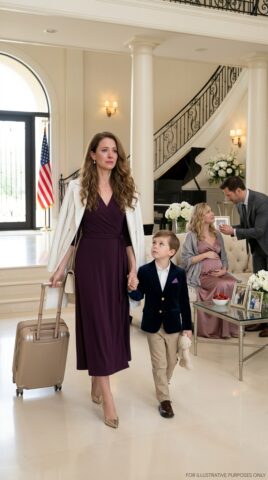
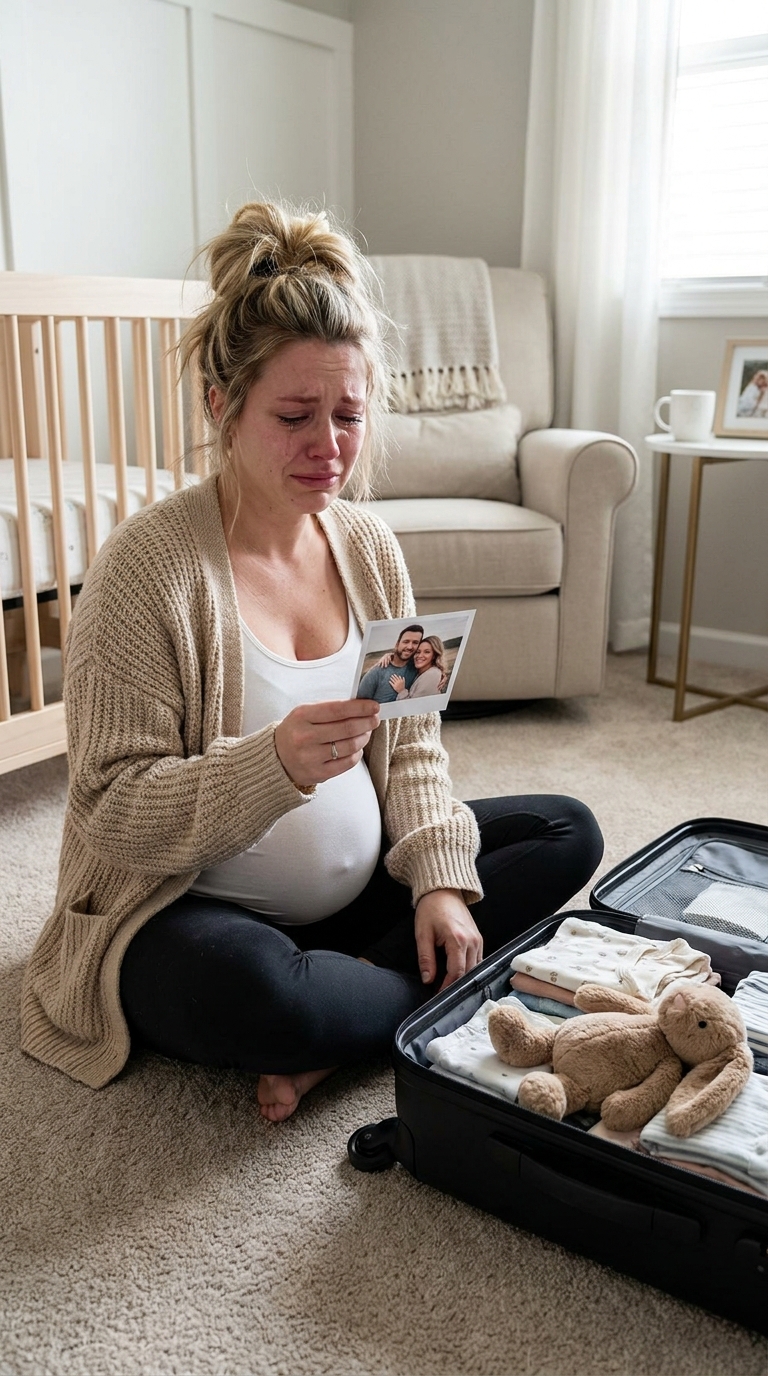
Then I walked upstairs to the master bedroom, opened my small pink suitcase, and started packing.
Not the Dior dresses Andrew’s grandmother bought me.
Not the Cartier bracelet.
Not the Hermès bags lined up in the closet like museum pieces.
I packed leggings, maternity jeans, two sweaters, my laptop, prenatal vitamins, my passport, and the cheap silver necklace my dad gave me when I graduated from Northwestern.
On the vanity, I placed the diamond engagement ring.
Beside it, I left the divorce papers.
My lawyer had prepared them three weeks earlier.
Andrew Sterling could keep the mansion, the money, the family name, the board seats, the country club membership, the vintage cars, and the fake charity galas.
I wanted one thing.
Full custody of my daughter.
Martha, the housekeeper, found me in the hallway.
“Mrs. Sterling?” she said, her face draining when she saw the suitcase. “Does Mr. Sterling know?”
“No.”
“Should I call him?”
I looked at her long enough for her to lower her eyes.
“Martha, when he comes home, tell him he doesn’t need to hide the black journal anymore.”
Her hand flew to her mouth.
That was when I knew.
The staff knew.
Maybe everyone knew.
I had been the only idiot walking around that house pretending silence was respect.
I called an Uber Black, then canceled it. Andrew could track Uber accounts. So I called a yellow cab like a woman escaping a crime scene in a Lifetime movie, except I wasn’t dramatic enough to scream.
When the cab pulled up, the driver helped me with the suitcase.
“Airport?” he asked.
“JFK.”
“That’s a long ride from Greenwich.”
“I’m aware.”
The Greenwich estate disappeared behind us, all iron gates and imported stone and dead roses along the driveway.
Andrew was at a corporate dinner in Manhattan, probably laughing with men who used prenups like napkins.
He had texted me once that evening.
Not coming home.
I snapped my SIM card in half before we hit I-95.
By the time I reached JFK, I was unreachable.
That was the first real breath I had taken in three years.
At the gate, I bought warm milk from Starbucks because I was too pregnant for coffee and too angry for water. I sat near the window and watched planes taxi under the blue-white lights.
My wedding flashed through my head.
The Plaza Hotel.
A Vera Wang gown.
A Tom Ford tuxedo.
A $20 million performance staged for people who measured love by floral budget.
At the altar, Andrew had looked through me.
Later that night, drunk enough to be honest, he grabbed my wrist and called me Penny.
I should have left then.
Instead, I smiled like a well-trained fool and said, “You’ve had too much.”
The boarding announcement crackled overhead.
Flight 284 to Chicago O’Hare.
I stood.
My daughter kicked again.
“Good girl,” I muttered. “We’re not inheriting this mess.”
In first class, the flight attendant helped me into the bulkhead seat. She asked if I needed anything.
“A blanket would be nice.”
“And water?”
“Please.”
The plane pushed back from the gate.
New York shrank into gold lights beneath the wing.
I touched my belly.
“Mia Bennett,” I whispered. “That’s your name.”
Not Sterling.
Never Sterling.
While the plane lifted into the dark, Andrew Sterling came home to an empty bed.
PART 2
Andrew found my ring before he noticed I was gone.
That tells you everything.
At 2:13 a.m., he walked into our bedroom, loosened his tie, and flicked on the lights.
The bed was made.
My nightstand was empty.
My pink suitcase was gone.
On the vanity sat his family diamond and a thick envelope marked:
Separation and Divorce Agreement.
He called me.
The number was dead.
He called again.
Dead.
Then he called Martha.
“Where is my wife?”
I heard later that Martha cried. Good. She could afford the emotion. I had already spent mine.
“She left for the airport,” Martha told him. “And she said you don’t need to hide the black journal anymore.”
That was when Andrew ran to his study.
That was when the great Andrew Sterling, billionaire CEO, Harvard MBA, Wall Street magazine cover boy, finally understood that a quiet wife is not always a weak wife.
Sometimes she is just gathering evidence.
He tore through the cabinet and found the journal.
Penny’s name stared back at him from every page.
He drove to JFK like panic could turn back a plane.
At the information desk, he used the voice that made junior executives sweat.
“I need to locate a passenger. Clare Sterling.”
The agent typed.
“Sir, that flight departed forty-five minutes ago.”
He stood there in his custom Italian suit, surrounded by tourists with neck pillows and kids eating airport fries.
For the first time in our marriage, Andrew Sterling had arrived too late.
PART 3
I gave birth without him, and the first sound my daughter heard was not his name.
It was mine.
“Clare, push.”
The delivery room at Northwestern Memorial was too bright, too cold, too practical for heartbreak. Nurses moved around me with the brisk competence of women who had seen every kind of man disappoint every kind of woman.
Kate stood by my shoulder, gripping my hand.
“You’re doing great,” she said.
“I hate that sentence.”
“I know.”
“I also hate your face right now.”
“Fair.”
That was why Kate was my emergency contact instead of my husband.
Two months earlier, she had met me outside a Lincoln Park apartment at three in the morning wearing pajama pants, a parka, and the expression of someone ready to commit a felony for friendship.
She had leased the apartment under her cousin’s name.
She stocked the fridge with soup, Greek yogurt, frozen waffles, and enough Gatorade to hydrate an NFL team.
She took me to OB appointments.
She sat through birthing classes where husbands rubbed their wives’ backs while I practiced breathing beside an empty chair.
She built the crib.
She argued with insurance.
She taped a note on my bathroom mirror that said:
You are not hard to love. He was just bad at it.
I kept that note.
Andrew found Chicago within forty-eight hours. Of course he did. Men like Andrew think money is a search warrant.
Private investigators showed up at the first apartment.
Kate moved me before sunrise.
Then again.
Then again.
By the time I went into labor, I was in a secure condo in Lake View with blackout curtains, a new phone, and a lawyer who did not blink when I said, “I need him away from my child.”
During labor, I thought pain would make me sentimental.
It didn’t.
Pain made everything clear.
Andrew had not been there when I heard Mia’s heartbeat.
He had not been there when my ankles swelled so badly I cried trying to get my shoes on.
He had not been there when I ate saltines over the sink at 2 a.m. because pregnancy nausea had decided sleep was optional.
He had not been there when I signed the lease, paid the deposit with my own credit card, and changed my emergency contacts.
So he would not be there now.
“Push,” the doctor said again.
I pushed.
Hard.
Angry.
Alive.
A sharp cry hit the room.
The nurse lifted a tiny, furious baby with clenched fists and a face scrunched like she already had complaints about the service.
“Healthy baby girl,” the doctor said.
I reached for her.
The second they placed Mia on my chest, she stopped crying.
Just stopped.
Like she recognized the only person who had never left.
“Hi, baby,” I said, my voice wrecked. “I’m your mom. I’m also your security system, legal department, and unpaid personal assistant.”
Kate laughed and cried at the same time.
“She’s perfect.”
“She’s loud.”
“She’s yours.”
That landed.
Mine.
Not in a selfish way.
In a truthful way.
For three years, people had treated my body like a hallway to the Sterling bloodline. Andrew’s grandmother wanted an heir. Andrew wanted peace. The staff wanted order. Society wanted a pregnancy announcement printed on thick paper.
Nobody had asked what I wanted.
Now Mia slept against me, warm and real.
I wanted her safe.
That was enough.
Across the country, Andrew was falling apart in a corner office above Manhattan.
I knew because Kate showed me a gossip item three weeks later.
STERLING GROUP CEO CANCELS PUBLIC APPEARANCES AMID PRIVATE FAMILY CRISIS
I scrolled past it while pumping breast milk at 4:40 a.m.
“Congratulations,” I muttered. “You discovered consequences.”
Andrew’s people kept calling my lawyer.
He wanted to talk.
He wanted updates.
He wanted to know if the baby had been born.
My lawyer asked if I wanted to respond.
“No.”
“Are you sure?”
“Yes.”
“Clare, family court may eventually require some structured communication.”
“Then we’ll communicate through court.”
A month after Mia was born, Andrew sent flowers to Kate’s office.
Two dozen red roses.
Kate threw them in the dumpster behind the building and sent his assistant a photo.
The caption read:
Try therapy, not florists.
I laughed for the first time in weeks.
Life became smaller and harder, but cleaner.
There was rent.
There were diapers.
There was spit-up on my last clean sweater.
There were job interviews done over Zoom while Mia slept in a bassinet two feet away.
There were days I missed the ease of the estate. Not Andrew. Never Andrew. Just the dishwasher that never broke, the pantry that refilled itself, the silent luxury of not checking my bank app before ordering groceries.
Then I got hired.
A Seattle maternal tech startup needed a marketing director. I had experience, a Northwestern degree, and a level of focus that scared men who used phrases like “work-life balance” only after their wives handled the life part.
I moved west with Mia.
Then I built.
I worked while she slept.
I pitched investors with baby formula on my blazer.
I took calls from airports, pediatric waiting rooms, and once from the floor of a Nordstrom family restroom while Mia chewed on my car keys.
When the startup imploded because the founders were two Stanford boys with Patagonia vests and no operating discipline, I bought the product line out of bankruptcy with investor money I raised myself.
I renamed it Bennett Mothercare.
Three years later, it was valued at $1.2 billion.
That was when New York invited me back.
The Global Family Innovation Gala was held at The Pierre Hotel, because old money loves chandeliers almost as much as it loves pretending not to gossip.
I arrived in a black evening gown, hair pinned back, diamonds borrowed from no man.
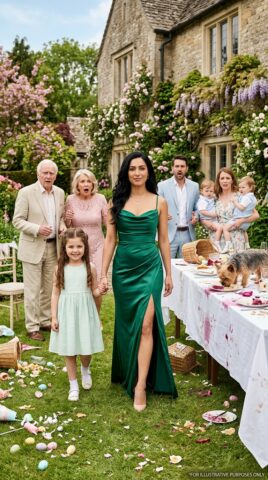
Mia walked beside me in a white tulle dress and tiny Mary Janes, holding my hand like she owned Manhattan.
Flashbulbs popped.
Reporters called my name.
Someone whispered, “Isn’t that Andrew Sterling’s wife?”
I turned, smiled, and corrected him.
“Ex-wife. Legally pending. Emotionally ancient history.”
Mia tugged my hand.
“Mommy, is this where rich people come to clap for themselves?”
“Mostly.”
“Okay.”
I kissed the top of her head.
At three years old, Mia was frighteningly observant. She read early, remembered everything, and once told a pediatrician his waiting room fish tank had “depressive lighting.”
She was my daughter.
At the VIP table, I gave her a strawberry tart and a warning.
“No wandering.”
“No touching microphones.”
“No telling billionaires they have weird hair.”
She sighed. “Fine.”
I had just finished speaking with a venture partner from Boston when the ballroom doors opened.
The room changed temperature.
Andrew Sterling walked in.
Navy suit.
Sharper face.
Too thin.
Holding an enormous bouquet of red roses like a man who had learned nothing and paid extra for it.
He saw me.
Everyone saw him see me.
The crowd parted with obscene enthusiasm.
Nothing entertains rich people more than private pain in formalwear.
“Clare,” he said when he reached me.
His voice cracked on my name.
I gave him my best boardroom smile.
“Mr. Sterling.”
He flinched.
Good.
“I’ve been looking for you for three years.”
“I heard. Very expensive hobby.”
“I need to talk to you.”
“This is a corporate gala, not a parking lot breakup.”
He held out the roses.
“These are for you.”
I looked at them.
Then at him.
“No, thank you.”
His hand stayed extended.
“Clare, please.”
Before I could answer, Mia appeared beside me, face tilted up at him.
“Mister,” she said, “my mommy is allergic to rose pollen.”
The ballroom went quiet enough to hear ice shift in glasses.
Andrew looked at me.
Then at the flowers.
Then at our daughter.
“You’re allergic to roses?”
“I was allergic during our marriage, too,” I said. “You were busy.”
Mia studied him.
“Are you the man who made Mommy sad when I was in her tummy?”
A woman behind us inhaled sharply.
Andrew went pale.
I placed a hand on Mia’s shoulder.
“That’s enough, sweetheart.”
But Mia was not done.
“You should apologize with something useful. Like legal documents.”
A nervous laugh moved through the room.
Andrew lowered the roses.
“Mia,” he whispered.
She stepped behind my leg.
“You don’t get to say my name like you know me.”
That one hit him hard.
I almost felt sorry for him.
Almost.
Then I remembered the journal.
PART 4
The mistress walked into the gala wearing white, and left on her knees with every phone in the room recording her.
Penny Blake still knew how to make an entrance.
She came through the side doors in a white satin gown, hair glossy, diamonds bright, face arranged into the delicate sadness of a woman who practiced expressions in elevator mirrors.
I recognized her instantly.
Not because Andrew had shown me photos.
He hadn’t.
But because I had lived with her shadow long enough to know the shape.
Andrew turned when he heard the whispers.
His face hardened.
“Andrew,” Penny said softly. “I didn’t know you’d be here.”
That was a lie with lip gloss on it.
He stared at her.
“What do you want?”
She glanced at me, then at Mia, then back to him.
“I wanted closure.”
I laughed before I could stop myself.
Penny’s smile twitched.
“I’m sorry,” I said. “That word is hilarious coming from you.”
She lifted her chin.
“I don’t believe we’ve been properly introduced.”
“No, but you’ve been overrepresented in my marriage.”
A few people nearby froze mid-sip.
Andrew stepped between us.
“Penny, leave.”
“Why?” she asked, eyes shining on command. “Because your wife is here?”
“Ex-wife,” I corrected.
Penny looked at me like I was gum stuck to her Louboutin.
“I know this must be uncomfortable for you.”
“Penny, I gave birth without anesthesia for the last twenty minutes because my epidural failed. You are not uncomfortable. You are an email.”
That got a laugh from the bar.
Her cheeks tightened.
“You always had a talent for playing victim.”
Andrew’s head snapped toward her.
“What did you just say?”
Penny realized too late that the room had leaned in.
I opened my clutch and pulled out my phone.
“Actually, Penny, I’m glad you brought up talent. Yours is fraud.”
Her face changed.
Just a flicker.
But I saw it.
Three years earlier, after I left Greenwich, Martha had called me from a blocked number. She was crying so hard I almost hung up.
Then she confessed.
Penny had paid her $20,000 to move the journal into the box I would open for the hospital bag.
Penny knew I was pregnant.
Penny knew Andrew was emotionally negligent.
Penny knew exactly where to place the knife.
Martha had needed tuition money for her son. Ugly reason. Human reason. Still betrayal.
I recorded everything.
Then I hired a forensic accountant.
Because I was done being the quiet wife in the upstairs bedroom.
I tapped play.
Martha’s voice filled the corner of the ballroom.
“Mrs. Sterling, I’m ashamed. A woman paid me to put the journal where you would find it. She said if you saw it before giving birth, you would leave. She gave me cash first, then wired the rest through an LLC.”
Penny backed up.
“That’s fake.”
I smiled.
“Predictable.”
I lifted a folder from my assistant, who had been waiting nearby because I do not expose people without paperwork.
Inside were bank records, flight logs, security stills, and Martha’s signed affidavit.
I handed the folder to Andrew.
“Your first love flew into New York three days before I left. Her phone pinged near your estate. Her shell company paid your housekeeper. She planted the journal.”
Andrew opened the folder.
His hands shook.
Penny grabbed his sleeve.
“Andrew, listen to me.”
He pulled away like she had burned him.
“You did this?”
She started crying.
Real tears this time. Panic tears. Not performance.
“I loved you.”
I laughed once.
It was not a kind sound.
“No. You loved access. You loved the Sterling name. You loved beating the woman you thought was beneath you.”
Penny turned on me.
“You were beneath me. You were some grocery-chain girl from the Midwest playing dress-up in Greenwich.”
There it was.
The real face.
Phones came out all around us.
Penny saw them too late.
Andrew’s voice dropped.
“You destroyed my family.”
“No,” I said, looking at him. “She set the trap. You built the house it worked in.”
He looked at me.
I let him have the full sentence.
“Every word in that journal was yours. Every missed appointment was yours. Every ignored text was yours. Every lonely night in that mansion was yours. Penny lit the match, Andrew, but you soaked the place in gasoline.”
The room went silent.
Penny’s mascara had started to run.
A man from a venture fund whispered, “Holy hell.”
Security approached.
Penny looked around and understood what rich people fear most.
Not jail.
Not guilt.
Humiliation.
“Clare,” she said, voice breaking. “Please. Don’t do this publicly.”
I stepped closer.
“You did it privately when I was eight months pregnant.”
She dropped to her knees.
Actually dropped.
Right there on the polished floor of The Pierre Hotel.
“I’m sorry. Please. I’ll lose everything.”
“No,” I said. “You’re losing what never belonged to you.”
Security escorted her out through a side door while people filmed. Within an hour, her name was trending. By morning, three charity boards removed her. Two brands cut ties. Her ex-husband’s family released a statement so cold it could refrigerate meat.
Andrew disappeared after the gala.
For two weeks, he sent nothing.
No flowers.
No dramatic emails.
No private investigators.
Then my lawyer called.
“Clare,” she said, “Andrew Sterling signed the divorce agreement.”
I sat at my kitchen island in my Tribeca penthouse, Mia coloring beside me with intense focus.
“All of it?”
“All of it. Full legal and physical custody remains with you. He is requesting supervised visitation only if you consent. No challenge to the Bennett name. No asset claims. No custody fight.”
I looked out at the Manhattan skyline.
“What does he want?”
My lawyer paused.
“Nothing. He added a letter. Do you want it forwarded?”
“No.”
Then Mia looked up.
“Is it about Dad?”
I had never lied to her.
“Yes.”
She put down her purple crayon.
“Can I meet him?”
That was the thing about motherhood. You can win in court and still lose control of the questions.
“Why?”
“Because I want to see if he knows how to be sorry without making it about him.”
I stared at my three-year-old.
“You are terrifying.”
“I know.”
We met Andrew one week later at a public park near the Hudson. Neutral location. Daylight. My lawyer nearby. Kate on standby. Two security guards pretending not to be security guards.
Andrew arrived without flowers.
Good start.
He wore jeans, a gray sweater, and the expression of a man who had spent time alone with consequences.
Mia stood beside me in a yellow coat.
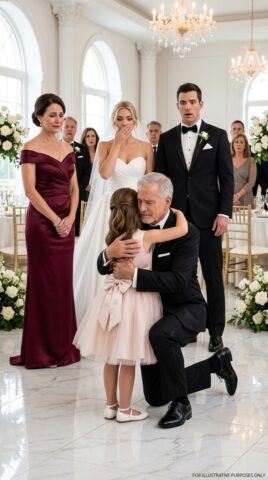
Andrew stopped several feet away and crouched down.
“Hi, Mia.”
She nodded.
“Hello, biological father.”
He winced.
Fair.
“I brought you something,” he said.
I stiffened.
He opened his hand.
Not jewelry.
Not a toy.
A library card.
“I started a children’s science foundation in your name,” he said. “But your mom controls it until you’re eighteen. It funds labs in public schools. No Sterling branding.”
Mia took the card.
“Useful,” she said.
Andrew let out a broken laugh.
Then he looked at me.
“I signed everything.”
“I know.”
“I’m stepping down as CEO.”
That surprised me.
He continued.
“The board wanted stability. I became a liability after Penny’s confession went public and after people started asking why my pregnant wife had to disappear to feel safe.”
“And?”
“And they were right.”
I said nothing.
“My grandmother removed me from the family trust committee. I’m still wealthy. I’m not pretending poverty is punishment. But I lost power I abused.”
Mia looked at him.
“Are you sad?”
“Yes.”
“Good,” she said. “Sad means your brain is learning.”
For the first time, Andrew smiled at her like he actually saw her.
Not an heir.
Not a Sterling.
A child.
“Your mom taught you that?”
“No. I taught me that.”
He nodded seriously.
“Of course you did.”
Then he looked at me again.
“Clare, I’m not asking you to come back.”
“Smart.”
“I’m not asking you to forgive me.”
“Smarter.”
“I just wanted to say, in front of you and Mia, that what I did was neglect. Not confusion. Not grief. Not bad timing. Neglect. You deserved better before you left. You deserved better while you were pregnant. You deserved better from me.”
The wind moved across the river.
I waited for my old self to react.
That younger Clare would have searched his face for hope. She would have treated basic accountability like a diamond.
I wasn’t her anymore.
“Thank you for saying that,” I replied.
His shoulders dropped, like even that small courtesy cost him.
Mia slipped her hand into mine.
“Mommy, can we get fries now?”
“Yes.”
Andrew stood.
“Mia,” he said carefully, “may I see you again sometime? Only if your mom says it’s okay.”
Mia considered him with brutal seriousness.
“You can send a written proposal.”
Kate, hiding badly near a hot dog cart, choked on her coffee.
Andrew nodded.
“I’ll do that.”
Mia added, “No roses.”
“No roses.”
“And no lying.”
“No lying.”
“And no acting rich as a personality.”
I pressed my lips together.
Andrew looked at me.
“I deserved that.”
“Yes,” I said. “You did.”
PART 5 — ENDING
The day my divorce became final, Andrew lost his last claim to my name.
The judge signed the papers at 9:17 a.m.
Full custody.
Bennett surname confirmed.
No Sterling trust control.
No forced visitation.
No hidden clauses written by men in expensive suits.
Outside the courthouse, cameras waited because Penny’s scandal had turned our private wreckage into public entertainment.
A reporter shouted, “Clare, do you feel vindicated?”
I looked at Mia, who was holding Kate’s hand and wearing sunglasses indoors because she said “privacy is a constitutional vibe.”
Then I looked back at the cameras.
“I feel free.”
Across town, Andrew Sterling officially resigned from the company his family built. Penny Blake’s foundation collapsed under donor withdrawals and lawsuits. Martha testified, paid back the money, and lost the job she had betrayed me to keep.
Nobody walked away untouched.
That was not revenge.
That was math.
That evening, Mia and I flew back to Seattle for a board meeting at Bennett Mothercare’s new headquarters. I buckled her into the first-class seat beside mine.
“Mommy?” she asked.
“Yes?”
“Are we rich now?”
I smiled.
“We’re independent.”
“Is that better?”
“Much better.”
The plane lifted over New York, and this time, I looked down without shaking.
Three years ago, I flew out pregnant, broke, and erased.
Now I left as Clare Bennett.
Mother.
CEO.
Owner of my own life.
And no man on earth was getting the pen back.