PART 2
Ben told me his name at 1:13 in the morning.
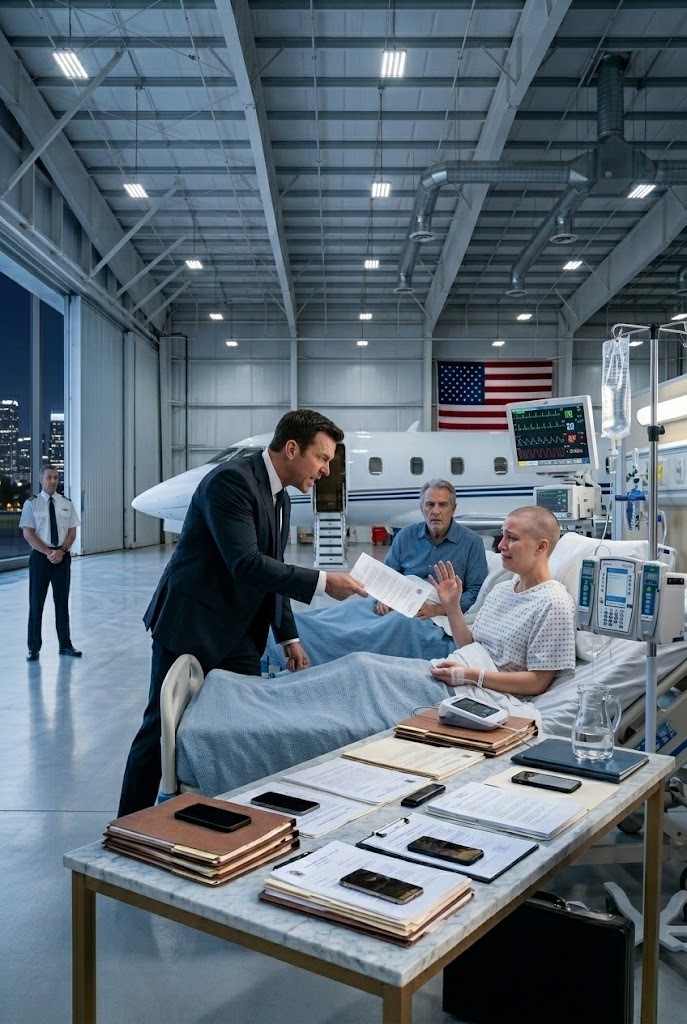
Neither of us could sleep. I was too sore to move and too frightened to close my eyes. He had been awake for hours, reading under the soft lamp attached to the wall. The curtain between us was half open because the night nurse kept forgetting to pull it closed.
Outside the hospital window, Boston glittered cold and quiet. Somewhere beyond the Charles River, people were sleeping in warm houses, next to spouses who had not texted them divorce papers before surgery.
“Ben what?” I whispered.
He looked up from his book.
“Just Ben.”
“That sounds suspicious.”
He smiled. “Does it?”
“Very. Nobody is just Ben.”
“I am.”
“What do you do, Just Ben?”
He hesitated.
It was small, but I noticed.
“I teach sometimes,” he said.
“What kind of answer is that?”
“A true one.”
“You teach sometimes?”
“A graduate seminar once a year.”
“Where?”
“Harvard.”
I turned my head slightly, which was a mistake. Pain flared through my abdomen.
“Of course,” I whispered. “The mysterious man in the next bed teaches at Harvard.”
“It’s not as dramatic as you’re making it sound.”
“It is when you say it in a hospital gown.”
He laughed softly.
The laugh warmed the room.
I told him I taught fourth grade at a public elementary school in Cambridge. I told him about my students, about the way they argued over who got to feed the class guinea pig, about the Valentine cards still taped to my classroom cabinet, about a little girl named Emily who had given me a folded note before my medical leave.
The note said, Come back soon, Mrs. Walker. We saved your chair.
“Mrs. Walker?” Ben asked. “Not Caldwell?”
“At school, I kept my maiden name.”
“Why?”
“Because it was mine.”
He looked at me for a moment.
“That’s a good reason.”
Andrew had not thought so. Andrew had said it made us look divided. His mother had called it “modern in a slightly defensive way.” I had laughed then because back then I still thought humiliation was easier to survive if I pretended it was funny.
Ben did not laugh at the things that had hurt me.
That was one of the first things I noticed.
The next morning, my mother arrived with her right wrist in a fresh navy-blue cast and fire in her eyes.
Margaret Walker was sixty-two, a retired public librarian, and the kind of woman who could make a rude adult apologize with one silent stare. She walked into my hospital room as if she was entering a courtroom where everyone else had already committed perjury.
“Where is Andrew?” she asked.
“Gone,” I said.
“Coward.”
Ben lowered his eyes to his book, pretending not to hear.
My mother turned toward him immediately.
“And who are you?”
He looked up.
“Ben. Temporary roommate.”
“He was kind to me when I woke up,” I said.
My mother studied him.
Ben held still under her inspection.
After several seconds, she said, “You don’t look like a temporary roommate.”
“I don’t know how to respond to that,” he said.
“You responded fine.”
Then she sat beside me and took my hand with her good one.
“I spoke to Eleanor Caldwell,” she said.
I closed my eyes. “Why?”
“Because she called me while I was getting my wrist set to explain that Andrew has been under unbearable emotional pressure.”
Ben’s book lowered slightly.
“What did you say?” I asked.
“I told her unbearable emotional pressure is not a medical emergency, but my daughter’s cancer surgery is.”
Ben made a small sound like he was swallowing a laugh.
My mother glanced at him.
“Something funny?”
“No, ma’am.”
“Good.”
But her mouth twitched.
Later that afternoon, the surgeon came in. The tumor was malignant. It had been removed, but the cancer was more complicated than they had hoped. I would need chemotherapy. Six rounds to start. More scans. More blood tests. More waiting.
I listened like a student taking notes in a class I never wanted to attend.
My mother squeezed my hand.
Across the room, Ben opened his book and looked down, giving me the closest thing to privacy a shared hospital room could offer.
After the surgeon left, I stared at the ceiling.
“So,” I said, my voice empty, “Andrew picked a very efficient time to leave.”
My mother leaned close.
“You listen to me, Hannah Walker. You are not being left. You are being released from a man who failed the simplest test of love.”
That night, Andrew called twice.
I did not answer.
Eleanor texted once.
The house needs to be discussed carefully. Andrew is willing to be reasonable.
The house.
Our townhouse in Cambridge, bought with the $85,000 my grandmother left me and the mortgage I helped pay every month. The house where I painted the kitchen soft green. The house where I planted tulips in the little front garden because I thought one day our children would pick them.
I turned the phone over.
Ben noticed.
“Bad news?” he asked.
“Just people trying to steal my house politely.”
“Do you have a lawyer?”
“I’m a teacher. I have a dentist and a library card.”
“My sister knows a good family attorney.”
“Of course she does.”
He smiled. “Why do you say it like that?”
“Because mysterious Harvard teachers always have sisters who know powerful attorneys.”
“I never said powerful.”
“You didn’t have to.”
At 2:06 a.m., the pain medication made me reckless.
The room was dark except for the city lights across the window. Ben was awake. So was I.
“Ben?” I whispered.
“Yes?”
“If I survive this whole thing, you should marry me.”
The words slipped out before shame could catch them.
For one second, there was silence.
Then Ben laughed.
It was not mocking. It was surprised and real.
“Okay,” he said.
I turned my head toward him. “Okay what?”
“Okay. If you survive, I’ll marry you.”
“You don’t know me.”
“I know you can make jokes under terrible conditions.”
“That’s not a foundation for marriage.”
“It’s better than some foundations.”
I laughed until my stitches hurt.
The next morning, a nurse I hadn’t seen before came in to check Ben’s vitals. She was older, with silver hair and glasses hanging from a chain around her neck.
She saw him and froze.
Only for a second.
But I saw it.
“Sir,” she said carefully, “radiology is ready for you.”
Sir.
Not Ben.
Sir.
Before he left, Ben looked back at me.
“Don’t go anywhere, Hannah.”
“I’m attached to machines,” I said. “Hard to make a dramatic exit.”
He smiled and disappeared through the doorway.
The nurse stayed behind, adjusting my IV line though nothing needed adjusting.
Then she looked at me and whispered, “Sweetheart, do you know who that man is?”
I blinked.
“Ben,” I said. “He teaches sometimes.”
The nurse opened her mouth.
Closed it.
Then she patted my blanket.
“Get some rest,” she said.
And walked out before I could ask why her hands were shaking.
PART 3
When I was discharged four days later, Andrew had changed the locks.
I found out from my neighbor, Mrs. Patterson, who called my mother while we were still in the hospital parking garage.
“Margaret,” Mrs. Patterson said loudly enough for me to hear, “there’s a locksmith at Hannah’s townhouse. And Eleanor Caldwell is on the front steps with a clipboard.”
My mother looked at me.
I was sitting in the passenger seat with a pillow pressed against my stomach, trying not to throw up.
“We’re going there,” she said.
“No,” I whispered.
“Yes.”
“Mom, I can barely stand.”
“Then you will sit in the car while I legally terrify people.”
We went.
The townhouse looked exactly the same from the street, which somehow made everything worse. Same brick front. Same black door. Same frozen flower boxes beneath the windows. But the lock on the door was new.
Bright brass.
Ugly.
Eleanor Caldwell stood on the sidewalk in a camel-colored coat and pearls, looking like the chairwoman of a charity designed to make poor people feel grateful.
“Hannah,” she said when she saw me. “You should be resting.”
“And you should be ashamed,” my mother said.
Eleanor’s face tightened. “This is a difficult time for everyone.”
“No,” my mother said. “It is a difficult time for my daughter. For you, it is an opportunity to behave badly.”
Eleanor looked past her at me.
“Andrew thinks communication should go through attorneys from now on.”
“Then why are you standing outside my house?” I asked.
“Our family needs to protect its interests.”
Our family.
Its interests.
My pain was not even the subject of the sentence.
The police came. Andrew’s attorney called. Eleanor spoke in careful, polished phrases. My mother used words like “inheritance,” “marital property,” “illegal exclusion,” and “documented abandonment” with the pleasure of a woman who had been waiting her whole life to weaponize a vocabulary.
I did not get inside that day.
Instead, my mother took me to a small guest cottage in Brookline owned by a friend from her library days. It had white walls, old quilts, a narrow kitchen, and a view of a maple tree.
For the next few months, that cottage became my world.
Chemotherapy began three weeks later.
If surgery was thunder, chemo was fog.
It moved in slowly and covered everything.
I lost my appetite first. Then my strength. Then my hair. My skin became pale and dry. My bones ached. Some mornings, I could smell toast from two rooms away and it made me sick. My mother drove me to every infusion in her old Subaru with one hand still clumsy from the cast.
My students sent cards.
Mrs. Walker, cancer is rude.
Mrs. Walker, we are saving your chair but Ethan tried to sit in it once and we yelled.
Mrs. Walker, please come back soon because the substitute does not do the voices right.
I taped every card to the cottage wall.
I did not hear from Ben.
I told myself that was normal.
He had been a stranger in a hospital room. A kind stranger. A funny stranger. A man with a paperback and gentle eyes. But still a stranger.
Then, on the morning of my second chemo round, a package arrived.
No return address.
Inside was a copy of A Tree Grows in Brooklyn.
On the title page, someone had written:
For long hours in uncomfortable chairs. Still rooting for you. — B.
My mother read the note over my shoulder.
“B,” she said.
“Ben.”
“The not-teacher.”
“He teaches at Harvard.”
She looked at me. “Hannah, I watched two men in dark suits stand outside his hospital room for three days.”
I stared at her.
“What?”
“You were asleep for most of it.”
“Why didn’t you tell me?”
“Because your husband had just abandoned you by text before cancer surgery. I thought you deserved one pleasant mystery.”
I took the book to chemo and read until the medicine made the words blur.
A nurse asked if the book was from my husband.
“No,” I said.
Then, because it felt good to say, I added, “It’s from the patient in the next bed.”
After my third infusion, another book arrived.
After my fourth, when a fever sent me back to the hospital for six nights, yellow tulips were delivered to the nurses’ station with a card that said:
Still here. — B.
Meanwhile, Andrew got meaner.
His attorney filed a motion claiming I was medically unstable and emotionally impaired. Andrew wanted temporary control over our joint accounts. He wanted exclusive possession of the Cambridge townhouse. He wanted the judge to believe I was too sick to manage property.
My lawyer, Judith Keane, was a sharp-eyed family attorney in Boston with silver glasses and the calmest voice I had ever heard.
She read Andrew’s filing at the cottage kitchen table.
Then she looked at me and said, “Your husband is making a mistake.”
“Can he win?” I asked.
“He can try.”
“What do we do?”
Judith tapped the paper.
“We let him talk.”
That sounded weak.
But Judith smiled slightly.
“Men like Andrew Caldwell always think talking makes them look innocent.”
By March, I was bald, thin, and exhausted.
But I was alive.
And something inside me had started changing.
I was not becoming harder exactly.
I was becoming less available for harm.
Then Andrew brought in his witness.
A nurse named Vanessa Cole.
And according to him, she could prove I was losing my mind.
PART 4
Vanessa Cole walked into the deposition room like she had already won.
She was tall, blonde, elegant, and polished in the cold way expensive hotels are polished. Her cream coat fit perfectly. Her hair fell over one shoulder in smooth waves. Her lipstick was red, her diamond earrings small and sharp, and her expression carried the faint pity of someone pretending to be kind while holding a knife.
I sat across from her wearing a black scarf over my bald head, a gray sweater, and no makeup because I no longer had the energy to decorate my suffering.
Andrew sat beside his attorney.
He looked thinner than he had before, but not sad. Pressured. Irritated. Like a man offended that consequences had arrived on schedule.
He did not look at me.
Vanessa did.
Her eyes moved from my scarf to my hands to my face.
Then she looked away with practiced sympathy.
Fake sympathy is one of the cruelest costumes a person can wear.
Judith Keane opened a folder.
“Ms. Cole,” she said, “you are a registered nurse?”
“Yes.”
“You worked at Massachusetts General Hospital during Mrs. Walker’s surgery and recovery?”
“Yes.”
“You claim you personally observed Mrs. Walker behaving in ways that concerned you?”
“Yes.”
“Please describe those observations.”
Vanessa folded her hands neatly.
She said I was confused after surgery.
She said I was emotionally unstable.
She said I spoke about marrying a stranger from the hospital and could not provide his real name.
She said I appeared detached from reality.
She said Andrew had been deeply concerned for my mental health.
At that, my mother made a sound from the back of the room.
Judith did not interrupt.
She let Vanessa speak.
That was Judith’s talent. She let liars build a stage, walk to the center, and turn on every light themselves.
When Vanessa finished, Judith looked down at her notes.
“Ms. Cole, were you assigned to Mrs. Walker’s room after surgery?”
Vanessa paused.
“I was on the floor.”
“That was not my question.”
“I had interactions with her.”
“Were you assigned to her care?”
“No.”
Andrew shifted in his chair.
Judith turned a page.
“Did you have legal authorization to access Mrs. Walker’s medical chart?”
Vanessa’s smile tightened.
“I don’t recall accessing it.”
“Hospital access logs show your employee ID opened Mrs. Walker’s chart on four separate dates when you were assigned to a different wing.”
The room went silent.
Vanessa looked at Andrew.
It was quick.
Too quick.
But everyone saw it.
My stomach turned cold.
Judith placed another document on the table.
“Ms. Cole, how long have you been romantically involved with Mr. Andrew Caldwell?”
Andrew’s attorney shot forward.
“Objection.”
Judith leaned back.
“You may object for the record. But if you prefer, I can first introduce the hotel receipts from the Four Seasons Boston, the parking garage records, credit card statements, and text message metadata.”
My mother whispered, “Dear God.”
I could not move.
Vanessa’s face lost color under her makeup.
Andrew finally looked at me.
Not with regret.
With fear.
That hurt more than I expected.
Not because I still loved him.
Because I realized he had never feared losing me.
He only feared being exposed.
Judith continued, her voice calm.
“Ms. Cole, were you with Mr. Caldwell the night before Mrs. Walker’s cancer surgery?”
Vanessa said nothing.
“Were you with him in a hotel room while his wife was preparing to be admitted for surgery?”
Nothing.
“Did you drive him to Logan Airport that morning?”
Andrew’s attorney stood.
“We need a break.”
Judith closed her folder.
“I think that would be wise.”
I stood too fast.
The room tilted.
My mother reached for me, but I shook my head and walked into the hallway alone. I made it to the restroom before I threw up.
When I came out, weak and sweating, a man was standing near the elevators.
Dark suit. Neatly cut hair. Gray-blue eyes.
Ben.
But not hospital Ben.
Not the tired man in a gown with a paperback.
This man looked like wealth had learned to lower its voice. His suit fit perfectly. A silver watch showed beneath his cuff. Two men stood near the far wall, pretending not to watch the hallway.
My mother had been right.
The nurse had been right.
Everyone had known something I hadn’t.
“Hi, Hannah,” he said.
I laughed.
It came out sharp and shaky because the day had already become so absurd that the mysterious patient from the next bed appearing outside my deposition felt like the final twist in a movie I had not agreed to be in.
“You’re not just a teacher,” I said.
He smiled faintly.
“I am a teacher.”
“You have security.”
“Some teachers attract complicated attention.”
“Who are you?”
He looked at his hands.
“My full name is Benjamin Lawson.”
I knew that name.
Everyone in America knew that name.
Lawson Industries. The Lawson Foundation. Hospital wings. University buildings. Education grants. Medical research centers. A family whose last name appeared on plaques in Boston, New York, Washington, D.C., and San Diego.
“You’re Benjamin Lawson,” I said.
“Yes.”
“And you were in a shared hospital room pretending to be Ben?”
“I wasn’t pretending. I am Ben.”
“You left out the billionaire part.”
“I usually do.”
I stared at him.
“Why were you in that room?”
He exhaled slowly.
“When I need medical treatment, I check in quietly. No private suite. No special attention. I don’t like how people change when they know the name.”
“That sounds insane.”
“It probably is.”
“And the books?”
His expression softened.
“You said your students saved your chair. I thought you might need something to sit with.”
That almost broke me.
Not the money.
Not the famous name.
Not the security.
The fact that he remembered my chair.
Behind us, the deposition room door opened.
Andrew stepped into the hallway.
He saw me.
Then he saw Benjamin Lawson standing beside me.
And for the first time in ten years, my husband looked at me as if he had underestimated the wrong woman.
PART 5
Andrew walked toward us, but his eyes were fixed on Ben.
Men like Andrew recognize money faster than they recognize pain. They can ignore loyalty, dismiss sacrifice, and mistake kindness for weakness. But power? They notice it immediately.
“Hannah,” Andrew said carefully. “Can we talk?”
Months earlier, those words would have pulled me apart. I would have searched his face for the man I married. I would have wondered if I had been too sick, too emotional, too needy, too difficult to love.
Now I only felt tired.
“No,” I said.
His jaw tightened.
He looked at Ben.
“This is a private family matter.”
Ben said nothing.
He did not step in front of me.
He did not perform rescue.
He simply stood beside me, close enough that I knew I was not alone.
Andrew’s attorney whispered something, but Andrew ignored him.
“So this is him?” Andrew said. “The hospital stranger?”
“No,” I said. “This is the man who was kind to me after you abandoned me.”
Color rose in his face.
“I did not abandon you. I was overwhelmed.”
“You texted me from a hotel room with your mistress forty-three minutes before cancer surgery.”
His eyes darted toward the people in the hallway.
“Keep your voice down.”
There it was.
Not I’m sorry.
Not I hurt you.
Not Are you okay?
Just keep your voice down.
“You wanted me quiet before surgery,” I said. “You wanted me quiet when you changed the locks. You wanted me quiet while your girlfriend lied about my mental state. I am done being quiet so you can look decent.”
People had started watching.
Andrew noticed. Of course he did.
“You don’t know what this year was like for me,” he said.
I nodded once.
“You’re right. I don’t. Because while you were suffering from my cancer, I was busy having it.”
His mouth opened.
Nothing came out.
Judith appeared in the doorway.
“Hannah,” she said, “we’re finished for today.”
“Did we win?” I asked.
Her smile was small and sharp.
“We started winning when they started lying.”
The next weeks were brutal.
Andrew’s legal team tried to bury Vanessa’s testimony. Judith filed motions. Hospital administrators opened an investigation into Vanessa’s unauthorized access of my medical records. The judge was not impressed by Andrew’s attempt to use his mistress in scrubs as a witness against his sick wife.
Eleanor Caldwell stopped texting me.
Lauren blocked me online after posting a quote about “choosing peace over toxic people.”
My mother printed the post, stuck it on the refrigerator, and wrote Exhibit A: shamelessness across the top.
Chemo continued.
So did life.
Some mornings, I woke up convinced my body had become a place I no longer wanted to live. Other mornings, sunlight came through the cottage window and touched the cards from my students, and I thought, Not today. Today I stay.
Ben did not rush me.
That mattered.
He did not arrive with dramatic speeches or expensive solutions. He did not try to buy away my pain. He called sometimes. Sent books. Asked if I had eaten. Asked if my mother needed help. Asked if I wanted company and accepted no when no was the answer.
One afternoon after my fifth chemo round, I found him on the cottage porch holding a brown paper bag.
“You look suspicious,” I said through the screen door.
“I brought soup.”
“Billionaire soup?”
“Technically from a deli.”
“Did the deli know you were Benjamin Lawson?”
“I wore a baseball cap.”
“That probably fooled no one.”
“It fooled a man who asked if I was a delivery driver.”
I let him in.
My mother arrived twenty minutes later and found him setting bowls on the table.
“Benjamin,” she said.
“Mrs. Walker.”
“I liked Ben better.”
“Most people do.”
She sat down, eyes narrowed.
“Are you going to hurt my daughter?”
The spoon paused in his hand.
“No.”
“Men always say that.”
“I know.”
“What makes you different?”
Ben looked at me, then back at her.
“I don’t think love is proven by what someone says when life is easy.”
My mother watched him for a long moment.
Then she picked up her spoon.
“Fine,” she said. “But if you turn out to be secretly awful, I know librarians in every state.”
“I’ll remember that.”
My final chemo round happened on a gray Thursday in May.
The nurses clapped when I rang the bell. My mother cried openly. I cried too, not because I believed everything was over forever, but because I had reached the end of something designed to break me.
Outside the infusion center, Ben waited beside a black SUV holding yellow tulips.
“You have a theme,” I said.
“You noticed.”
“I’m a teacher. We notice patterns.”
He handed them to me.
“I’m proud of you, Hannah.”
The words entered quietly.
Not as rescue.
Not as romance.
As truth.
Two days later, Judith called.
“Andrew wants to settle,” she said.
“What does that mean?”
“It means he knows a judge will not enjoy hearing more about Vanessa Cole.”
“What do we ask for?”
“Your townhouse. The money he moved. Attorney’s fees. And a signed agreement that he stops contacting you except through counsel.”
“And if he refuses?”
Judith’s voice warmed.
“Then we let him explain the Four Seasons receipts under oath.”
Andrew signed.
He returned the money from our joint account.
He gave up the townhouse.
He paid my legal fees.
When it was over, he waited outside the conference room.
“Hannah,” he said.
I stopped.
He looked older.
“I made mistakes.”
I almost admired the cowardice of that sentence.
“No,” I said. “You made choices.”
“I loved you.”
“You loved being admired by me.”
“That’s not fair.”
“No,” I said. “It’s finally accurate.”
Then I walked away.
This time, I did not look back.
PART 6
I returned to my classroom in June wearing a soft brown wig and a blue dress that hung too loosely on my body.
Before I opened the door, I stood in the hallway and listened.
Children talking. Chair legs scraping. Someone laughing too loudly. The familiar noise of a room full of small human beings who still believed most disasters could be fixed with fairness, snacks, and a freshly sharpened pencil.
My principal, Mrs. Bennett, stood beside me.
“Ready?” she asked.
“No.”
She smiled.
“That means you are.”
When I stepped into the classroom, twenty-four fourth graders went completely silent.
Then Emily stood up.
“We saved your chair,” she said.
On my desk sat my old wooden chair, covered in paper hearts, drawings, ribbons, and one large sign that read:
WELCOME BACK, MRS. WALKER. CANCER IS STILL RUDE.
I cried in front of all of them.
Not small tears.
Real tears.
The children stared until I laughed and wiped my face.
“These are happy tears,” I told them.
A boy named Jack frowned.
“They look exactly like sad tears.”
“They do,” I said. “That is why grown-ups are confusing.”
Teaching saved me in pieces.
Not magically. Not all at once. But every day, I had somewhere to go where cancer was not the most important thing about me. My students cared whether I remembered the funny reading voice for the class novel. They cared whether the guinea pig got enough carrots. They cared whether I still knew how to make multiplication less boring.
They did not care that my husband had left me.
They did not care that my hair was fake.
They did not care that I sometimes had to sit down while teaching because standing too long made the room tilt.
They loved me practically, which is how children often love best. Without speeches. Without pity. With full expectation that I would remain myself.
Ben visited my classroom once before summer break.
I introduced him as Mr. Lawson, a man who helped fund schools, hospitals, and libraries across the United States.
Emily raised her hand immediately.
“Are you rich?”
The room gasped.
“Emily,” I said.
Ben smiled.
“Yes.”
“How rich?”
“Emily,” I warned again.
Ben leaned against the desk.
“Rich enough that I have to work hard not to become useless.”
The children went quiet.
That answer interested them more than any number.
He talked about responsibility. He talked about money as a tool, not a personality. He talked about how everyone had something to give, even if it was not dollars.
At the end, Jack raised his hand.
“Do you like Mrs. Walker?”
The class exploded.
I covered my face.
Ben looked at me.
Then back at Jack.
“Yes,” he said. “Very much.”
The next month, my scans showed no evidence of disease.
The doctor said the phrase carefully, like she knew better than to make it sound like a promise.
No evidence of disease.
Not cured forever.
Not guaranteed safe.
But clear.
I walked out of the cancer center into bright Boston sunlight and sat on a bench because my legs would not hold me.
My mother cried.
Ben sat on my other side.
After a while, he said, “Do you want to celebrate?”
“Yes.”
“Dinner?”
“No.”
“What then?”
I looked across the street at a hot dog cart near the park.
“I want one of those.”
So Benjamin Lawson, whose family name was carved into buildings from Boston to Washington, D.C., bought me a hot dog from a street cart and ate one beside me while mustard dripped onto his sleeve.
It was one of the happiest meals of my life.
In August, I moved back into my Cambridge townhouse.
The first night, my mother slept in the guest room even though I said I was fine. The second night, I slept alone.
The house felt haunted, but not by Andrew.
By the woman I had been there.
She was in the green kitchen. In the empty room I once imagined as a nursery. In the dining room where Eleanor had once corrected the way I set the silverware. In the bedroom where Andrew had slept beside me while already planning his exit.
I walked through every room.
Then I opened all the windows.
Fresh air moved through the house.
The next weekend, Ben came over wearing jeans, a sweater, and carrying a toolbox.
“What are you doing?” I asked.
“You said the upstairs bathroom cabinet sticks.”
“You remember that?”
“I remember most things you say.”
That should have frightened me.
Instead, it steadied me.
We spent the afternoon fixing small things. A loose hinge. A broken drawer. A stair rail Andrew had promised to repair for three years.
At dusk, Ben stood in the kitchen doorway.
“There is something I want to ask you,” he said.
My heart jumped.
He noticed and shook his head quickly.
“Not that.”
I laughed.
“Okay.”
“I have houses in San Diego, New York, and Washington, D.C. My life can get public and complicated. But when I am here, fixing a cabinet badly with you, I feel more like myself than I do anywhere else.”
“You fixed it badly?”
“Very badly.”
I smiled.
He stepped closer.
“I don’t want to rush you. I don’t want to become another man making decisions around your life. But I want to be in it, Hannah. In whatever way you can handle.”
I looked at him.
At the man who had reached through a hospital curtain with a folded napkin.
At the man who remembered my students.
At the man who never asked me to become easier to love.
“Yes,” I said.
His breath caught.
“Yes what?”
“Yes, be in it.”
PART 7
A year after my surgery, Ben asked me to marry him on the back porch of my Cambridge townhouse while it rained.
No yacht.
No reporters.
No private island.
No diamond hidden in champagne.
Just rain, tea, old sweatshirts, and a stack of student essays from his Harvard seminar on the table between us.
My hair had grown back in short brown curls. It was softer than before, messier than before, and completely mine.
Ben had been reading an essay and muttering, “That is absolutely not what Aristotle meant,” when he suddenly put the pages down.
“Hannah,” he said.
Something in his voice made me still.
He reached into his sweatshirt pocket and took out a small velvet box.
I stared at it.
Then at him.
“No pressure,” he said quickly. “I know we joked about it in the hospital, but this is not because of that. Not only because of that. I just—”
“Ben.”
He stopped.
I loved that I could stop him.
I loved that he let me.
He opened the box.
The ring was beautiful but simple: an oval diamond on a thin gold band. No performance. No announcement. Just light.
“I loved you before I understood what it was,” he said. “I think part of me started loving you when you made a joke in the worst pain of your life. But I respect you enough to know love is not a rescue mission. You saved yourself. I just want to stand close for the rest of it.”
The rain tapped against the porch roof.
I thought about Andrew’s text.
I thought about the operating room.
I thought about waking up alone and not alone.
“Yes,” I said.
Ben closed his eyes for half a second.
“Yes?”
“Yes.”
He slid the ring onto my finger with hands that trembled.
My mother, who had absolutely been watching from the kitchen window despite later claiming she “just happened to be checking the weather,” opened the door and shouted, “Finally.”
We got married in October on Cape Cod.
Not in a mansion. Not on a private estate. Not in a room full of donors and executives.
We married in a small white chapel near the water, with thirty-six people, white flowers, soft music, and an American flag standing quietly near the front beside the church door.
I wore a cream dress with sleeves because it made me feel graceful and strong. Ben wore a navy suit. My mother walked me down the aisle with her healed wrist tucked through my arm.
Emily came with her parents and several classmates from that year. She had grown taller, but when she saw me, she still ran straight into my arms.
“You look like yourself,” she said.
Her mother gasped. “Emily!”
I laughed.
“That is the nicest thing anyone has said to me today.”
When the officiant asked Ben if he took me as his wife, he said, “Yes. I have since the first night.”
My mother pressed a tissue to her eyes.
Emily whispered loudly, “That was romantic.”
Everyone laughed.
At the reception, my mother gave a toast.
“I used to think the worst thing that could happen to a woman was being left,” she said. “I was wrong. The worst thing is staying somewhere your soul is not safe. My daughter was left on the worst morning of her life. But she did not end there. She came back to herself. And then, because life is strange and sometimes merciful, the man in the next hospital bed had better timing than anyone I have ever met.”
Ben lifted his glass to her.
She pointed at him.
“I still know librarians in every state.”
“I remember,” he said.
After the wedding, the world tried to make our marriage into a simple headline.
Teacher marries billionaire.
Cancer survivor gets fairy-tale ending.
Abandoned wife finds wealthy husband.
Those versions missed almost everything.
We did not move to his house in San Diego, though we visited sometimes. We did not live full-time in Washington, D.C., though his foundation work often pulled him there. We stayed mostly in Cambridge, in my townhouse, the house I had fought to keep, the house where the windows opened now.
I kept teaching.
Ben kept teaching his seminar.
Together, we funded patient support programs quietly, especially for people facing illness without family support, legal help, transportation, or safe housing.
Two years after the surgery, Andrew emailed me.
The subject line was:
I hope you’re well.
I stared at it for a long time before opening it.
He wrote that losing his job had humbled him. He wrote that Vanessa was no longer in his life. He wrote that he had been afraid. He wrote that part of him would always love me.
I showed it to Ben.
He read it once and handed the phone back.
“What do you want to do?” he asked.
Not what should you do.
Not answer him.
Not ignore him.
What do you want to do?
I deleted the email.
Then I made coffee.
PART 8
Five years after Andrew texted me from a hotel room, I stood in the lobby of Massachusetts General Hospital holding a framed photograph.
In the photo, my fourth-grade class from that terrible year stood around my old wooden chair. The chair was covered in paper hearts, ribbons, and crooked drawings. Emily stood in the center with both hands on the chair back, smiling like she had personally guarded it from the whole world.
The hospital had invited me to speak at a small dedication ceremony for a new patient assistance program funded by the Lawson Foundation. The program provided transportation, emergency housing, legal referrals, meal support, and counseling for patients whose families fell apart during serious illness.
I knew exactly why Ben wanted to fund it.
Not because money could erase what happened to me.
Because he had listened.
Doctors, nurses, social workers, former patients, and hospital administrators filled the lobby. My mother sat in the front row. Ben stood near the back in a charcoal suit, trying and failing not to look proud.
I stepped to the microphone.
For a moment, the hospital blurred.
I remembered the ceiling tiles.
I remembered the phone in my hand.
I remembered Andrew’s text.
I remembered waking up in pain and hearing a stranger turn the page of a book.
“My name is Hannah Walker Lawson,” I began. “Five years ago, I came to this hospital on the worst morning of my life.”
The room became still.
“I was here for cancer surgery. Forty-three minutes before I was taken back, my husband texted me that he wanted a divorce. My mother had broken her wrist trying to get me here. I thought I had reached the absolute bottom of my life.”
My mother pressed a tissue to her face.
“But after surgery, I woke up in a shared recovery room. There was a patient in the next bed. He was reading a book. He did not know me. He did not owe me anything. But when I woke up crying, he set a folded napkin on my pillow and gave me the dignity of not making my pain a spectacle.”
I looked at Ben.
His eyes shone.
“That small kindness changed what I believed was possible. Not because it fixed my life. It didn’t. I still had chemo. I still had a divorce. I still had betrayal waiting for me in legal filings and locked doors. But kindness gave me one solid place to stand when everything else moved.”
I lifted the framed photograph.
“My students saved my chair. My mother saved my sanity. My lawyer saved my home. And the man in the next bed became my husband. But this program exists because not everyone has those things. Not everyone has a ride, a lawyer, a safe place to sleep, or someone to sit beside them through treatment. Serious illness does not only attack the body. It exposes every weak place in a person’s life. And when people are abandoned, they should not have to prove they deserve help.”
Afterward, an older nurse approached me.
Silver hair. Glasses on a chain.
I recognized her immediately.
“You probably don’t remember me,” she said.
“I do,” I said. “You asked if I knew who Ben was.”
She smiled.
“I almost told you.”
“Why didn’t you?”
She looked toward Ben, who was speaking with a doctor near the elevators.
“He looked happy being nobody.”
I smiled.
“He still does.”
That night, my mother came to dinner. Emily came too, now a college freshman at Boston University and still direct enough to terrify polite company.
She brought me a card.
She still did that every year.
This one said:
Mrs. Walker, I hope your husband knows he is lucky. Also, I am studying education. This may be your fault.
I read it twice.
Then I cried.
Emily looked uncomfortable.
“They’re happy tears,” I said.
“They still look the same,” she said.
After everyone left, I stood at the kitchen sink rinsing glasses. Ben came up beside me and rested one hand lightly at my waist.
“You okay?” he asked.
I looked at Emily’s card propped beside the window.
Outside, the maple tree moved in the dark.
“I was thinking about timing,” I said.
“The hospital?”
“Everything.”
He leaned against the counter.
“I used to think my life changed because Andrew left,” I said. “But that isn’t true. He left because he was already gone. My life changed because I survived the moment he chose to show me who he really was.”
Ben listened the way he always did, with his whole attention.
“And because you were in the next bed,” I added.
“That helped,” he said softly.
“You know what still amazes me?”
“What?”
“You were kind before you knew my story.”
His expression quieted.
“Hannah.”
“No, really. Before you knew about Andrew. Before you knew I was a teacher. Before you knew I had students saving my chair. Before you knew anything that might have made me worthy in some obvious way. You were just kind.”
He looked down.
“That should be normal.”
“I know,” I said. “But it isn’t.”
The dishwasher hummed. The house smelled like lemon soap, roasted chicken, and coffee. Ordinary things. Sacred things.
There were still scans. Still anxious mornings before appointments. Still days when fear came back without warning and sat beside me like an old enemy.
But there was also morning coffee beneath Emily’s framed card.
There was my mother calling every Sunday from Phoenix with gossip and unsolicited advice.
There was Ben reading essays on the porch.
There were new students every September who did not know the whole story but somehow understood that their teacher believed deeply in saved chairs.
One afternoon, a boy in my class asked why I kept that old wooden chair instead of getting a new one.
I looked at the scratched legs, the tape marks from old paper hearts, the worn seat polished by years of use.
“Because,” I told him, “sometimes people save a place for you when you don’t know if you’ll make it back.”
He thought about that.
Then he nodded, like it made perfect sense.
Maybe it did.
People ask me sometimes if I believe in fate.
I don’t know.
I don’t believe cancer happened for a reason. I don’t believe betrayal was a gift. I don’t believe pain becomes beautiful just because something good comes after it.
But I believe this: when someone shows you who they are, believe the evidence.
Andrew showed me who he was at 6:47 a.m.
Vanessa showed me who she was under oath.
Eleanor showed me who she was on my front steps with a clipboard.
My mother showed me who she was in every crisis.
My students showed me who they were with paper hearts and a saved chair.
And Ben showed me who he was with a folded napkin in a hospital room where nobody was supposed to know his name.
Character is not the speech someone gives when the lights are on.
Character is the hand that reaches through the curtain when there is nothing to gain.
I still have the first book Ben sent me.
I still have the tulip cards.
I still have Andrew’s divorce text printed and sealed in an envelope because Judith told me to keep it.
Not because I need proof anymore.
Because sometimes I like to remember the exact moment my old life ended.
It was not when Andrew sent the message.
It was not when I went under anesthesia.
It was when I woke up, broken and terrified, and a stranger said, “You’re okay.”
He was right.
Not immediately.
Not easily.
But eventually.
I was okay.
I am okay.
And every morning, when I stand in my kitchen with coffee in my hand, my husband beside me, and Emily’s card hanging by the window, I think about that hospital room in Boston.
The curtain.
The book.
The man in the next bed.
And I think: sometimes the life waiting for you is already close enough to hear you breathing.