PART 2
Evelyn recovered faster than her son.
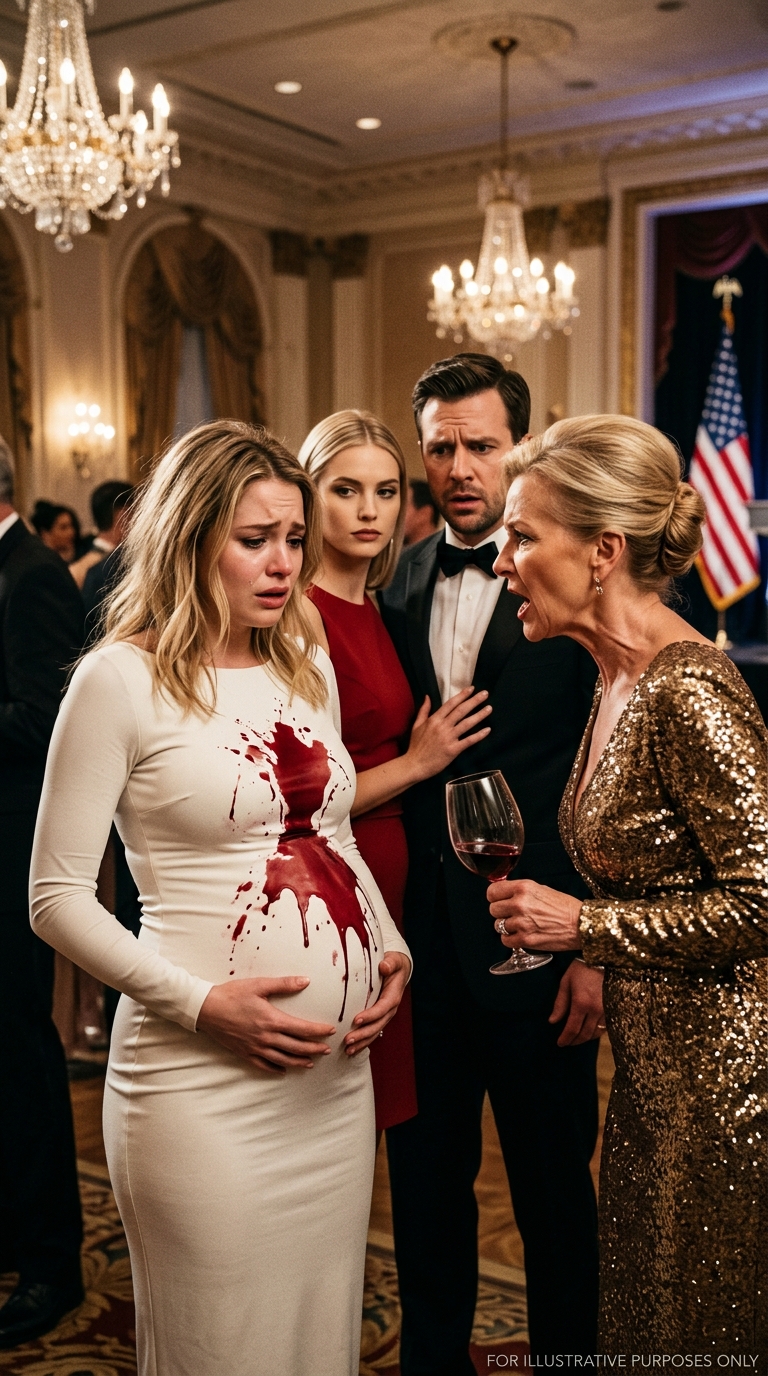
“This is a private celebration,” she snapped at Daniel Price. “You have no right to walk in here.”
Daniel opened his case calmly. He was in his late fifties, silver-haired, patient, and terrifying in the way only a lawyer who never raised his voice could be terrifying.
“Mrs. Whitaker,” he said, “according to the invitations sent to investors, vendors, and members of the regional press, this event is also the public closing reception for Whitaker Holdings’ emergency restructuring and merger agreement. That makes it far more than a family party.”
Evelyn’s jaw tightened. “Who invited you?”
I placed the sealed envelope on the wine-stained table.
“I did.”
Grant let out a short, disbelieving laugh. “You can’t invite anyone to negotiations involving my company.”
I looked directly at him.
“Your company just lost the word your.”
The sentence moved through the ballroom like electricity. At first, it was only a murmur from the nearest tables. Then it spread toward the back of the room where employees, vendors, and junior executives had been seated far from the Whitaker family, close enough to applaud them but not close enough to be noticed.
Evelyn gripped the edge of the table.
“She has no shares,” Evelyn said. “No board seat. No voting authority. No right to speak.”
“Correct,” I said. “I do not personally own Whitaker shares.”
Marissa’s smile tried to come back.
I let it.
“However,” I continued, “the private capital fund deciding whether Whitaker Holdings receives the bridge financing required to stay alive is under my control.”
The smile died on Marissa’s face.
Grant’s mouth opened, but no words came out.
Evelyn understood one second later. The empty wineglass slipped from her fingers and rolled across the marble until it touched my stained shoe.
That tiny sound was better than applause.
Daniel placed a gray folder beside Evelyn’s silver one.
“Result first,” he said, exactly as I had instructed. “Tonight’s signing is suspended. All bridge accounts related to the restructuring are frozen. The Whitaker family may not withdraw funds, transfer assets, modify vendor contracts, or execute internal officer changes until the audit is complete.”
The ballroom went completely still.
No legal lecture. No complicated introduction. Just consequences.
Evelyn had just lost her rescue.
Daniel continued in clean, simple sentences.
“For eight months, Whitaker Holdings has sought a merger partner and emergency capital injection to avoid insolvency. The fund designated in public documents as Hawthorne Mother Capital appears faceless by design. In the full operating documents, its principal beneficiary and authorized representative is Mrs. Claire Bennett Whitaker.”
My maiden name landed like a second glass breaking.
Before Grant, before the Whitakers, before the house in Lake Forest and the charity luncheons where Evelyn introduced me as “Grant’s little wife,” I had helped build a medical logistics company in San Diego. We specialized in temperature-controlled transport for transplant materials and emergency pharmaceuticals. I sold my equity before marrying Grant.
Evelyn had met me when I was filling in at the front desk during an investor conference because our receptionist had gone into early labor.
She decided I was a receptionist.
She never asked what I owned.
Grant knew. At first, he said my independence made him proud. Then his company began bleeding money. Then he began asking for “temporary help.” Then he began telling me I didn’t understand legacy, family pressure, or the sacrifices required to protect a name like Whitaker.
When I got pregnant, the asking became hiding.
Invoices disappeared. Corporate cards showed charges in Beverly Hills. Marissa began appearing in places where my husband claimed he had board meetings. Evelyn started calling my baby “that situation.” Paige began sending me articles about paternity fraud from burner accounts she thought I wouldn’t trace.
So I did not come to the gala to be humiliated.
I came because humiliation was the only language the Whitakers trusted enough to speak in public.
Dr. Mercer stepped forward.
The notary opened her leather portfolio.
“Before any further discussion,” the notary said, “we need to document Mrs. Whitaker’s physical condition.”
Dr. Mercer looked at the room, then at me.
“Claire Whitaker is seven months and three weeks pregnant,” she said clearly. “She has been medically advised to avoid severe emotional and physical distress. The act of throwing liquid on her abdomen and pressuring her to sign property and family-status documents in this condition should be recorded.”
Grant reacted instantly.
“I didn’t throw anything.”
There it was.
The first attempt to separate himself from his own family.
I looked at Daniel.
“Register that.”
“Registered,” he said, tapping his tablet.
Evelyn turned sharply. “Grant, shut up.”
Marissa took one careful step backward. Paige pushed forward, desperate to remain important.
“She’s manipulating all of you,” Paige said. “She wore white because she wanted drama. She wanted Mom to react.”
“Yes,” I said.
The honesty stunned them more than denial would have.
Paige blinked. “What?”
“Yes,” I repeated. “I expected Evelyn to do something. Maybe an insult. Maybe a security escort. Maybe a public demand that I sign away my child’s rights. I didn’t know it would be wine.”
Evelyn breathed hard through her nose.
“So this was a trap.”
“No,” I said. “It was an opportunity. You chose what to do with it.”
The sentence settled over her like a verdict.
Paige tried again. “She’s pregnant with God knows whose baby. My brother shouldn’t have to—”
“Paige,” Grant hissed.
Too late.
I opened another folder from my clutch. This one was medical, not corporate. I laid a protected ultrasound photo on the table. A corner of it brushed the wine but did not soak through.
“My baby,” I said, “became your favorite insult. So let’s return him to the table as evidence.”
Dr. Mercer nodded once.
“The noninvasive prenatal paternity test was requested by Mrs. Whitaker after repeated threats regarding the child’s name and inheritance status,” she said. “The result confirms Grant Whitaker as the biological father.”
Grant looked around for allies.
Nobody gave him their eyes.
I placed one more sheet beside the ultrasound.
“Marissa is not pregnant,” I said. “And the ring on her finger was purchased with corporate funds three days after Grant told me to sell my car to help cover payroll.”
Marissa’s face drained.
Her hand flew to the diamond.
The ring no longer looked like romance.
It looked like a receipt.
PART 3
Nobody moved for several seconds.
Then a low murmur spread through the ballroom, not loud enough to interrupt, but heavy enough to change the temperature of the room. Employees glanced at one another. Vendors leaned toward their spouses. Executives who had laughed at Evelyn’s insult now stared down into their glasses, as if shame might be hiding at the bottom.
Marissa tried to pull her hand behind her back.
“Don’t hide it,” I said.
Her fingers froze.
“That ring stays on the table.”
Her voice came out thin. “You can’t take my things.”
“It isn’t yours,” I said. “It’s evidence of diverted funds.”
Daniel held open a clear evidence pouch. He didn’t do it dramatically. He didn’t need to. The simple gesture made Marissa’s ring feel less like jewelry and more like something taken from a crime scene.
Marissa looked at Grant.
For the first time all night, she expected him to protect her.
Grant took half a step back.
That tiny movement destroyed whatever fantasy she had been living in.
She was not the chosen woman.
She was the expense he would deny first.
“Grant,” she whispered.
He did not look at her.
“I didn’t authorize that purchase,” he said.
The ballroom absorbed the betrayal with cruel fascination.
Marissa laughed once, a broken little sound. “You said the company was already yours.”
“Be quiet,” Grant snapped.
“You said Claire would disappear after the baby came.”
The words cracked across the room harder than Evelyn’s glass.
My hand tightened over my belly. The baby moved again, not painfully, just firmly, as if he had marked the sentence too.
Evelyn’s face twisted. “Grant.”
I looked at the notary.
“Register that statement.”
“Registered,” she said.
Grant swung toward me, panic finally bright in his eyes. “Claire, I didn’t mean—”
“You didn’t say it to me,” I interrupted. “You said it to her. And now she said it in front of everyone.”
Marissa realized too late that she had wounded herself too.
“I didn’t know he was stealing,” she said quickly. “He told me his family controlled everything.”
Daniel raised an eyebrow.
I reached into my bag and removed a photograph. It showed Marissa leaving a Michigan Avenue jewelry store with Grant. Attached to the back was a copy of the corporate card statement.
“You may not have understood every account number,” I said. “But you signed as an authorized user on a secondary executive card.”
Marissa covered her mouth. Her makeup had begun to crease around her eyes, revealing fear beneath the glamor.
Evelyn moved toward me.
She no longer walked like a queen through her court. She walked like a woman crossing the ruins of her own house, careful not to make noise.
“Claire,” she said softly, “think of the baby. This will affect him too.”
I looked at the red stain on my stomach.
“I thought of my baby when you tried to strip him of his name.”
“We can acknowledge him,” Evelyn said quickly.
“Not after the ring.”
“We’ll repay it.”
“Not after Paige said a scared pregnant woman would sign anything.”
Evelyn closed her eyes.
“Please stop.”
Her voice was barely above a whisper. The nearest tables heard it. The phones heard it too.
That was Evelyn’s true fear. Not wrongdoing. Not cruelty. Public exposure.
“No,” I said. “You started this with wine. I’m finishing it with documents.”
Daniel removed the final set of papers from his folder.
“Mrs. Whitaker offers a protected path forward,” he announced.
Grant’s head snapped up. “A path forward?”
I nodded.
“Yes,” I said. “For the employees. Not for you.”
The difference hit him.
Daniel continued. “Hawthorne Mother Capital will temporarily cover payroll for one hundred and forty employees during the audit period. Critical vendors will be paid directly. Operations will continue. However, all Whitaker family members are immediately separated from financial decisions pending review of diversion of funds, coercion, and misuse of corporate resources.”
At first, the applause came from one side table.
A small clap. Nervous. Almost accidental.
Then another employee joined.
Then a woman from accounting.
Then a kitchen worker near the ballroom entrance.
The applause grew slowly, uncomfortably, then firmly. It was not celebration. It was relief. It was the sound of people realizing their paychecks might survive the family that had used them as decoration.
Evelyn stared around the room in horror.
Not because the company was being saved.
Because it was being saved without her.
Grant tried to speak over the applause.
“Claire, we’re married. You can’t do this.”
“Not anymore,” I said.
I picked up the black pen he had placed before me, the pen meant to force my surrender.
I signed a document in front of the notary.
Grant stepped closer. “What are you signing?”
“Petition for legal separation,” I said. “And emergency protective measures for marital assets and my son.”
I did not use complicated legal language. I wanted every person in the room to understand.
“From this moment forward, you cannot sell the house. You cannot empty joint accounts. You cannot make decisions about my child’s name, status, or support without court review.”
Grant paled.
The pen remained in my fingers, its silver clip stained with a smear of red wine from the table.
I held it up.
“You wanted me to sign away my life with this pen,” I said. “I used it to draw your boundary.”
The chief financial officer rushed back into the ballroom with his phone still pressed to his ear. His face looked gray.
“Mr. Whitaker,” he said, not meeting Grant’s eyes, “the bank has confirmed. Bridge accounts are frozen.”
Evelyn made a sound.
Not a scream.
Worse.
A small, broken breath, like even the air had turned against her.
Paige sat down and began crying silently.
Marissa tried to pick up her purse, but the notary looked at her.
“Miss Bell, I strongly recommend leaving all items connected to the inquiry in place.”
Marissa released the purse as if it burned.
Grant looked at his mother.
“You said she had no power.”
Evelyn stared back with pure hatred.
“You said you controlled her.”
That sentence destroyed them more completely than anything I had brought in my folders.
The Whitakers, who had called me a climber, a burden, a woman who wanted their name, began devouring each other in front of the same people they had invited to admire them.
I turned to the waiter still holding the napkins.
“Now,” I said gently. “May I?”
His hands trembled as he gave me one.
I did not clean my dress first.
I wiped the ultrasound photo.
Several people looked away.
The wine on my clothes could wait.
My child would not carry one drop of their shame.
PART 4
Dr. Mercer stepped close.
“Claire,” she said quietly, “we should check your blood pressure.”
I nodded. “I’m done here.”
But Evelyn grabbed my wrist.
It was quick, desperate, almost human.
“Don’t leave like this,” she whispered. “I’ll apologize. I’ll do it publicly.”
I looked down at her hand.
She let go before I had to ask.
“I don’t need an apology to return to a family that never wanted me,” I said. “I need my son to be born far away from this table.”
Grant stepped forward. For once, he did not look like a businessman, husband, or heir. He looked like a spoiled child whose stage had been taken away.
“What about me?” he asked.
I studied him without hatred.
That hurt him more.
“You’re going to learn the difference between having a name and having honor.”
He flinched.
Daniel collected the folders. The notary gathered the signed statements. Dr. Mercer offered her arm, and this time I accepted it, not because I was weak, but because my body deserved gentleness after what they had done to it.
Before I left, I picked up three things: the sealed envelope, the cleaned ultrasound photo, and the wine-stained pen.
My humiliation.
My son.
My decision.
I walked through the ballroom slowly. Seven months pregnant, wet with red wine, watched by people who had expected me to collapse.
Nobody laughed now.
The guests moved aside without touching me. Many lowered their phones. A few whispered, “I’m sorry,” but I did not stop. Apologies from bystanders are little blankets thrown over fires that have already burned through the house.
At the door, Evelyn called my name.
“Claire.”
I did not turn.
Daniel’s voice answered behind me.
“Mrs. Whitaker will receive all communication in writing.”
For the first time in my life, the Whitaker name did not sound powerful.
It sounded notified.
Outside, Chicago air hit my face like cold water. Police lights from an unrelated traffic stop flashed red and blue against the hotel windows. The American flag above the entrance snapped in the wind. Dr. Mercer led me toward a waiting black SUV, while Daniel spoke quietly with his assistants behind us.
Only when I was inside the vehicle did my hands begin to shake.
Dr. Mercer noticed immediately. “Breathe in through your nose.”
I tried.
The baby moved again.
“I’m okay,” I said, though my voice did not sound like mine.
“You’re running on adrenaline,” she said. “That doesn’t mean you’re okay.”
I stared at the hotel doors.
Through the glass, I could see figures moving inside, the beautiful wreckage of people trying to rearrange themselves after truth had changed the furniture.
For months, I had imagined this night.
In my imagination, I was stronger.
I delivered every sentence perfectly, walked out cleanly, and never trembled.
Real life was messier.
My dress was ruined. My hair stuck to my neck. My stomach felt tight from stress. My heart was pounding so hard I worried the baby could hear it.
Then Dr. Mercer placed the portable cuff around my arm, checked my blood pressure, and nodded cautiously.
“High, but not dangerous. We’re going to monitor you.”
I closed my eyes.
For the first time, tears came.
Not because Evelyn humiliated me.
Not because Grant betrayed me.
Because I had held myself together long enough, and now my body wanted proof that it was safe.
Daniel opened the SUV door ten minutes later.
“The audit freeze is confirmed,” he said. “Payroll protection is in motion. Security has been instructed not to let Grant near you.”
“Did he try?”
Daniel paused.
That was answer enough.
“He said he needed to speak to his wife.”
I laughed once, and it sounded almost like a cough.
“He had a wife. He brought a girlfriend.”
Daniel’s expression softened. “You did what you needed to do.”
I looked down at the stain across my belly.
“I let them do what they wanted to do.”
“That too.”
Three days later, the first audit report arrived.
Whitaker Holdings was worse than I had expected.
There were transfers to Marissa’s accounts disguised as marketing advances. Duplicate payments to shell vendors. Personal expenses coded as client entertainment. A Miami hotel suite during a week Grant told me he was meeting lenders in Washington, D.C. Jewelry. Private dinners. A lease payment on an apartment I had never heard of.
The house in Lake Forest was frozen.
The executive cards stopped working.
I found out because Grant called twelve times from an unknown number after trying to buy flowers from a luxury shop on Oak Street.
I did not answer.
Evelyn released a public statement saying she was stepping back temporarily for health reasons.
Nobody believed her.
The video of the wine had already spread too far. It appeared on employee group chats, local business forums, and gossip pages that cared less about corporate law than the image of a pregnant woman standing still while a dynasty exposed itself.
Marissa returned the ring through her attorney.
Inside the evidence pouch was a note claiming she had also been deceived.
Maybe she had.
Partly.
But a woman who laughs while a pregnant wife is humiliated does not get to become innocent just because the man beside her proves worse.
Paige texted me at 2:13 in the morning.
I was under pressure from Mom. I’m sorry.
I deleted it.
Grant came to my prenatal clinic one week later.
He did not get past the lobby.
A temporary protective order had been issued two days before. The security guard explained it in a voice low enough not to disturb other patients but firm enough to humiliate him.
I watched from behind a glass partition.
Grant wore a navy suit, expensive shoes, and the face of a man finally discovering that charm does not work on locked doors.
I expected triumph.
Instead, I felt peace.
It was quieter than victory.
Cleaner.
I rested one hand on my stomach and whispered, “Not long now, little man.”
PART 5
The next six weeks did not feel like the ending of a scandal.
They felt like construction after a storm.
Every morning, I woke in the apartment I had rented under my maiden name near Lincoln Park. It was smaller than the Lake Forest house, but sunlight entered the bedroom without permission from any Whitaker. I bought a rocking chair, folded tiny blue blankets, and placed the ultrasound photo on the dresser beside the wine-stained pen in a glass box.
Not as a shrine.
As a reminder.
A woman should remember the hour she stopped asking cruel people to become kind.
The audit expanded.
Daniel called every few days with updates. He never overwhelmed me with details, but he understood I needed facts. Facts had saved me. Facts were the nails in the door between my baby and the Whitakers.
Grant tried several strategies.
First, remorse.
He sent an email with the subject line: Please Let Me Explain.
I did not open it.
Then panic.
He left voicemails claiming his mother had manipulated him, Marissa had trapped him, Paige had exaggerated, and he had only wanted to protect the family legacy.
Then anger.
He accused me of destroying his father’s life’s work. That one almost made me answer, because Grant’s father had died ten years earlier, and from everything I had learned, the company had begun rotting the moment Grant and Evelyn decided reputation was easier than responsibility.
Finally, he tried tenderness.
A package arrived containing a cashmere baby blanket and a handwritten card.
Our son deserves both parents.
I gave the blanket to a women’s shelter and sent the card to Daniel.
Evelyn stayed quiet longer.
That worried me more.
Cruel people rarely disappear. They retreat, gather themselves, and look for softer places to stab.
Her first move came through a family friend named Beatrice Lowe, a charity-board woman with pearls, silver hair, and a voice that sounded permanently disappointed.
Beatrice called me on a Tuesday.
“Claire,” she said, “I’m not taking sides.”
Anyone who begins that way has already chosen one.
“She is devastated,” Beatrice continued. “Evelyn may have behaved poorly, but public humiliation helps no one. A private reconciliation would show grace.”
I was sitting in the nursery assembling a lamp.
“Beatrice,” I said, “Evelyn threw wine on a pregnant woman in front of employees, then tried to force legal documents onto the table. That was public. My response was evidence.”
“She is still the child’s grandmother.”
“No,” I said. “She is a woman applying for access.”
Beatrice inhaled sharply.
I hung up before she could exhale.
Two days later, Evelyn filed an emergency petition requesting family mediation and prenatal visitation consideration. Daniel laughed when he saw it, not because it was funny, but because it was desperate.
“Prenatal visitation?” I asked.
“She wants a judge to believe you are alienating the unborn child.”
I looked at him across the conference table.
“Can judges roll their eyes?”
“Professionally, yes.”
The petition failed.
Hard.
Evelyn’s attorney withdrew three weeks later.
Meanwhile, the company survived in a form the Whitakers would have hated. Hawthorne Mother Capital brought in temporary management. Payroll stabilized. Vendors were paid directly. A whistleblower hotline produced enough evidence to support civil action and potential criminal referrals.
The employees began sending notes.
Not dramatic ones. Simple ones.
My husband kept his job.
Thank you for covering payroll.
We knew something was wrong, but we were scared.
I kept every note in a blue folder.
On difficult nights, when my back hurt and fear crept in, I read them. Not because I needed praise, but because the Whitakers had spent years teaching me that family meant protecting a name at any cost. Those notes reminded me that real responsibility protects people, not reputations.
My son arrived during a thunderstorm.
At 3:08 in the morning, rain hammered the hospital windows so hard it sounded like applause. Dr. Mercer was there. Daniel was not, because even lawyers cannot argue babies into better timing, but he sent a message through my nurse.
You’ve got this. He already picked the right mother.
Labor was long. Pain stripped everything down to breath, bone, and will.
At 11:42 a.m., my son entered the world red-faced, furious, and strong.
The nurse placed him on my chest.
He stopped crying the moment his cheek touched my skin.
I cried then.
Not softly.
Not elegantly.
I sobbed like a woman who had crossed a burning bridge and found grass on the other side.
His tiny hand opened and closed around my finger.
“Hi, Mason,” I whispered.
I did not give him Grant’s name.
I named him Mason Bennett, after my grandfather, a carpenter from Wisconsin who taught me that a steady hand matters more than a famous signature.
Grant arrived at the hospital four hours later.
Security stopped him downstairs.
He had flowers, a stuffed bear, and no legal right to enter.
He called Daniel.
Daniel called me.
“You don’t have to decide anything today,” he said.
I looked at Mason sleeping against my chest, his mouth slightly open, his entire body no heavier than the truth and somehow stronger than it.
“Tell him the baby is healthy,” I said. “Nothing else.”
“Understood.”
An hour later, Evelyn came too.
She did not bring flowers.
She brought cameras.
A local society blogger had followed her into the lobby, probably invited by someone who believed grandmotherly tears could soften public memory.
Hospital security removed them both.
By evening, the clip was online.
Evelyn Whitaker denied access to grandson after gala scandal.
For once, I did not watch the video.
I was too busy watching Mason breathe.
PART 6
The court proceedings began when Mason was eleven weeks old.
By then, my body had healed enough to sit through meetings without feeling like every chair had been designed by an enemy. Mason slept in a carrier against my chest during early conferences, one fist tucked under his chin, completely unimpressed by corporate fraud.
Grant looked worse each time I saw him.
Not poor. Men like Grant rarely become poor quickly. But smaller. His suits still fit, his watch still gleamed, yet the room no longer leaned toward him. That was the difference. Power had left him, and he did not know how to stand without it.
In family court, his attorney argued that Grant wanted to be a present father.
Daniel asked which version of Grant wished to be present: the man who questioned paternity, the man who tried to force a waiver during pregnancy, or the man whose mistress publicly stated he expected me to “disappear” after birth.
Grant stared at the table.
The judge ordered supervised visitation only after completion of parenting classes, financial disclosures, and compliance with all protective measures.
Evelyn requested grandparent access.
The judge read the ballroom incident summary twice.
Then she looked over her glasses and said, “Denied at this time.”
Evelyn’s face hardened.
Outside the courtroom, she waited for me near a marble column.
Daniel stepped slightly in front of Mason and me.
“I want to speak to my grandson’s mother,” Evelyn said.
“You may speak through counsel,” Daniel replied.
Her eyes flashed. “I am still family.”
I looked at her for the first time since the gala.
“No,” I said. “You are history with a court date.”
She flinched as if I had slapped her.
That was the last time she tried to speak to me in person.
The corporate case took longer.
Whitaker Holdings was restructured under new leadership. The name remained on old buildings and contracts, but Evelyn’s portrait came down from the lobby. Grant was removed from management. Paige resigned before she could be formally terminated, then claimed on social media she had chosen “peace over toxic business culture.”
The comments were not kind.
Marissa cooperated after prosecutors contacted her. Her attorney negotiated. She returned the ring, the card statements, and messages from Grant that made him look even worse than the video already had.
I was not interested in revenge against her.
But I was also not interested in rescuing her from consequences.
During deposition, Grant finally admitted he had known about my control of Hawthorne Mother Capital before the gala.
“Why did you proceed with the signing event?” Daniel asked.
Grant shifted in his chair.
“I believed Claire would not risk public embarrassment.”
Daniel’s voice remained mild.
“So you believed you could humiliate her into financial cooperation?”
Grant’s attorney objected.
The court reporter kept typing.
I sat across the table, Mason’s photo tucked inside my notebook, and felt something inside me settle forever.
That was the truth, stripped clean.
Grant had not underestimated my intelligence.
He had underestimated my willingness to stop protecting his image.
A year after the wine incident, the civil settlement was finalized.
Grant accepted limited custody under supervision that could expand only if he complied with therapy, financial obligations, and strict boundaries. He paid child support. He gave up claims to my separate assets. The Lake Forest house was sold, with my protected portion placed into a trust for Mason.
Evelyn lost access to company decision-making permanently.
Paige moved to Florida and started a podcast about “surviving family betrayal.” It lasted seven episodes.
Marissa disappeared to Arizona, according to a mutual acquaintance who believed I cared.
I did not.
The company changed its name to Bennett Meridian Logistics after the restructuring. Employees voted on the name. I did not ask them to use mine. They did it anyway, they said, because Bennett sounded like the chapter that saved them, not the one that nearly buried them.
I kept a minority leadership role but refused the CEO seat.
Motherhood had taught me something business never had: just because you can hold something does not mean you should carry it every day.
I hired a CEO who had once worked night shifts in warehouse operations and still remembered the names of drivers. The company grew stronger.
Mason grew faster.
At eighteen months, he had Grant’s gray eyes and my grandfather’s stubborn frown. He loved wooden blocks, blueberries, and throwing socks into the bathtub. He called Daniel “Dan-Dan” and Dr. Mercer “Doc.” He knew nothing of wine, cameras, frozen accounts, or legal petitions.
That was my victory.
Not Grant’s humiliation.
Not Evelyn’s fall.
Mason’s innocence.
One afternoon, when Mason was nearly two, I took him to the renovated company headquarters in Chicago for the employee family picnic. The lobby was bright now, filled with plants and photographs of workers from every department. Near the reception desk stood a framed print of the company values.
Safety. Accountability. Dignity. Stewardship.
No portraits.
No family crest.
No dead-eyed oil painting of Evelyn pretending kindness.
Mason ran across the lobby holding a toy truck. He crashed gently into the legs of an older janitor named Sam, who had worked there for twenty-six years.
Sam laughed and bent down.
“Well, look at you,” he said. “You’re the little boss.”
Mason held up the truck.
I smiled. “No. He’s just Mason.”
Sam looked at me and nodded.
“Even better.”
Across the lobby, near the security desk, I noticed an older woman standing outside the glass doors.
Evelyn.
She looked thinner. Less gold. Less certain.
Security watched her carefully. She did not try to enter. She only looked through the glass at Mason, who was now explaining his truck to Sam in serious toddler nonsense.
For one second, something like pity moved through me.
Then I remembered the wine.
Not the humiliation.
The coldness of it.
The way it hit my unborn child because Evelyn wanted the room to know she could.
I picked Mason up and turned away from the doors.
He put his sticky hand on my cheek.
“Mama,” he said.
“Yes, baby.”
“Home?”
I kissed his forehead.
“Yes,” I said. “Home.”
And we left through the side exit, into clean afternoon light.
PART 7
Five years after the gala, a journalist asked me if I had forgiven the Whitakers.
We were sitting in a quiet studio in Washington, D.C., recording an interview about ethical restructuring, corporate governance, and the new maternal protection initiative my foundation had launched for women facing financial coercion during pregnancy.
The interviewer was kind, but young. She asked the question carefully, as if forgiveness were the final chapter every woman owed the public.
I thought about giving the polished answer.
I could have said healing is complicated.
I could have said forgiveness is personal.
Instead, I told the truth.
“I stopped making them the center of my recovery,” I said. “That’s different from forgiveness.”
She blinked, then nodded slowly.
By then, the wine video had become one of those internet clips people remembered without remembering names. Some saw it as a corporate scandal. Some as a marriage betrayal. Some as a mother-in-law horror story. Others turned it into little captions and dramatic edits, which I hated at first.
Then one night, a woman from Ohio emailed me.
She was six months pregnant. Her husband’s family was pressuring her to sign away claims to a house she had helped pay for. She had watched the video and decided to call a lawyer.
After that, I stopped resenting the clip.
Pain becomes different when it keeps someone else from walking into the same fire.
Mason was five when he first asked about his father.
We were making pancakes on a Sunday morning in San Diego, where we had moved for warmer winters and better beaches. He sat on the counter in dinosaur pajamas, dusted with flour, holding a whisk like a microphone.
“Do I have a dad?” he asked.
I turned off the stove.
Children ask life-changing questions as if they’re asking for syrup.
“Yes,” I said. “You have a biological father.”
“Where is he?”
“In Chicago.”
“Is he bad?”
I leaned against the counter and chose each word carefully. Mason deserved truth, but not poison.
“He made choices that hurt people,” I said. “Including us. He has to do a lot of work before he can be safe and steady in your life.”
Mason thought about that.
“Did he say sorry?”
“Yes.”
“Did he fix it?”
“No,” I said. “Not yet.”
Mason nodded with the solemn wisdom of a child deciding whether a broken toy can be repaired.
“Can I have chocolate chips?”
I laughed so suddenly that tears came to my eyes.
“Yes, Mason. You can have chocolate chips.”
Grant did improve, in some ways.
I want to be honest about that.
Not all endings arrive with villains locked in towers. Sometimes people remain disappointing in quieter, more legal ways. Grant completed parenting classes. He attended therapy. He paid support on time after the court threatened consequences. Eventually, when Mason was six, supervised video calls began.
Mason treated him like a distant uncle with a nice voice.
Grant tried too hard at first. Too many gifts. Too many dramatic apologies. Too many attempts to be meaningful in ten-minute calls.
Mason preferred showing him Lego structures.
Over time, Grant learned to listen.
That was the closest thing to redemption I was willing to acknowledge.
Evelyn never received access.
She sent birthday cards every year. I kept them unopened in a file Daniel maintained, not out of cruelty, but recordkeeping. She died when Mason was eight, after a stroke. Grant called to tell me. His voice broke when he said it.
“I know she did terrible things,” he said. “But she was my mother.”
“I’m sorry for your loss,” I replied.
And I meant it.
The death of a cruel person does not erase the grief of those who loved them.
It also does not erase what they did.
At twelve, Mason found the glass box with the wine-stained pen.
I had kept it on a high shelf for years, then moved it into my office when he was old enough to understand boundaries but young enough to snoop creatively.
He came to the doorway holding it with both hands.
“What’s this?”
I put down my laptop.
“That,” I said, “is a story.”
“About me?”
“Partly.”
We sat together on the couch as Pacific light filled the room. I told him the gentler version first. That before he was born, some people tried to make decisions that would hurt us. That I used documents and truth to stop them. That the pen was supposed to make me surrender, but I used it to protect our future.
Mason turned the box in his hands.
“Were you scared?”
“Yes.”
“But you did it anyway?”
“Yes.”
He stared at the stained metal.
“Can I keep it someday?”
“When you’re older.”
“Why?”
“Because I want you to remember that power isn’t being the loudest person in the room,” I said. “Sometimes power is staying calm long enough for the truth to arrive.”
Mason leaned against me.
“I’m glad you’re my mom.”
I closed my eyes.
After everything, that sentence was the ending I had never known I was writing toward.
Years later, at Mason’s high school graduation, Grant sat three rows behind us. He had earned a place there slowly, carefully, under boundaries that never fully disappeared. He was polite. Sober. Humble enough not to ask for more than he had earned.
When Mason crossed the stage, tall and bright-eyed, he looked back at me first.
Not Grant.
Not the Whitaker side.
Me.
I stood and clapped until my palms hurt.
In my purse, wrapped in a small cloth, was the wine-stained pen. I had brought it without telling anyone. Not because I needed the past, but because the past deserved to see what it had failed to destroy.
After the ceremony, Mason hugged me in the crowd.
“Mom,” he said, embarrassed by how tightly I held him, “I can’t breathe.”
“Too bad,” I said. “I earned this hug.”
He laughed.
Grant approached carefully.
“Congratulations, Mason,” he said.
Mason smiled. “Thanks.”
There was no movie-scene reconciliation. No swelling music. No perfect family photo.
Just a young man accepting a polite hug from a father who had lost the right to be central, then returning to stand beside the mother who never made him pay for adult sins.
That evening, Mason and I drove along the coast. The sky over California burned orange and pink. He was talking about college, engineering, dorm rooms, and whether he could survive without my lasagna.
I listened, smiling.
At a red light, he looked over.
“Do you ever wish it happened differently?” he asked.
I knew what he meant.
The gala. The wine. The video. The lawyers. The years of boundaries.
I watched the light turn green.
“Yes,” I said. “I wish they had loved us properly the first time.”
He nodded.
Then I added, “But I don’t wish I stayed quiet.”
He looked out the window at the ocean.
“Good,” he said. “Because then I wouldn’t know how strong you are.”
I drove on, the road open ahead of us.
For years, people had asked whether the video embarrassed me.
It did, once.
But when I remembered that night now, I no longer saw a ruined white dress. I saw a woman standing still while everyone guilty walked close enough to the table for the truth to catch them all at once.
Evelyn thought the wine would mark me as shameful.
Grant thought the pen would make me disappear.
Marissa thought the ring meant she had won.
Paige thought cruelty was safe when spoken in a crowd.
They were all wrong.
The stain became evidence.
The pen became protection.
The child they tried to reduce to a threat became a man who knew dignity before he ever understood scandal.
And I became what the Whitakers never expected.
Not a victim.
Not a wife begging for a last name.
Not the quiet pregnant woman they could corner under chandeliers and cameras.
I became the owner of the room.