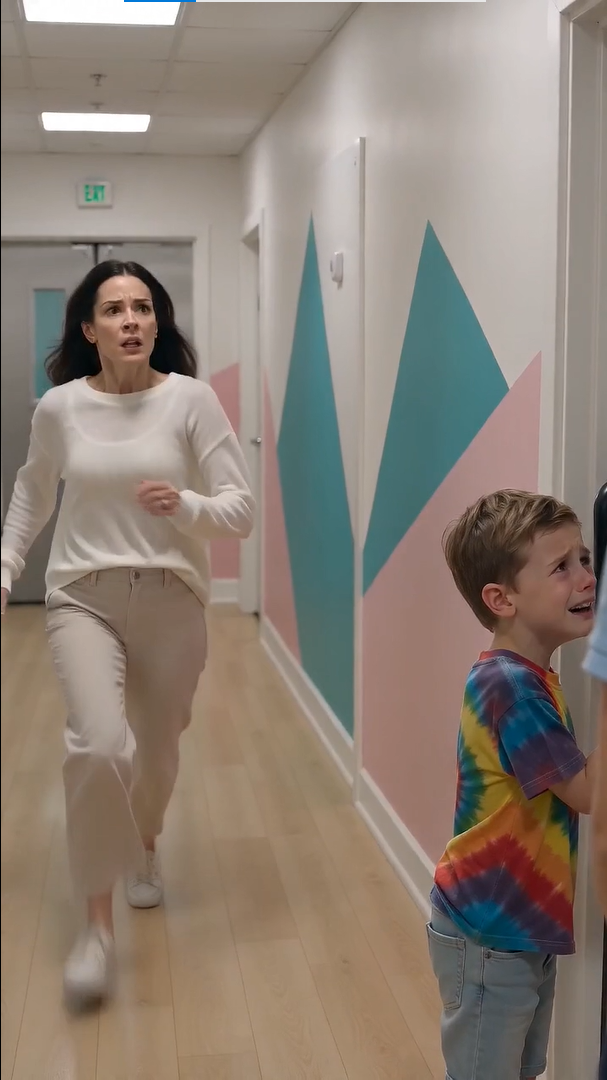
The mother caught the teacher’s wrist before she could pull the alarm.
“No,” she said, her voice shaking. “You open this door first.”
The hallway went silent except for the little girl crying behind the wood.
The boy crawled back toward the door and pressed the pink ribbon to the gap.
“I’m here,” he sobbed. “I didn’t leave you.”
Tiny fingers touched the ribbon from the other side.
The mother broke.
A father from the hallway stepped forward and forced the lock with a metal lunchbox handle.
The door opened.
Inside, the little girl was sitting on the floor behind stacked chairs, cheeks red from crying, one shoe missing, her small hands shaking.
She reached for her mother and collapsed into her arms.
The teacher stepped back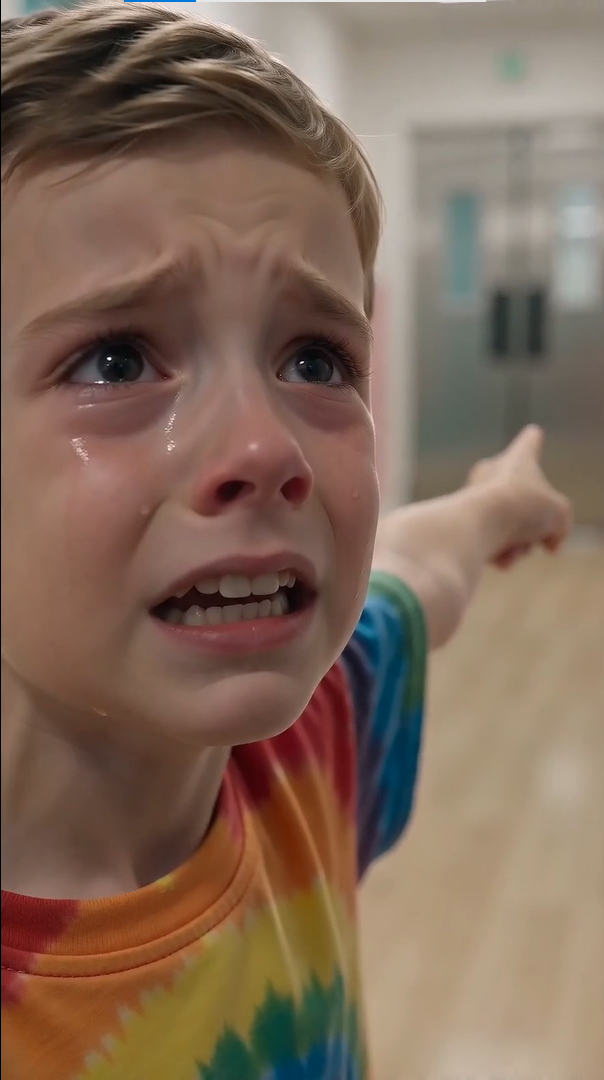
“She was hiding,” she whispered.
The boy pointed at the closet.
“No. She locked her there because she spilled paint.”
Parents gasped.
The mother looked around the room and saw the truth: the tipped paint cup, the tiny shoe by the closet, the chair pushed against the door.
The little girl clung to her mother’s neck.
“She said bad kids stay quiet.”
The mother lifted her daughter, tears turning cold.
Then she looked at the teacher and said the words every parent in that hallway needed to hear.
“She wasn’t bad. She was scared, and you knew it.”
The teacher’s face went pale.
For the first time since the screaming began, she had nothing ready.
No sweet smile.
No soft excuse.
No practiced little sentence to calm the parents.
Just silence.
The boy was still on the floor, crying so hard his shoulders shook. His tiny hand still held the pink ribbon, now wrinkled from being squeezed too tightly.
His mother bent down with her daughter in her arms and pulled him close too.
“You did good,” she whispered into his hair. “You stayed with her.”
The boy sobbed harder.
“I tried to tell them,” he cried. “Nobody listened.”
Those words moved through the hallway like a slap.
Nobody listened.
Every parent standing there heard it.
Every parent looked at the teacher.
A little boy had screamed.
Begged.
Kicked against adults.
Held a ribbon like proof.
And they had almost dragged him away from the one person who needed him most.
The young mother who had rushed in with the lunchbox stepped forward, her face shaking with anger.
“My son is in this class,” she said. “How many times has this happened?”
The teacher shook her head quickly.
“Never. This is being twisted. The child was having a tantrum.”
The little girl’s mother turned slowly.
“My daughter is three.”
Her voice was quiet now.
Too quiet.
“She was locked in a room with chairs pushed against the door.”
The teacher opened her mouth.
The mother stepped closer.
“Say one more word about a tantrum.”
The teacher closed her mouth.
The hallway stayed frozen until the daycare director arrived.
She came fast, heels clicking, phone pressed to her ear, face already tight with panic.
“What is going on?”
No one answered at first.
Then the little girl lifted her head from her mother’s shoulder.
Her voice was small and broken.
“She put me in the dark room.”
The director stopped walking.
The teacher snapped, “That is not what happened.”
The boy shouted through tears, “Yes, it is! I saw her! She said if Maya cried, nobody would come!”
Maya.
The mother tightened her arms around her daughter.
The director looked at the closet.
At the pushed chair.
At the paint on the floor.
At the missing shoe.
Then at the teacher.
“Step into my office.”
The mother’s eyes flashed.
“No.”
The director turned toward her.
“Ma’am, we need to handle this professionally.”
The mother let out a shaky laugh.
“Professionally?”
She shifted Maya higher on her hip.
“My daughter was locked inside a room while your staff tried to convince me she had gone home.”
Parents began murmuring.
One father said, “They told us everything was safe here.”
Another mother pulled her child closer.
The young mother with the lunchbox raised her phone.
“I’m calling the police.”
The teacher’s head snapped toward her.
“That’s unnecessary.”
The little boy looked up, cheeks wet.
“No. Please call them.”
That finished the room.
The teacher looked at him like she hated him for speaking.
The mother saw it.
She saw the look.
And in that second, she understood.
This was not only about spilled paint.
This was about power.
About a grown woman who could scare children and smile at parents.
About a little girl punished for being messy.
About a little boy treated like a problem because he refused to stay quiet.
The mother looked at the director.
“You will not move that chair. You will not touch that door. You will not clean that room.”
The director swallowed.
“Of course.”
“No,” the mother said. “Say it.”
The director’s face reddened.
“We won’t touch anything.”
The police arrived ten minutes later.
Those ten minutes felt endless.
Maya stayed wrapped around her mother, one hand clutching her brother’s sleeve.
The boy sat beside them on the floor because he refused to leave the door.
Every time someone walked past the closet, he flinched.
The mother noticed.
She put her free hand on his head.
“You’re safe too.”
He looked up at her.
“Will they be mad at me?”
“Who?”
“The teachers.”
The mother’s heart cracked.
Then hardened.
“No one is going to punish you for telling the truth.”
He nodded, but he did not look convinced.
That hurt more than anything.
When the officers stepped inside, the hallway became even quieter.
One officer knelt in front of Maya, keeping his voice gentle.
“Hi, sweetheart. My name is Officer Daniel. Can you tell me what happened?”
Maya hid her face.
Her mother kissed her temple.
“It’s okay. You don’t have to say it if you’re scared.”
The boy raised his hand.
“I can tell.”
The officer looked at him.
“What’s your name?”
“Leo.”
“Okay, Leo. Tell me what you saw.”
Leo wiped his nose with his sleeve.
“Maya spilled red paint. Miss Carla got mad. Maya cried. Miss Carla grabbed her arm and put her in the closet. Then she pushed the chair there.”
He pointed with a trembling finger.
“I tried to open it, but I couldn’t. I told her Maya was inside. She said I was lying. Then she pulled me away.”
The officer wrote everything down.
Miss Carla stood near the wall, arms folded tightly.
“That child is dramatic,” she said.
The officer looked up.
“He is four?”
“Five,” the mother said.

The officer turned back to Miss Carla.
“You’re calling a five-year-old dramatic after he found his sister locked in a closet?”
Miss Carla’s face tightened.
“I never locked her.”
The father who had forced the door stepped forward.
“I opened it. The chair was against it.”
Another parent said, “We heard the little girl crying.”
The young mother added, “The teacher told this mother her daughter went home.”
The officer’s pen stopped.
He looked at the director.
“Who released the child?”
The director’s lips parted.
“No one. Maya had not been signed out.”
The officer turned slowly to Miss Carla.
“Then why did you say she went home?”
Miss Carla’s face drained of color.
“I was confused.”
The mother’s voice cut through the room.
“No. You were caught.”
Miss Carla looked at her.
“You don’t understand what we deal with every day. Children scream. They throw things. They test limits.”
The mother held Maya tighter.
“You don’t get to lock them in the dark because you lost patience.”
Maya whispered, “She said Mommy wouldn’t come.”
The mother’s face changed.
“What?”
Maya’s lower lip trembled.
“She said I could cry all day and you wouldn’t hear me.”
Leo started crying again.
“I heard you,” he told her. “I heard you, Maya.”
Maya reached for him.
Their mother crouched down and pulled them both into her arms.
The officers exchanged a look.
The director covered her mouth, tears appearing in her eyes, but the mother could not feel sorry for her.
Not yet.
Maybe not ever.
Because sorrow after discovery was not the same as protection before harm.
Miss Carla was escorted out of the hallway while parents watched in stunned silence.
She tried to keep her chin up.
She tried to look innocent.
But as she passed Leo, he stepped behind his mother’s legs.
That small movement told the truth louder than any report.
The daycare emptied within the hour.
Parents called spouses.
Grandparents arrived.
Children were picked up early, held tighter than usual, asked questions they did not know how to answer.
The director kept apologizing.
The mother barely heard her.
She was too busy checking Maya’s arms.
Her wrists.
Her little knees.
The red mark near her elbow where someone had grabbed too hard.
Leo watched everything.
He was quiet now.
Too quiet.
The mother turned to him.
“Leo.”
He looked down.
“Did she ever do this to you?”
He shook his head fast.
Too fast.
Her breath caught.
“Leo.”
His eyes filled again.
“She made me stand in the bathroom once.”
The mother went still.
“When?”
“When I cried after nap.”
The hallway seemed to tilt.
Maya looked at him.
“You didn’t tell me.”
Leo wiped his face.
“I’m big.”
The mother pulled him against her chest.
“No,” she whispered. “You’re little. You’re allowed to be little.”
He finally cried like a child who had been trying not to.
That night, the house did not feel normal.
Maya would not sleep alone.
Leo would not let go of the pink ribbon.
Their mother placed both children in her bed and sat between them with the lamp on.
Maya kept asking, “Is the door open?”
“Yes, baby.”
“Can I see it?”
The mother turned her body so Maya could see the bedroom door wide open.
Leo whispered, “Can we keep the hall light on?”
“Of course.”
Then after a long silence, Maya asked, “Was I bad?”
The mother closed her eyes for one second.
Then she turned to her daughter.
“No.”
“But I spilled paint.”
“Paint can be cleaned.”
Maya looked confused.
“Miss Carla said I ruined everything.”
The mother touched her cheek.
“You didn’t ruin anything. You were a child making art.”
Leo looked at his mother.
“Will she come here?”
“No.”
“Promise?”
“I promise.”
He clutched the ribbon.
“I thought if I let go, Maya would think I left.”
Maya reached across their mother and touched his hand.
“I knew you were there.”
Leo’s face crumpled.
“You did?”
“I heard you.”
Their mother broke quietly.
She did not sob loudly.
She did not scare them.
She just leaned over them and kissed both their heads again and again, whispering, “I’m sorry. I’m so sorry. I should have known.”
Leo touched her arm.
“You came.”
Maya nodded sleepily.
“You came, Mommy.”
That was the only thing that let her breathe.
But sleep did not come easily.
Every time the house creaked, Maya woke.
Every time a car passed outside, Leo sat up.
Their mother stayed awake until dawn, one hand on each child, watching their chests rise and fall.
By morning, the story had spread.
Not because the mother wanted attention.
Because parents talk.
Because fear travels fast.
Because the daycare that had once posted smiling photos and perfect crafts now had police cars in front of it.
By noon, three more parents had come forward.
One child had been left alone in a supply room.
Another had been told he was “bad” for crying after his father forgot pickup.
A third had started wetting the bed weeks earlier and nobody had known why.
The teacher had not only failed once.
She had built a quiet little system of fear inside a place where children were supposed to feel safe.
The daycare issued a statement.
The mother read it on her phone while sitting beside Maya on the couch.
Incident.
Miscommunication.
Staff member placed on leave.
Committed to safety.
She turned the phone off before she threw it.
Leo looked up from the floor.
“What does incident mean?”
The mother looked at him.
“It means a grown-up is trying to make something sound smaller than it was.”
Maya leaned against her.
“It was big.”
The mother kissed her hair.
“Yes. It was.”
A week later, the parents were called to a meeting.
The room was full.
Mothers with tired eyes.
Fathers holding folders.
Grandparents whispering prayers.
The director sat at the front with the owner of the daycare, a man in an expensive suit who looked deeply uncomfortable around angry parents.
He cleared his throat.
“We understand emotions are high.”
The mother stood.
“Don’t.”
The room turned to her.
She held a small pink ribbon in her hand.
Leo had asked her to take it.
For Maya.
For him.
For every child who had been too scared to tell.
The owner blinked.
“Excuse me?”
“Don’t call this emotion. Call it what it is.”
Her voice shook, but she kept going.
“A teacher locked a three-year-old child in a closet. She lied to the mother. She tried to drag away the child who told the truth. Other children were harmed too. That is not emotions being high. That is trust being broken.”
The room was silent.
Then the young mother with the lunchbox stood beside her.
“My son cries every morning now when we pass this building.”
Another father stood.
“My daughter told me she thought teachers were allowed to punish children in secret.”
A grandmother wiped her eyes.
“My grandson said he didn’t tell us because Miss Carla said nobody believes noisy kids.”
The owner looked smaller with every sentence.
The director began crying again.
“I failed them,” she whispered.
The mother turned to her.
“Yes. You did.”
The director flinched.
But the mother continued.
“And crying in front of us will not fix it. Cameras in every room. No blocked closets. No child alone behind a closed door. Mandatory reporting. Parent access to complaints. Staff retraining. Independent review.”
The owner opened his mouth.
The mother looked at him.
“And if you say budget, I will walk outside and say everything again to the news crew.”
He closed his mouth.
The changes came fast after that.
Not because the daycare suddenly grew a conscience.
Because the parents refused to go quiet.
Miss Carla was fired.
Then charged.
The investigation widened.
The director resigned.
The owner sold the daycare six months later to a nonprofit childcare group that rebuilt the place from the inside out.
But none of that fixed Maya overnight.
For weeks, she hid under tables when voices got loud.
She cried when paint came out at home.
The first time her mother brought out red paint, Maya backed away so fast she knocked over her chair.
“I won’t spill,” she cried.
Her mother sat on the kitchen floor and poured paint onto her own hand.
Maya froze.
Leo gasped.
“Mommy!”
The mother pressed her red palm onto a sheet of paper.
Then smiled.
“Look. I spilled.”
Maya stared.
The mother dipped her other hand in blue.
“Still safe.”
Leo slowly dipped one finger in yellow and touched the paper.
“Still safe,” he whispered.
Maya watched them.
Then, with trembling fingers, she touched the red paint.
Nothing happened.
No shouting.
No closet.
No bad kids stay quiet.
Just her mother waiting.
Leo smiling.
Paper ready.
Maya pressed her tiny hand beside her mother’s.
The print came out messy.
Beautiful.
The mother framed it.
Underneath, she wrote:
Paint can be cleaned.
Fear must be healed.
Leo had his own healing to do.
At school, he watched every door.
He told teachers when someone was crying.
He sat close to Maya whenever they were in the same building.
One afternoon, his mother found him packing crackers into his backpack.
“Leo?”
He froze.
“Why are you taking food?”
“In case Maya gets locked somewhere.”
The mother sat down slowly.
Her heart hurt so much she had to breathe before speaking.
“She’s not going to be locked anywhere.”
“You don’t know.”
He said it softly.
Not rude.
Just honest.
Because he had learned that adults could be wrong.
His mother opened her arms.
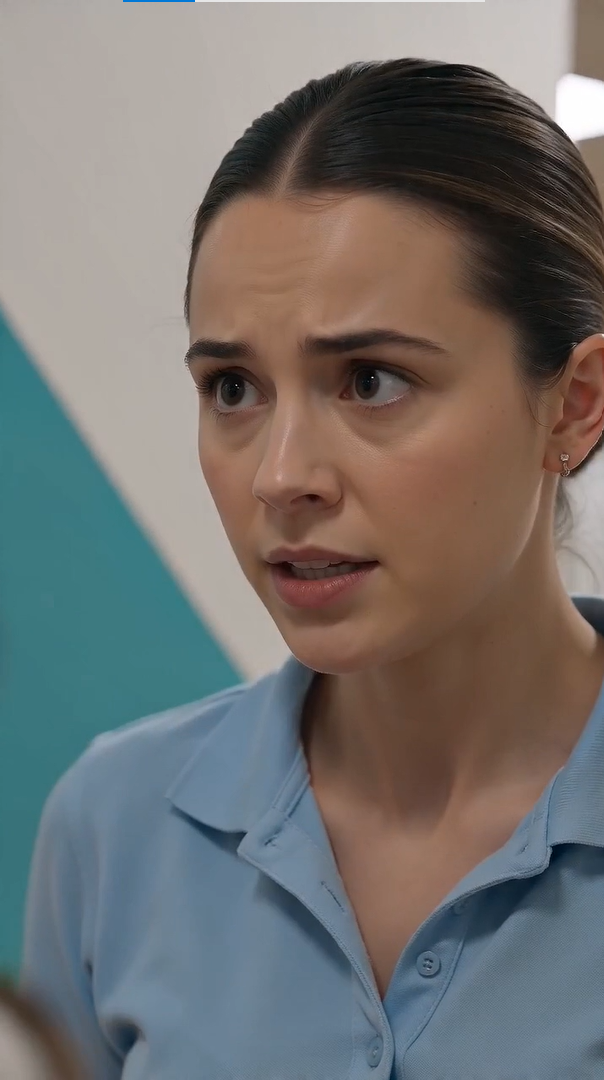
He came to her.
“I know I can’t erase what happened,” she whispered. “But you don’t have to be the grown-up who protects everyone.”
He shook his head.
“I’m her brother.”
“Yes,” she said. “And you were very brave.”
His shoulders softened.
“But brave boys still get to rest.”
He cried then.
Not because he was afraid.
Because someone had finally told him he could stop standing guard.
Months passed.
Maya started laughing again.
Leo stopped sleeping with the ribbon in his fist, though he kept it in a small box near his bed.
Their mother found a new preschool.
The first visit was hard.
Maya stood outside the classroom door, clutching her mother’s dress.
Leo stood beside her, eyes scanning the room.
The new teacher, Miss Elena, knelt on the floor instead of bending over them.
She did not reach for Maya.
She did not rush.
She pointed gently toward the room.
“Do you want to see where the paint is?”
Maya’s face tightened.
Miss Elena nodded like she understood.
“Paint stays on the table here. And if it spills, we use towels.”
Leo asked, “Do you have closets?”
Miss Elena answered calmly.
“Yes. For coats. Children never go inside them.”
He studied her.
“Ever?”
“Ever.”
Maya whispered, “Can doors stay open?”
Miss Elena smiled softly.
“Doors can stay open.”
Their mother felt tears rise.
Not because everything was fine.
But because someone finally knew that safety is built in small promises kept out loud.
On Maya’s first day, she cried for ten minutes.
Leo sat in the hallway with his mother even though his own class was next door.
“I’ll wait until she stops,” he said.
The mother didn’t argue.
Miss Elena didn’t either.
After a while, Maya’s crying faded.
Then they heard a small laugh from inside.
Leo looked at his mother.
“She’s okay?”
“She’s okay.”
He nodded.
Only then did he go to his class.
A year later, Maya painted a picture at school.
A bright red sun.
A pink house.
A little girl holding a ribbon.
A boy standing beside her.
And a mother with very long arms wrapped around both of them.
At pickup, Miss Elena showed it to the mother.
“She said the title is The Day Mommy Came.”
The mother looked down at Maya.
Maya smiled shyly.
“I used red.”
The mother swallowed her tears.
“I see that.”
“I spilled a little.”
“And what happened?”
Maya lifted her chin.
“We cleaned it.”
Leo grinned.
“And nobody got locked anywhere.”
The mother laughed through tears.
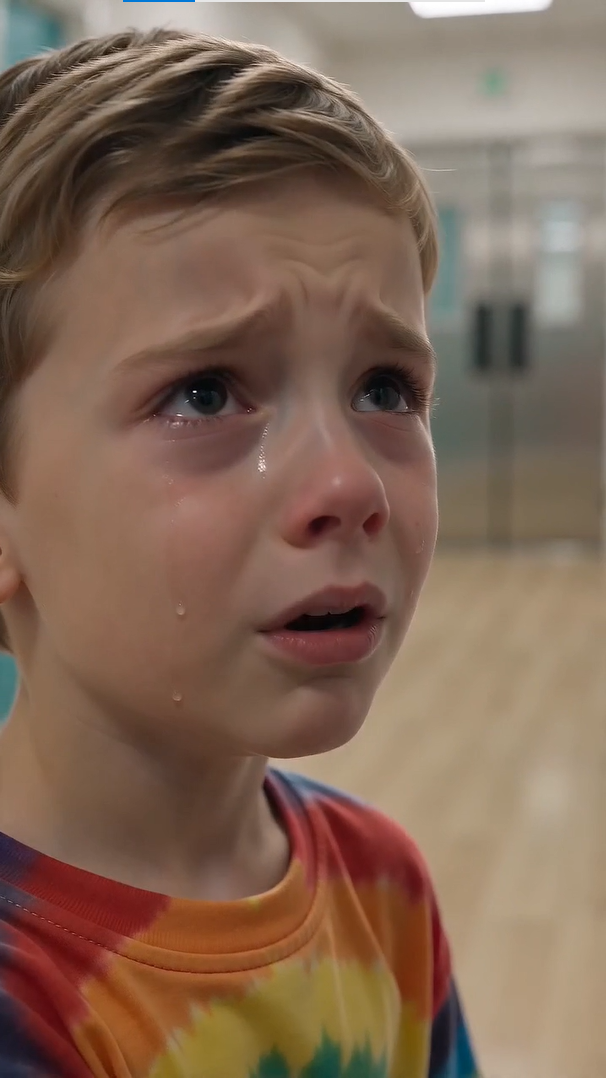
“No. Nobody did.”
That evening, they placed the painting on the fridge.
Right in the center.
Beside the red and blue handprints.
Beside the pink ribbon in its small clear frame.
Their home had become a place of reminders.
Not reminders of fear.
Reminders of survival.
Years later, people in town still talked about the daycare incident.
They talked about the mother who stopped the teacher from pulling the alarm.
They talked about the father who broke the lock with a lunchbox handle.
They talked about the little boy who crawled back to the door and pushed a pink ribbon through the gap.
But the mother remembered something else most.
Tiny fingers touching that ribbon from the other side.
A child in the dark knowing she had not been left.
A brother refusing to be silenced.
A hallway full of adults finally hearing what they should have listened to from the start.
Maya grew older.
She forgot some details, the smell of the closet, the exact shape of the stacked chairs, the sound of Miss Carla’s shoes.
But she never forgot Leo’s voice.
I’m here.
I didn’t leave you.
And Leo never forgot the moment the door opened.
The way Maya reached for their mother.
The way truth filled the hallway.
The way one adult finally said what he had been trying to say all along.
She was scared.
And you knew it.
Years later, when Maya was old enough to ask why her mother still kept the pink ribbon in a frame, her mother took it down and placed it in her hands.
“This was the day your brother saved you,” she said.
Maya touched the ribbon softly.
“And you came.”
Her mother smiled, eyes wet.
“Yes.”
Leo, taller now, leaning in the doorway, rolled his eyes.
“I was very dramatic.”
Maya looked at him.
“You were brave.”
He looked away, pretending not to care.
But his eyes were wet too.
The mother pulled them both close, just as she had in that hallway years before.
And for a long time, they stayed like that.
Because some doors open and life moves on.
But some doors should never have been closed in the first place.
And sometimes the smallest voice in the hallway, the one everyone calls dramatic, is the only voice telling the truth.