“Evelyn… how long?”
The girl looked down at the pink ribbon in the boy’s hand.
“Since Mommy’s birthday.”
That was six months ago.
The day her father had been told Evelyn was too weak to visit her mother’s grave.
The fiancée stepped forward quickly.
“She’s traumatized. You know how children make things up.”
The poor boy snapped, “She didn’t make up the scissors.”
Everyone looked at him.
His dirty fingers shook as he dug into his backpack and pulled out more things.
A pharmacy receipt.
A small bottle with the label torn off.
A folded drawing of a girl with long hair standing beside a woman in a white dress.
The boy looked at the father, voice trembling with fury.
“She threw these away behind the clinic.”
The fiancée’s face tightened.
The father finally stood.
“Nora.”
His voice was quiet.
Too quiet.
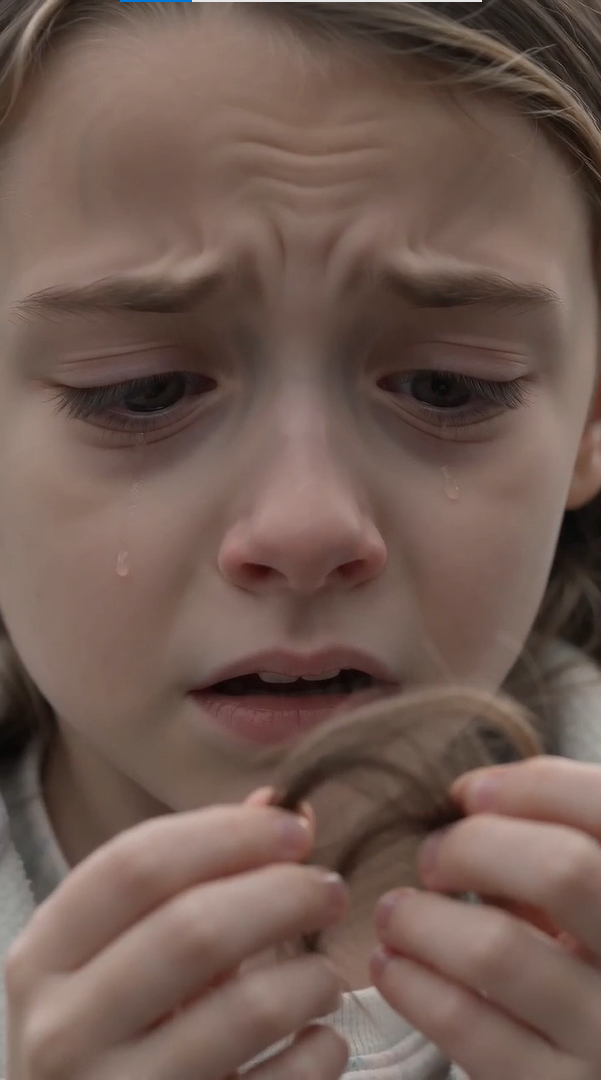
The little girl began to cry without sound.
“She told me if I looked sick, you would stay home more.”
Her father’s eyes filled.
“And if I told you…”
Evelyn swallowed hard.
“She said you’d send me away because nobody loves crying children.”
The boy looked at Evelyn like that sentence hurt him personally.
Then he whispered, “My sister was really sick.”
The father turned to him.
The boy’s eyes filled, but he kept going.
“She lost her hair for real. She would have given anything to run on a bridge like this.”
His voice cracked.
“When I saw that woman throw Evelyn’s ribbon away and smile… I followed her.”
The fiancée backed up one step.
The father looked at her like he was seeing a stranger wearing a familiar face.
“You cut my daughter’s hair.”
Nora shook her head.
“You were leaving me out. Everything became about her.”
“She is seven.”
The words came out like a verdict.
Evelyn reached for the boy’s sleeve.
He let her hold it.
That small touch broke her father more than any confession.
His daughter trusted a hungry stranger more than the woman he had brought into their home.
He took off his coat and wrapped it around Evelyn’s shoulders.
Then he crouched in front of the boy.
“What’s your name?”
“Sam.”
The father looked at the ribbon in Sam’s hand.
“You stopped us before I took her back there.”
Sam nodded, tears running through the dirt on his cheeks.
“My sister used to say if adults don’t see, kids have to shout louder.”
The father closed his eyes.
When he opened them, he looked at Nora.
There was no rage on his face now.
Only decision.
“You are never coming near my daughter again.”
Nora’s perfect calm finally shattered.
But Evelyn wasn’t looking at her anymore.
She was looking at Sam.
With one shaking hand, she touched her bare head and whispered, “Will it grow back?”
Sam looked at the ribbon.
Then gently placed it in her palm.
“Yes,” he said. “But you don’t have to wait for hair to be loved.”
Her father broke completely then.
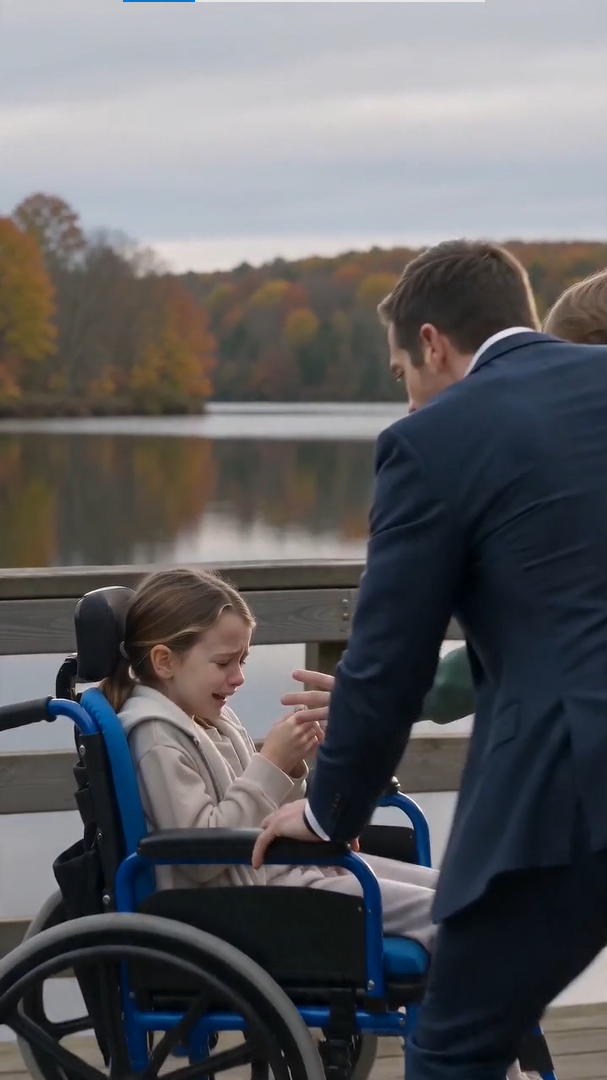
He pulled Evelyn into his arms on the bridge, holding her like he was trying to apologize for every day he hadn’t seen the fear behind her silence.
And behind them, the woman in the cream coat stood alone in the golden light, finally smaller than the child she tried to break.
For a moment, nobody moved.
The bridge that had been filled with footsteps and evening traffic seemed to hold its breath.
Evelyn buried her face against her father’s chest. Her small shoulders shook under his coat. She didn’t sob loudly. She cried like a child who had learned to hide pain before it could become a problem for someone else.
That hurt him the most.
Not the scissors.
Not the lies.
Not the medicine bottle.
The silence.
His little girl had been suffering in his own house, and he had mistaken obedience for peace.
He pressed his cheek against her bare head.
“I’m sorry,” he whispered.
Evelyn didn’t answer.
He deserved that.
Nora suddenly stepped forward again, panic rising in her voice.
“You’re being manipulated. Look at him. He’s just a street kid. You’re going to believe him over me?”
Sam stiffened.
The father slowly lifted his head.
“Don’t say another word about him.”
Nora’s mouth tightened.
“I was trying to keep this family together.”
“No,” he said. “You were trying to remove my daughter from it.”
The words made Evelyn grip his shirt harder.
Nora looked around, hoping someone nearby would look at her with pity, but a few people had stopped on the bridge now. A woman with a stroller. An old man in a gray cap. Two teenagers who had gone quiet.
No one looked like they believed her.
Nora’s eyes flashed.
“You think you can just throw me away?”
The father stood, keeping Evelyn close to his side.
“I’m not throwing you away,” he said. “I’m removing you from the place where my daughter sleeps.”
Then he took out his phone.
Nora’s face changed.
“What are you doing?”
“Calling the police.”
Her breath caught.
“You wouldn’t.”
He looked at the bottle in Sam’s hand. Then at Evelyn’s bare head. Then at the child’s trembling fingers still clutching the pink ribbon.
“I should have done it sooner.”
Nora stepped back.
For the first time since Evelyn had known her, Nora looked afraid of consequences.
Not guilt.
Not remorse.
Consequences.
That difference stayed with Evelyn.
Sam handed the bottle and receipt to the father.
“I kept them because I thought maybe someone would need proof.”
The father looked at him, stunned.
“You carried this all this time?”
Sam shrugged, trying to act tougher than he was.
“I know what grown-ups say when kids tell the truth.”
His voice dropped.
“They say we’re confused.”
The father’s throat tightened.
He wanted to ask where Sam’s parents were. Why his coat was too thin. Why his hands looked like he had been sleeping outside. But he knew this wasn’t the moment to ask everything. This was the moment to finally listen.
So he said only, “You did the right thing.”
Sam looked away quickly, but not before Evelyn saw his eyes shine.
The police arrived ten minutes later.
Those ten minutes felt longer than the last six months.
Nora tried to speak calmly at first.
She told them Evelyn was unstable.
She said the father was grieving and overreacting.
She said Sam was lying for money.
But then Evelyn spoke.
Her voice was small, but clear.
“She cut my hair in the bathroom.”
The officer crouched down, gentle.
“Did she hurt you?”
Evelyn looked at Nora.
Nora’s eyes narrowed slightly.
Just enough.
Just enough to make Evelyn shrink.
Her father saw it.
For the first time, he saw the fear that had been living in his daughter’s body.
He knelt beside her and held her hand.
“She can’t punish you anymore,” he said softly. “I promise.”
Evelyn looked at him.
Maybe she wanted to believe him.
Maybe she was scared to.
Then Sam stepped closer.
“My sister used to say the truth gets easier after the first sentence,” he whispered.
Evelyn looked at him.
Then she turned back to the officer.
“She gave me drops that made me sleepy. She said if Daddy thought I was sick, he would stay home. She told me not to eat too much before he came back because sick girls don’t look hungry.”
The father shut his eyes.
Something inside him tore open.
He remembered all those evenings.
Nora standing in the doorway with that sad, perfect face.
“She barely ate again.”
“She’s too tired to go out.”
“She cried for her mother all day.”
“She needs routine. Maybe fewer visits to the cemetery.”
And he had believed her.
Because believing Nora had been easier than facing the truth that his daughter was getting worse in front of him.
The officer took the bottle.
Another officer asked Nora to step aside.
Nora’s voice rose.
“This is ridiculous. She’s a child. She misses her mother. She says things.”
Evelyn whispered, “I miss Mommy because she loved me.”
The whole bridge went quiet.
Nora stopped talking.
The father turned toward his daughter.
Evelyn was staring at the ground now, ashamed of her own sentence, as if saying her mother loved her was an insult to the living.
He bent down and took her face in both hands.
“She did love you,” he said, his voice breaking. “And I love you. More than anything. I forgot how to show it, but I never stopped.”
Evelyn’s lips trembled.
“You didn’t see me.”
The sentence was not loud.
It didn’t need to be.
It hit harder than Nora’s confession.
Her father nodded, tears falling now.
“I know.”
His voice cracked.
“I know, baby.”
She looked at him with eyes too old for seven.
“Mommy would have seen.”
He lowered his head.
“Yes,” he whispered. “She would have.”
Evelyn began crying again, and this time he did not tell her to calm down. He did not wipe her tears away too quickly. He did not rush her grief because it made him uncomfortable.
He just held her.
And let her cry.
When Nora was finally placed in the back of the police car, she didn’t look at Evelyn.
Not once.
She looked at the father.
Angry.
Betrayed.
As if she were the one who had been wounded.
That was how he knew, fully and finally, that there was nothing left to understand.
Some people do not break a child by accident.
Some people do it quietly, piece by piece, and call it love.
When the car drove away, Evelyn did not ask where Nora was going.
She only whispered, “Can I go home with you?”
Her father almost collapsed.
Because the question told him everything.
For six months, his daughter had lived in his house but had not felt safe enough to call it home.
He pulled her close.
“Yes,” he said. “With me. Only with me.”
Then he turned to Sam.
The boy had stepped back from them, like his job was done and now he was supposed to disappear.
The father noticed.
“Sam.”
The boy froze.
“You’re not leaving.”
Sam’s eyes darted away.
“I should go.”
“Where?”
Sam didn’t answer.
Evelyn reached out and caught his sleeve again.
“Please don’t.”
Sam looked at her hand.
That tiny hand holding his torn jacket made him look younger than before. Not brave. Not angry.
Just tired.
“I don’t want trouble,” he mumbled.
“You’re not trouble,” the father said.
Sam laughed once, bitter and small.
“That’s what people say before they send you somewhere.”
The father crouched in front of him again.
“I don’t know what happened to you,” he said carefully. “And I won’t pretend I can fix your whole life in one night. But you protected my daughter when I failed to. So tonight, you are not sleeping hungry.”
Sam stared at him.
Suspicion fought with hope on his face.
Hope almost lost.
Then Evelyn whispered, “Please.”
Sam looked at her.
And because he knew what it meant to be alone when the world got cold, he nodded.
Only once.
The father took Evelyn to the hospital first.
He called ahead. He called his lawyer. He called the family doctor. He called the housekeeper and told her Nora was not allowed inside again.
Then he sat in a white waiting room with Evelyn asleep against him and Sam beside him, holding a sandwich with both hands like someone might take it back.
The doctors checked Evelyn gently.
They asked questions.
They took blood.
They documented everything.
Every bruise from gripping hands.
Every missing patch of hair.
Every sign that her weakness had been helped along by someone who wanted her helpless.
The father signed papers with a hand that would not stop shaking.
At one point, he looked through the small glass window and saw Evelyn sitting on the exam table while a nurse wrapped a soft blanket around her shoulders.
Her bare head looked so small under the hospital lights.
He turned away, pressed his fist against his mouth, and broke down in the hallway.
Sam watched him from the plastic chair.
For a few seconds, the boy said nothing.
Then he stood and walked over.
“My mom cried like that in the hallway too,” he said quietly.
The father wiped his face.
“When your sister was sick?”
Sam nodded.
“She tried not to cry in front of us. But hospitals have thin walls.”
The father looked at him.
“What was her name?”
Sam swallowed.
“Lily.”
The name came out carefully.
Like something precious he was afraid to drop.
“She was nine. She loved pink stuff. Ribbons, socks, cupcakes, everything.” He looked down at his shoes. “When Evelyn’s ribbon fell out of that woman’s purse, I thought of Lily.”
The father’s eyes softened.
“That’s why you followed Nora.”
Sam nodded.
“She threw it in the trash behind the clinic like it was nothing. But my sister cried for three days when she lost one of her ribbons during treatment.”
He rubbed his sleeve across his face angrily.
“I hated her for smiling.”
The father placed a hand on Sam’s shoulder, then stopped himself.
“Is this okay?”
Sam looked surprised by the question.
Then he nodded.
The father rested his hand gently there.
“Thank you for hating the right thing.”
Sam’s face crumpled for half a second.
Then he looked away.
By midnight, Evelyn was cleared to go home, but the doctors wanted follow-up care, therapy, and more tests once the lab results came back.
Her father agreed to everything.
Everything.
No argument.
No delay.
No pretending things would be fine because the worst was over.
The worst was not over.
A child does not heal the moment danger leaves the room.
A child heals when safety keeps showing up.
Again and again.
At home, the house felt different.
Not because the furniture had changed.
But because the lie was gone.
Nora’s flowers still sat on the dining table.
Her perfume still hung near the staircase.
Her framed engagement photo still stood on the mantel beside Evelyn’s picture with her mother.
The father looked at it for one long moment.
Then he picked up Nora’s photo and turned it face down.
Evelyn watched from the doorway.
“Is she coming back?”
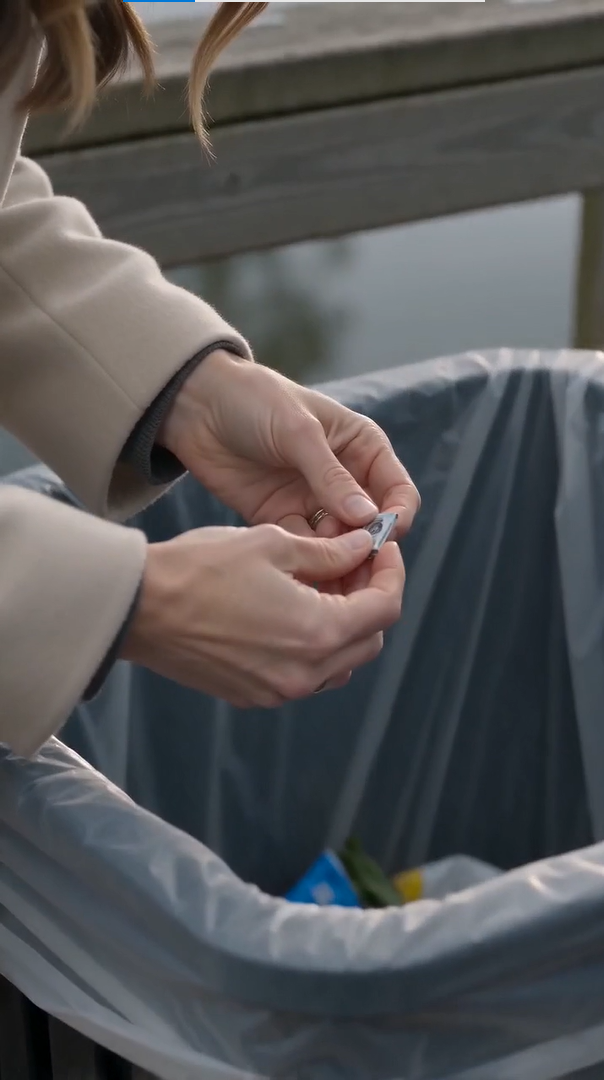
“No.”
“She said you would forgive her.”
“I won’t.”
Evelyn looked down.
“She said grown-ups always forgive pretty women.”
Her father closed his eyes in pain.
Then he knelt in front of her.
“Listen to me. Being pretty does not make someone good. Crying does not make someone innocent. And loving me should never have meant hurting you.”
Evelyn stared at him.
He took her hands.
“I made a terrible mistake by trusting her more than your silence. I should have asked better questions. I should have stayed closer. I should have believed your body when your words were too scared to speak.”
Evelyn’s eyes filled.
“I tried to tell you once.”
His heart stopped.
“When?”
“At breakfast. I said Nora doesn’t like my hair.”
He remembered.
God help him, he remembered.
He had been late for a meeting. He had kissed Evelyn’s forehead, barely looking up from his phone, and said, “She’s just trying to help you keep it tidy.”
He covered his face.
“I’m sorry.”
Evelyn looked at him for a long time.
Then she whispered, “I don’t forgive you yet.”
The sentence hurt.
But it was honest.
And honesty was better than fear.
He nodded.
“You don’t have to.”
She looked surprised.
“I don’t?”
“No. I’m your father. It’s my job to earn back your trust, not your job to make me feel better.”
Evelyn stared at him.
Something small softened in her face.
Not forgiveness.
Not yet.
But maybe the first breath of it.
Sam stood awkwardly near the hallway, holding the backpack against his chest.
The father turned toward him.
“You can sleep in the guest room tonight.”
Sam immediately shook his head.
“No. I can sleep on the couch.”
“You don’t have to.”
“I don’t like rooms with closed doors.”
The father paused.
Then nodded.
“The couch, then. Door open. Lights on if you want.”
Sam blinked at him.
“You’re not mad?”
“No.”
“People get mad when I’m difficult.”
The father looked at Evelyn, then back at Sam.
“Maybe people need to learn the difference between difficult and scared.”
Sam said nothing.
But later that night, when the father came downstairs with blankets, he found Sam sitting on the floor beside the couch, not on it.
Evelyn had come down too, wrapped in her father’s coat, pink ribbon in her hand.
She sat a few feet away from Sam.
Neither of them spoke.
They just sat there under the soft living room light, two children carrying pain too large for their small bodies.
The father stopped at the bottom of the stairs.
He did not interrupt.
For once, he simply watched.
Evelyn finally whispered, “Did your sister’s hair grow back?”
Sam looked at his hands.
“A little.”
“Was she still pretty?”
Sam looked offended by the question.
“She was the prettiest person in the world.”
Evelyn touched her head.
“Even with no hair?”
“Especially then,” Sam said. “Because you could see her eyes more.”
Evelyn thought about that.
Then, very slowly, she smiled.
It was tiny.
Fragile.
But it was the first real smile her father had seen from her in months.
He turned away before they could see him cry again.
The next few weeks were not easy.
Stories make rescue look like one big moment.
A bridge.
A confession.
A police car driving away.
But healing was quieter than that.
It was Evelyn waking from nightmares and calling for her father.
It was him running every time, even when he was exhausted.
It was removing Nora’s clothes from the closet while Evelyn stood behind him to make sure nothing of hers remained.
It was canceling the wedding.
Returning the ring.
Answering ugly calls from people who had only seen Nora’s charm and not the child she had been breaking.
It was Evelyn sitting in therapy, silent for the first three sessions, while her father waited outside and learned that love without attention can still fail a child.
It was Sam refusing new shoes twice before finally accepting them because Evelyn said, “They’re not charity if your feet are cold.”
It was a detective calling with updates.
It was lab reports.
It was statements.
It was the father reading every medical note and feeling sick because the signs had been there.
It was Evelyn standing in front of the bathroom mirror one morning, touching the soft uneven patches on her scalp.
Her father stood behind her, afraid to speak.
After a long silence, she asked, “Can I wear the ribbon even if I don’t have hair?”
He swallowed hard.
“Yes.”
He helped tie the pink ribbon gently around her head like a small crown.
Evelyn looked at herself.
For a moment, her mouth trembled.
Then she whispered, “Sam was right.”
“About what?”
“I don’t have to wait.”
Her father bent down and kissed the top of her head.
“No,” he whispered. “You don’t.”
Sam did not stay only one night.
At first, the father found his mother.
She had been sleeping in a shelter two neighborhoods away, working day shifts cleaning offices and night shifts whenever she could get them. Lily’s illness had taken their savings, then their apartment, then almost everything else.
When she arrived at the house, Sam ran into her arms so hard she nearly fell.
For the first time, Evelyn saw him cry like a child.
Not like a witness.
Not like a protector.
Just a boy who missed being held.
The father helped them get a small apartment close by.
Sam’s mother tried to refuse.
She said she could pay him back.
She said she didn’t want pity.
The father said, “Then don’t take pity. Take gratitude.”
She cried when he said that.
Sam started school again.
Evelyn did too, but slowly.
Some days she wore hats.
Some days she wore scarves.
Some days she wore nothing on her head at all, and walked into class with Sam beside her, daring anyone to stare too long.
Children did stare.
Children asked questions.
One girl asked if Evelyn was sick.
Evelyn touched her ribbon and said, “No. Someone hurt me, but I’m getting better.”
The teacher went quiet.
Sam, sitting two desks away, smiled down at his paper.
That afternoon, Evelyn told her father she had said it out loud.
He hugged her so carefully, like he was afraid pride might crush her.
“I’m proud of you.”
She leaned into him.
Then she whispered, “I believed me too.”
That mattered more than anything.
Months passed.
The trial came and went.
Nora’s name was spoken in rooms where her beauty could not protect her. Receipts were shown. Messages were recovered. The clinic cameras confirmed Sam’s story. The torn label from the bottle was matched. The haircut was documented.
Nora cried in court.
But this time, Evelyn did not shrink.
She sat beside her father, holding the pink ribbon in her lap.
When asked if she wanted to speak, she stood on trembling legs.
Her father started to rise with her, but Evelyn gently shook her head.
She wanted to stand by herself.
The courtroom waited.
Evelyn looked at the judge and said, “I used to think if someone made me small, it meant I was small.”
Her voice shook, but she kept going.
“But I’m not small. I’m a child. And children should not have to be brave in their own house.”
The room went still.
Even the judge looked down for a moment.
Evelyn turned toward Nora.
“I don’t hate you,” she said.
Nora’s face lifted, almost hopeful.
Then Evelyn finished.
“But I don’t want you near any child who has nobody listening.”
Nora looked away.
Evelyn sat down.
Her father took her hand.
This time, she let him.
A year after that night on the bridge, Evelyn asked to visit her mother’s grave.
Not because it was a birthday.
Not because someone told her she was too weak or too sad or too broken.
Because she wanted to go.
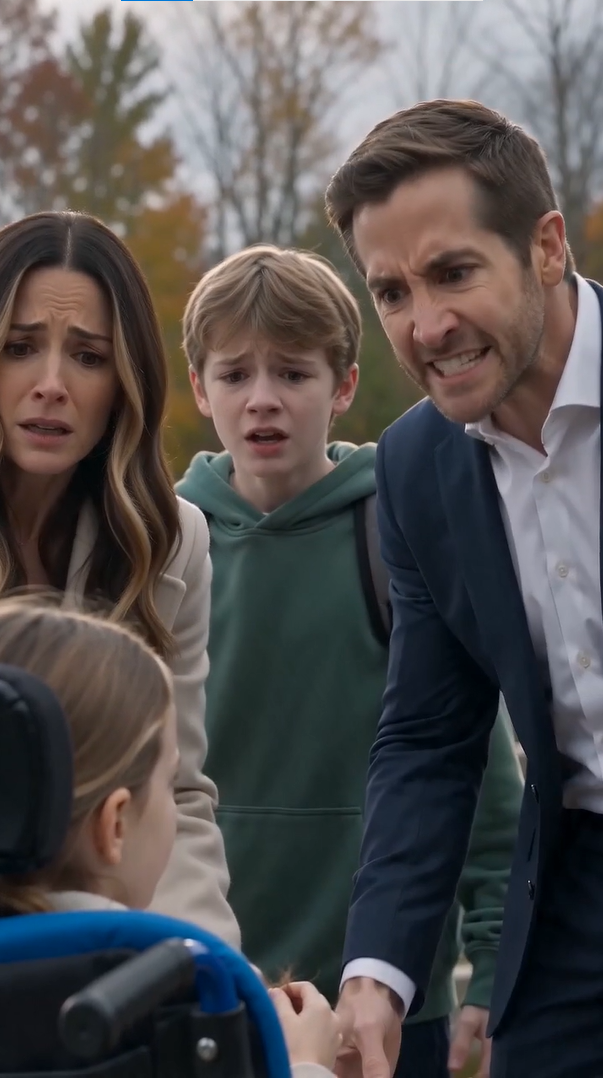
Her father drove her there on a bright spring morning.
Sam came too.
So did his mother.
They brought flowers.
Pink ones for Evelyn.
White ones for her mother.
A small lily for Sam’s sister.
Evelyn stood in front of the stone for a long time.
Her hair had begun to grow back in soft, uneven curls. The pink ribbon was tied around her wrist now.
Her father stayed a few steps behind, giving her space.
Finally, Evelyn knelt and placed the flowers down.
“Hi, Mommy,” she whispered.
The wind moved gently through the trees.
“I’m sorry I didn’t come for your birthday.”
Her father covered his mouth.
Evelyn kept going.
“I wanted to. I really wanted to. But I was scared.”
She touched the ribbon on her wrist.
“Daddy knows now.”
The father’s tears fell silently.
Evelyn looked back at him.
Then she held out her hand.
He came forward and took it.
Together, they stood before the woman they both missed.
“I failed her,” he whispered.
Evelyn looked up at him.
“Yes.”
He closed his eyes.
She squeezed his hand.
“But you came back.”
His breath broke.
Those four words did not erase what had happened.
They did not undo six months of fear.
They did not bring back the hair Nora had cut or the nights Evelyn had cried alone.
But they were a beginning.
And sometimes a beginning is the first mercy a broken family gets.
Sam stepped forward quietly and placed the lily beside the grave.
“This is for my sister,” he said.
Evelyn looked at him.
“I think our moms know each other now,” she whispered.
Sam smiled sadly.
“Maybe Lily showed them where the best flowers are.”
Evelyn smiled too.
The father watched them and thought about the bridge.
About the way pain recognizes pain.
About how a boy who had lost his sister had saved his daughter.
About how his own money, house, and name had meant nothing when his eyes were closed.
On the drive home, Evelyn fell asleep in the back seat with her head against Sam’s shoulder.
Sam didn’t move the whole ride.
Not once.
That evening, the father took the pink ribbon and placed it in a small frame.
Evelyn watched him.
“What are you doing?”
“Keeping proof.”
“Of what?”
He looked at the ribbon.
“That someone shouted when I wasn’t listening.”
Sam stood in the doorway, embarrassed.
Evelyn smiled.
Then she took the frame from her father’s hands and added something else.
A small photo of herself from that spring morning, standing at her mother’s grave with short curls, tired eyes, and a real smile.
Under the ribbon, her father wrote five words.
Loved before it grew back.
Years later, Evelyn would still remember the bridge.
She would remember the cold air.
The golden light.
The way Nora stood alone after the truth came out.
But more than that, she would remember Sam’s voice.
You don’t have to wait for hair to be loved.
Those words stayed with her.
On the days her hair grew back uneven.
On the days people stared.
On the days trust felt hard.
On the days her father knocked softly before entering her room and asked, “Can I come in?” because he had learned that love asks before it assumes.
Sam stayed in their lives.
Not as a charity case.
Not as the poor boy from the bridge.
As family.
He and Evelyn grew up with a bond no one could explain easily.
They argued over homework.
They fought over the last slice of pizza.
They visited Lily’s grave every year.
And every time Evelyn tied a ribbon around her wrist, Sam rolled his eyes and said, “Still pink?”
And she always answered, “Always pink.”
Her father changed too.
He worked less.
Listened more.
Canceled meetings for school plays.
Learned how to braid short hair when it grew long enough.
Learned that silence from a child is not peace.
Sometimes, late at night, guilt still found him.
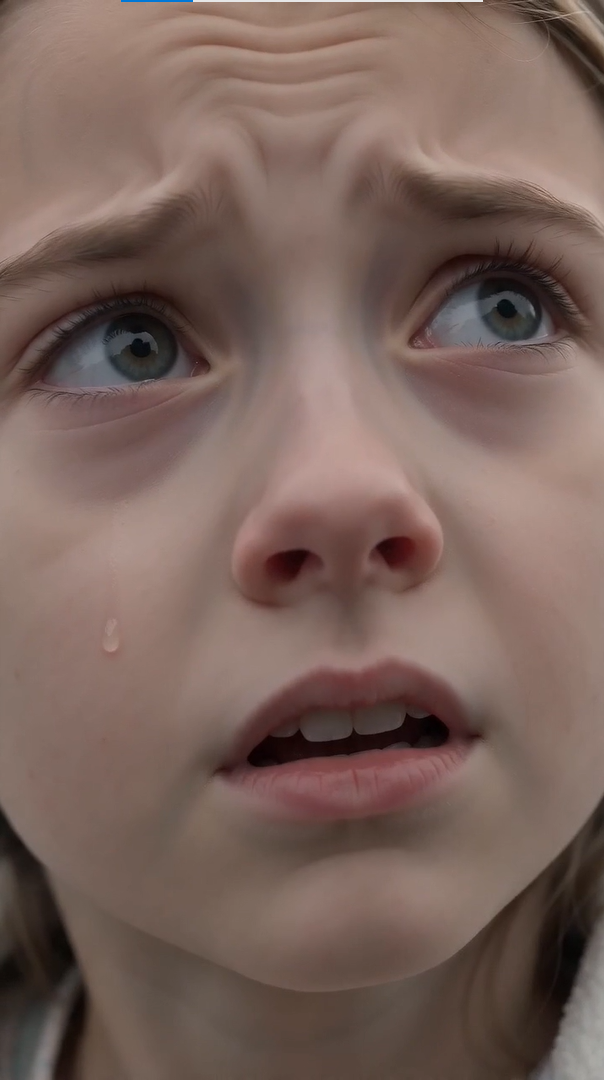
He would stand outside Evelyn’s room, watching the soft glow from her nightlight under the door, and remember how close he had come to taking her back to the woman who hurt her.
But then Evelyn would call out, “Daddy?”
And he would open the door.
Not too fast.
Not too loud.
Just enough to show her he was there.
Every time.
That became his apology.
Not one sentence.
Not one tearful night.
But years of showing up.
Years of seeing.
Years of choosing his daughter before anything else.
As for Nora, the world slowly stopped using the words everyone had once used for her.
Beautiful.
Elegant.
Perfect.
Those words faded.
Another word remained.
Cruel.
And cruelty, once exposed, never looks beautiful again.
The bridge stayed the same.
People crossed it every day without knowing what had happened there.
They didn’t know that a child’s life changed on those stones.
They didn’t know that a poor boy with a backpack had carried more truth than every adult around him.
They didn’t know that a little girl had learned she was loved before she healed.
But Evelyn knew.
Sam knew.
Her father knew.
And every year, on the day Evelyn’s mother would have had her birthday, they returned to that bridge.
Not to remember Nora.
Not to remember fear.
But to remember the moment the truth became louder than the lie.
One evening, years later, Evelyn stood there with long hair moving in the wind, the same pink ribbon tied gently at the end of it.
Sam stood beside her, taller now, still pretending not to be emotional.
Her father stood behind them, older, quieter, holding flowers for the cemetery.
Evelyn touched the ribbon and smiled.
“It grew back,” she said.
Sam looked at her.
“I told you it would.”
She turned toward him.
“You told me something better.”
He smiled, but his eyes softened.
Her father heard them and looked away, wiping his face before either of them could tease him.
The sun lowered behind the city.
The bridge glowed gold again.
And Evelyn, once the child who had been made to feel unwanted in her own home, stood there loved, heard, and whole.
Not because nothing had happened to her.
But because someone finally believed her.
Because someone shouted louder.
Because her father learned that protecting a child means seeing the pain they are too scared to name.
And because one small pink ribbon, thrown away like trash, became the proof that saved her life.