Part 1
My name is Avery Callahan. I am forty-two years old, and until four weeks ago, I believed there was dignity in silence.
I believed that if you worked hard enough, loved quietly enough, gave without keeping score, then one day the people who benefited from your sacrifices would look up and see you. Maybe they would not clap. Maybe they would not thank you in front of a room full of relatives. But they would know. They would carry the truth somewhere private and sacred, and when the moment mattered, they would not let someone else erase you.
That belief died in a candlelit private dining room in Franklin, Tennessee.
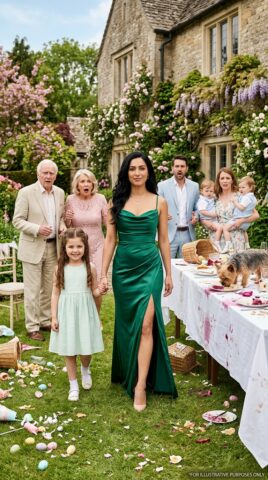
The room was called the Terrace Room at Magnolia Hollow, a restored farmhouse restaurant tucked into the rolling hills outside Nashville. I had reserved it, designed the menu, chosen the flowers, approved the wine list, paid the deposit, and arranged every small detail from the ivory linen napkins to the gold votive candles flickering along the long cypress table. It was my parents’ fortieth wedding anniversary, and I wanted them to have one night that felt beautiful without worry attached
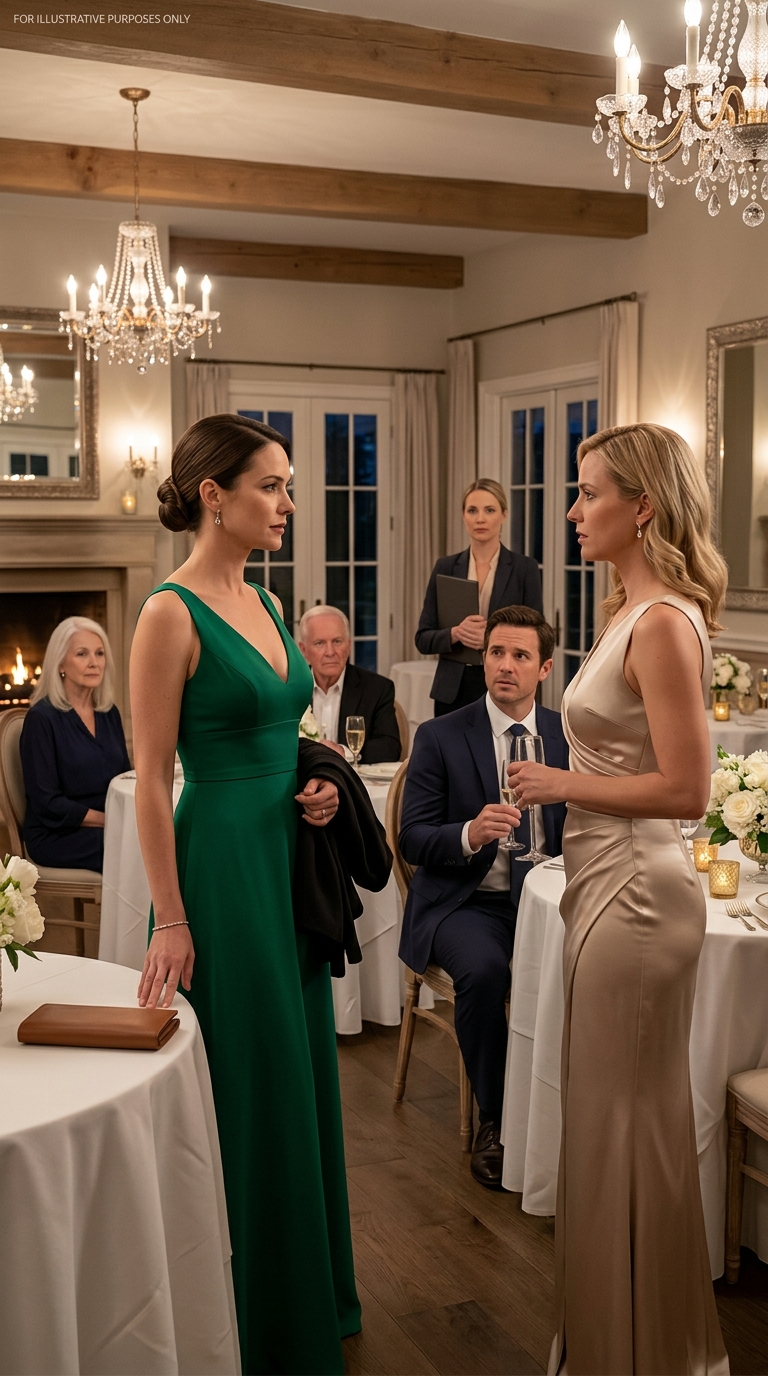
Then my younger sister, Renee, stood in that same room, lifted a champagne flute in front of twenty-eight people, and told everyone that I had not contributed a single dollar.
My uncle slow-clapped once from the other end of the table and said, “Finally, the real ones get their moment.”

The sound of that one clap cut through me harder than any shouting could have.
My mother lowered her eyes to her dessert spoon. My father stared at the candle in front of him as though the flame had suddenly become the most important thing in the world. No one corrected Renee. No one looked shocked enough to defend me. The people who had eaten the meal I paid for, drunk the wine I chose, and sat inside the room I booked simply froze and waited to see what I would do.
For forty-two years, I had trained myself not to make scenes. I had swallowed little humiliations until they hardened into something I mistook for strength. But that night, something inside me went cold and still.
I set down my napkin.

I picked up my coat.
And I walked out without saying one single word.
Fifty-five minutes later, the restaurant manager carried a burgundy leather billfolio through those French doors and placed it beside my sister’s water glass. Every fork at every table stopped moving at exactly the same moment.
But to understand why I let that bill find Renee, you have to understand the kind of woman my sister had always been allowed to become.

Four weeks before that dinner, on a Tuesday at 5:43 in the afternoon, my phone rang while I was closing a report at work. My mother’s name appeared on the screen.
“Avery, sweetheart,” she said, using the soft voice she always used when she was about to ask me for something she had already decided I would do. “It’s about your father’s and my anniversary. The fortieth.”
I closed my laptop slowly. “What about it?”

“Well, Renee said she would plan something, but you know how tied up she is with her move with Derek.”
I stared out the office window at downtown Nashville glowing orange in the late afternoon sun.
I knew exactly how tied up Renee was. She had one part-time consulting contract, no children, and lived four hours away in Knoxville with her husband, Derek, who had recently decided he was a fine art photographer despite never selling anything that wasn’t paid for by relatives trying to be supportive. Renee had been “tied up” for eleven years. Somehow, every birthday, Easter dinner, graduation party, hospital visit, meal train, and family emergency had landed on my calendar while she stayed the charming free spirit who sent heart emojis in the group chat and arrived late holding store-bought cupcakes.

“Could you maybe look into a venue?” Mom continued. “Somewhere memorable. I hate to ask.”
She did not hate to ask. My mother had perfected the art of sliding responsibility across the table and making it sound like a fragile favor.
I looked at the framed photo on my desk: my eight-year-old son, Oliver, sitting on a dock at the lake, laughing with a fish he had insisted we release. Behind him, my husband Theo’s hand rested protectively on his shoulder.
“I’ll take care of it,” I said.
That was the last easy yes of my life.
Part 2
Renee called me that Saturday morning while I was sitting at the kitchen island with a notebook, my laptop, and three venue menus spread across the granite counter.
“Hey, sis,” she said brightly. “Mom told me you’re sorting out the party. Good of you to step in.”
Step in.
That was Renee’s favorite phrase for anything she had abandoned. I had “stepped in” when she forgot Mom’s sixtieth birthday brunch. I had “stepped in” when she promised to help organize Grandpa’s memorial and then cried that she was too emotionally overwhelmed to look at flower arrangements. I had “stepped in” when Dad needed rides to physical therapy after back surgery, when Mom needed help with insurance forms, when cousin Leah’s baby shower needed a host, when every family occasion required invisible labor and Renee discovered a scheduling conflict.
“Budget-wise,” she continued, “I’ll cover my share. Fifty-fifty. Just put me on the paperwork where people can see it. If anyone asks, we both hosted.”
I held my pen still against the notebook. “You want to pay half?”
A pause.
“Well, things are a little stretched right now. Derek’s studio, you know how startups go. But I’ll contribute what I can. Just make sure my name is there, okay? Mom’s been talking like I’m planning it.”
There it was. Not a contribution. A credit claim wrapped in a favor.
I looked at Theo, who was pouring coffee across the kitchen. He met my eyes and raised one eyebrow. He knew. After fourteen years of marriage, he knew every tone of my family’s dysfunction.
“I’ll handle the arrangements,” I said.
“Great. You’re the best.”
Renee hung up before asking what anything cost.
That afternoon, I decided to pay for the entire dinner myself.
My parents’ finances were tighter than they admitted. Dad’s electrical contracting business had slowed after his back surgery, and Mom had spent most of spring managing his recovery, pretending not to be afraid of medical bills. If I told her the real price of the evening, she would insist on a backyard gathering with paper plates and grocery-store sheet cake. She would smile too brightly and say, “This is perfect,” while secretly calculating what she could return from her closet to help cover her own anniversary.
I didn’t want that for her. Not for their fortieth.
I had earned a strong year-end bonus in November. Director of Client Strategy. My name had finally appeared on department letterhead after years of being the woman who fixed problems quietly while louder people took credit. Paying for one beautiful dinner would not break me.
So I handled everything and told no one.
Magnolia Hollow was exactly what I wanted. Exposed beam ceilings, a stone garden terrace, a fireplace wall, and a private room that felt elegant without being cold. The event coordinator, Sandra Vega, had direct eyes and the kind of calm competence that made you feel disasters would think twice before entering her room.
As she walked me through the terrace, I could already imagine my mother pressing her hands to her mouth when she saw it. I pictured Dad pretending not to be emotional while reading the menu. I pictured Oliver handing them the card he had spent two evenings drawing with colored pencils.
“Any guests I should be aware of in advance?” Sandra asked as we sat down to finalize the contract.
I gave a short laugh. “My sister may try to take credit for the evening. She might even try to hand over a small amount at the end so she can say she contributed. Please don’t let her near the transaction.”
Sandra’s expression did not change, but something sharpened behind her eyes.
“Understood completely.”
I signed the agreement: Avery Callahan, event host.
Before I left, Sandra slid her card across the table. “Any changes the night of, you reach me directly. Not the front desk. Me.”
I slipped the card into my wallet behind my license.
I had no idea how important that small rectangle of paper would become.
The night of the dinner, everything was perfect at first.
My mother stepped into the Terrace Room wearing a navy dress and pearl earrings Dad had bought her years ago. She stopped so abruptly that Dad nearly walked into her.
“Oh,” she whispered, both hands covering her mouth.
Dad looked around the room, blinking too fast. “Avery, did you—”
Before I could answer, Renee swept in behind them wearing a champagne-colored wrap dress and the expression of someone arriving at her own coronation.
“Surprise!” she cried, wrapping her arms around Mom. “We wanted tonight to be unforgettable.”
We.
I felt Theo’s hand brush lightly against the small of my back.
“Breathe,” he murmured.
I did.
I watched Renee move through the room, touching shoulders, accepting hugs, soaking in compliments like sunlight. “Derek and I found this place,” she told Aunt Carol. “The menu took forever, but we wanted it to feel personal.” To cousin Leah, she said, “I just knew Mom would love the lavender.” To my uncle, she sighed, “It was a lot, but family is worth it.”
Derek stood near the bar, looking uncomfortable, but not uncomfortable enough to correct her.
Part 3
Dinner began with roasted pear salad, warm rolls, and a toast from my father that made my mother cry. For a little while, I let myself enjoy it. Oliver sat beside Theo, carefully using his best manners and whispering questions about which fork to use. My parents smiled across the table at each other like they had survived the same storm and still recognized the person on the other side.
Then Renee stood.
She tapped her champagne flute with a knife, though no one had asked her to speak. The room quieted.
“Mom, Dad,” she began, her voice trembling in that practiced way of hers, “Derek and I wanted tonight to be completely perfect. We scouted this location ourselves. We chose every detail of the menu because forty years is everything. You taught us what love looks like.”
Glasses rose around the table.
I held mine by the stem and did not drink.
Theo leaned close. “Do you want me to say something?”
“No,” I whispered.
Because even then, some foolish piece of me still believed the truth would not need rescuing.
Then my uncle stood before the clinking had even faded.
Uncle Martin had always adored Renee. She laughed at his jokes, praised his opinions, and never challenged the cruel little comments he disguised as wisdom. He lifted his glass toward my sister.
“Real families,” he said, “aren’t the people who send gift cards from three states away and think that counts. Real families are the ones who stay. The ones who show up season after season without needing applause.”
His eyes flicked toward me for half a second.
“To the ones who actually stayed.”
A few people looked down. A few drank too quickly. Renee tilted her head in false humility.
My mother did not look at me.
My father did not look at me.
I set my still-full glass on the table.
I lasted forty-one more minutes.
I smiled when Aunt Carol complimented the salmon. I helped Oliver cut his chicken. I answered cousin Phil’s question about work. I thanked the server when she refilled my water. I became so polite I could barely feel my own body.
Then Renee drifted over during dessert service with her second glass of champagne in hand, her wrap slipping off one shoulder.
“Don’t take it personally that you’re not at the head table, Avery,” she said softly enough that only I could hear. “That spot is for the people who actually built tonight.”
I turned my head and looked at her.
For a moment, I saw her clearly. Not as my little sister. Not as the favorite. Not as the charming girl my parents had protected from consequences until consequence became a foreign language to her. I saw a woman in her late thirties who still needed to stand on someone else’s back to feel tall.
“You should be very careful,” I said quietly, “about claiming ownership of things you cannot afford.”
Her smile flickered.
Then she reset it.
A few minutes later, when the dessert trays came out, Renee stood again.
This time, her voice was louder.
“Avery,” she called from near my mother’s chair, “don’t fill up too much over there. You didn’t put a cent into any of this.”
The room went still.
Not quiet. Still.
My uncle clapped once, sharp and deliberate.
“Finally,” he said, “the real ones get their moment.”
Twenty-nine faces froze around me.
For a strange second, I heard everything at once: the soft crackle of the fireplace, the clink of a spoon against china, the wind moving beyond the garden doors, Oliver’s small intake of breath beside me.
I looked at my mother.
She stared down at her spoon.
I looked at my father.
He stared at the candle.
In that moment, I understood that silence was not always helplessness. Sometimes silence was a choice. Sometimes it was permission.
For forty-two years, I had believed that if this moment ever truly came, one of them would stand up for me.
Not one of them stood.
I did not yell. I did not cry. I did not defend myself.
I leaned toward Oliver. “Grab your jacket, bud.”
His eyes were wide. “Mom?”
“It’s okay. Jacket.”
Theo was already standing.
“Take him to the car,” I said quietly. “Give me four minutes.”
Theo did not ask why. That was one of the reasons I loved him.
I folded my napkin and set it neatly on my plate. I slipped Oliver’s hand-drawn anniversary card into my bag. Then I picked up my wallet and stood.
Every eye in the room followed me.
I turned and faced them all.
“Enjoy the rest of your evening, everyone.”
That was all I said.
Then I walked the full length of the Terrace Room at a perfectly normal pace, past the dessert station, past the fireplace wall, past my uncle’s smug face, past Renee’s shining smile, past my father, who never lifted his eyes from the table.
The November air hit me the moment I pushed through the garden door.
For the first time all night, I could breathe.
Part 4
In the parking lot, Theo had the car running.
Oliver was buckled into the back seat, holding his jacket in his lap. He looked confused but calm, because Theo had probably told him we were leaving early and everything was fine. My husband had always known when to protect a child from adult ugliness without pretending ugliness did not exist.
I opened my wallet and pulled out Sandra Vega’s card.
My hands were steady.
She answered on the second ring. “Ms. Callahan?”
“Sandra,” I said, “I need to withdraw my payment authorization for the remaining balance.”
There was a brief silence. Not confusion. Understanding.
“All right.”
“Keep the deposit for your time and staff. Present the rest directly to the table.”
“To whom?”
I looked back at the glowing windows of Magnolia Hollow. Inside, my sister still had fifty-five minutes of believing the evening belonged to her.
“To the woman seated beside my mother. Renee Callahan Drake.”
“Of course.”
“And Sandra?”
“Yes?”
“Add the gratuity. Twenty-two percent. She can absolutely afford to tip generously.”
This time, Sandra’s pause held something close to approval.
“Understood.”
I hung up and got into the car.
Theo glanced at me once. “Home?”
“Home.”
He pulled out of the parking lot without another word.
In the back seat, Oliver began humming something from a video game soundtrack, soft and unaware. Through the rear window, I watched the warm terrace lights disappear into the dark Tennessee hills.
My sister had almost an hour left.
I gave her every second.
What happened next was told to me later by cousin Phil, Aunt Carol, and eventually my father, each version carrying the same stunned details.
At 9:22 p.m., Renee was laughing too loudly at something nobody else found funny. Her third champagne was nearly finished. Derek was checking his phone under the table. My mother looked pale. My father had not spoken much since I left.
Then Sandra Vega entered the Terrace Room carrying the burgundy leather billfolio with the posture of someone delivering a verdict.
She placed it beside Renee’s water glass.
“Miss Callahan-Drake,” she said calmly, “the remaining balance for the private terrace, full bar service, service charge, and gratuity this evening is six thousand two hundred forty dollars. We accept credit, debit, or bank transfer.”
Every fork stopped.
Renee’s mouth opened.
“I’m sorry,” she said after a moment. “Who sent this over?”
“Miss Avery Callahan, event host of record. She has withdrawn her card authorization. The balance is now due.”
Derek set his phone face down with enormous care.
Renee laughed, but no one joined her.
“There has to be a mix-up. My sister didn’t pay for a single thing tonight.”
Sandra looked at her with professional stillness.
“I have the signed event contract.”
Cousin Phil, God bless him, said quietly, “Renee, you toasted twenty-five minutes ago that you and Derek planned every detail.”
Aunt Carol added, “You said you chose the menu.”
Someone else murmured, “And the flowers.”
Derek’s chair shifted back an inch.
Renee’s face had gone blotchy beneath her makeup. “Fine,” she snapped. “Obviously this is petty revenge.”
Sandra did not blink.
“Would you like to use a card?”
Renee pulled two from her wallet.
The first declined.
The second declined.
The sound of the second decline, Phil told me later, was somehow louder than Uncle Martin’s clap.
Renee’s hand moved toward Derek’s jacket pocket.
Derek pulled back as though she had reached for a weapon.
“Are you serious right now?” he said under his breath, but the room was quiet enough for everyone to hear.
“Derek,” Renee hissed. “Not here.”
“No,” he said, standing slowly. “Apparently everything is here tonight.”
That was when my father rose.
He was sixty-eight years old, with two knee replacements and a back that still stiffened in cold weather. He pushed himself up from the table, walked past my mother, past Uncle Martin, past Renee, and placed his Visa in Sandra’s hand.
“Run this one.”
It cleared on the first try.
He signed the receipt in black ink, slow and steady.
Then he turned to Renee.
For a long moment, he looked older than he had when the night began.
“Go home,” he said.
Two words. Quiet. Final.
Renee’s mouth opened, but nothing came out.
Derek was already putting on his jacket.
“I’m calling a car,” he said. “Do not text me tonight.”
The garden door closed behind him.
The room held eight full seconds of silence.
Then people began gathering their coats and wraps. They said soft goodbyes to my mother. They hugged my father awkwardly. Not one of them said goodbye to Renee.
Part 5
Renee sent fourteen texts over the next three days.
At first, they were furious.
How could you humiliate me like that?
Then wounded.
You have always wanted everyone to hate me.
Then practical.
Can you please tell Dad I’ll pay him back when Derek transfers funds?
Then cruel.
You ruined Mom and Dad’s anniversary because you can’t stand not being the center of attention.
I read every message.
I responded to none.
There is a peace that comes when you realize an argument cannot continue without your participation.
Derek filed for a formal separation the following Thursday. I heard through cousin Phil that the restaurant bill had not been the reason so much as the final proof. Renee had been using Derek’s credit cards for months, promising clients for his studio that did not exist, telling him money was “about to clear” when nothing was coming. Two weeks later, she moved into a short-term rental in Brentwood and began posting inspirational quotes about betrayal.
Uncle Martin was quietly removed from the holiday list without debate.
Three cousins called me within a week to say they had seen enough. Aunt Carol cried on the phone and told me she was sorry she had stayed quiet. Phil said, “I should have spoken sooner.” I thanked him because at least he had spoken at all.
My parents asked to come to my house for Christmas.
Just the two of them.
No Renee. No Uncle Martin. No performance.
I almost said no.
For days, I carried the question around with me like a stone. Theo told me I did not owe anyone immediate forgiveness. He said our home was not a courtroom where my parents could show up, plead discomfort, and be released. Oliver, not fully understanding the grown-up layers, only asked whether Grandma and Grandpa were still sad.
“They’re learning,” I told him.
He thought about that. “Like when I mess up fractions?”
“A little.”
“Then they need practice.”
Children have a way of making truth sound simple without making it easy.
So I let them come.
On Christmas evening, the good dishes were on the table. Cinnamon and roasted turkey filled the house. Frost silvered the window glass outside, and Oliver had arranged everyone’s place cards himself, writing Grandma and Grandpa in careful block letters.
My mother arrived holding a pie she had clearly baked while crying. My father carried a small wooden box he had made in his workshop for Oliver’s art supplies. They both looked nervous standing in my foyer, as though they were guests in a place they had once assumed would always open automatically.
Theo took their coats. I hugged them both.
Not tightly. Not like nothing had happened.
But I hugged them.
Dinner was quiet at first. Then Oliver began explaining a LEGO spaceship he had designed, and my father leaned forward like he was being briefed by NASA. My mother smiled, but her eyes kept moving to me, then away.
Halfway through dessert, Oliver looked across the candles at her.
“Grandma,” he asked softly, “were you sad when they made Mommy feel small?”
The entire table went still.
My instinct was to protect him from the answer, but Theo’s hand rested over mine beneath the table, grounding me.
My mother set down her fork.
Her eyes filled completely.
“Yes, sweetheart,” she said. “I was very sad. And I was wrong not to say so.”
Oliver studied her. “Why didn’t you?”
My father closed his eyes.
My mother swallowed. “Because sometimes grown-ups get scared of making things worse, and they forget that staying quiet can hurt people too.”
Oliver nodded slowly, accepting this with the seriousness of a child sorting the world into rules.
“Are you braver now?”
My mother gave a broken little laugh.
“I’m trying to be.”
“I’m proud of you, Grandma,” Oliver said.
That was when my father reached across the table and laid his hand gently over mine.
“I am sorry,” he said.
Not loudly. Not dramatically. Not with excuses. He did not mention Renee. He did not blame surprise, discomfort, age, or family patterns. He simply said the words and let them stand on their own.
I looked at his hand over mine. The same hand that had signed the receipt after failing to defend me. The same hand that now trembled slightly.
“I needed you sooner,” I said.
“I know.”
My mother began to cry then, quietly, into her napkin.
I did not rush to comfort her. That was new for me. I let her feel what she had earned. I let my father sit with what he had failed to do. I let the silence become honest instead of dangerous.
Later, after pie and coffee, Dad sat on the living room rug while Oliver showed him drawings and LEGO projects. He listened to every single word. My mother helped me wash dishes, and for once, she did not fill the room with nervous chatter.
Before she left, she took out her phone, opened her contacts, and deleted Uncle Martin’s number in front of me.
“I should have done it years ago,” she said.
“Yes,” I answered.
She nodded, accepting that too.
My father calls every Sunday now at 6:30. He asks about my week. He asks about Theo. He watches Oliver hold up drawings to the camera and treats every crooked robot and superhero sketch like a museum piece. Nobody mentions that November night, not because it has been forgotten, but because all of us know it is sitting beneath the surface, shaping the new rules.
Renee still has not apologized.
Maybe she never will.
I no longer wait for it.
For most of my life, I thought family was something you inherited, something fixed and permanent, something you had to preserve no matter how many times it cut you. I thought love meant making room at the table even for people who kept kicking your chair out from under you.
Now I know better.
Family is not a birthright. It is a table.
You build it. You decide who sits there. You decide what kind of voice is welcome. You decide whether silence will be used as shelter for cruelty or space for truth.
And sometimes the most loving thing you can do for the people you love most is refuse to let them teach your child that swallowing pain is the same thing as keeping peace.
That night at Magnolia Hollow, I walked out with my coat, my son’s card, and the last pieces of a version of myself I no longer needed.
Fifty-five minutes later, the bill found my sister.
But the truth found all of us.
THE END