I Closed My Laptop Slowly
The server room hummed with the steady rhythm of cooling fans and blinking lights. I sat cross-legged on the floor, my laptop balanced on my knees, running diagnostics on the network infrastructure that kept Harrison Financial Group alive every day.
This was my corner of the building.
The basement.
The place where blue and yellow cables snaked across ceiling racks, backup generators waited behind locked metal doors, and the air always smelled faintly of dust, warm plastic, and coffee someone had forgotten on a utility shelf.
Above me, five floors of glass offices, polished tables, framed financial awards, and people in expensive suits made decisions that appeared in business journals.
Down here, I kept the machinery breathing.
My family called it playing with computers.
I called it maintaining the digital backbone of a $2.3 billion investment firm.
Through the thin ceiling, I could hear footsteps moving overhead. The executive offices were directly above me. My father’s corner office. My brother David’s vice president suite. My sister Catherine’s strategy department.
They spent their days in glass-walled conference rooms, managing portfolios, courting clients, and speaking in the confident tone of people who believed the building belonged to them.
I spent mine making sure their computers actually worked.
“Emma.”
David’s voice crackled through the intercom system I had installed the year before.
“Emma, you down there?”
I pressed the response button without looking away from the terminal window on my screen.
“Yeah.”
“Dad’s computer is frozen again. Can you come fix it?”
“I’m in the middle of a system update. Can it wait twenty minutes?”
“No. He’s got a client call in ten. Get up here.”
The intercom clicked off before I could answer.
I saved my work, closed the diagnostic panel, and stood up. My knees cracked slightly from sitting on the floor too long. I picked up my laptop and headed for the stairs.
The elevators were being serviced, naturally, because nothing in this building worked correctly unless I personally maintained it.
Five flights later, I stepped into the executive hallway. The carpet was thick enough to swallow footsteps. The walls were lined with black-and-white photographs of Harrison Financial Group through the decades: its first storefront office, the original trading desk, ribbon-cuttings, charity events, and my grandfather Thomas Harrison standing beside men who looked like they owned half of Connecticut.
My father’s office was exactly as I remembered from childhood.
Dark wood.
Leather chairs.
A wide desk facing the city.
Framed photographs of himself with politicians, business leaders, and clients who smiled like they were used to being listened to.
He was on his phone when I entered, gesturing impatiently at his computer without looking at me. I walked around the desk and looked at the screen.
It was not frozen.
It was displaying an error message because he had tried to open a document that required software he had personally uninstalled the previous month, despite three warning emails from me.
I fixed it in forty seconds.
“All set,” I said.
He nodded without looking away from his phone conversation.
I let myself out.
In the hallway, I nearly collided with Catherine.
“Oh, good, you’re here,” she said, thrusting her tablet at me. “This thing isn’t syncing with my email. I have a presentation in an hour.”
I took the tablet. The problem was obvious immediately. She had disabled cloud sync in her settings, probably while trying to save battery life.
“Fixed,” I said, handing it back thirty seconds later.
“Finally. I’ve been dealing with this for two days.”
She was already walking away, typing rapidly with her thumbs.
“Oh, and Emma,” she added over her shoulder, “the shareholders meeting is tomorrow at two. Don’t schedule any maintenance during that time. We need everything working perfectly.”
“I know. I sent the reminder last week.”
“Good. And maybe dress a little nicer tomorrow. We’re having some important people in the building.”
She disappeared around the corner before I could respond.
I stood in the empty hallway holding my laptop, wearing jeans and the company polo shirt that had become my unofficial uniform.
The shareholders meeting.
Right.
The meeting where my family would present their annual performance review to the board and discuss their grand plans for expansion.
The meeting where they would showcase their expertise, vision, and business judgment.
The meeting where they would decide how to spend money that did not actually belong to them.
What they did not know, what nobody knew except my attorney and my private wealth manager, was that I owned seventy-three percent of Harrison Financial Group’s managed assets.
Not the company itself.
The assets.
My grandfather, Thomas Harrison, had been a brilliant man and a difficult father. He had built Harrison Financial Group from a small storefront office into one of the most respected investment firms in the country. He had also been controlling, sharp-eyed, and quietly convinced that his children were too careless to manage real wealth without supervision.
So he had done something unusual.
When he died six years earlier, he left the company structure to his children: my father and my aunt Rebecca, who retired to Monaco and never came back.
They received the business entity, the brand, the client relationships, the office building, the name on the door, and the public image of control.
But the actual investment portfolio, the $500 million pool of assets the company managed, he left to me.
All of it.
There was a letter, of course.
My grandfather had been fond of letters.
This one was delivered by his attorney on my twenty-third birthday, three years after his death.
Emma,
If you are reading this, you are now the legal owner of the Harrison portfolio. Your father will have spent the last three years believing he controls these assets. He does not. He never has.
The company manages the portfolio on your behalf, but you are the sole owner. You may choose to keep this arrangement private, or you may choose to reveal it. The decision is yours.
I trust you will know when the time is right.
Your father is a competent manager, but a poor owner. Your brother is ambitious but reckless. Your sister is intelligent but impatient.
You, however, have what they lack.
You understand that true power comes from understanding how systems work, not merely how they appear to work. The company needs someone who sees the machinery behind the curtain.
I believe that person is you.
For three years, I kept the secret.
For three years, I watched my family run Harrison Financial Group believing they owned what they only managed.
For three years, I fixed their computers, maintained their systems, reset their passwords, updated their servers, restored their presentations, and stayed invisible in the basement.
For three years, I learned everything there was to know about the portfolio I actually owned.
I had access to everything.
Not because of my ownership. Nobody knew about that. I had access because I was the IT administrator.
Every email, every document, every financial projection, every meeting file, every archived memo, and every internal report passed through systems I maintained. I had legitimate access to every database, every backup, every security log, every permission structure.
I knew about David’s risky investments in the cryptocurrency sector that he had hidden from the board.
I knew about Catherine’s plans to expand into markets she did not fully understand.
I knew about Dad’s increasingly desperate attempts to match the returns my grandfather had once generated, even as his decisions slowly eroded the portfolio’s stability.
I knew everything.
And tomorrow, at the shareholders meeting, they were going to propose a major restructuring that would fundamentally change how the portfolio was managed.
They were going to vote on transferring $200 million into a new high-risk investment fund David had designed.
They were going to need my approval.
They just did not know it yet.
The next morning, I arrived at the office at six to run final system checks before the meeting.
Everything needed to be perfect.
Presentation equipment.
Video conferencing for remote board members.
Network connectivity for the financial data they would display on the large screen.
Backup files.
Printer access.
Secure Wi-Fi.
The kind of invisible work nobody respected until the moment it failed.
I was in the main conference room testing the projector when David walked in at seven-thirty, carrying a coffee cup and wearing a navy suit that probably cost more than my monthly rent.
“What are you doing here?” he asked.
“Making sure your presentation doesn’t crash in the middle of your big moment.”
“Right. Good.”
He set his coffee down and opened his laptop.
“Hey, while you’re here, can you look at something? My financial modeling software keeps giving me error messages.”
I walked over.
The problem was obvious.
He had corrupted a spreadsheet by forcing a formula the software was not designed to handle.
“You’re trying to project twenty-year returns on a fund that has only existed for six months,” I said. “The software doesn’t have enough historical data to generate reliable projections.”
“Can you make it work anyway?”
“I can make it stop showing error messages. I can’t make the projections accurate.”
“Just make the errors go away. The board doesn’t need to know the limitations.”
I looked at him.
“You’re presenting unreliable data to the board.”
“I’m presenting a vision,” he said. “Sometimes you have to extrapolate beyond what the data strictly supports. That’s called innovation, Emma. You wouldn’t understand.”
I fixed the error messages without another word.
By two o’clock, the conference room was full.
Twelve board members sat around the long table, including several external advisers. My father took the head seat. David sat to his right, polished and confident. Catherine sat to his left, reviewing her notes with a silver pen in her hand.
And I sat in the back corner at the small table where the AV equipment was set up, just in case anything went wrong with the technology.
That was where the IT person sat.
In the corner.
Ready to fix things.
Nobody questioned it.
The meeting began with Dad’s overview of the company’s performance. Strong returns in most sectors. Some volatility in emerging markets. Overall trajectory positive, but room for improvement.
His voice was smooth, practiced, and reassuring.
Then David stood.
“Ladies and gentlemen,” he said, his tone carrying the confidence of someone who had rehearsed every pause, “Harrison Financial Group has been successful by being conservative, by playing it safe. But the market is changing. Our clients are younger, more risk-tolerant, and more interested in innovative investment strategies.”
He clicked through slides showing market trends, potential opportunities, and glossy graphs designed to make risk look elegant.
“That is why I am proposing the Harrison Innovation Fund, a $200 million portfolio focused on high-growth technology sectors, cryptocurrency integration, and emerging market opportunities.”
He clicked to the slide with the numbers I had fixed that morning.
“The projected returns are exceptional. Twenty-year projections show potential returns of three hundred percent or more.”
Several board members leaned forward.
Interested.
Catherine presented next, outlining the operational structure for the new fund, management fees, client acquisition strategies, and marketing plans.
It all sounded very professional.
It all depended on money they did not actually control.
Before the vote, Richard Chin, one of the external board members, lifted his hand slightly.
“I’d like to understand the risk profile better. This is a significant portion of our managed assets. What’s our downside protection?”
“The diversification strategy,” David began.
“Is insufficient for this level of risk,” I said quietly from my corner.
Everyone turned to look at me.
The projector hummed behind my shoulder.
A coffee spoon stopped halfway to someone’s mouth.
“Sorry,” I said, not feeling sorry at all. “But the diversification model you’re presenting doesn’t account for correlation between the crypto markets and the technology sector. If both decline at the same time, which has happened twice in the last five years, you’re looking at potential losses of forty to sixty percent, not the fifteen percent maximum you projected.”
David’s face tightened.
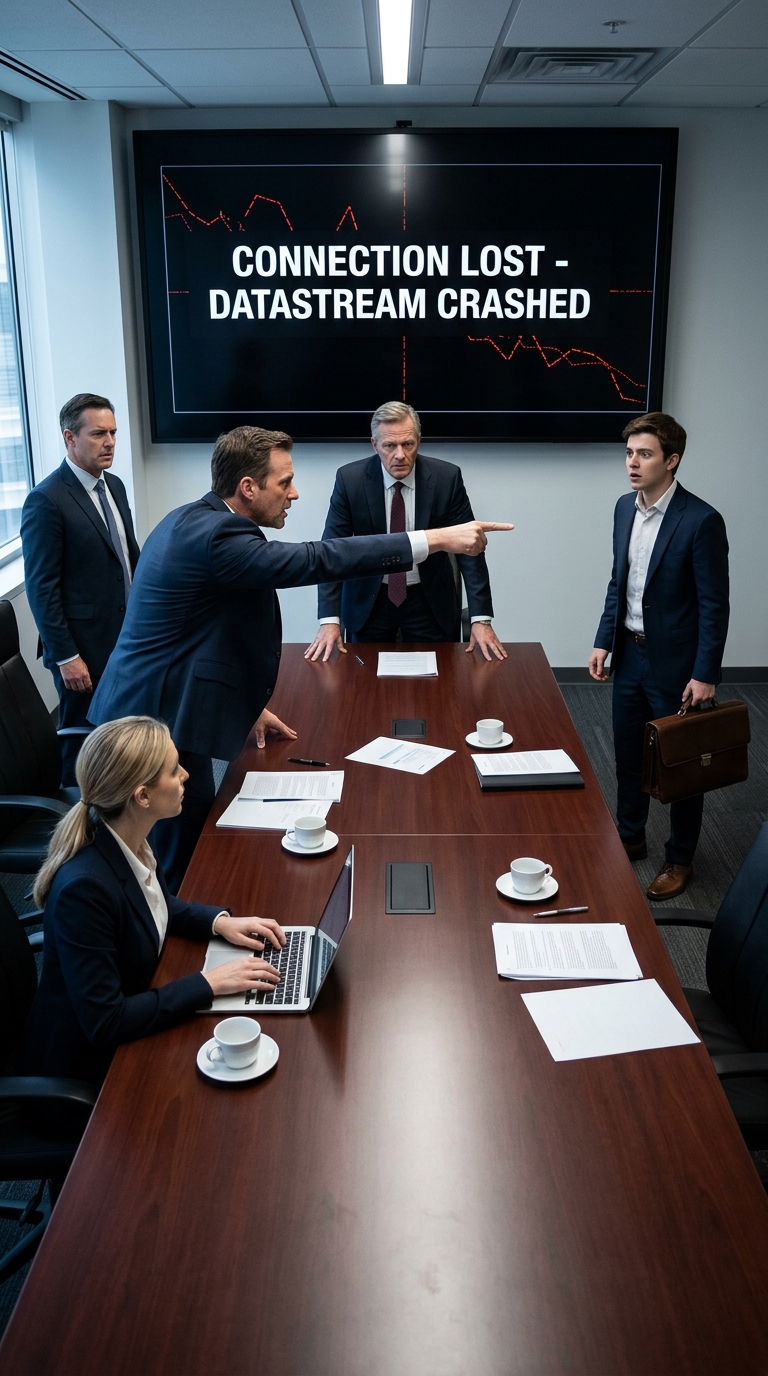
“Emma, this is a board meeting, not a tech support session.”
“I’m aware.”
“Then maybe you should go fix computers where you belong and leave financial strategy to people who understand it.”
Several board members shifted uncomfortably.
The room had gone very still.
“I understand it fine,” I said. “Your model is flawed. The twenty-year projections are based on six months of data extrapolated beyond statistical reliability. And the risk calculations ignore correlation factors that any first-year analyst should catch.”
“That’s enough,” Dad said, his voice sharp. “Emma, if you can’t be respectful during board proceedings—”
“She’s right,” Richard Chin said quietly.
Everyone looked at him.
He was reviewing the presentation on his tablet, his brow furrowed.
“These projections are questionable. Where did this data come from?”
“Our internal analysis team,” David said quickly.
“Which consists of David and two analysts he hired last quarter,” I added. “Neither of whom has significant experience with cryptocurrency markets.”
“Emma, I’m warning you,” David said.
His confident presentation voice was gone. What replaced it was anger wrapped in embarrassment.
“Leave now.”
“I don’t think she should,” said Maria Santos, another board member.
She was looking at me with new attention.
“She’s raising valid concerns. I’d like to hear more.”
“She’s IT support,” Catherine said. “She fixes computers. She doesn’t have the expertise to evaluate investment strategies.”
“Actually,” I said, “I have a master’s degree in financial engineering from MIT. I completed it while working here. Night classes, four years.”
Silence.
The kind of silence that presses against the windows.
“You never mentioned that,” Dad said.
“You never asked. You assumed I was just good with computers.”
“But you work in the server room,” David said. “Why would you get a master’s in finance if you wanted to work in IT?”
“I never said I wanted to work in IT. You needed someone to maintain your systems. I was available. It seemed useful to understand the technical infrastructure of financial services.”
David gave a short, humorless laugh.
“This is all very interesting, but it doesn’t change the fact that you are not a voting member of this board. So while we appreciate your concerns, this is a decision for the actual stakeholders.”
“About that,” said a voice from the doorway.
Everyone turned.
A man in his sixties stood at the entrance, carrying a leather briefcase.
I recognized him immediately.
James Morrison, senior partner at Morrison and Associates, the law firm that had represented my grandfather for decades.
“Mr. Morrison,” Dad said, standing. “We weren’t expecting you. Is this about the quarterly legal review?”
“No, Mr. Harrison,” Morrison said. “I’m here because this board is about to vote on a transfer of assets that requires authorization from the portfolio’s legal owner.”
“I’m the owner,” Dad said. “I built this company with my father. I’ve managed these assets for thirty years.”
“You’ve managed them,” Morrison said.
He walked to the table and set his briefcase down.
“But you don’t own them.”
He opened the briefcase, removed a document, and placed it in front of my father.
“This is a copy of Thomas Harrison’s asset allocation trust, established eighteen years ago and executed upon his death. It transferred ownership of the Harrison Financial Group investment portfolio to his granddaughter, Emma Harrison, effective on her twenty-third birthday.”
The room erupted.
David was saying something about impossible.
Catherine had gone completely pale.
Dad stared at the document as though the words had rearranged themselves into a language he did not know.
“That’s absurd,” David finally managed. “Granddad left the company to us. To his children. There was a will.”
“He left the company structure to his children,” Morrison said calmly. “The business entity, the brand, the client relationships. But the assets themselves, the $500 million investment portfolio that the company manages, belong to Emma.”
“This can’t be legal,” Catherine said. Her voice was shaking. “We’ve been managing those assets for six years. We’ve made decisions. Executed trades. Allocated resources.”
“With Emma’s implicit authorization,” Morrison said. “The trust agreement allows the company to manage the portfolio provided the management serves the owner’s interests. Emma has allowed you to continue that management. But any major restructuring, such as transferring $200 million into a new investment vehicle, requires her explicit approval.”
Dad finally spoke.
His voice sounded hollow.
“Emma, did you know about this?”
“Yes.”
“For how long?”
“Three years.”
“Three years,” he repeated, as if testing the shape of the words. “You’ve known for three years that you owned it. That you controlled everything.”
“I didn’t say I controlled everything. I said I owned the assets.”
David slammed his hand against the table.
“This is fraud. You’ve been lying to us.”
“I’ve never lied,” I said. “I just never corrected your assumptions.”
“You’ve been watching us. You’ve had access to all our systems, all our communications.”
“That’s my job. I’m the IT administrator. I’m supposed to have access to everything.”
“But you used that access to—”
“To understand how my portfolio was being managed,” I finished. “To make informed decisions about my investments.”
“Your investments,” Catherine said bitterly. “You’ve been sitting in the server room fixing computers while we’ve been building this company, and now you’re claiming it’s all yours.”
“Not the company,” I said. “The assets. The portfolio. The $500 million you’ve been managing, and in some cases mismanaging, for the last six years.”
“Mismanaging?” David’s voice rose. “We’ve delivered consistent returns. We’ve grown the portfolio.”
“You’ve grown it at 4.2 percent annually,” I said. “The market average for similar portfolios is 7.3 percent. You’ve underperformed by 3.1 percent per year, which translates to approximately $47 million in lost potential returns over six years.”
More silence.
Richard Chin looked at his tablet again.
“She’s right,” he said. “I’ve been reviewing the performance data. The returns are positive in absolute terms, but mediocre relative to market benchmarks.”
“And now,” I continued, “you want to transfer forty percent of my assets into a high-risk fund based on flawed projections and insufficient risk analysis. A fund that, based on my own modeling, has a sixty-three percent probability of losing money over the next three years.”
“Your modeling,” David sneered. “You’re not a fund manager. You’re tech support.”
“I’m the owner,” I said. “And I’m rejecting this proposal.”
“You can’t just—”
“Yes, she can,” Morrison said. “The trust agreement is explicit. Major restructuring requires the owner’s approval. Emma is the owner. She is declining to approve the restructuring.”
Dad was still staring at the trust document.
“Thomas did this,” he said quietly. “My father did this. He left the company to me but gave the assets to Emma.”
“He wanted someone who understood systems,” I said. “Not just financial systems. All systems. How things actually work, not only how they appear to work.”
“And you’ve been studying us,” Catherine said slowly.
Understanding was beginning to appear on her face.
“For three years. Learning everything. Watching every decision we made.”
“Yes.”
“While pretending to be just the IT person.”
“I am the IT person. I’m also the owner. I’m both.”
David stood abruptly.
“This is insane. We’re being trapped by a person who—”
“Owns the portfolio you’re trying to restructure,” Morrison finished. “Yes, Mr. Harrison. That is exactly what is happening.”
“I won’t accept this,” David said. “I’ll challenge the trust. I’ll take this to court.”
“You’ll lose,” Morrison said simply. “Thomas Harrison had this trust reviewed by four separate law firms. Every possible challenge was anticipated and addressed. The trust is ironclad.”
“Then we’ll vote to remove Emma somehow.”
“You can’t vote to remove ownership,” Richard Chin said.
He was reading through the trust document now, his expression grave.
“Ownership isn’t determined by votes. It’s determined by legal title. According to this, Emma has clear legal title to the portfolio.”
Maria Santos cleared her throat.
“I think we need to take a step back. Emma, you’ve been managing the company’s IT infrastructure for three years while also monitoring your portfolio. What are your intentions now? Do you plan to continue the current management arrangement, or are you planning to make changes?”
Everyone looked at me.
I closed my laptop slowly and stood up.
“I plan to make significant changes,” I said. “Starting with a complete audit of all investment decisions made in the last six years. I want to understand exactly how my assets have been deployed, what returns have been generated, and where we’ve underperformed.”
“That will take months,” Catherine said.
“Then it takes months. The audit begins next week. I’ve already hired an external firm.”
“You’ve already—” Dad’s voice cracked slightly. “You’ve been planning this.”
“I’ve been preparing for the possibility that I’d need to take a more active role. Today’s proposal made that possibility a certainty.”
“What about the Innovation Fund?” David asked. “You’re just killing it completely?”
“I’m rejecting the proposal as presented. If you want to redesign it with proper risk modeling, realistic projections, and adequate downside protection, I’ll consider a revised proposal.”
“Consider,” David repeated. “You’ll consider our proposal for managing money we’ve been managing successfully for six years.”
“Mediocrely,” I said. “You’ve been managing it mediocrely. Now you know why I’m not comfortable with you transferring forty percent of my assets into a fund based on flawed analysis.”
“Emma, I’d like to discuss your audit plans in more detail. If we’re going to do this, we should do it properly.”
“Agreed. I’ll have my team send you the preliminary framework.”
“Your team?” Catherine said. “You have a team?”
“I’ve been building one for two years. Financial analysts, risk assessment specialists, portfolio managers. All working independently, preparing for the possibility that I’d need to take direct control.”
“You’ve been building a shadow organization,” Dad said. His voice was flat. “Planning to replace us.”
“Planning to support you or replace you, depending on whether you were managing my assets competently.”
I looked at David.
“Today’s proposal answered that question.”
Morrison checked his watch.
“I have another appointment. Emma, do you need anything else from me today?”
“No. Thank you for coming.”
He nodded and left.
The room felt very quiet after he was gone.
Finally, Maria Santos spoke.
“I move that we table the Innovation Fund proposal pending redesign and additional risk analysis. All in favor?”
Seven hands went up.
“Motion passes,” Maria said. “This meeting is adjourned.”
People began gathering their papers and closing laptops. Several board members were already pulling out phones, likely to report the development to their own firms and clients.
Catherine stopped beside my chair.
“Emma, I don’t know what to say.”
“You don’t have to say anything.”
“I should have asked about your degree. About what you were working on. I just assumed—”
“That I was just good with computers.”
“I know everyone did.”
She left.
David said nothing. He grabbed his laptop and walked out quickly, his face red with humiliation and anger.
Eventually, only Dad and I remained in the conference room.
He was still sitting at the head of the table with the trust document in front of him.
“Your grandfather always said you were like him,” he said finally. “Quiet. Observant. Patient. I thought he meant you were introverted. I didn’t realize he meant you were strategic.”
“He taught me to wait for the right moment.”
“And this was it? Humiliating your brother in front of the board?”
“This was stopping my brother from risking $200 million of my money based on faulty analysis.”
Dad was quiet for a long time.
“Then what happens now?”
“Now we work together to properly manage the portfolio, or we don’t work together and I hire new management. That’s up to you.”
“You’d fire your own family?”
“I’d replace poor managers. Family or not.”
He stood slowly, looking older than he had that morning.
“I built this company. Your grandfather and I built it together.”
“You built the company structure, the client relationships, and the reputation. Those things have value, and they’re yours. But the assets you’ve been managing belong to me. They always have.”
“Because my father didn’t trust me to own them.”
I did not answer.
We both knew it was true.
He left without another word.
I sat alone in the conference room for several minutes, listening to the building settle around me: the hum of the HVAC system, the distant sound of phones ringing, the low movement of another ordinary business day continuing outside the glass walls.
My phone buzzed.
A text from Richard Chin.
Impressive. Let’s schedule a meeting next week to discuss the audit framework. I think you’ll find you have more allies on this board than you expected.
Another text came from Maria Santos.
That took courage. Your grandfather would be proud.
Finally, one from my private wealth manager.
Just saw the news. Ready to move forward when you are.
I gathered my laptop and headed back down to the server room.
There was work to do.
System updates. Security patches. Normal maintenance. The quiet labor that kept everything running.
Tomorrow, I would move upstairs to a proper office.
Tomorrow, I would start the audit.
Tomorrow, I would begin the process of actually managing my assets instead of merely monitoring them.
But that night, I had one more night in the server room.
One more night of being just the IT person.
One more night before everything changed.
The next morning, I arrived at the office to find a note taped to the server room door.
Emma,
Please come to the executive floor. We’ve prepared an office for you.
Jennifer, HR
I climbed the five flights of stairs and found Jennifer waiting in the hallway.
“We’ve converted the corner office on this floor,” she said nervously. “It has windows, proper furniture, everything you should need. Mr. Chin called this morning and said you’d be taking a more active role in management.”
“Thank you, Jennifer.”
“Also, um, David and Catherine submitted their resignations last night.”
I stopped walking.
“Both of them?”
“Yes. David’s was brief. Catherine’s was more detailed. She said she couldn’t work for her younger sister, that it would be too uncomfortable.”
“I see.”
“Your father hasn’t resigned. He came in this morning and asked that you meet with him when you have time.”
The corner office was exactly as Jennifer described.
Large windows overlooking the city.
A mahogany desk.
Leather chairs.
Shelves that had been emptied overnight.
Everything that was supposed to signify power and authority.
I set my laptop down on the desk and looked around.
This was what winning looked like.
Apparently, it felt emptier than I had expected.
My phone rang.
Dad’s extension.
“Emma,” he said when I answered. “Can you come to my office?”
I found him sitting at his desk, looking at a photograph on the wall. It showed him and my grandfather, both younger, standing in front of the original Harrison Financial Group office, a narrow storefront that had grown into the building we now occupied.
“David and Catherine quit,” he said without preamble.
“I heard.”
“They’re humiliated. Angry. David is talking to lawyers about challenging the trust, though I told him it’s pointless. Morrison was right. It’s ironclad.”
“I know.”
He turned to face me.
“I’ve spent thirty years building this company. Teaching your brother and sister how to manage money, how to court clients, how to build relationships in this industry. And it turns out none of it mattered because the assets were never mine to begin with.”
“The company is still yours,” I said. “The infrastructure, the client relationships, the brand. That is all you. What you built with Grandpa has tremendous value.”
“Value that depends on the assets you control.”
“Yes.”
He was quiet for a moment.
“Your grandfather was right about me. I’m a good manager, but a poor owner. I’m too cautious when I should be bold and too bold when I should be cautious. I let David push me into proposals I should have questioned. I let Catherine’s confidence override my concerns.”
“You kept the company stable for six years. That’s not nothing.”
“It’s not enough. Not for someone managing $500 million in assets.”
He looked directly at me.
“What do you need from me, Emma? Do you want me to stay, to resign, to transition into some advisory role?”
I had been thinking about that question all night.
“I want you to do what you do best,” I said. “Manage client relationships. Maintain the company’s reputation. Keep the business running smoothly. But I’m bringing in new people for portfolio management, people who understand modern markets and risk modeling.”
“And David’s Innovation Fund?”
“Dead as proposed. But I’m not opposed to innovation. I’m opposed to recklessness disguised as innovation.”
“What about me? Where do I fit in this new structure?”
“You’re CEO of Harrison Financial Group. That doesn’t change. But the investment decisions for my portfolio go through me now, and through the team I’m building.”
“So I run the company, but you control the assets.”
“Yes.”
He nodded slowly.
“Your grandfather’s plan. Keep the family involved in management, but ensure the assets are protected from our mistakes.”
“Something like that.”
“I hate that he was right,” Dad said.
There was no heat in his voice now. Only tired resignation.
“I hate that he saw my weaknesses so clearly that he planned around them even after his death.”
“He loved you. He just didn’t trust you with money.”
“Those two statements are more compatible than they should be.”
He stood and walked to the window, looking out at the city.
“I’ll stay,” he said finally. “If you want me to. I’m good at what I do, even if what I do isn’t what I thought it was.”
“I want you to stay. And David and Catherine, if they can accept the new structure, are welcome to return. If they can’t, I’ll hire replacements.”
“They won’t come back. They’re too proud. Too angry.”
He turned to face me.
“You embarrassed them in front of the board.”
“I stopped them from losing $200 million.”
“That’s not how they’ll remember it.”
“I know.”
We stood in silence for a moment.
“Your grandfather used to say something,” Dad said. “He would say that the most powerful person in the room is usually the one everyone underestimates. I never understood what he meant. I thought he was talking about humility.”
“He was talking about information asymmetry,” I said. “Being underestimated means people are careless around you. They reveal things they wouldn’t reveal to someone they perceived as threatening.”
“And you’ve been using that advantage for three years.”
“Yes.”
“Sitting in the server room. Fixing our computers. Learning everything.”
“Yes.”
“That’s unsettling, Emma. You know that, right? The idea that someone has been watching everything, knowing everything, preparing everything. It’s genuinely unsettling.”
“I wasn’t planning to take over. I was preparing for the possibility that I’d need to intervene. There’s a difference.”
“Is there? Because from where I’m standing, it looks like you’ve been running this company for three years while pretending you were just tech support.”
“I was tech support. I was also the owner. Both things were true.”
Dad shook his head slowly.
“Your grandfather trained you well.”
“Maybe.”
“You’re more like him than I ever was.”
“Is that a compliment?”
“I honestly don’t know.”
He returned to his desk, picked up the photograph, and looked at it for a long moment.
“I’ll send an email to the staff this afternoon,” he said. “Announcing organizational changes. Introducing you as an active member of management. People will have questions.”
“Let them ask.”
“And the board?”
“Richard Chin is already on board. Maria Santos too. The others will follow once they see the audit results.”
“You’re very confident.”
“I’m very prepared. There’s a difference.”
He almost smiled.
“Your grandfather’s words exactly.”
I left him there holding the photograph, looking at an image of a past that had been more complicated than anyone had understood.
The audit took four months.
During that time, I hired six new analysts, two portfolio managers, and a chief risk officer. I moved permanently into the corner office and spent my days reviewing investment strategies, risk models, market projections, and decisions that had previously been made in rooms where nobody expected me to speak.
I also spent time in the server room.
Old habits were hard to break.
Besides, the new IT director I hired needed training on our systems, and I had built half of those systems by hand.
David never came back.
I heard through Catherine that he had taken a position at a competing firm, where he immediately started working on plans to attract some of Harrison’s clients. His Innovation Fund proposal was rejected there, too.
Catherine returned after two months.
She apologized stiffly, said she had been unprofessional, and asked if there was still a place for her.
I put her in charge of client relations, where her intelligence and people skills could be useful without giving her control over investment decisions.
Dad stayed, managing company operations and slowly accepting his new role.
We met weekly to review performance and strategy. The meetings were professional and increasingly productive, though they never completely lost the tension underneath.
The audit confirmed what I had suspected.
Mediocre performance.
Several high-risk positions that had not been properly hedged.
A general habit of following market trends instead of anticipating them.
A management culture that treated confidence as if it were evidence.
We fixed it.
Within six months, the portfolio had been restructured, properly diversified, and aligned with risk models that made sense outside of a sales presentation.
For the first time in years, the portfolio began exceeding market benchmarks.
Within a year, the $500 million portfolio had grown to $547 million.
People began asking about the transformation.
Industry journals wanted interviews.
Competitors wanted to know what had changed.
The answer was simple.
Someone who understood systems had started running them.
One year after the shareholders meeting, I was in my office reviewing quarterly results when Dad knocked on my door.
“Got a minute?” he asked.
“Sure.”
He sat across from me, looking more relaxed than I had seen him in months.
“I just got off the phone with Richard Chin,” he said. “He wanted me to tell you the board is unanimously impressed with the portfolio’s performance. They’re proposing to expand your authority to include oversight of the company’s operational investments as well.”
“Not just my personal portfolio?”
“Not just your personal portfolio. They want you managing all of Harrison Financial Group’s investments. Company assets, client portfolios, everything.”
“That’s a significant expansion.”
“It is. It also means you would effectively be controlling the entire company, not just your grandfather’s assets.”
“How do you feel about that?”
He considered the question carefully.
“Six months ago, I would have hated it. I would have seen it as the final humiliation. Proof that I had failed at everything my father built.”
“And now?”
“Now I see someone doing what needs to be done. Someone making the company stronger, more stable, and more successful than I ever managed to make it.”
He paused.
“Your grandfather saw something in you that I missed. I’m glad he did.”
“Dad—”
“Let me finish. I’m not good at this, but I need to say it. I’m sorry for treating you like you didn’t matter. For assuming you had failed just because you weren’t following the path I expected. For not seeing what you were capable of until you forced me to see it.”
“Thank you.”
“Your grandfather would be proud.”
He gave a small, tired smile.
“Honestly, I’m proud too. Even if I’m also slightly terrified of you.”
I smiled.
“You should be.”
“Because you know where all the records are?”
“Because I have access to everything.”
He stood to leave, then paused at the door.
“Your brother called me last night. He’s struggling at his new firm. Having trouble getting clients to take him seriously. He wanted advice.”
“What did you tell him?”
“I told him to be patient. To learn. To understand that real power doesn’t announce itself. It waits.”
Dad looked back at me.
“Your grandfather’s advice seemed appropriate.”
After he left, I sat at my desk and looked out at the city.
Three years in the server room.
One year in the corner office.
And finally, everything was exactly where it needed to be.
My phone buzzed.
A message from the new CIO.
Network infrastructure audit complete. Everything is running perfectly, almost like someone spent years maintaining it properly.
I smiled and typed back:
Old habits die hard.
Then I opened the quarterly reports and got back to work.
Because that is what owners do.
They understand the systems.
They maintain the infrastructure.
They wait for the right moment.
And when that moment comes, they are ready.