After 7 Years of Love, He Thought I Couldn’t Live Without Him. Then He Saw Me Kissing Another Man…
Adrien Vale raised his champagne glass and told four hundred guests that his bride would never leave him because she had already wasted seven years loving him.
The woman beside him wore Vanessa’s mother’s bracelet and smiled as if the wedding had already changed brides.
Vanessa did not cry. She placed one folder on the table—and ended both the marriage and the illusion holding Adrien’s company together.
The silence lasted only half a second.
It was not enough time for anyone in the Lucent Crown ballroom to understand what had happened, but it was long enough for the sound of a fork striking porcelain to carry from the back of the room to the head table.
Then several men near the investor section laughed.
Not because Adrien’s remark was funny.
They laughed because he had delivered it into a microphone while smiling, and powerful men often trained rooms to treat cruelty as wit.
Adrien leaned back in his chair, pleased with the response. His tuxedo had been cut in Milan. His black bow tie sat perfectly beneath his jaw. Under the chandeliers, he looked exactly like the man the business magazines preferred to photograph: brilliant, expensive, and untouched by doubt.
His hand rested on Camille Rosier’s bare shoulder.
Camille was not his bride.
She was the public relations consultant he had hired two years earlier, the woman whose hotel rooms always seemed to be on his floor, whose name appeared on messages arriving after midnight, and whose perfume had followed him home often enough that Vanessa had stopped asking where he had been.
Camille wore pale silver silk to the rehearsal dinner.
Around her wrist was a narrow diamond bracelet that had belonged to Vanessa’s mother.
Vanessa stood at the edge of the head table in an ivory dress, holding a leather folder filled with schedules, revised contracts, vendor instructions, and legal notices no one else in the room knew existed.
The ballroom smelled of white roses, melted candle wax, roasted meat, and the faint electrical heat produced by hundreds of lights hidden above the ceiling. Outside, July rain streaked the hotel windows and turned the traffic on Lexington Avenue into wavering red lines.
Adrien lifted his glass toward her.
“Come on, Vanessa. Don’t look so serious.”
His voice boomed through the speakers.
“You know I’m joking.”
She looked at him.
The old version of her would have helped him.
She would have smiled so the investors would not feel uncomfortable. She would have moved closer to the table and allowed him to place an arm around her waist. Later, alone, she might have said that the joke hurt. Adrien would have sighed, accused her of creating drama, and reminded her that successful people needed thicker skin.
The old version of Vanessa had mistaken private suffering for public loyalty.
That woman had not survived the previous month.
Adrien gestured toward the guests.
“Seven years,” he said. “That’s a serious investment. Vanessa isn’t walking away before closing day.”
A few more people laughed.
Camille covered her mouth with two fingers.
The gesture might have looked embarrassed if she had not slowly turned her wrist beneath the chandelier, letting the bracelet catch the light.
Vanessa’s mother, Elaine Hart, had worn it during the final public event of her life. There were photographs of her standing in a half-built pediatric clinic in the South Bronx, her hair tied back, the bracelet visible beneath the cuff of a plain blue shirt.
Elaine had died four years later.
The bracelet had remained in a velvet box inside Vanessa’s private safe.
Two weeks earlier, it disappeared.
Adrien said he had moved several pieces of jewelry because the penthouse security system was being upgraded.
Vanessa had known that was a lie.
Knowing had not prepared her to see the bracelet on Camille’s skin.
Camille noticed her staring.
“Adrien thought it matched the dress,” she said softly.
Vanessa heard her despite the distance.
The head table heard her too.
Adrien smiled, pleased by the intimacy of the explanation.
“Family jewelry should be worn,” he said. “Not locked away like a museum piece.”
Vanessa felt the folder press against her fingers.
There had been a time when she would have crossed the space between them, taken Camille’s wrist, and removed the bracelet herself.
But rage was dangerous when surrounded by cameras.
Adrien understood spectacle better than truth. He would have called Vanessa unstable. Camille would have stepped back, wide-eyed and injured. By morning, the story would be about a jealous bride attacking a consultant at her own rehearsal dinner.
Vanessa had learned not to hand dishonest people the photograph they needed.
At the far end of the ballroom, near the service doors, Maryanne Bell gave one small nod.
Maryanne was sixty-one, with silver hair pinned at the nape of her neck and the composed expression of someone who had spent forty years watching arrogant men discover that documents could not be intimidated.
She served as senior counsel to the Hart family office.
Adrien had met her twice.
He believed she managed Vanessa’s mother’s charitable estate.
He was not entirely wrong.
He was only wrong about the scale.
Vanessa placed the folder on the table.
Adrien’s smile faded slightly.
“Don’t make a scene,” he said.
He did not use the microphone this time.
Vanessa opened the folder.
“I was about to ask you for the same courtesy.”
Her voice was quiet.
The nearest conversations stopped.
Maryanne began walking toward the head table.
Seven years earlier, Adrien Vale had not been cruel.
At least Vanessa had not recognized the cruelty then.
He was twenty-eight when they met at a university alumni fundraiser in Boston. His first medical technology company had three engineers, one disputed patent, and enough money to survive approximately eleven weeks.
He spilled black coffee down the sleeve of Vanessa’s blue dress.
For ten minutes, he apologized with such genuine mortification that she laughed before he finished.
He did not know who she was.
Vanessa had grown up inside a family whose wealth was old enough to be invisible when it wished. Hart family trusts owned hospitals, hotels, commercial buildings, and minority positions in companies whose names appeared on national exchanges.
Elaine Hart had spent much of her life directing that money toward pediatric medicine, neighborhood clinics, and research programs that private investors considered too slow to produce prestige.
Vanessa learned young that visible wealth changed rooms.
People became more attentive.
Men became more charming.
Relatives who forgot birthdays remembered investment cycles.
So when she met Adrien, she introduced herself as Vanessa Hart, a program coordinator at the Crescent Children’s Foundation.
That was true.
She coordinated grant applications, hospital partnerships, and patient-access programs.
She did not mention that she chaired the trust funding half of them.
Adrien loved her usefulness.
He loved the way she could read a clinical contract and identify a clause his attorneys overlooked. He loved that she remembered engineers’ names and their spouses’ medical issues. He loved that investors calmed down when she translated his aggressive promises into practical timelines.
“You make chaos feel possible,” he once told her.
At the time, Vanessa believed it was love.
When Adrien’s company nearly collapsed during its third year, a bridge fund extended emergency financing through a private investment vehicle.
Vanessa arranged it.
When a supplier threatened to stop shipping essential components, Maryanne introduced Adrien’s counsel to a mediator who resolved the dispute in forty-eight hours.
Vanessa arranged that too.
When the company needed pediatric trial access, the Crescent Foundation invited Adrien to speak at a medical innovation conference and introduced him to two hospital systems.
Every rescue arrived through committees, advisers, and legal entities.
Adrien never asked why doors opened after Vanessa made a phone call.
He preferred to believe the world had finally understood his genius.
Success altered him slowly enough that Vanessa kept excusing each new version.
First, he stopped saying, “We survived.”
He began saying, “I built this.”
Then he stopped asking what Vanessa thought before meetings. He asked what she planned to wear.
He referred to her foundation work as charity administration. When she corrected him, he kissed her forehead and said she took language too seriously.
He grew impatient with restaurant staff, then drivers, then junior employees.
His apologies became strategic.
His gratitude became private, then rare.
Camille Rosier entered his life during a product launch in Paris.
She was thirty-three, French-American, polished without appearing rigid, and skilled at making powerful men believe she had discovered something exceptional beneath their public image.
She called Adrien visionary in interviews.
She laughed before he finished speaking.
She placed one hand at his elbow whenever cameras appeared, guiding him toward the light.
Vanessa first noticed the intimacy because Camille never touched women that way.
The explanations arrived gradually.
Camille needed access to Adrien’s private calendar because messaging had to remain consistent.
She needed hotel rooms nearby because European journalists worked unpredictable hours.
She needed to join private dinners because perception was part of strategy.
When Vanessa objected, Adrien spoke to her with weary patience.
“You understand nonprofit people,” he said. “Camille understands the market.”
Vanessa understood both.
What she did not understand was why she remained.
Perhaps seven years felt too large to abandon.
Perhaps she feared that leaving would make her sacrifices look foolish.
Perhaps she was still in love with the young man who once waited outside a library in cold rain, holding cheap coffee and a paper bag of croissants because she had mentioned skipping breakfast.
Love rarely disappeared when respect did.
It lingered in habits.
Vanessa still ordered Adrien’s shirts with longer sleeves. She knew which medication upset his stomach. She remembered that he slept badly before earnings calls and placed water beside the bed without mentioning it.
She cared for the memory of him while the living man used that care as evidence she would never leave.
The engagement had been a performance from the beginning.
A former executive accused Adrien of concealing unfavorable clinical trial data. Vanessa helped arrange an independent audit, which ultimately cleared him of intentional fraud but exposed serious governance failures.
The board demanded stability.
Adrien proposed three days later at a press dinner.
Cameras were ready.
Camille stood behind the photographer.
Vanessa said yes because two hundred people watched her, Adrien’s mother began crying, and part of Vanessa still wanted the proposal to mean the man she loved had returned.
The wedding date was set for eleven months later.
By the final month, Adrien barely hid Camille.
He called her indispensable.
He told Vanessa modern professional relationships required emotional openness.
When Vanessa asked whether he was sleeping with her, Adrien smiled sadly.
“Jealousy is unattractive in a wife.”
That sentence ended something.
Not immediately.
But completely.
Vanessa began collecting evidence.
She did not search his private devices illegally. She did not hire someone to break into accounts. She used records already available through the company’s compliance process after an internal auditor flagged payments to Camille’s consulting firm.
The invoices were vague.
Brand alignment.
European stakeholder engagement.
Executive communications support.
Several were duplicates.
Others charged medical education accounts for luxury travel unrelated to patient programs.
A shell vendor in Delaware received hundreds of thousands of dollars, then transferred part of it to Camille’s agency.
Adrien approved the payments.
Company emails revealed more.
Camille wrote:
She still thinks the wedding is real.
Adrien replied:
Real enough to keep Hart people calm until the funding round closes.
Another message appeared beneath it.
Camille: And afterward?
Adrien: She can cry in the apartment I bought.
Camille: Cruel.
Adrien: Useful.
Vanessa read the exchange in Maryanne’s office.
The first time, the words made her hands shake.
The second time, they made her nauseated.
The tenth time, they became evidence.
What delayed her departure was not hope.
It was responsibility.
Adrien’s company funded pediatric device trials involving more than two hundred children. A sudden collapse could interrupt treatment, damage hospitals, and cost hundreds of employees their jobs.
Vanessa refused to let patients become collateral damage in a romantic scandal.
So the Hart family office developed a preservation plan.
Independent directors were approached quietly.
Emergency funding was secured.
Patient programs were separated from Adrien’s personal control.
Payroll reserves were established.
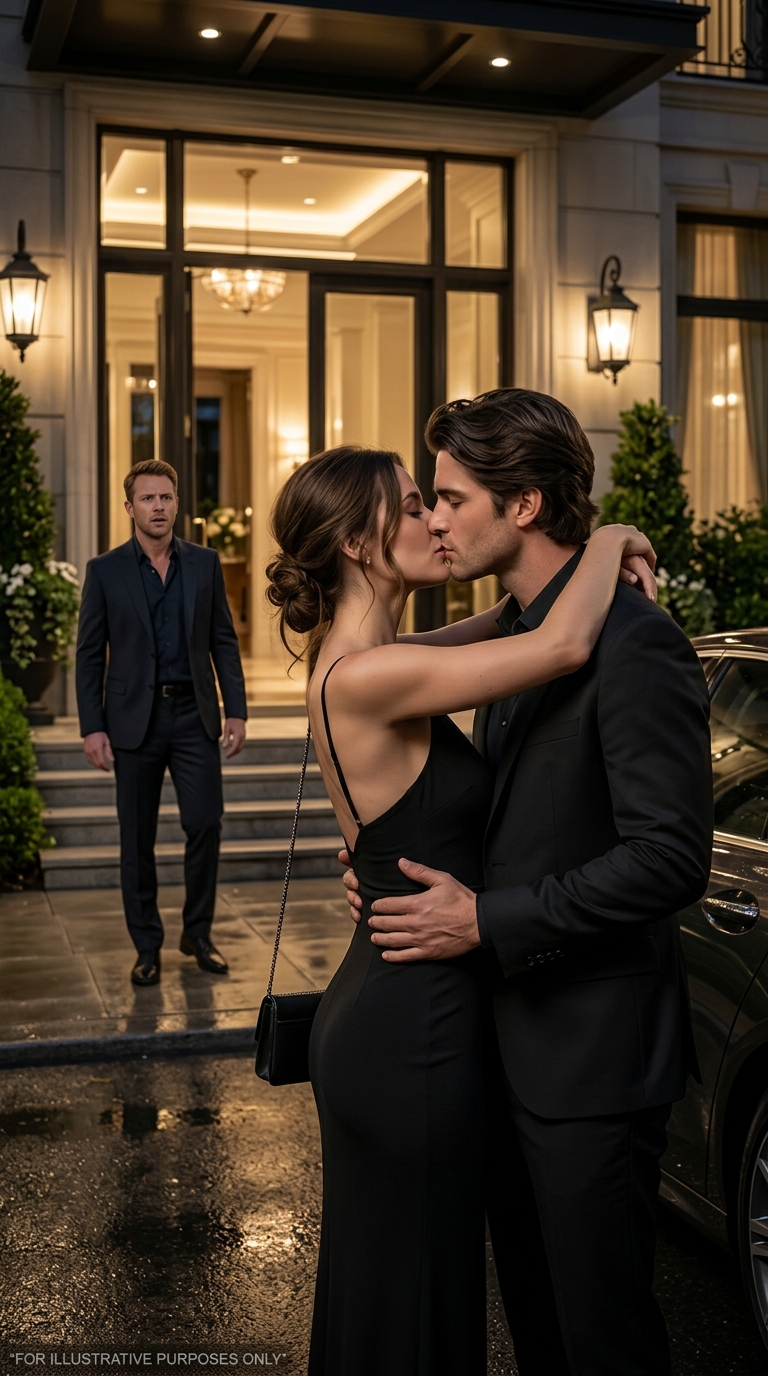
The board scheduled a review for the morning after the rehearsal dinner.
Adrien received formal notice through corporate counsel.
He ignored it.
He was too busy preparing his joke.
Maryanne reached the head table.
Adrien looked at her with irritation.
“If this is about Vanessa being upset, you can speak to me.”
Maryanne faced him.
“No, Mr. Vale. I cannot.”
“I am paying for this wedding.”
“No,” Maryanne said. “You are not.”
The sentence traveled through the ballroom.
Adrien laughed once.
“What is that supposed to mean?”
Vanessa removed the first document from her folder.
“The venue belongs to Hart Hospitality Trust.”
Adrien looked toward the hotel manager.
The manager remained near the wall, hands folded.
“The deposits came from Hart accounts,” Vanessa continued. “The vendor contracts were executed through the trust’s events division.”
“My office handled the wedding.”
“Your office sent requests.”
Maryanne’s tone remained professional.
“Ms. Hart approved them.”
Camille’s hand moved toward her bracelet.
Vanessa saw it.
“The bracelet,” she said.
Camille looked up.
“What about it?”
“Take it off.”
Adrien’s expression hardened.
“Don’t be petty.”
“It belonged to my mother.”
“It is jewelry, Vanessa. I can replace it.”
For a moment, every legal plan, every preserved document, and every careful decision disappeared beneath the pain of that sentence.
Adrien believed money could replace history because he had never learned the difference between price and value.
Vanessa looked directly at him.
“That is exactly why you should never have touched it.”
Maryanne opened her portfolio.
“The bracelet is item seventeen in the Elaine Hart memorial inventory. It is separate trust property. It was neither gifted nor transferred to Mr. Vale.”
She turned toward Camille.
“If you leave the hotel wearing it, security will document the removal as unauthorized possession.”
Camille’s face flushed.
She attempted the clasp once and failed. Her fingers had begun to tremble.
On the second attempt, the bracelet opened.
She placed it on the white tablecloth between two champagne glasses.
Without it, her wrist looked strangely bare.
Adrien stood.
“Enough.”
Vanessa lifted her eyes.
“No.”
He froze.
It was the first time she had said the word to him in years without explaining it.
“You’re embarrassing yourself,” he said.
“No. I embarrassed myself for years by defending you to people who understood you before I did.”
The room became silent again.
This time, it belonged to Vanessa.
Adrien lowered his voice.
“Tomorrow is our wedding.”
“Yes.”
“Board members are here. Investors are here. My family is here.”
“That is why tonight is appropriate.”
His eyes narrowed.
“Appropriate for what?”
Maryanne placed three documents on the table.
“Emergency governance review. Asset preservation order. Formal demand for records concerning vendor payments to Rosier Public Strategies and associated entities.”
Camille inhaled sharply.
Adrien turned toward her.
The look he gave her contained no tenderness.
Only warning.
Vanessa saw the calculation begin.
The man who had placed his hand on Camille’s shoulder in front of four hundred people was already deciding whether she could absorb the blame.
“This is a private event,” he said.
“It became a governance matter when you invited directors, investors, executives, and vendors,” Maryanne answered. “Several people in this room are witnesses to material statements.”
Adrien glanced toward the board members.
His general counsel had gone pale.
One director was already reading messages on his phone.
Adrien recovered the expression he used during hostile interviews.
“Vanessa is emotional. Weddings create pressure. I apologize to everyone for this unfortunate performance.”
For seven years, that tone had reduced her pain to atmosphere.
It invited other people to manage her rather than believe her.
Vanessa removed a small remote from the folder.
Behind Adrien, the ballroom screens went black.
Engagement photographs disappeared.
A financial timeline appeared.
No dramatic music.
No photographs of Adrien and Camille entering hotels.
Only dates.
Invoices.
Company accounts.
Board approvals.
Vendor registrations.
The Delaware shell company.
Camille’s agency.
Restricted medical education funds charged for private travel.
The room changed.
People leaned forward.
Adrien moved toward the nearest technician.
“Turn that off.”
Two hotel security officers stepped calmly into his path.
They did not touch him.
They did not need to.
The lead officer looked toward Vanessa.
“Let it continue,” she said.
The screen advanced to the message thread.
She still thinks the wedding is real.
Real enough to keep Hart people calm until the funding round closes.
Camille looked at Adrien.
“You said those payments were approved bonuses.”
“Be quiet.”
The command was automatic.
Several guests turned toward them.
Camille’s face altered.
She had mistaken participation in Adrien’s cruelty for protection from it.
Vanessa watched her understand that she had never been a partner.
Only the newest useful person in the room.
Adrien looked toward Vanessa.
“What is this?”
“Evidence.”
“You investigated me?”
“No. I stopped protecting you from the investigation your decisions created.”
His mouth tightened.
Being accused of greed did not frighten men like Adrien. Greed could be renamed ambition.
But being told his success had depended on the woman he mocked threatened the story upon which his identity rested.
“This is private correspondence,” he said.
“Sent from a company device,” Maryanne replied. “Recovered through an authorized compliance review after financial irregularities were reported.”
“Authorized by whom?”
“The independent investment committee.”
Adrien laughed.
“You are not on my investment committee.”
Vanessa held his gaze.
“I chair the trust controlling the bridge facility your company has relied on for eighteen months.”
The ballroom seemed to inhale.
Adrien sat slowly.
Vanessa watched the numbers move behind his eyes.
The bridge loan.
The hospital access.
The European licensing introduction.
The emergency trial funding.
The senator who returned his call after a Hart Foundation dinner.
One by one, the miracles of his career acquired Vanessa’s shadow.
His first reaction was not shame.
It was arithmetic.
“Why didn’t you tell me?” he asked.
Vanessa almost smiled.
The question contained its own confession.
“Because I wanted to know who you would become when you believed I had nothing important to offer.”
Adrien’s mother covered her mouth.
His father stared at the table.
Camille remained standing beside the chair Adrien no longer seemed to remember she occupied.
“I loved you,” Adrien said.
The words arrived late and asking for credit.
Vanessa remembered her mother’s memorial service, when Adrien spent fifteen minutes beside her before stepping away to answer Camille’s call.
She remembered her thirty-second birthday, when flowers selected by an assistant arrived while Adrien remained in Lisbon.
She remembered asking him directly whether he loved someone else and receiving a kiss on the forehead instead of an answer.
“No,” Vanessa said. “You loved being loved by me.”
Camille let out a broken breath.
“You told me she was clinging to you.”
Vanessa turned toward her.
“He lied to you too.”
Camille’s expression hardened defensively.
“Do not pretend we are the same.”
“We are not,” Vanessa said. “I did not help him move company money.”
The invoices remained visible behind them.
Camille’s agency appeared beside duplicate payments, private flights, and consulting fees billed to medical programs.
She looked toward Adrien.
He did not defend her.
He had already begun to separate himself from the evidence.
Adrien stood again.
“Even if Vanessa controls one financing facility, she cannot destroy the company without hurting patients and employees.”
There it was.
The hostage argument.
Whenever Adrien’s behavior faced limits, he placed vulnerable people between himself and consequences.
Patients.
Employees.
Innovation.
Family.
Future.
He used noble nouns as shields.
Maryanne removed another document.
“The patient preservation plan has already been approved by independent directors. Payroll is secured. Trial funding continues under third-party oversight. Vendor accounts connected to conflicts have been frozen.”
Adrien stared at her.
“You cannot suspend my authority.”
A chair moved near the investor tables.
Daniel Mercer, the company’s oldest independent director, rose.
He had silver eyebrows, a tired face, and the posture of someone who had ignored his conscience too long.
“We already did.”
Adrien turned.
“Daniel.”
“The emergency meeting concluded at six forty-five.”
“I was not present.”
“You were notified through counsel.”
“This dinner—”
“You chose the dinner.”
Adrien’s face darkened.
Daniel continued.
“You told us Vanessa was unstable. You told us she threatened the company because she was jealous. Compliance sent the records this afternoon.”
He looked toward Vanessa.
“She was the reason the company survived its last two cash crises.”
The statement altered the room more than the screens had.
Adrien could describe Vanessa’s actions as revenge.
He could not easily dismiss his own director confirming them.
His anger shrank.
“We can fix this,” he told Vanessa.
His voice softened with sudden intimacy.
“You are hurt. I understand. Camille was a mistake.”
Behind him, Camille made a small sound.
Adrien did not turn around.
“We should speak privately.”
Vanessa looked at the man she had loved.
His left cuff link was crooked.
She had given him those cuff links after his first successful clinical trial. He had cried in an elevator that night, hiding his face against her shoulder because he could not believe the company might survive.
Somewhere between that elevator and this ballroom, gratitude became something he could not tolerate.
“No,” she said.
A small word.
Seven years to reach her mouth.
The rehearsal dinner ended without a dramatic removal.
Adrien’s lawyers took him into a private conference room.
Camille was escorted separately to retrieve her belongings and surrender the bracelet formally to hotel security.
Guests left in clusters, speaking softly beneath the chandeliers.
Vanessa exited through a private service corridor with Maryanne.
She remained composed until the elevator doors closed.
Then her body began to shake.
Not elegantly.
Not with a single cinematic tear.
She pressed one hand to her mouth and folded forward as seven years of controlled grief moved through her chest.
Maryanne stood beside her.
She did not say Adrien did not deserve her.
She did not promise Vanessa would feel better tomorrow.
She handed her a linen handkerchief and waited.
When Vanessa could breathe again, she looked at her reflection in the elevator’s brass wall.
Her dress remained perfect.
Her eyes did not.
“I thought I would feel free.”
“Freedom often arrives before the body believes it,” Maryanne said.
Vanessa gave one broken laugh.
“My mother would have said that.”
“Your mother would have said it less politely.”
That drew another laugh.
Small.
Real.
They worked through the night in a conference suite.
The wedding website was removed.
Vendors were notified.
Security access was revised.
The marriage license had not yet been filed because the ceremony had not occurred, but deposits, guest travel, and contracts still had to be resolved.
Vanessa instructed the hotel to pay every worker in full.
The flowers would be donated to hospitals and assisted-living facilities.
The food prepared for the reception would be redirected to shelters and staff meal programs.
She did not want the collapse of her wedding to become another person’s lost wages.
Adrien began calling at 9:20 the next morning.
At 9:22, he wrote:
Do not make a permanent decision from temporary anger.
At 9:31:
You will look cruel if you humiliate me today.
At 9:40:
I know you still love me.
That message hurt because it was partly true.
Love did not vanish when summoned by evidence.
It remained in muscle memory.
Vanessa still knew he disliked pulp in orange juice. She still noticed when he rubbed his left hand, an old sign that he had not slept. She still remembered the young man outside the library.
But love was not a legal obligation.
It was not permission.
It was not a debt requiring her to continue financing someone who spent her devotion as though it belonged to him.
At ten fifteen, Adrien found Maryanne in the hotel lobby.
Vanessa watched unseen from the mezzanine behind a screen of white orchids.
He had not changed clothes. His tuxedo shirt was open at the throat. His hair had lost its careful shape.
For a dangerous second, exhaustion made him resemble the man she once knew.
Then he spoke.
“Tell her I will forgive this if she stops now.”
Maryanne’s face did not change.
“You are not in a position to forgive Ms. Hart.”
“You people think money makes you untouchable.”
“No. We believe records make people accountable.”
“She loved me for seven years. She needs me.”
The words reached Vanessa more cleanly than any message.
She needs me.
Not I hurt her.
Not I betrayed her.
Not she knows me.
Needs me.
Vanessa stepped out from behind the orchids.
Adrien saw her and smiled with immediate relief.
“There you are.”
He held out one hand.
“Come down. We can still control the optics.”
Vanessa descended the staircase.
The lobby remained beautiful in the indifferent way expensive places often did. White roses filled tall vases. Rainwater shone on the marble near the entrance. A pianist rehearsed in the lounge and stopped after one wrong note.
“The optics,” Vanessa repeated.
“You know what I mean.”
“I do.”
When she reached the bottom step, Adrien lowered his voice.
“I was angry. You blindsided me.”
“I exposed you.”
“Fine. You exposed me. Are you satisfied?”
“No.”
“Camille is gone. The board is overreacting. My attorneys can unwind this.”
He stepped closer.
“I do not want a war with you.”
“Because you care about me?”
He hesitated.
Only one second.
Long enough.
“Because we built a life.”
Vanessa looked at him fully.
His eyes were still the color she once described as winter glass. His face remained handsome. But she could no longer find the man she had been grieving.
Perhaps he had existed.
Perhaps love had made her generous with the evidence.
“No,” she said. “I built shelter around your ambition and called it a life.”
Adrien flinched.
For once, Vanessa did not apologize for the truth landing hard.
The wedding was formally canceled at noon.
There was no replacement ceremony.
No instant new romance.
No public kiss designed to wound Adrien back.
Vanessa understood that turning another person into a weapon would reproduce the same cruelty she was trying to leave.
At four, she entered the chapel alone.
Only family trustees, several close friends, foundation staff, and a few company directors remained.
The elaborate aisle arch had been dismantled. Adrien’s monogram was removed. White flowers lined the room without names attached to them.
At the front stood a narrow table holding three things.
The canceled marriage license.
The corporate preservation agreement.
Elaine Hart’s bracelet.
Vanessa did not wear her wedding gown.
She wore a simple cream suit and flat shoes.
Maryanne stood beside the retired judge who had been scheduled to officiate the marriage.
Daniel Mercer sat in the front row.
Near the back stood Dr. Elias Ren, director of pediatric surgery at one of the hospitals funded by the Hart Foundation.
Elias had known Vanessa for five years.
He was calm without being passive, direct without enjoying confrontation. During medical emergencies, his voice became quieter. He had never asked Vanessa to explain her wealth, never treated her access as a resource for his career, and never mistaken protection for possession.
He did not approach her.
He waited.
The judge addressed the room.
“No marriage will occur here today. Ms. Hart has requested that this gathering be used to confirm legal protections for the programs and employees affected by the corporate review.”
Vanessa stepped forward.
Her hands were cold.
She placed them on the edge of the table.
“For seven years,” she said, “I believed loyalty meant protecting a person from the consequences of his worst decisions.”
The room remained still.
“I was wrong.”
She looked toward Daniel and the directors.
“Vale Medical will continue operating under independent oversight. Patient trials will not be interrupted. Employees will be paid. No hospital program will become collateral damage for one executive’s conduct.”
Daniel lowered his head.
Vanessa continued.
“I also need to acknowledge my own responsibility. I stayed silent too long. I allowed personal loyalty to influence professional oversight. I protected Adrien because I believed exposure would harm the company.”
She touched the bracelet.
“Silence did not prevent harm. It gave harm privacy.”
Maryanne looked down at her notes.
Elias remained near the back, his attention steady.
“The trust will fund five independent compliance fellowships,” Vanessa said. “They will support women working in medical ethics, nonprofit finance, and patient advocacy. Their work will not be glamorous. It may never become public. That is exactly why it must be protected.”
No one applauded immediately.
Vanessa was grateful.
The moment did not need celebration.
It needed weight.
Afterward, she walked onto the hotel balcony.
The rain had stopped.
The city shone beneath a gold late-afternoon sky. Water dripped from the stone railing. Below, buses moved through traffic and pedestrians stepped around puddles.
Elias joined her carrying two glasses of water.
“No champagne?” she asked.
“You have had enough objects handed to you for symbolism.”
She laughed.
The sound surprised her.
He stood beside her without closing the space.
“Are you all right?”
“I don’t know.”
“That is a real answer.”
“I’m grieving someone who may never have existed.”
Elias nodded.
“That is still grief.”
“And I’m relieved.”
“That is still allowed.”
Vanessa looked at him.
“You make room for complicated answers.”
“You have lived through complicated years.”
Inside, the pianist began playing a piece Elaine Hart loved.
Vanessa listened.
She did not ask Elias to dance.
Not that day.
Healing did not begin with romance.
It began with sleep.
With food she could taste again.
With mornings when she did not check Adrien’s mood before deciding whether she was safe.
The corporate investigation lasted ten months.
Camille cooperated after learning Adrien planned to attribute the vendor scheme entirely to her agency. She surrendered emails, voice recordings, and a spreadsheet Adrien used to track inflated invoices.
Her cooperation did not erase her responsibility.
She entered a civil settlement, returned a substantial portion of the fees, and accepted a temporary ban from serving as an officer of any company receiving regulated medical funds.
Adrien resigned six weeks after the rehearsal dinner.
Publicly, he called it a personal decision.
Regulatory filings described the departure as separation following internal review.
His voting authority remained suspended. Several assets were frozen pending litigation. The board recovered funds through clawback provisions tied to executive misconduct.
He was not arrested in the ballroom.
He did not lose every dollar overnight.
Consequences arrived through conference rooms, filings, interviews, and doors that stopped opening.
His name disappeared from panels.
Journalists who once returned his calls asked for written statements instead.
Investors who praised his risk tolerance began describing him as a governance concern.
Vale Medical survived.
That mattered more to Vanessa than Adrien’s humiliation.
The company appointed an interim chief executive, expanded compliance oversight, and created protections allowing employees to report executive misconduct without routing complaints through executive offices.
Daniel Mercer publicly acknowledged that the board had failed.
“We confused charisma with competence,” he said during a shareholder meeting. “We treated Vanessa Hart’s quiet intervention as support for Adrien rather than evidence that Adrien required intervention.”
Vanessa respected the honesty.
She did not excuse the delay.
Adrien attempted to control the public story.
A leaked voice memo described Vanessa as vindictive, emotionally unstable, and manipulated by family advisers.
The recording contradicted statements he had made during the investigation.
Maryanne forwarded it to counsel.
No public response followed.
“Why aren’t we answering?” Vanessa asked.
“Because boring documentation is stronger than emotional theater,” Maryanne said. “He is trying to make this a romance scandal. We are keeping it a governance matter.”
The Hart family office released one statement.
Patient programs continue under independent oversight. Payroll and research obligations are secured. The review concerns executive conduct, conflicts of interest, and misuse of restricted funds.
Nothing about Camille.
Nothing about the bracelet.
Nothing about seven years of love.
Boring protected people.
Vanessa learned to value boring.
She began therapy two weeks after the canceled wedding.
Dr. Lena Morris maintained a small office overlooking a brick courtyard. There were no inspirational quotations on the walls. The chairs were made of brown wool that scratched Vanessa’s wrist.
During the first session, Vanessa described Adrien’s conduct with the precision of a legal deposition.
Dr. Morris listened.
Then she asked, “What did staying protect?”
“The patients.”
“At the end, yes. What did it protect before that?”
Vanessa folded her hands.
“The relationship.”
“Was there still a relationship?”
The question made her angry.
She carried the anger for three days before realizing it was grief.
During another session, Dr. Morris asked why Vanessa had hidden so much of her authority from Adrien.
“I wanted to be loved without it.”
“And were you?”
“At first.”
“Did remaining hidden preserve that love?”
Vanessa stared toward the courtyard.
“No.”
“What did it preserve?”
“His ability to underestimate me.”
That answer hurt differently.
Privacy had not protected Vanessa from being used.
It had prevented her from being fully known.
Recovery arrived through ordinary actions.
She changed the emergency contact on her medical forms.
She removed Adrien’s clothes from the penthouse and had them delivered through counsel.
She returned the engagement ring to his attorney because keeping it felt like allowing the performance to remain in her home.
She moved six months later.
The new apartment overlooked Riverside Park. It had uneven wooden floors, a narrow kitchen, and windows that caught morning light.
She placed Elaine’s bracelet in a glass drawer beside family photographs.
She did not lock it away.
Elias remained present without pressing closer.
He sent books when she was recovering from an illness. He joined foundation meetings when medical expertise was useful. He invited her to coffee twice and accepted her refusal without changing his warmth.
Nine months after the canceled wedding, Vanessa asked him to dinner.
They ate at a quiet restaurant in Brooklyn where no one recognized her.
There were no photographers.
No investors.
No family representatives.
Elias asked whether she wanted to discuss the foundation or avoid it.
“Avoid it for one hour.”
“All right.”
They talked about terrible apartment kitchens, books neither of them finished, and the strange seriousness with which children explained dinosaurs.
When the server brought the check, Elias placed his card down.
Vanessa raised an eyebrow.
“I can pay for dinner.”
“I know.”
“Then why did you take the check?”
“Because I invited you.”
The answer contained no performance.
Vanessa let him pay.
Their relationship developed slowly.
There were boundaries, pauses, and difficult conversations.
Vanessa sometimes withdrew without explanation when affection frightened her. Elias did not chase her through locked emotional doors, but he did not pretend not to notice them either.
“You disappear when you think you might need someone,” he told her once.
“I don’t need rescuing.”
“I did not say you did.”
“What are you saying?”
“That independence and isolation are not the same thing.”
She disliked the sentence because it was true.
A year after the investigation began, Adrien requested a meeting.
Maryanne advised against it.
Dr. Morris asked what Vanessa hoped to receive.
“Nothing,” Vanessa said.
“Then why attend?”
“To learn whether that is true.”
They met in a conference room at the Hart family office.
Glass walls.
A polished table.
Counsel nearby.
Adrien looked older, though only eighteen months had passed. His suit fit, but he no longer seemed able to fill it with certainty.
“Thank you for seeing me,” he said.
“You asked four times.”
“I deserved that.”
Vanessa waited.
Adrien looked down at his hands.
“I have rehearsed this conversation.”
“Then it probably won’t be honest.”
He gave a faint, painful smile.
“You still do that.”
“Do what?”
“Find the sentence I’m avoiding.”
Vanessa did not answer.
He took a breath.
“I resented you.”
She remained still.
“Not because you failed me. Because you remembered me before success. You remembered the unpaid engineers, the bad apartment, the panic attacks before investor meetings. Camille made me feel like I had always been the man on the magazine covers.”
“And I didn’t.”
“You knew the truth.”
“Yes.”
“I made that feel like an insult.”
Vanessa watched him.
It was the first accurate explanation he had offered.
“I thought needing you made me smaller,” he said.
“So you made me smaller first.”
His eyes reddened.
“Yes.”
The apology came slowly.
For the affair.
The money.
The bracelet.
The joke.
The use of her family’s financing while describing her as dependent.
He did not ask forgiveness immediately.
That mattered.
“I loved you,” he said. “But I loved you badly.”
Vanessa looked through the glass wall toward the city.
“No. You loved what my devotion allowed you to avoid.”
He accepted the sentence.
After a while, he asked, “Do you hate me?”
“No.”
“Is that supposed to comfort me?”
“It isn’t for you.”
He nodded.
When the meeting ended, Adrien stood but did not move toward her.
“I hope Elias is good to you.”
Vanessa met his eyes.
“He is good beside me. That is different.”
Adrien looked as if he understood.
Perhaps he did.
Perhaps understanding arrived too late to matter but early enough to change what remained of his life.
Vanessa never found out.
Two years after the canceled wedding, the Elaine Hart Foundation hosted a medical ethics summit at the Lucent Crown.
The same ballroom.
Different purpose.
No white roses.
No engagement photographs.
No head table designed to elevate one man above everyone else.
The room held compliance officers, nurses, hospital administrators, researchers, grant managers, and young attorneys whose work rarely appeared in photographs.
Vanessa stood at the podium wearing a dark green suit.
Elaine’s bracelet rested on her wrist.
Maryanne sat in the front row with a legal pad.
Daniel Mercer prepared to speak about board accountability.
Elias entered quietly during the opening remarks, still wearing hospital scrubs beneath a dark jacket. He remained at the back.
Vanessa saw him.
Warmth moved through her without fear.
“For years,” she began, “I believed quiet loyalty was always noble.”
The room listened.
“I was wrong. Loyalty without boundaries becomes permission. Silence without truth becomes shelter for people who misuse trust.”
She spoke about governance.
Restricted funds.
Executive charisma.
The danger of allowing patient programs to depend on one individual’s reputation.
She spoke about women whose labor disappeared behind public victories.
She spoke about the simple courage of asking for records when everyone else preferred a convenient story.
Near the end, she touched the bracelet.
“My mother believed power should leave fingerprints only where protection was needed. I once thought that required invisibility.”
Vanessa looked across the room.
“Now I believe it requires accountability. We do not use power to humiliate. We use it to prevent humiliation from becoming a system.”
Maryanne lowered her eyes and wiped one of them.
The foundation announced five fellowships in medical ethics, nonprofit finance, and patient advocacy.
After the speech, a young woman approached Vanessa holding a folder against her chest.
Her navy suit was slightly too large in the shoulders.
“My name is Maya,” she said. “I applied for the rural clinic fellowship.”
“What do you want to change?”
Maya began speaking about billing transparency, patient transport, and the way small clinics lost funding when paperwork failed to reflect the reality of their work.
Her voice strengthened as she spoke.
Vanessa listened.
She asked questions.
She took notes.
Across the room, Elias watched without interrupting.
Life did not rebuild itself through one public reversal.
It rebuilt through meetings.
Signatures.
Therapy sessions.
Meals that remained warm because no one arrived three hours late.
Mornings when Vanessa woke without first calculating another person’s mood.
That winter, she returned to the Lucent Crown balcony after a foundation dinner.
The city glittered below. Cold air moved between the buildings. Vanessa tucked her hands into the sleeves of her coat.
Elias offered his arm.
She took it.
“Thinking about that night?” he asked.
“A little.”
“Good memory or bad?”
Vanessa considered the question.
Below them, a bus stopped at the corner. A woman lifted a sleeping child from a stroller while another passenger held the door.
Ordinary tenderness continued everywhere.
“A high place,” Vanessa said.
Elias looked at her.
“The balcony?”
“No. That year.”
He waited.
“Not because it was happy. Because I could finally see everything from there. What I had survived. What I had mistaken for love. What I still needed to protect.”
“And where you wanted to go?”
She smiled.
“Yes.”
Elaine’s bracelet caught the winter light.
Once, it had represented theft.
Now it represented return.
Adrien believed seven years of love meant Vanessa could not leave.
He misunderstood love.
Seven years had taught her endurance.
Betrayal taught her precision.
Leaving taught her that dignity did not arrive when a man regretted losing her.
It arrived when she stopped negotiating with the part of herself that already knew the truth.
Elias turned toward the ballroom doors.
“Ready to go home?”
Vanessa looked once at the city.
Then she slipped her hand into his.
“Yes.”
They walked inside together.
Not because she needed someone to lead her away.
Because she had finally learned that walking beside another person did not require disappearing behind him.