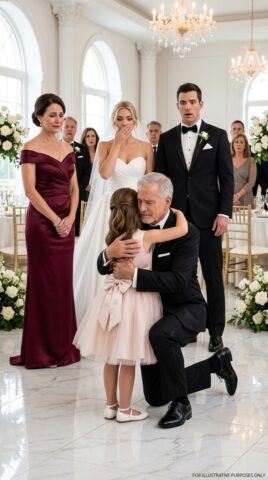
My Father-in-Law Married an 18-Year-Old—Then We Heard Her Screaming Behind a Locked Door…
My father-in-law announced his wedding over Sunday dinner like he was ordering dessert. The bride was eighteen. He was almost seventy. Then he locked her in my dead mother-in-law’s hospice room, shut off the cameras, and ignored the screams that came from behind the door every night.
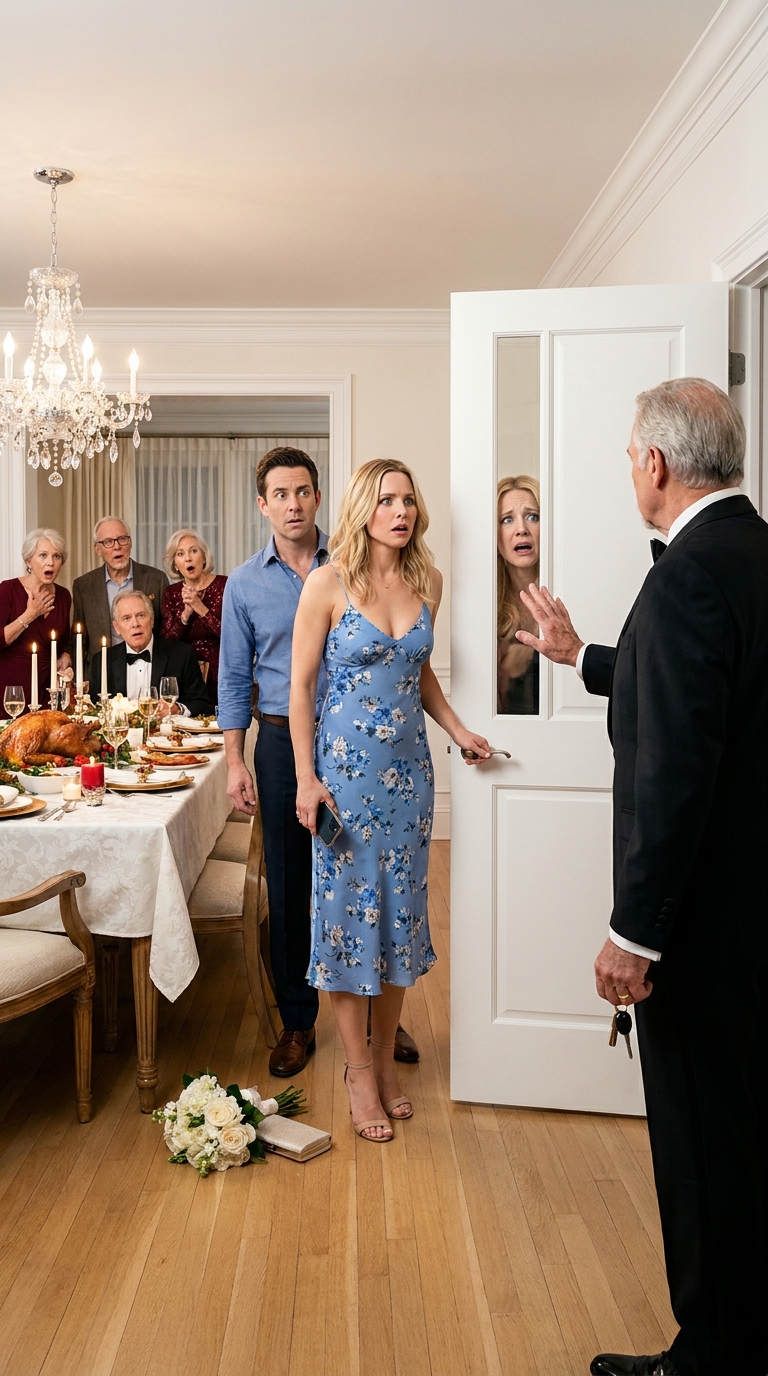
PART 1 — THE WEDDING ANNOUNCEMENT
“I’m marrying an eighteen-year-old,” my father-in-law said, right under his dead wife’s portrait.
Nobody moved.
Not my husband David.
Not his sister Hannah.
Not Martha, the housekeeper, who had just carried in a platter of roast beef and garlic mashed potatoes like this was supposed to be a normal Sunday dinner in a rich Seattle suburb.
The only sound was the memorial candle flickering on the mantle beneath Catherine Turner’s framed photo.
Catherine had been dead less than a year.
And Thomas Turner, her widower, nearly seventy, CEO of Turner Smart Tech, had just announced he was bringing a teenage bride into the family home.
Hannah laughed first.
It was not a happy laugh. It was sharp enough to cut crystal.
“Dad,” she said, setting down her wineglass, “please tell me this is a stroke. Because that would be less humiliating.”
David’s fork hit his plate.
“What did you just say?”
Thomas didn’t blink.
“Her name is Lily Collins. She is eighteen. The ceremony will be private. End of the month.”
The dining room went cold.
Outside, rain tapped against the glass roof of the waterfront estate. Inside, every motion sensor, every camera, every smart lock worked perfectly, because Turner Smart Tech sold security systems to half the Pacific Northwest.
The house had no blind spots.
That was the family joke.
Even a raccoon crossing the driveway would get logged, tagged, and timestamped.
Yet Thomas sat at the head of the table like a man hiding a body in plain sight.
I looked at David. His jaw was tight. His hand had curled into a fist beside his plate.
“Are you in love with her?” he asked.
Thomas lifted his water glass.
“No.”
Hannah’s mouth opened.
Robert, her husband, finally spoke.
Robert had a talent for entering a conversation like he was placing a chess piece on a board.
“Dad,” he said softly, “no judgment, of course. But corporate partners may react badly if they hear the CEO is marrying a teenager.”
“How thoughtful,” I said. “Always nice when morality arrives with a shareholder memo.”
Robert smiled at me.
He hated when I noticed things.
I was the CFO. I noticed everything.
Bank transfers. Expense reports. Overdrafts. Men who smiled too smoothly.
Robert continued, “Catherine’s shares should probably be protected before anyone new enters the picture.”
There it was.
Not concern.
Not grief.
Inventory.
Thomas turned his eyes on him.
“Do not calculate my family at my dinner table.”
Robert lowered his head.
“Of course. I only meant—”
“You meant money,” I said.
Hannah snapped toward me. “And we’re supposed to ignore it? Some random girl gets to walk in here wearing a white dress and maybe walk out owning half the company?”
David stood so fast his chair scraped the floor.
“This isn’t about the company. This is about Mom.”
Thomas’s face tightened.
Hannah pointed toward the hallway.
“Is she moving into the guest suite?”
Thomas looked at me.
“Nancy, tomorrow have the room at the end of the first-floor hall prepared.”
The room went silent again.
That room had been Catherine’s hospice room.
Medical bed. Air purifier. emergency button. Side door to the garden for nurses. Catherine had spent her last months there while Martha made chicken broth and David slept on the hallway couch, refusing to leave his mother alone.
David stared at his father.
“You’re putting her in Mom’s room?”
Thomas did not apologize.
“Yes.”
Hannah pushed away from the table.
“That’s disgusting.”
Thomas stood.
“The ceremony is at the end of the month. Attend or don’t.”
Then he walked past Catherine’s portrait without looking at it.
That was the first time I understood something was wrong.
Not immoral.
Wrong.
Because Thomas Turner cared about reputation more than most people cared about oxygen. He didn’t get photographed at messy charity galas. He didn’t drink in public. He didn’t send sloppy emails. He built a billion-dollar company by making sure every door locked, every record matched, and every weakness stayed buried.
So why would a man like that choose the ugliest scandal available?
Two weeks later, Lily arrived in a black SUV.
She stepped out wearing a plain white dress and cheap flats.
No diamond.
No blowout.
No rich-girl smile.
She carried a brown canvas duffel bag like everything she owned could fit inside it.
The relatives whispered before she even reached the porch.
“Good Lord, she looks like a freshman.”
“Not even a legal wedding, I heard.”
“Money makes men stupid.”
Lily heard them.
Her shoulders tightened, but she kept her eyes on the driveway.
Hannah stood beside me in a cream Nordstrom dress and gold bracelet, looking Lily up and down.
“Great costume,” she muttered. “Very innocent farm girl.”
Robert leaned close to her.
“The quiet ones are usually the best trained.”
I turned my head.
“Say that again louder, Robert. Let everyone know you’re trash with cufflinks.”
His smile twitched.
Thomas led Lily inside.
When she passed Catherine’s portrait, she stopped.
For one second, nobody breathed.
Then Lily lowered her head.
Not like a bride being polite.
Like a girl apologizing to a dead woman.
David saw it and looked away.
The ceremony took twelve minutes.
No music. No flowers. No marriage license.
Thomas only said, “This is Lily. She will live in this house. Treat her with respect.”
A cousin asked, “Have you filed anything legally?”
Thomas replied, “Her paperwork is complicated.”
That made it worse.
By afternoon, staff carried Lily’s duffel bag toward Catherine’s old room.
David blocked the hallway.
“Don’t do this.”
Thomas said, “Move.”
Lily stood behind him, pale and thin, her fingers locked around the sleeves of her cardigan.
She opened her mouth like she wanted to speak.
Thomas glanced back once.
She lowered her head.
That was when I stopped seeing her as a gold digger.
Gold diggers smile.
Lily looked like someone being delivered to a sentence.
PART 2 — THE LOCKED ROOM
That night, Thomas shut off the cameras outside her door.
Phil, our lead IT manager, arrived with a tablet and an uncomfortable face.
Thomas gave the order in the living room.
“Lower hallway cameras to privacy mode. Disable motion sensors. Change access to my admin account only.”
David stepped forward.
“Our company sells security to the public, and you’re creating a blind spot in your own house?”
Thomas didn’t look at him.
“My house. My business.”
Robert, of course, found the match and dropped it into gasoline.
“An honest man doesn’t fear the light.”
Thomas’s eyes cut toward him.
Robert looked down at his phone.
Smart man. Cowardly, but smart.
By dinner, meals were being left outside Lily’s door.
Pureed soup. Warm water. Pills in a small plastic cup.
Martha brought the tray back half-full and whispered to me in the kitchen, “Mrs. Turner, that girl does not look like a bride. She looks like a patient.”
I had already seen the invoices.
Sterile gauze.
Heart monitor.
Neurology consult.
Private doctor visits after midnight.
Nothing about this looked like romance.
Everything looked like a cover-up.
Four nights later, I heard it.
A glass breaking.
A metal tray hitting the floor.
Then Lily screaming from behind the locked door.
“It hurts. I can’t take it.”
David came out of our bedroom at the same time I did.
He stared down the dark hallway.
Inside the room, Thomas barked, “Stay still. Breathe. Do not scratch.”
Then Lily cried one word.
“Dad.”
David didn’t hear it.
I did.
And it changed everything.
PART 3 — THE DOOR BREAKS
When Lily tried to run, she wasn’t carrying jewelry. She was carrying pills, torn papers, and a dead woman’s photo.
I found her at the garden door the next evening.
Rain blew sideways across the patio. Lily stood barefoot in a gray sweatshirt, clutching that cheap duffel bag to her chest.
When she saw me, she flinched.
“Please don’t call him,” she whispered.
“Him?”
“Mr. Turner.”
Not husband.
Not Thomas.
Mr. Turner.
I stepped closer slowly, like approaching a wounded animal.
“Where are you going?”
She unzipped the bag with shaking fingers.
Inside were three shirts, faded jeans, pill packs, a medical folder, torn documents, and a photo of a thin woman with tired eyes.
“My mom,” Lily said. “She died.”
No performance. No manipulation.
Just two words dropped on wet concrete.
I looked at her wrist.
Old bruises. Needle marks. Finger-shaped discoloration half hidden under her sleeve.
Before I could ask anything, Thomas’s voice snapped from behind me.
“Lily.”
She went rigid.
Thomas came out under the patio lights, shirt damp, face wrecked with panic.
Not anger.
Panic.
“I don’t want this anymore,” Lily said. “Everyone hates you. They hate me. Please let me leave.”
Thomas took her wrist, firm but not cruel.
“Inside. Now.”
Her bag fell. Pills scattered across the patio.
When I picked up the medical folder, I saw three words before Thomas snatched it from my hand.
Neurological disorder. Hematology treatment.
That night, I couldn’t sleep.
By morning, Robert was back in our living room with Starbucks coffee and fake concern.
Hannah stood near Catherine’s portrait, eyes swollen, voice bitter.
“She gets breakfast delivered to Mom’s room now?”
I said, “Lily is sick.”
Hannah laughed.
“Sick with what? A wedding addiction?”
Robert touched her shoulder.
“Your feelings are valid, honey. If Dad won’t explain, we need to protect what your mother left you.”
I looked at him.
“What exactly are you protecting, Robert?”
He gave me his soft executive smile.
“Family assets.”
“Funny. Greed always wears a nicer suit when it calls itself family.”
His smile thinned.
At the office, I pulled records tied to Robert.
His startup was failing.
Loans overdue.
Investors circling.
Then I found an $8,000 payment from one of Robert’s shell companies to Megan, Phil’s wife.
Phil, the man who controlled the smart home system.
The timing was perfect.
Too perfect.
Two days later, Hannah called David in a panic.
She had received an anonymous text.
Dad is hiding something horrific in the room.
If the family doesn’t act, the board will know by Friday.
In the background, Robert said, “Tell David we need proxy papers ready.”
There it was.
Not rescue.
Ambush.
The next morning, Hannah arrived at the estate in a black dress.
Robert came behind her carrying a leather briefcase.
Normal people visiting family do not bring briefcases.
Predators do.
Thomas sat in the living room, gray-faced from no sleep. David stood by the window. I stood near the mantle, watching Robert’s hands.
Hannah spoke first.
“Tell us what’s happening in that room.”
Thomas said, “I’m handling it.”
David snapped, “You’ve handled it so well someone is threatening to leak it to the board.”
Robert placed his briefcase on the coffee table.
“I drafted a temporary proxy authorization. Just in case Thomas needs to step away.”
I almost laughed.
“Of course you did. Nothing says family emergency like preprinted paperwork.”
Thomas stared at the briefcase.
“I’m not signing anything.”
Before anyone could answer, a scream ripped through the hallway.
“Save me!”
David ran first.
We all followed.
The smart lock flashed red when he pressed his thumb.
Access denied.
He punched in the backup code.
Invalid.
Inside, Lily screamed again.
Thomas shouted, “Lily, look at me. Stop scratching. Hold still.”
David grabbed a brass floor lamp.
I shouted his name.
He didn’t stop.
The first strike cracked the glass panel.
The second crushed the lock housing.
The third sent metal and plastic across the hardwood.
Then David kicked the door open.
The room was not a bedroom.
It was a clinic.
Lily was on the medical bed, lips blue, arms jerking, fingernails tearing at her own wrists. Thomas was holding her down, not hurting her, stopping her from hurting herself.
On the nightstand: gauze, pillbox, thermometer, heart monitor, medical chart.
No champagne.
No silk sheets.
No romance.
Just a sick girl fighting her own body while an old man looked terrified.
Hannah froze.
Then she saw the small safe under the desk.
It was open.
Inside were a DNA test, an old letter, a medical trust draft, and an unsigned will amendment.
Her horror turned back into suspicion.
“I knew it,” she shouted. “You’re signing everything over to her.”
David spun around.
“She is having a medical emergency. Shut up.”
Lily’s eyes opened halfway.
She looked at Hannah, then at David.
“Please,” she whispered. “Don’t blame Dad.”
The room stopped.
Thomas went still.
Lily reached for his sleeve.
“Dad,” she said again. “Tell them. I don’t want to be your young wife anymore.”
David stepped back like someone had hit him.
“Dad?”
Thomas sat on the edge of the bed.
For the first time since I married into the Turner family, he looked small.
“She is not my wife,” he said.
Then he looked at David and Hannah.
“Lily is my biological daughter.”
Nobody spoke.
The rain beat against the glass roof like fists.
Hannah covered her mouth.
David stared at Lily, then at his father.
“What did you do?”
Thomas pulled out the letter.
Nineteen years earlier, during a broken period in his marriage, Thomas had an affair with a woman named Diane. He ended it. Diane disappeared. He never knew she was pregnant.
Diane raised Lily in rural Oregon.
When Lily became seriously ill, Diane moved in with her brother Carl.
Carl took their IDs, forged debt papers, used Lily’s illness as leverage, and threatened to hand Lily over to a much older man in town to settle fake debts.
Diane died a month ago.
Her final letter reached Thomas.
He ordered a DNA test.
Paternity probability: 99.9%.
David read the paper twice.
Hannah sank into a chair.
Thomas rubbed his face with both hands.
“I staged the fake wedding to scare Carl off,” he said. “If Lily was my daughter, Carl could threaten me publicly. If she was my wife, it would be ugly, but legally harder for him to drag her back.”
David let out a dead laugh.
“So your solution was to let the whole world think you married a sick eighteen-year-old?”
Thomas didn’t defend himself.
“I was a coward.”
That was the first honest sentence he had said in weeks.
Lily whispered, “I don’t want anyone’s money. I just want my ID back.”
David looked at her for a long time.
“I can’t call you my sister tonight,” he said.
Lily nodded.
“I know.”
“But nobody is taking you back to Oregon.”
For the first time, Lily’s shoulders dropped.
Not safe yet.
But closer.
PART 4 — THE REAL THIEF
Robert tried to steal the company while Lily was still bandaged in bed.
The next morning, Carl Collins arrived at the estate with two men behind him and a manila folder under his arm.
He looked cheap and confident, which is a dangerous combination.
Thomas called Attorney Harrison.
Carl slapped papers on the coffee table.
“System logs,” he said. “Hallway cameras off. Girl locked inside. Medical alarm silenced. No exits recorded for days.”
Hannah went pale.
The cropped logs looked awful.
If you didn’t know about Lily’s seizures and Dr. Bennett’s visits, it looked like false imprisonment.
Carl grinned at Thomas.
“Pay what you owe, or this goes to your board by five.”
Thomas stood.
“I will not give you cash.”
Carl pulled another document from his pocket.
“Then I’ll take Lily. She signed power of attorney.”
I grabbed the paper before Thomas could.
The signature was shaky. The date matched a week Lily had been heavily medicated.
I looked at her.
“Did you sign this?”
Lily shook so hard Martha had to hold her up.
“I don’t remember. He made me sign so many things. He said Mom would be thrown out of the clinic if I didn’t.”
Carl pointed at her.
“Crazy little liar.”
David stepped between them.
“Lower your voice before I lower it for you.”
Robert sighed.
Perfect timing. Perfect tone.
“Dad, fighting this publicly is risky. The fake wedding, the data, the secrecy. If this leaks, partners will pull out.”
I turned.
“What are you suggesting?”
Robert opened his briefcase and removed a bound document.
“Temporary proxy authorization. Hannah can hold part of the family voting power while Thomas handles legal exposure.”
Hannah stared at him.
“When did you draft that?”
Robert patted her hand.
“I’m looking out for you.”
I took the document and read fast.
Page one: crisis management.
Page two: board stability.
Page three: 28% voting rights.
Duration: three years.
Fine print: proxy holder may designate an acting representative.
I looked at Robert.
“And the acting representative would be you.”
His face cooled.
“Standard flexibility.”
“No,” I said. “A back door.”
David read the papers and his face hardened.
Carl stood near the door, smirking.
I looked at him, then Robert.
One man brought blackmail.
The other brought paperwork.
Same morning.
Same pressure point.
Same target.
I turned to David.
“We need the original server logs.”
Robert objected too fast.
“Why leave now?”
“Because cropped truth is how cowards lie.”
At Turner Smart Tech, David and I went straight to the server room.
The admin pulled the estate backups.
Yes, cameras had been disabled.
Yes, sensors were off.
But the missing lines told the real story.
Medical emergency alarm triggered.
Smart medicine cabinet opened.
Neurological medication removed.
Heart monitor anomaly.
Garden side door accessed by Dr. Victor Bennett’s temporary medical code.
Carl’s data wasn’t fake.
It was sliced.
Then we pulled access history.
Phil’s account had exported residential data at 1:23 a.m., wiped front-end history seven minutes later, and sent files to an external IP.
I cross-checked the payment.
$8,000.
From Manurva Consulting.
Registered to Robert.
Phil folded in ten minutes.
He sat in the server room chair, sweat on his upper lip.
“Robert said Hannah needed it to protect her mother’s shares. He told me to filter out the medical data. I didn’t know Carl would get it.”
David almost lunged.
I blocked him.
“No. We fight paper with paper.”
Phil wrote a confession.
When we returned to the estate, everyone was in the living room.
Thomas looked exhausted.
Hannah sat far from Robert now.
Carl leaned by the window, impatient.
Robert stood as we entered.
I dropped three things on the coffee table.
Unedited server logs.
Wire transfer receipt.
Phil’s signed confession.
The sound was small.
The damage was not.
David looked at Robert.
“Explain.”
Robert frowned.
“Explain what?”
I tapped the confession.
“You paid Phil’s wife through Manurva Consulting. You told him to remove the medical data. You gave Carl a log that made Lily’s care look like imprisonment. Carl scares Thomas. You walk in with proxy papers. Hannah signs. You control voting rights for three years while your failing startup avoids bankruptcy.”
The room erupted.
Hannah stood.
“You paid him?”
Robert stepped toward her.
“Hannah, they’re twisting this.”
“Did you pay him?”
He paused.
One second.
That was all she needed.
I added one more folder.
“Your business loans default in three weeks. This was never about Catherine. It was about your debt.”
Carl tried to slip toward the door.
David blocked him.
“The police are outside.”
Carl’s confidence cracked.
Attorney Harrison gathered the forged IOUs, Lily’s medical records, Diane’s letter, and the stolen data evidence.
“Mr. Collins,” he said calmly, “extortion, forged debt instruments, unlawful retention of identification documents, and receiving stolen residential data are not minor problems.”
Carl’s mouth opened.
Nothing useful came out.
Hannah slowly removed her wedding ring.
She placed it on the glass coffee table.
The click was clean.
Final.
“Get out,” she said to Robert. “And don’t ever speak for me again.”
Robert’s mask finally broke.
No polished voice.
No soft concern.
Just panic.
“You don’t understand what I did for you.”
Hannah looked at him with dry, furious eyes.
“You tried to rob my family using my grief as your signature.”
Robert grabbed his briefcase and walked into the rain.
Nobody followed.
Nobody called him back.
PART 5 — THE OPEN DOOR
Three days later, the room at the end of the hall was no longer locked.
The new estate plan was signed in front of Attorney Harrison.
Catherine’s shares stayed untouched for David and Hannah.
Thomas’s personal assets funded Lily’s medical trust.
Her legal identity was restored.
Paternity paperwork was filed in family court.
Carl faced charges.
Phil lost his job and cooperated with investigators.
Robert lost his wife, his access, his reputation, and eventually the investors he had been lying to for months.
Hannah apologized to Lily with a bowl of Martha’s chicken soup and no dramatic speech.
“I was cruel,” she said. “That’s on me.”
Lily didn’t hug her.
She nodded.
That was enough for day one.
David still didn’t forgive Thomas.
Not fully.
But he drove Lily to her neurology appointments every Tuesday and bought her Starbucks on the way home.
One afternoon, I passed Catherine’s old room and saw the door wide open.
Sunlight hit the bed.
A potted plant sat near the window.
Lily was reading quietly.
No title.
No fake wedding.
No locked door.
Just her own name, finally returned to her.
And as for Thomas?
He learned what smart locks never could.
A secret may protect your reputation for a while.