For a long moment, the old woman forgot the city around her.
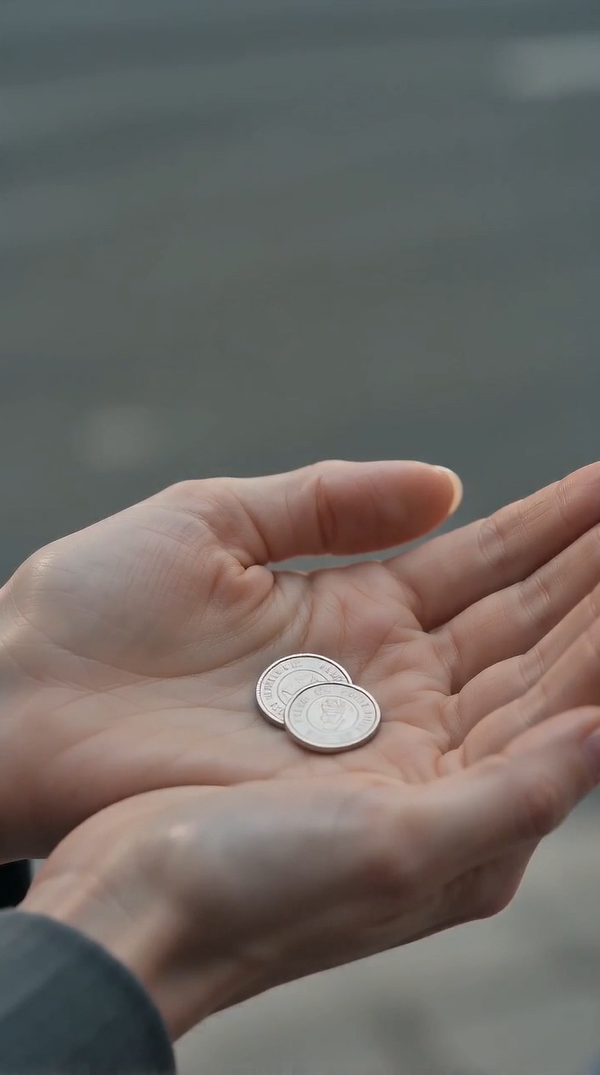
The blurred buses, the footsteps, the cold air, the hiss of the grill, everything seemed to fall away as she stared at the two worn coins resting in the young woman’s hand.
She knew them.
Not because coins are special.
But because guilt and kindness both leave marks in memory.
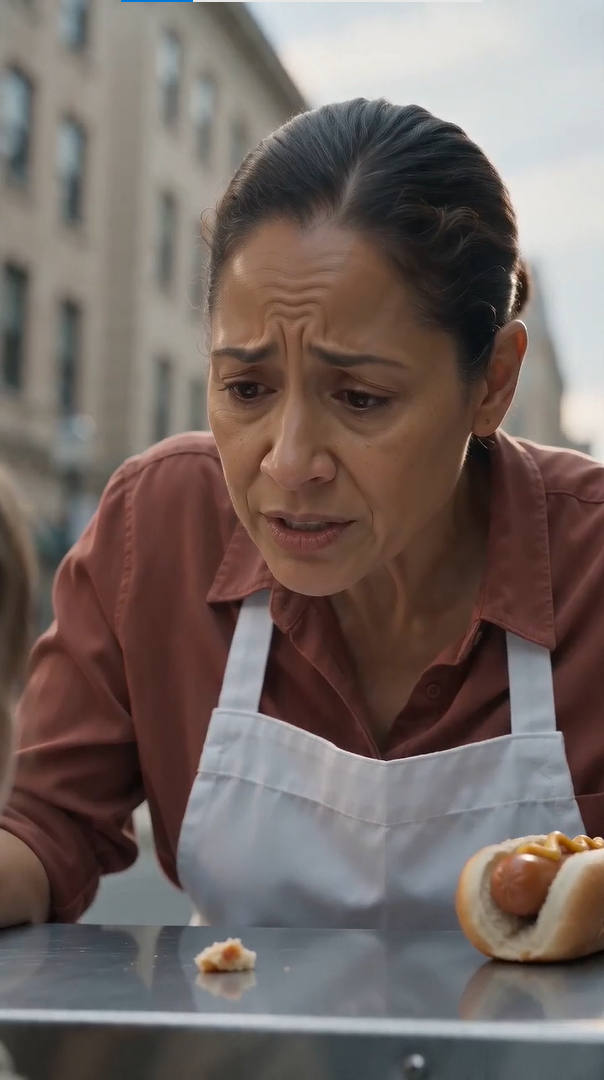
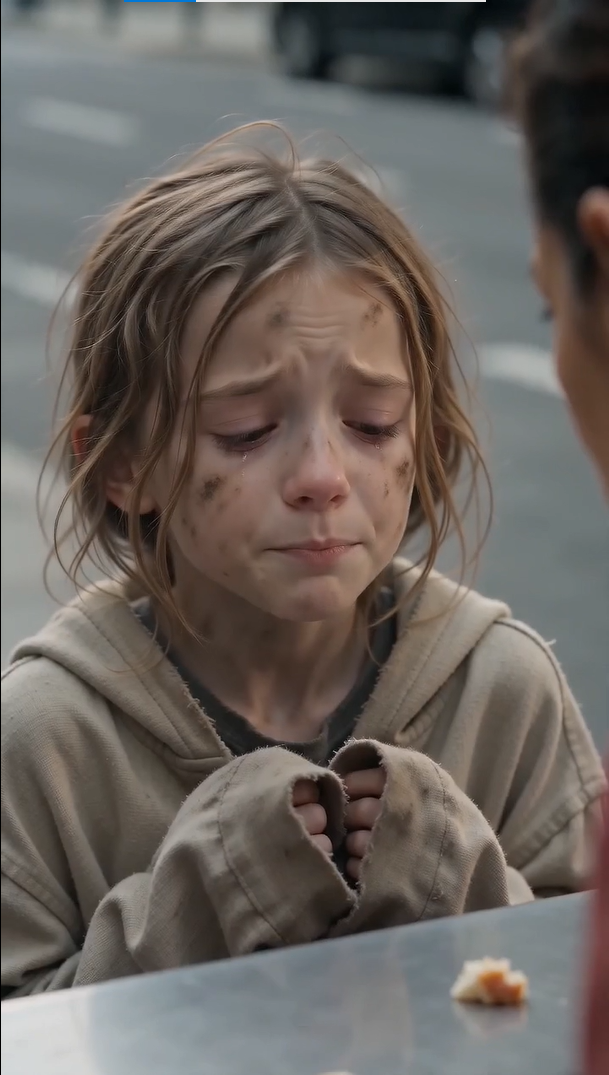
She remembered the little girl who had looked too ashamed to ask for help. The child who had tried to pay for hunger with two tiny silver coins and a shaking voice. The child who had promised something impossible.
The elderly vendor’s lips parted.
“That little girl?”
The young woman nodded, tears finally slipping free.
“Now it’s my turn.”
The old woman reached for her hands. Her own fingers were wrinkled, weathered, trembling with age. The young woman held them gently, like they were fragile and holy.
Up close, the vendor could see it now.
The same eyes.
The same trembling mouth.
The same sadness, only older, shaped into strength.
“I thought about you for years,” the young woman said softly. “There were nights I didn’t know where to sleep. Days I didn’t know what I would eat. But every time I wanted to give up, I remembered one thing.”
The old vendor could barely breathe.
“You fed me when nobody else would.”
The young woman looked down at the two coins.
“I kept these because I didn’t want to forget the day someone treated me like I was still worth saving.”
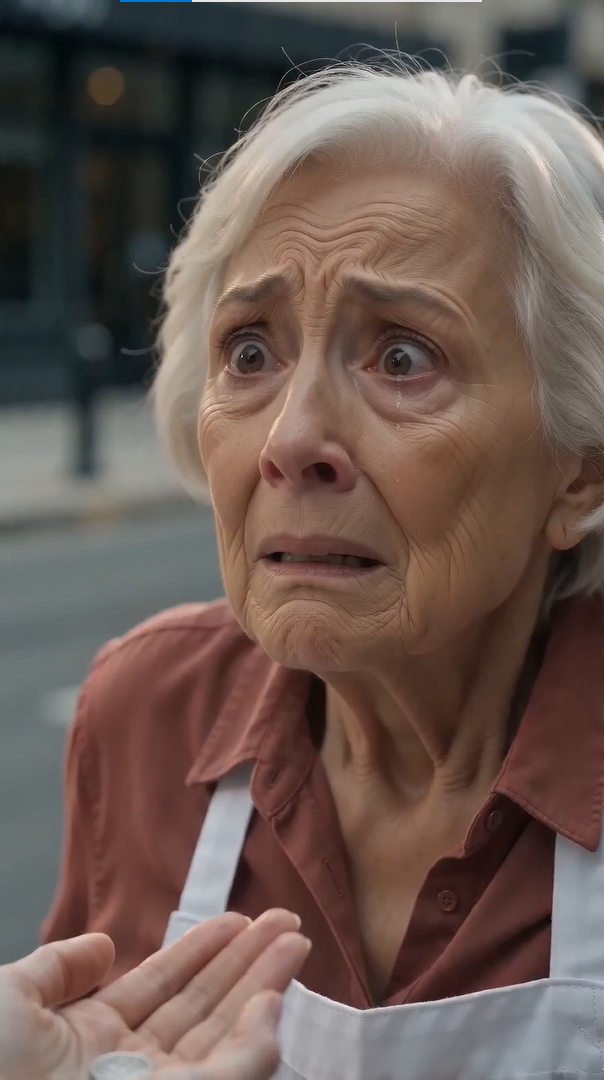
The elderly woman’s face crumpled. She covered her mouth, but the tears kept coming.
“Oh, sweetheart…”
The young woman laughed through her tears.
“You told me to survive. So I did.”
Then she reached into her gray suit jacket and pulled out a black envelope.
The old woman’s eyes dropped to it, then lifted back to the young woman’s face.
“What is that?”
The young woman held the envelope carefully, but did not open it yet.
“I spent years trying to find you. I didn’t even know your name. Just the cart. Just this street. Just your face.”
Her voice shook harder now.
“I built a life. I worked every job I could. I studied at night. I slept in shelters. I kept going because one person showed me mercy when I was invisible.”
The vendor was openly crying now, not even trying to hide it.
“I only gave you a hot dog.”
The young woman shook her head immediately.
“No. You gave me back my dignity.”
The old woman closed her eyes for a second as if the weight of that sentence was too much to carry.
When she opened them again, the young woman placed the two silver coins gently into her palm.
“I came to repay my debt,” she whispered.
The vendor looked down at the coins like they were the most valuable thing she had ever touched.
Then the young woman lifted the black envelope between them.
“I also came to change your life the way you changed mine.”
The old woman’s eyes widened.
Inside the envelope, something stiff shifted. Paper, maybe a letter, maybe something legal, maybe something far bigger than money. But before she could ask, before the flap could open, before the truth could fully land, the young woman leaned closer and pressed the old woman’s trembling fingers around it.
And the old vendor, crying openly now, stared at her like she was seeing a miracle she herself had once fed with mustard and bread.
Her hands shook so badly that the envelope almost slipped.
The young woman caught it gently and helped her open it.
The old vendor pulled out the first paper.
At first, the words blurred.
Her tears made everything swim.
Then she saw her own name printed across the top.
Martha Ellis.
Her real name.
The name she had not heard spoken with tenderness in years.
She looked up, confused.
“How do you know my name?”
The young woman smiled through her tears.
“I found your permit records. I searched every old street vendor license in this district. I called offices. I checked old photographs. I came here every winter hoping I would see you.”
Martha looked down again.
Her eyes moved over the words slowly.
Then her knees weakened.
The paper was not a check.
It was not a loan.
It was not charity written in cold numbers.
It was the deed to a small storefront two blocks away.
Martha’s breath stopped.
“No…”
The young woman nodded.
“Yes.”
Martha stared at her, unable to speak.
“It has a kitchen, storage space, proper heating, and a little sitting area by the window,” the young woman said. “No more freezing out here. No more dragging this cart through snow. No more standing in the cold until your hands go numb.”
Martha pressed the paper to her chest.
“No, sweetheart. I can’t take this. I can’t.”
“You can,” the young woman whispered. “And you will.”
Martha shook her head, crying harder.
“I don’t deserve this.”
The young woman stepped closer.
“That’s what I thought too, when you handed me that hot dog.”
Martha froze.
The young woman’s voice softened.
“I tried to refuse it. I remember. I told you I only had two coins. You said, ‘Then pay me with a promise.’”
Martha’s lips trembled.
“I said that?”
“You said, ‘Promise me you’ll make it through today. Tomorrow can worry about itself.’”
The old woman covered her face.
The memory returned so clearly it hurt.
That day had been bitter cold.
The little girl’s coat had been too thin.
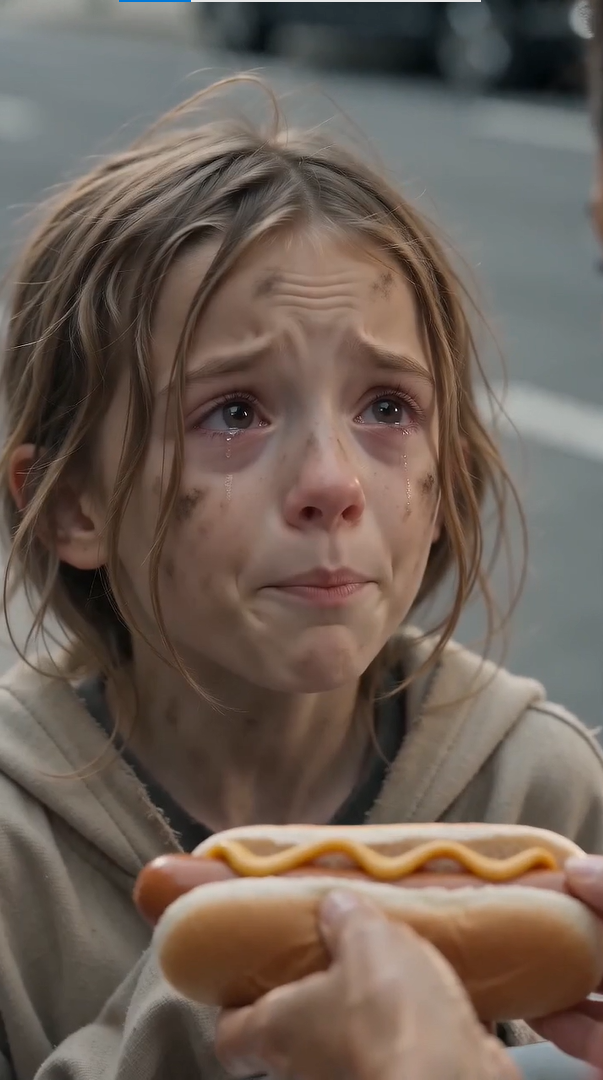
Her shoes had holes at the toes.
Martha had seen hungry children before, but something about that girl had broken her heart. Maybe it was the way she held out those coins like they were proof she was trying. Maybe it was the shame in her eyes.
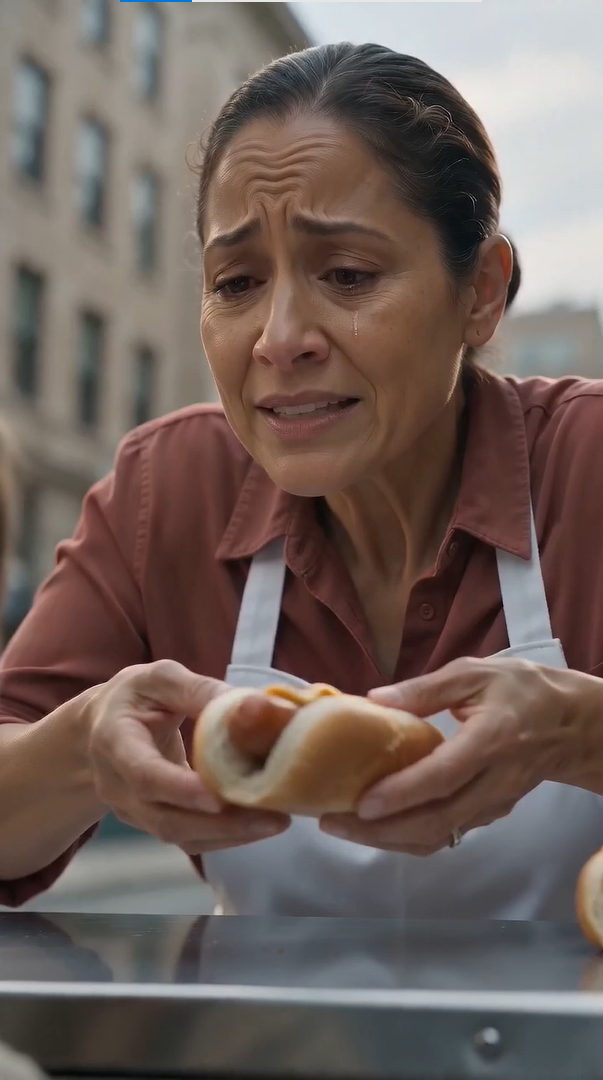
So Martha had taken the coins, made the biggest hot dog she could, wrapped it in a napkin, and tucked a small packet of cookies beside it.
Then she had told the child to live one more day.
Just one more day.
She never knew what happened after that.
She never knew that those words had followed the girl through shelters, empty classrooms, bad jobs, locked doors, and lonely nights.
Martha looked at the young woman now and whispered, “What is your name?”
The young woman smiled, but it broke at the edges.
“Elena.”
Martha repeated it like a prayer.
“Elena.”
People had started to slow down around them.
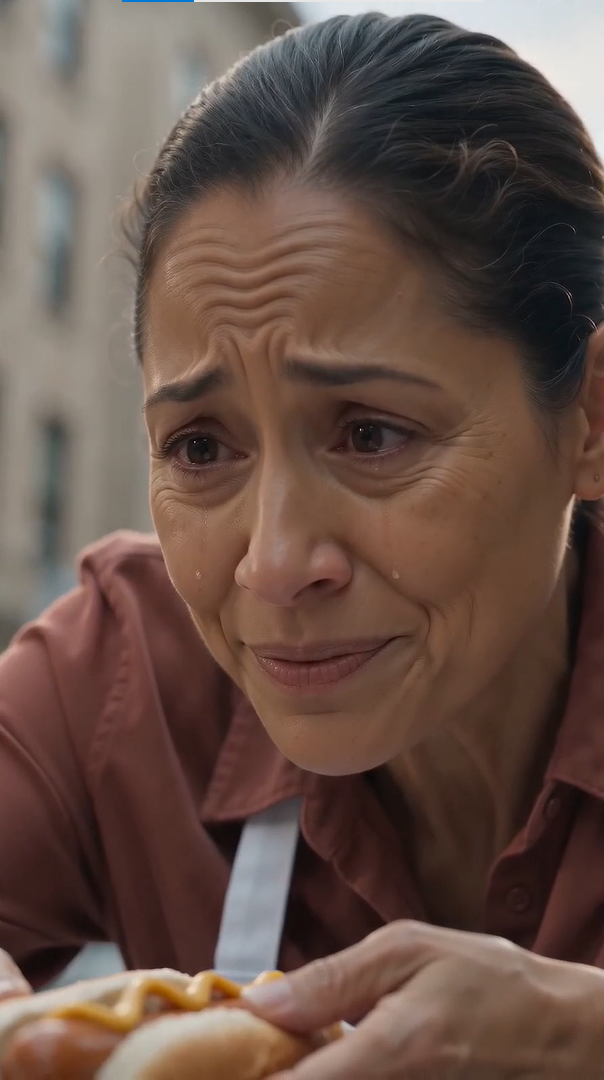
A man with a briefcase stopped near the curb.
A mother holding a toddler paused beside a streetlamp.
Even the usual rush of the city seemed softer now, like the whole sidewalk had become quiet enough to hear two hearts remembering the same day.
Elena reached into the envelope again.
“There’s more.”
Martha looked terrified.
“More?”
Elena pulled out another document.
“This is a retirement account in your name. It won’t make you rich, but it will keep you safe. Your rent, your bills, your medicine, all of it is covered for the next several years.”
Martha’s mouth opened, but no words came.
“And this,” Elena said, holding up a smaller folded paper, “is an employment contract. But only if you want it.”
Martha blinked.
“Employment?”
Elena nodded toward the cart.
“I didn’t just buy a storefront. I bought your dream a place to rest.”
Martha stared at her.
Elena smiled gently.
“I want to open it as Martha’s Table.”
The old woman pressed one hand to her heart.
“Martha’s Table?”
“A small place where anyone can come in hungry and leave fed. People who can pay will pay. People who can’t will still eat. No one will be turned away because their pockets are empty.”
The words hit Martha so deeply that she had to grip the edge of the cart.
Elena continued, her voice shaking but sure.
“I want your recipes. Your name. Your kindness. I want the world to know that a hot dog stand on this street saved a little girl’s life.”
Martha began to sob.
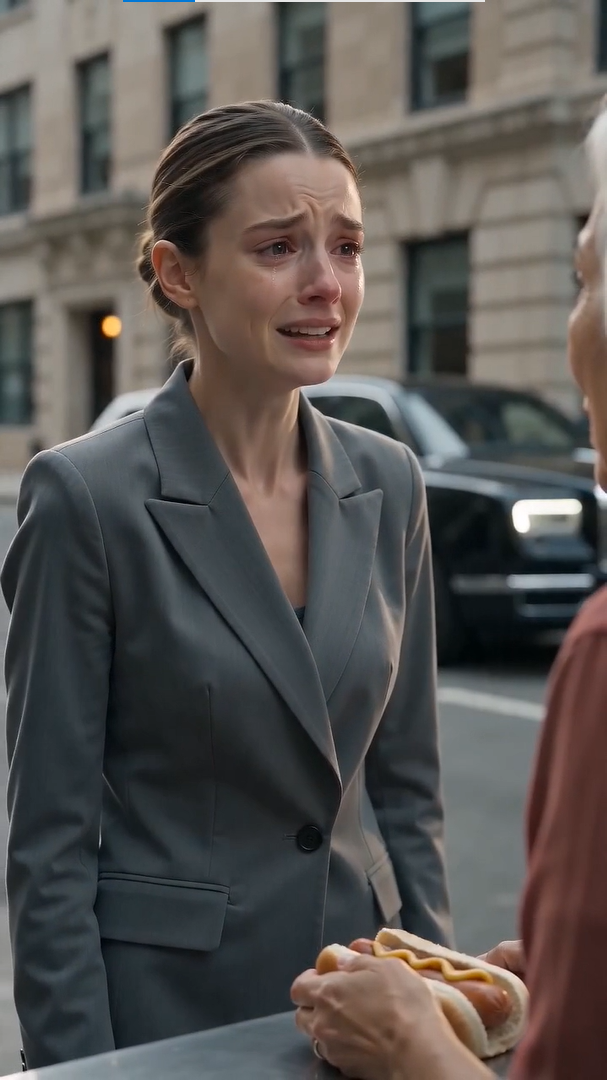
Not quietly.
Not politely.
She cried from somewhere deep inside, from years of exhaustion, years of being ignored, years of smiling at strangers while wondering how much longer her body could keep standing.
Elena wrapped her arms around her.
At first, Martha stood stiff.
Then she collapsed into the hug.
The paper crinkled between them.
The two silver coins stayed locked in Martha’s fist.
“I’m old,” Martha cried. “I’m tired. Some mornings I can barely lift the trays.”
“Then don’t lift them anymore,” Elena whispered. “Teach me instead.”
Martha pulled back and looked at her.
Elena wiped her cheeks.
“You don’t have to work unless you want to. You can sit by the window. You can tell me when the soup needs more salt. You can yell at me if I burn the onions.”
Martha laughed through her tears.
It was a small laugh.
Broken and beautiful.
“I do hate burnt onions.”
“I know,” Elena said. “I asked around.”
Martha laughed again, then cried harder.
For the first time in years, the lines on her face seemed less like pain and more like history. Every wrinkle held a storm she had survived. Every tear carried something she had buried for too long.
Then she looked back at the cart.
The grill still hissed.
A row of buns sat warming near the edge.
The mustard bottle leaned against the napkin holder.
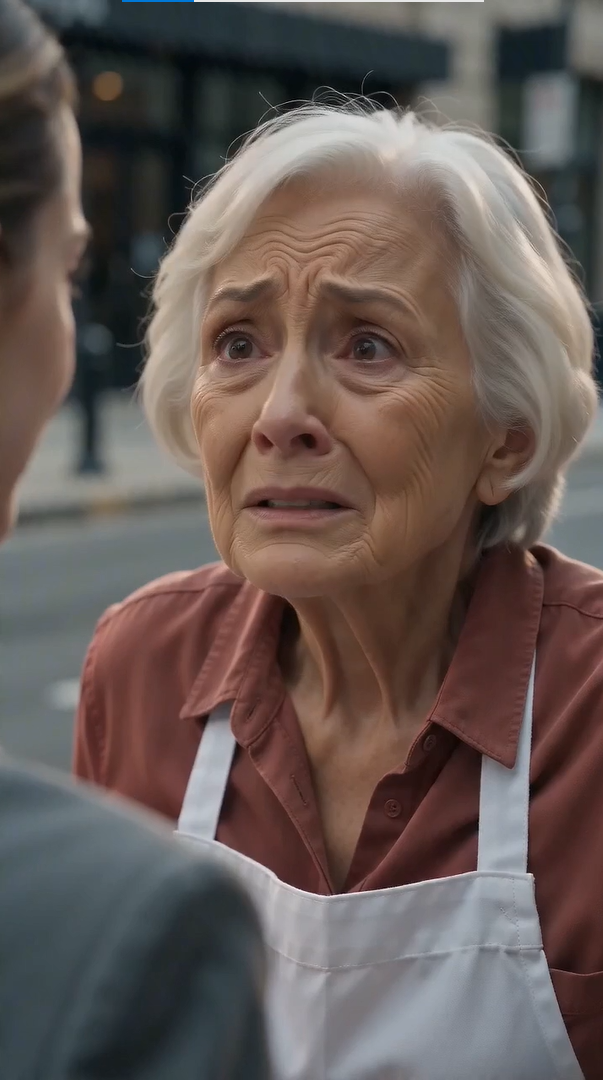
That cart had fed office workers, bus drivers, children, lonely old men, tired nurses, and people who never said thank you. It had paid her bills. It had hurt her back. It had kept her alive.
And now it had brought one child back as a woman.
Martha turned to Elena.
“Can I ask you something?”
“Anything.”
“That day… after you left… did you find somewhere safe?”
Elena’s face changed.
For a moment, the powerful woman in the gray suit disappeared, and the little girl came back.
She looked down.
“Not that night.”
Martha’s hand flew to her mouth.
Elena shook her head quickly.
“But I made it to the library the next morning. I stayed warm there. A woman helped me find a shelter. Then school helped. Then a teacher. Then a scholarship.”
Her voice cracked.
“But the first person was you.”
Martha whispered, “I wish I had done more.”
Elena took both of her hands.
“You did enough to keep me alive until more help came.”
Martha closed her eyes.
That sentence settled inside her like forgiveness.
Not perfect forgiveness.
Not the kind that erases regret.
But the kind that lets an old woman breathe again.
A young boy standing nearby tugged at his mother’s sleeve.
“Mom, why is that lady crying?”
His mother wiped her own eyes and whispered, “Because someone remembered her kindness.”
Martha heard it.
She looked at the boy.
Then, with trembling hands, she reached for a bun and placed a hot dog inside it. She added mustard, ketchup, and a little extra relish.
The boy’s eyes widened.
Martha held it out.
“Here, sweetheart.”
His mother quickly reached for her purse.
“No, please, let me pay.”
Martha shook her head.
“No charge today.”
The mother stared at her.
Martha smiled through her tears.
“Today, kindness is paying.”
The mother took the hot dog with shaking hands.
“Thank you.”
Martha looked at Elena.
Elena looked back at her.
And for a second, neither of them had to say anything.
The promise had come full circle.
A hungry child had been fed.
A forgotten woman had been found.
And two coins had become proof that mercy never really disappears. It waits. It grows. It returns when the heart that gave it needs saving too.
Later that afternoon, Elena helped Martha close the cart early.
Martha moved slowly, still stunned, still touching the envelope as if it might vanish.
Elena carried the heavy things.
Martha tried to protest every time.
Elena ignored her every time.
When the cart was finally locked, Martha stood in front of it for a long while.
The city moved around them again.
Buses sighed.
Cars honked.
People rushed home.
But Martha did not move.
Elena stood beside her quietly.
“I thought I would die here,” Martha admitted.
Elena looked at her.
Martha’s voice was soft.
“Not today. Not tomorrow. But someday. I thought one day I’d just stop showing up, and nobody would notice.”
Elena’s eyes filled again.
“I noticed.”
Martha looked at her.
Elena held out her hand.
“And from now on, you don’t disappear.”
Martha took her hand.
Together, they walked two blocks down.
Elena had not lied.
The storefront was small, but warm light glowed behind the glass.
The sign was covered with brown paper, waiting.
Inside, there were empty tables, a clean counter, a kitchen, and a window seat with a soft cushion.
Martha stood at the doorway and began crying all over again.
“Oh, Elena…”
Elena reached up and gently pulled the paper from the sign.
Martha covered her mouth.
Gold letters shone against the glass.
Martha’s Table
Underneath, in smaller words, it said:
Pay what you can. Eat with dignity.
Martha pressed her hand against the glass.
For years, she had thought her life had become small.
A cart.
A corner.
A tired body.
A few dollars at the end of each day.
But now she saw the truth.
A small act had traveled farther than she ever imagined.
One hot dog had crossed years.
One kind sentence had survived hunger.
One promise had come back wearing a gray suit and carrying a black envelope.
Elena unlocked the door and stepped aside.
“No,” Martha whispered.
Elena looked confused.
Martha wiped her tears and stood a little straighter.
“You first.”
Elena shook her head.
“This is yours.”
Martha smiled.
“It started with you being hungry.”
Elena’s lips trembled.
“And it continued because you fed me.”
So they entered together.
The next morning, Martha’s old cart still stood on the corner, but not for business.
A small handwritten sign hung from it.
Thank you for 38 years.
We have moved two blocks down.
No one eats alone anymore.
By noon, the little restaurant was full.
Some people paid.
Some people could not.
Martha sat by the window, just like Elena had promised, correcting the soup, complaining about the onions, and smiling every time someone walked in looking ashamed of their hunger.
Each time, Elena met them gently.
Each time, Martha watched.
And each time, somewhere inside her, the old pain loosened a little more.
Near closing, Elena placed a tiny frame on the wall beside the register.
Inside it were the two worn silver coins.
Martha stared at them for a long time.
Then she read the small note beneath them.
The first payment.
The promise that survived.
Martha touched the frame with trembling fingers.
Elena stood beside her.
“You once told me tomorrow could worry about itself,” Elena said softly.
Martha smiled through fresh tears.
Elena took her hand.
“But you gave me today.”
Martha leaned her head against Elena’s shoulder.
Outside, the city kept moving.
Inside, warm food filled empty hands.
And at Martha’s Table, no one ever had to prove they were worth saving again.