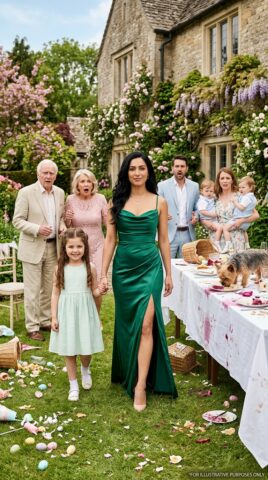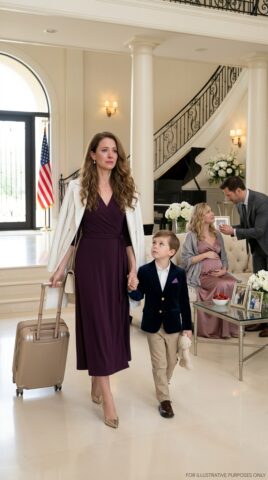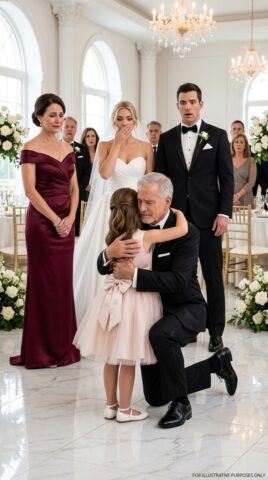
The same hands that had put Marcus Reed in a coma were now holding the smallest, softest person I had ever seen.
I began to shake.
Anna saw it.
She put her hand over mine. “Sonny.”
“I can’t,” I whispered.
She knew what I meant before I did.
“I know,” she said.
“I can’t be both.”
“No,” she said gently. “You can’t.”
Marcus woke up the next morning.
Thank God.
He lived. He recovered enough to walk, talk, laugh, and live a life. He never fought again.
Neither did I.
One week later, I walked away from the title shot.
The money would have changed everything. The house. The security. The life Anna deserved. The future Pearl might have had.
My manager screamed. My trainer cried. Reporters called me a coward. Fans said I was afraid of finally losing.
They were wrong.
I was afraid of winning.
I was afraid of what I had become so good at doing.
So I made Pearl a promise before she was old enough to understand words.
These hands would work.
These hands would hold.
These hands would cook oatmeal, braid clumsy ponytails, fix broken toys, carry grocery bags, and tuck blankets under her chin.
But they would never again be used in anger.
Not for money.
Not for pride.
Not even when the whole world said I had the right.
For a few years, life was hard but beautiful.
I worked. Anna worked. We had less than almost everyone we knew, but our little apartment was warm in the ways that mattered. Pearl grew into a bright-eyed child who asked impossible questions and believed pancakes tasted better if they were shaped like animals.
Then Anna got sick.
Fast.
Cruel.
Unfair.
The kind of sickness that makes doctors lower their voices and makes strong men discover strength is useless in the room where it matters most.
I had stood across from men trying to break my jaw and never blinked.
But I could not stop my wife from disappearing.
In the end, Anna weighed almost nothing. I could lift her with one arm, though I never did unless I had to, because she hated feeling fragile.
The night before she died, she asked me to bring Pearl into the bedroom.
Pearl was four then. Too young to understand fully, old enough to be afraid of the quiet.
Anna touched Pearl’s cheek and smiled.
“You take care of your daddy,” she whispered.
Pearl nodded seriously. “I will.”
Then Anna looked at me.
“No fighting,” she said.
Even then, she knew what grief might do to me.
I swallowed the broken glass in my throat. “No fighting.”
“Promise.”
“I promise.”
She closed her eyes.
Two days later, I became a widower.
After that, the world became bills.
Rent.
Utilities.
Groceries.
Childcare.
Medicine.
School forms.
Winter boots.
Always winter boots.
People who have never been poor think poverty is one large sadness. It is not. Poverty is a thousand tiny humiliations that arrive every day wearing ordinary clothes.
It is telling your daughter “maybe next month” until she learns maybe means no.
It is watering down soup and pretending you like it that way.
It is lying awake at 2:17 in the morning doing math that never works.
It is smiling while your child asks if she can go on a school trip and knowing the answer costs more than you have in the bank.
That was the week Camilla Roarke’s party happened.
Pearl had brought home a permission slip for a class trip to the Great Lakes Science Center.
“Everybody’s going,” she said, bouncing on her toes in our kitchen.
I looked at the cost printed on the bottom of the page.
Forty-five dollars.
Forty-five dollars can be nothing.
Forty-five dollars can be a wall.
“We’ll see,” I said.
Pearl’s smile softened just a little.
She was six, but children of broke parents learn early how to read faces.
“Okay, Daddy,” she said.
I hated myself for that okay.
That Friday, I took a catering shift at the Roarke estate.
The pay was better than usual. There was a bonus if we stayed past midnight. I figured I could cover Pearl’s trip, buy groceries, and maybe get those winter boots before the first real snow.
I did not know I was walking into the night that would change my daughter’s life.
Part 2
Camilla Roarke lived in a mansion outside Chagrin Falls, set behind black iron gates and a driveway so long it felt like entering another country.
The house sat on a hill above a private lake, all glass walls and pale stone, glowing against the Ohio dark like something too expensive to be real. Valets in black coats moved cars that cost more than every home I had ever lived in combined. Women in silk stepped out laughing. Men with watches like small mortgages shook hands under heat lamps.
Inside, everything shined.
Marble floors.
White orchids.
Crystal chandeliers.
A live string quartet playing near the staircase.
The kitchen alone was bigger than my whole house.
The head caterer, Denise, gathered us near the service entrance and gave the usual speech.
“Keep moving. Don’t stare. Don’t talk unless spoken to. If a guest is rude, smile. If a guest is drunk, smile farther away. No phones. No food from the trays. Questions?”
Nobody had questions.
People who work these events know the rules.
The rich are not all cruel. I have met kind rich people. Quiet ones. Generous ones. People who look you in the eye when they say thank you.
But there is a particular kind of rich person who forgets that money is not the same thing as height. They stand above you only because everyone around them keeps kneeling.
Camilla Roarke was that kind.
I knew her name, of course. Everyone did. She had built a real estate empire with tech money and turned old industrial buildings into luxury spaces. Magazines called her brilliant, ruthless, visionary. There were photographs of her on private jets, at charity galas, beside governors and movie stars.
In person, she was smaller than I expected.
Not physically. She was tall, elegant, dressed in a silver gown that looked poured onto her. Diamonds shone at her throat. Her blond hair was cut sharp at her jaw.
But there was something small in her eyes.
A boredom.
A hunger for amusement.
Like the world had given her everything except peace, and now everyone around her had to pay for that missing thing.
I spent the first hour refilling glasses and avoiding trouble.
Camilla held court near the fireplace with a circle of guests who laughed too quickly at everything she said. Dom stood behind her, silent and watchful. He looked like the only sober person in that part of the room.
The first insult came while I was passing with champagne.
Camilla looked at my vest and said, “They really do dress them like little penguins, don’t they?”
Her friends laughed.
I kept walking.
The second came twenty minutes later.
“Careful,” she said as I poured wine for a man beside her. “That bottle costs more than his car.”
More laughter.
My hand stayed steady.
A woman in emerald earrings said, “Camilla, be nice.”
Camilla smiled. “I am being nice. I’m providing employment.”
They laughed again.
I had been hit harder.
Words are strange things. People say they cannot hurt you, but that is a lie invented by people who want permission to use them carelessly. Words can land. Words can bruise places no one sees.
But I had Pearl at home.
I had Anna’s last promise in my chest.
So I smiled the service smile.
“Yes, ma’am,” I said.
That seemed to annoy her.
Some people cannot stand failing to make you bleed.
The night went on. Camilla drank more. Her friends became louder. The jokes became less like jokes.
At one point, she asked me where I was from.
“Cleveland,” I said.
“No, I mean before whatever staffing company found you.”
“I was born in Youngstown, ma’am.”
She tilted her head. “That explains the shoulders.”
A man beside her chuckled. “Factory stock.”
I looked at him.
Just for a second.
His smile died.
I looked away before the old me could rise any higher.
The old me was not gone. That is the truth people do not like about change. Becoming better does not erase the worse thing inside you. It just teaches you to stand guard over it.
The old me still lived somewhere deep.
He heard every insult.
He noticed every weak chin, every soft belly, every careless hand holding a drink too close to a face.
He whispered easy things.
One look.
One step.
One reminder.
But I was not there as that man.
I was there as Pearl’s father.
So I worked.
Near ten o’clock, a guest knocked over a glass. Red wine spread across the white rug like blood on snow. I knelt with a towel while Camilla watched.
“You’re very calm,” she said.
“I try to be.”
“Is that a job requirement?”
“It helps.”
She smiled, but not kindly. “What would it take to make you lose that calm?”
I kept blotting the rug. “More than spilled wine.”
Her friends made a low sound, amused by the hint of challenge.
Camilla leaned closer.
“Everybody has a price.”
I did not answer.
She took that as an invitation.
A few minutes later, I was carrying an empty tray back toward the kitchen when her voice cut through the room.
“You. Waiter.”
Every server in the room looked up, then looked away, grateful not to be the one selected.
I turned.
“Yes, ma’am?”
“Come here.”
Denise, the head caterer, caught my eye from across the room and gave me a warning look.
Do not make trouble.
I walked over.
Camilla stood in the center of her circle now, cheeks flushed, eyes bright with the terrible confidence of someone who had never been told no in a way that cost her anything.
“You look strong,” she said.
I said nothing.
“What’s your name?”
“Sonny.”
“Sonny,” she repeated, as if tasting it. “That’s adorable.”
A few people laughed.
She gestured lazily toward Dom.
“This is Dominic. He looks strong too, doesn’t he?”
Dom did not move.
“Yes, ma’am,” I said.
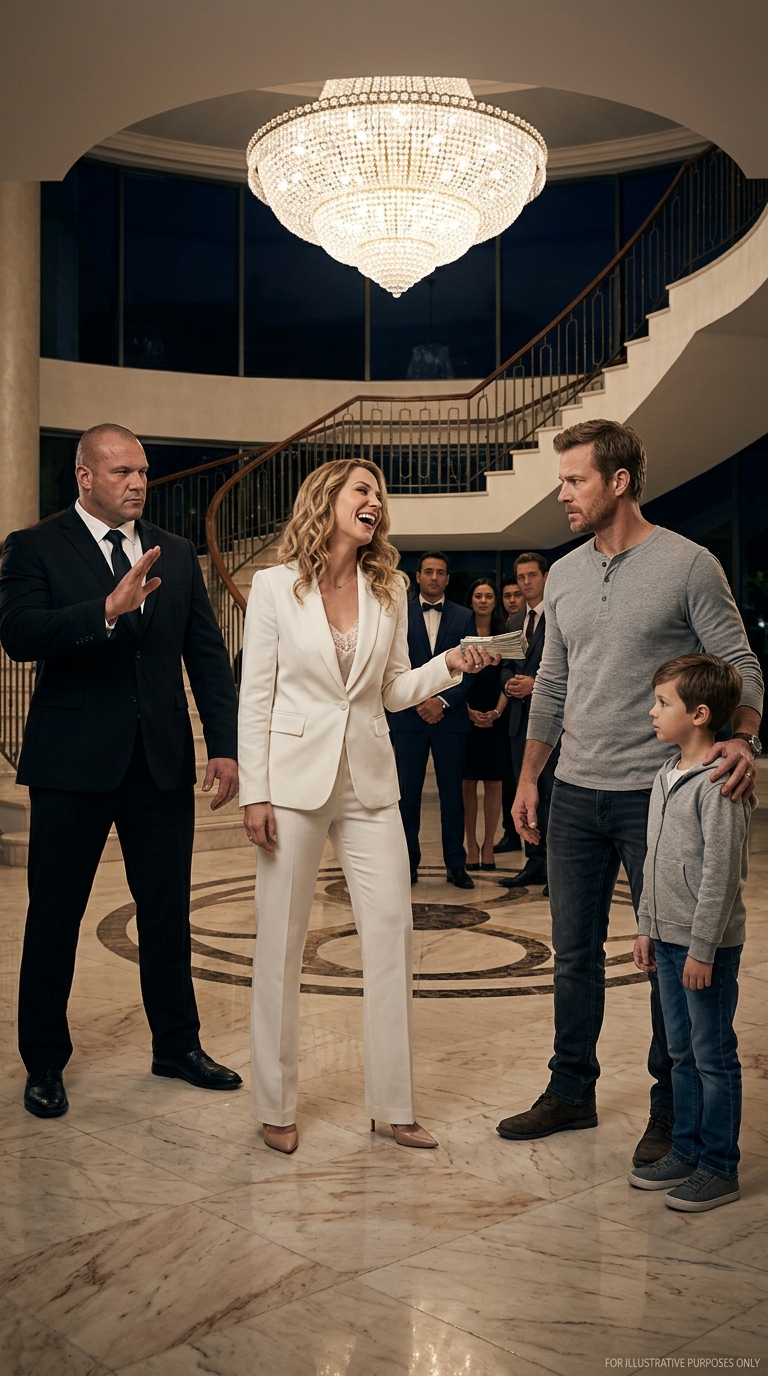
“Here’s my question.” Camilla lifted her voice so nearby guests could hear. “How much money would it take for you to let Dominic hit you?”
The room stirred.
Someone said, “Camilla.”
She ignored them.
I looked at Dom.
His face remained blank, but his jaw tightened.
“I’m not interested,” I said.
That should have ended it.
In decent company, it would have.
Camilla’s smile sharpened. “Not interested in money?”
“I’m here to work.”
“Oh, come on.” She laughed. “Don’t pretend dignity pays rent.”
That one found the soft place.
Because dignity did not pay rent.
Dignity did not buy boots.
Dignity did not send Pearl to the science center with the rest of her class.
Still, I said, “I should get back to the kitchen.”
Camilla stepped in front of me.
“One hundred thousand dollars,” she said.
The air changed.
Even the quartet stopped between songs and did not start again.
“One punch,” Camilla said. “Dom hits you once. You stay on your feet, you get one hundred thousand dollars.”
My pulse slowed.
That was something the body remembered too.
Danger made me calm.
“I said no.”
“Two hundred.”
Her friends were smiling now, nervous but entertained.
I could hear Denise whispering my name from somewhere behind me.
“Five hundred,” Camilla said.
My daughter’s face appeared in my mind.
Pearl holding that permission slip.
Pearl trying not to look disappointed.
I swallowed.
Camilla saw it.
Predators always see hunger.
“One million dollars,” she said.
The room gasped.
She lifted one hand as if conducting the sound.
“One punch. Right here. Right now. Dom can hit you as hard as he wants. If you stay standing, I write the check before you leave.”
Dom finally spoke.
“Ms. Roarke.”
“Quiet, Dom.”
His eyes flicked toward me.
At that moment, he still saw a server. A big man, maybe. A tired man. A poor man with rough hands.
He did not know me yet.
Camilla stepped closer.
“What do you say, Sonny? One million dollars. Unless you’re scared.”
The laughter came again, but thinner now. People wanted the show. They also wanted permission to pretend it was not ugly.
I thought about pride.
Pride is expensive when you are poor.
Rich men can call pride principle because their children still eat afterward.
A poor father has to be more careful.
One million dollars.
A house.
College.
Doctors.
A reliable car.
Heat in winter without fear of the bill.
Pearl never again learning to read no in the shape of my smile.
And what was the price?
One punch.
I had taken punches from champions.
Dom was big, but he was not a boxer. I could tell by the way his weight sat too heavy on his heels, by the way his shoulders carried strength but not rhythm. He could hurt a normal man badly. He could maybe break a jaw.
But he could not knock me down.
I knew it with the same certainty I knew Pearl’s birthday.
Camilla thought she was buying my humiliation.
She was accidentally selling me my daughter’s future.
So I set down my tray.
The room erupted.
Denise whispered, “Sonny, don’t.”
I looked at her and smiled faintly. “It’s all right.”
I took off my catering jacket.
Underneath, my white shirt stuck slightly to my back from hours of work. My sleeves were tight across my forearms. Old scars showed near my elbows and along the knuckles of my right hand.
Dom stared.
Something moved across his face.
I folded the jacket carefully and placed it on the back of a chair.
Then I rolled up my sleeves.
Not dramatically.
Not like a man preparing to fight.
Like a man preparing to work.
But the body remembers.
My feet found the old distance. Left foot forward. Right foot angled. Chin relaxed. Shoulders loose. Hands low, because I was not going to throw them.
Dom saw it.
His eyes dropped to my stance.
Then to my hands.
Then back to my face.
And there it was.
The recognition came like lightning behind his eyes.
He knew.
Not my face at first. Fifteen years and grief had changed me. I was heavier around the middle, thinner in the cheeks, gray at the temples.
But fighters know fighters.
The body speaks a language the world cannot fake.
Dom had heard mine.
He took a step backward.
Camilla laughed. “Dom, why are you moving away?”
He whispered something I could not hear.
“What?” she snapped.
Dom looked at me as if he were standing in front of a ghost from his childhood.
Then he turned to Camilla.
“Ma’am,” he said, “please call it off.”
People leaned in.
Camilla’s smile collapsed into irritation. “Don’t be ridiculous.”
“I won’t hit him.”
The words landed harder than any punch.
Camilla blinked. “You work for me.”
“Yes, ma’am.”
“I told you to hit him.”
“And I’m telling you I won’t.”
A man with silver hair laughed uncertainly. “Dom, you afraid of the waiter?”
Dom did not look at him.
“Yes,” he said.
The room went silent.
Dom swallowed.
“But not for the reason you think.”
Camilla’s face flushed. “Who is he?”
Dom looked at me again.
I gave the smallest shake of my head.
Not because I was ashamed.
Because I did not need that room to know.
But Dom had reached some line inside himself. I could see it. He had been ordered to cross it and had found he could not.
“He’s Sonny Vega,” Dom said.
At first, the name did nothing.
Then an older man near the fireplace straightened.
“No,” he said softly.
Another guest turned. “The boxer?”
Dom nodded.
“The boxer,” he said. “The undefeated one. The Man Who Wouldn’t Fall.”
A murmur spread through the ballroom.
Phones appeared.
Someone searched my name.
Someone whispered, “Thirty-two and zero.”
Someone else said, “He disappeared before the title shot.”
Camilla stared at me as if the vest had been a disguise I had worn specifically to embarrass her.
Dom’s voice grew rough.
“When I was twelve years old, I had his poster on my wall. I watched every fight. Every single one. Men hit him with everything they had and he never touched the canvas. Not once.”
He turned to Camilla fully now.
“You just offered him a million dollars to take a punch and stay standing.”
His laugh was short and humorless.
“Ma’am, he could take my best shot and ask if I was done.”
A few people looked at me differently then.
Not kindly.
Not yet.
But differently.
Power had entered the room wearing my face, and they did not know what to do with it.
Dom continued, quieter now.
“But that isn’t why I won’t hit him.”
Camilla said nothing.
Dom’s eyes shone.
“I won’t hit him because a man like this could have hurt every person who mocked him tonight, and he didn’t. He stood here and let you treat him like a joke. That’s not weakness. That’s control. And I’m not putting my hands on a man who has more control in one finger than this whole room has in its soul.”
No one breathed.
I looked down at my open hands.
Anna’s voice came back to me.
No fighting.
Promise.
I had thought the hard part would be taking the punch.
I was wrong.
The hard part was what came after Dom refused.
Because suddenly the room knew who I was.
And with that knowledge came a kind of invitation.
They had humiliated me when they thought I was powerless.
Now they understood I was not.
That is a dangerous moment for a man.
Part 3
There are rooms in life where revenge sits down beside you like an old friend.
It does not look like evil.
That is the trick.
It looks like justice.
It looks like balance.
It looks like giving people exactly what they earned.
Standing in Camilla Roarke’s ballroom, with her guests frozen around me and her bodyguard refusing to touch me, I felt revenge pull up a chair.
I could have let them feel afraid.
Not with violence.
I did not even need that.
I could have taken one step toward Camilla and watched every face change. I could have lowered my voice and reminded her that the man she had mocked all night was the most dangerous person in her house. I could have made her small in front of the same people who had laughed while she made me small.
No one would have blamed me.
Some would have enjoyed it.
That is how you know revenge is dangerous. It often arrives with applause.
Camilla looked at me, waiting.
Dom looked at me too.
So did Denise.
So did every guest holding a glass of wine that suddenly seemed too loud to set down.
I thought of Pearl asleep at home with her stuffed rabbit tucked under one arm.
I thought of Anna’s hand over mine in the hospital.
I thought of Marcus Reed’s mother staring at me in that hallway.
And I understood something I had been learning for years but had never needed more than I needed it then.
The strongest thing a man can do is not prove what his hands are capable of.
It is remember what he promised they would never become again.
I turned away from Camilla.
I walked to Dom.
The big man looked almost ashamed, though he had done nothing wrong.
I held out my hand.
He stared at it.
Then he took it.
His grip was careful, reverent, like he was afraid to squeeze too hard and insult me by pretending we were equals in that way.
“Thank you,” I said.
His mouth tightened.
“I’m sorry,” he whispered.
“For what?”
“For standing there while she talked to you like that.”
“You stopped when it mattered.”
His eyes filled.
I leaned closer so only he could hear.
“That took more courage than throwing the punch.”
Dom looked away quickly, blinking hard.
Then I picked up my catering jacket from the chair.
The entire ballroom watched me put it back on.
That was the part no one seemed to understand.
To them, the vest had been proof that I was beneath them.
To me, it was proof I had done an honest night’s work for my daughter.
There is no shame in serving food.
There is shame in treating the person serving it like they are not human.
I buttoned the jacket.
I smoothed the front.
Then I turned to Camilla.
Her face had changed.
The arrogance was cracked now. Underneath it, she looked younger somehow. Not innocent. Just exposed.
“I think I should get back to work, ma’am,” I said gently. “People need their glasses filled.”
That undid her.
Not completely. People like Camilla Roarke do not transform in one clean moment like characters in a church play. But something in her expression gave way. The cruelty lost its balance.
“Mr. Vega,” she said.
I paused.
Her voice trembled just enough for everyone to hear.
“I owe you an apology.”
The room remained silent.
She looked around, as if seeing her own house for the first time. The chandeliers. The guests. The bodyguard. The servers lined along the wall pretending not to watch.
Then she looked back at me.
“I treated you disgracefully.”
I said nothing.
She swallowed.
“I treated you like entertainment.”
“Yes, ma’am,” I said.
The words were not sharp.
That made them sharper.
Camilla flinched.
“I am sorry,” she said. “Truly.”
A few of her friends looked uncomfortable, as if an apology were more embarrassing than cruelty.
Camilla turned toward a man near the fireplace. “Graham, get my checkbook.”
The man hesitated. “Camilla, maybe privately—”
“Now.”
He left.
I shook my head. “That’s not necessary.”
“Yes,” she said. “It is.”
“The punch was never thrown.”
“Because my bodyguard turned out to have more decency than I did.”
Dom looked down.
Camilla’s eyes stayed on mine.
“I offered you a million dollars because I wanted to humiliate you,” she said. “I’m giving it to you because you chose not to humiliate me when you had every right.”
The man returned with a leather checkbook and a pen.
There are moments when pride tries to dress itself up as morality.
I could feel it then.
The urge to say no.
To prove I could not be bought.
To walk out with nothing but my dignity.
But I knew better.
My dignity had never been for sale.
The money was not for me.
It was for Pearl.
A proud man might have refused that check.
A father could not.
Camilla wrote slowly. Her hand shook. When she tore the check free, the sound seemed impossibly loud.
She held it out.
One million dollars.
Payable to Sonny Vega.
I looked at that number and felt my whole body go weak in a way no punch had ever managed.
Pearl’s future was in that ink.
College.
A safe house.
Dentist appointments without panic.
New shoes before the old ones split.
A life where her father did not have to say we’ll see when he already knew the answer was no.
I took the check.
“Thank you,” I said.
Camilla looked like she might cry, but perhaps she did not know how in public.
I folded the check once and put it in my vest pocket.
Then I said, “Can I tell you why I said yes?”
She nodded.
“My daughter’s name is Pearl. She’s six. Her mother died two years ago. It’s just me and her now.”
The room softened around the edges.
“I didn’t say yes because I wanted your money for myself. I said yes because this week my little girl asked me if she could go on a school trip, and I had to tell her we’d see because I didn’t have forty-five dollars I could spare.”
Camilla closed her eyes.
I continued because I needed her to hear it.
“Do you know what that does to a man? Not being able to give your child something small? Not a yacht. Not a diamond. A school trip. Boots. A bedroom where the window doesn’t leak cold air. You offered me a million dollars to swallow my pride. My pride was never worth more than her future.”
No one laughed now.
Not one person.
“I would have let Dom hit me,” I said. “I would have stayed standing. Then I would have gone home, paid the sitter, and tucked my daughter into bed with your check in my pocket. That was all this ever was to me.”
Camilla put a hand over her mouth.
“I’m sorry,” she whispered again.
I believed her.
Not because apologies fix everything. They do not.
But because shame, real shame, has a sound. It is quieter than embarrassment. It does not ask to be comforted. It simply stands there and accepts the weight.
The party did not recover.
How could it?
Music started again eventually, but softly. People spoke in low voices. Some left early. A few came up to me and tried to apologize for laughing. I accepted without making it easy for them.
Dom resigned before midnight.
He walked out beside me through the service entrance while snow began to fall in slow white flakes under the security lights.
For a while, neither of us spoke.
Then he said, “I really did have your poster.”
I laughed for the first time that night. “That right?”
“My mom bought it at a flea market. You were standing over Caleb Price in the fourth round.”
“Cincinnati fight.”
“You remember?”
“I remember all of them.”
Dom nodded. “I used to watch you when things were bad at home. I’d put the fights on low so my stepdad wouldn’t hear. You just kept standing up to everything. Made me think maybe I could too.”
I looked at him then.
Really looked.
Not as Camilla’s bodyguard. Not as hired muscle.
As a man who had once been a scared boy looking for proof that survival was possible.
“You did,” I said.
He shook his head. “I almost hit you for money.”
“No. You didn’t.”
He breathed out hard.
Snow gathered on his shoulders.
“You know what gets me?” he said. “When she told me to do it, I was going to. Before I knew who you were. Before I recognized you. I was going to hit some server because my boss told me to.”
“That’s what stopped you.”
“What?”
“You saw yourself before it was too late.”
He looked at me, and I could tell those words would stay with him.
Denise came out then, wrapping her coat around herself.
“Sonny,” she said, “your shift pay and bonus will be sent tomorrow.”
I nodded.
She hugged me suddenly.
Denise was not a hugging woman, which made it mean more.
“You scared me in there,” she whispered.
“I scared myself a little.”
She pulled back. “You okay to drive?”
I touched the pocket with the check.
“No,” I said honestly. “But I’m going to.”
I drove home through the snow at twenty miles an hour with one hand on the wheel and the other pressed against my vest pocket like the check might vanish if I stopped touching it.
The sitter, Mrs. Alvarez from next door, was asleep on the couch when I came in. She woke, apologized, and I paid her double from the cash tips in my wallet.
Then I went to Pearl’s room.
Her night-light threw stars across the ceiling. She was asleep with her hair spread over the pillow, one hand curled under her chin like Anna used to sleep.
I stood in the doorway for a long time.
People talk about life-changing money like fireworks.
For me, it was quiet.
It was my daughter sleeping in a room where I suddenly knew she would be okay.
Not spoiled.
Not protected from every pain. No money can do that.
But okay.
I went to her bed and pulled the blanket up around her shoulders.
She stirred.
“Daddy?” she mumbled.
“I’m here, baby.”
“Did work go good?”
I looked down at my hands.
Hands that had hurt men.
Hands that had held Anna’s as she left this world.
Hands that had carried trays for people who thought kindness was optional.
Hands that had stayed open.
“Yeah,” I whispered. “Work went good.”
The next morning, I called the bank before I let myself believe the check was real.
It was.
Camilla Roarke’s office confirmed it before noon.
By Monday, the money had cleared.
I paid every debt first.
Then I took Pearl to buy winter boots.
She chose purple ones with silver stars on the sides. They were too expensive for boots she would outgrow in a year, and for once, I did not care.
At the register, Pearl looked up at me.
“Are you sure, Daddy?”
I had to turn away for a second.
“Yeah,” I said. “I’m sure.”
Then I signed the permission slip for the science center and put the cash in the envelope.
Pearl danced around the kitchen for ten straight minutes.
That was the best purchase I ever made.
Not the house, though we did buy one eventually. A small blue house with a porch, a maple tree, and a backyard big enough for Pearl to run through sprinklers in the summer.
Not the college fund, though I built one.
Not the reliable truck, though I cried the first time it started in winter without complaint.
The best purchase was that school trip.
Because it was the first time in years I got to say yes without fear hiding behind it.
News of the party leaked, of course.
People had recorded pieces. Not the worst parts, thankfully, but enough. A clip of Dom saying my name went online. Another of Camilla handing me the check spread through every platform by breakfast.
Reporters called.
Podcasts called.
Old boxing promoters called like vultures who had found a body they could still sell tickets to.
One offered me five million dollars for a comeback exhibition.
Five million.
For three rounds.
I said no before he finished the sentence.
He laughed. “Sonny, don’t be stupid. You took a punch bet at a party.”
“I didn’t take a punch.”
“You know what I mean.”
“No,” I said. “You don’t know what I mean.”
I hung up.
A week later, Dom came by the gym where I sometimes cleaned after closing. Not to work security. To talk.
He looked different out of the suit. Younger. Less like a wall.
“I quit,” he said.
“I heard.”
“Camilla offered me more money to stay.”
“That must have been hard.”
“It was.” He looked around the empty gym. “I don’t know what I’m doing now.”
I tossed him a towel. “You ever train kids?”
He blinked. “No.”
“You should.”
Dom laughed. “Me?”
“You knew when not to throw a punch. That’s the first thing a kid needs to learn.”
He started volunteering two evenings a week.
Then three.
Within six months, he was working there full-time, teaching boys and girls how to wrap their hands, how to move their feet, how to breathe through fear, and most importantly, how to walk away from stupid fights.
Sometimes he told them about me.
I told him to stop.
He never did.
Camilla wrote me a letter three months after the party.
It came on thick cream paper with her initials pressed at the top.
Dear Mr. Vega,
I have started this letter twelve times because every version sounded like an excuse, and I do not want to offer you one.
What I did that night was cruel.
Not careless. Not drunken. Cruel.
I have spent most of my adult life confusing power with permission. You showed me, without raising your voice, what power looks like when it refuses to become cruelty.
I am trying to become someone who deserved the mercy you showed me.
I do not know if I will succeed.
But I wanted you to know the attempt began that night.
Camilla Roarke
I read it twice.
Then I put it in a drawer.
I did not forgive her all at once. That is another lie people like because it makes pain more convenient. Forgiveness, real forgiveness, is not a light switch. Sometimes it is a road.
But I respected the letter.
A year later, I heard she had started funding after-school programs in Cleveland and Youngstown. Real programs, not photo opportunities. Boxing gyms. Meal programs. Scholarships for kids with parents working two jobs.
She never put my name on any of it.
That made me think better of her.
People can change.
Not always.
Not easily.
But sometimes shame opens a door pride kept locked for years.
As for me, I still work.
People find that strange. They think a million dollars means you stop being the person who knows how to mop floors and carry boxes.
But work is not only desperation.
Sometimes work is rhythm.
Sometimes it is dignity.
Sometimes it is how you teach your daughter that comfort is not the same thing as character.
I work fewer jobs now. Better hours. I never miss Pearl’s school plays. I never miss breakfast if I can help it. Every Saturday, we make pancakes shaped like animals, though mine still look mostly like accidents.
Pearl knows some of the story.
Not all.
She knows her daddy used to be a boxer. She knows he stopped because he wanted to be safe for her. She knows a rich woman once gave us money after being unkind and learning she was wrong.
One night, when she was seven, she asked, “Daddy, could you still knock somebody down?”
I was washing dishes.
The question made the room go still.
“I suppose I could,” I said.
She thought about that.
“But you don’t?”
“No.”
“Because of your promise?”
I turned off the water.
“Yes.”
She nodded, satisfied in the way children are when the world makes sense for once.
Then she said, “I think not doing it is stronger.”
I had to grip the sink.
Out of all the belts I never won, all the applause I walked away from, all the money I lost and later gained, nothing in my life has ever felt more like a championship than hearing my daughter understand that.
People still ask me about that night.
They want the exciting version.
They want to know if I wanted to hit Dom.
No.
They want to know if I wanted to scare Camilla.
Yes.
That is the honest answer.
For a few seconds, I wanted it badly.
I wanted her to feel small. I wanted the room to taste its own cruelty. I wanted to take back every laugh and shove it down their throats with one look.
But wanting a thing does not mean obeying it.
That is what I hope Pearl learns from me.
That strength is not the absence of anger.
Strength is anger held carefully.
Strength is grief that does not become poison.
Strength is power that kneels down to tie a child’s shoes.
Strength is having fists and choosing open hands.
The world will tell you different.
The world loves a knockout.
It loves the dramatic fall, the revenge speech, the table flipped, the villain humiliated in front of everyone.
I understand the appeal.
I made a living in that world.
I know what it feels like to hear a crowd roar because the other man could not get up.
But the older I get, the less impressed I am by what men can do when everyone is cheering.
I am more interested in what a man does when no one would blame him for being cruel.
That is where the real fight is.
Not under bright lights.
Not inside ropes.
In a ballroom.
In a hospital room.
In a kitchen with a bill you cannot pay.
In a child’s doorway at midnight.
The real fight is deciding, over and over, what kind of person your pain is allowed to make you.
Camilla Roarke thought she was offering me one million dollars to take one punch.
She was wrong.
She offered me one million dollars to find out whether I had really kept my promise.
Dom thought he was refusing to hit a man he admired.
He was doing more than that.
He was saving himself from becoming the kind of man who obeys cruelty because cruelty signs his paycheck.
And me?
I thought I was standing there for Pearl’s future.
I was.
But I was also standing there for Anna.
For Marcus Reed.
For the man I buried in that delivery room.
For every version of myself that still wanted to prove I could not be knocked down.
Because the truth is, I finally did fall.
Not in the ring.
Not from a punch.
I fell in love with my daughter.
I fell into grief when her mother died.
I fell into humility when I learned all my strength could not save everyone.
And somehow, those falls made me stronger than all the years I spent refusing the canvas.
The man who never got knocked down became a better man only after life brought him to his knees.
That is the part people miss.
So if you remember anything about my story, do not remember the million dollars first.
Do not remember the billionaire.
Do not remember the bodyguard begging her to stop.
Remember this.
A room full of people once waited to see whether I would use my power to make someone pay.
And I chose to pick up my jacket.
I chose to go back to work.
I chose to keep my hands open.
Then I went home and tucked my daughter into bed.
That was the victory.
That was the title.
That was the only championship I ever needed.