Part 1: The Message After Goodbye
My name is Thomas Whitaker, and I was sixty-nine years old when my children finally discovered how completely they had misunderstood my silence. The discovery began with eleven words sent while my airplane descended toward Denver International Airport.
“Dad, neither of us can come, so please arrange a ride.”
My son, Caleb, sent that message thirty hours after I buried his mother in Scottsdale, Arizona. My daughter, Natalie, added another message several minutes later.
“You should have scheduled transportation before boarding, especially during rush hour.”
I stared at their words until the airplane wheels struck the runway. Around me, passengers activated their telephones and shared excited updates with relatives waiting beyond baggage claim. I typed a calm response because grief had already exhausted whatever argument remained inside me.
“Understood, and neither of you needs to change your plans.”
My wife, Margaret, had spent forty-three years translating my quietness into something our children could understand. I repaired broken fences, packed school lunches before sunrise, and worked winter construction sites without complaint, while Margaret remembered birthdays and explained that my practical efforts were another language for love.
During her final fourteen months, ovarian cancer reduced our carefully planned retirement to hospital corridors, clinical consultations, and disappointing scans. After treatments in Denver stopped working, a specialist in Scottsdale offered an experimental program that might extend her life.
I sold my restored 1967 Chevrolet pickup, accepted consulting projects despite my aching knees, and withdrew most of our retirement savings. Margaret understood the financial cost, although we agreed never to burden Caleb or Natalie with the details. Both children had careers, mortgages, and families, while we remained the parents who supposedly had everything under control.
Caleb visited Scottsdale twice during the first six months. Natalie postponed three trips because her marketing agency entered a complicated merger. When Margaret’s condition deteriorated, both promised to arrive during Thanksgiving week, but she died on the preceding Tuesday.
They attended the funeral through a private video connection after a winter storm canceled flights from Colorado. I knew their circumstances were complicated, although the sight of two empty chairs beside mine remained impossible to forget.
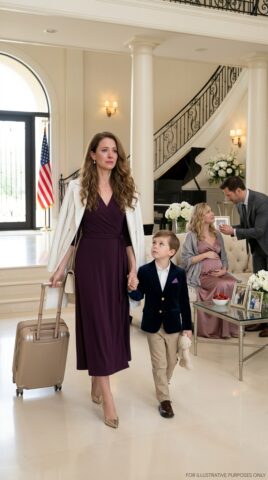
Before leaving Scottsdale, I folded Margaret’s cream cardigan inside my suitcase. The fabric still carried the faint vanilla perfume she had worn since our children were small, and preserving that familiar scent suddenly seemed more important than everything else I owned.
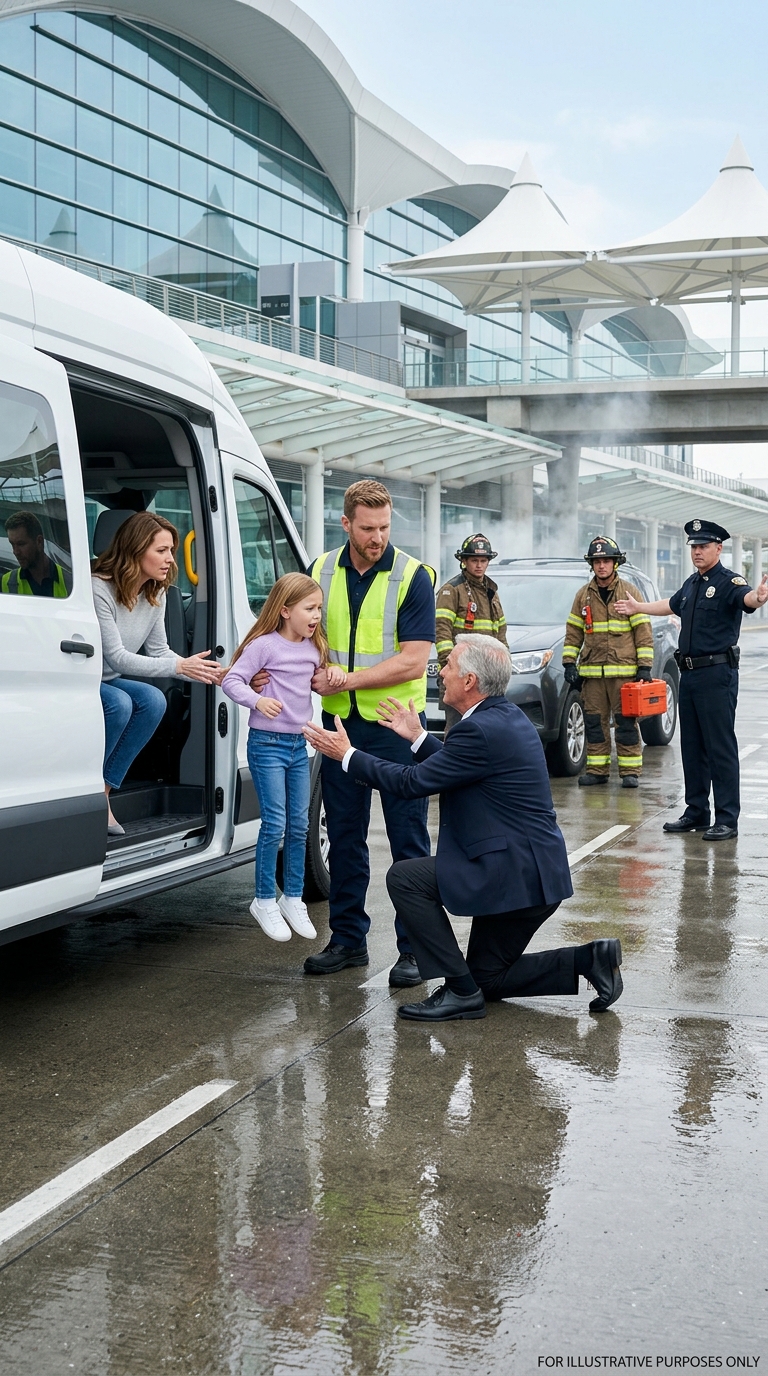
At Denver International Airport, freezing rain covered the pickup lanes with silver reflections. Families gathered beneath the terminal canopy, lifting children into embraces while drivers loaded luggage. I stood with my suitcase beside the curb, wearing the wedding ring Margaret had placed on my hand more than four decades earlier.
A rideshare application estimated that no driver would arrive for forty-five minutes. I had just accepted the delay when a hotel shuttle entered the crowded lane too quickly, swerved around a stalled vehicle, and struck a concrete divider.
The shuttle overturned against a dark SUV before both vehicles slid across the wet pavement. Steam and smoke rose from the engine compartment while frightened passengers pounded against the shattered windows.
People retreated toward the terminal as airport employees called emergency services. I left my suitcase beneath the canopy and ran toward the overturned shuttle.
Through a broken rear window, I saw a young mother hanging sideways against her seat belt while her daughter cried from the row behind her. Several passengers remained trapped beneath twisted luggage racks, and smoke had begun filling the interior.
Years spent supervising commercial construction had taught me how damaged structures shifted under pressure. I instructed two bystanders to stabilize an emergency ladder, then used a metal tire tool from the shuttle’s roadside compartment to widen the rear opening.
“Take the little girl first, because the smoke is reaching her row,” I told a baggage handler. “Keep everyone away from the front axle because the vehicle could shift.”
I crawled inside, released the child, and passed her through the opening. After returning for her mother, I helped three additional passengers move toward the rear while another bystander supported them outside.
A sixth passenger was pinned near the driver. By then, heat had begun spreading beneath the damaged SUV, and airport police ordered everyone to withdraw.
“There is still another man inside, and he cannot free his leg,” I shouted.
An officer followed me with hydraulic equipment while firefighters approached from the opposite lane. Together, we pulled the driver clear moments before flames reached the front of the SUV.
Paramedics treated my burned sleeve, scraped hands, and smoke exposure. A reporter asked my name while another camera captured me sitting beside the frightened little girl beneath an emergency blanket.
“Thomas Whitaker,” I answered. “Please focus on the firefighters because they finished what the rest of us started.”
That evening, Caleb and Natalie were eating dinner in separate homes when a local station interrupted its programming. The broadcast showed their father returning from his wife’s funeral, then entering an overturned shuttle while strangers stood back.
The reporter explained that nobody from my family had been waiting at the airport.
Caleb dropped his telephone onto the kitchen floor. Natalie replayed our family messages and finally recognized how those eleven words must have sounded to a man carrying his wife’s cardigan home alone.
Part 2: Everything Margaret Had Recorded
My telephone displayed thirty-eight missed calls when I awakened inside an airport hotel the following morning. Caleb had sent apologies throughout the night, while Natalie repeatedly offered to collect me immediately.
I turned the telephone facedown because I could not yet distinguish their concern from the shame produced by a public news report. I had no desire to punish them, but grief had left me incapable of comforting the people who had forgotten to comfort me.
Airport police returned my suitcase, and I spent most of the morning holding Margaret’s cardigan near the hotel window. For the first time since her diagnosis, I allowed myself to cry without checking medication schedules or pretending that optimism remained responsible.
Meanwhile, Caleb and Natalie entered our family home in Lakewood using the emergency key beneath the porch planter. They wanted to prepare the house before I returned, although neither knew what preparation could repair an absence that large.
Margaret’s reading glasses remained beside her favorite chair. A half-finished crossword puzzle rested on the end table, and dried hydrangeas filled the ceramic vase Natalie had given her years earlier.
Inside the bedroom closet, they discovered a maple keepsake box containing photographs, letters, and nine clothbound journals. Margaret had documented ordinary family life for decades, although the most recent volumes contained details our children had never known.
Caleb opened a journal dated seven years earlier and found his name beneath a pressed aspen leaf.
“Thomas sold the Chevrolet his father restored with him during high school. Caleb believes a collector offered such an exceptional price that refusing would have been foolish, although Thomas used every dollar to prevent the bank from foreclosing on Caleb’s struggling restaurant.”
Caleb sat against the closet wall with the journal open across his knees. He had believed an emergency investor saved the restaurant, never realizing his father had quietly provided the money through their accountant.
Natalie found another entry written during her custody dispute with her former husband.
“Natalie needs an experienced attorney, but pride prevents her from accepting our help. Thomas refinanced the workshop and arranged payment through my cousin’s legal foundation, allowing our daughter to protect herself without feeling indebted to us.”
Natalie covered her mouth as she continued reading. She had thanked the foundation publicly and eventually donated money back, while her parents remained silent about the debt secured against their property.
The journals revealed dozens of sacrifices that neither child had recognized. I postponed knee surgery because Caleb needed reliable childcare during a restaurant expansion. Margaret and I canceled an anniversary trip so Natalie’s daughter could attend a summer science program. I spent several winters inspecting mountain projects because the additional income paid medical insurance premiums for Caleb’s employees.
Nothing had been presented as heroic. Margaret described each decision as though generosity were another ordinary household expense.
The final journal contained entries from Scottsdale. Margaret wrote about the experimental treatment, the retirement account, and my habit of smiling whenever doctors presented another discouraging bill.
“Thomas believes protecting the children means hiding every cost from them, but our silence may have taught them that their father never needs anything. I fear they have mistaken his strength for an unlimited resource rather than the daily decision of an aging man who also becomes tired.”
Caleb read the passage aloud, then stared at the final message he had sent me.
“I told him to arrange a ride after he buried Mom alone,” he whispered. “He saved my business, and I could not surrender one evening.”
Natalie sat beside him with tears sliding across her face.
“I answered as though Dad had forgotten to book a restaurant table, not as though he was returning from Mom’s funeral.”
Caleb’s wife, Erin, had accompanied them but remained quiet until both siblings began discussing expensive gifts that might express their regret.
“Your father does not need another truck or a renovated house,” Erin said. “He needed two familiar faces at the airport, and your mother’s journals make the solution extremely clear.”
Between the final pages, Natalie discovered a sealed envelope addressed to both children. Margaret’s handwriting appeared weak but unmistakable across the front.
“Open this only when your father has needed you, and you arrived too late.”
Neither child opened it without me. They placed the envelope beside the journals and waited at the house until evening, when airport police drove me home.
Caleb carried my suitcase without offering explanations. Natalie warmed soup but did not insist that I eat. Their unusual restraint made the quiet house feel even larger.
When I noticed the journals arranged across the dining table, I understood that Margaret had finally told them what I never could.
Part 3: The Letter That Refused Easy Forgiveness
Natalie handed me the sealed envelope and asked whether I had ever seen it. I shook my head because Margaret never needed permission to understand our family more clearly than the rest of us.
Caleb opened the envelope carefully, then unfolded several pages covered with his mother’s increasingly uneven handwriting. Natalie began reading aloud.
“My Dear Caleb and Natalie, if you are reading this letter, then I am probably gone, while your father has attempted to protect everyone by pretending he requires nothing. You have also failed to notice a moment when he needed you, which means all three of you must finally abandon habits that love accidentally created.”
Natalie paused, wiped her eyes, and continued.
“Your father gave without keeping records, while I helped conceal the cost because we wanted you to live without guilt. However, gratitude is not the same as debt, and protecting children from every sacrifice can prevent them from learning that parents remain human.”
“Do not repay Thomas by purchasing expensive things or making promises inspired by shame. Bring coffee when nobody is watching, sit beside him when conversation feels uncomfortable, and invite him before loneliness becomes an emergency.”
“If you have hurt him, do not demand immediate forgiveness merely because remorse feels unbearable. Allow him to be angry, then prove through consistent choices that his remaining years will contain more presence than excuses.”
“Most importantly, never assume there will be another holiday, another flight, or another convenient weekend. Time rarely announces the final opportunity before taking it away.”
“With all my love, Mom.”
Nobody spoke after Natalie finished. Rain struck the kitchen windows while the refrigerator hummed behind us, and Margaret’s empty chair seemed to contain more authority than any living person.
Caleb finally looked toward me.
“Why did you never tell us about the restaurant or Grandpa’s truck?”
“Because helping you mattered more than being recognized for helping,” I replied. “Your mother and I wanted the restaurant to feel like something you saved through your own work.”
“I could have found another solution instead of taking the last thing Grandpa restored with you.”
“Perhaps you could have, although I had a solution when you needed one.”
Natalie opened the journal describing her divorce.
“You refinanced the workshop when you were already approaching retirement, but I never even asked whether the monthly payments frightened you.”
“You were trying to protect Madison while leaving a controlling marriage, and your fear was already heavy enough.”
“That explanation does not make our indifference acceptable.”
For years, I had softened every disappointment before my children could experience it. Margaret’s letter forced me to recognize that protection without honesty had allowed them to believe my needs were smaller than everyone else’s.
“You both abandoned me when I needed family at the airport,” I said. “The accident does not make your messages worse, because they were painful before anyone saw them on television.”
Caleb lowered his head, while Natalie gripped the edge of the table.
“I am ashamed that strangers recognized your loneliness before we did,” Caleb admitted. “However, I understand that shame does not entitle me to immediate forgiveness.”
“I do not know what forgiveness looks like yet,” I answered. “Your mother has been gone for six days, and everyone expects me to become a lesson before I have learned how to become a widower.”
Natalie reached toward my bandaged hand but stopped before touching it.
“Are you angry with us?”
“I am angry, disappointed, and profoundly tired, although none of those feelings means I stopped loving you.”
Caleb asked why I had defended them during the interview. Earlier that afternoon, a reporter had asked whether my children knew my arrival time, and I answered that modern families carried complicated schedules.
“You could have shown everyone our messages,” Natalie said. “Thousands of strangers would have condemned us, and we probably deserved it.”
“Public humiliation would have entertained strangers without repairing this family,” I replied. “Your mother would never want grief turned into a spectacle that followed her children forever.”
Caleb covered his eyes.
“We missed her final week because we believed another visit would always remain possible.”
Margaret had asked about them every morning in Scottsdale. She watched photographs from Caleb’s restaurant opening and Natalie’s company celebration, never criticizing their absence because she understood how easily responsible adults became trapped inside important schedules.
On her final afternoon, however, she made me promise something unexpected.
“Stop explaining every disappointment for them,” she whispered. “Love the people they can become enough to tell them when they have failed.”
I had promised, although I nearly broke that promise by dismissing the airport messages.
“Your mother knew both of you loved her,” I said. “She also knew love becomes meaningless when people continually postpone expressing it.”
We remained around the table until sunrise. Nobody requested a dramatic embrace or declared the family completely healed. We remembered Margaret’s terrible singing, her insistence upon overdecorating every Christmas tree, and the way she concealed chocolate inside vegetable containers where grandchildren never searched.
Before leaving, Caleb placed his car keys on the table.
“I am not promising anything tonight, because Mom specifically warned us about promises,” he said. “I will return Wednesday morning with coffee, and you can decide whether you want company.”
Natalie closed the journals gently.
“I will bring dinner Thursday, although I will leave it on the porch if you need space.”
Their plans were modest, which made them more believable than expensive declarations.
Part 4: Learning to Arrive Before the Emergency
Caleb returned Wednesday at eight with two cups of coffee and no hidden agenda. We sat inside my workshop while snow collected along the windows, discussing neither the accident nor the journals for nearly an hour.
The following Thursday, Natalie brought chicken casserole made from Margaret’s handwritten recipe. She had used too much rosemary, but I ate two portions without mentioning the mistake until she demanded honesty.
“Your mother measured rosemary with patience, while you measured it with unresolved anxiety,” I told her.
“Next week I will bring takeout because takeout respects emotional limitations,” she replied.
Our laughter felt unfamiliar inside the quiet house, although it did not betray Margaret’s memory. Grief gradually taught us that missing her and enjoying one another could occupy the same room.
Caleb began inviting me to breakfast every second Saturday. Natalie scheduled one family dinner each month where telephones remained inside a basket near the door. Neither arrangement was perfect, but both continued after media attention disappeared.
My grandchildren also became more present. Caleb’s son, Owen, asked me to teach him woodworking, so we built a cedar planter for the backyard. One corner leaned visibly because Owen insisted upon measuring without assistance.
“Should we start again because this side looks crooked?” he asked.
“A crooked corner can still hold something worth growing, provided the foundation remains strong,” I answered.
Owen examined the planter carefully.
“Are you talking about the planter or our family?”
“Your grandmother would say I am incapable of answering a simple question directly.”
One month after the accident, I visited the little girl rescued from the shuttle. Her name was Lucy Harper, and she remained at Children’s Hospital Colorado while recovering from a leg injury.
Lucy presented me with a drawing showing an overturned vehicle, several firefighters, and an improbably muscular gray-haired man carrying everyone simultaneously.
“My mother says you came back after everyone told you to leave,” she said
“The firefighters did most of the difficult work, while several strangers helped before they arrived.”
“You still came back for the driver.”
I studied the picture and remembered Margaret’s final months, when nurses repeatedly entered her room despite exhaustion because someone needed them.
“Sometimes courage means deciding another person’s life matters more than the fear telling you to step away.”
Lucy’s mother thanked me, although her gratitude produced complicated emotions. Saving strangers had happened during several chaotic minutes, while showing up for Margaret required fourteen exhausting months. The world celebrated the visible rescue because cameras recorded it, but nobody had filmed the quieter endurance that shaped our marriage.
The Denver Fire Department invited me to a public safety event, where an audience member asked what inspired an older man to enter an unstable vehicle.
“My wife spent more than a year reminding me that survival often depends upon somebody refusing to waste the available moment,” I answered. “When I saw those passengers, I did not feel fearless; I merely understood that hesitation also carried a cost.”
Caleb and Natalie listened from the front row. Their expressions contained pride, but also recognition that the same lesson applied far beyond burning vehicles.
Afterward, Caleb attempted to give me a check covering the money used to save his restaurant. I returned the envelope without opening it.
“Use that money to give your children experiences that remain after the restaurant changes hands,” I said. “Take them camping, attend their school performances, and close the kitchen early whenever they genuinely need their father.”
“I still owe you more than I can calculate.”
“Then stop calculating, because your mother never wanted this family managed like an account.”
Natalie offered to replace the truck I had sold, but I requested something less expensive and considerably more difficult.
“Spend one Sunday afternoon with me every month, even when there is no problem requiring your attention.”
“I can give you more than one Sunday.”
“Begin with one and continue doing it after your guilt becomes quieter.”
She honored that request throughout the following year.
Part 5: The Chair Beside Mine
On Margaret’s seventieth birthday, our family gathered in my backyard beneath the cottonwood trees she had planted shortly after we purchased the house. We prepared hamburgers, corn, apple pie, and the lemon cake she always claimed to dislike before eating two slices.
An empty chair stood beside mine with Margaret’s cream cardigan folded across the back. The gesture created sadness, although it also allowed her presence to remain part of the celebration without pretending she would return.
Caleb raised a glass of iced tea before dinner.
“For years, I believed providing money made me a responsible father and successful son,” he said. “I overlooked the man who taught me responsibility because Dad never demanded recognition for carrying everyone else.”
He glanced toward me before continuing.
“I cannot erase the message I sent after Mom’s funeral, although I can make certain Dad never again wonders whether his family will arrive.”
Natalie took my hand.
“I once told Dad he should have planned better, but the truth is that Caleb and I planned everything except time for the people who made our lives possible.”
Their words mattered, although the previous year mattered considerably more. Caleb had returned every Wednesday he promised, including mornings when conversation remained difficult. Natalie kept bringing dinners, sometimes homemade and sometimes purchased after exhausting workdays. Neither disappeared when apology stopped feeling urgent.
My family had not transformed into a flawless group of endlessly attentive people. Caleb occasionally canceled breakfast when restaurant equipment failed, while Natalie sometimes answered important calls during Sunday dinner. The difference was that nobody treated absence as invisible anymore.
We communicated disappointment without turning it into accusation, while they acknowledged mistakes without expecting me to erase my feelings immediately. Margaret’s letter had not magically repaired our relationships; it had given us instructions for performing the slower work ourselves.
As sunset reached the cottonwood branches, the grandchildren chased one another across the lawn. Owen’s crooked planter stood beside the porch overflowing with bright yellow flowers, proving that imperfect structures could still support living things.
Natalie sliced the lemon cake and placed a piece beside Margaret’s empty chair.
“Mom would say we are wasting perfectly good cake,” she observed.
“Your mother would wait until everyone went inside, then eat that slice directly from the plate,” I replied.
Caleb laughed and looked toward the grill.
“She would also say the hamburgers are burning while we make sentimental speeches.”
Smoke rose behind him, confirming that Margaret would have been correct. Everyone hurried toward the grill while I remained beside her chair, listening to the familiar confusion of family members interrupting one another.
Grief had not disappeared, although it no longer required an empty house. It had learned to share space with grandchildren, imperfect recipes, Wednesday coffee, and laughter that occasionally arrived without warning.
I once believed families broke during extraordinary betrayals, but experience taught me that distance usually accumulated through smaller decisions. A postponed visit, an unanswered call, or an impatient message seemed harmless when everyone assumed another opportunity remained available.
Margaret understood that time rarely announced which invitation would become the last. She also understood that guilt could produce one dramatic gesture, while love required the discipline of returning after nobody was applauding.
The airport rescue brought my children back to the house, but public embarrassment could not keep them there. The journals revealed what I had sacrificed, although gratitude alone could not rebuild trust. The letter showed them what to do next, and their repeated presence finally gave those instructions meaning.
Before everyone left that evening, Natalie asked whether I still carried anger about the airport.
“Some part of that hurt will probably remain because forgiveness does not rewrite memory,” I answered. “However, the memory no longer stands alone, because you have placed many better moments beside it.”
Caleb embraced me without rushing toward his telephone afterward.
“We should have been waiting when you arrived.”
“Yes, you should have been there.”
“Thank you for giving us enough time to become better.”
I looked toward Margaret’s chair before answering.
“Your mother gave us that time, and none of us should waste it.”
After the final car left, I carried her cardigan into the house and placed it inside the cedar chest. I no longer needed the fabric beside me to believe that our marriage remained part of everything ahead.
The following morning, Caleb arrived unexpectedly with coffee, while Natalie joined us carrying breakfast sandwiches. Nobody was injured, grieving, or trapped inside a public emergency. No camera recorded their arrival, and no audience praised them for coming.
They simply appeared before being needed.
Margaret had written that time was the only repayment she wanted our children to offer. Standing in the doorway while cold morning air followed them inside, I finally understood why.
Money could restore a bank account, while gifts could replace possessions sold years earlier. However, only presence could answer the loneliness of an empty arrival gate, an unoccupied hospital chair, or a silent kitchen after the person who filled it had gone.
My children could never return to the airport evening and choose differently. They could only decide how they would respond to every invitation that remained.
This time, before I could ask, they were already home.
THE END