PART 2
The hotel room looked like every expensive hotel room designed for women like me—clean lines, ocean-colored art, soft lamps, sheets so white they seemed untouched by human suffering. I locked the door, slid the chain into place, and stood barefoot on the carpet while the message burned on my phone.
Grant has done this before.
Before what?
Before Madison?
Before me?
Before Owen died?
My hands trembled so hard I had to sit on the edge of the bed. I typed back, Who is this?
No answer.
I called the number. Straight to voicemail. No greeting. No name.
For five minutes, I stared at the screen like it might confess on its own. Then I did the only thing that made sense. I called my mother.
Eleanor Harper answered on the second ring.
“Natalie,” she said, fully awake though it was past one in the morning. “Tell me where you are.”
The sound of her voice broke me.
I told her everything. The bra. The bedroom. Madison. The child. Grant’s plan. Vivian’s involvement. The anonymous message.
My mother did not gasp. She did not cry. That almost frightened me more.
When I finished, she was quiet for several seconds.
Then she said, “You did well not to confront him.”
“Mom, did you know?”
“I suspected Grant was hungry,” she said. “I did not know how evil he was.”
Hungry.
That was my mother’s word for people who looked at other people’s lives like dinner plates.
“I’m scared,” I whispered.
“Good,” she said. “Fear will keep you alive. Panic will get you killed. Do not confuse the two.”
I closed my eyes.
My mother had built her own fortune in Chicago real estate before marrying my father. She could smile through charity lunches and destroy a contract before dessert. She had never liked Grant, but she had respected my choice. Or so I thought.
“I had someone watching from a distance,” she admitted. “Not inside your marriage. Only the edges. Finances. Public records. His family’s debts.”
“You investigated my husband?”
“I protected my daughter.”
I wanted to be angry. I couldn’t afford anger yet.
“What do I do?”
“You go home tomorrow,” she said. “You act tired. You act trusting. You act exactly like the woman they believe they fooled. Then you let them walk deeper.”
“Into what?”
“A trap big enough for all of them.”
The next morning, I returned to the house wearing a cream business dress, diamond studs, and the expression of a woman too exhausted to notice betrayal. Vivian was in the living room, sitting upright on the sofa like a judge waiting for a defendant.
“Natalie,” she said. “Long night?”
“Company emergency,” I replied. “Nothing dramatic.”
Her eyes moved over me. “Everything is dramatic with your company.”
I smiled. “That’s why it pays the mortgage.”
Her mouth tightened, but she said nothing.
Grant and Madison came home around noon. Together.
Grant hugged me. I let him. His cologne made my stomach turn.
“You should have called me,” he said. “I was worried.”
Madison stood behind him, her face arranged into concern so convincing that a stranger would have believed she loved me.
“I barely slept,” she said. “We were all worried.”
All.
I almost laughed again.
Instead, I touched her arm and said, “You’re sweet.”
Her eyes flickered.
That afternoon, I cooked lunch. I asked Grant about work. I listened to Vivian complain about the neighbor’s landscaping. I let Madison tell a story about a coworker who had confused almond milk with coffee creamer. We looked like a family. We sounded like a family.
But beneath the table, my nails dug half-moons into my palm.
After lunch, while I washed dishes, Vivian joined me in the kitchen.
“You look pale,” she said.
“Jet lag.”
“Or overwork,” she replied. “A wife who spends all her energy on a company leaves very little for her husband.”
I turned off the faucet and looked at her reflection in the window.
“I’ll try harder,” I said softly.
She smiled.
She believed submission meant weakness.
Good.
That evening, my mother called. Her voice was calm and precise.
“Our attorney will contact you tomorrow. His name is Marcus Blackwell. He handled your father’s estate. Do exactly what he says.”
“Mom, who sent the text?”
“I’m trying to find out.”
“You think I’m in danger?”
“I think Grant Whitmore did not become this bold overnight.”
The next day, the first crack appeared.
Madison was in the living room, speaking quietly on the phone. I was in the hallway, invisible behind the curve of the staircase.
“Yes,” she whispered. “Tomorrow afternoon. Pacific Women’s Medical Center. Genetic screening results.”
My pulse sharpened.
Genetic screening.
Madison was pregnant again.
That night at dinner, I played my part.
I barely touched my food. I pressed a hand to my stomach and let my face drain of color.
Grant noticed. “What’s wrong?”
“Nothing. Stress, probably.”
Vivian set down her fork. “A woman your age shouldn’t ignore symptoms.”
Perfect.
“I made an appointment tomorrow,” I said. “Pacific Women’s Medical Center. Just a routine check.”
Madison’s hand froze around her water glass.
Grant coughed.
Vivian’s eyes narrowed, but she nodded. “Good. It’s time you took your health seriously.”
The next afternoon, I parked across from the clinic and waited in a dark SUV my mother had arranged. At 2:11 p.m., Madison arrived in a taxi wearing sunglasses and a loose navy dress. She looked over both shoulders before entering.
I followed ten minutes later.
From behind a column in the obstetrics wing, I watched her receive an envelope from an older doctor. Madison opened it, read one page, and went white.
Then she walked toward the elevators.
She did not go down.
She went up.
To the rooftop.
By the time I pushed open the metal rooftop door, the wind was tearing at my hair. Madison stood near the railing, one hand on her stomach, the paper crushed in her fist.
“Madison!” I shouted.
She turned.
For the first time since I had known her, the mask was gone.
Her face was pure terror.
“Natalie?” she whispered. “Why are you here?”
“Step away from the edge.”
“Don’t come closer.”
“Madison, step away.”
“You don’t understand,” she cried. “If this baby isn’t perfect, I’m dead to them.”
The paper flew from her hand. I grabbed it before the wind carried it away.
Genetic risk marker detected. Further testing recommended.
It was not a death sentence. It was not certainty.
But to Madison, it was the end of her value.
Her phone buzzed on the concrete between us.
Vivian.
Then a text appeared.
Did the test confirm a healthy boy? The lawyer says once we document Natalie’s infertility and your pregnancy, Grant can demand a major settlement and pressure her company board. Do not disappoint this family.
I read it twice.
There it was.
Their real plan.
They were going to use my pain, my years of failed fertility treatments, as a weapon. They would present Madison’s baby as the Whitmore heir and me as the cold, defective wife who valued business over family.
They did not only want my husband.
They wanted my name, my company, my dignity, and my future.
Madison sank to her knees.
“They’ll throw me away,” she sobbed. “They’ll take Liam. They’ll take everything.”
I looked at her and felt no forgiveness.
But I saw an opening.
“Then stop helping them,” I said.
She looked up.
“Help me destroy them first.”
PART 3
Madison stared at me as if I had offered her a loaded gun.
“You hate me,” she said.
“Yes.”
“Then why would you help me?”
“I’m not helping you,” I said. “I’m using you. The difference is that I’m telling you the truth.”
The wind whipped across the rooftop, carrying the smell of rain from the Pacific. Below us, cars moved through San Diego like toys. People were living normal lives down there. Buying coffee. Arguing over parking spaces. Picking up dry cleaning. They had no idea that two women stood above them, bound by the same man’s lies.
Madison wiped her face. “What do you want?”
“Everything they know. Every message. Every account. Every secret.”
“And in exchange?”
“I won’t pursue you for what you did to me. I’ll help you protect your children from Vivian and Grant. You will leave California when this is over.”
Her hand moved to her stomach. “You’d let me keep my baby?”
“That baby is not guilty.”
Madison cried harder at that than at the test results.
For the next hour, we sat on the rooftop while she told me enough to make me feel physically ill. Grant and Madison’s affair had begun six months after Owen’s death, she claimed. Grant had first comforted her, then kissed her, then convinced her that Owen would have wanted them to “take care of each other.” When Liam was born, Vivian insisted the child remain hidden until Grant could “cleanly transition” out of my marriage.
“And my company?” I asked.
Madison looked away.
“They said you were selfish. That you didn’t deserve what you had. Vivian said Harper Meridian should belong to a real family.”
“A real family,” I repeated.
My voice sounded calm. Too calm.
Madison nodded. “Grant has debts. Bigger than you know. Private investments. Gambling, maybe. I never saw the numbers.”
That night, Marcus Blackwell came to my office after everyone had left. He was in his late sixties, silver-haired, broad-shouldered, and dressed like every courtroom in America had disappointed him personally.
He watched the videos. He read Vivian’s text. He examined the screenshots from Madison’s phone.
When he finished, he removed his glasses and said, “Mrs. Whitmore, your husband is either stupid, arrogant, or very dangerous.”
“Can he touch my company?”
“Not if we move first.”
We moved first.
The following morning, a legal notice from Blackwell & Crane was delivered to Grant at his office and Vivian at the house. It warned them to cease harassment, intimidation, fraudulent asset claims, and any effort to interfere with Harper Meridian.
The reaction was immediate.
Grant came home early, pale and furious. Vivian followed him into the living room with the letter clutched in her hand.
“How would she know?” Vivian hissed.
I stood in the kitchen, slicing lemons for iced tea, listening.
“Maybe Madison talked,” Grant snapped.
“Don’t be absurd,” Vivian said. “That girl depends on us.”
I smiled down at the cutting board.
Dependency was a poor substitute for loyalty.
When Grant entered the kitchen, I looked up with wide eyes. “Is everything okay?”
He studied me.
“What did your lawyer contact my mother about?”
“My lawyer?” I blinked. “Oh. Marcus? He reviews company risk. Maybe something crossed over from the prenuptial documents.”
His face twitched.
“You didn’t tell me you were reviewing anything.”
“I didn’t think I needed to. It’s routine.”
Routine.
A small word. A sharp blade.
Over the next week, my house became a pressure cooker. Grant watched me when he thought I wasn’t looking. Vivian tested me with remarks about marriage and loyalty. Madison performed beautifully, glowing over her “healthy baby boy,” telling Vivian exactly what she wanted to hear.
Meanwhile, I set the second trap.
My mother’s people created a fake investment opportunity: a luxury resort project in Florida with beautiful projections, urgent timelines, and enough profit potential to make a greedy man lose sleep. I left the binder in my home office, labeled confidential.
Grant found it the same night.
The next morning, he brought it up over coffee.
“I heard South Florida development is exploding,” he said casually.
I kept my eyes on my laptop. “Some projects are promising.”
“Anything you’re involved in?”
I hesitated just long enough to make him lean forward.
“There’s one,” I said. “But it requires a private capital bridge. Half a million.”
His eyes lit up.
“Half a million for what return?”
“Potentially fifty percent in six months.”
“Natalie,” he said, laughing softly, “that’s not a risk. That’s an opportunity.”
“I don’t like mixing personal money with company matters.”
“But we’re married.” He reached for my hand. “Let me help.”
His touch felt like a snake crossing my skin.
A week later, Grant signed loan documents in his own name, believing he had secured his place in my “private investment.” Marcus structured it so every dollar Grant borrowed went into a controlled escrow tied to fabricated due diligence. Not illegal. Not theft. Simply a mirror held up to his greed.
Grant signed without reading half the documents.
That afternoon, Marcus called me into his office.
“There’s something else,” he said.
His tone made the room shrink.
“Our investigator looked into Owen Whitmore’s death.”
Owen.
Grant’s older brother. Madison’s first husband. The kind one. The one who had died five years ago in a car crash on Interstate 5.
“What about it?”
Marcus folded his hands.
“The crash report said Owen fell asleep at the wheel. But a truck driver behind him reported seeing movement inside the car before it swerved. A struggle.”
My throat tightened.
“Grant told us he was asleep in the back.”
“He was not,” Marcus said. “Hospital records place his injuries on the passenger side. Minor bruising consistent with a restrained passenger.”
I gripped the chair.
“Why would he lie?”
Marcus’s face darkened. “One week after Owen’s death, his shares in D&M Ventures transferred to Grant under a revised will. Grant also received a significant life insurance payout.”
The office turned silent.
I thought of the anonymous text.
Grant has done this before.
I understood then.
The enemy was not just a cheater.
He might be a murderer.
That night, I lay beside Grant in bed, fully dressed under the covers, listening to him breathe.
In his office downstairs sat a small black safe he guarded obsessively.
For years, he claimed it held family keepsakes.
Now I wondered how many ghosts were locked inside.
PART 4
Vivian’s birthday gave me the stage.
Every year, she demanded a celebration tasteful enough to impress her friends and expensive enough to remind everyone she had married into comfort. This year, I booked the private dining room at Marisol, a cliffside restaurant in La Jolla with crystal chandeliers, white tablecloths, ocean views, and a discreet American flag near the entrance because the owner was a former Marine and liked ceremony.
Vivian was delighted.
“Finally,” she said, examining the guest list. “You remembered family matters.”
“I never forget family,” I replied.
She did not hear the warning.
That afternoon, the house became a theater of vanity. Vivian wore emerald silk and enough diamonds to signal rescue planes. Grant adjusted his cuff links like a man rehearsing for a photograph. Madison wore a soft blue maternity dress, one hand always resting on her stomach, smiling whenever Vivian looked her way.
I wore black.
Not mourning black.
Judgment black.
Before we left, Grant stepped onto the balcony to take a call. I moved quickly into his office.
The safe crouched beneath his desk.
I had two minutes. Maybe less.
I tried his birthday.
Wrong.
Our wedding date.
Wrong.
Madison’s birthday.
Wrong.
My heartbeat hammered so loudly I could barely think. Then I looked at the framed photo on his desk: Grant and Owen as boys, sunburned and grinning on a fishing pier. At the bottom, a brass plaque read: D&M Ventures, Founded May 14.
I entered 0514.
Click.
The safe opened.
Inside were folders, an old phone, and insurance documents.
One policy for Owen.
One policy for me.
Both named Grant as the primary beneficiary.
The amount on mine made my vision blur.
Then I opened the old phone.
There were messages from an unsaved number.
Brake line adjusted. It won’t fail immediately. It’ll pull hard when pressure hits.
Grant’s reply: Make it look like panic.
Another message: Your brother can’t suspect.
Grant: He trusts me. Everyone does.
I stopped breathing.
I photographed everything. The policies. The phone. The messages. The serial numbers. Then I sent them to Marcus and my mother.
Grant called from the doorway.
“Natalie?”
I shoved everything back, closed the safe, and stood with a lipstick tube in my hand.
“Found it,” I said.
He smiled. “You look beautiful.”
“So do liars,” I almost said.
Instead, I kissed his cheek.
At Marisol, the private room glowed with candlelight. Relatives and family friends filled the tables. Vivian held court at the center, accepting compliments like tribute. Grant sat to her right. Madison sat near him, radiant with false innocence.
I waited until dessert.
A three-tier white cake rolled in. Everyone sang. Vivian closed her eyes and made a wish.
When she blew out the candles, I stood and tapped my glass.
“I’d like to say a few words.”
Vivian smiled proudly. “Of course, dear.”
I walked to the small screen where the restaurant usually displayed family slideshows. Marcus stood near the back entrance. My mother sat at the far end of the room, elegant in navy, her face unreadable.
Grant noticed her and stiffened.
“First,” I said, “happy birthday, Vivian. You’ve taught me so much about family.”
Light laughter moved around the room.
“You taught me that family is not what people say at dinner. It is what they do when they think no one is watching.”
Grant’s smile faded.
I clicked the remote.
The first image appeared.
The black lace bra on my bedroom doorknob.
A murmur rippled through the room.
Grant stood halfway. “Natalie—”
“Sit down,” my mother said.
Her voice was quiet, but he sat.
The next slide showed a still from my video: Grant and Madison in my bedroom, faces clear enough that no one needed explanation.
Madison lowered her head.
Vivian’s mouth opened.
I played only the audio. Not the image. I was not cruel enough to expose bodies. Only truth.
Grant’s voice filled the room.
Once I get control of Natalie’s company, I’ll divorce her. Then you and Liam can move in here where you belong.
A woman gasped.
Someone dropped a fork.
Vivian rose. “This is outrageous. This is private marital—”
“Fraud,” Marcus said from the back. “The word you’re looking for is fraud.”
I clicked again.
Photos from Madison’s hidden album appeared. Grant with Madison in Paris. Grant holding baby Liam. Vivian holding the child in what looked like a rented apartment, smiling like a proud grandmother.
The room erupted.
A cousin shouted, “Liam? Who the hell is Liam?”
Grant lunged toward the screen, but two security guards stepped into his path. They were not restaurant staff. My mother had arranged them.
I clicked again.
Vivian’s text appeared.
The lawyer says once we document Natalie’s infertility and your pregnancy, Grant can demand a major settlement and pressure her company board.
This time, no one spoke.
The silence was worse than shouting.
Vivian’s face had turned gray.
“You had no right,” she whispered.
“To find out you were using my infertility as a weapon?” I asked. “Or to survive it?”
Madison stood.
Her hands shook, but her voice held.
“She’s telling the truth,” she said. “Vivian planned all of it. Grant promised me he would divorce Natalie after taking the company. They hid Liam. They used me.”
Grant spun toward her. “You stupid—”
“Careful,” Marcus said. “Police are already on their way.”
Grant froze.
Then I clicked to the final folder.
Owen’s insurance policy.
My insurance policy.
The burner phone messages.
A low, horrified sound moved through the room like wind before a storm.
Vivian grabbed the table. “Grant?”
Her voice cracked for the first time all night.
Grant’s face changed.
Not guilty.
Not afraid.
Empty.
The mask simply fell off.
“You think you’re so smart,” he said to me. “You think money makes you untouchable.”
“No,” I said. “Evidence does.”
The doors opened.
Two detectives entered with uniformed officers behind them.
Grant looked toward the balcony exit, but security blocked it.
Detective Alvarez stepped forward. “Grant Whitmore, we need you to come with us.”
“For what?” Grant snapped.
“Fraud, conspiracy, and questioning in relation to the death of Owen Whitmore.”
The room exploded.
Vivian screamed.
Madison sobbed.
Grant stared at me with hatred so pure it almost looked like love turned inside out.
As they handcuffed him, he leaned close enough to whisper, “You’ll regret this.”
I looked at the man I had loved for seven years and felt nothing but relief.
“No,” I said. “That was your mistake. I already regretted loving you. This is me recovering.”
PART 5
The arrest did not end the war.
It only dragged the war into daylight.
The next morning, Grant’s face was everywhere. Local news called it “The La Jolla Birthday Scandal.” Business outlets focused on Harper Meridian. True crime forums found Owen’s crash report within hours. Vivian hired a criminal defense attorney famous for television interviews and moral outrage. Grant’s attorney claimed the evidence had been “manipulated by a vindictive spouse.”
I did not respond publicly.
Marcus did.
He filed for divorce, asset protection, a restraining order, and civil damages before lunch.
My company board met in emergency session. I walked into that room expecting fear. Instead, my COO, Rachel Kim, stood and said, “We’re with you.”
I almost cried.
Not from sadness this time.
From being believed.
The criminal investigation moved faster than anyone expected because Grant, arrogant even in custody, made mistakes. The burner phone led detectives to a mechanic named Paul Hensley, who had once worked for D&M Ventures. Hensley had debts, a record, and a storage unit full of cash withdrawals that matched the timing of Owen’s death.
At first, he denied everything.
Then police showed him Grant’s messages.
He flipped by evening.
Hensley confessed that Grant had paid him to tamper with Owen’s brake system. The plan had been for Owen to lose control on a steep curve while Grant survived as the grieving brother. Hensley had not known Grant would be in the car. Grant had insisted on riding along to “make sure Owen took the right road.”
My stomach turned when Marcus told me.
“He sat beside him,” I whispered. “He watched his own brother die.”
Marcus’s face was grim. “Worse. The truck driver said Owen seemed to be fighting for the wheel.”
In the following weeks, Madison testified before a grand jury. She admitted to the affair, the hidden child, Vivian’s pressure, and Grant’s financial desperation. She claimed she had not known about Owen’s murder.
I believed her about that.
Not because she deserved trust.
Because when detectives told her how Owen died, she collapsed so violently they called a paramedic.
Vivian tried to save herself by blaming Grant. Then Madison produced voice recordings from the weeks after the rooftop alliance. In them, Vivian discussed strategy, lawyers, my fertility records, and how to “keep Madison obedient until the baby is useful.”
Those recordings ended Vivian’s performance as a concerned mother.
The civil case settled quickly. Grant’s claim to my assets evaporated. The Florida investment trap became evidence of his willingness to manipulate marital finances, though Marcus had kept everything legal and controlled. The loan remained Grant’s responsibility. The escrow funds were returned to the lender. His credit collapsed.
The divorce took longer.
Grant fought everything.
The house.
The art.
The anniversary watch I had left in the hallway that night.
He even asked for a share of Harper Meridian, as if audacity alone could rewrite the law.
The judge was not amused.
In court, Grant looked smaller than I remembered. Without tailored suits and charming lies, he was just a handsome man with empty eyes.
His attorney tried to make me look cold.
“Mrs. Whitmore, isn’t it true you prioritized your career throughout the marriage?”
I leaned toward the microphone.
“Yes. I prioritized building a company that paid for the home where my husband hid his mistress.”
The courtroom went silent.
The judge looked down to hide what might have been a smile.
Six months after the birthday party, Grant was indicted for first-degree murder in Owen’s death, insurance fraud, conspiracy, and attempted financial fraud against me. Vivian was charged with conspiracy, fraud, and obstruction. Paul Hensley took a plea deal in exchange for testimony.
Madison received limited immunity for cooperating in the financial conspiracy, though she lost any claim to comfort from the Whitmore family. She moved to Oregon with Liam before the baby was born. I kept my promise. I gave her enough money for rent, medical care, and a lawyer to protect custody.
People asked why.
Friends. Reporters. Even Rachel.
“She betrayed you,” Rachel said gently.
“Yes,” I replied. “But her children did not.”
The baby was born three months early, a little boy named Owen.
Madison sent me one photo.
I stared at it for a long time.
Then I deleted the message.
Some doors should close without hatred standing guard.
The murder trial began the following spring in San Diego County Superior Court.
The prosecution laid out Grant’s life like a map of rot. Gambling debts. Failed investments. Resentment of his brother. Jealousy of my success. A pattern of using women for financial shelter. The insurance policies made the jury shift in their seats. The burner phone made them stare. The truck driver made one juror cry.
Then came Grant’s testimony.
Against his attorney’s advice, he took the stand.
Narcissists cannot resist an audience.
He began calm. Charming. Wounded.
He described himself as a loving brother, misunderstood husband, desperate man trapped by powerful women.
Then the prosecutor asked, “Mr. Whitmore, if you loved your brother, why did you lie about where you were seated in the vehicle?”
Grant’s jaw tightened.
“I was confused.”
“For five years?”
“I had trauma.”
“Enough trauma to forget the passenger seat, but not enough to forget collecting the insurance payout?”
Grant’s mask slipped.
The prosecutor pressed harder.
“Did Owen discover you were sleeping with his wife?”
Grant’s eyes flashed.
Madison, sitting behind me, sucked in a breath.
The courtroom felt electrified.
Grant said nothing.
The prosecutor repeated, “Did Owen discover the affair before he died?”
Grant leaned into the microphone.
“Owen had everything,” he said coldly. “He always had everything.”
His attorney closed his eyes.
That sentence did more damage than any confession could have.
Three days later, the jury returned.
Guilty.
Guilty.
Guilty.
Grant did not look at Madison.
He looked at me.
As if I had betrayed him by surviving.
PART 6
Sentencing happened on a gray morning, the kind of morning when the ocean disappears behind fog and the whole city seems to hold its breath.
I almost did not go.
My therapist told me closure was not a courtroom. My mother told me I owed him nothing. Rachel told me the company could handle my absence.
But Owen had no voice anymore.
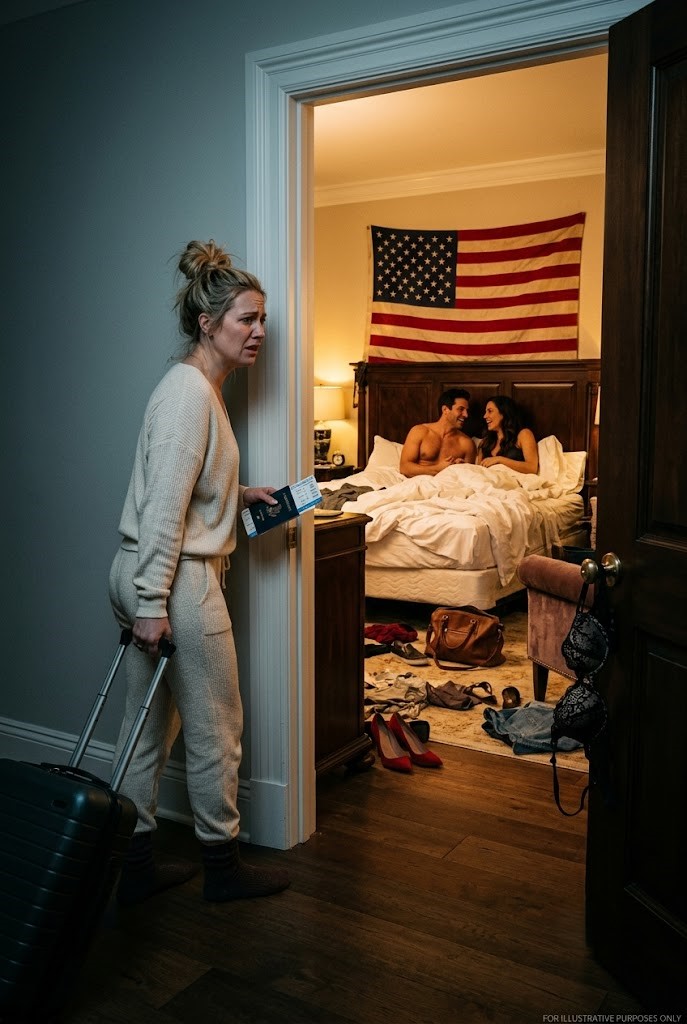
And the woman I had been—the woman who came home with an anniversary gift and stood outside her own bedroom door—deserved to see the ending.
Grant received life in prison with no possibility of parole for decades. Additional sentences for fraud would run consecutively. Vivian received prison time for conspiracy and obstruction, less than I wanted, more than she expected. When the judge spoke, Vivian cried loudly into a tissue. The performance was wasted. No one believed her anymore.
Grant declined to speak at sentencing.
Cowardice often dresses itself as dignity.
I did speak.
I stood at the podium and looked not at Grant, but at the judge.
“For seven years, I believed I was building a marriage,” I said. “In reality, I was living inside someone else’s plan. My husband did not simply cheat. He studied my trust. He used my grief over infertility. He used his mother. He used Madison. He used his son. And before all of that, he used his brother’s love to lead him toward death.”
My voice shook once.
I let it.
“I used to wonder what I did wrong. Now I know the answer. I trusted people who had mistaken kindness for weakness. That is not my shame. It is theirs.”
Grant stared at the table.
I continued.
“Owen Whitmore deserved a brother. I deserved a husband. Madison’s children deserved a father who saw them as human beings, not leverage. None of us received what we deserved from Grant. But today, we receive something else. We receive truth.”
Afterward, outside the courthouse, reporters shouted my name. I walked past them with my mother on one side and Rachel on the other.
“Natalie, do you feel vindicated?” someone yelled.
I stopped.
Not because I owed them an answer.
Because a younger version of me would have wanted to hear it.
“I feel free,” I said.
Freedom was not immediate.
It came strangely.
In the first quiet week after sentencing, I returned to the La Jolla house alone. The furniture remained. The ocean still glittered beyond the windows. The bedroom had been professionally cleaned, repainted, redesigned. It still felt haunted.
I sold the house within a month.
Not because I had to.
Because I could.
I moved into a smaller home in Coronado with white walls, blue shutters, and no memories hiding in the corners. My mother stayed for two weeks, pretending she was only there to help arrange furniture. At night, we drank tea on the porch while the bay turned silver.
One evening, she said, “You know, I wanted to tell you not to marry him.”
“I know.”
“Why didn’t I?”
“Because I wouldn’t have listened.”
She smiled sadly. “No. Because love has to learn some lessons by itself. I only wish yours had been gentler.”
I reached for her hand.
“It made me harder.”
“No,” she said. “It made you clearer.”
Harper Meridian survived the scandal. More than survived. Clients stayed. New ones came. People trusted a CEO who had been tested publicly and did not collapse. I created a new internal policy preventing spouses or family members from holding any influence over executive equity without independent board review.
Rachel called it “The Never Again Clause.”
I called it common sense.
A year after Grant’s sentencing, I stood in a renovated community center in San Diego and unveiled the Owen Whitmore Foundation for Financial Abuse Survivors. Owen’s parents attended. They had been distant after his death, swallowed by grief and Vivian’s manipulation. When the truth came out, they reached for me slowly, painfully, like people emerging from a burning house.
Owen’s mother hugged me so tightly I could barely breathe.
“You gave my son back his name,” she whispered.
I had no answer.
Sometimes justice is not about fixing the world.
Sometimes it is about refusing to let a lie be the final story.
Madison never came back to California. She wrote once, a long letter on pale stationery. She apologized without excuses. She told me Liam was in preschool, baby Owen was in therapy and doing better than expected, and she had found part-time work at a library.
At the end, she wrote: I know forgiveness is too much to ask. I only want you to know that every day, I remember you could have destroyed me, and instead you saved my children.
I folded the letter and placed it in a drawer.
I did not forgive her then.
Maybe I never fully would.
But I stopped carrying her like a stone.
Two years later, I traveled to Washington, D.C., to testify before a Senate committee about financial coercion, marital asset abuse, and the ways private companies could protect founders from predatory spouses. I wore a white suit. Not bridal white. Battle white.
After the hearing, a young woman approached me outside the chamber.
“My husband keeps asking me to sign papers,” she whispered. “He says I’m paranoid if I want a lawyer.”
I took her hand.
“Get the lawyer.”
She started crying.
I understood those tears.
They were not weakness.
They were the sound of a woman waking up.
That night, from my hotel balcony overlooking the lights of D.C., I thought about the black lace bra on the doorknob. Such a small thing. Cheap fabric. Careless arrogance. A warning disguised as humiliation.
For a long time, I wished I had never come home early.
Now I know better.
Coming home early saved my life.
It saved my company.
It gave Owen justice.
It gave Madison’s children a chance to grow up away from the people who would have used them.
And it gave me back to myself.
The woman who walked into that house with an anniversary gift was not stupid. She was loyal. She was hopeful. She believed the best of people because she had offered the best of herself.
The woman who walked out was not broken.
She was unfinished steel.
And in the fire, she became something no one in the Whitmore family had prepared for.
Uncontrollable.