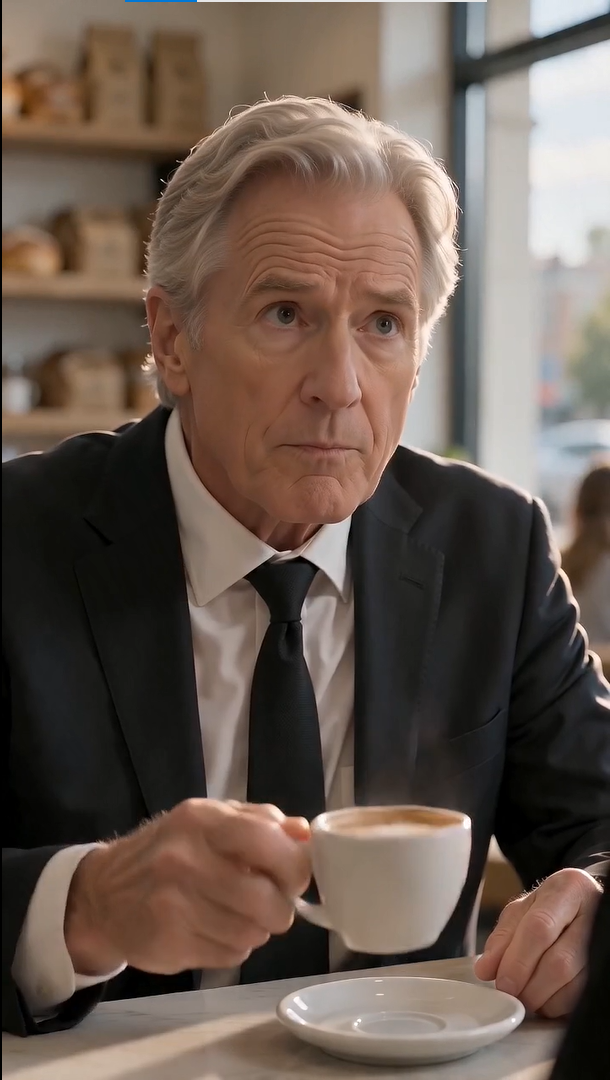
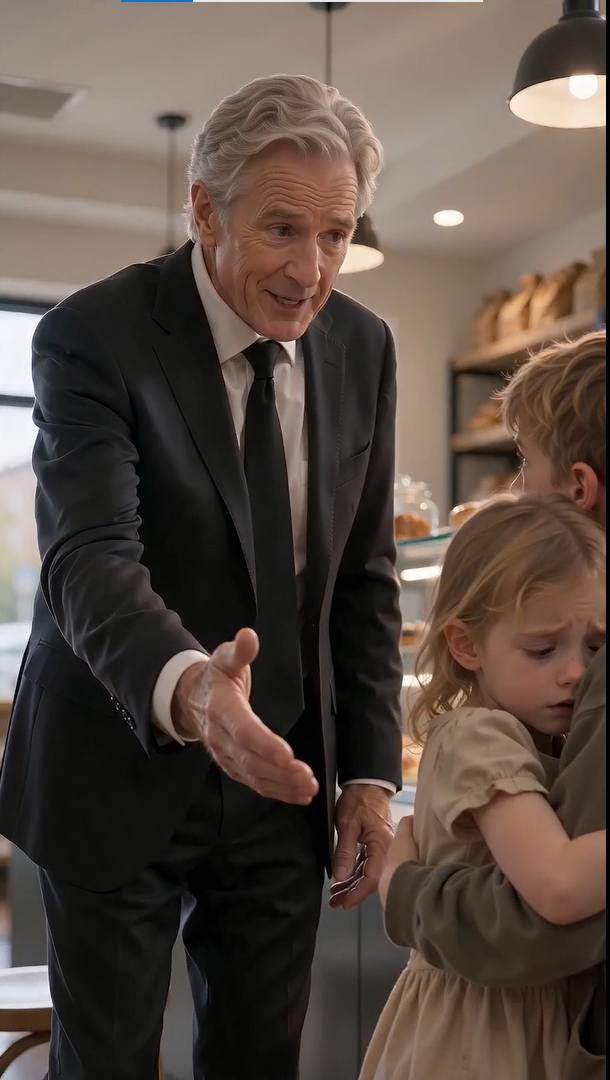
For a moment, the older man could not move.
The letter trembled so badly in his hands he had to grip it with both of them.
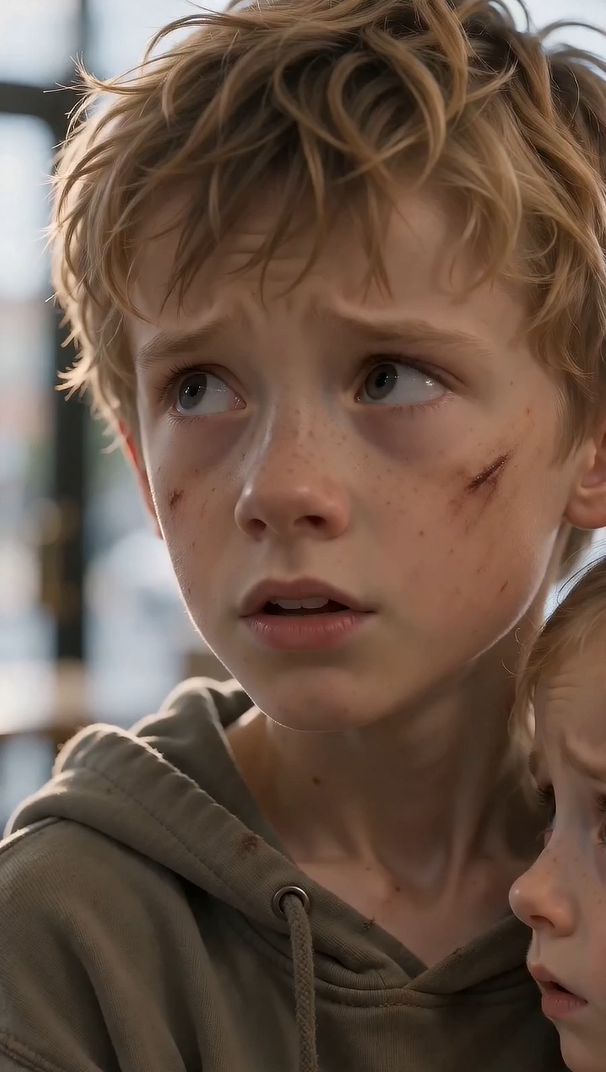
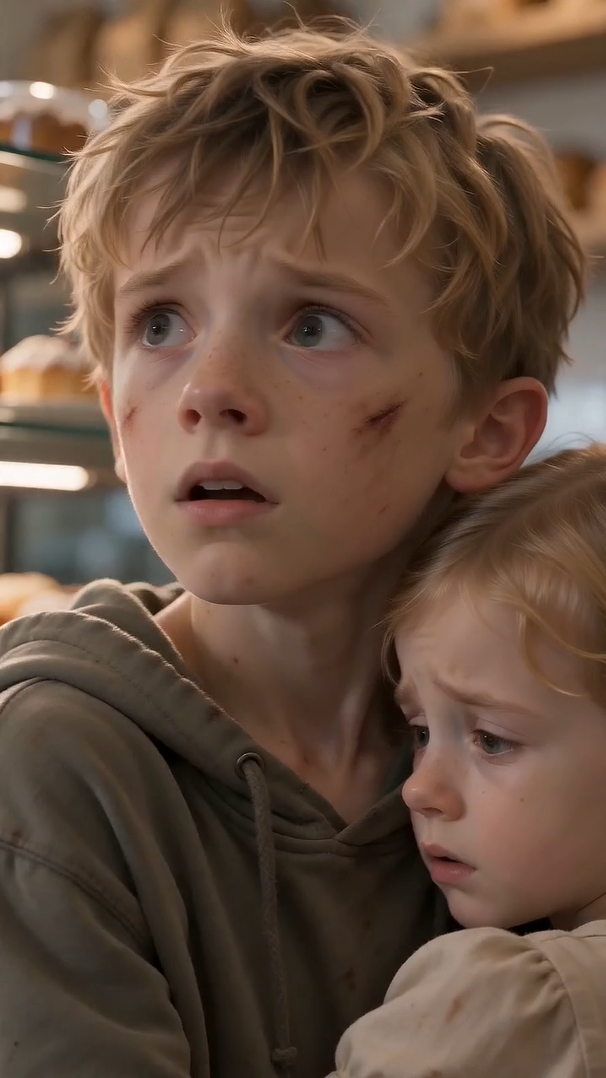
The boy stood frozen, still holding Lily.
He looked like he wanted to run, but hunger, fear, and hope had pinned him to the floor.
The man forced himself to keep reading.
I don’t know if this letter will ever reach you.
I know you stopped being my father the day I chose love over your approval.
But these children are innocent.
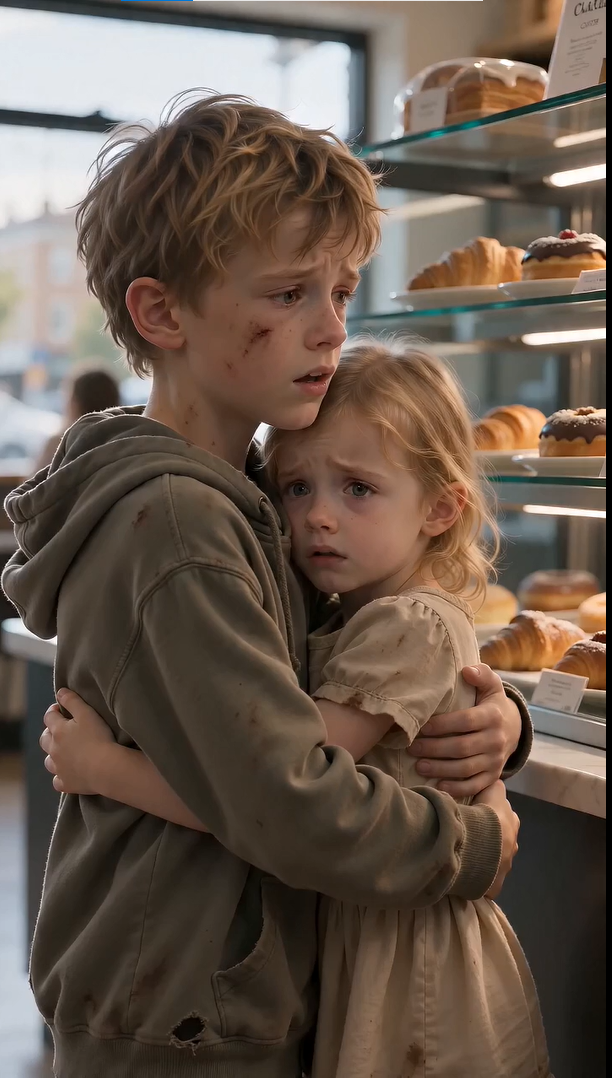
Sam has tried to protect Lily the way I protected him. He is only a child, but life made him older.
If I am gone, and they ever come to you, please don’t punish them for being mine.
Lily is the granddaughter you never met.
Sam is the boy who stayed when everyone else left.
If you still have any love for me, feed them first. Ask questions after.
By the time he reached the end, tears were running openly down his face.
No one in the bakery spoke.
Not the worker.
Not the customers.
Not even the toddler.
The older man lowered the letter and looked at the children as if he had been handed back the only part of his daughter that still remained in the world.
The boy’s voice came out small, guarded, and tired.
“Are you him?”
The man couldn’t answer at first.
He nodded once, then twice, like he hated himself for how late it was.
“Yes,” he whispered. “I’m her father.”
The boy tightened his hold around Lily instantly.
Not because he was emotional.
Because he was protective.
Because life had taught him that adults could say beautiful things and still leave.
The man saw that too.
And that hurt even more.
“What’s your name?” he asked.
“Sam.”
“And Lily is your sister?”
Sam nodded.
The toddler finally lifted her tear-streaked face and looked at the man properly.
He stared at her like she was a miracle and a punishment at the same time.
Then Lily reached one tiny dirty hand toward him and asked the question that destroyed whatever pride he had left.
“Did you know my mommy?”
The man covered his mouth.
A broken sound came out of him — half sob, half breath.
“Yes,” he said. “She was my daughter.”
Lily blinked.
Sam went still.
The whole bakery seemed to hold its breath.
Then Sam asked, very quietly, “If she was your daughter… why were we hungry?”
That question hit harder than the letter.
Harder than the memory.
Harder than guilt.
The older man had no defense.
No excuse that didn’t sound disgusting.
“I was wrong,” he said, voice shaking. “And I was too late.”
Sam didn’t answer.
But he didn’t walk away either.
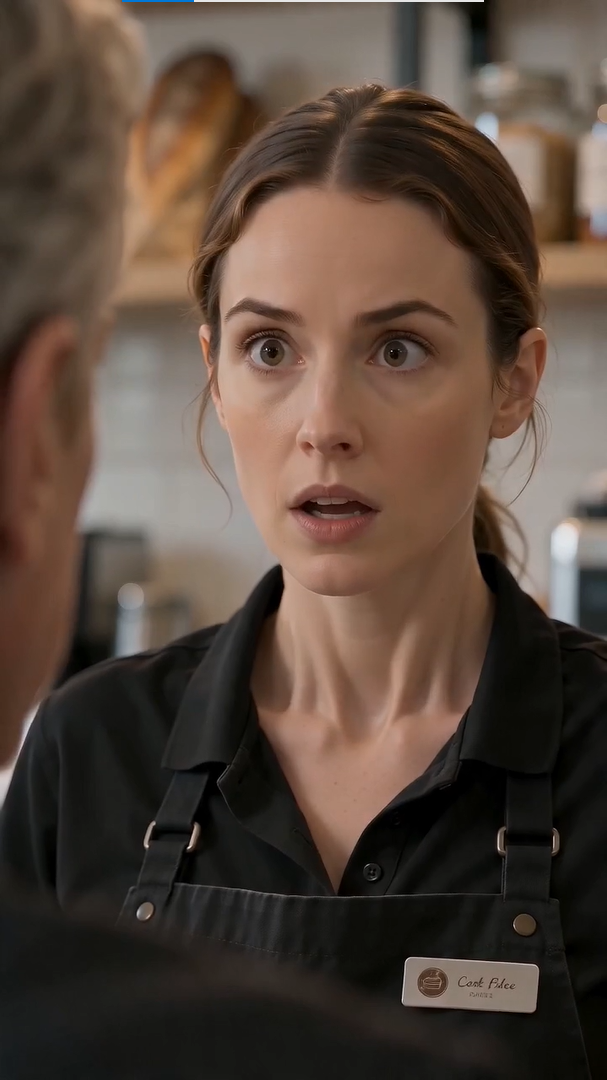
The older man turned to the worker, and when he spoke again, his voice had changed.
Not louder.
Just absolute.
“Pack bread. Soup. Fruit. Milk. Everything hot. Everything fresh.”
The worker rushed into motion.
Then he looked around the bakery, around the polished floors and shining pastry case, and seemed disgusted by the whole place for the first time in his life.
He turned back to Sam.
“You don’t have to ask for old bread again,” he said.
Sam’s lips trembled, but he still didn’t trust the promise.
The man slowly crouched until he was at eye level with him.
“I can’t undo what I did to your mother,” he said. “I can’t bring her back. But if you let me… I will spend the rest of my life trying to be better to both of you.”
Lily leaned toward him then, small and unsure.
He opened his arms carefully, as if he didn’t deserve to.
She looked at Sam.
Sam hesitated.
Then, very slightly, he nodded.
Lily reached across and wrapped her arms around the older man’s neck.
The man broke completely.
He held her like something sacred, crying into the dirty little shoulder of a child who should never have known hunger.
Sam stood there for one second trying to stay strong.
Then the older man lifted one arm toward him too.
Sam resisted.
Only for a second.
Then he stepped in.
And in the middle of the bakery, surrounded by warm bread and stunned strangers, the three of them held each other and cried for the years that had been lost.
A few minutes later, as bags of food were being packed, the older man asked softly, “Where were you sleeping?”
Sam looked down.
“Behind the pharmacy some nights. Bus station when it rained.”
The man shut his eyes like the words physically hurt him.
Then he took off his coat and wrapped it around Sam’s shoulders.
When the food was ready, he did not hand them a bag and send them away.
He took Sam’s hand.
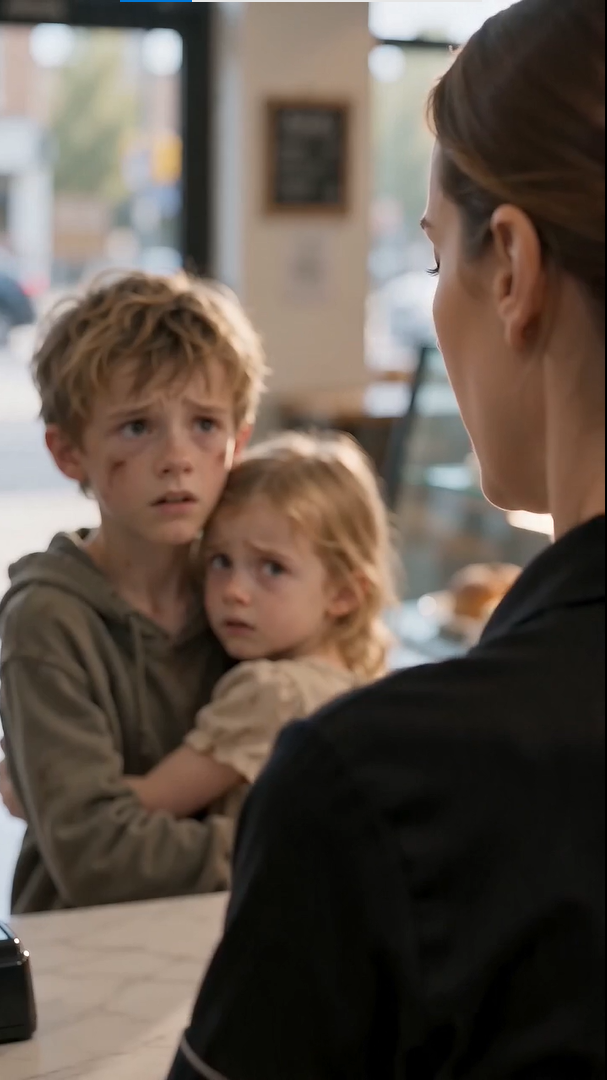
He carried Lily himself.
And before they walked out, he turned to the bakery worker and said something that changed more than just that day:
“From now on, no child leaves this bakery hungry. Ever.”
Then he looked down at his grandchildren.
His grandchildren.
Children his daughter had trusted him with even after everything.
And with tears still in his eyes, he whispered the words he should have said years earlier:
“I’m taking you home.”
Sam stopped walking.
The old man felt it immediately.
That tiny resistance in the boy’s hand.
He looked down.
Sam’s eyes were fixed on the bakery door, on the street outside, on the cold world that had taught him never to follow anyone too quickly.
“What is it?” the man asked softly.
Sam swallowed.
“Where is home?”
The question was simple.
But the old man had never heard anything more painful.
For years, his home had been a grand house with high windows, polished floors, locked rooms, and silence so deep it sounded expensive.
But if his daughter’s children had been sleeping behind pharmacies while that house stood warm and empty, then he had never truly had a home at all.
He bent down again, still holding Lily.
“Home,” he said carefully, “is wherever you are safe.”
Sam stared at him.
“And if we don’t feel safe there?”
The old man’s mouth trembled.
“Then I will keep trying until you do.”
Sam looked at him for a long moment.
Then, slowly, he nodded.
Not trust.
Not yet.
But permission.
That was enough.
Outside, the air was cold.
The old man’s black car waited near the curb. The driver stepped out quickly when he saw him carrying a crying toddler and holding the hand of a barefoot boy wrapped in an expensive coat.
“Sir?” the driver asked, stunned.
The old man looked at him.
“Open the door.”
The driver did.
Sam hesitated again at the sight of the car.
He had seen cars like that before.
Not from the inside.
Only passing by.
Only splashing rainwater near his feet.
Only carrying people who did not look at children like him.
The old man noticed.
“You can sit wherever you want,” he said.
Sam looked suspicious.
“Anywhere?”
“Anywhere.”
Sam looked at the back seat, then the front seat, then Lily curled against the old man’s chest.
“I’ll sit by her.”
The old man nodded.
“Of course.”
He placed Lily gently in the back seat, then helped Sam in beside her.
Sam pulled Lily close immediately, as if even inside a warm car he still needed to guard her from the world.
The driver closed the door carefully.
As the car pulled away from the bakery, Sam pressed his face to the window.
The bakery grew smaller behind them.
The old man watched him from the opposite seat.
“What was your mother’s name?” he asked quietly.
Sam didn’t turn around.
“Clara.”
The old man closed his eyes.
Clara.
His Clara.
The baby he had once held in one arm while signing business papers with the other.
The little girl who used to run through his office and steal sugar cubes from his tea tray.
The teenage daughter who had stood in front of him with tears in her eyes and said she loved a man he didn’t approve of.
The young woman he had pushed away because pride had sat where love should have been.
He pressed the letter to his chest.
“I called her Claire when she was little,” he whispered.
Sam finally looked at him.
“She said nobody called her that anymore.”
The old man’s face crumpled.
“No,” he said. “I suppose nobody did.”
Lily lifted her head sleepily.
“Mommy sang.”
The old man turned to her.
“What did she sing?”
Lily rubbed her eyes.
“The moon song.”
The old man froze.
Clara had sung that song when she was small.
His wife had sung it to her before she died.
A song he had not heard in decades.
His voice shook as he began softly.
“Little moon, don’t hide your light…”
Lily’s eyes widened.
Sam went completely still.
The old man could barely continue, but he forced the words out.
“Guide my baby through the night…”
Lily whispered the next line with him.
“Stars may fall and skies may cry…”
Sam’s mouth trembled.
The old man finished, breaking on the last words.
“But love will never say goodbye.”
The car fell silent.
Lily reached for him again.
This time, Sam did not stop her.
The old man lifted her into his lap and held her while she rested her head against his chest.
Sam looked out the window again, but his shoulders shook.
He was crying quietly.
Trying not to make sound.
Trying not to be a child.
The old man reached across the seat, then stopped.
He did not want to frighten him.
So he only said, “You don’t have to hold it in here.”
Sam wiped his face angrily.
“I’m not crying.”
The old man nodded through his own tears.
“Alright.”
For a few minutes, neither spoke.
Then Sam whispered, “She sang that when Lily had fever.”
The old man looked at him.
“And when you were scared?”
Sam didn’t answer.
That was answer enough.
When they reached the house, Sam stared up at it like it was not a home but a palace built for people who would never know hunger.
Tall gates opened.
Lights glowed in every window.
The front steps were swept clean.
The air smelled faintly of pine and rain.
Sam held Lily tighter.
“Is this yours?” he asked.
The old man looked at the house.
For the first time in years, he did not feel proud of it.
He felt ashamed.
“Yes,” he said. “But from tonight, it is yours too.”
Sam’s eyes narrowed.
“Both of ours?”
The old man looked at him.
“Yes. Both of yours.”
The front door opened before they reached it.
A housekeeper stood there, startled.
“Mr. Whitmore, I didn’t expect—”
“Prepare two rooms,” he said. Then he stopped and looked down at Sam. “No. Prepare the blue room and the nursery.”
The housekeeper’s face changed.
“The nursery, sir?”
His throat tightened.
“Yes.”
That room had not been opened since Clara left.
His wife had decorated it years before, hoping for grandchildren one day. When Clara disappeared from his life, he locked it and told everyone never to mention it again.
Now the child who should have slept there was in his arms.
And the boy who had protected her stood beside him in shoes too broken for the marble floor.
The housekeeper looked at Lily, then at Sam.
Her eyes softened.
“At once, sir.”
Inside, warmth wrapped around them.
Sam flinched when his dirty feet touched the polished floor.
“I’ll make it dirty,” he said quickly.
The old man looked down.
For one second, rage at himself rose so sharply he could barely breathe.
This child had learned to apologize for existing.
He knelt in front of him, still holding Lily.
“Sam,” he said carefully, “floors can be cleaned. Children cannot be replaced.”
Sam stared at him like he didn’t know what to do with words that gentle.
The old man continued.
“You are not in trouble for being hungry. You are not in trouble for being cold. You are not in trouble for being here.”
Sam’s lips trembled.
“People say things first.”
The old man swallowed.
“And then?”
Sam looked away.
“Then they get tired of us.”
The old man nodded slowly.
“Then I will have to show you I don’t.”
“How?”
“By staying tired with you.”
Sam looked back at him.
The answer seemed to confuse him.
Maybe because nobody had ever offered to stay through the difficult part before.
A doctor was called.
A warm bath was prepared.
Fresh clothes were laid out.
Food was placed on the dining table, but when Sam saw the silverware and the candles, he froze.
The old man noticed and immediately said, “Take it to the kitchen.”
The servants looked surprised.
He repeated, “We’ll eat in the kitchen.”
So they did.
The richest man in town sat at the kitchen table with a hungry boy, a sleepy toddler, two bowls of soup, and bread cut into thick slices.
Sam ate slowly at first.
Suspiciously.
Like someone might snatch the bowl away.
Then hunger won.
He tried to hide how fast he was eating, but the old man saw.
He said nothing.
He only pushed more bread toward him.
Sam stopped.
“Is this for Lily?”
“There is more for Lily.”
“For you?”
“There is more for me.”
Sam looked at the bread.
“Then… can I?”
“Yes.”
Sam took it.
The old man had attended dinners with ministers, bankers, and men who owned entire streets.
But nothing in his life had ever felt as important as watching that boy eat without fear for one full minute.
Lily fell asleep halfway through her soup, her cheek resting against the table.
The old man lifted her gently.
Sam immediately stood.
“Where are you taking her?”
“To bed,” the old man said softly. “You can come.”
Sam followed so closely he almost stepped on the man’s heels.
Upstairs, the nursery door stood open.
The room smelled faintly of old lavender and dust that had been freshly disturbed.
The housekeeper had changed the sheets, warmed the blankets, and placed a small lamp near the bed.
On the wall hung a faded painting of a moon and stars.
Lily stirred in the old man’s arms.
“Pretty,” she whispered.
The old man smiled through tears.
“Yes. Your grandmother chose it.”
Sam stood at the doorway, refusing to enter.
The old man laid Lily on the bed and tucked the blanket around her.
Then he turned back.
“Sam?”
The boy’s eyes moved around the room.
“Is this Lily’s?”
“Yes.”
“Where do I sleep?”
“The blue room is across the hall.”
Sam’s face changed.
Across the hall was too far.
The old man understood immediately.
“Or,” he said gently, “we can put another bed here tonight.”
Sam’s eyes lifted.
“Here?”
“Yes.”
“Won’t that ruin it?”
The old man looked around the room that had waited empty for years.
“No,” he whispered. “It will fix it.”
A small cot was brought in.
Sam sat on it carefully, still wrapped in the old man’s coat.
The doctor arrived soon after.
Sam tensed through the whole examination.
He answered questions like each answer might be used against him.
How long had they been outside?
How often did Lily eat?
Did Sam have pain anywhere?
Was Lily coughing?
Had either of them had fever?
When the doctor asked Sam to remove the coat, he refused.
The old man stepped forward but stopped himself.
“Sam,” he said softly, “the doctor only needs to check your arm.”
Sam looked at him.
“You’ll give the coat back?”
The old man’s chest tightened.
“Yes.”
Sam removed it slowly.
Underneath, his shirt was thin and torn.
His arms were scratched.
His wrists looked too small.
The doctor’s expression changed, but he kept his voice gentle.
When it was over, the old man wrapped the coat back around Sam himself.
“You can keep it as long as you want,” he said.
Sam touched the sleeve.
“It’s expensive.”
“It’s yours.”
The boy stared at him.
Nobody had ever said that to him about something warm.
That night, the old man did not go to his room.
He sat in a chair between Lily’s bed and Sam’s cot.
The children slept fitfully.
Lily whimpered for her mother twice.
Sam woke at every sound.
Once, near midnight, the old man heard him whisper, “Lily?”
“I’m here,” the old man said.
Sam sat up quickly.
The room was dark except for the lamp.
“You’re still here?”
“Yes.”
“I thought you left.”
“No.”
Sam lay back down slowly.
After a moment, he asked, “Will you be here in the morning?”
The old man’s throat closed.
“Yes.”
“People say that.”
“I know.”
Sam turned his face toward the wall.
The old man stayed awake until sunrise just to make sure the promise would be true when the boy opened his eyes.
In the morning, Sam woke before Lily.
The first thing he did was check the chair.
The old man was there.
Still awake.
Still holding Clara’s letter.
Sam stared at him.
“You didn’t sleep.”
“No.”
“Why?”
The old man smiled sadly.
“I didn’t want you to wake up alone.”
Sam said nothing.
But something in his face shifted.
Not trust.
Not yet.
But the first crack in disbelief.
The next days were strange.
Too soft.
Too warm.
Too full.
Sam did not know what to do with abundance.
He hid bread under his pillow.
He filled his pockets with fruit.
He asked three times whether Lily could keep the doll the housekeeper gave her.
Every time someone entered the room, he stood up as if preparing to be thrown out.
The old man noticed all of it.
And every time, he answered with patience he had not known he still possessed.
“Yes, you can eat later.”
“Yes, Lily can keep the doll.”
“No, you are not leaving today.”
“No, you are not in trouble.”
“Yes, I am still here.”
The doctor returned.
Then a lawyer.
Then a social worker.
Sam hated the lawyer most.
Not because the man was cruel.
Because papers had always meant trouble.
The old man sat beside him during the meeting.
“I want guardianship,” he said.
The social worker looked gently at Sam.
“Sam is not your biological grandchild, Mr. Whitmore.”
Sam’s face shut down.
The old man felt it happen.
A wall dropping into place.
He turned sharply.
“He is my daughter’s son in every way that matters.”
Sam looked at him.
The old man continued, voice steady.
“She trusted him with Lily. She wrote his name in her last letter. She called him the boy who stayed.”
His eyes filled.
“And if my daughter saw him as family, then so do I.”
Sam’s lips parted.
The social worker softened.
“I understand. But legally—”
“Then legally we will fix it,” he said. “I failed my daughter when she needed me. I will not fail the children she left behind because paperwork cannot feel love.”
Sam looked down quickly.
But not before the old man saw the tears.
That evening, Sam stood outside the old man’s study.
The door was half open.
Inside, the old man sat at his desk surrounded by photographs.
Clara as a baby.
Clara at five in a white dress.
Clara as a teenager, laughing in the garden.
Clara with her mother.
Clara alone on the staircase, stubborn chin lifted, the same stubbornness Lily now carried in her tiny face.
Sam knocked softly.
The old man looked up.
“Come in.”
Sam stepped inside.
He looked at the pictures.
“That’s her?”
The old man nodded.
“Yes.”
Sam came closer.
“She had longer hair when I knew her.”
The old man’s breath caught.
“When you knew her.”
Sam nodded.
“She cut it after Lily was born. Said babies pull everything.”
A broken laugh escaped the old man.
“She was right.”
Sam picked up a picture carefully.
In it, Clara was maybe ten, holding a ribbon from a school race.
“She smiled like that when Lily learned to walk,” Sam said.
The old man covered his mouth.
Sam looked at him.
“Do you want me to tell you things?”
The old man could not answer for a second.
Then he nodded.
“More than anything.”
So Sam told him.
Not all at once.
Just pieces.
That Clara sang when she cooked.
That she burned rice often but pretended it was soup.
That she called Lily “little moon.”
That when Sam cried because he missed his own parents, Clara sat beside him and said, “Then you can borrow me.”
The old man broke at that.
“She said that?”
Sam nodded.
“She said family is sometimes who finds you when nobody else looks.”
The old man pressed his hand over his eyes.
His daughter had understood love better while poor and abandoned than he had understood it in a mansion.
Sam stood awkwardly, unsure what to do with an adult’s tears.
Then, very carefully, he placed the photograph back on the desk.
“She forgave you sometimes,” he said.
The old man lowered his hand.
“What?”
Sam looked at the pictures.
“When she was angry, she said you were proud and cold and didn’t deserve to know Lily.”
The old man nodded, tears slipping down his face.
“She was right.”
“But when Lily was asleep,” Sam continued, “she would look at the letter and say maybe grief makes people stupid. Maybe one day you would stop being stupid.”
The old man laughed once, painfully.
“That sounds like her.”
Sam looked at him.
“She wanted to send it sooner.”
“Why didn’t she?”
Sam’s eyes dropped.
“Postage cost money. And then she got sick.”
The old man stared at him.
Postage.
A letter that could have brought his grandchildren home had sat unsent because his daughter could not afford a stamp.
The shame was so deep he could barely breathe.
He opened a drawer, removed his checkbook, then stopped.
Money would not fix that sentence.
Nothing would.
Sam noticed the movement.
“You can’t buy that away,” he said quietly.
The old man looked at him.
“I know.”
Sam’s voice was small but sharp.
“People with money always think they can make old things not hurt.”
The old man closed the drawer.
“You are right.”
Sam looked surprised.
Most adults did not say that to him.
The old man leaned forward.
“I cannot buy away what happened. But I can use what I have to make sure it does not keep happening.”
Sam studied him.
“To us?”
“To you. To Lily. And to any child who walks into my bakery hungry.”
Sam looked at the floor.
Then he asked, “Can we go there again?”
“The bakery?”
Sam nodded.
“Why?”
“I want to see if you meant it.”
The old man understood.
Promises were easy in warm rooms.
Sam trusted only what repeated in daylight.
So the next morning, they went back.
The bakery worker stood straighter when they entered.
Several customers recognized them.
Sam held Lily’s hand and walked slowly inside, wearing clean clothes but the same guarded expression.
Near the front counter, a small boy stood with his mother.
The mother was counting coins, her face red with shame.
The child was staring at the bread.
The worker looked at the old man.
He gave one nod.
She immediately packed bread, soup, milk, and fruit.
The mother blinked.
“I didn’t ask for—”
“It’s already paid for,” the worker said gently.
The woman’s eyes filled.
The little boy smiled.
Sam watched everything.
His face did not change at first.
Then he looked at the old man.
“You told her.”
“Yes.”
“And she listened.”
“Yes.”
Sam looked back at the boy receiving warm bread.
For the first time since entering the bakery days earlier, his shoulders lowered.
Just a little.
That became the beginning.
The old man changed the bakery first.
A sign appeared in the window.
No child leaves hungry.
At first, people thought it was charity.
Then they learned it was law inside that place.
Children came quietly.
Mothers came ashamed.
Old men came pretending they were buying for someone else.
The bakery fed them all.
No questions first.
Food first.
Ask after.
Clara’s rule.
The old man put those words above the counter in her handwriting, copied from the letter.
Feed them first. Ask questions after.
Every time Sam saw it, he stopped for a second.
As if hearing her voice.
The old man changed the house too.
The grand dining room, once used only for cold formal dinners, became a family room with scratches on the table from Lily’s toys and crumbs Sam no longer rushed to hide.
The nursery became Lily’s room.
The blue room became Sam’s, though for the first month he dragged his blanket into Lily’s room every night.
The old man never stopped him.
Eventually, Sam moved across the hall.
Then one night, he slept through until morning.
The old man considered that a victory greater than any business deal of his life.
Lily healed faster in the way very young children sometimes do when love reaches them before fear grows roots too deep.
She learned to laugh loudly.
She learned to ask for more milk.
She learned that baths could be warm and not rushed.
She learned that when she cried for Mommy, someone would hold her instead of telling her to stop.
Sam healed differently.
Slower.
Harder.
Some days he was almost a boy.
He ran in the garden.
He ate pancakes with too much syrup.
He laughed when Lily put jam in her hair.
Then some small thing would pull him back.
A raised voice.
A door closing too loudly.
A servant moving too quickly toward Lily.
And suddenly he was the child in the bakery again, body tight, eyes sharp, ready to run.
The old man learned not to take it personally.
He learned to lower his voice.
To knock before entering.
To explain plans.
To say, “You are safe,” and then prove it with action.
One night, months later, Sam appeared in the doorway of the old man’s study.
“Are you busy?”
The old man closed the file in front of him immediately.
“No.”
Sam looked suspicious.
“You didn’t even check.”
“I don’t need to.”
Sam stepped inside.
He held Clara’s letter in both hands.
The old man’s heart tightened.
“Where did you find that?”
“In your drawer.”
The old man went still.
Sam quickly added, “I wasn’t stealing.”
“I know.”
The boy looked down.
“I wanted to read it again.”
The old man nodded.
“Alright.”
Sam sat on the chair opposite him.
For a while, he traced the edge of the paper.
Then he whispered, “She said I was the boy who stayed.”
“Yes.”
“Do I have to keep staying?”
The old man’s chest tightened.
“What do you mean?”
Sam looked up, eyes wet.
“If I stay here, does that mean I stop missing her?”
The old man closed his eyes.
“No, Sam.”
The boy’s lips trembled.
“If I call this home, does that mean the bus station didn’t happen?”
“No.”
“If I like my room, does it mean I forgot sleeping outside?”
“No.”
Sam’s breathing turned shaky.
“If I love you,” he whispered, “does it mean I don’t love her enough?”
The old man broke.
He came around the desk slowly and knelt in front of Sam.
“No,” he said, voice shaking. “Love does not replace love. It grows beside it.”
Sam’s tears fell then.
“I miss her.”
“I know.”
“She smelled like soap and smoke.”
The old man nodded through tears.
“She did when she was little too.”
Sam cried harder.
The old man opened his arms, not sure if Sam would come.
This time, Sam did not hesitate.
He folded into him like a tired child.
Finally.
Completely.
The old man held him and whispered, “You stayed for her. Now let me stay for you.”
After that night, Sam began calling him Grandpa.
Not often.
Not loudly.
The first time it happened, they were at breakfast.
Lily asked for more toast.
Sam passed the plate and said without thinking, “Grandpa, Lily wants jam.”
The old man froze.
The fork slipped from his hand and clattered onto the plate.
Sam looked up, panicked.
“What?”
The old man covered his mouth.
“Nothing.”
Sam’s face reddened.
“I didn’t mean—”
“Yes,” the old man said quickly. “Yes, you did.”
Sam blinked.
“I did?”
The old man was crying now.
“I hope you did.”
Lily clapped her sticky hands.
“Grandpa!”
The old man laughed through tears.
“Yes, little moon. Grandpa.”
Sam looked down at his toast, pretending not to smile.
But he did smile.
Just enough.
Years passed.
The bakery became known across the city, not because the bread was perfect, though it was, but because of the table near the window that always had warm soup waiting.
People called it Clara’s Table.
The old man insisted Sam choose the name.
Sam had stood in front of the empty wall for a long time, thinking.
Then he said, “Name it after Mom.”
So they did.
Under the sign, they placed her photograph.
Clara holding Lily as a baby, with Sam standing beside her, trying to look serious.
Beneath it were her words:
Feed them first. Ask questions after.
Sam grew taller.
Stronger.
Still careful with food.
Still watchful in crowds.
But also softer with Lily.
Lily grew into a bright, stubborn child who asked too many questions and believed every bakery in the world gave children free soup if they needed it.
When she was old enough to understand more, she asked about her mother.
The old man and Sam told her together.
They told her Clara had been brave.
That she had sung the moon song.
That she had loved them enough to write a letter when she had almost nothing left.
Lily listened quietly.
Then she asked, “Did Mommy forgive Grandpa?”
The old man stopped breathing.
Sam looked at him.
Then at Lily.
“She wanted to,” Sam said carefully. “I think she was sending us to help him learn how.”
The old man’s eyes filled.
Lily nodded seriously.
“Did he learn?”
Sam looked at the old man for a long moment.
Then he said, “He’s still learning.”
The old man smiled through tears.
“That is fair.”
On the fifth anniversary of the day they walked into the bakery, the old man closed it for one afternoon.
Not for a holiday.
For Clara.
He took Sam and Lily to a small cemetery on the edge of town where Clara had been buried by strangers because there had been no family to claim her.
That sentence had haunted him for years.
No family to claim her.
Now he stood at her grave with flowers, two children, and a heart full of words that arrived too late.
The stone had been replaced.
The old cheap marker was gone.
In its place stood white marble, simple and beautiful.
Clara Whitmore.
Beloved daughter.
Beloved mother.
Beloved protector.
Sam stood beside him, hands in his pockets.
Lily placed a small moon-shaped drawing against the stone.
The old man knelt slowly.
For a long time, he could not speak.
Then he whispered, “I fed them.”
The wind moved softly through the trees.
He pressed one hand to the stone.
“I know it was not enough. I know nothing will ever be enough. But I fed them first, Clara. I asked questions after.”
Lily leaned against Sam.
Sam wiped his face quickly.
The old man continued, voice breaking.
“I was wrong. I was proud. I chose my anger over my child. And you still trusted me with yours.”
His shoulders shook.
“I don’t know why.”
Sam stepped closer and placed one hand on his shoulder.
The old man looked up.
Sam’s eyes were wet.
“She knew you could still be good,” he whispered.
The old man covered Sam’s hand with his own.
“I hope she was right.”
Sam looked at Lily, then back at him.
“She was.”
That was the closest thing to forgiveness he had ever received.
And it was enough to make him bow his head and cry.
Years softened the house.
The locked rooms opened.
Clara’s old bedroom became a room of memories, not mourning.
Her school ribbons.
Her childhood books.
The last letter.
The scarf she had worn in the one photograph Sam carried.
The old man did not hide from any of it anymore.
He let the children know her.
Not as a tragedy.
As a person.
Sam became serious about the bakery as he grew older.
He learned the ovens.
The accounts.
The deliveries.
The quiet art of seeing who was hungry before they asked.
At sixteen, he caught a little girl near the door staring at the pastry case.
The worker was about to ask if she needed help, but Sam stepped forward first.
He knelt in front of her.
“Are you hungry?”
The girl looked down.
“I don’t have money.”
Sam smiled gently.
“That wasn’t the question.”
The old man watched from behind the counter, eyes filling as Sam packed bread, soup, fruit, and milk.
Everything hot.
Everything fresh.
Just as the old man once ordered for him.
When Sam handed the bag to the girl, she whispered, “Why?”
Sam looked toward Clara’s picture.
Then back at the child.
“Because someone should have asked sooner.”
The old man turned away and cried in the kitchen.
Lily grew up with the bakery too.
She loved the front counter, loved the children, loved announcing, “No child leaves hungry!” with dramatic seriousness to anyone who looked doubtful.
At ten, she asked the old man, “Were we really poor?”
He sat beside her near Clara’s Table.
“Yes.”
“Poor like no toys?”
“Poor like no bed.”
She went quiet.
“Poor like hungry?”
He nodded.
Her eyes filled.
“I don’t remember all of it.”
“I’m glad.”
She touched the table.
“Sam remembers.”
“Yes.”
Lily looked at her brother across the bakery, where he was helping a delivery boy carry flour.
“Is that why he watches doors?”
The old man’s throat tightened.
“Yes.”
“Will he stop?”
“Maybe. Maybe not completely.”
Lily thought about that.
Then she said, “Then I’ll watch the windows.”
The old man smiled sadly.
“That sounds like love.”
She nodded.
“It is.”
On Sam’s eighteenth birthday, the old man gave him a box.
Sam opened it cautiously.
Inside were papers.
Legal papers.
Property papers.
Bakery ownership papers.
Sam stared at them.
“What is this?”
The old man sat across from him, older now, his hair fully white, his hands thinner than they used to be.
“The bakery,” he said. “Half of it is yours now. The other half goes to Lily when she is grown.”
Sam looked up sharply.
“No.”
The old man blinked.
“No?”
Sam pushed the papers back.
“I don’t want payment for being hungry.”
The old man’s face softened.
“That is not what this is.”
“It feels like it.”
“Then I explained badly.”
Sam stood, agitated.
“You always try to give things when something hurts.”
The old man absorbed that.
Because it was true.
Old habits did not die easily.
He stood slowly too.
“You’re right.”
Sam froze, surprised by the admission even after all these years.
The old man walked to Clara’s picture.
“This bakery is not payment,” he said. “It is responsibility.”
Sam said nothing.
The old man turned back.
“The day you came in, I almost stayed the same man. I almost let you walk out with hunger and a letter. You changed that. Your mother changed that. Lily changed that.”
His voice shook.
“This place became good because of what happened here. Not because of me. Because of all of us.”
Sam’s expression softened, but only a little.
The old man continued.
“When I am gone, I don’t want Clara’s Table to become a marketing story. I don’t want some manager deciding soup costs too much. I don’t want kindness to depend on profit.”
Sam looked at the papers again.
The old man stepped closer.
“I am not giving you the bakery because you were hungry. I am giving it to you because you remember hunger. And that means you will never make poor children prove they deserve bread.”
Sam’s eyes filled.
He looked toward Lily, who was decorating cupcakes badly at the counter.
Then at Clara’s photograph.
Then at the old man.
“You’re not going anywhere,” Sam said.
The old man smiled faintly.
“Not today.”
Sam looked down, jaw tight.
“I hate when people talk like that.”
“I know.”
The old man placed a hand on his shoulder.
“So I’ll say it plainly. I want you beside me while I’m still here. Not after. I want to teach you everything. And I want you to argue with me when I forget what matters.”
Sam laughed through sudden tears.
“I already do that.”
“Yes,” the old man said. “You are very skilled.”
Sam wiped his face.
Then, slowly, he picked up the pen.
He signed.
Not because the paper made him family.
But because family had already made the paper true.
Many years later, when the old man became too weak to stand behind the counter, Sam placed a chair for him near Clara’s Table.
Every morning, the old man sat there with tea while children came and went.
Some knew who he was.
Most did not.
To them, he was simply the grandfather who smiled softly and always asked if they wanted extra bread.
One rainy evening, a small boy came into the bakery carrying a toddler girl on his hip.
He was soaked through.
His shoes were splitting.
His face was too serious.
Sam saw him first.
For one second, the bakery disappeared.
He saw himself.
Cold.
Hungry.
Holding Lily.
Asking for yesterday’s bread.
The old man saw it too from his chair.
His eyes filled.
Sam walked to the boy and crouched.
“Are you hungry?”
The boy tightened his hold on the little girl.
“I don’t have money.”
Sam smiled gently, though his throat burned.
“I didn’t ask that.”
The boy stared at him.
Sam stood and turned toward the counter.
“Pack bread. Soup. Fruit. Milk. Everything hot. Everything fresh.”
The worker moved immediately.
The old man closed his eyes.
A tear slipped down his face.
Lily, now grown, came from the back room and froze when she saw the children.
She looked at Sam.
Sam looked at her.
No words were needed.
They brought the children to Clara’s Table.
They fed them first.
Asked questions after.
The old man watched with trembling hands folded over his cane.
When Sam returned to him, the old man reached for his hand.
“You kept it,” he whispered.
Sam looked at Clara’s picture.
Then at the children eating near the window.
“We kept it,” he said.
The old man smiled.
That night, after the bakery closed, Sam helped him into the car.
Lily locked the door behind them.
The sign in the window glowed softly.
No child leaves hungry.
The old man looked at it for a long time.
Then he whispered, “Do you think she forgives me?”
Sam stood beside him.
For years, the question had lived between them.
Heavy.
Unanswered.
Maybe unanswerable.
Sam looked at the sign.
At Clara’s name.
At the table inside.
At Lily humming the moon song while closing the curtains.
Then he said, “I think she sees what you did with the guilt.”
The old man nodded slowly.
Tears filled his eyes.
“That may be all I can ask.”
Sam placed a hand on his shoulder.
“It’s enough for tonight.”
The old man smiled weakly.
“Always practical.”
“You raised me.”
The old man looked up.
Sam had said it simply.
Naturally.
Like it was not a gift.
Like it was just true.
The old man broke softly.
He reached for Sam’s hand, and Sam took it.
No hesitation now.
No caution.
No hungry boy ready to run.
Just a man holding the hand of the grandfather who had arrived late, but stayed long enough to become real.
Years later, after the old man passed quietly in his sleep, the whole city came to the bakery.
Not in black cars only.
Not just bankers and businessmen.
Children came.
Mothers came.
Workers came.
Old men came.
People who had once stood ashamed at the counter and left with warm food came back with flowers, notes, and stories.
Sam stood near Clara’s Table with Lily beside him.
On the table were two framed photographs.
Clara, smiling with Lily in her arms.
And the old man, sitting in his chair near the window, handing bread to a child.
Lily cried openly.
Sam did not at first.
He shook hands.
Accepted condolences.
Answered questions.
Stayed strong.
Then a little girl stepped forward with a folded piece of paper.
She handed it to Sam.
“My mom said to give you this,” she whispered.
Sam opened it.
Inside, in a child’s handwriting, were the words:
Thank you for feeding me when I was hungry.
That was all.
That was enough.
Sam sat down hard at Clara’s Table and cried like the boy he had never been allowed to be.
Lily wrapped her arms around him.
The bakery stayed silent around them.
Not empty silence.
Full silence.
The kind that holds grief gently.
After the funeral, Sam found one last letter in the old man’s desk.
It was addressed to him and Lily.
My children,
I know I do not deserve that word, but you gave it to me anyway.
When you came into the bakery, I thought I was saving you.
The truth is, you saved what was left of me.
I spent years thinking pride could protect a family name.
But pride only emptied my house.
You filled it again.
Sam, you were never a burden I accepted. You were the boy who taught me what loyalty looks like when it is hungry and afraid.
Lily, you were the little moon your mother promised would still shine.
If I loved you imperfectly, forgive me.
If I stayed well enough, remember me kindly.
Keep the bakery open.
Feed them first.
Ask questions after.
And when you miss Clara, look around.
Every child at that table is part of the love she left behind.
The letter ended there.
Sam and Lily sat together in the quiet study, holding it between them.
For a long time, neither spoke.
Then Lily whispered, “He called us his children.”
Sam wiped his face.
“He was slow.”
Lily laughed through tears.
“Very slow.”
Sam smiled.
Then he folded the letter carefully and placed it beside Clara’s.
Two letters.
One from a daughter asking her father to feed her children.
One from a grandfather asking those children to keep feeding others.
Years later, Clara’s Bakery still stood on the corner.
The windows glowed warm every evening.
The smell of bread filled the street.
And near the front, by the window, Clara’s Table remained ready.
Bread.
Soup.
Fruit.
Milk.
Everything hot.
Everything fresh.
No questions first.
On the wall above it hung three things.
Clara’s photograph.
The old man’s coat, framed behind glass, the same coat he had wrapped around Sam’s shoulders.
And a simple line written in gold:
Home is where hunger stops being ignored.
Sometimes, when the rain came hard and the street turned silver, Sam would stand by the door and remember the boy he had been.
The torn shoes.
The cold hands.
Lily crying against his shoulder.
The letter folded in his pocket.
The fear of asking for old bread.
Then he would look across the bakery.
At Lily laughing with children near the counter.
At the workers packing warm bags for families.
At Clara’s Table filled again.
And he would understand what his mother had done.
She had not only sent him to find a man.
She had sent him to rescue a family from its own pride.
She had sent Lily home.
She had sent Sam toward a place where he would finally be allowed to stop being only brave.
And every night, before locking the bakery, Sam would touch the old photograph of Clara and whisper the same promise.
“We fed them first, Mom.”
Then he would turn off the lights, leaving only the sign in the window glowing softly for whoever might need it next.
No child leaves hungry.
Not anymore.