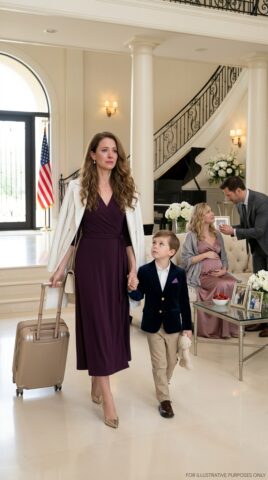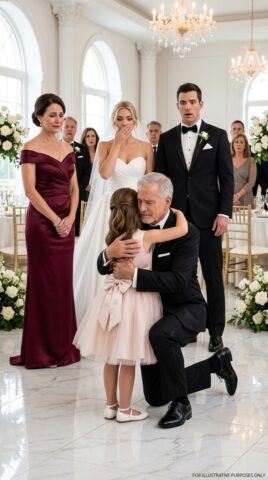
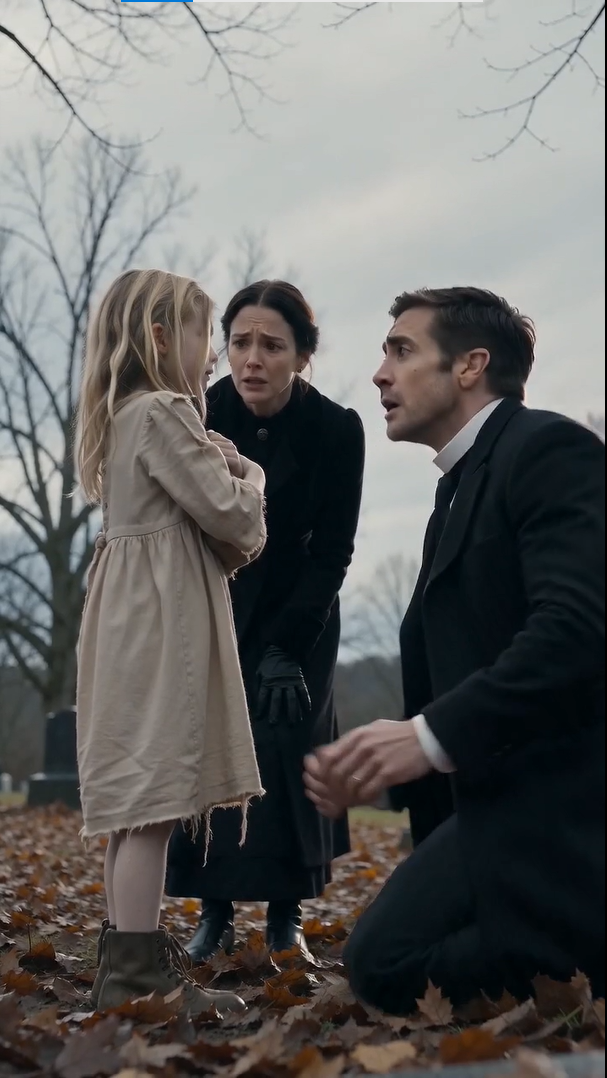
The little girl did not pull away from his hand.
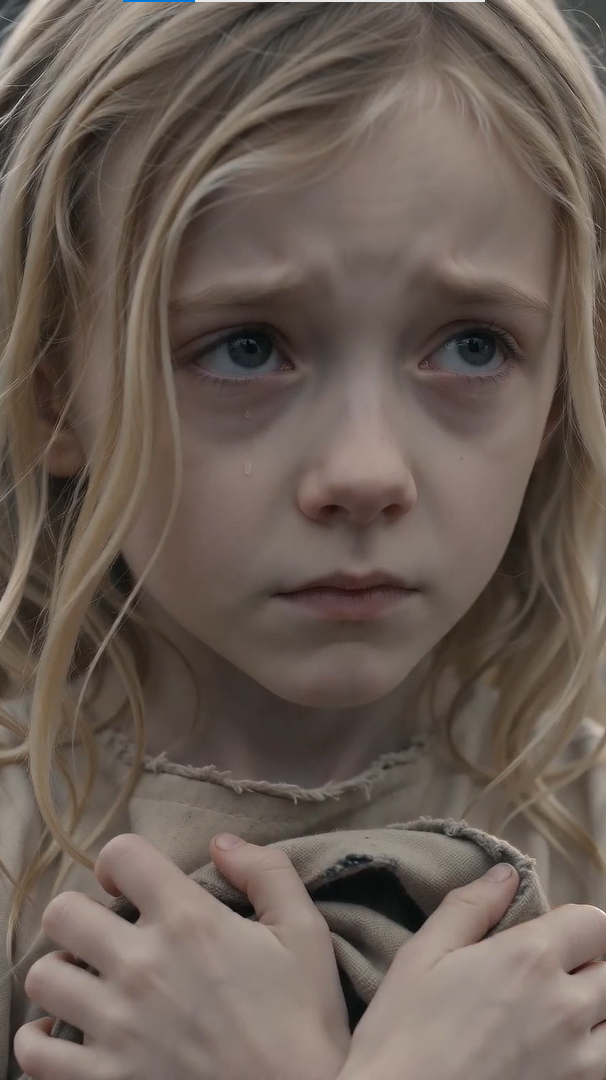
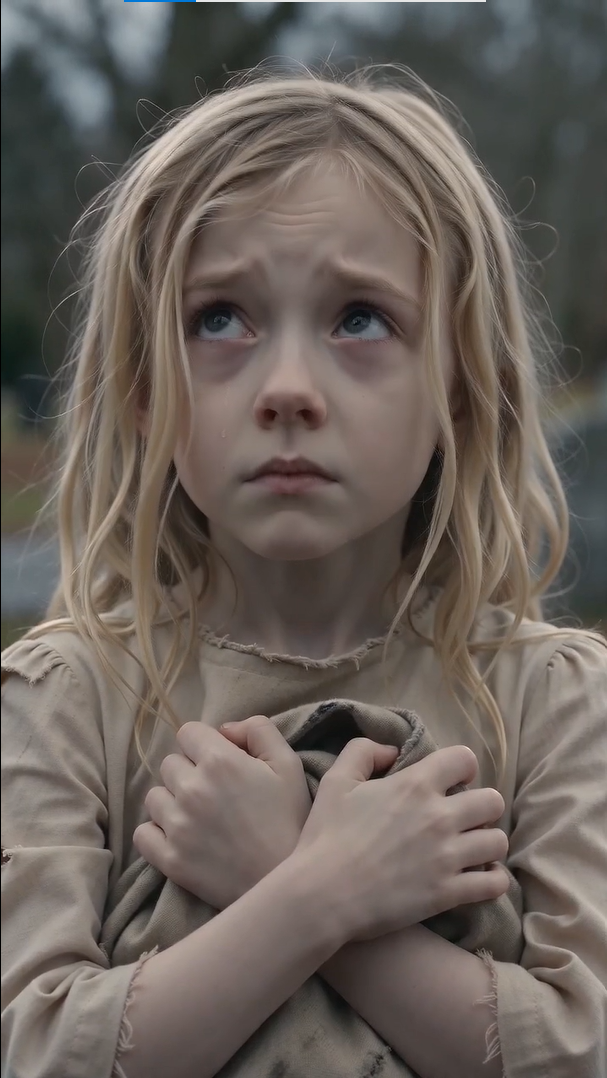
She only looked at the grave one last time and whispered,
“They said you would cry.”
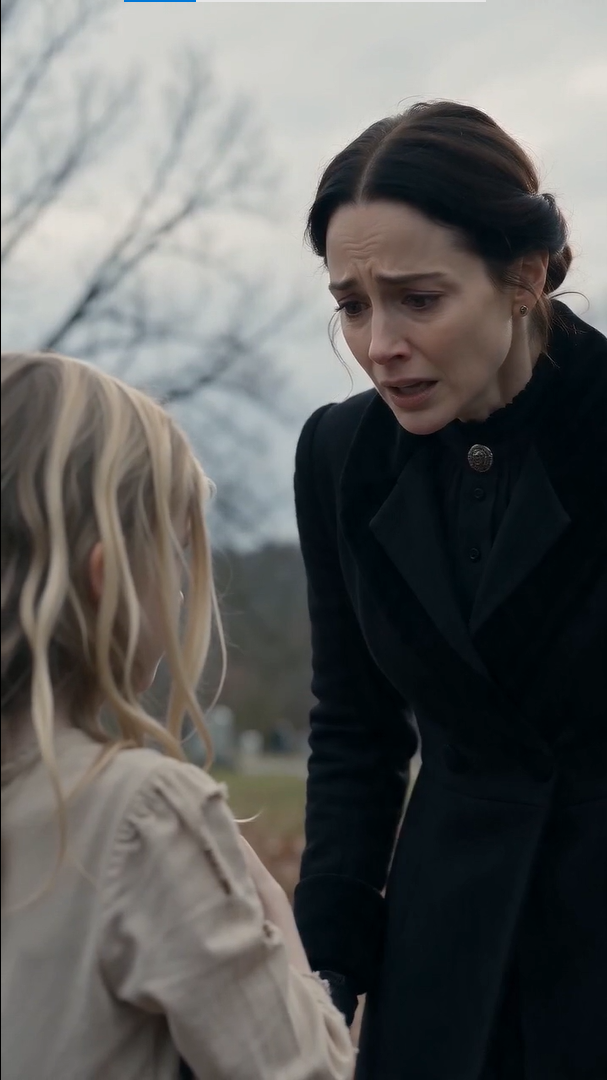
The mother froze.
“Who said that?”
The girl pointed back to the photo.
“The boys.”
The father’s face went pale.
They followed her through the cemetery gate, past the wet road, to an old brick orphanage at the edge of town.
The mother’s hands shook the whole way.
When they stepped inside, the girl led them to a small room with two narrow beds, two folded sweaters, and a wooden toy car sitting between them.
The mother gasped.
That toy had been buried with the boys.
She picked it up with trembling fingers.
“No,” she whispered. “This was in the coffin.”
The girl looked down.
“They gave it to me when I was scared.”
The father turned toward the old caretaker standing in the doorway, his voice shaking.
“What is this place?”
The caretaker’s face collapsed.
“I’m sorry,” she whispered. “The boys were brought here after the accident. We were told you didn’t want them back.”
The mother made a sound like her heart had torn open.
“We buried them.”
The caretaker looked away, ashamed.
“You buried two empty coffins.”
The father grabbed the doorframe to stay upright.
Then from the hallway came a tiny voice.
“Lily?”
The barefoot girl turned.
Two boys stepped out of the shadows, thin, pale, older now, but alive.
The mother dropped to her knees.
The father covered his mouth, sobbing.
And the little girl whispered,
“They waited for you every day.”
For a moment, nobody moved.
The mother stared at the two boys as if her mind could not accept what her heart already knew.
Their hair was longer.
Their faces were thinner.
Their clothes hung loose on their small bodies.
But those eyes.
Those eyes were hers.
The older boy took one shaky step forward.
“Mom?”
That one word destroyed her.
She crawled across the floor before she could even stand, reaching for them with both hands, sobbing so hard no sound came out at first.
The boys ran into her arms.
All three collapsed together.
The mother held them like the world might steal them again if she loosened her grip for even one second.
“My babies,” she cried. “My babies. My babies.”
The father fell to his knees beside them.
His hands hovered in the air, trembling, afraid to touch them, afraid they might vanish.
Then the younger boy reached for him.
“Daddy?”
The father broke.
He pulled them all into his arms, the mother, the boys, even little Lily standing beside them, and he cried in a way no grown man wants strangers to see.
But he did not care.
Not anymore.
For two years, he had stood over a grave every Sunday, speaking to names carved in stone.
For two years, he had watched his wife sleep with one hand on two tiny pillows she refused to throw away.
For two years, he had blamed himself for surviving the accident when his sons had not.
And now they were here.
Breathing.
Crying.
Holding him back.
The older boy buried his face in his mother’s shoulder.
“We thought you forgot us.”
The mother shook her head so hard her tears fell into his hair.
“No. Never. Never.”
The younger boy’s lips trembled.
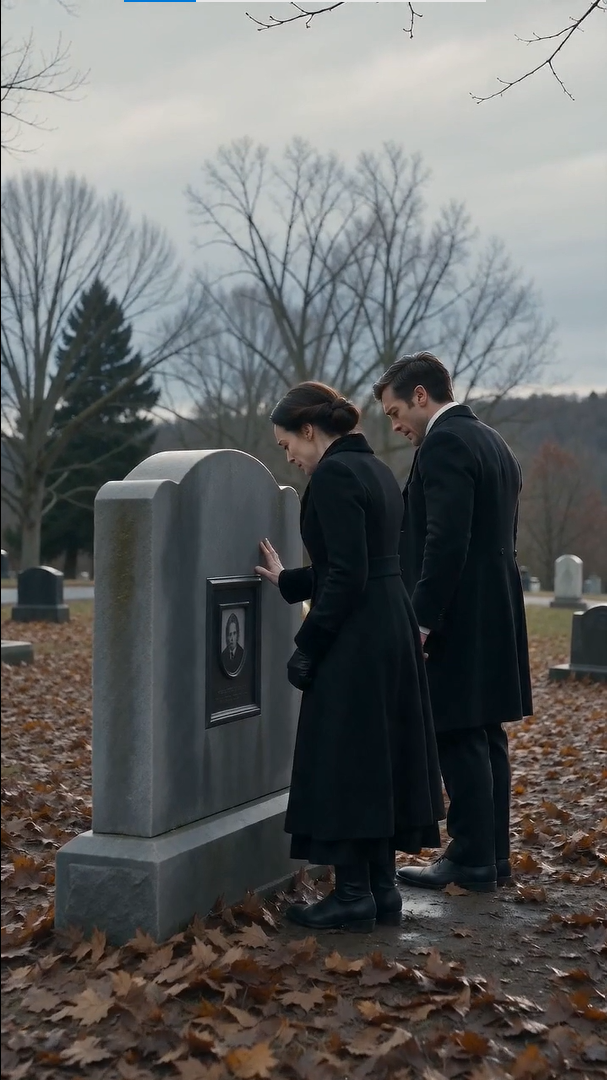
“They said you didn’t want us because we were broken.”
The father pulled back, his face twisted with pain.
“Who said that?”
The boys looked toward the caretaker.
The old woman’s eyes filled with shame.
“I need to show you something.”
She led them down the hallway to a small office with cracked green walls and a metal filing cabinet.
The mother refused to let go of the boys’ hands.
The father carried Lily, though he still did not understand who she was, or why she had been the one to lead them back to life.
The caretaker opened a drawer and pulled out a thin folder.
Inside were hospital forms, transfer papers, and one handwritten note.
The father grabbed it first.
His face hardened the moment he saw the signature.
“No.”
The mother looked at him.
“What?”
He slowly turned the paper toward her.
At the bottom was a name.
Victor Hale.
The father’s older brother.
The man who had stood beside them at the funeral.
The man who had paid for the coffins.
The man who had held the mother while she screamed into his coat.
The man who had told them, again and again, “You must accept it. They’re gone.”
The mother shook her head.
“No. Victor helped us.”
The father’s voice came out hollow.
“Victor handled the hospital paperwork.”
The caretaker wiped her face.
“He came here himself. He said the boys had lost both parents emotionally, that you couldn’t bear to see them injured, that you wanted them placed somewhere quiet.”
The mother made a choking sound.
“I would have torn the world apart for them.”
“I know that now,” the caretaker whispered. “But he brought legal documents. He paid monthly fees. He told us there had been a private funeral because the family couldn’t handle the truth.”
The father’s hand crushed the paper.
“What truth?”
The caretaker looked at the boys.
“That they survived badly injured. That they needed care. That their recovery would be long.”
The older boy touched the side of his head, where a faint scar disappeared into his hair.
“We woke up in the hospital,” he said quietly. “Uncle Victor was there.”
The mother looked at him, shaking.
“What did he tell you?”
The boy’s eyes filled.
“He said you cried when you saw us. He said you couldn’t look at us anymore.”
“No,” the mother whispered.
The younger boy started crying again.
“He said if we loved you, we should stay here and let you be happy.”
The mother pressed both hands over her mouth.
The father stood suddenly.
His grief turned into something colder.
Something dangerous.
“Why?” he whispered.
The caretaker opened the rest of the file.
“There are bank records. Every month, money came from an account under your sons’ trust.”
The father went still.
The mother stared at him.
“What trust?”
He closed his eyes.
“My father’s will.”
His voice shook with rage.
“When the boys were born, my father left a trust in their names. If anything happened to them before they turned eighteen, the trustee would control the funds.”
The mother’s face drained.
“Victor.”
The father nodded.
“Victor was the trustee.”
The room spun around them.
Two empty coffins.
Two stolen children.
Two grieving parents destroyed for money.
The mother looked down at the boys, and something inside her changed.
She had spent two years drowning in sorrow.
Now she was awake.
Fully awake.
She turned to the caretaker.
“Where is your phone?”
The caretaker quickly handed it over.
The father dialed the police.
His voice was calm when he spoke.
Too calm.
“My children were reported dead two years ago. They are alive. I have documents proving they were hidden in an orphanage under false papers.”
The mother sat on the floor with the boys pressed against her sides.
Lily stood near the door, twisting her fingers.
The mother looked at her through tears.
“Lily, sweetheart, come here.”
The little girl hesitated.
“I’m not yours.”
The mother’s heart cracked again.
“No child should have to say that.”
Lily looked at the boys.
“They told me their mommy smelled like vanilla and rain.”
The mother sobbed softly.
“I used to bake when it rained.”
The older boy nodded quickly.
“We remembered. We told Lily every time she was scared.”
The mother reached out.
This time, Lily came.
She stepped into the mother’s arms slowly, like she expected to be pushed away.
But the mother pulled her close.
Not instead of her sons.
With them.
The father watched them and wiped his face with shaking hands.
“Who is she?” he asked softly.
The younger boy answered.
“She’s our sister here.”
Lily looked down.
“I don’t have anyone.”
The mother held her tighter.
The father knelt in front of her.
“You do now.”
Lily’s eyes widened.
“You don’t mean that.”
The father’s voice broke.
“I have buried my children once. I will never leave a child behind again.”
The police arrived within the hour.
Then came two social workers.
Then a detective.
Questions filled the small office.
Dates.
Names.
Forms.
Hospital records.
The caretaker cried through most of it, admitting she should have checked more, should have called the parents herself, should have questioned why two living boys were treated like secrets.
The mother did not scream at her.
She wanted to.
But every time anger rose, one of the boys tightened their grip on her dress, and she remembered they needed her steady more than they needed her furious.
The detective looked at the father.
“Where is Victor Hale now?”
The father’s jaw clenched.
“At my house.”
The mother looked up sharply.
“What?”
The father’s eyes were dark.
“He said he wanted to be there today. To help us after the grave visit.”
The mother understood then.
Victor had known.
Somehow, he had known the truth was close.
Maybe Lily had been seen near the cemetery.
Maybe one of the boys had talked.
Maybe guilt finally made him careless.
The father took out his own phone.
Victor had called seven times.
Then a message arrived.
Where are you? Your wife isn’t answering.
The father stared at the screen.
The detective held out his hand.
“Don’t reply.”
But the mother stood.
“No,” she said.
Everyone looked at her.
Her face was pale, wet with tears, but her voice was steady.
“He has listened to our grief for two years. He watched me kneel at an empty grave. I want him to hear my voice when he realizes it’s over.”
The detective studied her for a moment.
Then nodded carefully.
“Put it on speaker.”
The father called.
Victor answered on the first ring.
“Finally. Where the hell are you?”
The mother took the phone.
“Victor.”
There was a pause.
Then his voice softened into the same fake kindness she had trusted for years.
“Clara? Are you all right?”
She looked at her sons.
The older one had buried his face into her arm.
The younger one was clutching the wooden toy car.
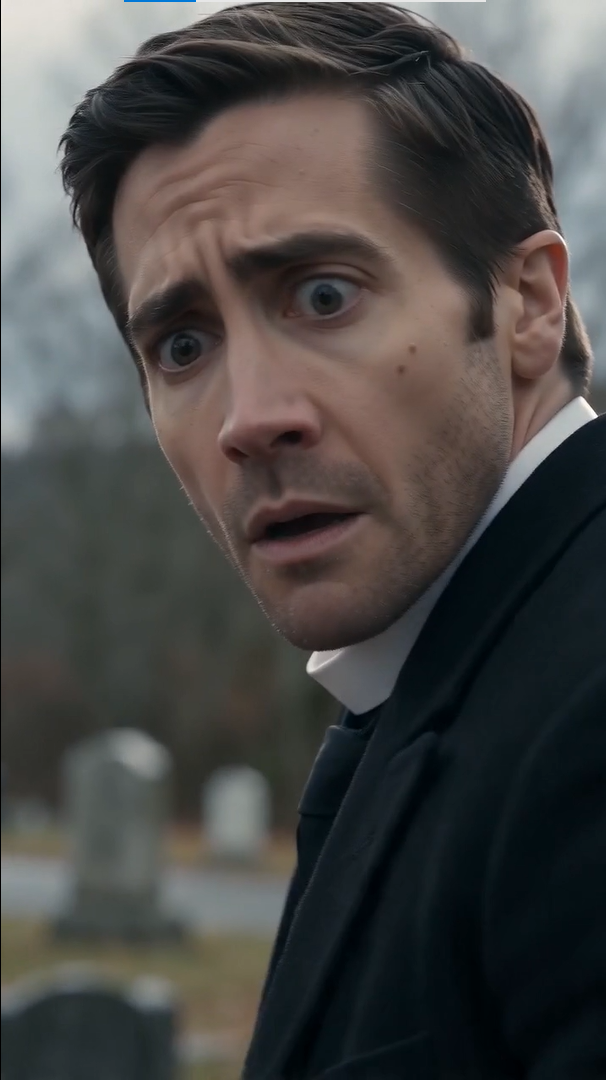
Lily stood behind them, holding the father’s hand.
The mother swallowed.
“I found them.”
Silence.
Not confusion.
Not shock.
Silence.
The kind only guilty people make when the lie dies before they can build another one.
Victor breathed once.
“Found who?”
The mother closed her eyes.
“My sons.”
Another pause.
Then his voice changed.
“Listen to me. You’re emotional. You’ve had a terrible day.”
The father stepped closer to the phone.
“You put them in an orphanage.”
Victor said nothing.
The detective nodded to the officer beside him, who started recording.
The father’s voice shook with controlled fury.
“You made us bury empty coffins.”
Victor finally snapped.
“You don’t understand what I did for this family.”
The mother’s face twisted.
“For this family?”
“They were broken,” Victor hissed. “Do you remember what the doctors said? Brain trauma. Therapy. Years of bills. They would have ruined you.”
The mother clutched her sons closer.
“No. You ruined us.”
Victor laughed bitterly.
“You were already ruined. Both of you. My father left everything tied up in those boys’ names while I ran the company, while I kept the family alive. It should have been mine.”
The father’s eyes filled with rage.
“So you stole children?”
“I protected what belonged to me.”
The mother’s voice came out like ice.
“They were not money. They were our babies.”
Victor went quiet.
Then he said softly, “You’ll never prove anything.”
The detective looked at the recording officer.
Then at the mother.
She looked at the phone.
“We already have.”
Victor hung up.
For a moment, no one spoke.
Then the mother lowered the phone and kissed both boys on their heads.
“It’s over,” she whispered.
But it wasn’t over.
Not yet.
The boys could not simply leave the orphanage that night, not without paperwork, medical checks, and emergency custody clearance.
The mother nearly broke when they told her.
“No,” she said. “You are not taking them from me again.”
The social worker spoke gently.
“No one is taking them. We just need to make sure everything is documented safely so nobody can challenge it.”
The father touched her shoulder.
“She’s right.”
The mother turned on him, wild with pain.
“You can leave them here?”
His face crumpled.
“No. I can barely stand breathing in a room they’re not in. But this time, we do it right. No secret papers. No lies. No one gets to touch them again.”
So they stayed.
All night.
The caretaker brought blankets.
The mother slept sitting on the floor between the two narrow beds, one hand holding each boy.
The father sat against the door with Lily asleep in his lap.
He did not close his eyes.
Not once.
Every sound in the hallway made him look up.
Every footstep made his body tense.
At dawn, the younger boy woke and stared at his mother as if he could not believe she was still there.
“You didn’t leave.”
The mother smiled through fresh tears.
“I told you. Never again.”
He touched her face.
“I forgot your voice sometimes.”
She broke.
“I’ll talk every day until you remember it forever.”
The older boy looked at the window.
“Can we go home?”
The father answered from the doorway.
“Yes.”
The boy looked at him.
“Even if we’re different?”
The father stood and came to the bed.
“You were never loved because you were perfect.”
The boy’s chin trembled.
“You sure?”
The father knelt.
“I loved you when you couldn’t speak yet. When you cried all night. When you spilled cereal on my work papers. When you broke my watch and tried to hide it under the couch.”
The boy smiled through tears.
“I did that.”
“I know. I found it.”
The father touched his scar gently.
“You could come home in a thousand pieces, and every piece would still be mine.”
The boy reached for him.
The father held him, and for the first time since seeing them alive, he let himself breathe.
By afternoon, emergency custody was granted.
The boys were coming home.
Lily stood near the office door, watching quietly while the boys packed their few belongings.
A sweater.
A book.
The wooden toy car.
The younger boy looked at her.
“You’re coming too.”
Lily shook her head.
“I can’t.”
The older boy turned to the mother.
“Please.”
The mother looked at the social worker.
The woman sighed softly.
“Lily has no living relatives listed. Her case is open. Foster placement is pending.”
The father looked at the mother.
They did not need to discuss it.
Pain had made the decision before words could.
The mother knelt in front of Lily.
“You brought us back to our sons.”
Lily’s lips trembled.
“They told me where the grave was.”
“And you were brave enough to come.”
“I just didn’t want them to cry anymore.”
The mother held her face gently.
“Then come with us. Not as a thank-you. Not because you have to. Come because every child deserves a door that opens for them.”
Lily stared at her.
“For tonight?”
The mother smiled through tears.
“For as long as the law allows.”
The father added softly, “And we’ll fight for longer.”
Lily looked at the boys.
They nodded.
Then she ran into the mother’s arms.
That evening, three children walked through the front door of a house that had been silent for two years.
The mother stopped just inside.
Everything was still there.
The framed photos.
The small shoes she could never throw away.
The height marks on the kitchen wall.
The two bedroom doors she had not opened except to dust and cry.
The boys went still too.
The younger one looked around.
“You kept our things?”
The father’s voice broke.
“We kept everything.”
The older boy walked to the wall where their heights had been marked in pencil.
He touched the last line.
“I’m taller now.”
The mother picked up a pencil from the hall table.
“Then we fix it.”
He stood against the wall.
His back straight.
His chin trembling.
The mother drew a new line above the old one.
Then she wrote the date.
Her hand shook so badly the numbers came out crooked.
The younger boy stood next.
Then Lily.
She stepped back quickly after the line was drawn.
“You don’t have to write my name.”
The father looked at her.
“Yes, we do.”
He wrote it carefully.
Lily.
For a long time, she stared at the mark.
A pencil line on a wall.
To anyone else, it was nothing.
To her, it was proof that she had entered a home and left a sign behind.
That night, the mother cooked soup because it was all her shaking hands could manage.
The boys ate slowly.
Lily kept asking if she could have more, like permission might run out.
The father put the pot in the middle of the table.
“This house does not count bowls.”
Lily looked confused.
The older boy smiled a little.
“It means eat.”
For the first time, Lily laughed.
It was small.
Careful.
But real.
After dinner, the mother opened the boys’ bedroom.
Two beds.
Two lamps.
Two blankets folded neatly.
On the shelf were old school drawings, toy animals, and the last birthday cards they had received before the accident.
The younger boy touched his pillow.
“It smells like home.”
The mother covered her mouth.
The older boy stood in the doorway, unable to enter.
The father moved beside him.
“What is it?”
The boy whispered, “I dreamed about this room so much. I’m scared if I go in, I’ll wake up back there.”
The father knelt.
“Then I’ll sit by the door until morning.”
The boy looked at him.
“You will?”
“Yes.”
The mother touched his hair.
“And I’ll be right here too.”
Lily was given the small guest room across the hall.
She stood inside with her little bag in her hands.
The bed was made with a yellow blanket.
A lamp glowed softly beside it.
There was a towel folded on the chair.
The mother came in carrying a clean nightgown.
“I know it might not fit perfectly.”
Lily held it like it was made of glass.
“It’s mine?”
“Yes.”
Lily looked at the bed.
“And I can sleep here?”
“Yes.”
“With the door open?”
“Of course.”
“With the light on?”
“As bright as you want.”
Lily swallowed hard.
“And if I get scared?”
The mother sat on the edge of the bed.
“Then you come to us.”
Lily looked at her.
“You won’t be mad?”
The mother’s eyes filled.
“No, sweetheart. We’ll be glad you came.”
That night, no one slept much.
The boys woke twice.
Lily woke three times.
The mother walked between rooms until sunrise, touching foreheads, fixing blankets, whispering the same words again and again.
You’re home.
You’re safe.
I’m here.
The father stayed near the hallway with a phone in his hand, waiting for news about Victor.
It came just after breakfast.
Victor had been arrested trying to leave the state.
The father listened silently.
The mother stood beside him, holding Lily’s hand.
When he hung up, he said only one thing.
“They got him.”
The older boy looked up from his cereal.
“Will he come here?”
The father crossed the room at once.
“No.”
The younger boy’s spoon shook.
“But he said if we ever told, you’d hate us.”
The mother sat beside them.
“Look at me.”
Both boys did.
“Adults who hurt children use fear like a lock. But he doesn’t have the key anymore.”
The older boy’s eyes filled.
“You really don’t hate us?”
The mother pulled him close.
“I hated every sunrise I had to live through without you.”
The father held the younger boy.
“And I hate that he made you believe our love could disappear.”
The trial came months later.
Victor’s lawyers tried to make it sound complicated.
They used words like guardianship confusion.
Emotional instability.
Financial mismanagement.
But the records were clear.
The transfer papers were forged.
The trust money had been drained.
The hospital discharge had been hidden.
The orphanage payments had come from stolen funds.
And most damning of all was the phone call, where Victor’s own voice admitted what greed had done.
The mother testified first.
She walked to the stand with her hands trembling but her head high.
Victor sat across the room in a suit, looking smaller than she remembered.
He would not meet her eyes.
She told the court about the day of the accident.
About waking in the hospital and asking for her sons.
About being told there was nothing they could do.
About two tiny coffins.
About birthday candles lit beside a grave.
About hearing her boys call her Mom again in a hallway that smelled of dust and old paint.
When the lawyer asked how Victor’s actions had affected her, she looked straight at him.
“He didn’t just steal money,” she said. “He stole goodnight kisses. He stole school mornings. He stole lost teeth, nightmares, birthdays, fevers, drawings on the fridge. He stole the years when my children still needed to be small.”
The courtroom was silent.
Then the father testified.
He spoke about guilt.
About standing at the grave every Sunday.
About wanting to follow his sons because the pain had become too heavy.
Then he looked at Victor.
“My brother let me mourn living children.”
Victor looked down.
That was the only time his face changed.
The boys did not testify in open court.
The judge would not allow them to be torn apart for spectacle.
But their recorded statements were played privately.
Lily’s statement was included too.
She explained how the boys talked about their parents every night.
How they saved half their dessert for birthdays that never came.
How they had given her the wooden toy car because they said it had been loved before, so maybe it could protect her too.
When the verdict came, the mother held all three children against her.
Guilty.
Fraud.
Kidnapping by deception.
Child endangerment.
Forgery.
The words were legal.
Cold.
But underneath them was something simple.
The world finally believed what their hearts had screamed from the beginning.
Something was wrong.
Victor was led away in handcuffs.
At the door, he turned once toward the father.
“I was your brother,” he said.
The father looked at him.
“No,” he answered. “You were only a man who shared my blood.”
Then he turned back to his children.
Life after truth was not easy.
People think miracles end the pain.
They do not.
Miracles only give you back something to fight for.
The boys had nightmares.
One hated closed doors.
The other cried when school asked for family drawings because he did not know whether to draw the grave or the house.
Lily hid food under her pillow.
For weeks, she still asked before opening the fridge.
The mother learned not to cry every time one of them flinched.
The father learned to speak softly when anger rose.
They all went to therapy.
They all told the truth in pieces.
Some days were beautiful.
Some days were hard.
Some days the mother had to stand in the boys’ room just to convince herself their beds were not empty.
Some nights the father woke and walked the hall, counting three sleeping children instead of two lost ones.
One afternoon, the younger boy came home from school with a drawing.
It showed a house.
Five people stood outside it.
A mother.
A father.
Two boys.
And a girl with yellow hair holding a wooden toy car.
The mother stared at it.
“Is this our family?”
He nodded.
Lily froze beside him.
“I’m in it?”
The boy looked confused.
“Of course.”
Lily began to cry.
The older boy rolled his eyes gently.
“Don’t cry. He draws everyone with triangle heads.”
Lily laughed through tears.
The mother put the drawing on the fridge.
Right in the center.
Not on the side.
Not under a magnet where no one would notice.
In the center.
Months became a year.
The cemetery visits changed.
They did not stop going.
The grave still existed.
The stone still had the boys’ names.
For a long time, the mother hated it.
Then the father said they should not pretend the grief had not happened.
So they planted flowers there.
Not as a grave anymore.
As a place for the years they lost.
The boys stood in front of the stone one Sunday, holding Lily’s hands.
The younger boy looked at his own name carved into the marble.
“That’s weird.”
The older boy nodded.
“Feels like we’re ghosts.”
The mother knelt behind them.
“You were never ghosts.”
The father placed a small wooden plaque at the base of the stone.
It read:
For the years we mourned.
For the love that waited.
For the children who came home.
Lily touched the words.
“Can we bring flowers here too?”
The mother nodded.
“Yes.”
“For the sad version of us?”
The father’s eyes filled.
“Yes, sweetheart. For the sad version too.”
That day, they left the wooden toy car on the stone for one hour.
Then the younger boy picked it back up.
“We’re taking it home,” he said.
The mother smiled.
“Yes. It belongs with the living.”
Two years after Lily led them from the cemetery to the orphanage, the adoption papers were signed.
The courtroom was nothing like Victor’s trial.
No fear.
No heavy silence.
No cold lawyers twisting pain into questions.
Just a kind judge, a stack of papers, and one little girl wearing a blue dress the mother had ironed twice because her hands were nervous.
The judge smiled at Lily.
“Do you understand what today means?”
Lily looked at the mother.
Then the father.
Then the boys.
She nodded.
“It means I don’t have to ask if I can stay.”
The judge’s face softened.
“That’s exactly what it means.”
When the papers were signed, Lily did not run to the mother first.
She ran to the boys.
They hugged her so tightly all three nearly fell over.
Then the mother and father joined them, laughing and crying at the same time.
That evening, they marked Lily’s new height on the kitchen wall.
Under the old pencil line, the father wrote her full name.
Lily Hale.
Then he crossed out Hale.
Everyone stared.
He smiled.
“Sorry. Habit.”
Then he wrote the new name.
Lily Carter.
The same as theirs.
Lily touched it with two fingers.
“That’s me?”
The mother kissed her hair.
“That’s you.”
The boys shouted, “That’s you!” until she laughed so hard she had to sit down.
Years later, people in town still told the story.
They talked about the mother who visited a grave and found a little girl waiting.
They talked about the orphanage at the edge of town.
They talked about two empty coffins, a greedy uncle, and two boys who had been alive the whole time.
But the family did not tell the story that way.
Not as a scandal.
Not as a headline.
Not as the worst thing that ever happened to them.
They told it as the story of Lily.
The girl who listened when two lonely boys talked about their mother.
The girl who followed a memory to a grave.
The girl who held out her small hand and led two broken parents back to the children they had been told were gone.
The boys grew strong again.
Not the same.
No one returns from pain exactly the same.
But they grew.
They fought over toys.
They spilled juice.
They complained about homework.
They got taller than the marks on the wall could keep up with.
Lily stopped hiding food.
She stopped asking if she could stay.
One night, years later, the mother passed the hallway and saw all three children asleep in the boys’ room.
The wooden toy car sat between them on the floor.
The father came up behind her and wrapped an arm around her shoulders.
She leaned into him.
“They’re really here,” she whispered.
He kissed the side of her head.
“Yes.”
“I still wake up scared sometimes.”
“I do too.”
She looked at the children.
“But then I hear them breathing.”
The father’s voice broke softly.
“And the world comes back.”
The mother wiped her eyes.
On the kitchen wall, the pencil marks climbed year by year.
Three names.
Three lives.
Three children who had all been lost in different ways and found under one roof.
And every Sunday, when rain touched the windows, the mother baked.
Vanilla filled the house.
The boys would grin and say, “Smells like before.”
Lily would sit on the counter, swinging her feet, stealing bits of dough when she thought no one was looking.
The mother always saw.
She never stopped her.
Because once, that little girl had walked out of an orphanage and into a cemetery with nothing but courage and a message from two boys everyone thought were dead.
They said you would cry.
And she had been right.
They cried that day.
They cried many days after.
But in time, the tears changed.
They were no longer only for what had been stolen.
They were for what had survived.
For small hands held across a cemetery road.
For empty coffins that did not get the final word.
For a toy car that found its way home.
For two boys who waited.
For one girl who came back to tell.
And for a mother and father who learned that sometimes love is not buried where people say it is.
Sometimes it is waiting in a small room with two narrow beds.
Still breathing.
Still hoping.
Still whispering your name.