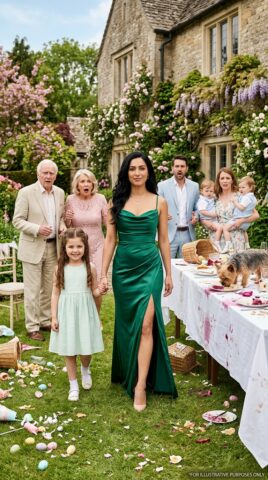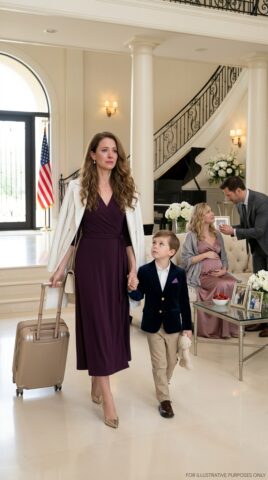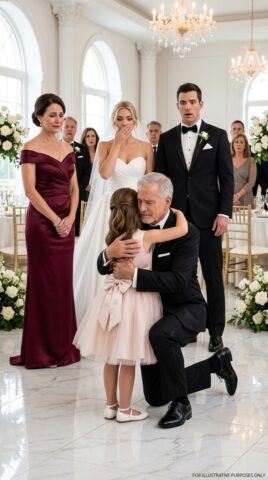
The cold hospital room felt nothing like the wedding hall.
Gone were the flowers, the soft music, the warm gold light.
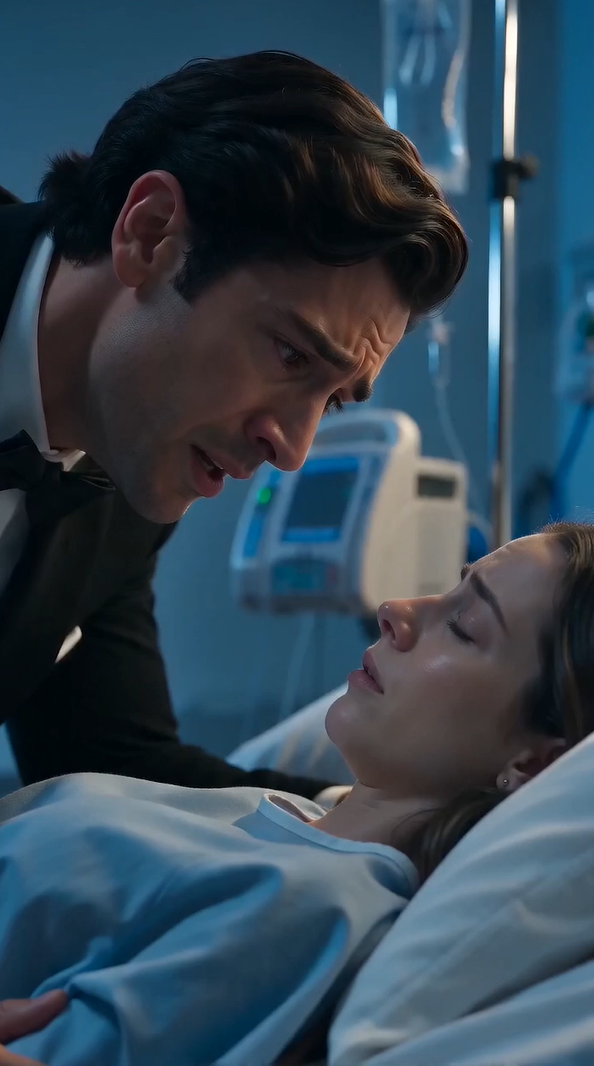
Now there were white sheets, pale blue walls, a low monitor hum, and Yohandra lying weak and still in the bed, her face drained of color.
Esteban rushed to her side in his wedding suit, breathing like he had run through a nightmare to get there.
“Yohandra…” he whispered, grabbing her hand with both of his. “I’m here. Look at me.”
Her eyelids fluttered.
Then slowly, painfully, she opened her eyes.
For one broken second, she just stared at him.
“Esteban?” she breathed.
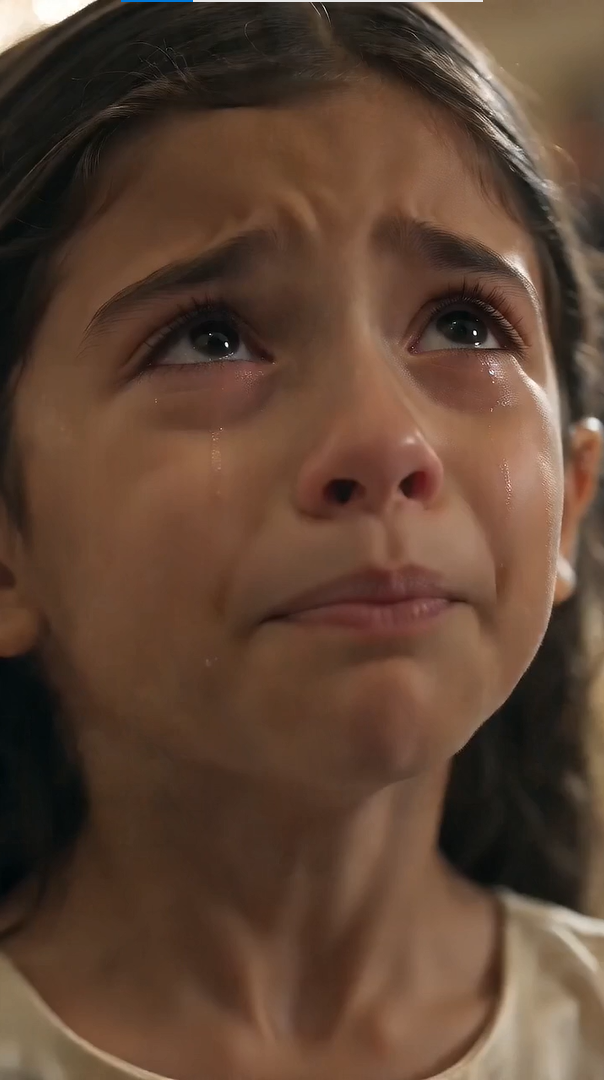
His face crumpled.
“Why didn’t you tell me?” he asked, voice shaking. “Why didn’t you come find me?”
A weak tear slipped down her cheek.
“I tried,” she whispered. “But your family made sure I disappeared first.”
That hit him like a blow.
He looked down at her hand in his, then back at the woman he had once loved and thought he had lost forever.
In the doorway, the little girl stood frozen, watching.
Esteban looked at her, then back at Yohandra, his chest tightening around the truth he was already too afraid to say aloud.
“She’s mine?” he asked softly.
Yohandra closed her eyes for one second, then nodded.
The breath left him.
He looked at the little girl again, really looked at her now, the eyes, the mouth, the fear, the hope.
His daughter.
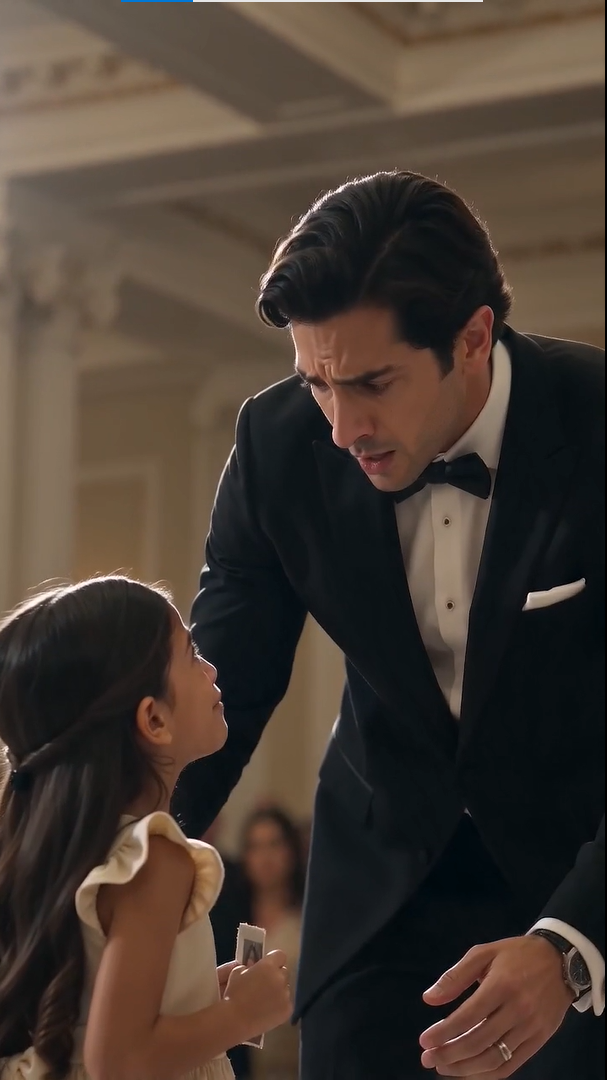
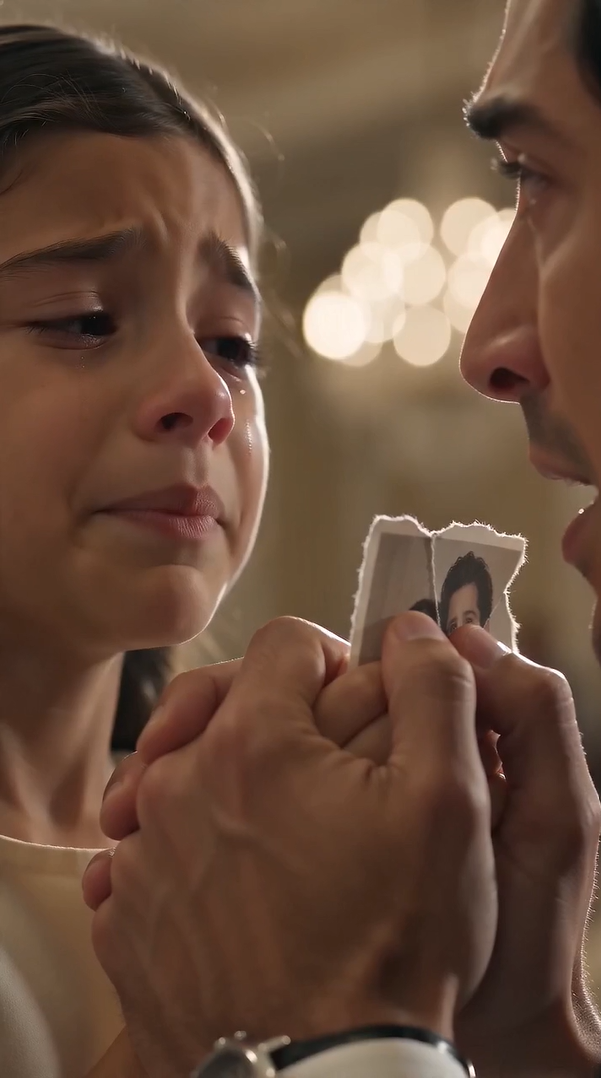
The child standing in a wedding hall with a crumpled photo because she had no one else left to save her mother.
He bent over Yohandra, shattered.
“I would have come,” he whispered. “I swear to you, I would have come.”
Yohandra’s weak hand lifted and touched his wrist.
Then, with the last of her strength, she looked toward the doorway and whispered,
“Because… she’s not the only one…”
Esteban turned sharply toward the hall outside the room,
and froze.
A little boy stood there.
Barefoot.
Small.
Too thin for his age.
His dark hair fell over his forehead, and both hands clutched the sleeve of an old sweater that looked far too big for him.
He was half-hidden behind a nurse, staring at Esteban with the same eyes as the little girl.
The same eyes Esteban had seen in his own mirror every morning.
The room tilted beneath him.
The boy took one tiny step back, afraid of what this man in the wedding suit might do.
The little girl moved first.
She ran to the boy and took his hand.
“It’s okay, Mateo,” she whispered. “He came.”
Mateo.
Esteban repeated the name inside his head, and it nearly brought him to his knees.
“Mateo?” he said, barely breathing.
The boy looked at Yohandra first.
Then at Esteban.
His voice was soft and guarded.
“Are you our father?”
The question entered the room like a knife.
Not angry.
Not loud.
Just a child asking for the truth adults had buried under money, pride, and lies.
Esteban’s lips trembled.
He tried to stand, but his knees weakened. He grabbed the side of Yohandra’s bed to steady himself.
“I…” His voice broke. “I didn’t know.”
Mateo looked down.
“That’s what they said you would say.”
Esteban went still.
“Who said that?”
The little girl tightened her grip on her brother’s hand.
“The old woman.”
Esteban’s face changed.
Yohandra closed her eyes, and fresh tears slid into her hair.
His mother.
He knew it before anyone said the name.
The woman who had straightened his tie that morning.
The woman who had smiled in the wedding hall while a little girl begged for help.
The woman who had told him Yohandra had left him for another man all those years ago.
His mother.
The door opened wider.
And there she was.
Isabel Vargas stood in the hallway in her perfect silver dress, diamonds at her throat, her face pale with fury and fear.
Behind her stood Esteban’s father, silent and rigid, and the woman he was supposed to marry, still wearing her wedding gown, veil hanging loose, flowers crushed in her hand.
Nobody spoke.
The hospital monitor hummed.
Yohandra’s breathing grew uneven.
Esteban slowly turned to face his mother.
“What did you do?”
Isabel’s face hardened instantly.
“Lower your voice.”
The old command.
The one that had controlled rooms, servants, board members, family dinners, and Esteban himself for most of his life.
But this time, he did not lower anything.
He stepped between his mother and the children.
“What did you do?” he asked again.
Isabel looked at the children like they were stains on the floor.
“I protected this family.”
Mateo flinched.
The little girl hid closer to him.
Esteban saw it.
His own children were afraid of his mother.
That single sight burned through whatever love, duty, or guilt still tied him to her.
“Protected us from what?” he asked. “From my own children?”
Isabel’s mouth tightened.
“You were young. Yohandra was not right for you. Her family had nothing. She would have trapped you.”
Yohandra turned her face away on the pillow, as if the old insult still had power to wound her.
Esteban’s voice dropped.
“She was pregnant.”
Isabel said nothing.
The silence answered.
His father finally stepped forward.
“Esteban, this is not the place.”
Esteban turned on him.
“You knew?”
His father’s eyes shifted away.
That was enough.
Esteban laughed once.
It was a broken, terrible sound.
“You both knew.”
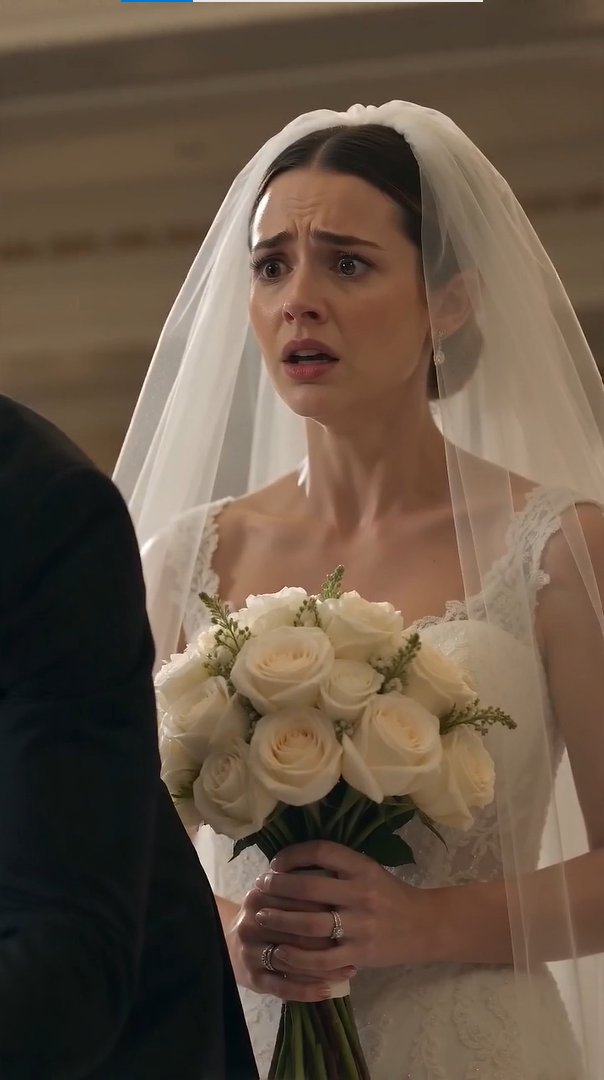
His bride, Camila, stood in the doorway, tears sliding silently down her cheeks.
“Esteban,” she whispered. “Is this true?”
He looked at her.
The woman he had almost married.
The woman who had not done this to him.
The woman standing in a hospital hallway while his past, his children, and the dying woman he still loved all crashed into the present.
“I didn’t know,” he said.
Camila looked at the children.
Then at Yohandra.
Then at Isabel.
Her face changed from heartbreak to horror.
“Your mother knew?”
Isabel snapped, “Do not involve yourself in family matters.”
Camila’s hand tightened around the bouquet.
“I was five minutes from marrying into this family.”
She stepped closer, voice shaking.
“So yes, I think I am involved.”
Isabel’s eyes flashed.
“You are upset. This can be managed.”
Esteban stared at her.
Managed.
As if Yohandra’s pain was a business problem.
As if two frightened children were a scandal to bury.
As if his whole life had not just split open in front of him.
Yohandra coughed suddenly.
The sound was deep and painful.
Esteban spun back to her.
A nurse rushed in and adjusted the oxygen near her face.
The children started crying quietly.
Esteban took Yohandra’s hand again.
“Stay with me,” he whispered. “Please.”
Yohandra looked at him with tired eyes.
“I waited,” she breathed.
His tears fell onto her hand.
“I know.”
“No,” she whispered. “You don’t.”
She tried to breathe, then forced herself to continue.
“I went to your house. Twice. Your mother said you were engaged. She said you hated me for embarrassing you. She said if I came again, she would make sure my babies were taken from me.”
Esteban’s face went white.
The little girl nodded, crying now.
“Mommy kept all your letters.”
Esteban turned to her.
“My letters?”
Yohandra closed her eyes.
“I wrote to you every month.”
“I never got them.”
“I know.”
Mateo stepped forward with trembling hands and pulled something from inside his sweater.
A bundle of envelopes.
Old.
Bent.
Tied with a faded ribbon.
He held them out to Esteban like they were sacred.
“We found them in Grandma’s drawer when she got sick,” he whispered. “Mommy said they were proof she didn’t stop loving you.”
Esteban took the letters.
The first envelope had his name written across the front.
Esteban Vargas.
In Yohandra’s handwriting.
The same handwriting from birthday cards, old notes, napkins from cafes, dreams they once made when they had nothing but each other and promises.
His hands shook as he opened one.
The date was eight years ago.
His daughter’s age.
He read the first line.
Esteban, I don’t know if this will reach you, but I am pregnant, and I am terrified, and I still love you.
He stopped.
The room blurred.
He opened another.
Our daughter was born today. She has your eyes.
Another.
I named her Lucia because you once said you loved that name.
Esteban looked at the little girl.
“Lucia,” he whispered.
She stared back at him, tears caught in her lashes.
That was the first time he had said her name.
She looked like she wanted to run to him and hide from him at the same time.
He opened another letter.
Mateo was born early. He is small, but he fights. I wish you were here to hold him.
Esteban covered his mouth.
His son.
His daughter.
Born into the world without him.
Crying, walking, speaking, growing, getting sick, getting scared, asking where he was.
And all that time, he had been grieving a lie.
He turned to his mother.
“You stole them from me.”
Isabel lifted her chin, but her hands were shaking now.
“I gave you a future.”
Esteban’s voice cracked.
“You stole my family.”
His father said quietly, “We thought it was best.”
Esteban looked at him with a kind of pain that had no words.
“You thought letting my children grow up hungry was best?”
His father flinched.
“You don’t understand the pressure your mother was under.”
“No,” Esteban said. “I understand perfectly.”
He held up the letters.
“You let her make me a stranger to my own children.”
Isabel took a step forward.
“Enough. You are emotional. That woman has filled your head with stories.”
Camila suddenly stepped between them.
“Stop calling her that woman.”
Everyone looked at her.
Her wedding gown brushed against the hospital floor.
Her makeup had streaked beneath her eyes.
But her voice was clear.
“Her name is Yohandra.”
Isabel looked stunned.
Camila continued, “And if everything they are saying is true, then she had more honor in poverty than all of you had in luxury.”
Esteban looked at Camila with grief and gratitude tangled together.
“I’m sorry,” he whispered.
Camila swallowed hard.
“So am I.”
Then she slowly removed the ring from her finger.
Esteban closed his eyes.
She placed it in his palm.
“I wanted a husband,” she said softly. “Not a man still trapped inside a lie.”
Her voice broke, but she did not look away.
“Go be a father.”
Then she turned and walked out of the room, her crushed bouquet hanging at her side.
No one stopped her.
Even Isabel had nothing to say.
Yohandra’s fingers tightened weakly around Esteban’s hand.
“Don’t hate her,” she whispered.
He leaned close.
“I don’t.”
“She didn’t know.”
“I know.”
Lucia moved to the bed.
“Mommy?”
Yohandra turned her head with effort.
“Yes, baby?”
“Is he staying?”
The room fell quiet again.
Esteban looked at his daughter.
His daughter, who had been brave enough to enter a wedding hall full of strangers with only a photo in her hand.
His daughter, who had carried truth like a stone too heavy for a child.
His daughter, who still did not know if fathers could be trusted.
He knelt in front of her.
“I am staying,” he said.
Lucia’s lips trembled.
“Even if Grandma says no?”
Esteban looked at Isabel.
Then back at Lucia.
“Especially then.”
Mateo stepped beside his sister.
“Do we have to go back to the apartment?”
Esteban frowned.
“What apartment?”
Yohandra closed her eyes.
Lucia looked down.
“The one with no heat.”
Esteban’s chest tightened.
Mateo added softly, “Mommy said not to tell. She said she didn’t want you to think we came for money.”
Esteban could barely breathe.
“I would never think that.”
Isabel made a sharp sound.
“Don’t be naive.”
Esteban stood so fast the chair scraped against the floor.
“Get out.”
His mother stared at him.
“What did you say?”
“Get out of this room.”
His father stepped forward.
“Esteban.”
He turned to him too.
“You as well.”
Isabel’s face twisted with disbelief.
“I am your mother.”
“And she is the mother of my children.”
The words landed hard.
Lucia’s eyes widened.
Mateo gripped her hand.
Yohandra began to cry silently.
Esteban continued, voice shaking with fury and heartbreak.
“You will not look down on them. You will not threaten them. You will not decide what happens next. You have done enough.”
Isabel’s eyes filled with angry tears.
“You’ll regret humiliating me.”
Esteban looked at the letters in his hand.
“No. I’ll regret every day I didn’t know they existed.”
The nurse stepped closer to the door.
“Sir, I need the room cleared for the patient.”
Isabel looked at Yohandra one last time.
There was no apology in her face.
Only defeat.
Then she turned and walked away, heels sharp against the hospital floor.
His father lingered for a moment.
He looked at the children.
At Yohandra.
At Esteban.
Something like shame moved across his face.
But shame without courage was useless.
He left too.
The door closed.
For the first time, the room was only theirs.
Esteban sat beside Yohandra again.
He tried to speak, but the words broke apart.
Yohandra touched his wrist.
“We don’t have time for guilt,” she whispered.
He shook his head.
“Don’t say that.”
Her eyes softened.
“I’m tired, Esteban.”
“No.”
“I fought for a long time.”
“No,” he said again, louder this time, like the word could hold her here.
The doctor entered before Yohandra could answer.
He spoke gently but clearly.
Her infection was severe.
Her body was weak.
She needed surgery and treatment immediately.
There was risk.
A lot of risk.
Esteban listened with one hand on Yohandra’s and the other holding the letters like they were pieces of his own heart.
“Do whatever she needs,” he said.
The doctor nodded.
“There are consent forms.”
“I’ll sign.”
Yohandra looked at him.
“You don’t have to…”
“Yes,” he said softly. “I do.”
Her eyes filled.
“I wanted to hate you.”
He bent his head.
“You should have.”
“I couldn’t.”
He pressed his forehead to her hand.
“I never stopped loving you.”
The words were not romantic now.
They were not the kind of words said under flowers or wedding lights.
They were broken.
Too late.
But true.
Yohandra looked toward Lucia and Mateo.
“They need more than money.”
“I know.”
“They need patience. Mateo still wakes up screaming sometimes. Lucia acts brave, but she listens at doors because she’s scared people will leave.”
Lucia looked down.
Mateo wiped his nose with his sleeve.
Esteban nodded, tears falling freely.
“Tell me everything.”
Yohandra’s breath caught.
“If I don’t…”
“Don’t.”
“If I don’t wake up,” she said, forcing the words out, “promise me they won’t go to your mother.”
Esteban stood.
His voice was firm.
“They will never be in her care.”
“Promise.”
He looked at Lucia and Mateo.
Then back at Yohandra.
“I swear on my life.”
Only then did Yohandra close her eyes.
Not in peace.
Not yet.
But in the first small release she had allowed herself in years.
They took her to surgery twenty minutes later.
Lucia cried when the nurses wheeled the bed away.
Mateo stood frozen, fists clenched, trying to be stronger than any child should have to be.
Esteban knelt and opened his arms.
For a second, neither child moved.
They had spent their lives hearing stories about him.
Some true.
Some stolen.
Some poisoned.
He did not force them.
He just stayed there on his knees in the hospital hallway, still in his wedding suit, holding his arms open to the children he should have held years ago.
Lucia came first.
She stepped into him carefully.
Then collapsed.
Mateo lasted two seconds longer.
Then he ran into them both.
Esteban wrapped his arms around them and cried into their hair.
“I’m sorry,” he whispered again and again. “I’m so sorry. I’m here now. I’m here.”
The surgery lasted hours.
During that time, Esteban learned his children in pieces.
Lucia liked drawing but hid her pictures because she thought wasting paper was bad.
Mateo loved cars but had never owned a new toy.
Lucia hated thunderstorms.
Mateo loved them because he said rain made the apartment feel less lonely.
They both loved rice with fried eggs because Yohandra made it when there was nothing else.
They both knew their mother’s medicine schedule.
They both knew how to lie to landlords.
They both knew how to be quiet when adults argued.
Esteban listened to all of it with a pain so deep he could hardly sit still.
Every detail was a year stolen.
Every habit was proof of a childhood made smaller by his family’s cruelty.
At dawn, the doctor finally came out.
Esteban stood so quickly Lucia grabbed his sleeve.
The doctor looked tired.
“The surgery went better than expected.”
Lucia gasped.
Mateo whispered, “She’s alive?”
“Yes,” the doctor said gently. “She is alive. But the next few days are very important.”
Esteban closed his eyes.
For the first time since he had left the wedding hall, he breathed.
He pulled both children close.
“She’s alive,” he whispered.
Lucia began to sob.
Mateo laughed once through his tears, like his body didn’t know what to do with relief.
When Yohandra woke the next day, the first thing she saw was Esteban asleep in a chair beside her bed, Lucia curled against his side, Mateo across his lap.
All three still in the clothes from the day before.
Her eyes filled.
For years, she had imagined this.
Not in a hospital.
Not with tubes in her arm and pain in her chest.
But still.
Her children with their father.
Safe.
Held.
Esteban opened his eyes as if he had felt her watching.
He sat up at once.
“Yohandra.”
She gave the smallest smile.
“You stayed.”
He leaned forward.
“I told you I would.”
Her eyes moved to the children.
“They let you hold them?”
He looked down at them, his face breaking softly.
“For a little while.”
“That’s a start.”
He nodded.
“Yes.”
The following days were hard.
Isabel tried to enter the hospital once.
Security stopped her.
She tried to send lawyers.
Esteban refused them.
She tried to call him, leaving messages full of anger, tears, manipulation, and finally a cold threat.
You are choosing a sick woman and two children raised in poverty over your own blood.
Esteban listened once.
Then deleted it.
His blood was asleep in the hospital room.
His blood called him Dad for the first time on the fourth day.
It happened by accident.
Mateo dropped a cup of water.
It spilled across the floor.
He froze in terror.
“I’m sorry,” he said quickly. “I’m sorry. I didn’t mean to. Don’t be mad.”
Esteban crouched at once.
“It’s only water.”
Mateo shook his head.
“I can clean it.”
“I know you can. But you don’t have to be scared.”
Mateo stared at him.
Then whispered, “Okay, Dad.”
The word slipped out before either of them was ready.
Mateo’s eyes widened.
Esteban went completely still.
Lucia looked up from her drawing.
Yohandra covered her mouth.
Mateo looked ashamed.
“I didn’t…”
Esteban pulled him gently into his arms.
“You can call me that whenever you want,” he whispered. “And if you’re not ready, that’s okay too.”
Mateo pressed his face into his shoulder.
“I wanted to before,” he cried. “I just didn’t know if I was allowed.”
Esteban held him tighter.
“You were always allowed. I’m the one who was late.”
Lucia watched from the chair.
Later that night, when the lights were low, she climbed into the chair beside him.
She didn’t call him Dad.
Not yet.
She only leaned her head against his arm.
Esteban did not move for almost an hour, afraid even his breathing might disturb the gift.
A week later, Yohandra was strong enough to leave intensive care.
Two weeks later, she was discharged.
Esteban brought them not to the Vargas mansion, not to the cold marble house where his mother’s shadow lived in every corner, but to a smaller home near the park.
Warm.
Quiet.
With yellow curtains in the kitchen and two bedrooms already prepared.
One for Lucia.
One for Mateo.
And a room for Yohandra downstairs, until she recovered.
When they stepped inside, Lucia held her small backpack to her chest.
“Are we visiting?”
Esteban shook his head.
“No. This is home, if you want it to be.”
Mateo walked slowly to the window.
“There’s heat?”
Esteban’s eyes filled.
“Yes.”
“All night?”
“All night.”
Lucia stood in the doorway of her room.
There was a bed with a soft purple blanket.
A desk.
A stack of drawing paper.
Colored pencils in a cup.
She touched them with one finger.
“Can I use these?”
Esteban’s voice almost failed him.
“They’re yours.”
“All of them?”
“All of them.”
She looked at him for a long moment.
Then she said softly, “Thank you.”
Not Dad.
But trust does not grow because adults are sorry.
It grows because they stay.
So Esteban stayed.
He learned how Mateo liked his eggs.
He learned Lucia needed the hallway light on.
He learned Yohandra pretended she was fine when she was hurting.
He learned apologies were not enough.
Presence had to come every day.
Some nights, the children asked questions.
“Did you love Mommy?”
“Yes.”
“Why did Grandma hate us?”
“She hated losing control.”
“Did you really not know?”
“No.”
“Would you have wanted us?”
That question came from Lucia one rainy evening at the kitchen table.
Esteban set down his fork.
Yohandra looked at him, pain in her eyes.
He turned fully toward his daughter.
“Yes.”
Lucia swallowed.
“Even if we were poor?”
“Yes.”
“Even if Mommy got sick?”
“Yes.”
“Even if Grandma got angry?”
Esteban’s voice broke.
“Especially then.”
Lucia looked down at her plate.
Her little fingers tightened around the edge.
Then she whispered, “I wanted you to come when Mateo had fever.”
Esteban closed his eyes.
“I wish I had known.”
“She cried in the bathroom because there wasn’t money.”
Yohandra turned away.
Esteban reached across the table, but stopped before touching Lucia’s hand.
He had learned not to grab trust.
To wait for it.
“I can’t fix that night,” he said. “But I can be here for the next one. And the next. And every one after that.”
Lucia studied him.
Then slowly, she pushed her drawing across the table.
It showed four people standing in front of a house.
Yohandra.
Mateo.
Lucia.
And Esteban.
His name was written under the figure.
Not Dad.
Esteban.
But he still had to turn away so the children would not see him cry too hard.
Three months later, the truth about Isabel became public.
Not through gossip.
Not through rumors.
Through court filings.
Yohandra’s letters.
Phone records.
Witness statements from former staff.
Bank transfers Isabel had made to keep Yohandra moving from one cheap apartment to another, always with threats, always with conditions.
The Vargas name shook.
Board members called.
Reporters waited outside gates.
Old friends disappeared.
Isabel blamed Yohandra.
Then Camila.
Then Esteban.
Never herself.
But this time, nobody could hide the story.
Camila gave a statement too.
Not for revenge.
For truth.
“I was almost married into a lie,” she said. “The children deserved to be known before the family reputation was protected.”
That sentence hurt Isabel more than any insult.
Because it came from the bride she had chosen herself.
In court, Isabel sat straight-backed, dressed in black, face unreadable.
Esteban sat beside Yohandra.
Lucia and Mateo did not attend the first hearing.
He refused to let them become a spectacle.
But Yohandra testified.
Her voice shook at first.
Then grew stronger.
She spoke of being threatened.
Of giving birth alone.
Of writing letters that never came back.
Of choosing between medicine and rent.
Of Lucia walking into a wedding hall because a child had finally done what adults were too afraid to do.
When the lawyer asked what she wanted, Yohandra looked at Isabel.
“I don’t want revenge,” she said. “I want my children to never again be treated like shame.”
The judge ordered protections.
Financial restitution.
A formal investigation into intimidation and fraud.
Isabel was removed from control of the family trust.
The mansion was no longer hers to command.
For the first time in her life, Isabel Vargas learned that money could buy silence for a while, but not forever.
After court, she waited outside.
Esteban tried to walk past her.
She stopped him.
“You would destroy your mother for them?”
He looked at her.
For a moment, he remembered being a little boy, holding her hand at parties, believing she could never be wrong.
Then he remembered Lucia in the wedding hall.
Mateo barefoot in the hospital hallway.
Yohandra lying pale in bed.
The letters.
The years.
He answered quietly.
“No. You destroyed yourself.”
Isabel’s eyes flashed.
“I gave you everything.”
Esteban shook his head.
“You kept everything that mattered from me.”
Then he walked away.
Not in anger.
Not in triumph.
In freedom.
Life did not turn perfect after that.
Yohandra’s recovery was slow.
Some days she could walk to the kitchen.
Some days she could barely sit up.
The children still woke from nightmares.
Esteban still felt guilt rise in his chest when he looked at old photos and realized how many birthdays he had missed.
But their home began to fill with ordinary sounds.
The washing machine.
Cartoons on Saturday morning.
Mateo laughing too loudly.
Lucia sharpening colored pencils.
Yohandra humming while cutting fruit.
Esteban burning pancakes and pretending they were a new recipe.
One afternoon, Lucia came home from school with a father-daughter dance invitation.
She hid it behind her back for almost an hour.
Yohandra saw it first.
She said nothing.
That night, Lucia found Esteban in the kitchen washing dishes.
She held out the paper.
“You don’t have to go,” she said quickly.
Esteban dried his hands.
He took the paper carefully.
Father-daughter dance.
His throat tightened.
“Do you want me to go?”
Lucia shrugged.
But her eyes were already wet.
“I don’t know how to dance.”
Esteban smiled softly.
“Neither do I.”
She looked surprised.
“But you were going to have a wedding.”
“That doesn’t mean I know what I’m doing.”
A tiny smile touched her face.
He knelt in front of her.
“I would be honored to go with you.”
She looked down.
“Really?”
“Really.”
The night of the dance, Lucia wore a blue dress.
Not fancy.
Not expensive.
But she twirled once in front of Yohandra, and Yohandra cried.
Mateo groaned from the sofa.
“Girls cry about everything.”
Then he cried too when Lucia hugged him goodbye.
At the school gym, fathers spun daughters beneath paper stars.
Lucia stood stiff at first, one hand in Esteban’s.
“I’m scared people will ask where you were before.”
Esteban bent down.
“If they ask, I’ll tell them I was lost, but I found my way.”
Lucia looked at him.
“Because of me?”
He smiled through tears.
“Yes. Because of you.”
She stepped closer.
The music began.
They were terrible dancers.
They stepped on each other’s shoes.
Lucia laughed.
A real laugh.
Free and bright and young.
Esteban looked down at her and felt the years he missed ache inside him, but not as punishment now.
As a promise.
He could not return to the beginning.
But he could be there for every step forward.
Months later, Mateo asked him to build a toy car.
Not buy one.
Build one.
They sat on the floor with wooden pieces, glue, paint, and instructions neither of them understood.
Mateo watched him struggle with the wheels.
“You’re bad at this.”
Esteban laughed.
“Yes.”
“My mom is better.”
“I know.”
Mateo looked at him.
“But I wanted to do it with you.”
Esteban stopped.
The little boy looked down quickly, embarrassed by his own honesty.
Esteban placed a hand gently on the floor between them.
“I wanted that too.”
Mateo leaned against him.
Not a big hug.
Not dramatic.
Just his shoulder touching Esteban’s arm while they worked.
It was enough to make Esteban’s eyes burn.
One year after the ruined wedding, Yohandra stood in the garden behind the house.
She was stronger now.
Still thin.
Still healing.
But alive.
Lucia and Mateo ran across the grass, chasing each other with paper kites.
Esteban stood beside her.
For a long time, they watched the children in silence.
Then Yohandra said, “I used to imagine telling you.”
He looked at her.
“I used to imagine you finding us.”
Her voice softened.
“Sometimes I hated you for not coming.”
He nodded.
“You should have.”
“Sometimes I loved you anyway.”
His eyes filled.
“I did too.”
She looked at him then.
Not like the young woman he had lost.
Not like the sick woman he had found in the hospital.
But like someone standing at the edge of a new life, afraid to step but wanting to.
“I don’t know what we are now,” she said.
Esteban took a breath.
“Then we don’t name it yet.”
She looked at him.
“We just tell the truth. We raise them. We heal. And if one day you can trust me with your heart again, I’ll be grateful. If not, I’ll still be here.”
Yohandra’s eyes filled.
“You’ve changed.”
He shook his head.
“I woke up.”
Lucia shouted from the grass.
“Mom! Dad! Watch!”
Both of them turned.
Lucia launched her kite.
It stumbled, dipped, almost fell.
Then the wind caught it.
The kite rose into the sky.
Mateo screamed with joy.
Yohandra started crying.
Esteban laughed softly, tears in his own eyes.
Dad.
Lucia had said it without thinking.
Without fear.
Without asking permission.
Yohandra looked at him and saw that he had heard it too.
That night, after the children fell asleep, Esteban found an old photo on the kitchen table.
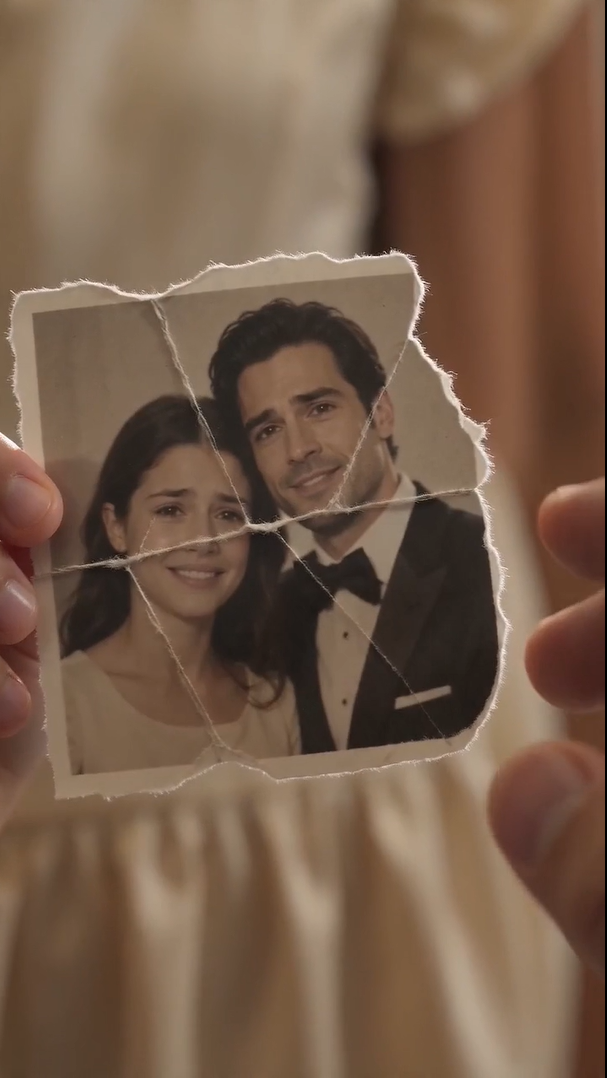
The same crumpled one Lucia had carried into the wedding hall.
Yohandra had smoothed it carefully and placed it in a frame.
In it, Esteban and Yohandra were younger.
Smiling.
Unaware of everything that would come.
Esteban touched the edge of the frame.
“She saved us with this.”
Yohandra nodded.
“Our little girl walked into a room full of people who would have ignored me.”
“She didn’t let them.”
“No,” Yohandra whispered. “She didn’t.”
They placed the photo on the mantel.
Beside it, Lucia later added a drawing.
Four people holding hands.
Then Mateo added his crooked wooden car beneath it.
Small things.
Simple things.
Proof that a family was being built again, not from perfection, but from truth.
Years later, people still talked about the wedding that never happened.
They remembered the bride who took off her ring.
The mother who was exposed.
The billionaire family that fell apart in court.
They remembered the little girl who walked into a wedding hall with a photograph and changed everything.
But Lucia remembered the hospital room.
The pale walls.
The monitor hum.
Her mother’s weak hand.
Her father kneeling in front of her, promising to stay.
Mateo remembered the first time he said Dad and wasn’t punished for needing someone.
Yohandra remembered opening her eyes and seeing Esteban there, too late for the past but just in time for the future.
And Esteban remembered the moment he turned toward the hallway and saw his son standing in the shadows.
That was the moment his old life ended.
Not the wedding.
Not the scandal.
Not the court.
That moment.
Because in one breath, he understood that the greatest thing stolen from him had not been love.
It had been time.
But time, once found, could still be honored.
So he showed up.
At breakfast.
At school plays.
At fevers.
At birthdays.
At bad dreams.
At small kitchen dances with Yohandra when the children were asleep.
At every moment he once would have missed.
And every year, on the day Lucia walked into that wedding hall, they did not call it the day everything broke.
They called it the day the truth came home.
Because one brave little girl had carried a photo through a room full of lies.
And because a dying mother’s whisper had revealed what no powerful family could bury forever.
She’s not the only one.
No.
She wasn’t.
There was Mateo.
There was Yohandra.
There was Esteban, the father he was always meant to become.
And together, after years of silence, fear, and stolen chances, they finally became what Isabel Vargas had tried so hard to erase.
A family.