
My fiancé stood behind me and said she made him happier than I ever had.
He did not know I had already checked the vacation fund that morning.
The toothbrush was pink.
That was the detail that stayed with me first, before the robe, before the wine glasses, before Marcus’s face, before Renee came out of my bedroom wearing the softness of a woman who had already made herself comfortable in someone else’s life. A pink travel toothbrush lay on the edge of my bathroom sink, angled beside my toothpaste, damp at the bristles, casual as a confession. Beside it sat a row of skincare bottles I did not own, a hairbrush with Renee Holt’s dark strands caught in the teeth, and a gold tube of lip gloss I had watched her apply across café tables for fourteen years while she told me every secret except the one that mattered.
The apartment smelled like her.
Not perfume exactly. Renee wore expensive perfume only when she wanted a room to notice her. This was more intimate. Dry shampoo, almond lotion, mint gum, the faint powdery scent of the setting spray she used before client calls. I had bought her that dry shampoo once for her birthday, tucked it into a gift bag with a silk scarf and a handwritten note that said, To my first call and my last defense.
I stood in the bathroom doorway with my overnight bag still in my hand.
Behind me, Marcus Webb said my name.
“Dany.”
Not Danielle. Not baby. Not babe.
Dany.
The way people say your name when they want to place you back into a role before you notice the room has changed.
I turned.
He stood in the hallway outside our bedroom wearing sweatpants and a white T-shirt, barefoot on the wood floor I had paid to refinish last summer. His face was pale, but not shocked. That was what I noticed next. He did not look like a man caught in the middle of a mistake. He looked tired in the specific way people look when pretending has finally become inconvenient.
Renee came out behind him.
She was wearing my robe.
The white one from the hook on the back of the bathroom door. The robe I bought after my promotion bonus two years ago because it felt irresponsible and beautiful and soft against my skin. It hung on her differently, loose at one shoulder, tied badly at the waist. She looked at me for one second with wide eyes, then lifted her chin.
That small gesture ended something in me.
Not the engagement. That had ended when I saw the toothbrush.
The gesture ended the version of friendship where I searched for misunderstanding before truth.
I walked past Marcus into the living room. One wine glass sat on the coffee table. Another on the floor near the couch, lipstick marked at the rim. Renee’s canvas bag was open on the armchair, keys and a compact spilled across the cushion. In the closet, three dresses I had never seen hung between Marcus’s shirts. One was still in a dry-cleaning sleeve.
This was not an affair that visited.
This was an affair that had unpacked.
Marcus followed me, keeping a careful distance as if I were something unstable.
“Dany, listen—”
“How long?”
His mouth opened.
Renee spoke first.
“Long enough to know this is real.”
The words were not loud.
They were worse.
They were placed.
Marcus looked at her, and whatever shame remained in his face slipped into relief. He straightened, as if her confidence gave him permission to stop hiding.
“You were never fully here,” he said. “You know that, Dany. You were always working. Always in your head. Always checking numbers and planning everything. Renee and I found something I didn’t have with you.”
My hand was still on the strap of my overnight bag.
I had told him I would be out of town for a work file. I had packed in front of him. He had scrolled through his phone and told me to drive safe without asking when I would be back. Then I checked into a cheap motel ten minutes away, waited until night fell, and drove home because the hotel receipt I found in his jacket and the emptied joint account had already told me enough.
I came home looking for proof.
The proof was wearing my robe.
Marcus glanced toward the kitchen counter. “You can keep the apartment.”
I looked at him.
He said it gently, like generosity.
“I’ll stay somewhere else for now. Renee and I… we need to figure things out. But I don’t want to make this ugly.”
Renee’s expression softened in triumph.
He thought I was losing him.
He had no idea I had already lost something larger.
The vacation fund.
Three years of my deposits. Two hundred dollars a month at first, then three hundred when my salary rose. A shared account labeled Future Fund: Vacation/Wedding, because Marcus said the label made him feel like we were building something, and I believed him. I had imagined a honeymoon near the ocean, a house down payment later, maybe Italy for our fifth anniversary if we stayed careful and the market behaved.
That morning, the balance was $214.67.
I walked to the kitchen counter, slid the engagement ring from my finger, and set it down beside his keys. The sound was small. A plain little click against granite. It did not match the size of the ending.
“I hope the lemon cake was worth it,” I said.
Then I left.
I did not slam the door.
I did not cry in the hallway.
I walked down three flights of stairs, past Mrs. Alvarez’s apartment where garlic and onions warmed the corridor, past the mailboxes where our wedding invitation sample still sat tucked behind a circular because I had forgotten to throw it away, past the glass front door of the building where Marcus had kissed me after our first date and told me he liked women who knew what they wanted.
Outside, the October night was damp and cool. Streetlights glowed against the wet pavement. A delivery truck idled at the corner. I put my bag in the back seat, got into my car, locked the doors, and sat with both hands on the steering wheel.
Only then did my body shake.
Not for long.
Long enough to prove I was human.
Then I called my mother.
Pamela Marsh answered on the second ring. She always answered on the second ring for me, never the first, because she said a woman should never sound like she had been waiting by the phone, even for her own child.
“Hey, baby.”
“Mom.”
One word.
She heard everything in it.
“What happened?”
“I found them.”
A silence.
Then the sound of her chair scraping against her kitchen floor.
“Where are you?”
“In my car.”
“Are you safe?”
“Yes.”
“Come home.”
“I need to go to the motel first. My stuff is there.”
“No. You come here. I will send your uncle for the rest.”
“I’m okay.”
“Danielle.”
That was not a request.
I drove to my mother’s house.
Her kitchen smelled like garlic, black pepper, and something simmering low. The table was small, wooden, worn smooth at the edges from years of bills, homework, funeral casseroles, birthday cakes, and the quiet work of surviving. Pamela did not hug me immediately. She looked at my face, took the bag from my hand, and put a bowl of soup on the table.
“Eat first,” she said.
“I don’t think I can.”
“You can.”
So I did.
Three spoonfuls. Then five. Then the whole bowl because my mother was right about many things, including the fact that shock is less romantic when your blood sugar collapses.
Only after I ate did I tell her.
The hotel receipt from Marcus’s jacket. The drained account. The fake work trip. The toothbrush. Renee in my robe. Marcus saying Renee made him happy.
My mother listened with both hands folded around her coffee mug.
She did not interrupt.
That was one of the things I loved most about Pamela Marsh. She did not rush into outrage before she had all the facts. She believed anger should be fed properly before it went anywhere.
When I finished, she said, “How long have you known about the account?”
“Since this morning.”
“You didn’t confront him?”
“I needed to be sure.”
She nodded.
Not approvingly.
Understandingly.
“You were always good with numbers,” she said. “Now let them tell you everything.”
The next morning, I went to work.
Heritage Community Bank sat on the corner of Elm and Fifth in a square brick building that smelled like old carpet, new coffee, printer toner, and winter coats drying too close to vents. It was not glamorous. The framed family photos in the lobby had been the same since 2009. The waiting chairs sagged slightly. The coffee machine in the breakroom made a sound like it resented employment.
But the work mattered.
When I approved a loan, a family bought a house. When I flagged a file, I protected the bank from something that could hurt people who trusted us. I understood risk. I understood patterns. I understood that small inconsistencies, ignored long enough, become large losses.
My desk had three piles.
Approved.
Pending review.
Problems.
The right pile was always smallest.
I made sure of that.
My supervisor, Greg, passed my open door and tapped twice on the frame without stopping. “Hendrick account is flagged. Third-party income docs look thin.”
“Already pulled them,” I said. “I’ll have notes to you by three.”
He nodded and kept walking.
That was how Greg worked. He asked. I had already done it.
At 7:00 the following Thursday, Sandra Whitfield met me in the breakroom before the branch opened. Sandra was senior staff, sharp-eyed, warm when earned, and allergic to nonsense. She brought her own coffee because she considered the bank machine a crime.
“I want to pull the old joint account records,” I said. “Marcus and I are both on the account. I’m primary. I have legal access.”
Sandra did not ask why.
That was why she was my friend.
“How far back?”
“Two and a half years.”
She pulled the records cleanly, legally, through the system, while the fluorescent light buzzed overhead and the hallway outside remained empty. At first, the account looked ordinary. My deposits. Small withdrawals. Wedding vendor payments. Groceries. Utilities. A few restaurants.
Then Sandra stopped scrolling.
“There.”
A transfer. $300 to an account ending in 7714.
Two weeks later, another.
Then another.
Small enough to disappear inside routine. Frequent enough to build a second life.
Sandra cross-referenced the destination name.
Her face did not move, but her jaw tightened.
“Renee Holt.”
I did not speak.
The first payment predated Marcus’s proposal by seven months.
Seven.
Not seven weeks. Not after stress. Not after wedding planning. Not after he “felt unseen.” Seven months before he knelt in our living room with the ring I later learned he had financed poorly and told me he could not imagine building a life with anyone else.
“How much total?” I asked.
Sandra added it quietly.
“Just under six thousand over twenty-two months.”
The breakroom seemed colder.
I wrote the number down.
Not because I could forget it.
Because numbers become less monstrous when placed on paper where they can be used.
That evening, at my mother’s kitchen table, I spread the printed records between the salt shaker and a pot of rice cooling on the stove. Pamela read them slowly.
“He proposed after this started,” she said.
“Seven months after.”
She got up, turned the stove lower, and came back.
“Then it was never about wanting to marry you,” she said plainly. “It was about what marrying you gave him. Stability. A front. Your paycheck. Your planning. Something respectable while he did whatever he wanted.”
I had already understood it.
Hearing it from my mother made it sharper, like a photograph coming into focus.
“He used the engagement as cover,” I said.
“And your money as a cushion.”
The room was warm. Outside, dusk gathered behind the window. The pot on the stove made a soft, steady sound.
“I need to know how far it goes,” I said.
My mother looked at me.
“Then we find out.”
The deeper betrayal was not the money.
That surprised me.
I thought the money would be the part that made rage sustainable. The three years of savings, the payments to Renee, the hotel receipts, the vacation fund drained to under two hundred and fifteen dollars. But money, once traced, had edges. It could be counted, printed, highlighted, filed.
The thing without edges came from an email.
Sandra found it two weeks later.
She called me before the branch opened. Her voice was quiet enough to tell me not to bring coffee.
“I found something you need to see.”
The breakroom smelled like burnt microwave popcorn and old carpet. Sandra had her laptop open. On the screen was an archived internal email from Renee Holt to Robert Finch, my former supervisor, sent twenty-six months earlier during the week of my regional manager review.
Subject: Just wanted to flag something re: Danielle Marsh.
I read the first line.
Then the second.
Then the whole email.
Renee had written like a concerned friend. That was the genius and ugliness of it. She told Robert she hated to say anything, but she was worried about me. She had noticed I seemed overwhelmed. A couple of people had mentioned I was short with clients. She did not want to interfere, but because the regional manager role involved leadership under pressure, maybe he should keep an eye on my temperament.
Temperament.
A word men love when they want to make a woman sound dangerous without evidence.
Robert forwarded it to HR.
Worth keeping in mind as we finalize.
HR replied:
Noted. We’ll factor it in.
I sat with my hands flat on the table.
The promotion had gone to Derek Paulson. Derek, whose accuracy rate was lower than mine. Derek, who had three fewer years of experience and a habit of asking me to double-check his work. Robert told me Derek was “a stronger cultural fit.” I had thanked him, walked back to my desk, and worked the rest of the day because that was what I did when something hurt too publicly to touch.
For two years, I had carried that rejection like a private flaw.
Now I knew who had placed it in me.
“She called me emotionally volatile,” I said.
Sandra’s face remained still.
“Yes.”
“While smiling at me every week.”
“Yes.”
The email was dated before Marcus sent Renee money. Before the proposal. Before the first obvious sign of the affair.
Which meant Renee had not sabotaged me to protect him.
She had done it before him.
She had done it because resentment had been living in our friendship long before betrayal found a bed.
I thought about fourteen years. Freshman dorms. Shared holidays. Her crying in my kitchen when Marcus proposed. Me drafting a client pitch email for her at midnight after her marketing business stalled. The way she made jokes about me being rigid, organized, too careful, too practical. I had heard the jokes as insecurity. They had been previews.
You do not write an email like that once.
You do not choose those words, send them to your best friend’s supervisor, then show up that Friday with wine and a smile unless something in you has already made peace with harming her.
I looked at Sandra.
“Send me copies.”
“Already done.”
That evening, I went to Julian Ashford’s apartment.
I had met Julian in February as a client.
A new business account had come across my desk under the name Ashford Venture Holdings LLC. The paperwork was clean, but one number looked unusual in the funding sequence. Most officers would have let it slide because the client had enough money behind him to make questions feel unnecessary. I asked anyway.
He paused.
Then he answered clearly.
When we finished, he said, “You’re the first person who asked me that.”
“It was the obvious question,” I said.
“Most people assume.”
“I’m not most people.”
I meant it as a fact, not flirtation.
He heard it that way.
Three weeks later, he came back for a follow-up. We got coffee afterward. Twenty minutes. Nothing dramatic. The kind of conversation that does not mean anything yet and later becomes the hinge on which a door opens.
By the time I learned his full name, Julian Ashford of the Ashford Group, family hotels, real estate holdings, development projects across four countries, it did not change what mattered. I had already seen who he was across a desk covered in loan files. Patient. Clear. Unoffended by questions. Interested in accuracy. Not threatened by a woman who did her job.
Honesty built faster than either of us expected.
Not romance first.
Trust first.
Now I sat on his couch with the transfer records, the emails, and the timeline spread across the coffee table.
“I’m not asking you to fix this,” I said. “I’m asking you to help me plan.”
He looked at the documents for a long time.
Then he looked at me.
“Good,” he said. “Because you don’t need fixing. You need leverage.”
The next move came from Marcus.
A text on a Wednesday.
Hey Dany. I know this is out of nowhere. I’ve been doing a lot of thinking. Would you be open to coffee sometime? I feel like we never really got closure.
Closure.
People use that word when they want access without admitting the purpose.
I had heard things by then. Marcus was not doing well at his marketing firm. A campaign he had championed had failed. Renee’s personal brand consulting business had burned through money and produced nothing stable. Their relationship, once thrilling enough to destroy a wedding, had become ordinary under debt and consequences.
I replied the next morning.
Sure. Coffee works.
He answered in four minutes.
Saturday?
We met at a café near Midtown with exposed brick, too many plants, and the kind of lighting that made everyone look like they were about to launch a podcast. Marcus stood when I arrived. He wore a jacket a season behind and a smile too eager to be casual.
“You look incredible,” he said.
“Thank you.”
He spoke for fifteen minutes.
Stress. Growth. Soul-searching. Mistakes. Perspective. How the last year had humbled him. How he missed the way I saw things. How I was always the smartest person in the room.
Then he leaned forward.
“I’ve been working on something. More of a venture play. Hospitality-adjacent. Maybe real estate. There’s serious money in that space if you have the right relationships.”
There it was.
He had not come for closure.
He had come for Julian.
“I saw you at the gala last month,” he said. “Julian Ashford seems like a solid guy. Down to earth, actually. I’d love to pick his brain.”
I kept my face mild.
“What are you pitching?”
Encouraged, Marcus started talking.
Vague business plan. Inflated numbers. Connections he did not have. A market he barely understood. He referenced our history twice, trust once, and my “financial mind” three times.
When we said goodbye, he hugged me like an old friend.
I smiled.
Then I got into my car and called Julian.
Within a week, we had a plan: me, Julian, Sandra, and Pamela around my mother’s kitchen table with papers between the coffee pot and a plate of biscuits. Julian sent the dinner invitation through his family’s assistant. Formal. Polite. Impressive enough to make Marcus believe the door had opened.
Marcus accepted within the hour.
The pitch deck arrived Thursday.
Julian’s assistant, Carol, forwarded it with one line:
Thought you should see page four.
My name was there.
Danielle Marsh, Senior Loan Officer, Heritage Community Bank. Long-standing professional colleague and close personal contact. Ms. Marsh has provided informal guidance on this venture’s foundational financial structure.
I read the sentence three times.
Not because I did not understand it.
Because I needed the anger clean.
He had taken my money.
He had taken my trust.
He had taken two years of my professional confidence through Renee’s sabotage.
Now he was taking my name.
The private dining room at Ashford Group’s preferred venue was quiet, elegant, and built for serious decisions. No sign on the street. No visible host stand. Just polished wood, soft lights, and thick carpet that swallowed footsteps. Marcus and Renee arrived seven minutes early.
Marcus wore a stiff new suit.
Renee wore a fitted black dress and the careful expression of a woman rehearsing ease.
They smiled when they saw Richard Ashford, Julian’s father, and Clare Ashford, Julian’s mother, seated at the table with two senior associates.
Then Marcus saw me.
His smile held.
Barely.
“Dany,” he said. “I didn’t know you’d be here.”
“I live here,” I said pleasantly.
Dinner began.
Marcus performed well at first. He was good at beginnings. Background. Vision. Opportunity. Timing. Strategic relationships. He spoke with the confidence of a man who had always trusted rooms to bend toward him if he sounded certain enough.
Then I set my water glass down.
“Marcus, I had a question about page four of your pitch deck.”
His hand tightened slightly around his fork.
“Sure.”
“You listed my name, title, and bank under professional endorsements. Can you walk me through what that was based on?”
The room quieted.
“We have a long history,” he said. “Professional and personal.”
“What guidance did I provide for this specific venture?”
His eyes flicked once to Renee.
“We’ve talked about finances over the years.”
“We’ve talked about groceries over the years,” I said. “I’m asking about the venture.”
Clare Ashford spoke softly.
“Did you ask Ms. Marsh for permission to use her name?”
Marcus swallowed.
“Not formally.”
The word formally carried too much weight.
Everyone heard it strain.
Renee broke first.
“This is what she does,” she said, too sharply. “Dany always makes herself the center of things. She’s been doing it for years. She’s difficult to work with.”
No one replied.
Silence can be very instructive when intelligent people let it remain.
Renee pushed on, because people do when they feel the room slipping.
“Ask anyone who worked with her. She had a supervisor years ago who had real concerns. Temperament concerns. Reliability concerns. There was a promotion she didn’t get because people knew she wasn’t ready.”
I looked at her.
“Who told him those things, Renee?”
The color shifted in her face.
“What?”
“The concerns. The reservations. Who told Robert Finch I was emotionally volatile?”
Her mouth opened.
Nothing came out.
The room saw it.
That was all I needed.
But I gave them the rest.
“Two years ago, I was up for regional manager. My numbers were stronger than anyone else’s. I had the tenure, the client record, the reviews. I didn’t get it. I carried that for a long time. I thought I had missed something.”
I kept my voice steady.
“It was you. You emailed my supervisor and planted false concerns. Sandra has the correspondence. Internal memos. Your name. Dates. Everything.”
Renee lifted her chin again, but this time it did not look like victory.
It looked like defense.
“You can’t prove—”
“Sandra has the correspondence,” I repeated.
A woman at the far end of the table, Patricia, who ran an events firm Renee had been courting for months, set down her wine glass and did not pick it up again. A man named Garrett, who managed a referral network Renee wanted to join, leaned back slowly and stared at the ceiling for one second, the way people do when recalculating a risk.
I turned to Marcus.
“Fourteen months ago, I checked our joint vacation account. Nearly eleven thousand dollars was gone. Sandra pulled the full history. The money did not go to wedding vendors. A significant portion went to accounts connected to Renee and her failed business setup. The first transfer started almost two years ago, before you proposed.”
Marcus’s face stiffened.
“Dany—”
“You proposed while already involved with her. That was not weakness. That was not confusion. You kept the apartment, my stability, my income, and Renee. You needed both of us to make the picture work.”
He looked at Julian.
Julian said nothing.
That was worse for him.
Richard Ashford folded his napkin once and placed it beside his plate.
“The credentials submitted in your deck have been reviewed,” he said. “Several are exaggerated. Two are fabricated outright. We will be withdrawing all consideration for this or any future engagement. We will also be notifying your current employer regarding the falsified materials. That is a professional matter separate from this evening.”
Marcus went pale.
Not gradually.
All at once.
Then he turned on Renee.
“This is because of you.”
Her face hardened.
“Don’t you dare.”
“You pushed me to pitch them.”
“You listed her name.”
“You told me to do whatever it took.”
“I told you to be smart.”
Their voices rose, not loudly enough to become a scene, but enough to reveal exactly who they were when performance failed.
I picked up my clutch.
Julian stood beside me.
I did not look back as we left the room.
There was nothing left there worth the turn of my head.
Six months later, the branch manager’s office at Heritage Community Bank had a new nameplate.
D. Marsh.
Black letters on brushed silver.
Nothing fancy.
I chose it myself.
The promotion came after a performance review that took forty minutes and felt almost anticlimactic because justice often arrives dressed as paperwork. My loan approval accuracy rate was the highest in the district. Client retention had improved under my informal leadership. Greg admitted, with visible discomfort, that the prior regional manager decision had been compromised by incomplete and improperly weighted feedback. Renee’s old email became part of an internal review. Robert Finch had already left the company, but HR revised the promotion documentation and issued a formal correction to my personnel file.
Long overdue, the regional director said.
I signed the acceptance letter.
Sandra brought cake.
Pamela cried and pretended she was checking the napkins.
I did not make a speech.
I had spent too long mistaking silence for being overlooked. Now I understood silence could simply mean the work had arrived before the applause.
Marcus lost his job in May after his employer received documentation of falsified credentials in the Ashford pitch deck. Renee’s consulting business never recovered. The contacts she lost in that dining room did not return. She and Marcus lasted two more months, or so I heard, blaming each other in conversations with mutual acquaintances who stopped calling one by one.
I checked myself for satisfaction when the news came.
It was not there in the way I expected.
What I felt was quieter.
Like setting down a box I had carried so long my arms forgot it was heavy.
Julian and I married in late March, one year after the gala where Marcus first saw me on his arm and realized I had not remained where he left me.
The wedding was small.
Forty-two people in a restored garden space outside the city. No chandelier. No five-tier cake. No performance disguised as romance. I wore an ivory dress from a small boutique, simple, soft, with a neckline I liked. Julian wore a dark suit. Pamela sat in the front row and cried openly. Sandra stood beside me and handed me the ring at exactly the right moment without being asked, because Sandra had always known when something needed doing before it was said.
Julian’s vows were short.
“I will not ask you to be less precise so I can feel larger,” he said. “I will not call your clarity cold. I will not mistake your care for a resource I am owed. I will be honest before I am charming. I will be present before I am impressive.”
I laughed once through tears.
Not because it was funny.
Because it was exactly right.
People would always tell my story as if the most powerful moment was the night I found Renee’s toothbrush.
The pink toothbrush.
The robe.
The drained account.
The ring left on the counter.
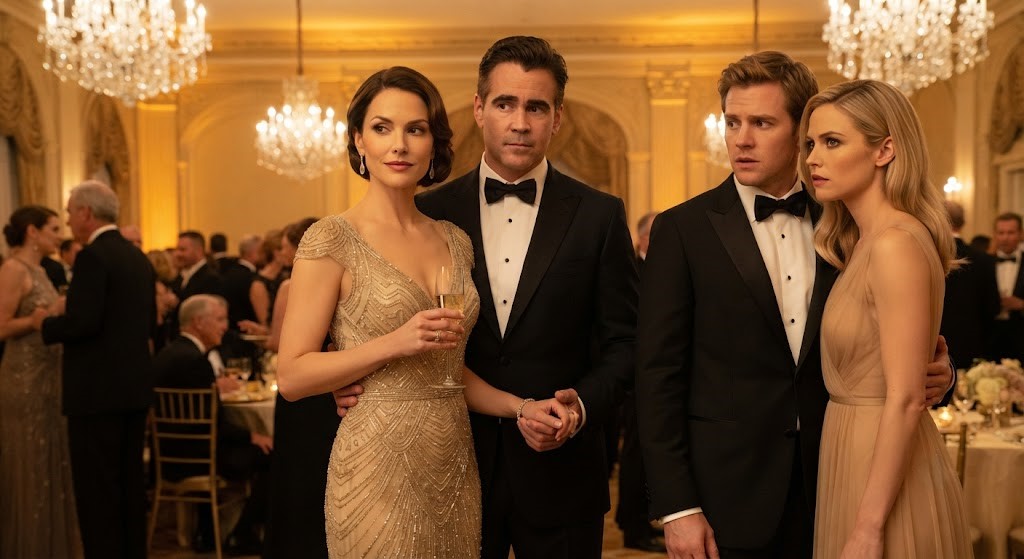
The hotel ballroom where Marcus saw me with Julian Ashford.
The private dinner where both of them finally said enough truth to bury themselves.
They would be partly right.
Those moments mattered.
But the real story was quieter.
It was a bank officer noticing a small transfer.
It was a mother saying, “Let the numbers tell you everything.”
It was Sandra pulling records at 7:00 a.m. without asking me to perform my pain.
It was learning that the friend who smiled beside me had once written the email that made me doubt my own competence.
It was Julian hearing the whole story and saying not “let me fix it,” but “let’s plan.”
It was a pitch deck with my name used without consent.
It was the word formally doing too much work in a dining room full of people who knew exactly what dishonesty sounded like.
It was a new nameplate on a branch manager’s door.
It was me understanding, finally, that I had not been cold.
I had been precise.
There is a difference.
Cold is absence.
Precision is discipline.
Cold refuses to feel.
Precision refuses to waste feeling where it cannot change the outcome.
On a Thursday evening in late May, I sat at the kitchen table of the house Julian and I shared. Not a mansion. Not a magazine spread. A real brick house with a back porch we were slowly furnishing and a kitchen that caught good morning light. My laptop was open to a budget projection I had already run twice and would run once more because that was who I was.
Julian was in the living room with the television low.
“Dany?” he called.
His voice was easy.
Unhurried.
Certain of my answer but never entitled to it.
I closed the laptop and looked around the kitchen: the ceramic bowl Pamela gave us, the grocery list on the fridge in Julian’s handwriting, the loan files in my bag, the flowers Sandra brought last week still holding on the windowsill.
I thought of the old apartment.
The toothbrush.
The robe.
The ring on the counter.
Then I thought of the nameplate on my door.
D. Marsh.
Still me.
More me.
I turned off the kitchen light and walked toward Julian’s voice.
The future did not arrive all at once.
It arrived in records, questions, witnesses, quiet mornings, clean signatures, corrected files, and rooms where I no longer had to make myself smaller to be loved.
Marcus once smiled at me like I was a problem he had finally solved.
He was wrong.