My wife put on a seductive black dress and said, “I’m going to the club. Don’t like it? Divorce me.” I didn’t yell, didn’t follow her, and didn’t beg. I walked into my office, signed the papers I had prepared months ago, and sent them to her with three words: “As you requested.” Ten minutes later, she came running home barefoot.
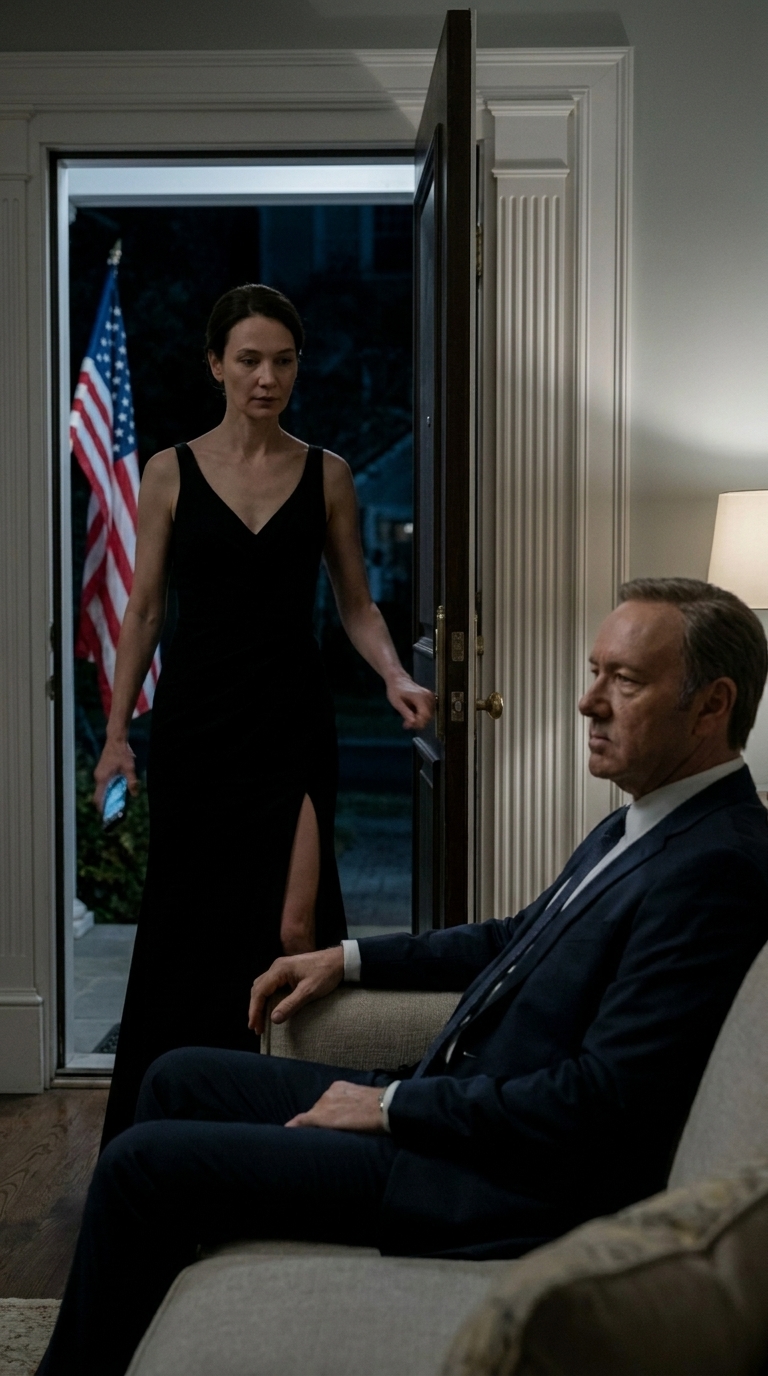
My wife came down the stairs in a black dress that looked like a decision more than an outfit.
It was not the dress that stopped me from breathing for half a second, but the way she paused on the last step and waited for me to look hurt.
The rain had been tapping against the windows all evening, soft and steady, the kind of rain that made the whole neighborhood look peaceful from the outside.
Inside our house, peace had become something we performed for delivery drivers, neighbors, and relatives who still believed our marriage was simply going through a quiet season.
Her name was Lauren, and once, years before, she would have asked me whether I liked the dress.
That night, she did not ask.
She turned in front of the hallway mirror, adjusted one thin strap over her shoulder, and smiled at her own reflection like I was only a piece of furniture behind her.
“I’m going to the club,” she said.
I was sitting at the dining table with a cup of coffee I had not touched, watching the steam disappear into the empty space between us.
Outside, a truck passed slowly along the street, headlights sliding across the wall where our wedding photo still hung.
I looked at that photo for a moment.
In it, Lauren was laughing with her whole face, her hand pressed against my chest, my eyes fixed on her as if I had somehow been chosen by the sun.
The woman standing at the stairs was not laughing.
She was waiting.
“Don’t like it?” she said, lifting her chin. “Divorce me.”
There was a time when those words would have shattered something in me.
There was a time when I would have followed her into the hallway, lowered my voice, begged her to sit down, asked what I had done wrong this time.
There was a time when I believed love meant refusing to leave even when the person you loved had already left in every way that mattered.
But that time had ended months ago.
I did not yell.
I did not stand.
I did not ask where she was going, who would be there, or why she needed to say it like a challenge instead of a fact.
I only looked at her for one long second and said nothing.
Her smile twitched.
That was the first crack.
Lauren had grown used to my pain having sound.
She knew the rhythm of my worry, the way I would reach for explanations, the way I would try to build a bridge across any silence she dropped between us.
But silence, when it comes from someone who has finally stopped reaching, is a different kind of language.
She waited for me to speak.
I did not.
She gave a small laugh, the kind meant to punish.
“Exactly,” she said. “That’s what I thought.”
Then she picked up her silver purse from the console table, took her keys from the bowl, and walked toward the front door as though she were walking out of a cage.
The door opened.
For a moment, the cold air pushed into the house, carrying the smell of rain and wet asphalt.
Then the door closed behind her.
I sat there until the sound of her heels faded down the porch steps.
Only then did I stand.
Not quickly.
Not dramatically.
I carried my untouched coffee to the sink, poured it out, rinsed the cup, and placed it in the drying rack beside hers.
That small act nearly broke me.
Not because I wanted her back, but because habit is sometimes more stubborn than love.
For eight years, I had known where her cup belonged.
For eight years, I had learned the temperature of her coffee, the shape of her moods, the exact way she folded herself into my side during thunderstorms.
For eight years, I had believed patience could save a marriage from contempt.
I was wrong.
I walked down the hallway to my office and closed the door.
The room smelled faintly of paper, leather, and the old cedar bookshelf my father had built before he died.
My desk lamp cast a circle of amber light over the files that had been waiting in the bottom drawer for one hundred and twelve days.
I knew the number because I had counted at first.
Then, after a while, I stopped counting and started healing.
The envelope was plain white.
No anger on the outside.
No accusation.
Only my name, her name, and the careful, quiet handwriting of the attorney who had told me something I did not want to hear.
“Some people don’t leave until you remove the door they keep slamming.”
I opened the drawer.
My hand did not shake when I took out the documents.
That surprised me.
The first time I had seen them, I could barely read past the heading.
Petition for Dissolution of Marriage.
The words had looked cold, almost cruel, as if the legal system had taken every dinner, every trip, every apology, every anniversary card, and reduced them to a file number.
But over the months, those pages had changed.
They were no longer an ending.
They were an exit.
I sat down, uncapped my pen, and turned to the signature page.
Before I signed, I looked once at the small framed photo beside my monitor.
It was not our wedding photo.
That one had stayed in the hallway because Lauren liked visitors to see it.
The photo in my office was older.
Lauren and I were standing under a red maple tree in Vermont, both of us wearing cheap coats, both of us laughing because the cabin we rented had lost power and we had cooked soup over a camping stove.
Back then, she had loved ordinary things.
Or maybe I had loved the ordinary version of her so much that I mistook it for who she really was.
I signed my name.
The pen moved smoothly.
No thunder.
No music.
No divine warning.
Just ink on paper.
I scanned the signed pages using the small printer on the side table, attached them to the email my attorney had already drafted, and added three words above the file.
As you requested.
I stared at the sentence for a moment.
Not because it was cruel.
Because it was true.
Then I sent it.
The email made a soft whoosh sound as it left my computer.
After that, the house became very still.
I leaned back in my chair and listened to the rain.
For ten minutes, nothing happened.
Then the front door burst open so hard it hit the wall.
“Michael!”
Her voice cracked across the house.
I did not move at first.
The first strange thing was that I heard no heels.
Only bare feet slapping against the hardwood.
Fast.
Uneven.
Panicked.
“Michael!” she shouted again.
I opened the office door just as she reached the hallway.
Lauren stood there barefoot, rain on her shoulders, her black dress clinging to her knees, one hand gripping her phone so tightly her knuckles had gone white.
Her hair, which had been perfect when she left, now stuck to her cheeks in wet strands.
One of her silver earrings was missing.
Her feet were dirty from the driveway.
That detail stayed with me.
Not the dress.
Not the panic.
The dirt on her feet.
She had not made it to the club.
She had not even made it to the main road.
She held up her phone.
“What did you do?”
I looked at the screen.
My email was open.
The attachment had been downloaded.
Below it, three words glowed in the soft blue light.
As you requested.
I met her eyes.
“I did what you told me to do.”
Her mouth opened, then closed.
For years, Lauren had been quicker than me in arguments.
She could turn a sentence into a knife before I realized we were holding weapons.
But now she looked like someone whose script had vanished from the page.
“You can’t just send divorce papers because I said something in anger.”
“You’ve said it fourteen times this year.”
Her face changed.
Only a little.
But I had spent years studying that face, trying to guess whether I was about to be forgiven or punished.
I knew when I had landed too close to the truth.
“You counted?” she whispered.
“No,” I said. “I remembered.”
She took one step into the office.
I stepped aside, not to welcome her in, but because I no longer needed to block anything.
Her eyes went to the desk, to the scanner, to the open folder, to the blue pen still lying beside the signed pages.
She saw the neatness of it.
The preparation.
The absence of rage.
That frightened her more than any yelling would have.
“How long have you had those?” she asked.
“Long enough.”
“How long, Michael?”
“Since February.”
The rain tapped harder against the window.
February had been the month she told me she needed space but still wanted me to cover the mortgage.
February had been the month she started sleeping with her phone under her pillow.
February had been the month she told her sister, loud enough for me to hear from the laundry room, that some men only understood fear.
She stared at me as if I had confessed to something unforgivable.
“You planned this?”
I almost laughed, but it would have sounded too bitter.
“No, Lauren. I survived toward it.”
Her eyes shone with something that might have been tears, but I had learned not to trust the first weather of her face.
She lowered her phone.
“You don’t understand.”
That sentence had become the hallway she always tried to make me walk down.
Whenever she hurt me, I did not understand.
Whenever she lied, I was too sensitive.
Whenever she disappeared for six hours and came home smelling like someone else’s cologne, I was insecure.
Whenever I asked why our joint account showed charges from places she claimed never to visit, I was controlling.
But that night, she was the one barefoot in the hallway.
And I was the one standing still.
“Then explain,” I said.
She swallowed.
For a second, I saw the old Lauren, the woman who used to cry when she found injured birds on the sidewalk, the woman who once drove forty minutes back to a diner because the waitress had forgotten to charge us for dessert.
Then the moment passed.
“I was angry,” she said. “I wanted you to react.”
“I know.”
“No, you don’t. I wanted you to prove you still cared.”
I looked at her wet hair, her trembling hand, the phone still unlocked against her palm.
“Threatening divorce is a strange way to ask for love.”
Her face hardened.
“That’s easy for you to say. You stopped fighting for me a long time ago.”
I let that sentence settle between us.
Then I walked back to my desk, picked up a second folder, and placed it in front of her.
She did not touch it.
“What is that?”
“The first time I stopped fighting.”
She stared at the folder as if it might move.
I opened it myself.
On top was a printed receipt from the Rosemont Grand Hotel.
Two nights.
One suite.
Paid with a card linked to a business account she told me had been closed.
Her name was on the reservation.
So was another name.
Evan Cole.
The moment she saw it, she went silent.
Outside, a dog barked somewhere down the block.
Inside, my wife looked at a piece of paper and understood that the house had been quiet for months because I had been listening.
She whispered, “Where did you get that?”
“You forwarded it to our shared printer by mistake.”
Her eyes flickered toward the printer in the corner.
It had happened on a Tuesday morning.
I had been making toast when the machine started humming.
At first, I thought it was one of my work contracts.
Then I saw the hotel letterhead.
I remembered standing in this office holding the paper, feeling my heartbeat move from my chest into my throat.
I remembered reading the name Evan Cole three times because my mind kept rejecting it.
I remembered hearing Lauren upstairs, singing in the shower.
That was the day something inside me stopped asking why.
She shook her head.
“That wasn’t what you think.”
I turned the next page.
A restaurant receipt.
Two entrées.
One bottle of wine.
A dessert Lauren hated but Evan apparently liked.
The time stamp matched a night she had told me she was at a women’s networking dinner.
I turned another page.
A photo printed from a parking garage security camera, obtained by my attorney after the garage mistakenly sent the invoice to our house.
Lauren entering Evan’s car.
Evan holding the passenger door open.
Lauren smiling in the way she had not smiled at me for over a year.
She reached for the folder then stopped.
“Why didn’t you confront me?”
“I almost did.”
“Then why didn’t you?”
I looked at her bare feet again.
There was a small cut near her left heel.
“I wanted to see whether you would choose honesty without being cornered.”
Her lips trembled.
“And?”
I did not answer.
I did not need to.
She backed away from the desk, suddenly less angry than frightened.
“This is why you had papers.”
“This is part of why.”
“There’s more?”
I closed the folder.
Her face lost color.
For the first time that night, she looked toward the hallway, toward the front door, as if leaving again might save her.
But she had already come back barefoot.
That meant something outside had scared her more than I did.
“What happened in the driveway?” I asked.
She blinked.
“What?”
“You left in heels. You came back barefoot. You were gone ten minutes.”
She pressed her lips together.
The old instinct rose in me, the one that wanted to soften the question so she would not feel trapped.
I ignored it.
“Were you going to the club?”
She looked down.
That was enough.
I leaned against the edge of the desk.
“Where were you going, Lauren?”
No answer.
“Was Evan waiting?”
Her eyes snapped up.
Not denial.
Fear.
I had guessed correctly, but not completely.
That was the worst kind of truth.
She hugged her arms around herself.
“You don’t know him.”
“I know enough.”
“No,” she said quickly. “You don’t.”
Her voice changed on those words.
It was not defensive anymore.
It was afraid.
That startled me more than her entrance had.
Because Lauren could fake softness, guilt, outrage, even tenderness.
Fear was harder to perform.
“What did he do?” I asked.
She laughed once, but there was no humor in it.
“Now you care?”
“I didn’t ask whether I care. I asked what happened.”
She looked toward the window.
The rain blurred her reflection until she looked like a stranger trapped behind the glass.
“He was outside.”
“In the driveway?”
“Across the street.”
I glanced past her toward the front window, but the blinds in the office were half closed.
“What do you mean, outside?”
She took a breath.
“I texted him when I left. I said I was on my way. Then your email came through before I reached the car.”
She looked at the phone in her hand as if it had betrayed her.
“I opened it because I thought you were begging.”
The words should have hurt.
They did not.
Maybe because the man she was describing no longer existed.
“When I saw the papers, I turned around. He called immediately. I didn’t answer. Then I saw his car parked under the oak tree.”
My eyes moved toward the front of the house.
The oak tree stood across the street, black and slick in the rain, its branches hanging over the curb.
“What car?”
“Gray Audi.”
I knew the car.
I had seen it once outside the Rosemont Grand Hotel.
At the time, I had told myself there were many gray Audis in the city.
Denial is not always blindness.
Sometimes it is the last blanket your heart has.
“What did he want?” I asked.
Her fingers tightened around her phone.
“He thought I was coming to him.”
“And when you didn’t?”
“He texted me.”
She hesitated.
“Show me.”
“No.”
“Then leave.”
Her eyes widened.
I said it calmly.
No threat.
No volume.
Just a door opening.
She looked down at the phone, then slowly turned the screen toward me.
The message was from Evan.
You said tonight was the final push. Don’t ruin this now.
Below that, another message.
If he actually filed, we have a problem.
And below that, the newest one.
Get back in the car, Lauren. You started this.
For a long moment, I could hear only the rain.
Not because the messages surprised me.
Because they clarified something I had not understood.
Tonight had not been only a cruel performance
.
It had been a move.
A planned provocation.
The dress.
The club.
The dare.
Divorce me.
She had not expected me to obey.
She had expected me to break.
I looked at her.
“What was the final push?”
She closed her eyes.
“Michael—”
“What was the final push?”
Her voice came out thin.
“He said if I could get you to threaten me, if I could record you yelling or blocking the door, it would help.”
“Help what?”
She did not answer.
But her silence had become clumsy.
I knew where to look.
I picked up another folder from my drawer and placed it on the desk.
This one had a red tab.
Lauren stared at it like she recognized the color.
“You know what this is,” I said.
She shook her head, but too late.
“This is the business loan.”
Her throat moved.
Three years earlier, Lauren had opened a boutique event planning studio downtown.
I had invested nearly everything I had saved from ten years of consulting work.
I did not do it because she asked beautifully.
I did it because I believed marriage meant standing behind each other’s dreams.
When the studio struggled, I covered payroll twice.
When she wanted to rebrand, I signed the lease extension.
When she said my questions made her feel judged, I stopped asking them.
Then, six months ago, notices began arriving from vendors I had never heard of.
Invoices.
Late payments.
A demand letter.
Lauren told me it was a bookkeeping mistake.
The attorney told me it was not.
I opened the red folder.
Inside were copies of loan documents, vendor agreements, and one page that had made my hands go cold when I first saw it.
My signature.
Not written by me.
Lauren took a step backward.
“I was going to tell you.”
“No, you weren’t.”
“I was desperate.”
“You forged my name.”
“I was trying to save the business.”
“You used my credit to hide debt from me.”
Her eyes filled.
This time, the tears came fast.
“I thought I could fix it before you found out.”
“You thought I would keep paying once I did.”
She pressed a hand to her mouth.
That was the sentence that broke through.
Not because it was cruel.
Because it was accurate.
She had counted on my love as if it were a bank account with no withdrawal limit.
“Evan knew?” I asked.
She looked away.
“Lauren.”
“Yes.”
The room tilted slightly, not from shock, but from the shape of the thing becoming visible.
Evan had not been only an affair.
He had been an adviser.
A partner.
Maybe even the architect.
“What did he promise you?”
She wiped at her face.
“He said he knew a lawyer. He said if I could show you were unstable, controlling, emotionally aggressive, then the court would look at the debt differently.”
I stared at her.
For a second, I saw every argument of the last six months from above.
The sudden accusations.
The moments she would start recording after provoking me.
The way she would stand near the door and say, “Move,” even when I was nowhere near blocking her.
The nights she would come home late and dare me to ask questions, phone already in her hand.
I had not been living in a marriage.
I had been walking through a case someone was trying to build against me.
The realization did not explode.
It settled.
Heavy.
Clean.
“So tonight,” I said, “you wanted me angry on camera.”
She whispered, “I didn’t think you would send the papers.”
“No. You thought I would beg.”
She looked at me then.
In her eyes was something close to shame, but shame is complicated when it arrives late.
“I thought you still loved me enough to stop me.”
“I did love you enough,” I said. “That was the problem.”
She flinched.
I closed the red folder.
“Where is Evan now?”
Her phone buzzed again.
Both of us looked down.
Another message.
Last chance. If you don’t come out, I’m coming in.
Lauren’s face drained.
I walked past her toward the living room window.
She grabbed my arm.
“Don’t.”
The word was small.
Not commanding.
Pleading.
That frightened me in a different way.
I gently removed her hand.
“I’m not going outside.”
I opened the blinds two inches.
Across the street, under the oak tree, a gray Audi sat with its lights off.
The windshield was dark with rain, but I could see the faint glow of a phone inside.
My own phone was already in my pocket.
I dialed.
Not Evan.
Not my attorney.
The police non-emergency line.
Lauren whispered, “Please don’t make this worse.”
I looked at her.
“It got worse when he threatened to come into my house.”
She sank onto the edge of the couch as I gave the dispatcher my address, my name, and the simple facts.
A man connected to a domestic dispute was parked outside my home and sending threatening messages.
No drama.
No performance.
Just facts.
When I hung up, Lauren was staring at the floor.
Her bare feet had left wet marks on the hardwood.
I noticed one of her toenails was chipped.
The detail made her look strangely human.
That was the cruelest part of marriage ending.
The person who hurt you does not become a monster all at once.
They remain someone whose coffee you know, whose childhood stories you remember, whose cold feet once found yours under blankets.
I went to the hallway closet and took out a towel.
When I handed it to her, she looked surprised.
“Dry your feet,” I said.
She took it with both hands.
For a few minutes, neither of us spoke.
Red and blue lights appeared faintly against the curtains before we heard the car.
Evan must have seen them too.
The Audi’s engine started.
I watched through the blinds as it pulled away from the curb too fast, water spraying behind the tires.
The police car turned onto our street thirty seconds later.
Lauren buried her face in the towel.
The officer who came to the door was a woman in her forties with tired eyes and a calm voice.
Her nameplate read Ramirez.
I invited her inside.
Lauren looked up quickly, panicked again.
I did not embellish anything.
I showed Officer Ramirez the messages.
I explained that my wife and I were separating, that a third party had been parked outside, that he had threatened to enter the house.
Lauren sat very still while I spoke.
When Officer Ramirez asked whether she knew the man, Lauren nodded.
“Yes.”
“Did you invite him here?”
Lauren looked at me.
Then back at the officer.
“No,” she said.
It was the first honest answer she had given all night.
Officer Ramirez took screenshots of the messages with Lauren’s permission and advised us to avoid further contact with Evan.
She also asked whether either of us felt unsafe staying in the house.
Lauren looked at me again.
I saw the question forming before she spoke.
Would I throw her out barefoot in the rain?
A month earlier, maybe even a week earlier, I might have rushed to reassure her.
That night, I only answered for myself.
“I’m safe,” I said.
Lauren looked down.
Officer Ramirez gave us a case number and left.
The house returned to rain and silence.
Lauren stood near the couch, towel in her hands, no longer looking like a woman headed to a club.
She looked like someone who had dressed for battle and discovered the battlefield had moved without her.
“I can sleep in the guest room,” she said.
“No.”
Her head lifted.
“You can call your sister. Or a hotel. I’ll pay for tonight if you need it. But you’re not staying here.”
Her lips parted.
“You’d send me out there after what happened?”
“I’m not sending you out there. I’m asking you to leave my house.”
“Our house.”
“For now,” I said. “Legally. But not tonight.”
The words landed hard.
I could see it in her face.
Not because she cared about the legal distinction, but because I had said my house without anger.
Ownership had shifted before paperwork could catch up.
She hugged the towel to her chest.
“I don’t have my shoes.”
I walked to the entryway.
Her heels were lying near the front door, one on its side, the other several feet away as if she had kicked them off mid-run.
I picked them up and placed them beside her purse.
She looked at them but did not move.
“Michael,” she said softly.
I almost hated her for using that tone.
The old tone.
The one from hospital waiting rooms, tax-season exhaustion, canceled flights, quiet Sunday mornings.
The tone that knew the shortest path to the part of me that still remembered how to protect her.
“I made mistakes,” she said.
I nodded.
“Yes.”
“I did terrible things.”
“Yes.”
“I got scared.”
“Yes.”
Her eyes searched mine.
“But that doesn’t mean everything was fake.”
That sentence reached something.
Not enough to change my mind.
But enough to hurt.
I turned toward the hallway wedding photo.
In that picture, we were still untouched by the versions of ourselves we would become.
“No,” I said. “It doesn’t.”
Her face softened with desperate hope.
“So you know there was love.”
“I know there was love.”
“Then why are you doing this?”
“Because love is not a pardon for everything done in its name.”
She closed her eyes.
The sentence stood between us like a wall neither of us could climb.
Her phone buzzed again.
She looked at it and went rigid.
I did not ask.
She turned the screen toward me anyway.
This time, the message was not from Evan.
It was from her mother.
Why is Evan calling your father about Michael filing for divorce?
That was when I understood there were more people in the room than the two of us.
Not physically.
But every secret has an audience waiting behind it.
Lauren whispered, “Oh God.”
“What did your parents know?”
“Nothing.”
I said her name once.
Quietly.
She sat down again.
“My father knew about the business debt.”
I waited.
“He didn’t know about Evan. Not at first.”
“At first.”
She stared at the screen.
“When the studio started failing, Dad told me not to tell you. He said you would make me shut it down, that men like you only support dreams while they’re profitable.”
That sounded like her father.
Gary Whitman had always believed kindness was weakness wearing a good suit.
He had smiled at me at family dinners while making jokes about my “safe little contracts” and my “spreadsheet personality.”
He never forgave me for not being impressed by him.
“And Evan?” I asked.
“Dad introduced us.”
The room seemed to narrow.
“Your father introduced you to Evan?”
“At a fundraiser. Evan said he helped businesses restructure debt.”
I looked at the red folder.
“By forging signatures?”
She shook her head quickly.
“No. That was me.”
The admission came too fast, too panicked, and I knew it was only half true.
“Lauren.”
She put both hands over her face.
“I signed it. Evan told me how. He said spouses do it all the time, that it was only temporary, that once the next event season came through, we would pay it back.”
“And your father?”
“He said not to be childish. He said marriage was partly business.”
A cold laugh escaped me before I could stop it.
“Apparently everyone knew my marriage was a business except me.”
She looked wounded.
I did not apologize.
Her phone started ringing.
Her mother.
Lauren stared at the name until it stopped.
Then it rang again.
This time, her father.
She silenced it.
Seconds later, my phone rang.
Unknown number.
I let it go.
Then a text appeared.
This is Gary. Do not do anything reckless. We need to talk like adults.
I showed Lauren the screen.
She looked ashamed.
Then another text arrived.
If you file, you hurt more than my daughter.
That one stayed in my hand longer.
Because there it was.
Not concern.
Not apology.
A warning.
Lauren saw my expression and stood.
“Don’t answer him.”
“I wasn’t going to.”
“He’ll make it worse.”
“He already did.”
I took a screenshot and forwarded it to my attorney.
Lauren watched me do it.
Something like resignation passed over her face.
“You really are done.”
I looked up.
“Yes.”
The word was small.
It was also the truest thing I had said all night.
She nodded slowly, as if her body understood before her pride did.
“I’ll call Emily,” she said.
Emily was her older sister.
The only person in Lauren’s family who had once pulled me aside at Thanksgiving and said, “Don’t let them make you feel small. They do that when they’re scared.”
I had not known what she meant then.
I did now.
Lauren dialed with shaking fingers.
While the phone rang, she turned toward the staircase.
“Can I pack a bag?”
“Yes.”
“I’m not going to take anything that isn’t mine.”
“That would be wise.”
She winced.
Maybe the old me would have softened that too.
The new me watched her climb the stairs barefoot, one hand on the railing, her black dress trailing a faint line of rainwater behind her.
I stayed downstairs.
Not because I did not trust her.
Because I did not want one more memory of following her through the house begging for access to a life she had already locked me out of.
In the kitchen, I made another cup of coffee.
This time, I drank it.
It tasted bitter and real.
Twenty minutes later, Lauren came down wearing jeans, a gray sweater, and old sneakers.
The dress was folded over her arm.
Without the dress, without the heels, without the performance, she looked smaller.
Not innocent.
Just smaller.
Her suitcase rolled behind her.
She stopped near the hallway photo.
For a moment, she looked at our wedding picture.
Then she reached up as if to touch the frame.
She did not.
“Do you want me to take it down?” she asked.
“No.”
She looked surprised.
“I’ll do it when I’m ready.”
That hurt her.
I could see it.
Good, some injured part of me thought.
Then a quieter part answered, You don’t need her hurt to prove yours happened.
Headlights washed across the front windows.
Emily’s car pulled into the driveway.
Lauren gripped the suitcase handle.
“She’s here.”
I nodded.
At the door, she paused.
The rain had softened to a mist.
“Michael.”
I looked at her.
“I never thought you would actually let me go.”
There was the whole marriage, folded into one sentence.
She had mistaken my devotion for captivity.
I opened the door.
“I know.”
Emily stepped onto the porch under a navy umbrella.
She looked from Lauren to me, then down at Lauren’s suitcase.
Her face tightened, but she did not ask questions.
Not there.
Not in the doorway.
Lauren stepped outside.
Then she turned back one last time.
“What happens now?”
I thought of the folders in my office.
The police case number.
The forged signature.
The man under the oak tree.
Her father’s warning.
The signed petition already sitting in my attorney’s inbox.
“Now,” I said, “we tell the truth in order.”
She stared at me as if that was the one thing she had not prepared for.
Emily touched her arm.
Lauren walked to the car.
I watched until the taillights disappeared down the wet street.
Then I closed the door.
The house exhaled.
For the first time in years, it did not feel empty.
It felt unoccupied by fear.
I walked through each room turning off lights Lauren had left on.
The living room lamp.
The hallway sconce.
The kitchen pendant.
At the stairs, I paused under the wedding photo.
I did not take it down.
Not that night.
Some endings deserve a witness.
I returned to my office and found three missed calls from Gary Whitman.
Two from unknown numbers.
One voicemail from Evan.
I did not listen to it.
I forwarded everything to my attorney.
Then I sat at my desk and opened a document I had been writing for months but never finished.
It was not a letter to Lauren.
I had tried writing those before.
They always turned into apologies for things I had not done.
This document was a timeline.
Dates.
Receipts.
Conversations.
Screenshots.
The slow architecture of betrayal, written without adjectives.
January 14: Lauren said studio revenue was delayed.
January 22: Vendor letter arrived, later hidden in garage cabinet.
February 3: Hotel receipt printed accidentally.
February 8: First consultation with attorney.
March 11: Lauren threatened divorce during argument over joint account.
March 12: Lauren apologized, asked me not to tell anyone.
March 29: Unknown gray Audi seen outside house at 11:40 p.m.
April 6: Copy of loan agreement received.
April 8: Signature confirmed inconsistent.
May 21: Lauren said, “You’d never survive without me.”
June 4: Lauren said, “If you don’t like it, divorce me.”
I added the newest entry.
June 4, 8:17 p.m.: Lauren left house in black dress, stated she was going to club, said, “Don’t like it? Divorce me.”
June 4, 8:23 p.m.: Signed petition sent.
June 4, 8:33 p.m.: Lauren returned barefoot, distressed, after messages from Evan Cole.
The facts looked almost dull on the page.
That was their power.
Drama asks people to choose sides.
Facts ask them to stop pretending they cannot see.
At 11:48 p.m., my attorney called.
Her name was Nora Bell, and she had the calm voice of someone who had watched too many good people confuse endurance with virtue.
“I saw your email,” she said.
“I signed.”
“I saw that too.”
There was a pause.
“Are you safe?”
“Yes.”
“Is she there?”
“No.”
I explained what had happened.
Nora listened without interrupting.
When I mentioned Evan’s messages and Gary’s text, she exhaled slowly.
“Send me everything.”
“I did.”
“Good. Do not answer calls tonight. Do not discuss settlement. Do not meet anyone alone. And Michael?”
“Yes?”
“You did the right thing by calling the police.”
I looked toward the dark window.
The oak tree moved in the wind like a hand dragging across the sky.
“It doesn’t feel like victory.”
“It isn’t,” she said. “It’s the end of a hostage negotiation you didn’t know you were in.”
After we hung up, I finally listened to Evan’s voicemail.
Not alone in the dark.
I put it on speaker and recorded it on another device, exactly as Nora had instructed me to do weeks earlier if anything happened.
His voice filled the office.
Smooth.
Annoyed.
Too confident.
“Michael, this is Evan Cole. I think emotions are high tonight, and I don’t want anyone making decisions they can’t walk back. Lauren is very upset, and frankly, she’s not in the best state to be pressured by legal threats. You and I should talk man to man before this becomes embarrassing for everyone.”
There was a pause.
Then his voice lowered.
“You don’t know the full situation. Trust me, you don’t want this in court.”
The message ended.
I played it twice.
Not because I was afraid.
Because I wanted to hear the exact point where arrogance began pretending to be concern.
Then I saved it.
By morning, the rain had stopped.
The neighborhood looked washed clean, which felt unfair.
I had slept for maybe two hours on the office couch.
When I woke, sunlight was slipping through the blinds, landing across the folders on my desk.
For a few seconds, I forgot.
Then my phone buzzed.
A message from Emily.
She’s with me. She’s safe. I don’t know everything yet, but I’m sorry.
I stared at those words for a long time.
Sorry is a small word.
Sometimes it is the only one that knows where to stand.
I wrote back, Thank you for taking her.
Then another message came in.
This one was from Lauren.
Can we talk today? Alone. Please.
I did not answer immediately.
Instead, I got up, showered, put on a clean shirt, and made breakfast.
Two eggs.
Toast.
Coffee.
For months, I had eaten standing at the counter, too tense to sit.
That morning, I sat.
The chair across from me was empty.
It did not accuse me.
At 9:06, Gary called again.
I let it go.
At 9:07, he texted.
You are making a mistake. Lauren is emotional. Be a man and fix your home.
I took a screenshot.
At 9:10, another message.
You think paperwork makes you strong? You have no idea what this family can do.
Screenshot.
Forward.
Archive.
At 9:14, Emily called.
I answered because Emily had never played games with me.
Her voice sounded tired.
“Michael.”
“Hi.”
“She told me some of it.”
“I’m sorry you’re in the middle.”
“I’m not in the middle,” Emily said. “I’m on the side where people stop lying.”
I closed my eyes.
I had not realized how badly I needed one sentence like that.
“She’s a mess,” Emily continued. “But she’s not the only problem. Dad is already calling people.”
“I know.”
“He’s scared.”
“That makes two of us.”
“No,” Emily said. “You’re hurt. He’s scared. Different things.”
I sat with that.
Then she said, “There’s something you should know.”
The old fear returned, quiet but immediate.
“What?”
“Evan came to my parents’ house once. Maybe two months ago. I was there picking up Mom for a doctor’s appointment. I heard Dad call him ‘the solution.’”
The word landed like a stone.
The solution.
I wrote it down.
Emily hesitated.
“I didn’t know what it meant. I thought it was about Lauren’s business.”
“It was.”
“And more?”
“Yes.”
She swore softly.
Emily almost never swore.
“I should have asked more questions.”
“You couldn’t have known.”
“Maybe not. But I know my father.”
So did I.
Gary Whitman believed problems were not solved; they were managed, buried, outmaneuvered.
A quiet son-in-law with assets, credit, and a long fuse would have seemed manageable.
Until the fuse stopped burning and became a line in the sand.
After Emily hung up, I replied to Lauren.
We can speak through attorneys for now.
Three dots appeared.
Vanished.
Appeared again.
Then her reply came.
I deserve that.
I did not know whether she meant it.
But I knew I was no longer responsible for teaching her how to.
The next few days moved with strange precision.
Nora filed the petition.
A forensic document examiner confirmed what I already knew about the signature.
The bank froze the disputed line of credit pending investigation.
Evan’s firm, which sounded impressive on paper and looked hollow under scrutiny, suddenly removed his biography from its website.
Gary stopped texting me directly after Nora sent a formal warning.
Lauren sent one email through her attorney admitting that “certain financial documents may have been improperly executed.”
Nora read that line aloud over the phone and said, “That sentence is wearing a tuxedo to a crime scene.”
I laughed for the first time in weeks.
It surprised me so much I nearly apologized.
But laughter, I was learning, did not mean nothing mattered.
Sometimes it meant something inside you had survived with its teeth intact.
A week after Lauren left, I took down the wedding photo.
I did it on a Saturday morning.
No ceremony.
No music.
I lifted the frame from the hook and carried it to the office.
For a moment, I considered throwing it away.
Instead, I wrapped it in newspaper and placed it in a storage box.
Not because I wanted it back someday.
Because the man in that picture deserved better than to be treated like a fool.
He had loved honestly.
That was not the same as losing.
Three weeks later, Lauren asked to meet.
Nora advised against it unless her attorney was present.
Lauren agreed faster than I expected.
We met in a conference room with glass walls and a long table that made every emotion look inappropriate.
She wore a pale blue blouse and no jewelry.
Her hair was pulled back.
She looked rested and ruined at the same time.
Her attorney, a compact man with silver glasses, sat beside her with a yellow legal pad.
Nora sat beside me.
No one raised their voice.
That made it worse.
Lauren slid a sealed envelope across the table.
Nora stopped it with one finger before I could touch it.
“What is this?” Nora asked.
Lauren looked at me.
“A letter. Not legal. Personal.”
Nora glanced at me.
I nodded.
She opened it first, scanned it, then handed it to me.
Lauren’s handwriting filled two pages.
I did not read it there.
I folded it and placed it beside me.
Something in Lauren’s face fell.
Once, I would have read it immediately to relieve her discomfort.
Now I let her carry it.
Her attorney began with cautious phrases.
Regrettable decisions.
Financial pressure.
Emotional distress.
Complex marital breakdown.
Nora listened politely, then placed copies of the forged loan documents on the table.
The cautious phrases became thinner.
Then Nora placed Evan’s messages beside them.
Thinner still.
Then she placed Gary’s texts.
Lauren’s attorney removed his glasses and rubbed the bridge of his nose.
That was the moment I knew the room had changed.
Not because we had won.
Because pretending had become expensive.
Lauren spoke for the first time.
“I’m not contesting the divorce.”
Her attorney turned toward her sharply.
She kept looking at me.
“I’m not asking for the house.”
The room went quiet.
“I’m not asking for support.”
Her attorney said her name under his breath.
She ignored him.
“I’ll cooperate with the debt investigation.”
Nora watched her carefully.
“And Evan?” Nora asked.
Lauren’s face tightened.
“I’ll provide everything I have.”
Her attorney leaned back as if his morning had just become much longer.
I looked at Lauren.
“Why?”
She gave a small, broken smile.
“Because Emily asked me what I would do if I woke up ten years from now and realized the only true thing I ever had was the person I tried to destroy.”
I said nothing.
She looked down at her hands.
“I don’t expect forgiveness.”
“That’s good,” I said.
Her eyes lifted.
Not offended.
Accepting.
“I know.”
The meeting lasted forty-six minutes.
At the end, Lauren stood but did not leave.
“Did you read my letter?” she asked.
“No.”
“Will you?”
“Yes.”
“When?”
“When I can read it without becoming responsible for it.”
Her eyes filled again.
This time, she did not use the tears.
She nodded once and walked out with her attorney.
Nora gathered her papers.
“That was unexpected.”
“Do you believe her?”
“I believe she understands the evidence.”
I looked at the closed door.
“That’s not the same thing.”
“No,” Nora said. “But it can still be useful.”
That evening, I sat on the back porch and read Lauren’s letter.
It began with my name.
Not baby.
Not honey.
Not the nickname she used when she wanted something forgiven.
Michael.
She wrote that she had been angry at aging, angry at the business failing, angry that my steadiness made her feel exposed.
She wrote that Evan made recklessness feel like confidence.
She wrote that her father taught her to treat shame like an enemy to be defeated instead of a signal to be heard.
She wrote that the first time she threatened divorce, she expected me to panic, and when I did, she felt powerful.
She wrote that power can become addictive when you are secretly terrified.
She did not ask to come home.
She did not say we were meant to be.
She did not blame me.
That was what made the letter hurt.
For once, she had written something I could not dismiss as strategy.
At the end, she wrote one sentence that stayed with me.
I ran home barefoot because for the first time, I realized the door I kept threatening to walk through might close behind me.
I folded the letter and sat until the porch light flickered on.
The backyard was quiet.
The maple tree near the fence moved slightly in the evening wind.
I wanted to feel triumphant.
I did not.
I wanted to hate her cleanly.
I could not.
But I also did not want her back.
That was the strange mercy.
You can grieve someone without reopening the door.
The divorce moved forward.
Evan disappeared for a while, then resurfaced through legal notices and carefully worded denials.
Gary tried to pressure Lauren until Emily threatened to release enough family messages to ruin his reputation at the country club he valued more than most relationships.
Lauren moved into a small apartment across town.
She sold what remained of the studio.
Some debts were hers.
Some were disputed.
Some became evidence.
The house became quieter.
At first, I thought quiet would feel like punishment.
Instead, it became a room I could finally enter.
I learned the sounds of my own mornings again.
The coffee machine.
The floorboards.
The low hum of the refrigerator.
The distant school bus stopping at the corner.
I started running before work, not because I wanted a transformation anyone could photograph, but because my body had carried stress for so long it had forgotten motion could be voluntary.
I repainted the dining room.
I replaced the hallway photo with a black-and-white print of a mountain road in Montana, a place I had never been but suddenly wanted to see.
I stopped explaining to acquaintances.
When people asked what happened, I said, “The marriage ended.”
Most people did not need more.
The ones who did were not owed it.
Three months after the night of the black dress, I saw Lauren again in court.
She looked different.
Not better.
Not worse.
Different.
There was no dramatic speech from the judge, no satisfying moment where truth stood up and everyone applauded.
Real endings are often administrative.
Names called.
Documents reviewed.
Questions answered.
Agreements entered.
The judge asked whether the marriage was irretrievably broken.
Lauren said yes.
I said yes.
The word sounded final in two different voices.
When it was over, we stepped into the hallway at the same time.
For a moment, we stood near a vending machine, two people who once owned matching Christmas stockings and now shared a case number.
Lauren held a folder against her chest.
“I heard you’re keeping the house,” she said.
“Yes.”
“I’m glad.”
I did not know what to say to that.
She looked toward the windows at the end of the hall.
Sunlight fell across the floor in pale squares.
“I’m going to counseling,” she said.
“That’s good.”
“I know it doesn’t change anything.”
“No,” I said. “But it might change you.”
She looked at me then, and for once, there was no performance in her face.
“I hope so.”
We walked toward the exit together, not because we planned to, but because the hallway only went one way.
At the courthouse steps, she paused.
Her car was parked to the left.
Mine to the right.
The symmetry was almost too obvious.
“Michael?”
I turned.
“That night,” she said. “When I came back barefoot. Did any part of you want to open the door and pretend I hadn’t left?”
I thought about lying kindly.
Then I chose the truth we had paid so much to reach.
“Yes.”
Her eyes closed briefly.
“But I didn’t,” I said.
She nodded.
“I know.”
She walked to her car.
I walked to mine.
I did not look back until I heard her engine start.
When I did, she was sitting behind the wheel, both hands on it, staring straight ahead.
Then she drove away.
I stood there for a moment longer, breathing in warm afternoon air that smelled like pavement and cut grass.
My phone buzzed.
A message from Nora.
Final decree entered. You’re officially divorced.
I read it twice.
There should be a different word for the moment a life you built becomes a document you can save as a PDF.
Divorced sounded too simple.
Too clean.
But maybe clean was not the same as painless.
Maybe clean meant there was no longer a lie attached.
That evening, I returned home and parked in the driveway.
For a second, I saw the ghost of Lauren in the black dress, standing on the porch with wet hair and dirty feet.
Then I blinked, and the porch was empty.
Inside, the house smelled faintly of fresh paint and coffee.
I placed the court papers on my desk.
Not hidden in the bottom drawer.
Not framed.
Just placed there like weather that had passed.
Then I opened the window.
A cool breeze moved through the office.
On the bookshelf, my father’s cedar wood caught the last light of the day.
I thought about the man I had been when Lauren first said “Divorce me” months earlier.
That man had heard a threat.
The man I was now had heard instructions.
There is a difference.
Some people say the opposite of love is hate.
I do not think that is true.
Hate still waits by the phone.
Hate still rehearses arguments in the shower.
Hate still wants the other person to understand the damage in exactly the right language.
The opposite of love is not hate.
It is release.
Not the kind that happens all at once, clean and cinematic.
The real kind.
The kind where you stop checking whether their car passed the house.
The kind where their favorite song comes on and you do not change it, not because it no longer hurts, but because hurting no longer gives orders.
The kind where you realize you have gone an entire afternoon without explaining yourself to someone who is not there.
Months later, on the first cold evening of autumn, I found Lauren’s black heels in the back of the hallway closet.
One was scuffed at the toe.
The other still had a small line of dried mud near the heel.
I sat on the floor for a while with the shoes beside me.
Not crying.
Not smiling.
Remembering.
Then I put them in a box with the last of her things and drove them to Emily’s house.
Emily met me on the porch.
She took the box without asking what was inside.
“You okay?” she asked.
I looked at the trees along her street, leaves burning orange under the evening sky.
“Yes,” I said.
And I meant it.
On the drive home, I passed the club district downtown.
Neon signs blinked awake.
Music thudded faintly through brick walls.
People stood in lines, laughing under streetlights, dressed as if the night might become the story they told later.
At a red light, I watched a woman in a black dress step carefully around a puddle while holding her shoes in one hand.
For one sharp second, memory rose.
Then the light turned green.
I drove on.
When I got home, I did not turn on every light.
I did not need to prove the house was occupied.
I made dinner, opened a window, and let the evening settle.
Afterward, I went into my office and wrote one final line at the bottom of the timeline.
October 18: Found the shoes. Returned them. Nothing left here that asks to be answered.
I saved the document.
Then I closed it.
For the first time since February, I did not back it up to three places.
I did not print it.
I did not send it to Nora.
I simply closed the laptop and sat in the darkening room while the neighborhood moved gently around me.
A car passed.
A dog barked.
Somewhere, a child laughed.
Life, indifferent and generous, continued.
I thought the night Lauren came home barefoot would be the moment I remembered forever as the end of my marriage.
But endings are rarely where we think they are.
The marriage had ended in small places first.
In deleted messages.
In swallowed questions.
In the first threat disguised as honesty.
In the first apology I accepted before it was finished.
The barefoot return was not the end.
It was the moment the ending stopped pretending to be negotiable.
That distinction saved me.
Because if something is negotiable, you keep bargaining.
If something is over, you learn to stand.
I stood.
Not perfectly.
Not proudly every day.
But enough.
And sometimes enough is the first honest foundation a person has after years of living inside a beautiful lie.
The next spring, I finally went to Montana.
I rented a small cabin near a road that looked almost exactly like the print in my hallway.
There was snow still clinging to the higher ridges, and the air smelled of pine and distance.
On the second morning, I made coffee on a little stove and stood outside watching light spill over the mountains.
My phone had no signal.
For once, that felt like a gift.
I thought of Lauren then, but not with longing.
I thought of the version of us under the Vermont maple tree, laughing over soup cooked during a power outage.
I hoped that version of her had been real.
I hoped that version of me had been real too.
Then I let the thought pass.
A hawk moved across the sky, silent and certain.
The world was wider than the house where I had learned to be quiet.
It was wider than the woman who dared me to divorce her.
It was wider than the man I became while waiting for permission to leave.
When I returned home a week later, there was an envelope waiting in my mailbox.
No return address.
For a moment, my stomach tightened.
Then I opened it.
Inside was a single photo.
Not of Lauren.
Not of Evan.
Not of anything cruel.
It was the old wedding photo from the hallway.
The one I had boxed away.
Across the back, in Lauren’s handwriting, were six words.
I’m sorry I made love unsafe.
I stood by the mailbox for a long time.
The street was quiet.
A neighbor’s flag moved gently in the wind.
Somewhere down the block, a lawn mower started.
I read the words again.
They did not undo anything.
They did not ask anything.
They did not pull me backward.
So I carried the photo inside.
I did not put it on the wall.
I did not put it in the trash.
I placed it in the same storage box as the Vermont picture and closed the lid.
Some memories do not deserve display.
Some do not deserve destruction either.
They deserve a place where they can stop interrupting the present.
That night, I slept in the middle of the bed.
Not on my side.
Not carefully leaving space out of habit.
The middle.
Rain started sometime after midnight.
Soft at first.
Then steady.
I woke once and listened to it touch the windows.
For years, rain had made me think of Lauren.
That night, it sounded only like rain.
And in that simple sound, I understood the quiet victory I had been waiting for.
Not revenge.
Not regret.
Not the satisfaction of being right.
Freedom.
The kind that arrives without applause.
The kind that asks for nothing except that you finally believe the door is allowed to stay closed.
The next morning, I brewed coffee and opened every curtain in the house.
Sunlight filled the hallway where the wedding photo used to hang.
The wall was bare.
For the first time, I did not rush to cover it.
I stood there with my cup in my hand and smiled at the empty space.