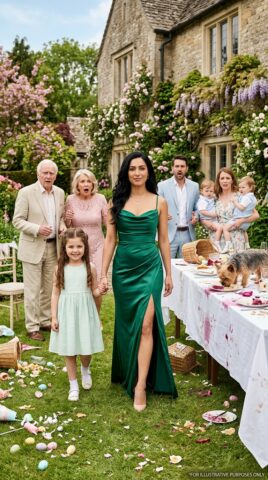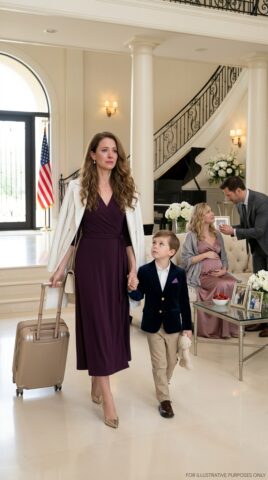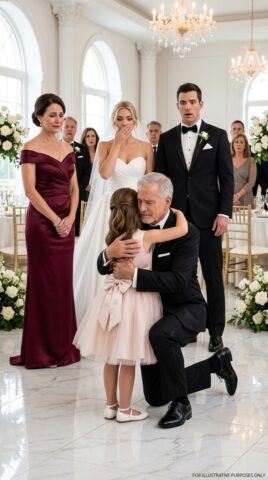
My sister married a prince, and I wasn’t invited. She said I would make the family look bad, so I stayed home. Six hours into the ceremony, two palace aides arrived at my door and said, “His Majesty requests your presence immediately.”
The Sister the Palace Called Back
My sister married a prince, and I wasn’t invited. She said I would make the family look bad, so I stayed home. Six hours into the ceremony, two palace aides arrived at my door and said, “His Majesty requests your presence immediately.”
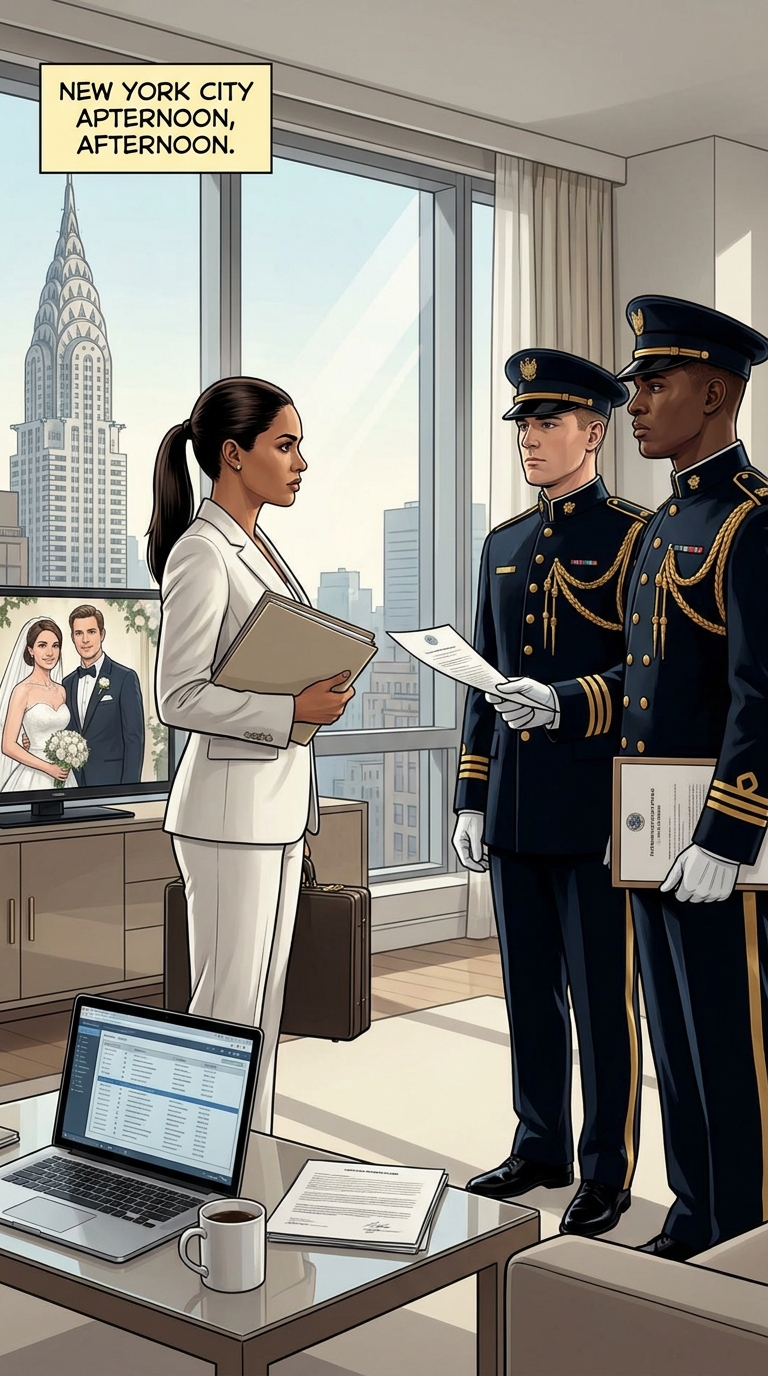
I was sitting alone in my Manhattan apartment when the knock came.
The royal wedding was playing on the television across from me, all gilded arches, cathedral bells, white roses, and commentary spoken in hushed voices by people who sounded like they were afraid to breathe too loudly near wealth. My younger sister Melody stood beneath a vaulted ceiling in Cordovia, smiling through a veil that looked like mist, while Prince Harrison held her hands in front of the entire world.
I had a mug of black coffee in my hand and my laptop open on the glass table in front of me.
On the screen beside the broadcast was a spreadsheet that could ruin my family.
That is the part no one knew yet.
The world saw Melody Williams, the beautiful American bride who had somehow found her way into one of Europe’s oldest royal houses. They saw my parents sitting in the first row, my mother in emerald silk, my father in a tuxedo with a face arranged into grave dignity. They saw the cameras lingering on our family as if we had always belonged in rooms like that.
What they did not see was the empty space where I should have been.
They did not see the white envelope Melody had pushed across my parents’ dining table two nights earlier. They did not see my father’s cold face when I asked if he knew about it. They did not see my mother look away as my sister told me I would spoil the image they had worked so hard to create.
They did not see me standing in the foyer of our parents’ Connecticut house with my grandmother’s diamond pendant missing from my neck.
That pendant was the only heirloom I ever cared about. Small, old-fashioned, and beautiful in a way that did not try to impress anyone. My grandmother had given it to me when I graduated from college, folding my hands around it in her tiny kitchen in Brookline and whispering, “This one goes to the woman who knows how to keep something safe.”
I kept it safe for eleven years.
Melody took it in eleven seconds.
She had arrived at my parents’ house already dressed like a woman who expected to be photographed from every angle. Cream cashmere, diamonds at her ears, hair glossy and perfect, hands moving with the impatience of someone who had mistaken being admired for being important. She was twenty-eight, five years younger than me, and had been treated by our parents as if the sun had learned to rise from her bedroom.
I had come from the office in a navy suit, my carry-on in the trunk, my passport in my purse, and a quiet hope I should have known better than to bring.
The plan had been simple. I would fly with my family to Cordovia the next morning, attend the rehearsal dinner, stand somewhere near the back in official photographs, smile politely, and return to New York without making myself noticeable.
That was what my family had always wanted from me.
Be useful. Be quiet. Be available when bills needed paying, when documents needed reviewing, when someone needed an adult in the room. But never be so visible that Melody had to share the light.
I was good at being invisible because I had practiced for years.
My name is Audrey Williams. I am thirty-three years old, a senior forensic accountant at a financial auditing firm in Manhattan. My job is to trace hidden money. I follow numbers when people believe they have buried them deep enough. I read loan documents the way other people read weather. I can look at a wire transfer and hear the lie inside it before the second page loads.
My parents used to introduce me as “our practical daughter.”
Melody was “our beautiful one.”
Those labels were never harmless. They were small rooms we were both forced to live in, except Melody loved hers because everyone kept bringing her flowers.
Two nights before the wedding, she placed the white envelope on the dining table in front of me.
“What is this?” I asked.
“A flight confirmation,” she said.
I opened it.
One passenger. Audrey Williams. Departure from JFK to no destination near Cordovia. Economy seat. Leaving the next morning, before the royal family’s private charter.
For a moment, I honestly thought it was an error.
Then Melody smiled.
“You’re not coming.”
My mother, Brenda, stood near the sideboard holding a wineglass. My father, Gregory, sat at the head of the table, pretending to study his phone.
I looked at both of them before I looked back at Melody. “Excuse me?”
She lifted one shoulder. “Don’t make this emotional.”
“That’s funny, coming from the woman canceling her own sister’s invitation two days before her wedding.”
“I’m protecting the tone of the event,” Melody said. “The Cordovians care about image. They care about grace, pedigree, presentation. You’re…” She looked me up and down, taking in my tailored suit, my sensible heels, my laptop bag on the chair beside me. “You’re very corporate.”
“I am your sister.”
“You are a spreadsheet with a pulse.”
My father sighed like I was the one making the room uncomfortable.
“Audrey,” he said, “try to understand the pressure Melody is under.”
I turned to him slowly. “You knew?”
He did not answer directly. Men like my father rarely do when a straight answer would reveal their character.
My mother set down her glass. “Sweetheart, this is a delicate moment. Melody is entering a royal family. Every person near her will be examined. You know how people talk.”
“About what?” I asked. “My job? My age? The fact that I have my own money and no husband to validate it?”
Melody’s eyes sharpened.
“There,” she said. “That tone. That is exactly what I mean. You always sound like you’re judging everyone.”
“I usually have the documents to justify it.”
My mother inhaled sharply. My father’s jaw tightened. Melody took two steps toward me, close enough that I could smell her perfume, something expensive and sweet that filled the space between us like a warning.
Then her eyes dropped to my necklace.
Grandmother’s diamond rested against the collar of my blouse.
Melody stared at it.
“You’re wearing that?”
My hand lifted instinctively to the pendant. “Yes.”
“It doesn’t go with your outfit.”
“It belonged to Grandma.”
“It belongs in the wedding.”
I stepped back. “No.”
Melody smiled, and I saw the sister I had spent decades making excuses for. Not stressed. Not nervous. Not misunderstood. Just entitled, with an audience trained to forgive her before she even asked.
“It would look better on me,” she said.
“Most stolen things do, until someone asks where they came from.”
Her smile vanished.
She reached for the chain.
I caught her wrist before she touched me. “Don’t.”
My mother finally moved, not toward Melody, but toward me. “Audrey, please don’t embarrass us.”
That was the sentence that ended something.
Not Melody’s cruelty. Not my father’s silence. My mother’s plea.
Please don’t embarrass us.
Not, Melody, don’t take what isn’t yours.
Not, Gregory, say something.
Not, Audrey, are you all right?
Just that old family command dressed in softer clothes: absorb it quietly.
Melody pulled her wrist free and grabbed the pendant. The chain snapped before I could stop her. A sharp sting crossed the back of my neck. She held the diamond in her palm and closed her fingers around it.
“Consider it your wedding gift,” she said.
My voice went very quiet. “Give it back.”
She slipped it into her purse. “No.”
I looked at my parents.
My father stood. “This is enough. Melody has a full schedule tomorrow. You should go home.”
I waited for some crack in his expression. A flash of shame. A hint that he understood what he was asking me to swallow.
There was none.
“You want me to leave,” I said.
My mother pressed her lips together. “We think it would be best.”
“Best for whom?”
No one answered.
That answer was enough.
I picked up the white envelope, folded it once, and placed it back on the table.
“I paid off your business debt in 2018,” I said to my father. “I covered the tax penalties in 2020. I paid the contractors when the kitchen renovation went over budget. I funded Melody’s ‘image consulting’ when she said it would help her network. I did all of that because I thought family meant something.”
My father’s face flushed. “Don’t turn this into an accounting lecture.”
“I’m an accountant. That’s what happens when people steal.”
Melody laughed. “You’re always so dramatic.”
I looked at her, really looked. The diamond in her purse. The white envelope. The parents standing between us and choosing the daughter who looked better in photographs.
“No,” I said. “I have been quiet. You mistook that for dramatic because you’ve never heard me stop.”
I left without saying goodbye.
Outside, the Connecticut night was cold enough to make my eyes water. I drove back to Manhattan in complete silence, one hand on the wheel, the other occasionally lifting to touch the bare place at my throat where the pendant had been.
By the time I reached my apartment, something had shifted.
I was hurt, yes. More than I wanted to admit. But beneath the hurt was a feeling I knew better: pattern recognition. It was the same cold alertness that came over me when a client handed me a balance sheet that looked too clean. The numbers of my family had never added up, but until that night, I had been emotionally invested in not auditing them.
At 1:12 a.m., my sister-in-law called.
Jada Williams was married to my older brother Derek, though I often wondered why she tolerated him. She was a corporate attorney, sharp enough to make partners nervous, and the only person in my family who could sit through Sunday dinner and see every lie without reaching for the wine.
I answered on the second ring.
“Are you home?” she asked.
“Yes.”
“Are you alone?”
“Yes.”
“Good. I need you to listen carefully.”
Something in her tone made me sit up straight.
“I’m in my office,” she said. “Derek is asleep. A batch of mail arrived here today from your parents’ old business account. It should not have come to us, but your father listed Derek as a secondary contact years ago and never corrected the routing. I opened it because the return addresses looked wrong.”
“Jada.”
“Audrey, someone has been using your name.”
The apartment became very still.
“My name how?”
“Loan documents. Credit lines. A major refinancing package connected to the Boston commercial plaza.”
The Boston plaza had belonged partly to my grandfather. By legal structure, my parents and I each held a share. I never took income from it. I let my parents manage the tenants and deposits because it seemed easier than starting one more fight about money.
That was my first mistake.
Jada continued. “There is a second mortgage attached to your interest in the property. Two million dollars.”
I stood so quickly the chair scraped the floor.
“No.”
“I’m looking at the signature page.”
“I didn’t sign anything.”
“I know.”
The word know landed harder than suspicion would have. Jada did not say it to comfort me. She said it because she had already seen proof.
She sent me a secure link.
I opened it on my laptop with shaking hands.
There it was. A scanned loan agreement. My full legal name. My old address. My Social Security number partially masked. Employment verification from my firm. My salary. My credit history. My signature at the bottom, so close to real that for one irrational second, I felt violated by the accuracy of it.
Beside it was a digital notary stamp.
Three weeks old.
I stared at the screen.
“My parents did this,” I said.
Jada did not soften it. “Yes.”
“How did they get approval?”
“They had everything. Birth certificate, family records, security answers, old tax forms. They also provided a power of attorney document that looks forged.”
My stomach turned.
“Where did the money go?”
“That is the part you need to see.”
Another file appeared.
Wire transfer confirmation. Two million dollars from a Boston bank to a Delaware clearing account, then to an offshore holding company called Aster Vale International, then into a private Cordovian bank account labeled for a bridal trust.
Melody’s bridal trust.
I read the line three times.
Suddenly, the flight envelope made sense. The necklace. The urgency. The way my father had looked not guilty, but annoyed that I had noticed the shape of the insult too soon.
“They used me to buy her way in,” I said.
Jada’s voice went quiet. “Yes.”
Cordovian royal protocol required financial disclosures. That was not gossip; I knew because my firm had once audited parts of Cordovia’s central banking compliance system. The royal family had spent decades marketing the principality as clean, stable, and transparent. A foreign bride entering that family needed to prove independent wealth, not because romance demanded it, but because banks, treaties, and reputations were built on those rituals.
Melody did not have independent wealth.
My parents did not either.
So they created it.
With my name.
My credit.
My property interest.
My life.
“Jada,” I said, and I heard my own voice change. “Send me everything.”
“I already am.”
“And don’t tell Derek.”
A pause.
“I wasn’t planning to.”
We worked until dawn.
By sunrise, I had the first outline of the fraud mapped across my office wall on sticky notes and printed statements. My parents had moved quickly but not carefully. People who are used to lying emotionally often assume financial lies work the same way. They don’t. Money leaves footprints. Every transfer has a timestamp. Every digital signature carries metadata. Every notary seal lives somewhere. Every account has a path.
I traced that path like a bloodhound in a glass building.
My father had purchased an offshore holding company because it sounded sophisticated. Aster Vale International had the kind of name people choose when they think vague elegance is the same as legitimacy. It had been used before, not in a dramatic criminal empire, but in enough questionable transactions that several compliance databases had flagged it for enhanced review. That alone would horrify a royal treasury built on pristine optics.
Then came the worse discovery.
The Cordovian escrow account holding Melody’s bridal trust was not merely receiving questionable money. It had accepted funds that could be traced directly to a forged American loan document tied to my stolen identity and a commercial property under active dispute.
In the world I worked in, that was not a family embarrassment.
That was a compliance breach large enough to make ministers stop breathing into their coffee.
At 9:30 that morning, while my family boarded a private charter to Cordovia, Jada walked into the Boston bank where the loan had been approved. She wore a charcoal suit and carried a leather briefcase, which was how I knew the bank manager’s day was about to become historic.
She called me from a glass conference room forty minutes later.
“I have camera footage.”
“How?”
“I explained the litigation exposure.”
“Jada.”
“I was polite.”
“That means you scared them.”
“That also means I have your parents on video.”
She sent the file.
My father and mother sat in the bank office smiling. My mother wore pearls. My father leaned back in his chair like a man closing a deal he believed proved his intelligence. A loan officer slid a tablet across the desk. My father signed my name while my mother produced a folder of documents that should never have left their file cabinet.
I watched my parents smile while turning my future into collateral.
There are moments that break your heart.
Then there are moments that cauterize it.
This was the second kind.
That afternoon, as the tabloids began posting soft little stories about Melody’s “private family sadness” and how her older sister had chosen not to attend because of “personal difficulties,” my firm called me.
My managing partner, Mr. Campbell, sounded uncomfortable before he said a word.
“Audrey,” he began, “we’ve seen the media chatter.”
“Then you’ve seen nonsense.”
“I assumed as much.”
“Good.”
“But the firm has risk protocols.”
I closed my eyes.
He explained that my access would be temporarily restricted while the situation was reviewed. Not fired. Not accused. Simply suspended pending verification. I knew the language. I had helped write language like it for clients who wanted to sound humane while protecting themselves.
“I understand,” I said.
“I’m sorry.”
“I know.”
When the call ended, my work email disappeared from my laptop. My database access shut down three seconds later. The screen went blank except for a security message telling me to contact administration.
My family had isolated me socially, financially, and professionally within forty-eight hours.
They had always underestimated me, but this was the first time they had removed everything that made me hesitate.
I no longer had a job to protect.
I no longer had parents to respect.
I no longer had a sister to forgive.
I still had my brain.
And I had already downloaded the files.
By midnight, I had built the dossier.
Not a dramatic letter. Not a tearful accusation. A forensic report. Seventy-eight pages. Clean language. Numbered exhibits. Signature metadata. IP logs showing the document had been signed from my parents’ Connecticut router while I was physically logged into a Manhattan boardroom. Bank footage. Forged power of attorney. Wire transfer receipts. The Delaware clearing account. Aster Vale International. The Cordovian escrow deposit. Compliance warnings. Risk exposure summary.
Jada added a legal memorandum from the American side, restrained and devastating. She did not use adjectives unless they could be admitted in court.
At 4:06 a.m., I sent the encrypted file to three recipients in Cordovia: the Minister of Finance, the Royal Treasury Inspector, and the private office of King Edward.
I wrote one sentence in the cover message.
The bridal trust presented by the Williams family contains funds obtained through forged American banking documents and may expose the Cordovian treasury to immediate compliance risk.
Then I pressed send.
For the first three hours, nothing happened.
I drank coffee. I showered. I put on a white suit because navy felt too close to the woman who had been told she did not fit the aesthetic. I pinned my hair back. I touched the bare place at my throat, remembered Melody’s fingers closing around my pendant, and felt my pulse steady.
By then, the wedding broadcast had begun.
The cathedral bells rang across my television speakers. Crowds lined Cordovian streets waving flags. Commentators praised Melody’s elegance, my parents’ composure, and the charming American story now joining an old European dynasty. I watched my sister step from a car in white silk and lace, my grandmother’s diamond resting against her collarbone.
My hand tightened around my coffee mug.
I did not cry.
Six hours later, the ceremony had moved into the palace reception, where the royal registry and trust presentation would be formally acknowledged. That was when the knock sounded at my door.
Not the soft knock of a delivery person.
Three hard strikes.
I opened the door to find two palace aides standing in my hallway.
They wore dark ceremonial uniforms with gold trim, not theatrical, not excessive, but unmistakably official. Behind them stood a man from a private security service, hands folded in front of him, expression neutral. The taller aide stepped forward and bowed his head slightly.
“Miss Williams,” he said, his accent crisp. “His Majesty King Edward requests your presence immediately.”
I looked past him toward the elevator bank, then back at his face.
“In Cordovia?”
“A private aircraft is waiting.”
The woman beside him held out a cream envelope sealed with the royal crest. “His Majesty asked us to convey his appreciation for your report and his apologies for the urgency.”
I took the envelope.
My name was written on the front.
Not “the bride’s sister.”
Not “the family issue.”
Audrey Williams.
For the first time in two days, someone had addressed me accurately.
I picked up my leather briefcase from beside the door. The encrypted drive was already inside.
“Lead the way,” I said.
The flight took seven hours, but the palace moved faster than distance. During the flight, I spoke through a secure line with Cordovia’s Treasury Inspector, a severe woman named Sofia Leclerc who had the tone of someone who could freeze a bank account with a sentence.
“The king has reviewed your executive summary,” she said.
“And the funds?”
“Frozen.”
“The registry?”
“Suspended until formal review.”
“And my family?”
A pause.
“They have not been informed.”
I looked out the window at the Atlantic beneath us, dark and endless.
“Good.”
By the time we landed, Cordovia was glowing in evening light. The royal wedding had stretched into the state reception, as these events often did, part ceremony, part performance, part political theater dressed as romance. The public still believed the fairy tale was intact. The palace did not.
A black car took me through the city. Crowds remained along the barricades, waving flowers and flags. Children sat on their fathers’ shoulders. Vendors sold pastry wrapped in royal blue paper. No one knew the music inside the palace had already begun to falter.
We entered through a private gate and drove beneath the palace through a service arch guarded by staff in formal coats. No one hurried in a messy way. That was what made the tension worse. Everyone moved with controlled speed, the way institutions move when panic has been translated into protocol.
A palace aide led me through marble corridors, past tapestries and tall windows reflecting chandeliers. My heels sounded too sharp on the floor. I gripped my briefcase handle and thought of the Connecticut dining room, the white envelope, the chain snapping at my neck.
Then the doors opened.
The reception hall was larger than anything television could capture. Chandeliers hung like frozen constellations. Tables gleamed with crystal and silver. An orchestra played softly from a balcony. Guests in formal gowns and decorations turned, one by one, as I entered with two palace aides at my side.
At the far end of the hall, Melody stood beside Prince Harrison in her wedding gown.
My parents stood just behind her.
Melody saw me first.
The color left her face.
Her hand lifted instinctively to the diamond pendant at her throat.
My mother followed her gaze and went still. My father’s mouth tightened. For one brief second, he looked angry, not afraid. Then he noticed the palace aides flanking me and the briefcase in my hand.
Fear arrived.
King Edward stepped down from the dais before anyone could speak. He was older than he appeared on television, with silver hair, a straight back, and eyes that did not waste movement. The room quieted around him. Even the orchestra stopped, one violin trailing a final note into silence.
He came directly to me.
“Miss Williams,” he said.
I inclined my head. “Your Majesty.”
He extended his hand.
The room inhaled.
I shook it.
“Your diligence,” he said, voice carrying through the hall, “has protected this house from a serious breach of trust.”
Whispers rippled through the room.
Melody’s face twisted in confusion. Prince Harrison looked from his father to me, then down at the folder an aide had placed in his hands.
My father stepped forward. “Your Majesty, there must be some misunderstanding. Audrey has been under tremendous stress. She was not invited because—”
King Edward did not look at him.
“Mr. Williams,” he said, “you will not speak until asked.”
My father stopped as if the words had physically closed around him.
I opened my briefcase and removed the printed dossier. Black cover. Clean binding. No emotion on the first page, only the title: Forensic Review of the Williams Bridal Trust.
I handed it to Prince Harrison.
“Your Highness,” I said, “the trust presented as evidence of my sister’s independent family wealth is not a family trust. It is funded by a two-million-dollar loan obtained through forged documents using my identity and my property interest in Boston.”
Melody laughed once, high and brittle. “That is ridiculous.”
I looked at her. “No, Melody. Ridiculous was stealing Grandma’s necklace and wearing it into a room full of people who understand provenance.”
Her hand closed over the pendant.
Prince Harrison opened the dossier. His eyes moved across the first page. Then the second. His expression changed slowly, each line removing another piece of the man who had stood beside her at the altar.
“This says the signature was forged,” he said.
“It was.”
My mother’s voice trembled. “Audrey has always been resentful. She is twisting things because she was hurt about the invitation.”
Jada’s face appeared on the massive screen behind the orchestra.
The palace had connected her secure video feed from Boston.
My mother made a small sound.
Jada sat in her office in a charcoal suit, calm as judgment.
“Good evening,” she said. “My name is Jada Williams. I represent Audrey Williams in the American legal filings connected to this matter. The bank footage you are about to see was provided by the lending institution after emergency review.”
The screen changed.
There were my parents, seated in a Boston bank office.
There was my father signing my name.
There was my mother sliding the forged power of attorney across the desk.
The ballroom went silent in the way large rooms do when every person inside is afraid of being the first to breathe.
Then Jada played the voicemail.
My father’s voice filled the hall.
“We had to get Audrey out before she checked the accounts. Once the payment fails, she’ll be dealing with the bank, not the wedding. By then, Melody will be secure. Audrey is the sacrifice we had to make for the family.”
The recording ended.
No one moved.
There are many kinds of silence. This one had weight. It pressed down on silk, diamonds, medals, polished shoes, and every lie my family had dressed up as ambition.
My father looked at the floor.
My mother began to cry, but quietly, because even she understood tears had lost their usefulness.
Melody turned to Prince Harrison. “I didn’t know.”
He stared at her. “You wore her necklace.”
“That has nothing to do with—”
“You told the press your sister had chosen not to attend for personal reasons.”
She swallowed.
“You let my family accept funds your parents presented as yours.”
“Harrison, please.”
He stepped back.
That step ended the wedding more clearly than any decree could have.
King Edward lifted one hand. A palace official came forward with a folder of his own.
“Until the financial review is complete,” the king said, “the royal registry will not recognize this union. The bridal trust is rejected. The funds are frozen. The Williams family will leave Cordovia under formal escort and answer all legal inquiries in the appropriate jurisdictions.”
Melody shook her head, as if refusal could change law.
“No,” she whispered. “No, I am married. I’m a princess now.”
The king looked at her, not cruelly, but with a finality that made cruelty unnecessary.
“You are a guest whose invitation has been revoked.”
The words moved through the hall like a blade made of ice.
I stepped toward Melody.
She backed away.
“My necklace,” I said.
Her eyes filled with panic. “Audrey—”
“My necklace.”
For once, nobody told me not to make a scene.
For once, nobody asked me to be understanding.
A palace protocol officer stepped beside Melody. She unclasped the chain with careful hands and placed the pendant into a small velvet tray. Then she carried it to me.
I picked it up.
The diamond was warm from my sister’s skin. I closed my fingers around it the way my grandmother had closed my fingers around it years ago in her kitchen.
This time, I knew exactly what I was keeping safe.
My parents were escorted from the hall first. My father tried once to look back at me. I did not give him anything to use. My mother kept whispering my name, but the word sounded empty now, stripped of all the authority it used to have.
Melody stayed longest.
She stood in the middle of that grand room in a wedding gown that no longer meant anything, staring at me as if she could not understand how the sister she had thrown away had become the person the palace believed.
“You ruined my life,” she said.
I looked at her for a long moment.
“No,” I said. “I audited it.”
After they were gone, the hall remained stunned. The prince stood with the dossier in his hands, looking like a man who had been spared and wounded in the same breath. King Edward turned to me.
“Cordovia owes you a debt.”
“No,” I said. “You needed the truth. I sent it.”
“That is rarer than you think.”
The next morning, I flew back to New York with my grandmother’s pendant in my pocket and a formal letter from the Royal Treasury in my briefcase clearing my name and thanking me for preventing a major compliance failure. By the time I landed at JFK, the first American bank had already reversed the disputed loan. My firm’s board had called an emergency meeting. Jada was waiting for me near arrivals in sunglasses, a black coat, and the expression of a woman who had not slept but had absolutely won.
She hugged me hard.
Not politely.
Not for show.
Like family.
“They’re calling it a royal financial review,” she said.
“That sounds cleaner than what it was.”
“It always does.”
My firm offered reinstatement within forty-eight hours. Then a promotion. Then a partnership track. Mr. Campbell slid the offer across the conference table as if money could erase the way they had locked me out the moment public pressure arrived.
I looked at the numbers.
They were excellent.
Then my phone buzzed.
A secure message from the Cordovian Ministry of Finance appeared on the screen. An independent consulting retainer. Multi-year. International. Large enough that even Mr. Campbell stopped talking when I turned the phone so he could see it.
I slid his folder back across the table.
“Thank you,” I said. “But I am no longer interested in proving my value to people who only recognize it after someone else does.”
Jada and I opened Williams Hart Advisory six weeks later.
Forensic accounting. Financial integrity review. Cross-border compliance. Quiet rooms. Serious clients. No family discounts.
My parents faced lawsuits, banking complaints, and the kind of public consequences they had always believed happened only to other people. The Connecticut house was sold. The Boston plaza was restructured under court supervision. Derek, after years of avoiding conflict, found himself alone with the discomfort he had spent his adult life dodging. Jada left him with dignity and a very clean divorce agreement.
Melody disappeared from public view for a while.
The last time I heard her name, she was working for a luxury retail company in New York, helping wealthy women choose dresses she could no longer afford. I did not celebrate that. Contrary to what people expect, there is no clean joy in watching a sister fall. There is only the knowledge that not every rescue is yours to perform, especially when the person drowning keeps pushing your head underwater.
A year later, I stood on the terrace of my Manhattan apartment with Jada beside me, both of us looking out at the city.
The skyline glittered against the dark like numbers on a clean report.
I wore my grandmother’s diamond again.
The chain had been repaired, stronger than before, with a clasp a jeweler promised would not break easily. I touched it sometimes when I needed to remember who I had been before my family taught me to disappear.
Jada raised her glass. “To the woman who wasn’t invited.”
I smiled. “To the woman they had to call back.”
We drank to that.
People think crowns are made of gold, diamonds, and old names stitched into ceremony. Maybe some are. But the only crown that ever mattered to me was quieter. It was the ability to stand in a room where everyone had lied about you and let the evidence speak. It was leaving behind the people who called your silence loyalty and your success inconvenience. It was learning that family is not the people who use your name when they need money and erase it when they need beauty.
Family is the person who answers the phone at one in the morning and says, “Send me everything.”
My sister married a prince.
For six hours, the world believed she had won.
Then the palace knocked on my door.