“I was wrong to marry you,” my husband said right at the dinner table; then he demanded the ring back, pushed me out of the home we had built, and when I returned the next day for something I had left behind, I walked in and saw what he never wanted me to see.
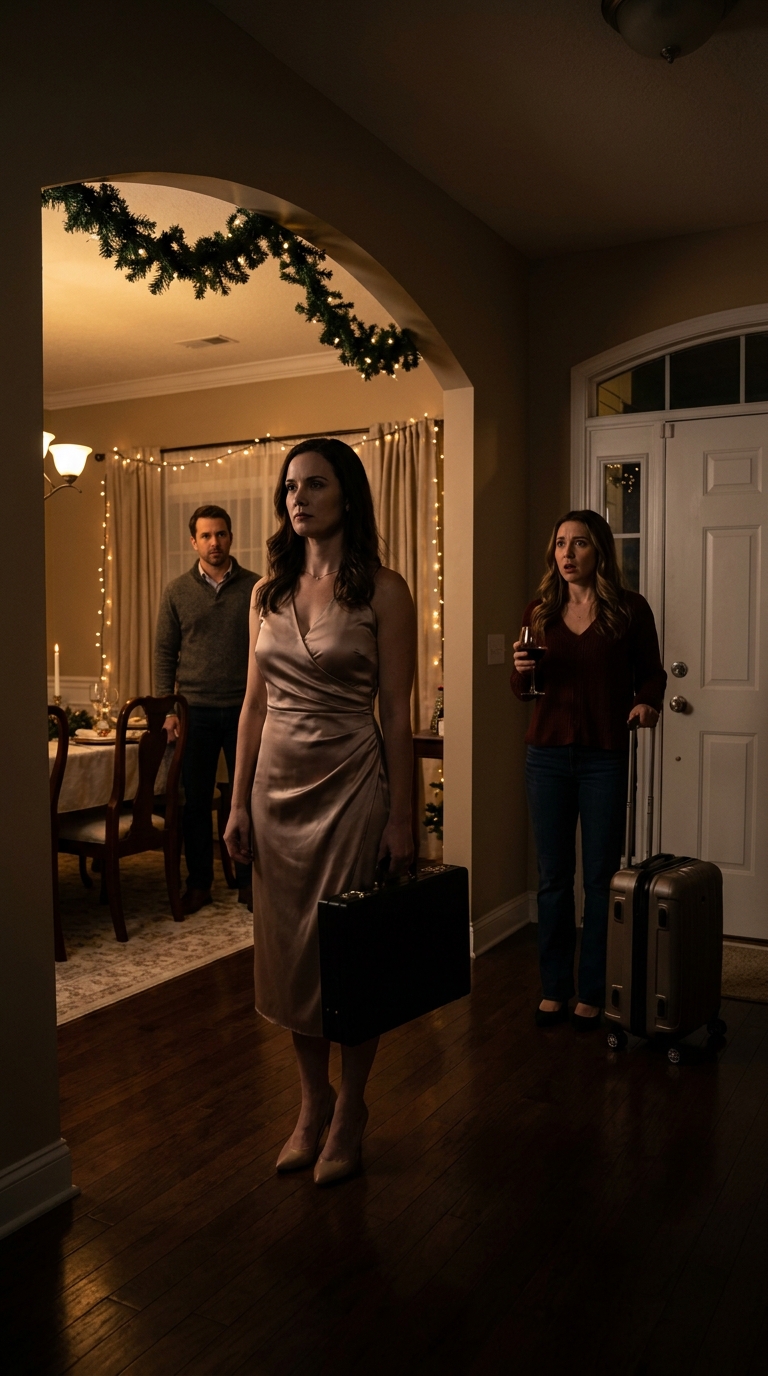
“I was wrong to marry you.”
My husband said it calmly, right there at the dinner table, as if he were commenting on the weather.
Then he held out his hand and asked for the ring back.
I gave it to him.
I walked away without a word.
But the next day, when I went back for something I had left behind, I realized I was not the one who had lost everything.
He did not raise his voice.
That was the first thing I noticed.
There was no anger in him, no tension in his shoulders, no hesitation in the way he held my gaze from across the table. If anything, there was a strange calmness to him, the kind that belongs to a man who has already rehearsed a moment several times and grown comfortable with the outcome.
The dining room looked almost too ordinary for what was happening inside it.
Two plates sat between us on the polished wood table, untouched. A bottle of wine stood beside the candles, opened but never poured. Outside the windows of our quiet Massachusetts neighborhood, the streetlights had just come on, glowing softly over trimmed lawns, mailboxes, and the American flag hanging from our neighbor’s porch.
Inside, my marriage ended without a shout.
“I was wrong to marry you,” he said again, his voice even.
The words did not invite questions. They did not ask for discussion. They were not even meant to begin an argument. They were simply laid flat on the table between us, like another object he had decided no longer belonged to me.
For a moment, I thought I had misheard him.
I blinked slowly, searching his face for any hint of irony, regret, or even cruelty. There was none. Just distance.
“Excuse me?” I asked.
My voice was steady, though something deep inside me had already begun to shift.
He leaned back slightly in his chair, exhaling as if he were relieved to finally say it out loud.
“I should have thought it through more carefully,” he continued. “This marriage. It doesn’t make sense anymore.”
Anymore.
The word lingered longer than it should have.
I folded my hands in my lap and forced myself to remain still.
“And when did you come to that conclusion?” I asked.
He did not answer immediately. Instead, he reached for his glass, realized it was empty, and set it back down again.
A small, unnecessary gesture.
But it told me everything I needed to know.
This was not sudden.
This was not impulsive.
This was planned.
“Does it matter?” he said finally, avoiding my eyes for the first time.
“Yes,” I replied quietly. “It does.”
He gave a small dismissive shake of his head.
“Look, I don’t want to drag this out. I’ve already spoken to a lawyer. It would be easier if we handled this quickly and cleanly.”
A lawyer.
Of course.
I felt something cold settle into my chest. Not pain. Not yet. Something sharper. Recognition, perhaps, like seeing the final piece of a puzzle you had not realized you were solving.
“And you’re telling me this now?” I asked. “Over dinner?”
“It seemed like the right time.”
“The right time.”
I almost smiled.
Instead, I studied him more carefully. The pressed shirt. The neat hair. The deliberate calm. He was not just prepared.
He was confident.
Too confident.
That was when he extended his hand across the table.
“Your ring,” he said.
Just like that.
No hesitation. No emotion. Just a request, as if he were asking for his car keys back.
For one brief second, my fingers tightened around the edge of the table. Not because of the ring itself, but because of what it represented.
Not love.
Not anymore.
But time. Investment. Trust. Years of believing we were building something solid together, and the shocking ease with which he seemed ready to reclaim the symbol of it.
I looked down at my hand.
The diamond caught the light from above, reflecting a soft, familiar glow I had once found comforting.
Now it felt irrelevant.
Without a word, I slid the ring off my finger, placed it in his palm, and closed his hand around it.
He did not thank me.
Of course he did not.
I pushed my chair back slowly and stood, smoothing down the front of my blouse out of habit more than necessity. My movements were controlled. Deliberate.
I refused to give him anything else.
Not confusion.
Not anger.
Not even the satisfaction of seeing me break.
“If you’ve already spoken to a lawyer,” I said, picking up my bag, “then I assume you’ve decided everything already.”
“It’s straightforward,” he replied. “We’ll divide things according to the agreement.”
The agreement.
Our prenup, signed three years earlier on a bright morning that now felt strangely distant.
“Of course,” I said softly.
He watched me for a moment as if expecting something more. A reaction, perhaps. A protest. Maybe tears.
I gave him nothing.
I turned and walked toward the door.
“Clare,” he called after me.
I paused, but I did not turn around.
“I think this is for the best,” he added.
For the best.
I nodded once, though he could not see it.
Then I stepped out into the night.
The air outside was cooler than I expected, carrying the faint scent of rain that had not yet fallen. I stood on the front steps for a moment, adjusting to the silence, to the sudden absence of his presence behind me.
It was strange how quickly everything could end.
Not with a fight.
Not with a storm.
But with a sentence.
I walked to my car, set my bag in the passenger seat, and sat behind the wheel without starting the engine. My hands rested lightly on the steering wheel, unmoving.
I was not crying.
That surprised me.
Instead, my mind replayed the evening in quiet fragments.
The calmness in his voice.
The lawyer.
The ring.
The confidence.
Too confident.
I leaned back in my seat and closed my eyes briefly.
Something about it did not sit right. Not the divorce itself. I could accept that people changed. Marriages ended. Adults made choices, sometimes painful ones.
But the way he had handled it felt different.
The precision. The timing. The confidence.
It felt coordinated, as if I had walked into a moment carefully arranged without me.
I opened my eyes again and stared through the windshield at the darkened street.
Our house stood behind me, still lit from within. The same warm glow it had always had. The same windows. The same quiet.
But something inside it had shifted.
I could feel it.
I started the engine and pulled away without looking back.
I spent the night at a small hotel downtown, one of those places that tried to feel more expensive than it actually was. Neutral decor. Soft lighting. Pale carpet. A clean white comforter designed to make everything feel temporary.
Which, I suppose, was appropriate.
I did not sleep much.
Not because I was upset, but because my thoughts refused to settle. They moved in slow, deliberate circles, returning again and again to the same point.
He had planned this.
The question was how long.
The next morning, I stood by the window of the hotel room, watching early traffic build below. Office workers crossed wet sidewalks with paper coffee cups in their hands. Cars moved through the intersection in a steady gray rhythm.
That was when it hit me.
Not like a shock, but like a quiet realization that had been waiting patiently for me to notice it.
My laptop.
I had left it in the study.
Not just any laptop. My work laptop. The one connected to several shared accounts. The one that held documents, records, access, and important things I did not want sitting in that house without me.
I straightened slowly and reached for my phone.
For a moment, I considered calling him.
Then I stopped.
No.
That would not be necessary.
I slipped on my coat, picked up my bag, and headed for the door.
When I pulled into the driveway, the house looked exactly as I had left it.
Still.
Silent.
Unchanged.
I stepped out of the car and approached the front door, my heels echoing faintly against the concrete.
The door was not fully closed.
It was slightly ajar.
I frowned and pushed it open slowly.
“Hello?” I called, stepping inside.
No answer.
The house was quiet, but not empty.
I could feel it immediately.
Something was different. Something subtle, but undeniable.
I moved forward, my gaze scanning the familiar space with new attention.
And then I saw it.
Not what I expected.
Not my laptop.
Something else.
Something that did not belong.
I took another step forward, my breath slowing, my mind sharpening.
In that moment, I realized I had not just forgotten something.
I had walked back into something I was never meant to see.
It was the shoes that stopped me.
A pair of heels.
Nude. Mid-height. Carefully placed beside the entryway bench, angled just slightly inward, as if their owner had slipped out of them with the quiet confidence of someone who knew exactly where she belonged.
They were not mine.
I stood there a second longer than necessary, my gaze fixed on them, my mind refusing to rush ahead.
It would have been easy, too easy, to jump to conclusions.
But I had never been someone who reacted without thinking.
I was not about to start now.
Still, there was something about the way those shoes sat there, unbothered and deliberate, that made the air in the room feel heavier.
I stepped inside and closed the door softly behind me.
The latch clicked into place with muted finality.
“Hello?” I called again.
No answer.
But this time, I did not expect one.
The house held a different kind of silence now. Not empty. Occupied. Lived in. Changed.
I moved slowly past the entryway and into the living room, my eyes adjusting to small differences I had not noticed at first.
A throw blanket draped over the arm of the couch, one I did not recognize.
A glass on the coffee table with a faint imprint of lipstick on the rim.
Subtle things.
Intentional things.
I did not stop walking.
Instead, I turned toward the hallway that led to the bedroom.
My bedroom.
At least it had been.
The door was slightly open.
I pushed it wider with two fingers.
And then I understood.
The closet door stood ajar. Inside, my clothes had been shifted, pushed to one side as if they were an inconvenience rather than belongings. In their place, a new set of garments hung neatly arranged with unmistakably feminine care.
Soft fabrics.
Neutral tones.
Familiar.
Too familiar.
My chest tightened, not from heartbreak, but from recognition.
I stepped closer and brushed my fingers against one of the blouses.
I had seen it before.
Not here.
Somewhere else.
Then it clicked.
Emily.
My younger sister.
The realization did not hit me like a wave.
It settled, cold and precise.
I straightened slowly, my gaze drifting across the room again, taking in details I might have otherwise ignored.
The open suitcase on the bed, half unpacked.
A pair of earrings on the nightstand.
Earrings I knew because I had given them to her last Christmas.
There was no doubt.
Emily was here.
Living here.
In my place.
I let out a quiet breath, steadying myself, not because I was about to fall apart, but because I needed clarity.
Emotion could come later.
Understanding came first.
A faint sound carried from down the hall.
Voices.
I froze, not out of fear, but instinct.
They were in the kitchen.
I could hear the clink of glass, the low murmur of conversation, followed by a laugh.
Her laugh.
There was no mistaking it.
I moved without thinking, stepping back into the hallway, my footsteps silent against the hardwood floor. The angle of the wall gave me just enough cover to remain unseen while still close enough to hear.
I did not step into the room.
I did not need to.
“I told you she wouldn’t make a scene,” my husband said.
His voice was relaxed.
Almost amused.
“She’s predictable like that.”
A pause.
Then Emily’s voice, lighter but edged with something sharper.
“You’re lucky she didn’t question anything. Most people would have.”
“She trusts too easily,” he replied. “Always has.”
I felt my fingers curl slightly at my sides.
Not in anger.
In focus.
There it was.
The shift.
This was not about emotion anymore.
It was about information.
“And the accounts?” Emily asked. “Did you move everything?”
“Almost,” he said. “I started last month. I just needed her out of the house before finishing the rest.”
Last month.
So that was the timeline.
“You should have done it sooner,” she said. “Before the prenup, even.”
“It wouldn’t have held up,” he replied. “Not without raising questions. This way is cleaner.”
Cleaner.
I leaned slightly closer to the wall, every sense sharpened.
“So once everything’s transferred?” Emily pressed.
“We file,” he said. “Quick. Simple. She walks away with what’s outlined. Nothing more.”
“And she doesn’t know?”
A small pause.
Then his quiet, confident answer.
“She doesn’t know anything.”
I closed my eyes for a brief second.
Not in pain.
In acknowledgement.
This was not a mistake.
This was not betrayal born from weakness or impulse.
This was strategy.
Planned.
Executed.
And I had been the variable they thought they had already removed.
I opened my eyes again, steady.
Emily laughed softly.
“I still can’t believe how easy that was.”
“People see what they expect to see,” he said. “She never looked deeper.”
I almost smiled.
Because that was where he was wrong.
I reached slowly into my bag and pulled out my phone. My movements were careful and precise. I did not rush.
The screen lit up briefly before I dimmed it.
Then I switched it to record.
Audio first.
Then, adjusting my position slightly, I angled the phone just enough to capture the edge of the kitchen, their silhouettes visible through the gap, indistinct but recognizable.
I did not need their faces.
I needed their voices.
Their words.
“And after the transfer?” Emily asked again.
“We consolidate,” he said. “Move everything into the new structure. It’s cleaner that way. Harder to follow.”
Harder to follow.
There it was.
The phrase that mattered.
The one that would linger longer than anything else they said.
I let the recording continue for a few seconds more, long enough to capture the rhythm of their certainty, the ease with which they spoke about dismantling my life.
Then I stopped it carefully and silently.
I slipped the phone back into my bag.
I had heard enough.
Seen enough.
More than enough.
I stepped back, slowly retracing my steps down the hallway, past the bedroom that no longer felt like mine, past the living room with its quiet rearrangements, until I reached the front door again.
My hand rested on the handle for a moment.
Not hesitation.
Consideration.
I could walk in there, confront them, demand answers.
But that would give them something they did not deserve.
A warning.
No.
I opened the door and stepped outside, closing it behind me with the same quiet care I had used when entering.
The sunlight felt different now.
Brighter.
Sharper.
Clearer.
I walked back to my car, each step measured and deliberate, not because I was trying to hold myself together, but because I already was.
As I sat behind the wheel again, I reached into my bag and pulled out my phone.
The recording was there.
Unedited.
Unfiltered.
Truth captured in their own words.
I stared at the screen for a moment, then locked it.
I started the engine, and for the first time since the night before, I allowed myself a small, controlled breath.
They thought I had left empty-handed.
They thought I had taken nothing with me.
But they were wrong.
I had taken everything that mattered.
And they did not even know it yet.
I did not go back to the hotel.
Not immediately.
Instead, I drove slowly at first, then with more intention, until the city shifted around me from quiet residential streets to the steady rhythm of downtown.
Traffic lights.
Crosswalks.
People moving through their day as if nothing had changed.
As if my life had not just been quietly dismantled in a kitchen I used to call my own.
I pulled into a parking garage two blocks from my office building and sat there for a moment, engine still running, hands resting lightly on the steering wheel.
The recording was still on my phone.
Untouched.
Unshared.
But it was real.
That was what mattered.
I turned off the engine, grabbed my bag, and stepped out of the car.
The air carried the usual hum of the city. Distant sirens. Footsteps on concrete. The low murmur of conversations blending into background noise.
Normal.
Predictable.
I needed that.
Inside the building, everything was exactly as I had left it the day before.
The receptionist smiled as I passed, offering a polite greeting. I returned it without thinking.
My heels clicked softly against the polished floor as I made my way to the elevator and pressed the button for the twelfth floor.
My floor.
My space.
One of the few things that still belonged to me.
When the doors opened, I walked straight to my office and closed the door behind me.
Only then did I allow myself to exhale fully.
The tension I had been holding settled into something more focused.
Controlled.
I set my bag down on the desk and took out my phone, placing it carefully in front of me.
For a few seconds, I just looked at it.
Then I unlocked the screen and played the recording.
Their voices filled the room again.
Clear.
Unguarded.
Confident.
“She doesn’t know anything.”
“Harder to follow.”
I let it play through once, then again, listening not for emotion, but for detail. Names. Timing. Intent.
Everything I needed was there.
When it ended, I did not replay it a third time.
I did not need to.
Instead, I opened my backup laptop, not the one I had left behind, and logged into my email.
There was one name I had not contacted yet.
One person who needed to hear this before anyone else.
Daniel Reeves.
My attorney.
I had hired him years earlier, not for anything dramatic, but for routine matters. Contracts. Business agreements. The kind of legal work that rarely made itself known until it was needed.
He was precise.
Discreet.
More importantly, he did not miss things.
I composed a short message.
No emotion.
No explanation.
Just facts.
Daniel,
I need to speak with you today. Urgent. I have evidence involving possible financial non-disclosure and a pending divorce. I would prefer to discuss it in person.
Clare.
I attached the recording.
Then I hit send.
He called within ten minutes.
“Clare.”
His voice came through steady, but sharper than usual.
“Are you somewhere private?”
“Yes.”
“I’ve listened to the file,” he said. “We need to meet now.”
“I’m at the office.”
“I’ll be there in thirty.”
He arrived in twenty-five.
No small talk.
No unnecessary questions.
Just a brief nod as he stepped into my office and closed the door behind him.
“Play it again,” he said.
I did.
This time, I watched his expression instead of listening to the words.
The slight tightening around his eyes.
The way he leaned forward just enough to catch every detail.
When it ended, he sat back in the chair across from me, silent for a moment.
Then he said, “This is significant.”
Not dramatic.
Not exaggerated.
Just precise.
“What does it give us?” I asked.
He folded his hands, considering.
“Potentially, a lot.”
He leaned forward again, his tone shifting into something analytical.
“First, there is the admission of intent. Moving assets in anticipation of divorce with the goal of limiting your share. That alone can be a serious issue, depending on how it was done and how the prenup was structured.”
“And the prenup?”
“That depends,” he replied. “Prenuptial agreements are enforceable, but they’re not absolute. If there was material non-disclosure, if one party concealed significant financial information at the time of signing, it can be challenged.”
I thought back to the conversation in the kitchen.
She never knew what you hid when she signed it.
“That’s exactly what I heard,” I said.
He nodded.
“Then we have a direction.”
“And the recording?” I asked. “Is it usable?”
He did not hesitate.
“That depends on jurisdiction, but based on where you were when this occurred, one-party consent applies. You were present in the environment. You did not unlawfully intercept a private communication. It holds enough to matter.”
I leaned back slightly, the pieces aligning in my mind.
“They think I don’t know anything,” I said.
He gave a faint, almost humorless smile.
“That’s their first mistake.”
“And their second?” I asked.
“They said it out loud.”
The rest of the meeting moved quickly and efficiently.
We outlined steps.
Not emotional reactions.
Not confrontations.
Actions.
Measured.
Strategic.
“Do not contact him,” Daniel said. “Do not confront either of them. Let them continue exactly as they are.”
“Why?”
“Because the more comfortable they feel,” he replied, “the more they reveal.”
That made sense.
“In the meantime, we start pulling records,” he said. “Bank statements. Account histories. Shared financial platforms. Anything connected to both of you. If assets were moved, there will be a trail.”
“There’s always a trail,” I said.
“Exactly.”
By late afternoon, I had access to everything I needed.
Shared accounts I had not checked in months.
Transaction histories I had never questioned before.
At first glance, everything seemed normal.
But then patterns began to appear.
Small transfers.
Unusual timing.
Amounts just large enough to matter, but not large enough to draw immediate attention.
Clever.
But not invisible.
I forwarded everything to Daniel.
Within an hour, he responded.
This is consistent with what we heard. Keep going.
By evening, I had a timeline.
Not complete, but enough.
He had started moving assets weeks before the dinner.
Before the conversation.
Before the ring.
Which meant one thing.
The decision had been made long before he ever said it out loud.
I closed my laptop and leaned back in my chair, staring at the ceiling.
There was no anger in me. Not the kind people expect.
What I felt was something quieter.
Sharper.
Clarity.
He had planned everything.
Every step.
Every detail.
He had believed he was in control.
And for a while, he was.
But that had changed.
Not when I left the house.
Not when I heard their voices.
But the moment I chose not to react.
The moment I decided to listen instead of speak.
That was when everything shifted.
I picked up my phone again, glancing at the recording one last time before locking the screen.
They thought silence meant weakness.
They thought walking away meant surrender.
They were wrong.
Silence, when used correctly, can become leverage.
By the time he filed, I already knew what was coming.
Not every detail. He was careful, and I would give him that. But enough to understand the structure of his plan, the rhythm of it, the quiet assumptions he had built into every step.
He believed the process would be quick.
Controlled.
Almost administrative.
A few signatures. A few negotiated lines. Then closure.
He believed I would comply.
The paperwork arrived on a gray Tuesday morning, delivered to my office in a slim professional envelope that bore the name of a firm I recognized but had never worked with.
It was thorough.
Organized.
Confident in tone.
The petition cited irreconcilable differences, referenced the prenuptial agreement with quiet authority, and outlined a division of assets that, on its face, seemed clean.
Too clean.
I read every page slowly.
Marking nothing.
Reacting to nothing.
Letting the language settle into place.
There were no surprises because I had already seen the framework of it in their conversation. But there were confirmations.
Dates.
Clauses.
Assumptions about accounts that no longer reflected reality.
Assumptions that relied on my ignorance.
I closed the file and set it aside.
My expression remained unchanged.
My breathing stayed steady.
Then I called Daniel.
“They’ve filed,” I said.
“I expected as much,” he replied. “We’re ready.”
Ready.
It was a strange word, considering how little time had passed since that dinner, and yet it felt accurate.
Not because I had rushed.
Because I had refused to waste time reacting.
“Next step?” I asked.
“We respond formally,” he said. “And we request mediation. That will be our first controlled environment.”
Controlled.
That mattered.
Mediation was scheduled for the following week.
Neutral office.
Neutral table.
Neutral tone.
Nothing about it felt neutral.
He arrived first.
Of course he did.
I saw him through the glass as I stepped into the building, standing near the conference room door, speaking quietly with his attorney.
He looked exactly as he had that night.
Composed.
Deliberate.
Confident in the way men are when they believe they have already secured the outcome.
For a moment, he glanced up and saw me.
There was a flicker there.
Not fear.
Not even concern.
Just surprise.
Brief.
Contained.
Then it was gone.
I walked past him without slowing, without acknowledgment, and entered the room.
Daniel was already inside reviewing documents, his presence as steady as ever. He looked up as I took my seat, gave a small nod, and returned to his notes.
No questions.
No reassurances.
We did not need them.
When they joined us, the introductions were minimal. The tone was professional.
The mediator, a woman in her late fifties with a calm, practiced voice, outlined the structure of the session, emphasizing cooperation, resolution, and efficiency.
Words that sounded good on paper.
In reality, it was a negotiation.
And negotiations, by definition, are not equal when one side thinks it holds all the information.
He spoke first.
“I think we can keep this straightforward,” he said.
His voice was measured.
His posture relaxed.
“We’ve already agreed on the framework. The prenup outlines everything clearly.”
He slid a folder across the table toward the mediator, who glanced at it briefly before turning her attention to me.
“Clare,” she said gently. “Have you had a chance to review the proposed terms?”
“Yes,” I replied.
“And your thoughts?”
I did not answer immediately.
Instead, I opened my own folder.
Thin.
Unassuming.
I placed it on the table in front of me.
Not as a gesture.
Not as a statement.
Just a fact.
“My thought,” I said finally, “is that the framework is incomplete.”
A pause followed.
Subtle, but noticeable.
“In what way?” his attorney asked.
I looked at Daniel.
He nodded once.
That was enough.
“There are assets that have not been fully disclosed,” I said. “Transfers made prior to filing. Accounts restructured without mutual consent.”
The room shifted.
Not dramatically.
But enough.
His expression did not change immediately, but there was a tightening around the edges. A recalculation happening behind his eyes.
“I’m not sure what you’re referring to,” he said.
The first hint of resistance entered his voice.
“Of course not,” Daniel replied calmly. “You will.”
He reached into his briefcase and removed a series of documents, organized, tabbed, precise. Then he placed them in front of the mediator.
“Transaction histories,” he said. “Account statements. A timeline of asset movement over the past six weeks.”
Six weeks.
The same timeline I had reconstructed.
The same timeline they thought I did not know.
The mediator scanned the first page. Her expression remained neutral, but focused.
“This appears to show a pattern,” she said slowly.
“It does,” Daniel confirmed. “One that suggests premeditated transfer of marital assets in anticipation of divorce, with the intent of limiting equitable distribution.”
The words landed exactly as they were meant to.
Carefully.
Deliberately.
He leaned forward now, the calm beginning to fracture.
Not outwardly, but in the small ways that mattered.
“These are routine financial adjustments,” he said. “Nothing improper.”
“Then you won’t mind clarifying them,” Daniel replied.
Silence.
Brief.
Telling.
I reached into my bag and placed my phone on the table.
Not aggressively.
Not theatrically.
Just present.
“There’s also this,” I said.
His eyes flicked to the device, then back to me.
“What is that?” his attorney asked.
“A recording,” I said.
No elaboration.
No explanation.
Just the word.
The mediator looked between us, her posture straightening slightly.
“Clare,” she said carefully, “if you intend to introduce new evidence, we’ll need to review it.”
“You will,” I said, meeting her gaze. “In the appropriate setting. Not here. Not yet.”
Daniel’s voice followed, smooth and controlled.
“We believe it would be prudent to move this discussion into formal proceedings. There are indications of both financial non-disclosure at the time of the prenuptial agreement and potential bad-faith conduct in the handling of marital assets.”
The room went still.
Completely still.
For the first time since I had walked in, he said nothing.
No denial.
No deflection.
Just silence.
And in that silence, everything shifted.
Not loudly.
Not visibly.
But permanently.
The mediator closed the folder in front of her, her expression more serious than before.
“I think,” she said, choosing her words carefully, “that further review is necessary before we proceed with any agreements.”
A polite way of saying this was no longer simple.
We stood shortly after.
No resolution.
No agreement.
But something far more valuable.
Leverage.
As I gathered my things, I felt his gaze on me again.
This time, not with confidence.
With something else.
Uncertainty.
A question he had not yet formed.
I did not answer it.
I did not acknowledge him.
I simply walked past the same way I had entered.
Calm.
Controlled.
Untouched.
Outside, the air felt different again.
Not lighter.
Not heavier.
Just clear.
Daniel stepped beside me, adjusting his coat.
“That went well,” he said.
“It went exactly as it needed to,” I replied.
He glanced at me, a faint hint of approval in his expression.
“You didn’t show your hand.”
“Not yet.”
He nodded once.
“Good.”
I stood there for a moment longer, watching traffic move past, the world continuing as if nothing had changed.
But something had.
Not just the case.
Not just the outcome.
The balance.
He had believed he was in control. That the plan was his. That the ending was already written.
But plans, no matter how carefully constructed, fail when one variable changes.
And I had changed.
Quietly.
Completely.
He thought he was taking everything from me.
But what he had actually done was show me exactly where to begin.
The weeks that followed were quieter than I expected.
Not easier.
There was nothing easy about dismantling a life you had once believed in. But quieter, in a way that felt deliberate, as if everything that had once been loud with emotion, expectation, and illusion had settled into something clearer.
More precise.
Legal processes have a rhythm to them.
Deadlines.
Filings.
Responses.
There is very little room for drama in the way people imagine it.
No raised voices in echoing courtrooms.
No sudden confessions delivered under bright lights.
Instead, there are documents carefully worded, strategically timed, and the steady accumulation of truth.
That was where the real shift happened.
Not in a single moment, but in a series of small, undeniable corrections.
The financial records told their story first.
Transfers that had once seemed subtle now appeared deliberate when viewed in sequence. Accounts that had been quietly restructured began to align into a pattern that was impossible to ignore.
It was not just movement.
It was intent.
And intent, when documented, carries weight.
Daniel built the case methodically, piece by piece, never rushing, never overstating.
He did not need to.
The evidence spoke clearly enough on its own.
When the issue of the prenuptial agreement came up, the tone shifted again.
Not dismissed.
Questioned.
There were discrepancies. Omissions that on their own might have seemed insignificant, but together suggested something else entirely.
Financial disclosures that had not been complete.
Assets that had not been fully represented.
Not a dramatic scandal.
But enough.
Enough to matter.
The recording remained where it belonged.
In reserve.
Not hidden.
Not revealed prematurely.
Its value was not in shock.
It was in confirmation and timing.
When the court date was set, it felt less like a confrontation and more like a conclusion that had been approaching for some time.
He arrived the same way he had arrived at mediation.
Composed.
Contained.
But the confidence was different now.
Not gone, but tempered.
Measured.
He knew.
Not everything, but enough to understand that the outcome was no longer certain.
Emily was there too, sitting a few rows behind him, her posture rigid, her expression carefully neutral.
For a moment, our eyes met.
There was no apology there.
No recognition.
Just distance.
I looked away first, not out of weakness, but because there was nothing left to see.
The proceedings were controlled and structured.
Every point raised was supported.
Every claim answered.
When Daniel presented the financial timeline, there was no real resistance. Only attempts at explanation that felt increasingly insufficient.
Routine adjustments.
Misunderstandings.
Administrative errors.
Words that might have worked in isolation, but not when placed against a pattern.
Then the moment came.
Not dramatic.
Not loud.
Just precise.
Daniel glanced at me once, a silent question.
I gave the smallest nod.
He introduced the recording.
No buildup.
No theatrics.
Just a file and the truth contained within it.
The room did not react the way people imagine.
There were no gasps.
No sudden outbursts.
Just silence.
Focused.
Attentive.
The voices filled the space, clear and unmistakable.
“She doesn’t know anything.”
“Move everything before she realizes.”
“Harder to follow.”
Each line landed exactly where it needed to.
Not exaggerated.
Not interpreted.
Simply heard.
I did not look at him while it played.
I did not need to.
The shift in the room was enough.
The subtle tightening of posture.
The way his attorney leaned in, whispering something low and urgent.
The absence of interruption because there was nothing to interrupt.
When it ended, silence returned.
But it was not the same silence as before.
This one had weight.
The judge’s response was measured and careful, as it should be, but the direction was clear.
Further review.
Reassessment.
Adjustments to the proposed division of assets.
Not punishment.
Not spectacle.
Correction.
In the end, there was no dramatic victory.
No moment where everything turned in my favor all at once.
Instead, there was balance.
The assets were re-evaluated.
The discrepancies were addressed.
What had been quietly shifted was brought back into view, and the outcome reflected that.
Fair.
Not more.
Not less.
When it was over, people gathered their things in the same quiet way they always do, the room returning to its neutral state as if nothing significant had happened.
But something had.
Not in the way people talk about revenge.
In the way things are set right.
Outside, the day was clear, cool, and uncomplicated.
I stood on the steps for a moment, letting the air settle around me.
Daniel joined me shortly after.
“It’s done,” he said.
“Yes,” I replied.
He studied me for a second, as if expecting something more.
Relief, perhaps.
Or satisfaction.
But what I felt was neither.
It was something simpler.
Completion.
He gave a small nod.
“You handled it well.”
“I handled it correctly,” I said.
That mattered more.
He left a few minutes later, his work finished.
I remained where I was, not because I needed to, but because I wanted to mark the moment.
Not the end of the marriage.
That had happened earlier.
But the end of something else.
The assumption that I had to accept what was given to me.
I walked down the steps slowly, my thoughts quiet, my mind clear.
I did not think about him or Emily with anger.
Not with regret.
Just distance.
They had made their choices.
I had made mine.
People often think revenge is about taking something back, balancing the scale through force or exposure or consequence.
But it is not.
Not really.
The strongest kind of revenge is refusing to carry what was never yours to begin with.
I reached my car and paused, my hand resting lightly against the door.
For a moment, I looked at my reflection in the window.
Not searching for anything.
Just observing.
I looked the same.
But I was not.
He had said he was wrong to marry me.
And maybe, in his own way, he was right.
Because the version of me he thought he understood, the woman who would trust without question, who would accept without looking deeper, no longer existed.
I opened the door and got in.
The quiet hum of the engine filled the space as I started it.
The road ahead was clear.
Not easy.
But clear.
He thought he was taking everything from me.
But all he really did was show me exactly what I no longer had to protect.