At first, nothing happened.
Just the soft clink of bottles.
The hum of the bar.
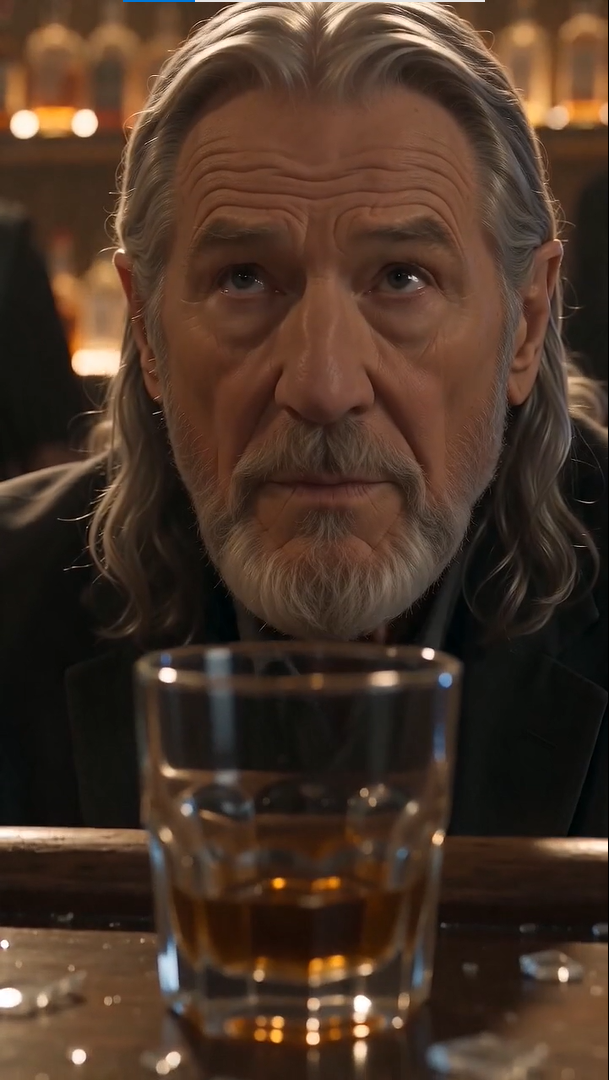
The old man still seated, phone in hand, as if the whole place had already become his.
Rex smirked again, but it was weaker now.
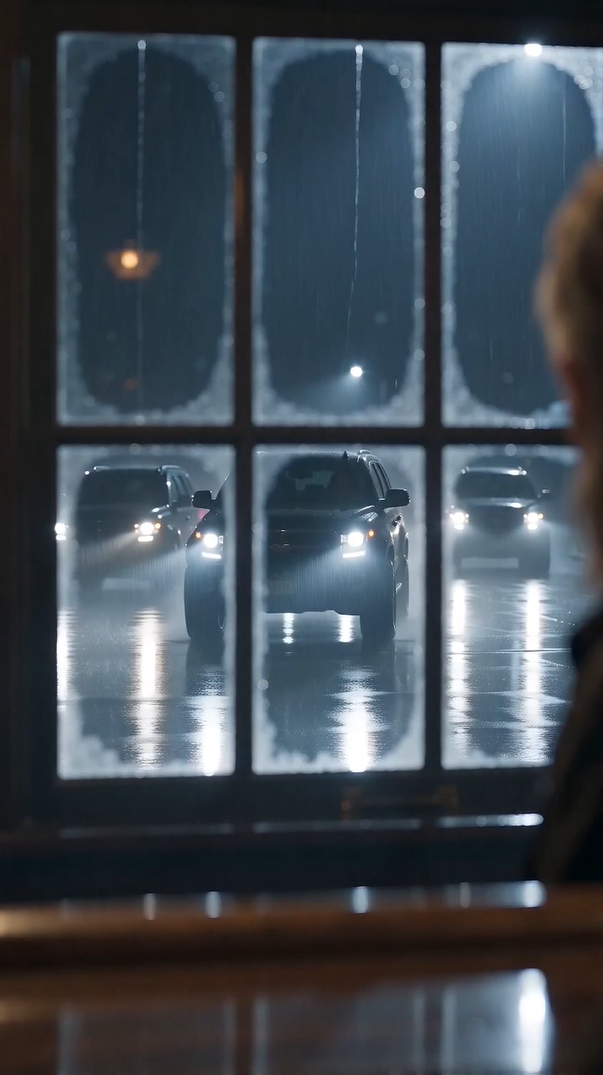
Then headlights flooded the window.
One black SUV.
Then another.
Then more.
They swept into place outside the bar in perfect formation, tires hissing on the wet street, engines rumbling so deep the tabletops seemed to vibrate.
The laughter stopped completely.
Every biker turned.
Rex stared through the glass, his face losing color as the reflections of the headlights shook across his eyes.
The SUVs idled there like a warning no one in the room wanted to understand too late.
The old man stayed seated.
Calm.
Heavy with the kind of power that never needs to shout.
Rex finally looked back at him, and this time his voice didn’t sound mocking.
It sounded afraid.
“Who are you?”
The old man lowered the phone slowly and met his eyes for the first time.
There was no anger in his face.
That was worse.
Just a cold, tired certainty.
Then he said, almost gently, “The man your father begged not to cross.”
Rex’s jaw dropped.
His lips parted, but no words came out.
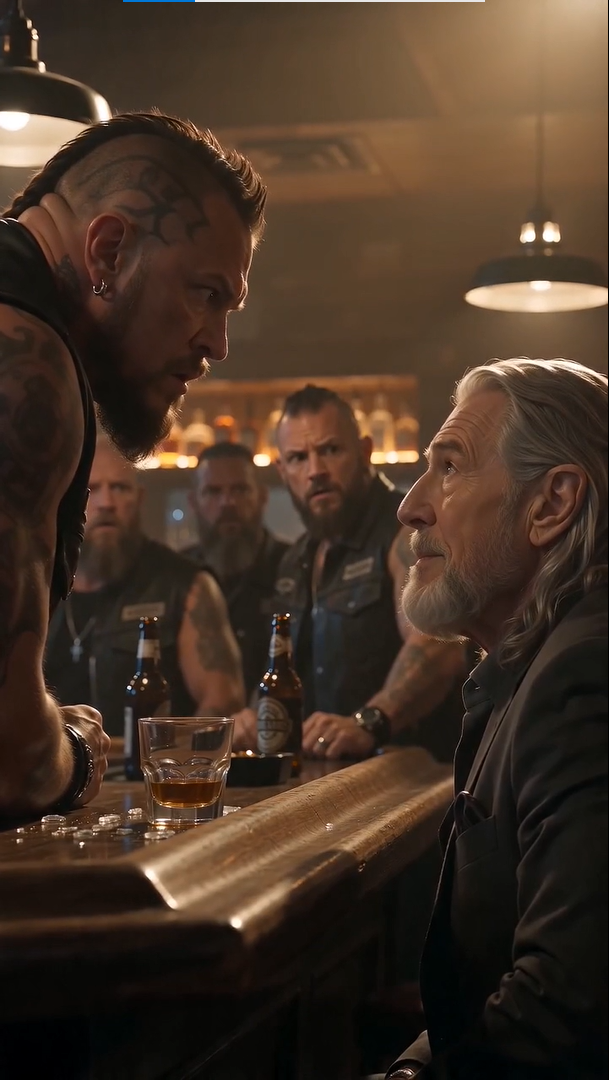
Because suddenly the broken glass, the laughter, the whole bar, all of it felt very small.
And the old man, who never raised his voice once, had already won the moment he chose not to be afraid.
The front door opened.
A tall man in a black coat stepped inside first, rain dripping from his shoulders. Behind him came two more men, then three, then more, all silent, all watching Rex like they already knew exactly what kind of man he was.
No one touched a weapon.
No one needed to.
The tall man walked to the old man’s table and stopped beside him.
“Sir,” he said quietly.
The old man gave a small nod, still looking at Rex.
Rex swallowed hard. His hand slowly slipped away from the broken bottle on the counter.
The bartender, who had been frozen near the shelves, finally breathed again.
One of Rex’s men tried to laugh, but the sound died in his throat.
“Listen,” Rex said, raising his hands a little. “I didn’t know.”
The old man leaned back in his chair.
“That’s what men like you always say after they hurt someone smaller.”
Rex looked toward his men, hoping one of them would speak for him, stand with him, do something.
But no one moved.
The same men who had laughed when Rex shoved the bartender, the same men who had enjoyed watching an old man get insulted, now stared at the floor like they had never known him.
The old man’s eyes shifted to the bartender.
“You all right, son?”
The bartender’s face was pale. His hands were shaking.
“I’m fine,” he said, though everyone could hear he wasn’t.
The old man looked at the broken glass scattered near the counter, the spilled drinks, the frightened faces, the young waitress standing in the corner with tears in her eyes.
Then his gaze returned to Rex.
“You came in here thinking fear made you strong.”
Rex said nothing.
“You broke a man’s place of work. You scared people who only wanted to finish their night in peace. You laughed because you thought no one could stop you.”
Rex’s breathing grew heavier.
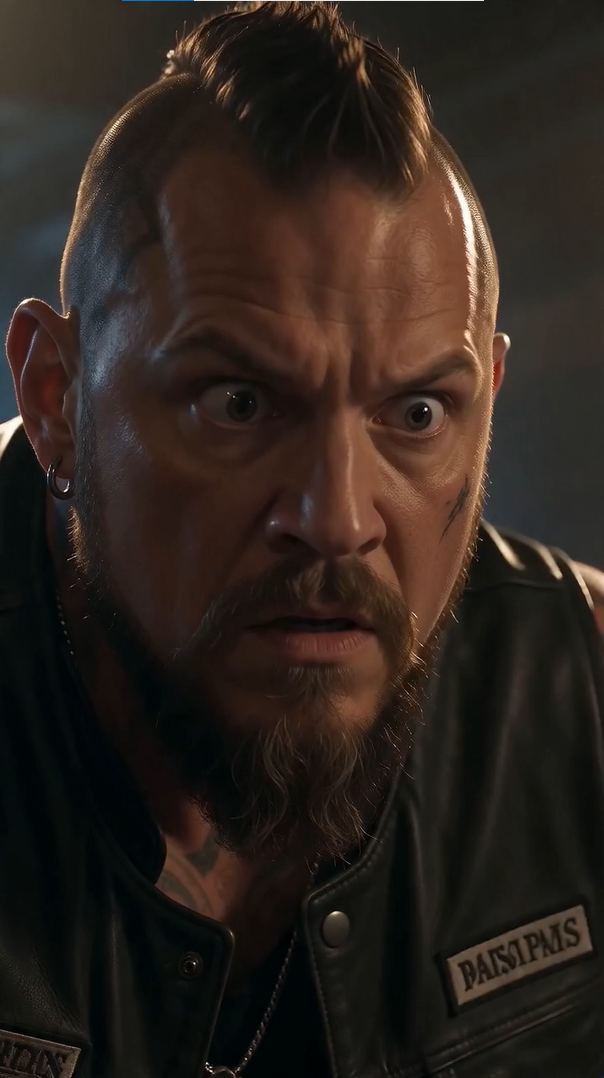
The old man stood slowly.
The whole room seemed to tighten around that one simple movement.
He was not tall. He was not young. His shoulders carried age, and his face carried grief. But when he stood, every man in that bar understood something at the same time.
Power was not noise.
Power was not cruelty.
Power was knowing exactly what you could do, and still choosing restraint.
The old man walked toward Rex.
Rex stepped back without meaning to.
The old man stopped inches from him.
“I knew your father,” he said. “He was a hard man. Proud. Stubborn. But even he had limits. Even he knew there were lines you don’t cross.”
Rex’s eyes dropped.
The old man’s voice softened, and somehow that made it hurt more.
“He asked me once to look out for you if you ever lost your way.”
Rex looked up quickly.
For the first time, there was no anger in his face. Only confusion.
“My father said that?”
The old man nodded.
“He knew what you were becoming. He was ashamed. But he still loved you.”
Those words struck Rex harder than any punch could have.
His face twisted for a second, like he wanted to fight the feeling rising in his chest, but he couldn’t.
The old man reached into his coat pocket and pulled out a folded photograph. He placed it on the nearest table.
Rex stared at it.
It was old, worn at the corners.
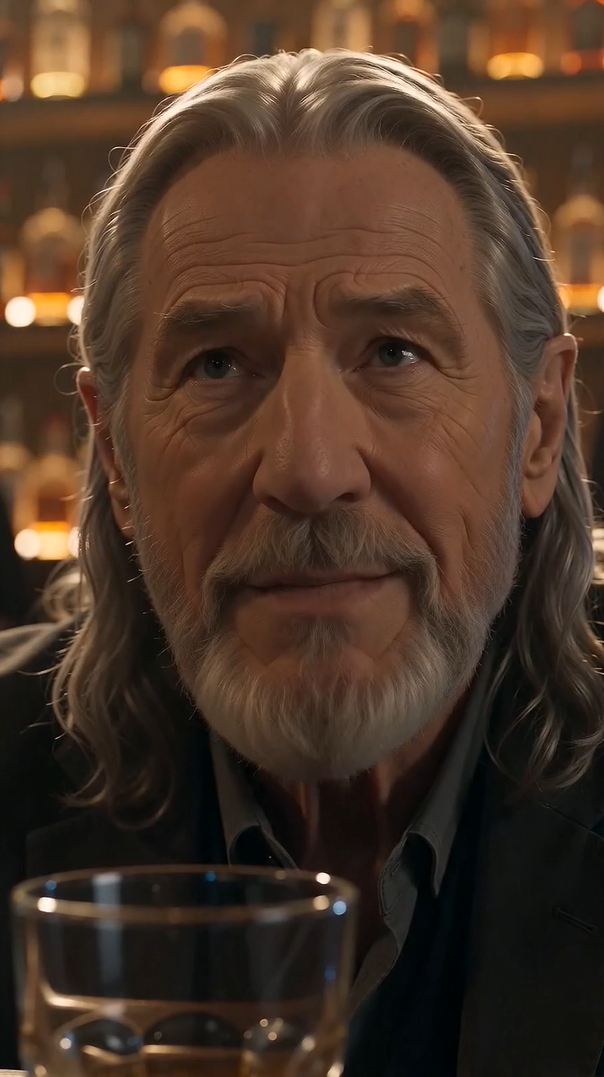
A younger version of his father stood beside the old man, both of them covered in dust, smiling like men who had survived something terrible together.
Rex picked it up with unsteady fingers.
His mouth trembled.
“He never told me about you.”
“He didn’t need to,” the old man said. “He hoped you’d become the kind of man who wouldn’t have to know my name.”
The room stayed silent.
Even the rain outside seemed quieter now.
Rex looked around the bar.
At the bartender.
At the waitress.
At the broken glass.
At his own men, who had followed him for years because they feared him, not because they respected him.
For the first time that night, shame entered his eyes.
He turned toward the bartender.
“I’ll pay for everything,” he said, voice low.
The bartender didn’t answer.
Rex looked down.
“And I’m sorry.”
It was not loud.
It was not perfect.
But it was the first honest thing he had said all night.
The old man watched him carefully.
“Sorry is only the beginning.”
Rex nodded, still holding the photograph.
The tall man in the black coat stepped forward. “What do you want done, sir?”
Everyone waited.
Rex closed his eyes, expecting the worst.
But the old man only looked at the mess around him and said, “Clean it up.”
Rex opened his eyes.
The old man pointed toward the broken glass.
“Your men made the mess. Your men will clean it. Then you’ll pay the owner for damages. Then you’ll apologize to every person in this room.”
Rex stared at him.
The old man’s face did not change.
“And tomorrow morning, you’ll go to your father’s grave and ask yourself why the man who raised you would have been ashamed to see you tonight.”
That finally broke him.
Rex’s shoulders dropped.
The tough mask, the cruel smile, the loud pride, all of it fell away at once.
He nodded slowly.
Then he turned to his men.
“You heard him,” he said, his voice rough. “Clean it up.”
No one argued.
Chairs scraped.
Bikers bent down and picked up the glass they had laughed over minutes before. One wiped the counter. Another helped move the broken table. Someone found a mop.
The waitress wiped her tears with the back of her hand.
The bartender stood still, watching men who had frightened him now cleaning his floor in silence.
The old man returned to his table and sat down again.
He picked up his glass of water and took a small sip, as if nothing strange had happened at all.
After a while, Rex walked over to him.
The photograph was still in his hand.
“I don’t know how to fix what I’ve become,” Rex admitted.
The old man looked up at him.
“No one fixes a life in one night.”
Rex nodded.
The old man continued, “But a man can choose where he starts.”
Rex looked back at the bar.
At the people he had scared.
At the damage he had caused.
Then he looked at the old man again.
“Why didn’t you destroy me?”
The old man’s eyes grew tired.
“Because your father once saved my life.”
Rex froze.
“And because years ago, when he begged me not to cross his son, he wasn’t asking me to fear you.”
The old man leaned closer.
“He was asking me to spare you.”
Rex’s eyes filled, but he turned away before anyone could see too much.
By the time the floor was clean, the bar felt different.
Not safe exactly.
Not healed.
But changed.
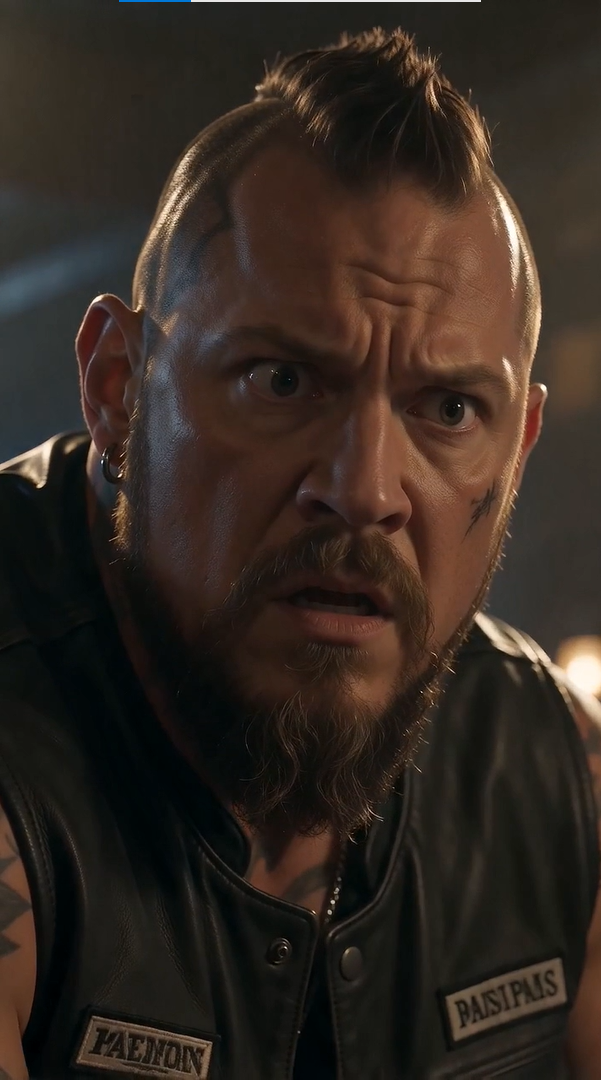
Rex placed a thick stack of cash on the counter. More than enough for repairs. Then he went from table to table, apologizing to strangers who could barely look at him.
Some accepted it.
Some didn’t.
The old man didn’t force anyone to forgive him.
Forgiveness could not be ordered. Not even by a man like him.
When Rex finally reached the door, he stopped and looked back.
The old man was still sitting alone, his face half-hidden under the dim yellow light.
For a moment, Rex looked like a boy again.
Lost.
Ashamed.
Afraid of the silence waiting for him outside.
“Tell me one thing,” Rex said.
The old man looked at him.
“What was my father like before he died?”
The old man’s expression softened for the first time that night.
“He was flawed,” he said. “But he loved you more than his pride. That’s not a small thing.”
Rex lowered his head.
Then he stepped out into the rain.
One by one, his men followed.
The SUVs started moving, their headlights sliding across the wet street, disappearing into the night until the bar was quiet again.
The bartender slowly walked to the old man’s table.
“I don’t know what to say,” he whispered.
The old man placed a few bills beside his untouched drink.
“Then don’t say anything.”
He stood, buttoned his coat, and looked once more at the place that had almost turned into a tragedy.
At the door, the waitress called out softly, “Sir?”
He paused.
“Why did you come here tonight?”
The old man looked at the rain outside.
For a second, the heavy power around him faded, and all that remained was an old man carrying too many memories.
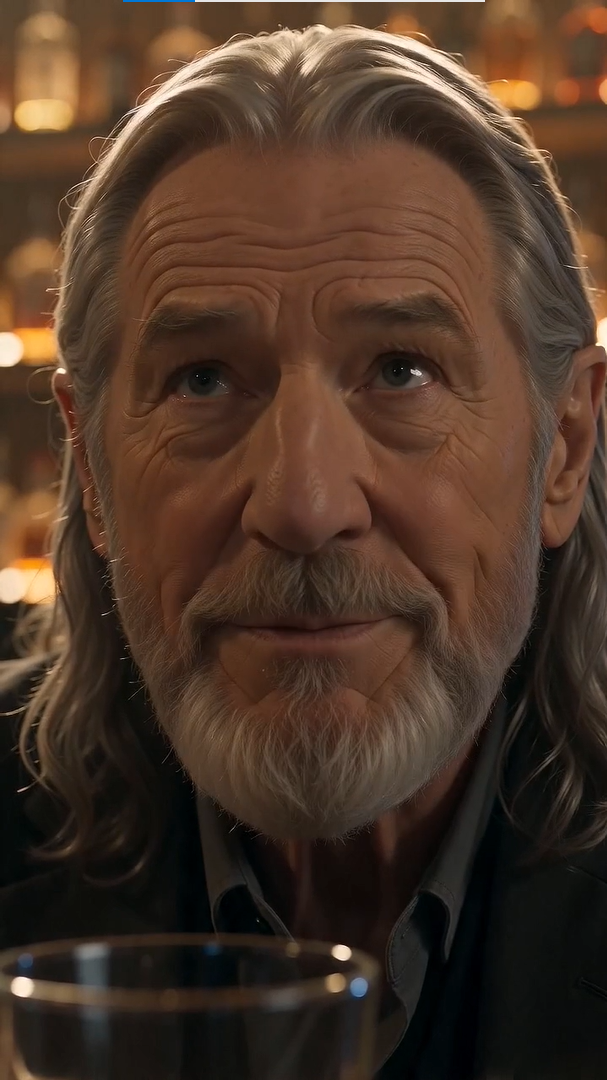
“Because this was the last place his father asked me to watch over him.”
Then he walked out.
No speech.
No applause.
No victory smile.
Just rain, silence, and the sound of a man who had carried a promise for years finally keeping it.
And inside that small bar, no one ever forgot the night they learned that the most dangerous man in the room was not the one who shouted the loudest.
It was the one who stayed calm.
The one who remembered.
The one who could have destroyed a man, but chose to give him one last chance to become human again.