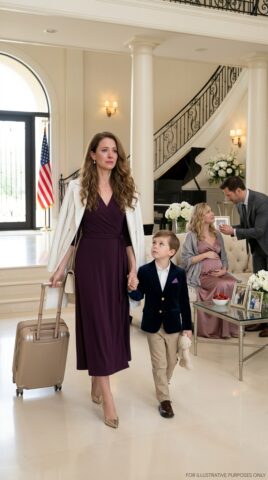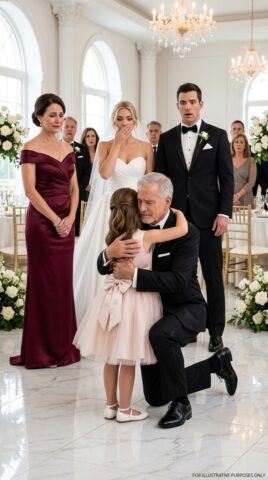
The maid didn’t speak right away.
Her eyes filled, but she held herself together. Then, with shaking fingers, she crossed to the cabinet above the counter and pulled down an old white flour tin.
The father stared at it like it was a ghost.
“She gave it to me the week before she died,” the maid whispered. “She said if grief ever turned you into a stranger, I had to wait for the right night.”
The three girls sat frozen on the bench, watching every movement.
The maid opened the tin.
Inside, under a folded dish towel, was a sealed envelope with his name on it.
His hands shook the moment he touched it.
The girls had never seen their father shake before.
He opened the letter slowly, and the moment he saw his wife’s handwriting, his whole face broke.
He read the first lines silently.
Then his lips parted.
Then he had to sit down.
The room was so quiet the girls could hear him trying not to cry.
Finally, in a voice that kept catching in his throat, he read it out loud:
“If you are reading this, it means you are standing in my kitchen, trying to survive me by becoming busy instead of being present.
Don’t do that to our girls.
If you miss one thing after I’m gone, miss me.
Not them.
And if Anna gives you this letter, it means she kept the promise I asked of her:
Make sure you sit down.
Make sure you eat with them.
And make sure they know their father’s love is bigger than his grief.”
By then, he couldn’t keep reading.
His eyes flooded.
The youngest girl slid off the bench first.
Then the other two followed.
They walked to him slowly, like they were afraid the moment might disappear if they moved too fast.
One by one, they climbed against him.
He dropped the letter.
Wrapped both arms around all three girls.
And cried for the first time in front of them.
The maid turned away and covered her own mouth, crying silently too.
The oldest girl looked up at him and whispered,
“So, you weren’t too busy?”
He shook his head hard, tears falling onto their hair.
“No,” he said. “I was just lost.”
Then he pulled the bench closer, wiped his face, picked up the fallen slice of pizza, and sat down at the table with his daughters.
And for the first time in a very long time, the kitchen felt like a family again.
No one knew what to say after that.
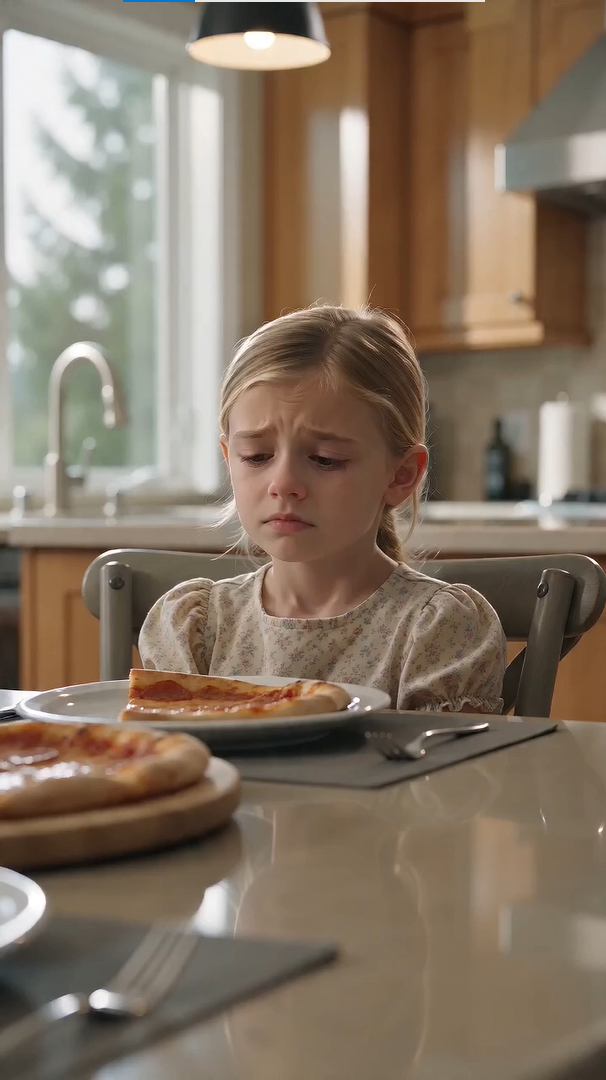
The pizza had gone cold.
The youngest girl’s juice had spilled a little near her plate.
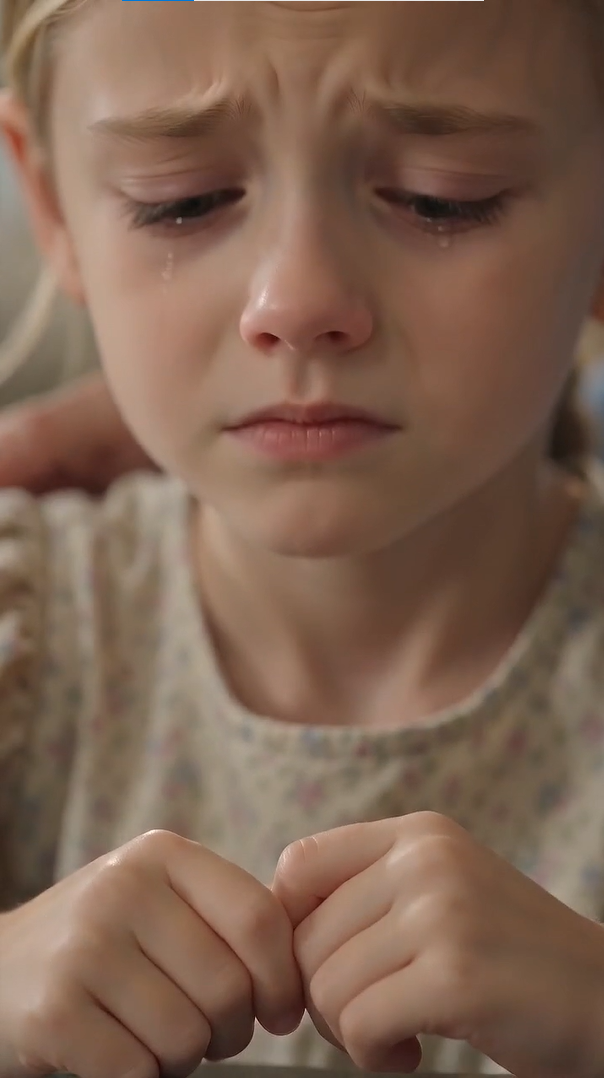
The middle girl kept rubbing her sleeve across her cheeks.
The oldest kept one hand on the letter, as if she was scared their mother’s words might disappear if she let go.
Their father looked at them.
Really looked.
Not like he was checking whether they had eaten.
Not like he was searching for homework, shoes, school bags, or another thing that needed to be handled before he disappeared into his study.
He looked at their faces.
Their tired eyes.
Their small hands.
The way they had learned to be quiet around him.
And shame moved through him like a knife.
“How long?” he asked softly.
The oldest girl frowned.
“How long what?”
“How long have you been eating dinner without me?”
None of them answered.
That was answer enough.
He looked at Anna.
She lowered her eyes.
“I tried,” she whispered. “I knocked on your office door many nights.”
He remembered.
Of course he remembered.
The soft knock.
The voice outside saying, “Sir, dinner is ready.”
And his own answer, always the same.
“Later.”
But later had become midnight.
Midnight had become tomorrow.
Tomorrow had become months.
And while he was locked in his office, trying to bury his pain under work, his daughters had been growing up on the other side of the wall.
Without him.
The youngest girl leaned against his arm.
“Are you going back to your office now?”
The question was so small.
So innocent.
And it destroyed him.
He shook his head.
“No.”
“Promise?”
He swallowed hard.
“I promise.”
The middle girl looked down at the table.
“You promised before.”
The words were not angry.
That made them worse.
They were tired.
Like she had already learned not to expect too much.
He reached for her hand, but stopped halfway, unsure if he still had the right.
“I know,” he said. “And I broke it.”
She looked at him then.
He forced himself to keep looking back.
No excuses.
No business calls.
No talk about how hard life had been.
Just the truth.
“I thought if I kept working, I wouldn’t feel the house being empty,” he said. “But I didn’t see that I was making it emptier for you.”
The oldest girl pressed her lips together.
“Mom used to say the kitchen was the heart of the house.”
He nodded, tears returning.
“She was right.”
Anna quietly took plates from the cabinet and placed them on the table.
For years, she had served meals in silence.
For years, she had watched the girls wait for footsteps that never came.
For years, she had carried their mother’s letter like a burning secret, wondering when the right night would finally arrive.
And now it had.
Not because the house was ready.
Not because the grief had become softer.
But because three little girls could not keep waiting for a father who was still alive.
Their father looked at Anna.
“You should sit too.”
Anna froze.
“No, sir. I’m fine.”
He shook his head.
“You kept this family breathing when I stopped showing up. Please sit.”
Anna’s eyes filled again.
Slowly, she pulled out a chair.
The girls looked at her with soft smiles, like they had been waiting for someone to say that for a long time.
That night, they ate cold pizza at the kitchen table.
Their father asked simple questions.
What was your favorite class today?
Who made you laugh?
What do you miss most about Mom?
At first, the girls answered carefully.
Then slowly, the words came.
The youngest said she missed the way her mother sang while brushing her hair.
The middle girl said she missed the pancakes shaped like hearts, even when they burned at the edges.
The oldest girl stayed quiet for a long time.
Then she whispered, “I miss having someone notice when I’m pretending to be okay.”
Her father closed his eyes.
When he opened them, his face was broken in a new way.
Not from grief only.
From understanding.
“I should have noticed,” he said.
She looked down.
“Yes.”
That one word sat between them.
Heavy.
Honest.
Needed.
He nodded.
“You’re right.”
No one had ever heard him say that before.
Not like that.
Not without defending himself.
Not without walking away.
After dinner, Anna began clearing the plates, but the father stood first.
“No,” he said gently. “I’ll do it.”
The girls stared.
Anna stared too.
He picked up the plates awkwardly, almost dropping one.
For a second, the youngest girl giggled.
Everyone went still.
Then the father smiled through his tears.
And just like that, the sound grew.
A small laugh.
Then another.
Soon all three girls were laughing, and even Anna had to turn away because she was crying and smiling at the same time.
It was not a perfect night.
Grief still sat in the chairs.
Their mother’s absence still lived in every corner.
But something had shifted.
Their father was in the kitchen.
His sleeves were rolled up.
His hands were wet from washing dishes.
And for the first time in years, the girls did not feel like they were visiting their own father from far away.
Later, after Anna took the youngest upstairs to change into pajamas, the father found the letter on the table.
There was more.
He had stopped reading when his heart broke.
Now he sat alone under the kitchen light and unfolded the last page.
His wife’s handwriting grew softer near the end, as if she had written while tired.
He read:
“You will want to protect yourself from pain.
I know you.
You will lock doors.
You will answer emails.
You will say you are doing it for the girls.
But money cannot hold them when they cry.
A large house cannot kiss their foreheads.
A full fridge cannot ask about their dreams.
They need you.
Not the version of you the world respects.
The real you.
The one who used to dance badly in this kitchen just to make them laugh.
The one who cried when our first daughter was born.
The one who held my hand through every hard night.
Please don’t bury that man with me.
Bring him back for them.
And when you can’t do it for yourself, do it because I am asking you one last time.”
The paper shook in his hands.
He pressed it to his mouth.
“I’m sorry,” he whispered.
No one answered.
But for the first time, the silence did not feel empty.
It felt like his wife was still there, pushing him gently toward the people he had almost lost.
The next morning, the girls came downstairs expecting the usual.
Their father gone before breakfast.
His coffee cup half-empty near the sink.
His office door closed.
But the kitchen smelled like burned toast.
The youngest stopped on the stairs.
The middle girl leaned over her shoulder.
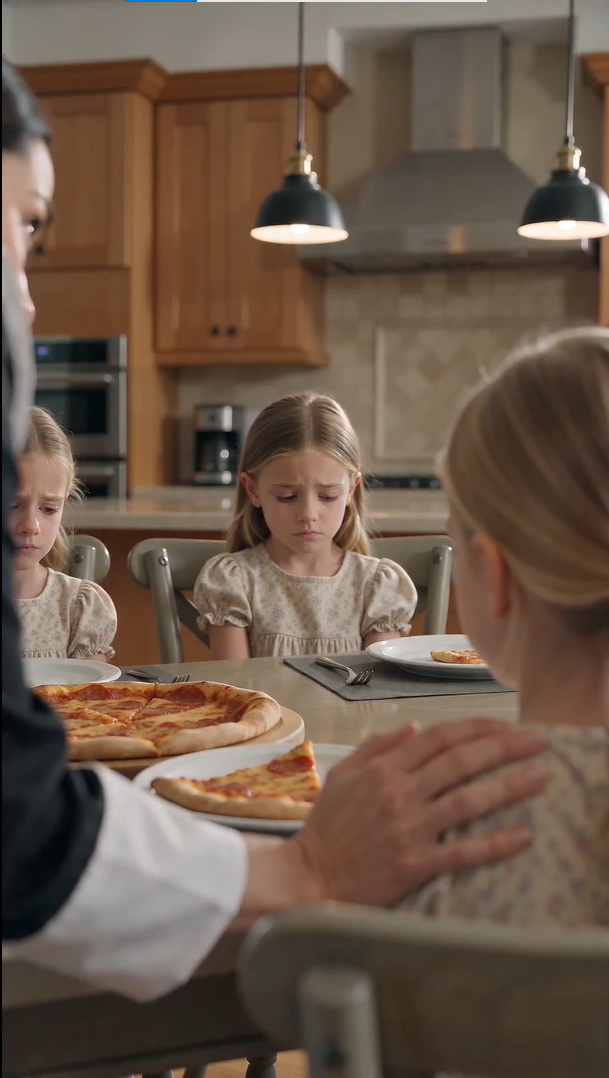
The oldest came down slowly, suspicious and hopeful at the same time.
Their father stood at the stove, wearing an apron that had belonged to their mother.
It was too small for him.
There was flour on his sleeve.
One pancake was black on one side.
Another was stuck to the pan.
Anna stood near the counter, trying very hard not to laugh.
The youngest girl’s mouth fell open.
“You’re cooking?”
He looked at the pan, then at them.
“I’m attempting to cook.”
The middle girl stepped closer.
“Are we safe?”
Anna laughed first.
Then the girls.
Their father laughed too, and the sound surprised all of them.
It had been so long since laughter had filled that kitchen that even the walls seemed to listen.
They ate bad pancakes with too much syrup.
The father did not check his phone.
Not once.
When it rang, he looked at the screen, then turned it off.
The oldest noticed.
“Was that work?”
“Yes.”
“Aren’t you going to answer?”
He took a breath.
“No.”
She studied him carefully.
“Why?”
He looked at all three of them.
“Because breakfast is more important.”
The youngest smiled like he had handed her the whole world.
That day, he drove them to school himself.
He did not send the driver.
He did not rush them into the car.
He stood at the gate and hugged each of them, awkwardly at first, then tighter when they leaned into him.
The middle girl whispered, “You’re really coming back after school?”
He bent down to her level.
“Yes.”
She looked into his eyes, searching for the old habit, the old distance, the old lie.
Then she nodded.
“Okay.”
But trust did not return in one morning.
He learned that slowly.
Some days, the girls still looked surprised when he came home early.
Some nights, the youngest still asked, “Are you eating with us?”
The middle girl still kept her feelings folded tight.
The oldest still watched him like she was waiting for the promise to crack.
And he accepted that.
He had spent too long teaching them not to rely on him.
Now he had to spend longer teaching them that they could.
So he showed up.
Again.
And again.
He attended school meetings.
He learned the youngest hated peas but loved carrots.
He learned the middle girl drew pictures of their mother in the corner of every notebook.
He learned the oldest had been helping with bedtime stories because she thought someone had to act grown.
One night, he found her in the hallway holding a basket of laundry.
She looked embarrassed.
“I was just helping Anna.”
He gently took the basket from her.
“You’re allowed to be a child.”
Her face tightened.
“I don’t know how anymore.”
He nearly broke again.
But this time, he did not collapse into guilt and disappear.
He sat on the hallway floor beside her.
“Then we’ll learn together.”
She looked at him.
“We?”
He nodded.
“I forgot how to be a father. You forgot how to be a child. We both need practice.”
For the first time, she leaned her head against his shoulder without being asked.
He stayed there with her until Anna found them both asleep against the wall.
Weeks passed.
The kitchen changed first.
Flowers appeared on the windowsill again.
The old white flour tin stayed on the counter now, not hidden in the cabinet.
The father kept the letter inside it, folded carefully, but he read it often.
Not because he wanted to suffer.
Because he did not want to forget.
Friday nights became pizza nights.
Not fancy pizza from expensive restaurants.
The simple kind the girls liked.
They ate it at the table, sometimes with plates, sometimes straight from the box.
They told stories about their mother.
At first, those stories made everyone cry.
Then slowly, they began to make them smile too.
Anna told them how their mother used to sneak cookie dough before baking.
The youngest laughed so hard she hiccupped.
The middle girl confessed she had once taken her mother’s lipstick and drawn hearts on the bathroom mirror.
Their father pretended to be shocked, but his eyes were soft.
The oldest finally told the story she had kept inside for months.
“The last night Mom tucked me in, she told me to be kind to you,” she said.
Her father looked down.
“She knew I’d get lost, didn’t she?”
The oldest nodded.
“She said grief makes people forget where the light is.”
He wiped his eyes.
“And did she tell you where it was?”
The girl looked around the table.
“At dinner.”
No one spoke for a moment.
Then the father reached across the table and held her hand.
From that night on, dinner became sacred.
No calls.
No office talk.
No empty chairs.
Even when he was tired.
Even when work pressed hard.
Even when grief returned without warning and made his chest feel too tight.
He came to the table.
Because love was not only something you felt.
It was something you practiced.
One evening, months later, the youngest came running into the kitchen with a paper in her hand.
Her school was holding a small play.
She had one line.
Only one.
But her face was shining.
“Will you come?” she asked.
The question looked simple.

But he heard everything behind it.
Will you remember?
Will you choose me?
Will I look into the crowd and find your chair empty?
He took the paper from her and read it carefully.
Then he wrote the date on the kitchen calendar in thick black marker.
“I’ll be there.”
The night of the play, his office called six times.
He did not answer.
He sat in the front row with the oldest on one side and the middle girl on the other.
Anna sat beside them, holding tissues.
When the youngest stepped onto the stage, she searched the crowd.
The moment she saw him, her nervous face changed.
She smiled.
Then she said her one line loudly, proudly, perfectly.
Her father stood up and clapped like she had performed on the biggest stage in the world.
People turned to look.
He did not care.
His daughter saw him.
That was enough.
On the anniversary of their mother’s death, the house felt heavy from morning.
No one knew what to do.
Before, that day had been spent in silence.
The father locked away.
The girls whispering.
Anna moving softly from room to room.
But this year, the father came downstairs carrying a wooden box.
Inside were photographs.
Old birthday cards.
A scarf that still faintly held their mother’s perfume.
A recipe book with notes in the margins.
He placed everything on the kitchen table.
“We don’t have to pretend today doesn’t hurt,” he said.
The girls gathered around.
Anna stood quietly near the stove.
Their father looked at her.
“You too, Anna.”
She sat with them.
Together, they remembered.
They cried.
They laughed.
They cooked their mother’s favorite soup and burned the bread because their father forgot it in the oven.
The middle girl said, “Mom would have laughed.”
The father smiled.
“She would have blamed me.”
“She would be right,” the oldest said.
For the first time, the anniversary did not feel like a locked room.
It felt like a door they opened together.
That night, after the girls went to bed, Anna found the father standing alone in the kitchen.
He was holding the flour tin.
“I was angry at you,” he said quietly.
Anna looked at him with surprise.
“I know.”
“For keeping the letter from me.”
“I know.”
He turned to her.
“But she told you to wait for the right night.”
Anna nodded, tears already rising.
“She said if I gave it too early, you would read it and hide again. She said the girls would have to be the ones to bring you back.”
He looked toward the stairs.
“She knew me too well.”
“She loved you too well,” Anna said.
His eyes filled.
Then he said the words he should have said long ago.
“Thank you for staying.”
Anna’s chin trembled.
“They were my family too.”
He nodded.
“Yes. They are.”
Years did not erase the pain.
But they softened its edges.
The girls grew.
The youngest became brave enough to sing in school.
The middle girl filled the house with drawings, some happy, some sad, all of them taped proudly to the fridge.
The oldest slowly stopped acting like a second mother and began laughing like a girl her age again.
Their father changed too.
Not into a perfect man.
There were days he still got quiet.
Days he still stood outside his late wife’s room and missed her so badly he could barely breathe.
But he no longer let grief make him cruel.
He no longer confused providing with loving.
He no longer treated presence like something he could postpone.
Every night, when the kitchen light turned warm and the plates were set, he came.
Sometimes the meal was loud.
Sometimes it was messy.
Sometimes someone cried.
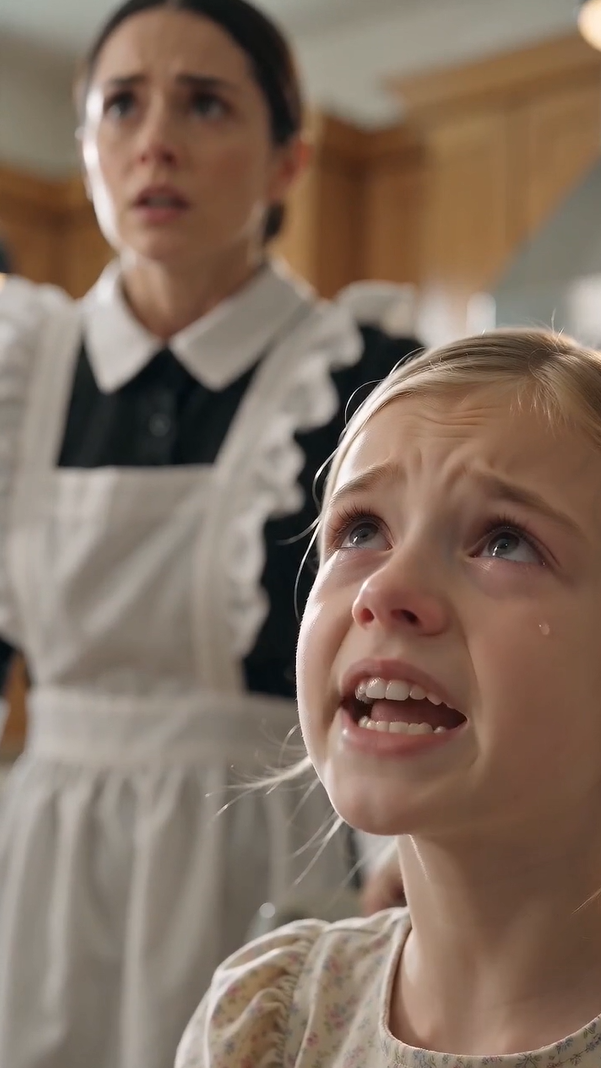
Sometimes someone laughed with food in their mouth and Anna scolded them all.
But the chair at the head of the table was never empty again.
One winter evening, the youngest, no longer so little, found the old white flour tin on the counter.
She opened it carefully and saw the letter inside.
The edges had softened from being unfolded so many times.
She looked at her father.
“Do you still read it?”
He smiled sadly.
“Yes.”
“Does it still hurt?”
He thought for a moment.
“Yes,” he said. “But now it hurts in a way that reminds me to love you properly.”
She leaned against him.
“I think Mom knew you’d come back.”
He looked around the kitchen.
At Anna humming by the sink.
At the middle girl drawing at the table.
At the oldest laughing at something on her phone.
At the empty chair that still belonged to his wife in a quiet, sacred way.
Then he looked at the daughter in his arms.
“I think she sent me a map,” he whispered. “And all of you were the way home.”
The girl hugged him tighter.
Outside, rain tapped softly against the windows.
Inside, the kitchen was warm.
The old flour tin sat on the counter, no longer hiding a secret, but guarding a promise.
A promise made by a dying mother.
Kept by a faithful maid.
Almost missed by a broken father.
And saved by three little girls who only wanted their dad to sit down and eat with them.
People would later say that grief changed him.
But that was not the whole truth.
Grief had almost taken him.
Love brought him back.
And from that night on, whenever life became hard, whenever the house felt too quiet, whenever any of them forgot how far they had come, they returned to the same place.
The kitchen table.
Where a cold slice of pizza, a trembling letter, and a mother’s final words had turned a broken house into a family again.