PART 2
Fifteen days earlier, Natalie Whitaker had walked out of Serenity West Maternity Retreat wearing a loose gray coat, holding her newborn son against her chest, and carrying nothing from her marriage except pain.
The black Lincoln Navigator waiting outside belonged to Caleb Sterling.

At first, she had not believed him.
When he appeared in her maternity room and said he was her brother, Natalie had nearly called security. She had grown up believing she was an orphan who had been adopted by a kind middle-class couple in Ohio. Her adoptive parents had died when she was twenty-two, leaving her with a small house, a few photographs, and no one to call family.
Then Caleb walked into her room with a DNA report, trembling hands, and eyes that looked exactly like hers.
“You were taken from a county fair in San Diego when you were three,” he told her. “Our father never stopped searching.”
Natalie stared at him as if he were speaking another language.
She had just survived childbirth alone. Grant had not answered. Patricia had come with a lawyer and a check. Her body ached. Her stitches burned. Her son cried every two hours. Her heart felt like it had been scraped hollow.
And suddenly, a stranger was telling her she belonged to one of the most powerful investment families in America.
“I don’t have a family,” she whispered.
Caleb’s jaw tightened. “You do now.”
She should have been afraid of going with him.
Instead, all her fear had already been used up.
There was nothing left in her but exhaustion and a bright, dangerous clarity.
Before leaving, she asked the nurse for an envelope. She signed divorce papers—not Patricia’s version, but one her own attorney drafted in a rush. She copied the recording of Patricia’s threats onto a USB flash drive. She placed it inside with a note.
“Are you sure?” Caleb asked.
Natalie looked back at the empty maternity suite where she had cried into a pillow so her baby would not hear.
“I’m sure.”
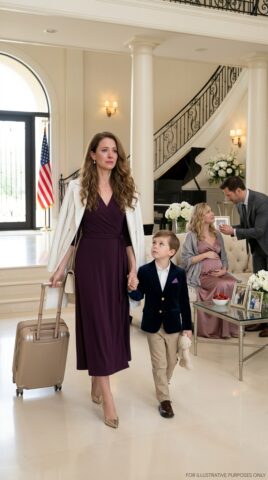
The Sterling estate in Westchester stood behind a long private road lined with old maple trees. The house was enormous, built from pale stone and black iron, with warm lights glowing in every window. It looked grand, but not cold.
An elderly man waited inside the foyer.
Arthur Sterling had white hair, a cane, and tears already running down his face.
For a moment, Natalie could not move.
Then he said, “My little girl.”
The words broke something in her.
She stepped forward, still holding the baby, and Arthur reached for her as if touching her might prove she was real.
“Dad?” she whispered.
He sobbed.
Caleb turned away, wiping his eyes with the back of his hand.
For the first time in three years, Natalie was not examined for usefulness. No one asked whether she had pleased her husband. No one asked whether she had produced an heir. No one told her to be grateful.
Arthur wrapped a blanket around her shoulders. Caleb took the baby so she could sit. A chef brought soup. A private nurse checked her vitals. A nanny prepared a bassinet beside her bed.
“What is his name?” Arthur asked, looking down at the infant.
Natalie touched her son’s tiny fist. “Noah.”
“Noah Whitaker?”
Her expression hardened.
“Noah Sterling.”
Arthur nodded once. “Good.”
That night, while Noah slept, Natalie told them everything.
She told them how Grant had seemed charming at first, sending flowers to her office, taking her to dinner in Chicago, promising her a life bigger than anything she had known. She told them how Patricia had pushed for the wedding after a famous New York spiritual consultant claimed Natalie’s birth chart would bring prosperity to the Whitaker family.
Arthur’s face darkened. “They used you.”
“Yes,” Natalie said. “But I didn’t know it then.”
For the first year, Grant had been polite enough to make her hope. He bought her jewelry, appeared beside her at charity galas in Manhattan, and called her “my wife” with a faint smile that made her heart foolish.
Then Whitaker Global Capital recovered.
Deals closed. Stock values rose. Investors praised Grant’s brilliance. Patricia became convinced Natalie truly was the family’s lucky charm.
And Grant began coming home later.
Then came Brielle Monroe, a former actress with perfect hair, expensive taste, and no shame.
Natalie had once found Brielle’s lipstick in Grant’s suit pocket. When she confronted him, Grant did not deny it.
He simply said, “Don’t embarrass yourself.”
That sentence had lived inside Natalie ever since.
When she became pregnant, she made one last mistake.
She believed a child might bring Grant back.
Instead, he left for Maui with Brielle three days before her due date.
On the third day after Noah was born, Patricia arrived with a lawyer.
“She offered me fifty thousand dollars,” Natalie said quietly. “For three years. For my marriage. For my son.”
Caleb stood so suddenly his chair scraped the floor.
“I’ll destroy them.”
Natalie looked up. “No.”
Both men stared at her.
She wiped her tears. “I don’t want you to destroy them for me. I want you to help me do it myself.”
Arthur’s grief shifted into pride.
“That,” he said, voice thick, “sounds like my daughter.”
Over the next two weeks, Natalie recovered in body while sharpening herself in silence. Caleb brought documents: Whitaker Global Capital’s unstable debts, hidden loans, pending lawsuits, investor vulnerabilities, and internal conflicts. Arthur brought old contacts. A private attorney prepared custody defenses before Grant even knew Noah was gone.
Natalie learned quickly.
Every night, after feeding Noah, she sat at the desk in her bedroom and read through files while the city lights burned beyond the windows. Her stitches healed. Her hands stopped trembling. The woman who had begged for love was buried one page at a time.
On the fifteenth day, Caleb entered her office with a leather folder.
Inside were emails, contracts, recordings, financial reports, and names.
“This is enough to wound them,” he said. “Not enough to kill.”
Natalie looked through the folder. “Then we start with a wound.”
Caleb smiled.
The first leak went out before dawn.
By lunchtime, every employee at Whitaker Global Capital had heard Patricia Whitaker’s voice threatening a postpartum woman and demanding custody of her newborn. By dinner, the audio had reached social media. By midnight, the phrase “fifty-thousand-dollar wife” was trending across New York.
Grant called seventeen times.
Natalie did not answer.
Instead, she stood beside Noah’s crib and watched him sleep.
“You’ll never have to beg anyone to choose you,” she whispered. “Not while I’m alive.”
The next morning, the second gift left her hands.
A confidential investment report landed anonymously in the inbox of Whitaker Global Capital’s fiercest competitor in Washington, D.C.
Within hours, Grant’s largest pending deal collapsed.
By noon, his board demanded answers.
By evening, the press wanted blood.
Natalie sat in Arthur’s office across from Caleb. Her father stood by the window, looking down at Manhattan’s skyline.
“Are you ready for him to know who you are?” Caleb asked.
Natalie held a warm mug in both hands.
“For three years, they called me nothing,” she said. “Now let them learn my name.”
PART 3
Grant Whitaker did not sleep for three nights.
Every time he closed his eyes, he heard Natalie’s laugh on that recording. Not the laugh she used to give him in the early days when he brought her coffee or stood behind her at charity events. Not the shy, hopeful laugh of a woman who believed marriage was sacred.
This new laugh was hollow, calm, and merciless.
It followed him through board meetings and investor calls. It sat beside him while lawyers argued strategy. It echoed when journalists shouted questions outside Whitaker Global Capital’s Manhattan headquarters.
“Mr. Whitaker, did your mother force your wife to give up custody?”
“Were you in Maui with Brielle Monroe while your wife was giving birth?”
“Did your family use superstition to justify your marriage?”
Grant shoved through the crowd without answering.
Inside his office, the crisis was worse.
A competitor had undercut their Washington, D.C. infrastructure deal using confidential numbers only a handful of executives had seen. Investors were furious. Shareholders demanded protection. His father, Charles Whitaker, called from Palm Beach, Florida, shouting about family disgrace. Patricia locked herself in the Greenwich estate and insisted Natalie had “planned this like a snake.”
Grant wanted to believe that.
It would have been easier.
But then he remembered Natalie standing in his office months earlier, eight months pregnant, carrying homemade chicken noodle soup in a thermos. He had been on the phone with Brielle. When Natalie entered, he snapped at her.
“Who told you to come here?”
She stood there for one breath too long, eyes shining.
Then she placed the thermos on his desk and said, “I thought you might be hungry.”
He told security not to let her upstairs without permission again.
At the time, her silence had irritated him.
Now it terrified him.
His assistant, Miles Davenport, entered with a folder.
Grant looked up. “Tell me you found her.”
Miles hesitated.
“Speak.”
“We found the car that picked her up from Serenity West.”
“And?”
“It belongs to Caleb Sterling.”
Grant frowned. “Sterling as in Sterling Capital Group?”
“Yes.”
Grant went still.
Sterling Capital Group was not merely wealthy. It was old American money wrapped in modern power, an investment empire with hands in technology, real estate, media, healthcare, and private equity. Arthur Sterling was a legend. Caleb Sterling had a reputation for buying companies the way other men bought watches.
“What connection does Natalie have to Caleb Sterling?”
Miles swallowed. “She is his sister.”
The room fell silent.
Grant stared at him.
“No.”
“I verified it twice. Natalie was born Natalie Sterling. She was kidnapped as a child in San Diego and later adopted under another name. The Sterling family has been searching for her for twenty-five years. Caleb found her two weeks ago.”
Grant gripped the edge of his desk.
His quiet wife.
The woman his mother had called low-class.
The woman he had planned to dismiss with money and paperwork.
She was Arthur Sterling’s missing daughter.
“How much does she know?” Grant asked.
Miles did not pretend to misunderstand. “About us? Enough.”
Grant walked to the window. Below, cameras gathered at the entrance like vultures.
Only the first gift.
Natalie’s note returned to him with brutal clarity.
He drove to the Sterling estate that evening with white roses he knew were pathetic before he even bought them. Natalie used to like white roses. Or maybe she had only said she liked them because he once sent them.
The gates did not open.
Through the intercom, a guard said, “Ms. Sterling refuses to see you.”
“Tell her I’m sorry.”
The guard’s voice remained flat. “She heard you.”
Grant stood outside until the sun disappeared behind the trees.
“Natalie!” he shouted. “Please. Just give me five minutes.”
No one answered.
But upstairs, behind a second-floor window, Natalie watched him.
She held Noah against her shoulder, feeling the child’s warm breath on her neck. Caleb stood beside her, arms crossed.
“Want me to have security remove him?”
“No.”
“You want to see him?”
“No.”
“Then why watch?”
Natalie looked at the man outside the gate. Once, she would have run to him for a single apology. Once, those flowers would have made her cry with gratitude. Once, she would have forgiven him before he finished saying her name.
That woman was gone.
“I want to remember this,” she said.
“Remember what?”
“What it looks like when a man realizes too late that the door is locked.”
Two days later, Natalie met Madison Blair.
Madison arrived at the Sterling estate in a tailored navy suit, carrying a slim laptop and the controlled fury of a woman who had survived powerful men. She ran Blair Media Group, one of New York’s sharpest public relations and entertainment firms. More importantly, she had once loved Grant Whitaker before he betrayed her to help Brielle rise in the entertainment world.
“He leaked confidential client material from my company,” Madison said. “Brielle benefited. I nearly went bankrupt. I rebuilt from ashes.”
Natalie studied her. “And now?”
“Now I want him to understand ashes.”
Caleb leaned back. “Madison has media reach we don’t.”
Madison opened her laptop. “And I have something you don’t.”
On the screen, Brielle Monroe stood outside a boutique hotel in Miami, kissing Preston Hayes III, a spoiled trust-fund heir with a reputation for scandals, drugs, and disappearing when bills arrived. The timestamp was two months old, when Brielle had supposedly been devoted to Grant.
Natalie looked at the video, waiting for satisfaction.
It did not come.
Instead, she felt a strange emptiness. Grant had chosen Brielle over his wife, his child, his decency. And Brielle had chosen whoever paid for the better room.
“How sad,” Natalie said.
Madison raised an eyebrow. “For Brielle?”
“For him.”
Madison smiled. “Don’t release this yet. Men like Grant don’t break when they’re attacked by enemies. They break when they realize the woman they betrayed everyone for was laughing at them too.”
So they waited.
Natalie learned the rhythm of revenge. Release too much too soon, and people became numb. Release one truth at a time, and the world kept watching.
The next gift was not emotional.
It was financial.
Tax irregularities. Hidden offshore transfers. Inflated valuations used to secure loans. Whitaker Global Capital had survived for years by looking cleaner than it was. Natalie did not create the dirt.
She only opened the windows.
The IRS announced an audit by Friday.
Whitaker stock dropped eight percent by Monday.
Grant called again.
This time Natalie answered.
For a long moment, neither spoke.
Then he said, “Natalie.”
She looked across her office at the framed photograph of Noah in his crib.
“Mr. Whitaker.”
He flinched audibly.
“Please,” he said. “We need to talk.”
“We did talk. You weren’t listening.”
“I didn’t know what my mother did.”
“You knew what kind of woman she was.”
Silence.
“I was wrong,” Grant said.
Natalie closed her eyes.
For three years, she had wanted those words.
Now they were only words.
“Yes,” she said. “You were.”
“Tell me what you want.”
She opened her eyes. “I want you to receive every gift I prepared.”
Then she hung up.
Across the city, Grant threw his phone against the wall.
But fear, not anger, was what remained.
Because he finally understood something.
Natalie was not trying to get his attention.
She was teaching him what abandonment felt like.
PART 4
The Brielle Monroe video broke on a Wednesday morning.
It spread faster than the audio. Scandal always moved faster when there was lipstick, betrayal, and a hotel awning involved. By noon, every gossip account in America had clipped the footage. By three, memes showed Grant in Maui beside screenshots of Brielle kissing Preston Hayes III in Miami.
By five, Grant was at Brielle’s apartment.
She opened the door wearing a silk robe and a face mask, holding a glass of cucumber water.
“Grant? Why didn’t you call?”
He walked past her.
“Explain this.”
He threw his phone onto the couch. The video played automatically.
Brielle’s face drained of color.
“It’s old.”
“Two months.”
“It didn’t mean anything.”
Grant laughed. It was a short, ugly sound. “Nothing means anything to you.”
“Don’t act like a saint,” she snapped. “You were married.”
“I was leaving her for you.”
“You were leaving her because you didn’t want her. Don’t make me responsible for your guilt.”
That struck harder than he expected.
Brielle saw it and softened immediately, reaching for him. “Baby, listen. We can fix this. We can disappear for a while. You still have money.”
He stepped back.
Something in him finally saw her clearly: the performance, the calculation, the glittering hunger. She had not forced him to become cruel. She had only made cruelty feel glamorous.
“It’s over,” he said.
Brielle’s face twisted. “You’ll regret this.”
“I already regret everything.”
When he left, she was screaming his name.
That night, Patricia called in hysterics. Brielle had gone to the Greenwich estate “to wait for Grant,” then vanished with cash, watches, and jewelry from Patricia’s private safe. More than three hundred thousand dollars was gone.
Grant drove there and found his mother sobbing in her bedroom.
“I told you she was trash,” Patricia wailed.
Grant looked at the empty drawers and felt nothing.
No shock. No heartbreak.
Only a deep, humiliating awareness that he had destroyed his life for a thief wearing perfume.
“Stop crying,” he said.
Patricia stared at him. “How dare you speak to me like that?”
“How dare you speak to Natalie the way you did?”
Patricia recoiled as if slapped.
For the first time in his life, Grant saw his mother not as a queen defending a dynasty, but as a frightened, vain woman whose cruelty had helped burn it down.
“You ruined this family,” Patricia whispered.
“No,” Grant said. “We did.”
The next day, he returned to the Sterling estate.
This time, he did not bring flowers.
He knelt outside the gate.
“Natalie,” he called, voice hoarse. “I know I don’t deserve anything. But let me see my son.”
Inside, Caleb watched the security feed with disgust.
“Absolutely not.”
Natalie stood beside him, unreadable.
Grant remained on his knees in the cold for twenty minutes.
Then thirty.
Then an hour.
Finally, Natalie said, “Let him in.”
Caleb turned. “Nat.”
“I’m not doing it for him. I want to end this face to face.”
Grant entered the Sterling living room looking thinner than she remembered. His suit was expensive but wrinkled. His eyes were bloodshot. His arrogance, once polished enough to blind people, had cracked.
Natalie sat on the sofa in cream loungewear, Noah sleeping in her arms.
For a few seconds, Grant could not speak.
He had never seen his son before.
“What’s his name?” he asked.
“Noah Sterling.”
His jaw tightened. “He’s my son.”
Natalie’s gaze lifted slowly. “Is he?”
The question landed like a blow.
“Blood—”
“Blood?” She stood carefully, handing Noah to the nanny. “Where was blood when I was in labor? Where was blood when he had jaundice? Where was blood when your mother threatened to take him from me while you were lying on a beach in Hawaii with Brielle?”
Grant’s face collapsed.
“I know,” he whispered. “I know.”
“No, you don’t.” Natalie stepped closer. “You know embarrassment. You know loss. You know what it feels like when people laugh at you. But you do not know what it felt like to be me.”
He had no answer.
So she gave him the truth.
“I leaked the audio. I leaked the files. I gave Madison the timing for Brielle’s video. I sent the tax evidence. I did all of it.”
Grant looked at her as if seeing a stranger.
“You?”
“Yes.” Her voice did not tremble. “For three years, you all thought I was weak because I was quiet. You mistook love for stupidity. You mistook patience for permission.”
“I deserve it,” he said.
“You deserve more.”
He swallowed.
Natalie returned to the sofa. “The divorce papers will be delivered tomorrow. Custody belongs to me. Noah stays with me. You will pay child support, not because I need your money, but because responsibility should hurt a little when it arrives late.”
“I’ll sign.”
“You will also stop sending people to watch this house.”
Grant’s eyes flickered.
“Yes,” Natalie said. “I know about that.”
“I just wanted to know if you were safe.”
“You lost the right to worry about my safety.”
He nodded slowly, broken by each sentence.
Before he left, he looked once toward the hallway where the nanny had taken Noah.
“Can I hold him?”
“No.”
“Can I see him again?”
“When I decide.”
Grant bowed his head.
At the door, Natalie spoke one last time.
“This is not revenge because you cheated, Grant. Men cheat every day and still manage not to become monsters. This is because you abandoned me at the most vulnerable moment of my life, then expected to buy my silence.”
He turned back, tears in his eyes.
“I loved you once,” she said. “That is the part I hate most.”
The door closed between them.
Three days later, the next gift arrived.
It was old, buried, and lethal.
Years before, Charles Whitaker had bribed a city official in Washington, D.C., to secure development rights. During the forced eviction of a small factory owner, a hired crew beat the man so badly he later died. The death was labeled an accident. The Whitaker family moved on.
Natalie did not.
The witness Madison found gave a sworn statement.
The evidence went to prosecutors.
Charles Whitaker was arrested before breakfast.
By sunset, the Whitaker name was no longer merely scandalous.
It was criminal.
And Grant, watching his father led away in handcuffs, finally understood Natalie’s second lesson:
Some houses do not collapse from storms.
They collapse because the foundation was rotten from the beginning.
PART 5
The Plaza Hotel ballroom in Manhattan was packed before ten in the morning.
Journalists crowded the aisles. Business leaders whispered near the coffee service. Cameras pointed toward a stage decorated with white orchids and polished gold. Across the screen behind the podium were the words:
STERLING CAPITAL GROUP STRATEGIC EXPANSION ANNOUNCEMENT
Grant sat in the back row.
He had received the invitation the night before. Thick card stock. Black lettering. No warmth. No signature, only one handwritten sentence at the bottom.
Come see how the woman you abandoned is living.
He could have stayed away.
He should have stayed away.
But shame has gravity. It pulls a man toward the place where he will be forced to look at himself.
At exactly ten, Caleb Sterling walked onto the stage and introduced his sister.
“Please welcome the newly appointed Vice President of Sterling Capital Group, Natalie Sterling.”
Applause exploded.
Natalie stepped out in a white tailored suit, her hair pinned back, diamonds at her ears, confidence in every line of her body.
Grant stared.
The woman on stage did not resemble the wife who once waited at the top of the stairs for him to come home. She did not lower her eyes. She did not search the room for approval. She stood beneath the lights as if she had been born there.
Maybe she had been.
“Good morning,” Natalie said. “Thank you for being here.”
Her voice carried with calm authority.
“Today, I officially return to my family and to Sterling Capital Group. I also announce that Sterling Capital Group has acquired a controlling interest in Whitaker Global Capital. Effective immediately, Whitaker Global Capital will operate as a subsidiary under Sterling oversight.”
The room erupted.
Grant’s ears rang.
He had known the acquisition was possible. He had not known it was complete.
A reporter stood during the Q&A.
“Ms. Sterling, many people know you as the former wife of Grant Whitaker. Is this acquisition personal?”
Natalie smiled slightly.
“Business is always personal to the people affected by it. But the acquisition was financially sound. Whitaker Global Capital was vulnerable due to mismanagement, legal exposure, and leadership instability.”
Another reporter shouted, “Did you leak the recording of Patricia Whitaker?”
“Yes,” Natalie said.
The room went silent.
“I recorded it three days after giving birth, while my then mother-in-law attempted to force me into signing away custody of my newborn son.”
Flashes burst.
“Where was your husband at the time?”
Natalie paused.
Grant wished, wildly and uselessly, that the floor would open.
“He was in Maui with his girlfriend.”
The room reacted like a wave.
Natalie continued, “I do not share this for sympathy. I share it because powerful families often expect women to suffer quietly behind expensive doors. I suffered quietly for three years. I am finished.”
Grant bowed his head.
When the conference ended, he tried to reach her backstage. Security stopped him.
“Please,” he said. “Tell her I need one minute.”
A guard listened to his earpiece, then replied, “Ms. Sterling says you had three years.”
Outside the hotel, rain began to fall.
Grant stood beneath the awning, watching black cars leave one by one. Natalie did not look toward him from the back seat of hers.
That night, divorce papers arrived at the Whitaker estate.
The terms were not greedy. That made them worse.
Natalie wanted full custody of Noah. Grant would pay monthly child support in U.S. dollars. She waived claims to his personal assets. She wanted nothing from his life except legal separation and protection for her child.
Patricia read the papers and began crying again.
“She took the company,” she said. “She took the heir. She took everything.”
Grant looked at the signature line.
“No,” he said quietly. “We handed it to her.”
He signed.
Weeks passed.
Charles remained under investigation. Patricia’s social circle evaporated. Brielle disappeared, leaving behind debt and rumors of pregnancy. Whitaker Global Capital’s old board resigned in pieces. Grant stayed on only as a temporary operations consultant under Sterling supervision, stripped of equity, authority, and pride.
One evening, after staring at Noah’s photograph in a newspaper article about Natalie’s return, Grant wrote a letter.
Natalie,
I know I do not deserve forgiveness. I am not asking for that.
Please let me see my son once. I will not touch him. I will not speak if you do not want me to. I only want to know his face from somewhere other than a photograph.
After that, I will leave you alone.
Grant
He sent it and expected nothing.
Three days later, a reply came.
Saturday. 10 a.m. Central Park. You may look. You may not hold him.
Grant arrived twenty minutes early.
He wore a plain coat, no watch, no polished armor. He stood near Bethesda Terrace with cold hands and a heart that felt too large for his chest.
Natalie arrived with a nanny pushing a stroller.
She wore a camel coat and dark glasses. Her beauty was not the delicate kind he remembered. It was steadier now, sharpened by survival.
“Do not make this difficult,” she said.
“I won’t.”
The nanny stopped the stroller.
Grant stepped forward slowly.
Noah slept beneath a soft blue blanket, his tiny mouth parted, one fist tucked against his cheek. He had Natalie’s eyes, even closed. He had Grant’s chin.
Grant covered his mouth with his hand.
A sob escaped anyway.
For months, he had defended himself in fragments. He had blamed timing, his mother, Brielle, work, pressure, the cold machinery of wealth. But looking at his son, he saw no excuse that could survive.
“Hi, Noah,” he whispered. “I’m your dad.”
Natalie’s jaw tightened, but she did not stop him.
“I’m sorry,” Grant said, tears falling freely now. “You deserved better before you were even born.”
Noah slept on.
After ten minutes, Natalie said, “Time.”
Grant stepped back immediately.
“Thank you,” he said.
“This is not forgiveness.”
“I know.”
“And it is not a promise.”
“I know.”
She turned the stroller away.
“Natalie.”
She stopped but did not turn.
“Brielle says she’s pregnant,” he said. “She claims it’s mine. It isn’t. I haven’t touched her since everything happened. I just wanted you to know before she tries to make noise.”
Natalie looked over her shoulder.
“That has nothing to do with me.”
The words were not angry.
They were final.
Grant watched her walk away through the park, his son disappearing beneath bare winter trees.
For the first time, he did not chase.
Love, he was beginning to understand, was not possession.
Sometimes love was standing still while the person you hurt carried peace away from you.
PART 6
Patricia Whitaker’s heart attack came in early spring.
Grant found her on the floor of the Greenwich estate beside an overturned teacup. At the hospital, doctors said she had survived the first attack but might not survive the night. Her face looked smaller without makeup, her silver hair loose against the pillow, her hands bruised from IV lines.
When she saw Natalie standing in the doorway, she began to cry.
Grant had not asked Natalie to come. Caleb had told her. Natalie came because some endings deserved witnesses.
“Natalie,” Patricia rasped.
Natalie approached the bed but did not take her hand.
“I was cruel,” Patricia whispered. “I thought bloodlines and money made people important. I thought you were nothing.”
Natalie said nothing.
“I was wrong.”
The words trembled in the sterile room.
Grant looked down, tears burning his eyes.
Patricia struggled to breathe. “Please. Don’t punish Noah for my sins. If Grant becomes worthy someday, let him know his son.”
Natalie stared at the woman who had once thrown fifty thousand dollars at her hospital bed.
“I won’t make promises for your comfort,” she said quietly. “But I will do what is best for my child.”
Patricia nodded as if that was mercy enough.
She died before dawn.
At the funeral, few people came. The Whitaker name had become radioactive. Grant stood beside a polished casket with his father absent, still awaiting trial. Natalie attended in black with Noah in the nanny’s arms. She did not cry. She did not smile. She simply stood there, dignified and distant, while Grant buried the woman who had taught him pride and called it love.
After the service, Grant approached her.
“Thank you for coming.”
“She was Noah’s grandmother.”
“She hurt you.”
“Yes,” Natalie said. “Both things are true.”
He nodded.
The following week, Caleb summoned Grant to Sterling headquarters in Manhattan.
Grant expected termination.
Instead, he found Caleb seated at a long conference table with several executives and a contract in front of him.
“Whitaker Global Capital is unstable,” Caleb said. “But not dead. Unfortunately, you understand its operations better than anyone.”
Grant waited.
“My sister recommended we keep you as CEO.”
Grant’s head lifted.
“Under strict supervision,” Caleb added coldly. “No equity. No discretionary control over major funds. Full audit access. One ethical violation and you’re gone permanently.”
“Natalie said this?”
“She said Noah may one day ask whether his father ever became a decent man. She wants the answer to be up to you.”
Grant looked at the contract until the letters blurred.
Caleb pushed a pen forward. “Do not mistake this for trust.”
“I won’t.”
“And do not thank me. I opposed it.”
Grant signed.
From that day forward, he lived differently.
He arrived at the office before everyone else and left after everyone else. He stopped drinking. He stopped attending society events unless required. He answered every audit request without complaint. When newspapers mocked him as “the humbled prince of Wall Street,” he did not respond.
Once a month, Natalie allowed him to see Noah.
At first, the visits were brief and supervised. Grant sat across the room while Noah played on a blanket. He brought toys but never pushed them forward. He spoke softly. He learned what brand of diapers Noah used, what songs calmed him, what foods upset his stomach.
One night, Noah developed a fever.
Natalie was at the emergency room when Grant arrived, breathless and soaked from rain.
“How did you know?” she asked.
“The nanny texted the family group by accident. I came as soon as I saw.”
He handled paperwork. He brought water. He stood back when doctors examined Noah, never inserting himself where he had not earned space. At dawn, when the fever broke, Natalie found him asleep upright in a plastic chair, his coat still wet.
Something in her chest shifted.
Not forgiveness.
Not love.
But recognition.
He was trying.
Months later, Brielle Monroe resurfaced.
A public hospital in New York called Natalie because Brielle, sick and broke, had listed her as an emergency contact. Natalie almost refused, then went.
Brielle looked nothing like the woman from Maui. She was thin, pale, and shaking beneath a hospital blanket. The pregnancy had ended badly overseas after she followed Preston Hayes III to Los Angeles and then Las Vegas. Preston abandoned her. Her money was gone. Her beauty, once weaponized, had become a memory.
“I’m dying,” Brielle whispered dramatically.
“You’re dehydrated and recovering from surgery,” Natalie said.
Brielle gave a weak laugh, then cried. “I’m sorry.”
Natalie stood beside the bed, feeling the old hatred search for a place to land and finding none.
“You helped ruin my life,” Natalie said. “But Grant ruined it too. Patricia ruined it. I ruined parts of it by staying when I should have left.”
Brielle sobbed harder.
“I’ll pay the hospital bill,” Natalie continued. “After that, disappear from my life.”
“Does Grant hate me?”
Natalie paused at the door. “No. You’re not important enough anymore.”
Brielle lowered her face into her hands.
Natalie left the hospital into bright afternoon sun and realized she felt lighter than she had in years.
Noah’s second birthday came in summer.
The Sterling estate was decorated with blue balloons, a small cake, and too many toys from Arthur. Grant arrived with a wooden train set and nervous eyes.
Noah, now walking unsteadily, toddled toward him.
“Da?”
Everyone froze.
Grant dropped to his knees.
Noah patted his face.
“Da,” he said again.
Grant cried so hard Caleb had to look away.
Natalie stood in the doorway, holding a paper plate, her heart twisting with something painfully human.
That evening, after the party, Grant prepared to leave.
“Wait,” Natalie said.
He turned.
“You can come twice a month now.”
His mouth parted.
“And if Noah wants you to hold him, you may.”
Grant pressed his lips together, nodding too many times.
“Thank you.”
“Don’t thank me,” she said. “Be worthy of it.”
He looked at her, eyes red but steady.
“I will spend the rest of my life trying.”
For the first time in a long while, Natalie believed him.
PART 7
Three years later, Noah Sterling believed Central Park belonged to him.
He ran through it with the confidence of a small king, laughing as Grant chased him across the grass while Natalie watched from a bench with coffee warming her hands.
“Daddy, faster!” Noah shouted.
“I am not twenty anymore,” Grant called back.
“You’re old!”
Natalie laughed before she could stop herself.
Grant looked over at her, breathless, smiling.
In moments like that, the past felt like a scar beneath clothing. Still there. Still part of the body. But no longer bleeding.
Grant had kept his promises.
He rebuilt Whitaker Global Capital into a stable subsidiary, not a reckless empire. He cared for Charles through trial and sentencing without defending his crimes. He sold the Greenwich estate and moved into a modest brownstone five minutes from Natalie’s Tribeca apartment. He showed up for preschool plays, pediatric appointments, midnight fevers, and ordinary Tuesday dinners.
He never once demanded more than she offered.
That, more than apologies, changed her.
One Friday evening, Natalie worked late at Sterling headquarters. She was now Executive Vice President, respected for her discipline and feared for her ability to read a deal before anyone else saw the trap. Caleb often joked that she had inherited their father’s patience and their mother’s aim.
At seven, Noah burst into her office wearing a dinosaur backpack.
“Mommy! Daddy said we’re going to Disneyland in California tomorrow!”
Grant appeared behind him, holding two paper bags of takeout.
“I said maybe,” Grant corrected.
Noah gasped. “You said definitely maybe.”
Natalie looked at Grant. “That sounds like a confession.”
He raised one hand. “Guilty.”
They ate dinner on the floor of her office, Noah building a block tower between contracts and legal folders. Outside the windows, Manhattan glowed like a promise.
Later, as Noah dozed on the couch, Grant stood beside Natalie at the window.
“I need to ask you something,” he said.
She glanced at him. “That sounds dangerous.”
“It is.”
He pulled a small velvet box from his coat.
Natalie stopped breathing.
Grant did not open it immediately.
“I know I asked this once before in a church full of flowers, when I didn’t understand what vows meant,” he said. “Back then, I wanted a wife who fit into my life. I wanted loyalty without earning it. I wanted forgiveness without accountability.”
His voice shook.
“I cannot undo what I did to you. I cannot erase that delivery room, that recording, or the years you spent being lonely beside me. But I can promise this: I know what love costs now. I know it is not possession. It is showing up. It is telling the truth. It is choosing the same people every day, especially when no one is applauding.”
He opened the box.
The ring inside was not the grand Whitaker diamond she once wore. It was simpler, warmer, chosen for her rather than for display.
“Natalie Sterling,” he said, “will you let me spend the rest of my life proving that your second chance was not wasted?”
Natalie looked at the ring.
The old pain rose first, because old pain always arrived early. She saw herself alone in a hospital bed. She heard Patricia’s voice. She felt the envelope in her hands, the first gift, the first strike, the first breath of freedom.
Then she looked at Grant.
Not the man from Maui.
Not the man who had abandoned her.
The man who had spent three years rebuilding trust one quiet act at a time.
Noah stirred on the couch. “Mommy?” he mumbled. “Are you and Daddy doing serious talking?”
Natalie laughed through tears.
“Yes, baby.”
“Say yes,” Noah said sleepily. “Daddy makes good pancakes.”
Grant wiped his eyes. “That is my strongest qualification.”
Natalie took the ring from the box.
“If you hurt us again,” she said, “there will be no third chance.”
“I know.”
“I mean it.”
“I know.”
She held out her hand.
“Then put it on.”
Grant’s hands trembled so badly he nearly dropped the ring. When it finally slid onto her finger, Noah sat up and clapped like he had just witnessed fireworks.
“Are we a family now?” he asked.
Natalie looked at Grant, then at her son.
“We already were,” she said softly. “We’re just making it official.”
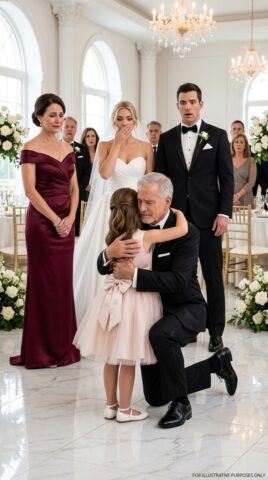
Six months later, they remarried in San Diego near the ocean, not in a cathedral filled with business allies, but in a small garden overlooking the Pacific. Arthur walked Natalie down the aisle. Caleb stood at her side, pretending not to cry. Madison Blair, now Caleb’s wife, cried openly and denied it later.
Noah carried the rings in a tiny navy suit and announced to every guest, “My daddy used to be bad, but now he’s good.”
The crowd laughed.
Grant knelt in front of his son before the ceremony began.
“You’re right,” he said. “And I’ll keep being good.”
Noah hugged him.
Natalie watched from beneath a white arch of flowers, her heart full in a way that no longer frightened her.
Years later, at Sterling Capital Group’s fiftieth anniversary gala in Washington, D.C., Natalie stood onstage in a deep red gown, speaking to a ballroom filled with leaders, investors, journalists, and family.
Her hair was swept over one shoulder. Her voice was calm. Her name needed no explanation.
Below the stage, Grant sat with twelve-year-old Noah, both watching her with identical pride.
“Mom is amazing,” Noah whispered.
Grant smiled. “Yes, she is.”
“Uncle Caleb told me you made her cry a long time ago.”
Grant’s smile faded, but he did not hide from the truth.
“I did.”
“Why?”
“Because I was selfish, foolish, and weak.”
Noah considered that. “But you changed.”
Grant looked at Natalie as applause thundered around the room.
“Your mother gave me the chance to. I spend every day trying to deserve it.”
Noah nodded solemnly. “Good. Because Mom deserves everything.”
“She does,” Grant said. “And so do you.”
When Natalie stepped down from the stage, Noah ran to her first. Grant followed more slowly, carrying the humility that had become part of him.
“How did I do?” Natalie asked.
Noah hugged her waist. “Perfect.”
Grant kissed her hand. “Perfect.”
Natalie looked at the two of them, then past them to Arthur, Caleb, Madison, and the life she had built from ashes.
Once, she had been a woman abandoned after childbirth, erased by a husband on a fake honeymoon with a mistress.
Now she was Natalie Sterling Whitaker, mother, daughter, leader, and the woman who had turned humiliation into power.
Outside, fireworks bloomed over the Potomac River, gold and white against the dark sky.
Grant slipped his fingers through hers.
“Thank you,” he whispered.
Natalie smiled, no longer haunted by the words.
“Don’t thank me,” she said. “Just keep choosing us.”
He squeezed her hand.
“Every day.”
And this time, she believed him.