For a moment, no one in the chapel moved.
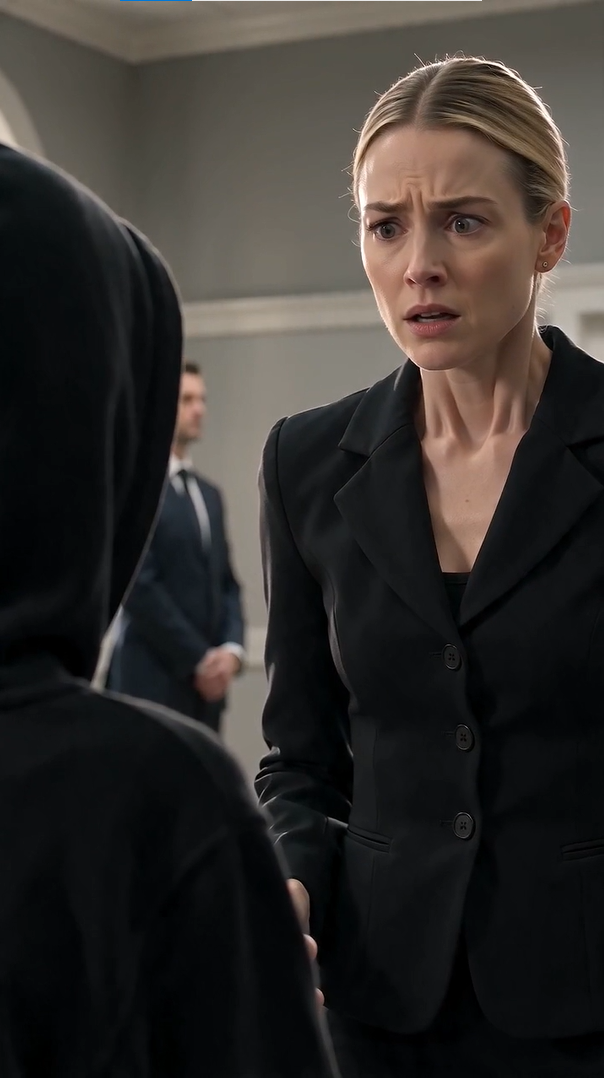
The widow stared at the man in the casket as if grief had suddenly become betrayal. Her fingers shook around her half of the necklace, while the girl stood in front of her, waiting for anger, rejection, or the same silence adults had given her whole life.
Then the widow stepped closer to her.
“Your mother’s name,” she whispered. “Tell me.”
The girl blinked through tears.
“Clara.”
The widow covered her mouth.
Not with disgust.
With recognition.
“She was my sister.”
A low gasp moved through the mourners.
The girl froze.
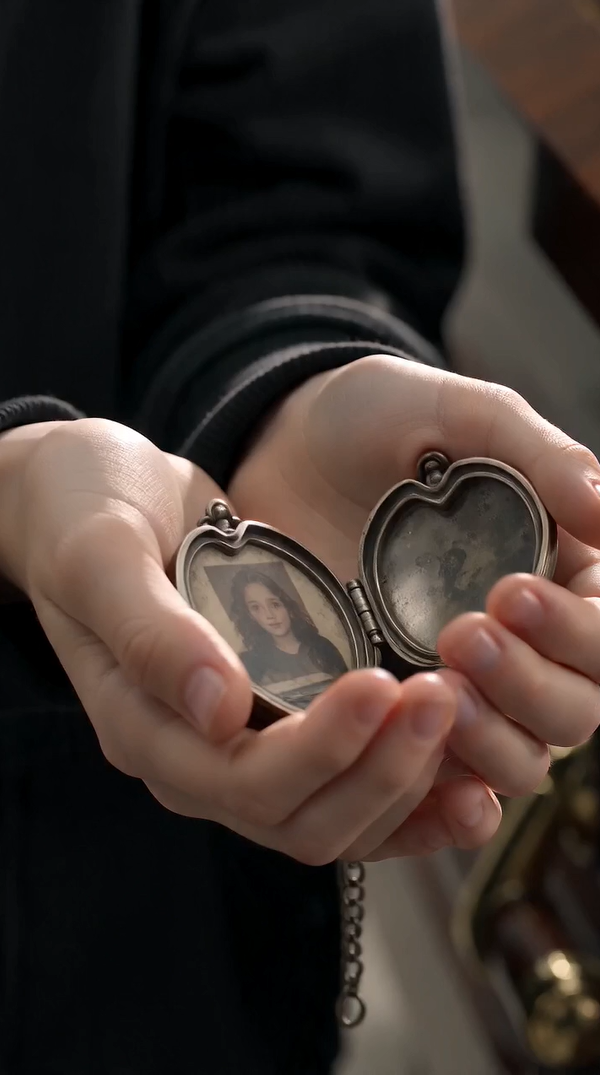
The widow turned the two necklace halves together. When they clicked into one heart, a tiny hidden photo slipped open inside.
Three people were in it.
The dead man.
The widow.
And Clara, smiling between them.
The widow looked at the girl, shattered.
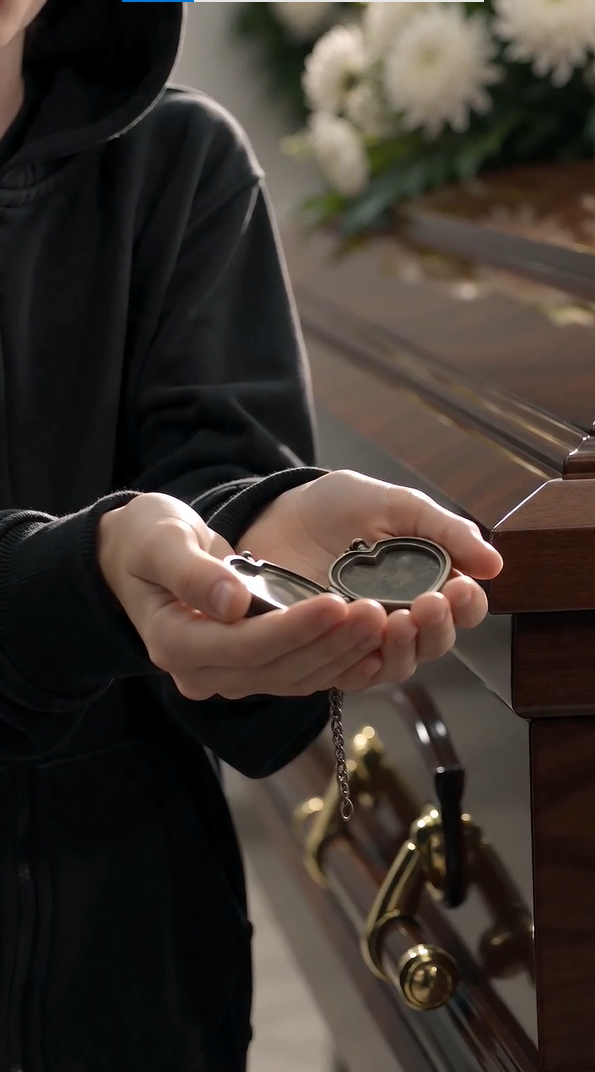
“He wasn’t hiding you from me,” she whispered. “He was hiding you from them.”
Behind the last row of mourners, a man in a dark coat turned and walked quickly toward the exit.
The widow saw him.
Her face changed.
The grief in her eyes sharpened into something cold.
“Stop him,” she said.
No one moved at first.
Everyone was still too shocked, too tangled in whispers and fear.
Then the girl turned and saw the man reaching for the chapel door.
Her whole body went stiff.
“That’s him,” she whispered.
The widow looked down at her.
“What?”
The girl’s voice broke.
“He came to our apartment after Mom died. He took her papers. He said if I ever came looking for my father, I’d disappear too.”
The widow’s breath caught.
The man in the dark coat pushed the door open.
Two older men from the front row stood at once and hurried after him. The funeral director stepped into the aisle. Someone called for security.
The chapel doors swung wide.
Rain and cold air rushed inside.
The man tried to run down the stone steps, but one of the mourners caught his arm. He pulled away, shouting, but then another man blocked him at the bottom.
The widow did not chase him.
She stood beside the casket, holding the necklace in one hand and the girl’s small wrist in the other.
As if she had already lost too much to let go of anything again.
The girl was shaking.
“Is he going to hurt me?” she whispered.
The widow turned to her, and the answer came from somewhere deeper than grief.
“No.”
She searched the widow’s face, used to promises that broke easily.
The widow knelt in front of her, not caring that everyone was watching.
“No one is going to hurt you again.”
The girl’s lips trembled.
“You don’t even know me.”
The widow touched the necklace around her neck with shaking fingers.
“I know enough.”
Outside, the man in the dark coat was dragged back through the chapel doors. His hair was wet from the rain. His face had lost all color.
The moment he saw the necklace joined in the widow’s hand, he stopped fighting.
The widow stood slowly.
“What did you do?” she asked.
The man said nothing.
She stepped closer.
“My husband is lying in that casket. My sister is dead. This child walked into her father’s funeral alone because someone scared her into hiding for years.”
Her voice cracked, but she did not lower it.
“So I’ll ask you again. What did you do?”
The man’s eyes flicked toward the mourners.
Then toward the casket.
Then toward the girl.
“I only followed instructions,” he muttered.
“Whose instructions?”
He swallowed.
The chapel went silent again.
The girl hid slightly behind the widow.
The man in the dark coat looked at the floor.
“His family didn’t want scandal.”
The widow’s face went pale.
The dead man’s older relatives shifted in their seats.
One woman whispered, “This is not the place.”
The widow turned toward her.
“This is exactly the place.”
No one spoke after that.
The man in the dark coat took a breath.
“Clara was pregnant. They told her he was already married, that if she came forward, she’d ruin his life. They paid her to leave the city.”
The widow shook her head slowly.
“No. Clara would have come to me.”
“She tried,” he said.
The words hit her hard.
The widow stepped back.
“What?”
“She came to the house once,” the man admitted. “Years ago. She asked for you. She said she needed help.”
The widow’s face collapsed.
“I was told no one came.”
The man looked away.
“We were told to send her away.”
A sound escaped the widow’s throat.
Small.
Broken.
Almost not human.
The girl stared at her, not understanding all of it, but understanding enough to know her mother had not abandoned anyone.
She had been pushed out.
Silenced.
Made afraid.
The widow gripped the edge of the front pew to keep herself standing.
“My sister came to my door,” she whispered. “And you sent her away?”
The man said nothing.
That silence was worse than a confession.
The widow looked toward the casket.
Her husband’s face was still.
Peaceful.
Too peaceful for the storm he had left behind.
“When did he know?” she asked.
The man hesitated.
The widow turned back sharply.
“When did my husband know he had a daughter?”
The man swallowed.
“Three years ago.”
The girl’s eyes widened.
The widow closed hers for a second.
Three years.
Not a week.
Not a month.
Three years of dinners, anniversaries, hospital visits, quiet mornings, and empty rooms.
Three years of sharing a bed with a man carrying a secret daughter in his heart.
“Why didn’t he tell me?” she whispered.
The man looked at the floor.
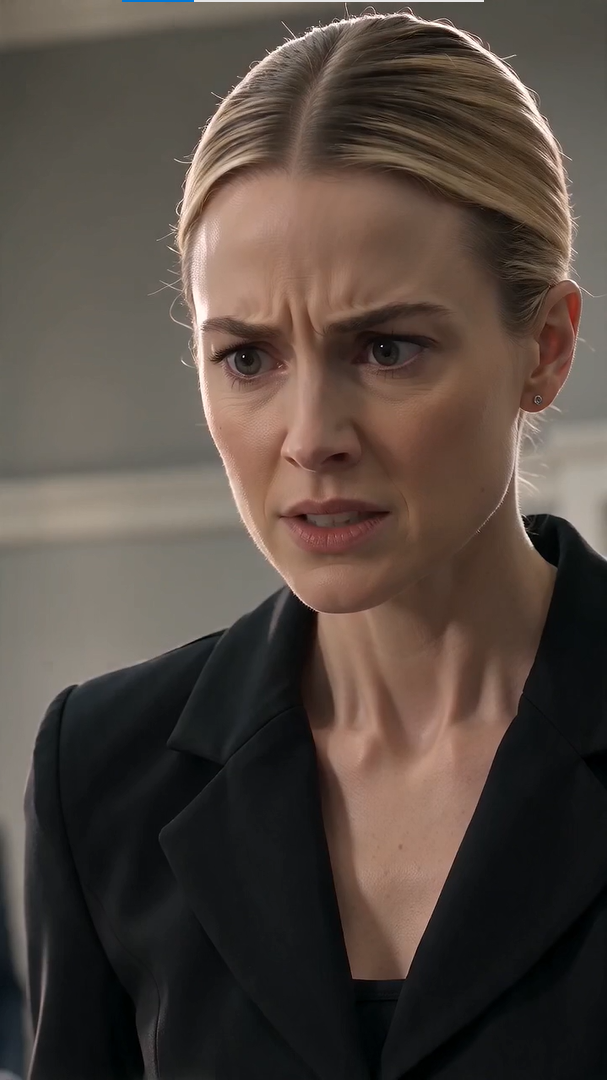
“He was afraid you’d hate him.”
The widow laughed once.
A painful, breathless sound.
“Hate him?”
Tears ran down her face.
“I loved him. I loved my sister. I would have loved this child.”
The girl looked up at her.
Loved.
The word landed on her carefully, like something too delicate to trust.
The man in the dark coat glanced toward the door.
The widow saw it.
“You’re not leaving,” she said. “Not until every lie is uncovered.”
One of the mourners called the police.
The man stopped moving.
The chapel slowly filled with whispers. Some people stared at the dead man with pity. Others stared with anger. A few looked ashamed, because maybe they had known pieces of the story and had chosen comfort over truth.
The widow turned away from all of them.
She knelt before the girl again.
“What is your name?”
She rubbed her sleeve across her face.
“Nora.”
The widow repeated it like a prayer.
“Nora.”
She nodded.
“My mom said if anything ever happened to her, I should find him.”
Her eyes moved to the casket.
“She said he would know what to do.”
The widow’s face softened and broke at the same time.
“Did you ever meet him?”
Nora shook her head.
“Once.”
Her heart stopped.
“He came to the hospital when Mom was sick. He stood outside the room. I didn’t know who he was. Mom saw him through the glass and started crying.”
Nora looked down.
“She told me later he was someone who had loved her once.”
The widow pressed a hand over her chest.
Nora continued, voice trembling.
“He gave her money for medicine. But she didn’t use most of it. She hid it. She said money wasn’t the same as courage.”
The widow closed her eyes.
That sounded like Clara.
Proud.
Wounded.
Still soft, even after life had been cruel to her.
Nora reached into the pocket of her old jacket.
“I brought this too.”
She pulled out a folded piece of paper, worn at the corners from being opened again and again.
“My mom wrote it before she died. She said I should only give it to the woman wearing the other half of the necklace.”
The widow’s hand flew to her mouth.
Nora held it out.
The paper shook between them.
For a moment, the widow could not take it.
She was afraid of what it might say.
Afraid of more truth.
Afraid of hearing her sister’s voice from a piece of paper when she could no longer hold her.
But then she took it.
Slowly.
Carefully.
As if it were something alive.
She unfolded it.
The handwriting was weak, uneven, but it was Clara’s.
Her Clara.
Her little sister who used to steal her lipstick.
Her little sister who laughed too loudly at weddings.
Her little sister who vanished and left behind nothing but questions.
The widow began to read.
Then her knees weakened.
She sat on the front pew, the letter trembling in her hands.
Her voice came out broken.
“To my sister,
If this reaches you, it means I am gone and my girl was brave enough to find you.
Please don’t be angry with her. She has lived her whole life being punished for mistakes she never made.
I wanted to come back.
I came once.
I stood outside your house with Nora in my arms, but they turned me away.
They told me you knew.
They told me you hated me.
I believed them because grief and shame make lies sound true.”
The widow sobbed.
Nora stood very still.
The whole chapel listened.
Even those who had no right to hear it could not look away.
The widow forced herself to continue.
“I loved him once.
I know that may hurt you. I am sorry.
But I never wanted to steal your life. I never wanted to break your home.
When I found out the truth, I left.
Not because I was weak.
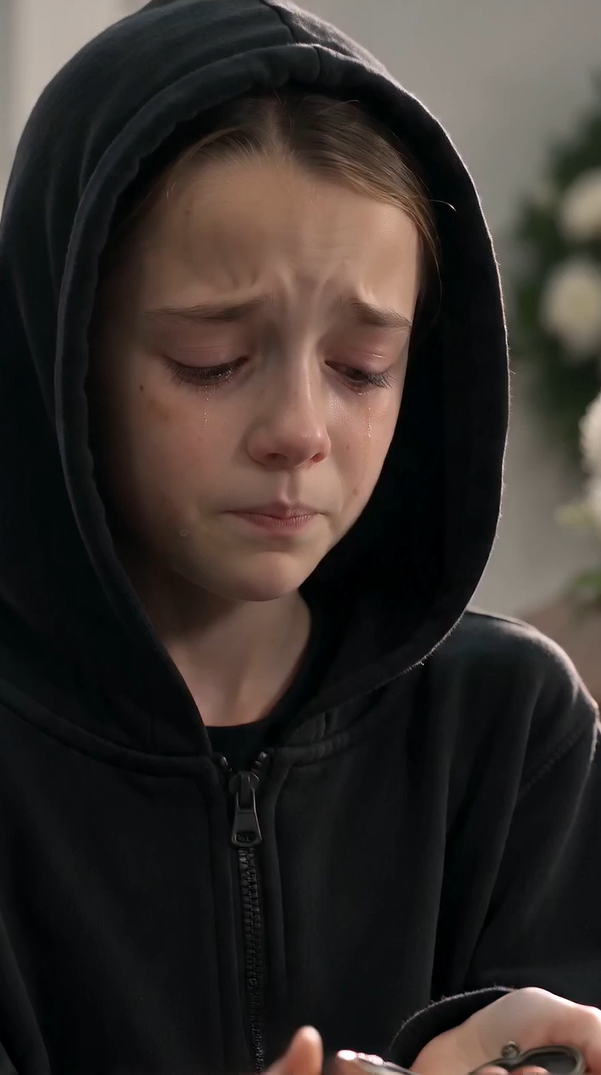
Because I wanted my child to grow up away from people who could smile in public and destroy lives in private.
If she ever asks about her father, tell her this:
He was not brave enough when we needed him most.
But I believe there was still good in him.
And if he has died carrying regret, let that regret become something useful.
Let it become a home for my daughter.”
The widow stopped.
Her voice disappeared.
She looked at the casket.
The dead man could not defend himself.
He could not apologize.
He could not explain why he waited too long.
And that made the pain worse.
Because some mistakes are not fixed by tears at the end.
Some doors close forever while people are still thinking they have time.
Nora looked at the widow.
“What does it say after that?”
The widow wiped her face.
She looked down at the last lines.
Then she read them softer.
“Tell my girl she was loved from the beginning.
Tell her I did not leave her.
Tell her if she ever feels unwanted, she should touch the heart around her neck and remember that she belongs to more than one broken story.
And please, if you can forgive me for being afraid, love her in the place where I no longer can.
Your sister,
Clara.”
The chapel was silent.
Nora’s small face crumpled.
For so long, she had been holding herself together with thin little pieces of courage.
The bus ride to the funeral.
The walk through the rain.
The way people stared at her worn shoes.
The terror of standing in front of a woman who might hate her.
But now her mother’s words had reached her.
She was loved.
She was wanted.
She belonged.
Her knees bent.
The widow caught her before she could fall.
She buried her face into the widow’s shoulder and cried like the child she had never been allowed to be.
The widow wrapped both arms around her.
At first, she held her as her sister’s daughter.
Then, without meaning to, she held her like her own.
Over her shoulder, her eyes moved to the casket.
Her voice came out in a whisper only the dead man could hear.
“You should have told me.”
No answer came.
Only the soft sound of Nora crying into her black dress.
The police arrived quietly.
The man in the dark coat was taken aside. Names were written down. Questions were asked. The dead man’s relatives avoided the widow’s eyes.
One of them, an older woman with pearls at her throat, tried to approach.
“This is a family matter,” she said carefully.
The widow stood with Nora’s hand in hers.
“No,” she replied. “This became a child’s life the moment you all decided your name mattered more than hers.”
The woman looked offended.
“She could be lying.”
The widow lifted the joined necklace.
“She has my sister’s letter. My husband’s photo. The necklace I gave Clara when we were girls.”
Then she looked at Nora.
“And she has her eyes.”
The older woman said nothing.
The widow turned away from her.
That was the first time Nora felt someone choose her in front of others.
Not secretly.
Not quietly.
Not with guilt.
Openly.
Like she was not something to be hidden.
The funeral did not continue the way it had begun.
There were no perfect speeches after that.
No polished memories.
No soft lies about a flawless man.
The priest stood quietly near the casket, waiting.
The widow remained in the front pew with Nora beside her.
Finally, she stood.
Everyone looked at her.
She walked to the front, still holding the letter.
For a long moment, she looked at her husband’s face.
Then she turned to the room.
“I was going to speak today about love,” she said.
Her voice was tired, but clear.
“I was going to say my husband was kind, generous, and honorable.”
She paused.
The words hurt now.
“Some of that was true. Some of it wasn’t.”
The mourners shifted uncomfortably.
The widow did not stop.
“He loved me. I believe that. But love without truth can still wound people. Silence can destroy families just as deeply as cruelty.”
Her eyes moved to Nora.
“This girl walked into this chapel today carrying more courage than most of the adults in this room.”
Nora looked down.
“She came for answers. She came with the only thing her mother left her. And instead of being welcomed by blood, she was almost chased out by shame.”
The widow looked at the casket again.
“My husband cannot repair what he broke.”
Her voice trembled.
“But I can refuse to keep breaking it.”
She stepped away from the casket and walked back to Nora.
Then she held out her hand.
Nora stared at it.
She waited.
Slowly, Nora placed her small hand in hers.
The widow looked at everyone.
“This is Nora. Clara’s daughter. My niece. And from today, she will not stand outside this family again.”
Nora’s lips parted.
The word niece seemed to shake something inside her.
A place.
A title.
A belonging.
She squeezed the widow’s hand hard.
The burial happened under a gray sky.
Rain fell softly over black umbrellas.
Nora stood beside the widow at the grave.
She did not know where she was supposed to stand.
Child of the dead man?
Niece of the widow?
Daughter of Clara?
Proof of betrayal?
Proof of love?
The widow seemed to feel her confusion.
She pulled her closer under her umbrella.
“You stand with me,” she whispered.
So she did.
When the casket was lowered, Nora looked down with a face too still for a child.
The widow watched her.
“Do you want to say something to him?”
Nora shook her head.
Then after a moment, she whispered, “I don’t know what to say.”
“That’s okay.”
She stared at the wet ground.
“I’m angry.”
“You’re allowed.”
“I wanted him to be good.”
The widow’s eyes filled.
“So did I.”
Nora looked up at her.
“Did he love me?”
The question was small.
But it opened the sky.
The widow wanted to say yes.
She wanted to give her something easy.
Something warm.
Something that would let her sleep that night.
But Clara’s letter sat in her coat pocket like a warning against pretty lies.
So she bent down and answered carefully.
“I think he loved you in a weak way.”
Nora frowned.
“What does that mean?”
“It means he felt something. Maybe regret. Maybe care. Maybe love. But he didn’t do what love should do.”
Nora looked back at the grave.
“Then I don’t want that kind.”
The widow touched her shoulder.
“You deserve the kind that shows up.”
Her eyes filled again.
“Will you?”
She did not hesitate.
“Yes.”
Nora searched her face.
“Even after today?”
“Especially after today.”
For the first time, she leaned into her without fear.
After the burial, the widow took Nora back to her house.
Not the grand family house with cold rooms and polished floors.
Her own small house.
The one where she had lived with her husband before money and status had pulled them into bigger rooms and quieter dinners.
Nora stood at the doorway, wet shoes on the mat, clutching the necklace.
“You don’t have to let me stay,” she said.
The widow’s heart broke again.
Who had taught her to make herself easy to reject?
She knelt and began untying her soaked shoelaces.
“This house has a guest room,” she said.
Nora looked around.
“For tonight?”
She paused.
Then looked up at her.
“For as long as you need.”
Nora did not answer.
Her eyes moved to the walls.
There were pictures everywhere.
The widow and her husband on their wedding day.
Clara and the widow as girls.
Clara laughing at a picnic.
Clara holding a birthday cake, frosting on her nose.
Nora walked slowly toward one frame.
Her fingers lifted but did not touch it.
“My mom looked happy there.”
“She was,” the widow whispered.
“She didn’t have many pictures.”
“I have boxes of them.”
She turned quickly.
“Can I see?”
The widow smiled through tears.
“Yes. All of them.”
That evening, they sat on the living room floor surrounded by old photo albums.
Nora barely spoke.
She just looked.
At her mother as a child.
Her mother as a teenager.
Her mother dancing barefoot in the kitchen.
Her mother with the widow, both wearing the matching heart necklace before it had been split in two.
The widow told her stories.
Small ones.
Human ones.
How Clara hated peas.
How she used to sing badly on purpose.
How she once cut her own bangs and cried for three days.
Nora laughed once.
It was small and surprised, like the sound had escaped her by accident.
The widow looked at her.
That laugh belonged in this house.
That laugh should have been here years ago.
Later, when Nora fell asleep on the sofa with the necklace still in her hand, the widow went into the kitchen and called her lawyer.
Her voice did not shake anymore.
“I want my husband’s will reviewed.”
She listened.
“No, not next week. Now.”
Another pause.
“There is a child. His daughter.”
She looked into the living room at Nora’s sleeping face.
“And I want every person who helped hide her held accountable.”
The next weeks were not easy.
Truth never enters a family politely.
It breaks plates.
It opens locked drawers.
It pulls names out of corners where people thought they were safe.
The man in the dark coat talked.
Then others did too.
The widow learned that letters had been intercepted.
Calls had been blocked.
Money had been sent, but always with threats tied around it.
Clara had tried more than once to reach her sister.
Every time, someone had stopped her.
Every discovery reopened the wound.
Some nights, the widow sat at the kitchen table with Clara’s letter and cried until morning.
Other nights, Nora woke from nightmares and stood silently in her doorway, too afraid to ask for comfort.
The first time it happened, she saw her standing there in the dark.
Small.
Barefoot.
Holding the necklace.
She lifted the blanket.
Nora ran to her.
No words.
Just a child finally learning that doors could open when she was afraid.
One afternoon, the lawyer came with documents.
Nora sat at the table, swinging her legs nervously.
The widow placed a cup of hot chocolate in front of her.
The lawyer cleared his throat.
“There is enough evidence to establish paternity. There may be a long process, but the estate cannot ignore her.”
Nora looked confused.
“What does that mean?”
The widow took her hand.
“It means your father should have taken care of you. Since he didn’t, what he left behind will help do that now.”
Nora looked down.
“I don’t want his money.”
“I know.”
“I wanted him.”
The widow closed her eyes.
The lawyer looked away.
No amount of money could answer that.
No court document could replace a father who had waited until death to be found.
The widow squeezed Nora’s hand.
“Then we won’t pretend money is love.”
She looked at her.
“But we’ll use it to give you what love should have protected. A safe home. School. Doctors. A future.”
Nora swallowed.
“And Mom?”
The widow’s lips trembled.
“We’ll make sure people know her name too.”
So they did.
The widow took Nora to Clara’s grave.
It was small.
Too simple.
A name carved into stone, almost hidden under weeds.
Nora knelt and cleaned it with her sleeve.
The widow knelt beside her and began pulling weeds with her bare hands.
“I should have been here,” she whispered.
Nora looked at her.
“You didn’t know.”
“I should have known.”
She thought about that.
Then she said softly, “Mom said some people are kept apart by lies, not by love.”
The widow turned to her, stunned.
Nora kept cleaning the stone.
“She told me that when I asked why I didn’t have aunties.”
The widow began to cry.
Nora reached out and touched her hand.
It was the first time she comforted her.
Not because she had to.
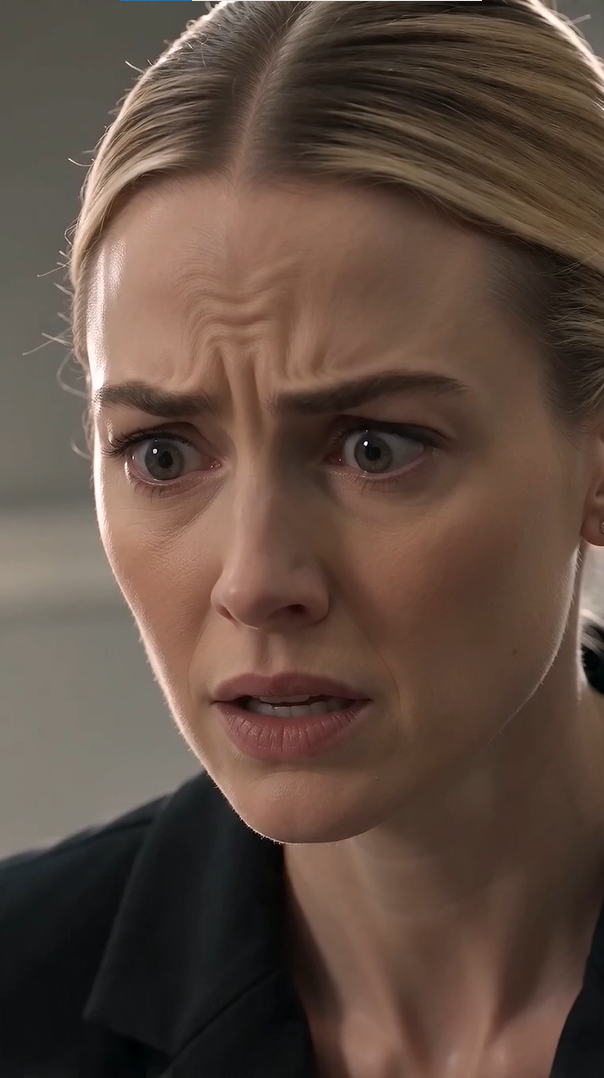
Because she wanted to.
Together, they placed fresh white flowers at Clara’s grave.
The widow brought one of the old photos and tucked a copy into a small frame beside the stone.
Clara smiling.
Clara alive.
Clara remembered.
The widow stood with Nora under the trees and made a promise out loud.
“I will not let them turn you into a secret again.”
Nora looked at her mother’s name.
Then she whispered, “I found her family, Mom.”
The wind moved softly through the branches.
For Nora, it felt like an answer.
Months passed.
The widow turned one of the rooms in her house into Nora’s room.
At first, she kept all her things in a backpack.
Even after the widow bought her drawers.
Even after she hung her clothes in the closet.
Even after she told her every day, “You live here.”
She still packed the bag every night.
The widow noticed but did not force her.
She only came to her doorway each evening and said, “Good night, Nora. See you in the morning.”
The words were simple.
But they mattered.
See you in the morning meant she expected her to still be there.
It meant no one was sending her away in the night.
It meant tomorrow had a place for her.
One night, many weeks later, she passed Nora’s room and saw the backpack empty on the floor.
Her clothes were in the drawer.
Her shoes were by the bed.
The necklace lay on her nightstand.
And Nora was asleep under the blue blanket she had bought her, one hand resting on the pillow like she had finally stopped holding on for survival.
The widow stood there, crying silently.
Not from pain this time.
From relief.
The house changed too.
It had been quiet for years, full of memories and polite sadness.
Now there were schoolbooks on the table.
Muddy shoes near the door.
Half-eaten toast on plates.
Nora’s drawings on the fridge.
Some days, grief still came.
It came when the widow saw her husband’s old coat.
It came when Nora asked questions no child should have to ask.
It came when they passed the chapel where everything had broken open.
But grief was no longer the only thing in the house.
There was laughter now.
There was homework.
There were burnt pancakes.
There were stories about Clara told so often that Nora began to remember her with more than sorrow.
On Nora’s first birthday after coming home, the widow baked Clara’s favorite cake.
It leaned badly to one side.
The frosting was too sweet.
Nora looked at the candles and then at her.
“I never had a real birthday party before.”
The widow almost dropped the knife.
She forced herself to smile.
“Then we start today.”
There were no grand decorations.
No crowd.
Just the widow, Nora, a few kind neighbors, and photographs of Clara placed near the window.
When Nora blew out the candles, the widow asked, “Did you make a wish?”
She nodded.
“What was it?”
She hesitated.
Then she said, “I wished Mom could see me.”
The widow looked toward Clara’s picture.
Her voice softened.
“I think she can.”
Nora smiled a little.
Then she cut the first slice and placed it in front of Clara’s photo.
No one laughed.
No one called it childish.
The widow simply touched her shoulder and let her love her mother in the way she needed.
A year later, the case was settled.
The family name that had once been protected by lies was dragged into court records, documents, and statements.
The widow did not enjoy it.
She did not want revenge more than peace.
But peace built on silence would only bury Clara twice.
So she told the truth.
Nora’s truth.
Clara’s truth.
Her own truth.
The estate was forced to recognize her.
The men who had threatened Clara lost their positions.
The man in the dark coat signed a statement admitting what had been done.
But the most important moment did not happen in court.
It happened one quiet afternoon at the cemetery.
The widow and Nora stood between two graves.
Clara’s grave, now clean and covered in flowers.
And the grave of the man who had been both husband and father, beloved and guilty, mourned and questioned.
Nora held the joined heart necklace in her palm.
“I don’t hate him today,” she said.
The widow looked at her.
“You don’t have to decide forever.”
She nodded.
“I still get angry.”
“So do I.”
“But if he hadn’t kept the other half of the necklace, I wouldn’t have found you.”
The widow’s eyes filled.
Nora stepped closer to the dead man’s grave.
“I wanted you to be brave when Mom was alive,” she said quietly. “You weren’t.”
The widow held her breath.
Nora continued.
“But I’m here now. And she’s not alone anymore. And neither am I.”
She placed a small white flower on the grave.
Then she stepped back and took the widow’s hand.
For the first time, the widow felt something inside her loosen.
Not forgiveness.
Not fully.
Maybe not ever.
But a kind of release.
The dead could keep their regrets.
The living still had to choose what came next.
Years later, people still talked about the funeral.
They remembered the poor girl who walked into a chapel with half a necklace.
They remembered the widow who discovered her husband’s secret beside his casket.
They remembered the man in the dark coat trying to run before the truth reached the door.
But Nora remembered something else.
She remembered a woman in black kneeling in front of her when everyone else stared.
She remembered her saying no one would hurt her again.
She remembered the first night she slept without packing her backpack.
She remembered learning that family was not always clean or simple, but sometimes it could still be repaired with truth, courage, and someone willing to stay.
And the widow remembered too.
She remembered the moment the necklace clicked into one heart.
The moment betrayal turned into blood.
The moment her dead sister’s child became her living promise.
In the living room of their home, Clara’s photo sat on the mantel.
Beside it was the tiny hidden photo from the necklace, now framed.
Three smiling faces from the past.
And next to it, a newer picture.
The widow and Nora standing together under a bright summer sky.
No secrets.
No hiding.
No shame.
Just a girl who had finally found her place.
And a woman who thought she had buried her whole family, only to discover that love had left one child behind, waiting to be brought home.