The woman’s breath stopped.
The teacher stared at the bracelet, then turned slowly toward the little girl beside the gate. The child was still standing there, confused, clutching her backpack strap, unaware that the whole world had just shifted under her feet.
“Switched at what?” the teacher asked softly.
The poor boy looked like he wanted to run. Instead, he tightened his fingers around the bracelet and forced the words out.
“At birth.”
Silence dropped over the courtyard.
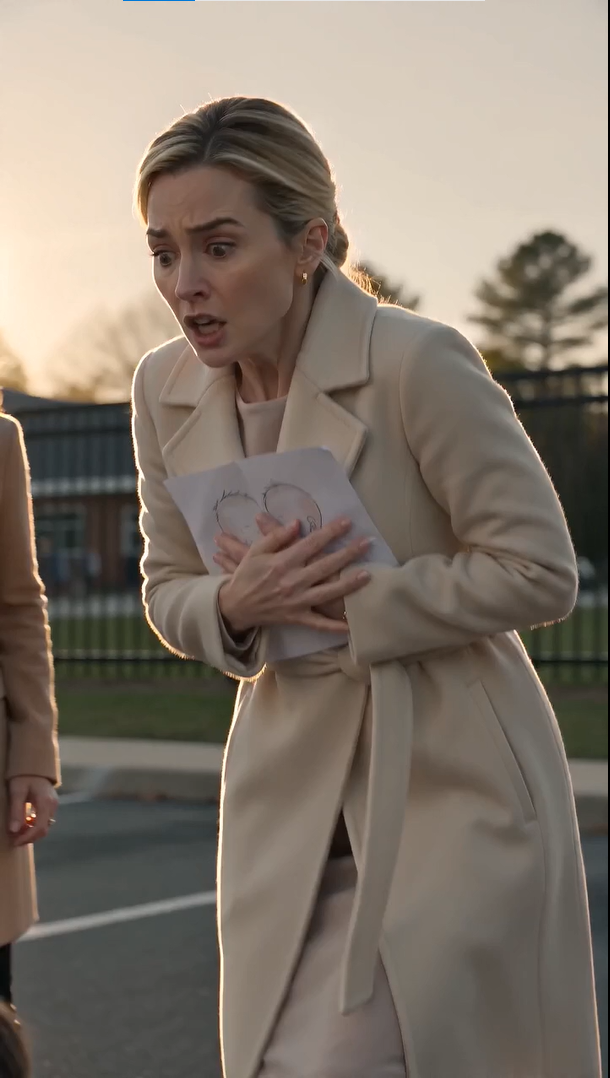
The elegant woman covered her mouth with one hand. Her eyes moved from the bracelet to the drawing, then to the boy’s face. She looked at him harder now—really looked.
His eyes.
His smile, even through fear.
Something in him felt terrifyingly familiar.
The little girl behind her whispered, “Mom… what is he saying?”
The woman didn’t answer.
The teacher crouched down in front of the boy. “Who told you this?”
He blinked fast, trying not to cry. “My mom.”
“Where is she now?”
His lower lip shook. “At the hospital. She’s very sick.” He looked at the woman in the cream coat again. “She said I had to find you before it was too late.”
The elegant woman’s face collapsed.
“She kept this,” the boy said, lifting the bracelet. “And she told me the other baby went home with the wrong mother.”
The little girl at the gate stepped closer now, staring at him like she was seeing him for the first time.
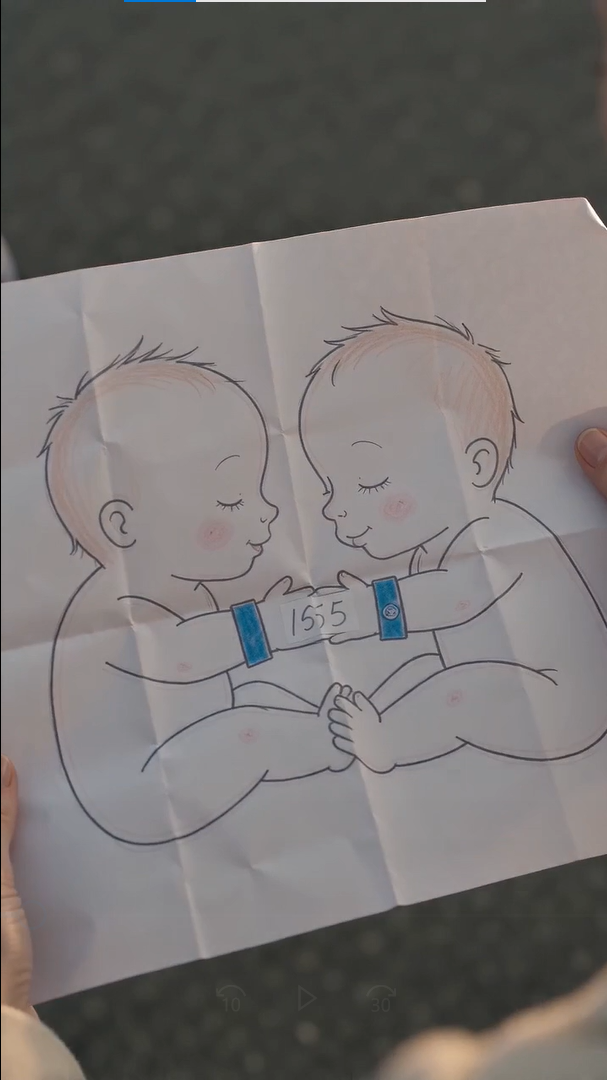
The teacher unfolded the drawing fully. On the back, written in a trembling adult hand, was a short note.
I couldn’t die with this lie. Forgive me.
The woman let out a broken sound and sank to her knees right there on the pavement.
“No…” she whispered. “No…”
The little girl beside her started crying without even understanding why. “Mom?”
But the woman was looking only at the boy now.
All the coldness was gone.
All the distance was gone.
Just shock. Guilt. And something deeper than either.
She reached for him with trembling hands. “How long have you known?”
He shook his head. “I didn’t. She only told me this morning.”
A tear slid down her cheek.
Then the boy said the one thing that shattered what was left of her.
“She said… I had your eyes.”
The woman broke completely.
She pulled him into her arms so suddenly he froze in surprise. Then, slowly, he clung back.
Behind them, the teacher wiped tears from her own face. The little girl stood beside them, crying too, looking lost and terrified.
The woman lifted her head, one arm still around the boy, and reached for the little girl with her other hand.
And there, in the middle of the school courtyard, under the soft afternoon sun, all three of them stood trembling together—like a family that had been broken before it ever had a chance to begin.
For a few seconds, nobody spoke.
The school bell rang in the distance, but even that sound seemed far away, like it belonged to another world where children still ran laughing through hallways and mothers still knew which child was theirs.
The boy’s hands were stiff at his sides.
He wanted to hug her back, but he was afraid.
Afraid of hurting the woman who had raised him.
Afraid of losing the only mother he had ever known.
Afraid that if this rich woman held him too tightly, his whole life would disappear.
The elegant woman seemed to feel it. She loosened her arms, but she didn’t let go completely.
“What’s your name?” she whispered.
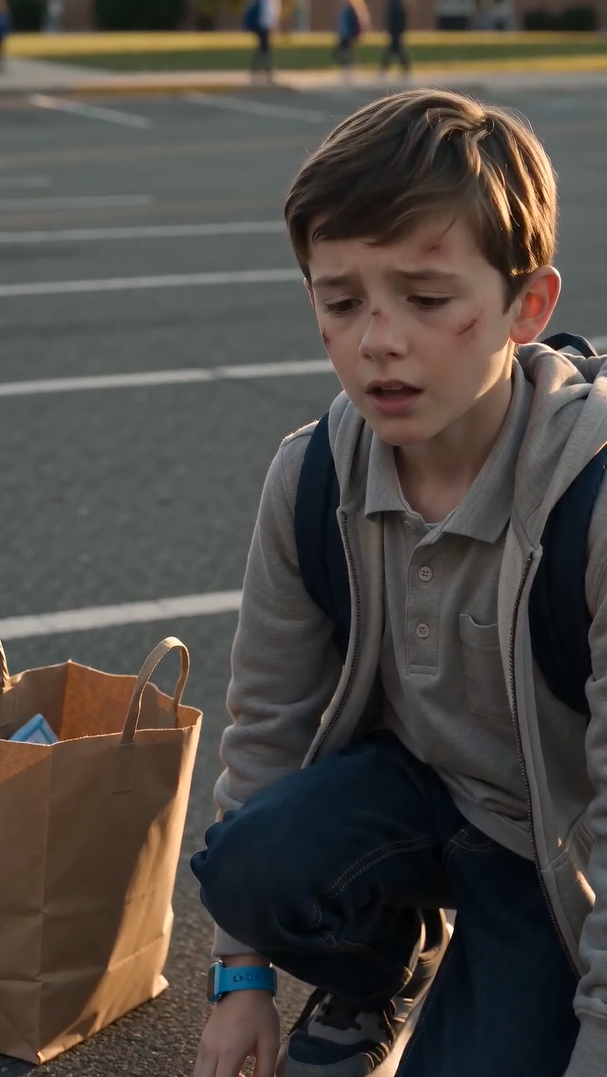
The boy swallowed.
“Ethan.”
Her face twisted as if even his name hurt.
“Ethan,” she repeated softly.
The little girl wiped her cheeks with her sleeve. “Mom… am I not your daughter?”
The question cut through the woman like a knife.
She turned immediately and pulled the girl close too.
“No,” she cried. “No, sweetheart, don’t say that. You are my daughter. You will always be my daughter.”
“But he said…” the girl sobbed.
“I know.” The woman held her tighter. “I know what he said. But love doesn’t disappear because a secret comes out.”
Ethan looked down at the bracelet in his hand.
The teacher gently touched his shoulder.
“Ethan,” she asked carefully, “what hospital is your mother in?”
He named it.
The woman stood so quickly she almost lost her balance.
“We’re going there.”
The teacher looked worried. “Maybe we should call someone first. The school, your family, the police—”
“No,” the woman said, then stopped herself and took a breath. “Yes. Call whoever needs to be called. But I am not waiting another minute.”
She looked at Ethan.
“Will you take me to her?”
Ethan’s eyes filled again.
“She said you might hate her.”
The woman closed her eyes.
For one moment, anger did pass across her face.
Ten years.
Ten birthdays.
Ten first days of school.
Ten years of raising a child while her own blood was growing up somewhere else with worn shoes and hunger hidden behind brave eyes.
But then she looked at Ethan’s trembling mouth and knew the anger could not land on him.
“Take me to her,” she whispered. “Please.”
The little girl held her mother’s hand tighter.
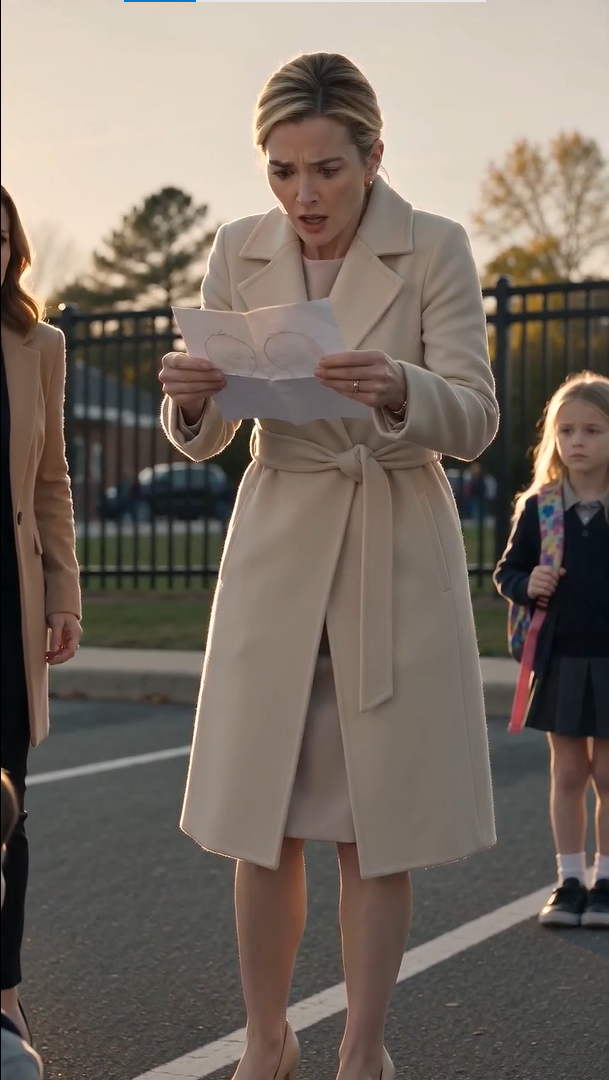
“Can I come?”
The woman looked down at her.
There was fear in the child’s eyes. Fear of being left behind. Fear of being replaced before she even understood what had happened.
The woman knelt again and cupped her face.
“Mia,” she said softly, “listen to me. Nothing is changing about how much I love you.”
Mia shook her head, crying harder.
“Then why are you looking at him like that?”
The woman froze.
Ethan looked away.
The truth was cruel because children could feel it before adults could explain it.
The woman pulled Mia against her chest.
“Because I think he was taken from me,” she whispered. “But that does not mean you are being taken away.”
Mia cried into her coat.
Ethan stood a few feet away, holding the bracelet like proof of a crime he never asked to carry.
The teacher looked at all three of them and quietly called the principal.
Within minutes, the courtyard filled with whispers.
Parents slowed down near the gate.
Children stared from classroom windows.
But the woman didn’t care.
She held Mia’s hand in one hand and reached for Ethan with the other.
Ethan hesitated.
Then, slowly, he placed his small, rough hand in hers.
Her fingers closed around it.
And the moment they touched, she cried again.
Because it felt impossible.
It felt like finding a missing heartbeat.
The drive to the hospital was silent.
Ethan sat in the back seat, pressed against the door, his backpack on his lap.
Mia sat on the other side, staring at him.
They were both ten.
Both born on the same day.
Both carrying a life that should have belonged to the other.
Mia looked at Ethan’s shoes. One lace was missing. The sole was peeling near the front.
Ethan noticed and tucked his feet under the seat.
Mia looked away quickly, ashamed for staring.
After a few minutes, she whispered, “Did you know my name before today?”
Ethan shook his head.
“No.”
“Did your mom know?”
He looked down.
“I don’t know. Maybe.”
Mia’s lips trembled.
“My birthday is in March.”
“Mine too,” he said quietly.
“What day?”
“The twelfth.”
Mia stopped breathing.
The woman gripped the steering wheel tighter.
Mia whispered, “Mine too.”
Ethan looked at her then.
For the first time, neither of them looked like strangers.
They looked like two children standing on opposite sides of the same broken mirror.
At the hospital, Ethan jumped out before the car fully stopped.
The woman followed with Mia, her heels clicking against the floor as they rushed through the crowded hallway.
Ethan knew exactly where to go.
Past the nurses’ desk.
Past the old man coughing in a wheelchair.
Past the room with peeling paint and a half-broken curtain.
He stopped outside a small ward and suddenly couldn’t move.
His whole body began to shake.
The woman came beside him.
“Ethan?”
He stared at the door.
“She told me to hurry,” he whispered. “What if I’m late?”
The woman’s face softened.
She reached for his shoulder, then stopped, afraid of scaring him.
“You’re not alone,” she said.
Ethan looked up at her.
Then he pushed the door open.
A thin woman lay on the bed near the window.
Her face was pale. Her lips were dry. Her hair, once probably dark and thick, was tied back loosely, with silver at the temples.
But when she saw Ethan, her eyes lit up.
“My boy,” she whispered.
Ethan ran to her.
“Mom.”
He pressed his face against her arm, trying not to cry, but failing.
The sick woman lifted a weak hand and stroked his hair.
Then her eyes moved past him.
To the elegant woman in the cream coat.
To Mia holding her hand.
Everything in the room stopped.
The sick woman began to cry.
“You came,” she whispered.
The elegant woman stood frozen near the door.
For years, she had imagined many terrible things.
An accident.
A mistake.
A hospital error.
A cruel system.
But standing here, looking at the woman in the bed, she felt something worse.
This woman knew.
This woman had carried the truth.
And yet Ethan called her Mom with his whole heart.
The elegant woman’s voice came out cold and broken.
“Why?”
The sick woman closed her eyes.
“I deserve that.”
“Why?” the woman repeated, louder now. “Why did you do this?”
Mia flinched.
Ethan lifted his head.
“Please don’t shout at her,” he said.
The elegant woman looked at him, and the anger cracked under his fear.
The sick woman looked at Ethan.
“It’s okay,” she whispered. “She has the right.”
“No,” Ethan said, crying now. “You’re sick.”
“And I am guilty.”
The room went silent.
Mia stared at the woman in the bed.
The sick woman’s eyes filled as she looked at her.
“My baby,” she whispered.
Mia stepped back instantly, pressing against the elegant woman.
The sick woman covered her mouth and sobbed.
“I’m sorry,” she cried. “I’m so sorry.”
The elegant woman held Mia close.
“Tell me everything,” she said.
The sick woman nodded weakly.
Her voice shook as she began.
“That night, there was a storm. The power went out twice. The nurses were running from room to room. I had given birth alone. No husband. No family. No money. I heard your baby crying in the next cot.”
The elegant woman’s face went pale.
“You were in the same ward?”
The sick woman nodded.
“For a few hours. Before they moved you to a private room.”
She looked at Mia and cried harder.
“My daughter had trouble breathing. They said she needed treatment I could never afford. I thought she would die with me in poverty.”
The elegant woman’s jaw tightened.
“So you took my son.”
The sick woman closed her eyes.
“Yes.”
Ethan froze.
Mia stopped crying.
The word sat in the room like poison.
Yes.
The sick woman looked at Ethan, and her face broke completely.
“I switched the bracelets.”
Ethan slowly stepped away from the bed.
“Mom?”
She reached for him.
“Ethan—”
“You switched me?”
Her lips trembled.
“I was desperate.”
“You took me?”
“I loved you,” she cried. “I swear I loved you from the first day. I fed you, held you, sang to you, worked until my hands bled for you. I know that doesn’t erase what I did, but I never treated you like someone else’s child. Never.”
Ethan’s eyes filled with a pain too big for his age.
“But I was someone else’s child.”
The sick woman sobbed.
“Yes.”
The elegant woman covered her mouth, tears spilling down her face.
Mia stared at the sick woman like she was both a stranger and a wound.
“So I was yours?” she whispered.
The sick woman looked at her.
“Yes.”
Mia shook her head.
“But my mom is my mom.”
“I know,” the sick woman cried. “I know. And I am grateful she loved you. I watched from far away sometimes. I saw you in clean dresses, with ribbons in your hair. I told myself I had saved you.”
The elegant woman’s voice trembled with rage.
“You watched?”
The sick woman nodded, ashamed.
“Only from far. I never came close. I never wanted to disturb her life.”
“Her life?” the elegant woman said. “You disturbed every life in this room.”
The sick woman lowered her head.
“I know.”
Ethan looked between them, breathing fast.
“So my whole life was a lie?”
“No,” the sick woman said quickly. “My love was not a lie.”
“But my name? My birthday? My family?”
She cried silently.
Ethan backed away until he hit the wall.
The elegant woman moved toward him instinctively.
But he held up one hand.
“Don’t.”
She stopped.
That one word hurt her, but she obeyed.
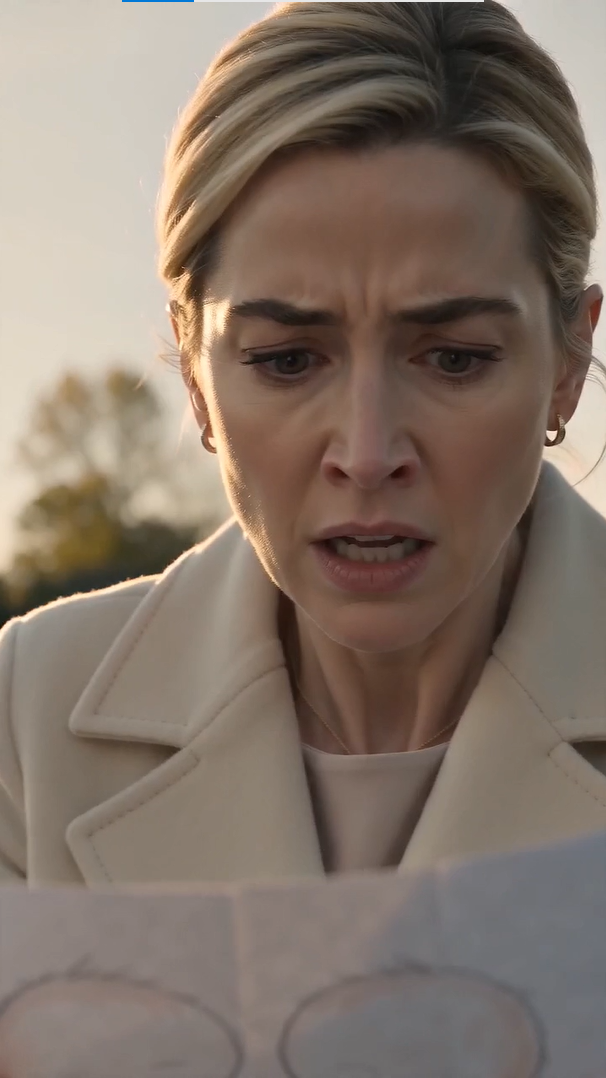
Because this was not about what she needed.
It was about a boy whose world had just been stolen for the second time in one day.
The sick woman reached under her pillow with shaking hands and pulled out an old envelope.
“I kept everything,” she whispered. “The hospital tags. The discharge paper. The bracelet. A copy of your name from the ward chart.”
She handed it toward the elegant woman.
“I was a coward for ten years. I told myself I would confess when they were older. Then I told myself it was too late. Then I got sick.”
She looked at Ethan.
“And when the doctor said I might not have much time, I couldn’t leave you with a lie.”
Ethan wiped his face angrily.
“You waited until you were dying?”
The sick woman cried harder.
“Yes.”
The honesty was cruel.
But it was the only thing she had left to give.
The elegant woman opened the envelope with trembling hands.
Inside were old records.
Names.
Times.
Birth weights.
Two bracelets.
One pink.
One blue.
Her son’s birthmark noted on the paper.
A tiny mark near the left eyebrow.
She looked at Ethan.
There it was.
The same mark.
The mark she had seen in dreams without knowing why.
She sank into the chair.
Mia stood beside her, silent now.
The sick woman looked at the elegant woman.
“His name at birth was Daniel,” she whispered. “You named him Daniel.”
The elegant woman made a sound like her heart had been crushed.
Daniel.
She remembered holding a newborn for only a few minutes before the nurses took him for checking.
She remembered whispering that name against his tiny forehead.
Daniel.
Then, hours later, a baby girl had been placed in her arms.
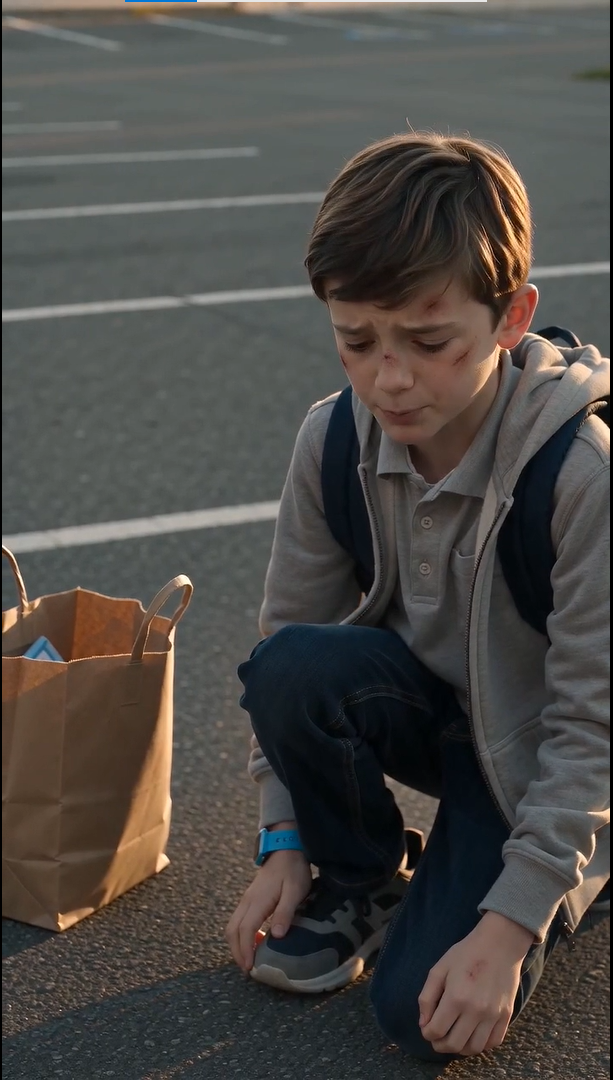
She had been exhausted, medicated, grieving a marriage that was already falling apart, and the nurse had said, “Your baby is here.”
And she had loved that baby.
She had loved Mia with everything in her.
But somewhere in her body, in some silent place, she had always felt a missing echo.
Now it had a name.
Daniel.
Ethan stared at her.
“That was my name?”
She nodded, tears flowing.
“Yes.”
He looked down.
“My mom named me Ethan.”
The sick woman whispered, “Because it means strong.”
Ethan’s face crumpled.
“I don’t feel strong.”
No one knew what to say.
Then Mia slowly walked toward the hospital bed.
The elegant woman reached for her, afraid, but Mia gently pulled away.
She stopped beside the sick woman.
The sick woman looked up at her as if looking directly at forgiveness she did not deserve.
Mia’s voice was small.
“Did you ever hold me?”
The sick woman nodded, crying.
“For one night.”
Mia’s lips trembled.
“Did I cry?”
The sick woman smiled through tears.
“All night.”
Mia wiped her face.
“My mom says I still cried a lot as a baby.”
The elegant woman laughed once through her tears, broken and soft.
“You did.”
For the first time, the two mothers looked at each other not as enemies, but as women standing over the same impossible pain.
The sick woman whispered, “Thank you for loving her.”
The elegant woman’s face hardened again, but not completely.
“You don’t get to thank me for raising the child you stole from me.”
The sick woman lowered her eyes.
“You’re right.”
“But I did love her,” the elegant woman said, pulling Mia gently against her. “I love her more than my own life.”
The sick woman nodded.
“I know.”
“And he?” the elegant woman looked at Ethan. “Did he suffer?”
The sick woman closed her eyes.
“Yes.”
Ethan looked away.
She continued through tears.
“I worked as a cleaner. A seamstress. Anything. Sometimes there wasn’t enough food. Sometimes he told me he wasn’t hungry so I would eat. Sometimes I sent him to school with torn shoes and prayed no one noticed.”
The elegant woman pressed her hand to her mouth.
Ethan whispered, “Mom, stop.”
“No,” the sick woman said. “She should know. She should know what my sin cost him.”
The elegant woman looked at Ethan.
At his thin wrists.
At his careful posture.
At the way he stood like a child who had learned never to ask for too much.
Her heart broke in a new place.
She wanted to pull him close again.
She wanted to take him home, feed him, dress him, show him his room, give him every birthday he had missed.
But he was looking at the sick woman like she had betrayed him and raised him at the same time.
And that was a pain no expensive home could fix.
A doctor entered quietly, followed by a nurse and two officers the teacher had called.
The room filled with questions.
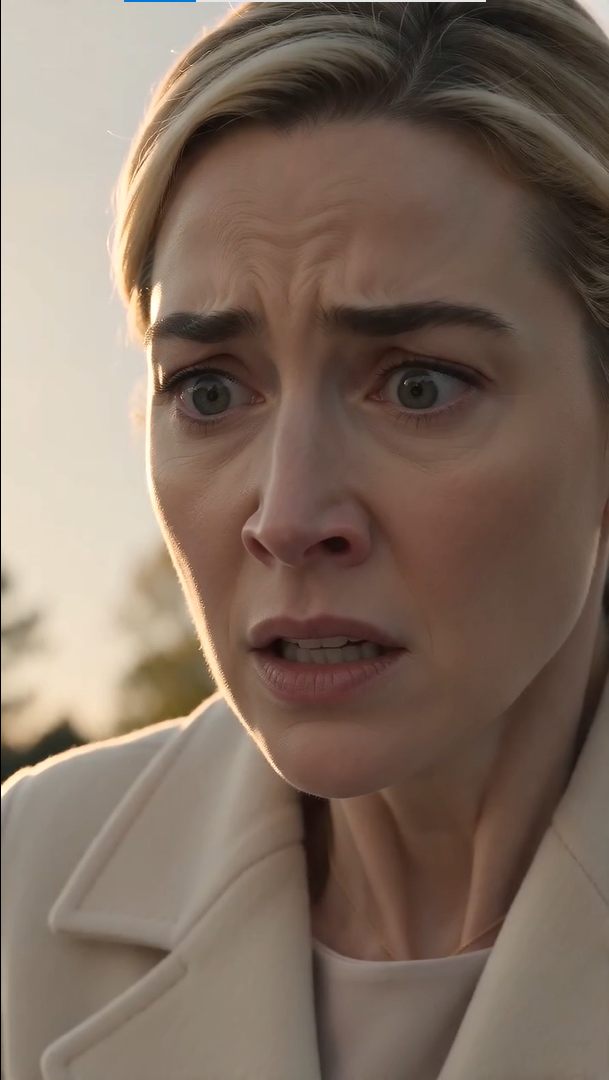
Records were taken.
Statements were made.
The hospital administration was contacted.
A social worker arrived.
But through it all, Ethan sat in the corner with his knees pulled to his chest.
Mia sat on her mother’s lap.
The sick woman lay in bed, weaker after the confession, but strangely calmer.
The truth had not saved her.
But it had freed the children from her silence.
That evening, the elegant woman stood outside the room while the officers spoke inside.
The teacher had stayed too, refusing to leave the children alone in the chaos.
Mia leaned against her mother.
“Are they going to take me away?” she asked.
The woman turned, horrified.
“No.”
“Are they going to make me live with her?”
The woman knelt.
“No one is taking you from me tonight. Do you hear me?”
Mia cried. “But she’s my real mother.”
The woman’s eyes filled.
“I don’t know what the world will call her. But I know what you call me.”
“Mom,” Mia whispered.
The woman kissed her forehead.
“And I will fight for that.”
Mia looked toward the hospital room.
“What about Ethan?”
The woman looked through the glass.
Ethan was sitting beside the sick woman again now, not touching her, but close enough that she could see him.
“I will fight for him too,” she whispered.
Mia looked up.
“Will he live with us?”
“I don’t know yet.”
“Will you love him more?”
The woman’s tears fell.
She held Mia’s face in both hands.
“Love is not a chair, Mia. Someone else sitting down does not mean you lose your place.”
Mia sniffled.
“But what if he wants his place back?”
The woman looked at Ethan.
Then at Mia.
“Then we make the table bigger.”
That night, the sick woman asked to speak to Ethan alone.
He refused at first.
Then he entered the room and stood near the foot of the bed.
“I’m angry,” he said.
She nodded.
“You should be.”
“I don’t know if I love you right now.”
Her face broke, but she nodded again.
“That’s okay.”
“I don’t know who I am.”
She reached for him, then stopped.
“You are Ethan. And Daniel. And you are the boy who gave me a reason to live longer than I deserved.”
He cried then, quietly.
“Why wasn’t I enough for the truth?”
The sick woman closed her eyes.
That question destroyed her.
“You were,” she whispered. “I wasn’t brave enough.”
He looked at her.
“I loved you.”
“I know.”
“I still love you.”
She sobbed.
“I know, my son.”
“But I hate what you did.”
“I know.”
Ethan slowly walked to her side.
She did not reach for him.
This time, she waited.
After a long moment, he took her hand.
“I can’t forgive you today.”
Her fingers closed weakly around his.
“You don’t have to.”
“But don’t die tonight,” he whispered. “Please. I’m not done being angry.”
She laughed through tears, then coughed.
“I’ll try.”
The next morning, tests confirmed what everyone already knew.
The bracelets matched the old hospital records.
The dates matched.
The birthmarks matched.
And days later, a DNA test removed the last shadow of doubt.
Ethan was the elegant woman’s biological son.
Mia was the sick woman’s biological daughter.
But the truth did not come with instructions.
No paper could tell a child which mother to run to when afraid.
No court order could erase bedtime songs.
No blood test could measure ten years of scraped knees, school lunches, birthday candles, and goodnight kisses.
The elegant woman hired lawyers, doctors, counselors, and anyone who could help, but she learned quickly that money could not hurry healing.
Ethan refused to move into her house at first.
“I can’t leave Mom in the hospital,” he said.
So the elegant woman did something no one expected.
She rented a small apartment near the hospital and stayed there with Mia.
Every morning, she drove both children to school.
Every afternoon, she took them to the hospital.
Every evening, she brought soup, clean clothes, homework books, and silence when silence was needed.
At first, Ethan barely spoke to her.
He called her “ma’am.”
Every time he did, something in her eyes cracked.
But she never corrected him.
She only kept showing up.
One rainy afternoon, Ethan came out of school with no umbrella.
Before he could run into the rain, the elegant woman stepped forward with one.
Mia stood beside her under the same umbrella.
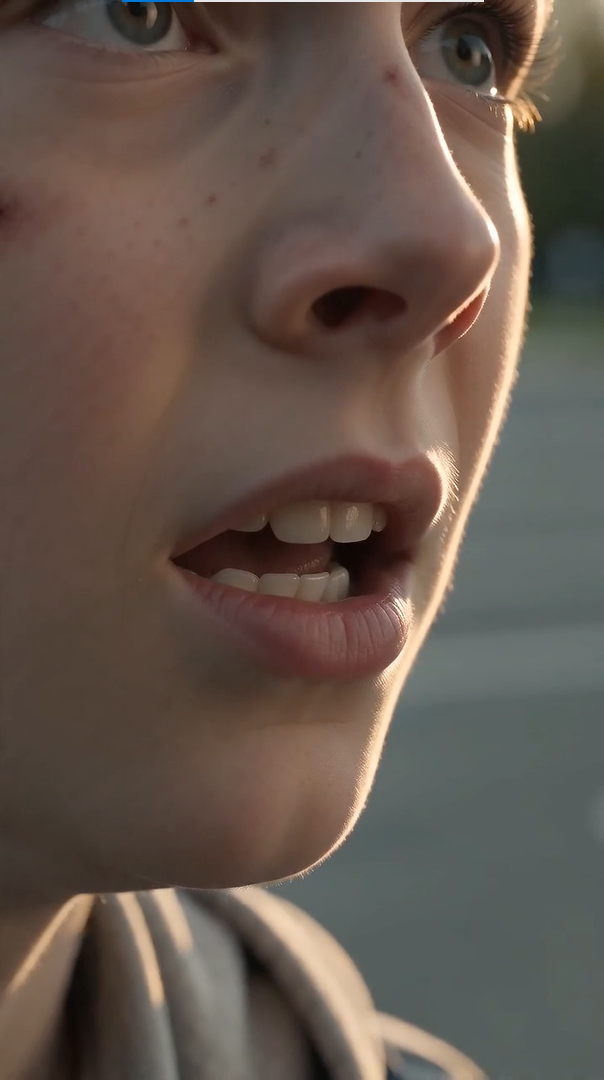
Ethan stopped.
“I can walk,” he said.
“I know,” the woman replied.
He looked at the umbrella.
Then at Mia.
Mia rolled her eyes like any annoyed child.
“Just come under it. I’m getting wet.”
Ethan hesitated.
Then he stepped under.
The three of them walked to the car together, shoulders almost touching.
Halfway there, Ethan whispered, “Thank you.”
The woman smiled through sudden tears.
“You’re welcome.”
That was the first small bridge.
Others came slowly.
He let her buy him new shoes, but only after she promised not to throw away the old ones.
He let her pack him lunch, but he always saved half for his sick mother until the woman started packing two.
He let her sit beside him during homework.
One night, he fell asleep in the hospital chair, and when his head slipped against her arm, she didn’t move for two hours.
Mia changed too.
At first, she avoided the sick woman.
Then one day, she stood at the hospital bed and asked, “What was I like when I was born?”
The sick woman cried before answering.
“You had a loud cry,” she said. “Angry. Like you knew the world had already made a mistake.”
Mia smiled a little.
The sick woman smiled back.
After that, Mia began asking more questions.
Did she have hair?
Was she small?
Did the sick woman name her?
The answer came softly.
“Yes. I named you Rose.”
Mia thought about it.
“I like Mia better.”
The sick woman nodded, tears in her eyes.
“Mia suits you.”
Mia looked at her carefully.
“Can I still be Mia?”
The sick woman reached out but didn’t touch her.
“You can be whoever you want.”
Mia looked at the elegant woman standing near the door.
Then back at the sick woman.
“Can I visit you and still go home with Mom?”
The sick woman’s lips trembled.
“Yes.”
Mia stepped closer.
“Okay.”
That was all.
But to the sick woman, it was mercy.
Months passed.
The sick woman’s health improved enough for her to leave the hospital, but not enough to live alone.
Everyone expected the elegant woman to send her away.
Instead, she stood in the hospital hallway with her arms crossed, looking like a woman fighting herself.
“I found a small house near mine,” she said.
The sick woman stared at her.
“What?”
“It has two rooms. A garden. No stairs. The children can visit when they want.”
“I can’t pay for that.”
“I know.”
The sick woman looked down, ashamed.
“I don’t deserve your help.”
“No,” the elegant woman said honestly. “You don’t.”
The sick woman flinched.
“But the children deserve peace,” the elegant woman continued. “And I am tired of making decisions from pain.”
The sick woman began to cry.
“I don’t know what to say.”
“Say you will never lie to them again.”
The sick woman looked up.
“I swear.”
The elegant woman nodded.
“Then start there.”
Life did not become simple.
Some people whispered.
Some judged.
Some called one woman a criminal and the other a fool.
But neither child cared about people’s whispers more than they cared about having somewhere safe to sleep.
The legal process continued.
There were consequences. There had to be.
The sick woman gave her confession officially. The hospital faced investigation. Old staff records were reopened. The nurse on duty that night was questioned. The truth became bigger than one desperate mother and two stolen bracelets.
But when the court finally looked at Ethan and Mia, it did not tear them apart.
Because both children spoke clearly.
Mia said, “I want to live with my mom. The one who raised me. But I want to know her too.”
Ethan said, “I want to stay close to both. I don’t want anyone to disappear again.”
So the adults did what adults should have done from the beginning.
They listened.
One year later, the school courtyard looked exactly the same.
Same gate.
Same pavement.
Same tree dropping yellow leaves near the entrance.
But the children were different now.
Ethan walked in wearing clean shoes, a neat uniform, and the same old bracelet tied carefully around his backpack strap.
Mia walked beside him, talking fast about a class project.
Behind them came the elegant woman, carrying two lunch boxes, and the sick woman, thinner than before but smiling softly, holding a small bag of medicine in one hand.
The teacher saw them from across the courtyard and stopped.
She remembered the day everything had fallen apart in that same spot.
Now she watched Ethan turn back and say, “Mom, you forgot my notebook.”
Both women looked up.
For one second, everyone froze.
Then Ethan’s face turned red.
“I mean…” he stammered.
Mia burst out laughing.
The elegant woman’s eyes filled.
The sick woman smiled through tears.
Ethan looked between them and gave up.
“You both know what I mean.”
The elegant woman handed him the notebook.
The sick woman fixed his collar.
Mia rolled her eyes again.
“We’re going to be late because everyone is crying.”
Ethan laughed.
A real laugh.
Light.
Free.
The teacher wiped her eyes.
Later that afternoon, Ethan had to read an essay in class.
The title was written in careful handwriting.
My Family.
He stood at the front of the room, nervous at first.
Then he looked through the window.
Both women were outside the gate.
Mia stood between them, waving like an embarrassing little sister even though she was not exactly his sister and not exactly not.
Ethan smiled.
Then he began to read.
“My family is not easy to explain. Some people think family is only blood. Some people think family is only who raises you. I used to think I had to choose. But I learned that sometimes grown-ups make mistakes so big that children have to spend years healing from them.
“I have one mother who gave me life and lost me. I have one mother who raised me and lied because she was afraid. I have a sister who was once a stranger. I have a name I was given and a name I found later.
“I used to feel like I belonged nowhere.
“But now I think maybe I belong to the truth.
“And the truth is this: I was loved wrongly, loved secretly, loved painfully, but I was loved. And now I am learning to be loved honestly.”
His voice shook at the end.
The classroom was silent.
Then the teacher started clapping.
One by one, the students joined.
Outside the window, the elegant woman covered her mouth as tears streamed down her face.
The sick woman bowed her head and cried quietly.
Mia shouted, “That was good!”
Everyone laughed.
Ethan laughed too.
And for the first time since the day he had walked into the courtyard with a bracelet and a broken secret, he did not feel like a stolen child.
He felt like a boy with a future.
That evening, they all returned to the elegant woman’s home for dinner.
The dining table had once felt too large, too polished, too perfect.
Now it was messy.
Mia spilled juice.
Ethan complained about vegetables.
The sick woman apologized too many times until the elegant woman finally handed her a bowl and said, “Just eat.”
After dinner, the children ran into the garden.
The two women stood near the doorway, watching them.
For a long time, neither spoke.
Then the sick woman whispered, “I stole ten years from you.”
The elegant woman looked at Ethan laughing with Mia under the lights.
“Yes,” she said.
“I can never repay that.”
“No.”
“I am sorry.”
The elegant woman’s eyes filled.
“I know.”
The sick woman looked at her, surprised.
The elegant woman took a slow breath.
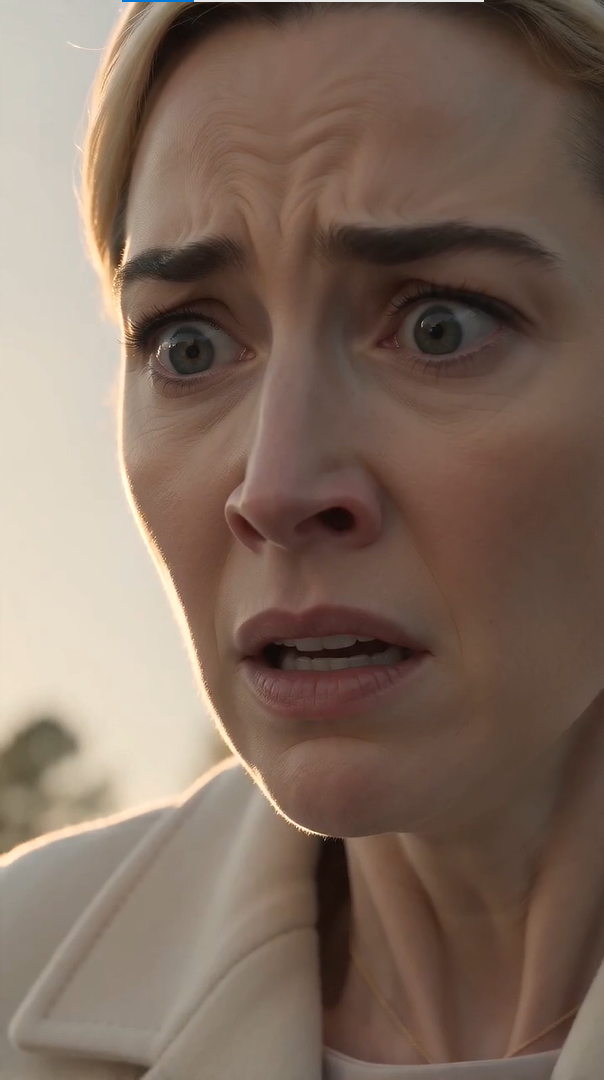
“I hated you,” she admitted. “Some days, I still wake up and feel that anger before I remember where we are now.”
“I understand.”
“But when I look at him,” the elegant woman said, “I see the pain you caused. And I also see the love that kept him alive.”
The sick woman cried silently.
The elegant woman continued, voice trembling.
“I will never say what you did was okay. It wasn’t. It will never be okay.”
“I know.”
“But I don’t want our children to spend their lives paying for it.”
The sick woman covered her face.
The elegant woman looked at her for a long moment.
Then, carefully, she said, “So we don’t bury the truth. We live with it. We tell it cleanly. And we never make them choose love by cutting their hearts in half.”
The sick woman nodded through tears.
“I promise.”
Outside, Mia shouted, “Ethan! Catch me!”
Ethan ran after her, laughing, the bracelet bouncing against his backpack where he had tied it like a reminder.
Not of the lie anymore.
Of the day the lie ended.
The elegant woman watched him and whispered, “Daniel.”
The boy stopped at once.
He turned.
For a second, everyone went still.
Then he walked back toward her.
She looked frightened, as if she had said too much.
“I’m sorry,” she whispered. “I didn’t mean—”
He shook his head.
“It’s okay.”
She swallowed.
“I know you are Ethan.”
He nodded.
“And I know I was Daniel.”
Her tears fell.
He stepped closer.
“Maybe you can call me that sometimes,” he said softly. “Not in front of everyone. Just… sometimes.”
The woman broke.
She pulled him into her arms.
This time, he did not freeze.
He hugged her back.
The sick woman watched them, crying, but she did not look away.
Mia came running over and wrapped her arms around both of them.
“Don’t start without me,” she said.
The sick woman stood back, unsure if she belonged in the moment.
Ethan noticed.
He reached one hand out toward her.
She stared at it.
Then she took it.
And under the garden lights, the four of them stood together.
Not perfect.
Not simple.
Not the kind of family people could explain in one sentence.
But real.
Years had been stolen.
Names had been changed.
Bracelets had been switched.
But the truth, once spoken, had opened a door none of them could close again.
And this time, no child was left on the wrong side of it.